Billboards in Clifton Springs, NY
No Minimum Spend. No Long-Term Contracts. Just Results.
Trusted by Leading Brands


Billboard advertising
in Clifton Springs has never been easier
How much is a billboard in Clifton Springs?
Why Choose Blip for Billboard Advertising in Clifton Springs
Choose Blip in Clifton Springs to launch fast on I-90 Exit 43 and Route 96—self-serve access makes regional reach simple.
Blip's flexible budgets fit Clifton Springs businesses, so you can test ads for hospital visitors, commuters, and Finger Lakes travelers without long-term contracts.
Daypart Clifton Springs campaigns to hit morning hospital staff, midday seniors, and evening Thruway traffic when it matters most.
Use real-time analytics in Clifton Springs to see what's working on healthcare and tourism corridors, then shift spend instantly.
Blip's creative tools help Clifton Springs ads stay clear and local, with quick swaps for Canandaigua, Geneva, and seasonal Finger Lakes traffic.
Frequently Asked Questions About Billboard Advertising in Clifton Springs
How much does a billboard cost in Clifton Springs, New York with Blip?
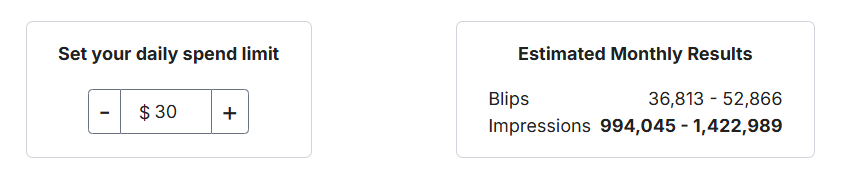
With Blip, you choose a daily budget that fits your goals, and your ads—short 7.5 to 10-second “blips”—run on Clifton Springs billboards only as often as your budget allows. Each blip is individually priced based on when and where it runs and current advertiser demand, so you only pay for the exposure you actually receive. Because you control your daily spend and can adjust it at any time, Blip makes billboards in Clifton Springs, New York accessible to local businesses and organizations of any size.
Where can I advertise with Blip in Clifton Springs, New York?
Clifton Springs is minutes from Interstate 90 (New York State Thruway) Exit 43 (Manchester), which carries on the order of 30,000–40,000 vehicles per day on this stretch of the Thruway. NY State Route 96, which passes near Clifton Springs and connects Victor, Farmington, Manchester, and Phelps, typically ranges from 8,000–15,000 vehicles per day on many segments in Ontario County. We can make the most of Blip inventory in and around Clifton Springs and neighboring towns by prioritizing commuter corridors and capturing I-90 travelers.
Why are Clifton Springs, New York billboards a good way to reach local and regional traffic with Blip?
Clifton Springs may be small, but it sits in a surprisingly strategic pocket of the Finger Lakes region with steady commuter traffic, a strong healthcare and senior-living presence, and proximity to tourism routes connecting Rochester, Syracuse, and the Finger Lakes. This makes Clifton Springs billboard advertising a useful way to intercept regional traffic that might never otherwise enter the village itself. The effective audience is far larger than the village population and includes tens of thousands of regional residents, healthcare workers and patients, and seasonal visitors.
When is the best time to run Blip billboards in Clifton Springs, New York?
Clifton Springs experiences typical upstate New York seasonality, which directly affects roadway volumes and audience composition. Summer and early fall generate the highest lodging occupancy rates and visitor spending, often 25–40% higher than winter months. With Blip, we can scale budget up during high-impact windows and scale down during off-peak or low-ROI periods.
What kinds of businesses work best on Clifton Springs, New York billboards with Blip?
Healthcare and senior services are especially relevant because Clifton Springs Hospital & Clinic and multiple elder-care facilities draw medical professionals, patients, and families from across the region. Tourism, hospitality, and dining businesses can also benefit by using location-based messaging and emotional imagery to reach travelers headed to the Finger Lakes. Local retail and services, as well as B2B and industrial advertisers, can use boards along commuter and farm corridors to reach residents, workers, farmers, and managers.
Do I need a contract to advertise with Blip in Clifton Springs?
No, Blip has no long-term contracts or minimum commitments. You can start, pause, or stop your campaign at any time.
How fast can I launch a billboard campaign with Blip in Clifton Springs?
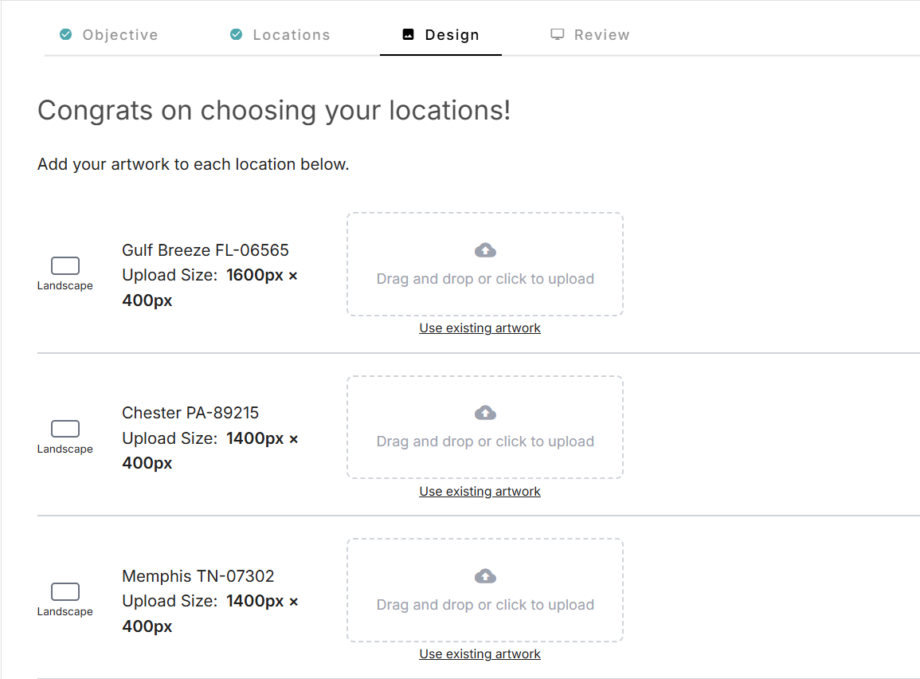
You can have your campaign live in minutes. Create a free account, select your locations, set your budget, upload your design, and start running once approved.
Where can I advertise with Blip in Clifton Springs?
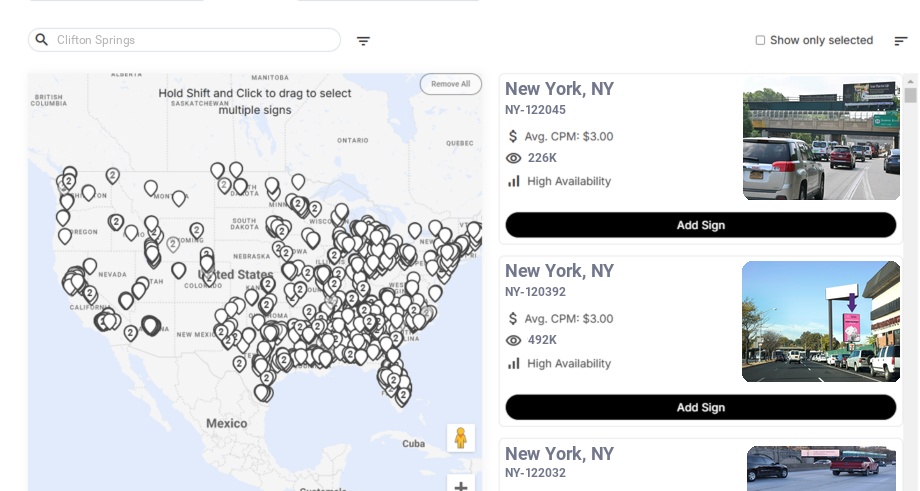
Blip has digital billboards in Clifton Springs. You can browse available locations on a map, choose the ones that fit your audience, and start advertising right away.
Still have questions? Launch a campaign in minutes — no contracts, no commitments.
Start Your CampaignClifton Springs Billboard Advertising Guide
Clifton Springs, New York may be small, but it sits in a surprisingly strategic pocket of the Finger Lakes region. With steady commuter traffic, a strong healthcare and senior-living presence, and proximity to tourism routes connecting Rochester, Syracuse, and the Finger Lakes, digital billboards in and around Clifton Springs can punch well above their weight. For advertisers considering Clifton Springs billboards as part of a regional mix, this village offers efficient coverage of both locals and pass-through traffic. Below, we outline how we can use Blip’s flexibility—short flights, daypart targeting, and quick creative swaps—to build highly efficient campaigns tailored to this village and its surrounding trade area.
Understanding the Clifton Springs Market
Clifton Springs is a village in Ontario County, about halfway between Rochester and Syracuse. While the village itself is home to roughly 2,000–2,200 residents, it functions as part of a much larger regional ecosystem that makes billboards in Clifton Springs relevant to a broader audience:
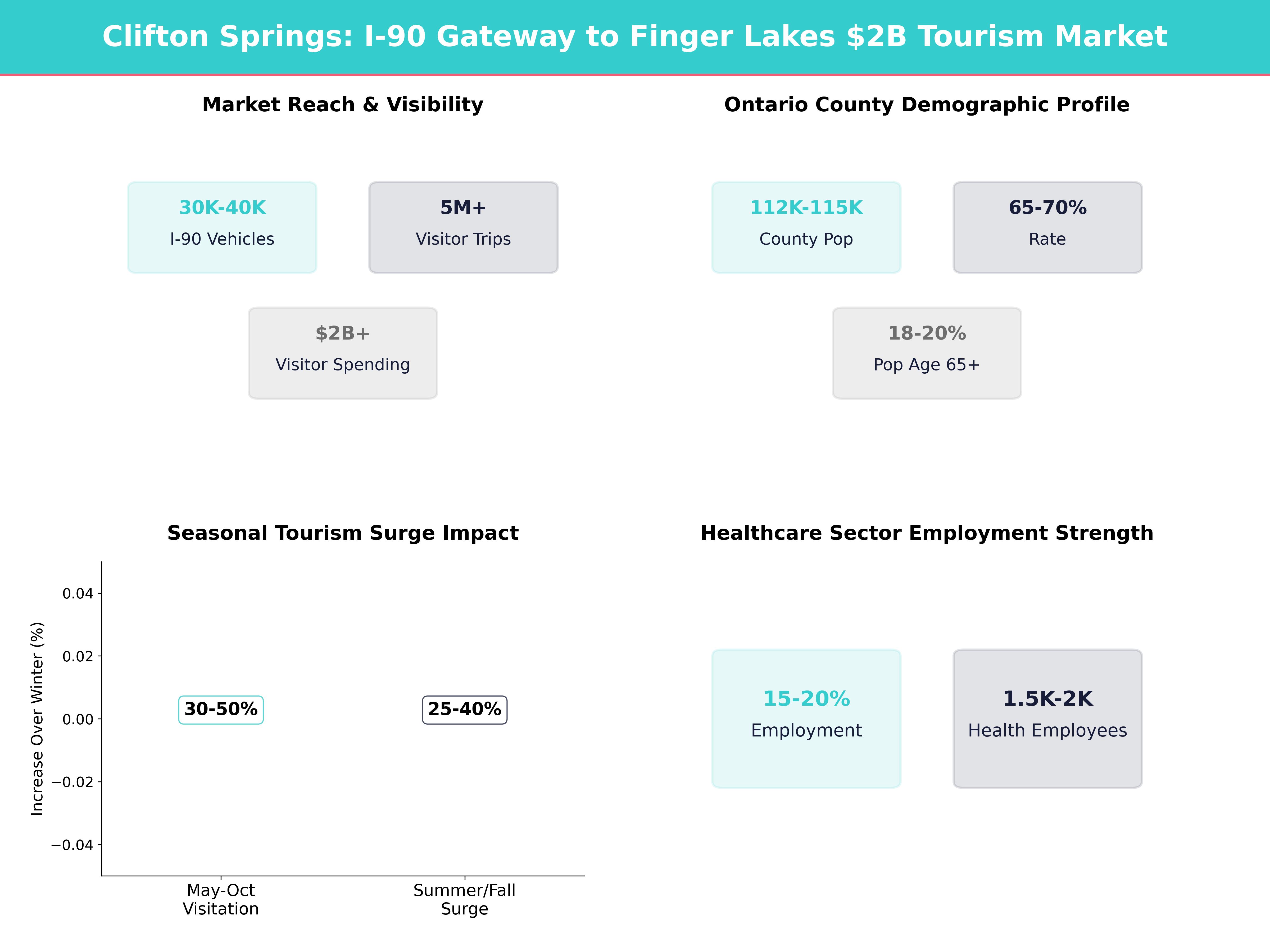
- Ontario County has around 112,000–115,000 residents, according to recent county estimates, with population centers in Canandaigua (about 10–11 miles southwest, population roughly 10,000–11,000) and Geneva (about 12 miles south, population around 12,000–13,000). You can explore county profiles and planning data via the Ontario County government and its Office of Economic Development.
- The county seat, Canandaigua, and the City of Geneva together add over 20,000–25,000 people to the immediate trade area, with the broader Canandaigua–Geneva micromarket serving 60,000+ residents when surrounding towns are included.
- Clifton Springs is minutes from Interstate 90 (New York State Thruway) Exit 43 (Manchester), which carries on the order of 30,000–40,000 vehicles per day on this stretch of the Thruway, based on recent New York State Department of Transportation traffic volume reports for the Finger Lakes corridor. This makes Clifton Springs billboard advertising a useful way to intercept regional traffic that might never otherwise enter the village itself.
Key institutional anchors:
- Clifton Springs Hospital & Clinic, part of the Finger Lakes Health system, is a major local employer, drawing healthcare workers and patients from the broader Ontario, Seneca, and Wayne County region. Finger Lakes Health reports that its system employs roughly 1,500–2,000 staff across multiple campuses, with several hundred based at the Clifton Springs location.
- Multiple senior living and rehabilitation facilities in and near Clifton Springs (including nursing homes, assisted living, and rehab centers in Phelps, Manchester, Farmington, and Newark hundreds of beds and steady year-round family visitation.
- Agriculture and light manufacturing in surrounding towns (Manchester, Phelps, Farmington, Hopewell) generate a regular flow of workers and service traffic. Ontario County’s agriculture sector alone supports over 600 farms and tens of millions of dollars in annual output, according to county agricultural summaries.
Because the village is embedded in the larger Finger Lakes region—one of New York’s most visited areas—Clifton Springs also touches seasonal visitor flows headed to Canandaigua Lake, Seneca Lake, nearby wineries, and outdoor attractions promoted by Visit Finger Lakes and the Finger Lakes Tourism Alliance. State tourism reports regularly attribute over 5 million annual visitor trips to the Finger Lakes region, generating well over $2 billion in direct visitor spending; Ontario County alone captures hundreds of millions of dollars in annual tourism spending, much of it tied to the Canandaigua–Geneva area.
For advertisers, this means:
-
The effective audience is far larger than the village population; realistic weekly reach includes:
- Tens of thousands of regional residents who pass nearby multiple times per week.
- Thousands of healthcare workers and patients linked to Clifton Springs Hospital & Clinic and nearby facilities.
- Seasonal influxes of visitors, especially May–October, when Finger Lakes visitation can rise 30–50% above winter baselines.
- We are reaching a blend of commuters, medical staff and patients, local families, and regional visitors.
- Campaigns can be structured to target local core residents year-round, and visitors or seasonal segments during peak months, taking advantage of Blip’s ability to scale impressions in response to seasonal volume surges.
Traffic Patterns and Where Billboards Work Hardest
While exact traffic counts vary by location and year, several corridors around Clifton Springs consistently show strong vehicle volumes in Annual Average Daily Traffic (AADT) data from NYS DOT and regional planning agencies:
- Interstate 90 (NY Thruway) between Rochester and Syracuse often sees 30,000–40,000+ vehicles per day on key segments in the Finger Lakes corridor, with heavy truck and long-distance traffic. Even a conservative estimate of 30,000 AADT translates to 900,000+ vehicle trips per month past key billboard locations.
- NY State Route 96, which passes near Clifton Springs and connects Victor, Farmington, Manchester, and Phelps, typically ranges from 8,000–15,000 vehicles per day on many segments in Ontario County, including those close to the village. At 10,000 AADT, a board can deliver approximately 300,000 potential impressions per month before applying targeting.
- NY-21 and NY-488 and connecting county roads carry several thousand vehicles per day each, moving traffic between Clifton Springs, Canandaigua, Geneva, and Newark. Corridors like NY-21 near Manchester often register 6,000–8,000+ AADT in recent counts.
We can make the most of Blip inventory in and around Clifton Springs and neighboring towns by:
- Prioritizing commuter corridors: Focus impressions on Route 96 segments that funnel workers between housing in smaller villages and job centers in Canandaigua, Geneva, Victor, and the Rochester metro. In some stretches between Farmington and Phelps, weekday peak-hour volumes can exceed 1,000 vehicles per hour.
-
Capturing I-90 travelers: Boards visible to Thruway drivers or near Exit 43 are suited for:
- Lodging and dining
- Fuel and convenience retail
- Attractions and wineries
- Auto services and truck repair
Even if only 1–3% of daily Thruway traffic converts into stops, that can mean 300–1,000+ potential customer parties per day within range of exit-oriented advertisers.
- Leveraging cross-county connectivity: Many residents of Ontario, Wayne, and Seneca counties crisscross the region daily for work, education, and healthcare. According to regional workforce data, 30–40% of workers in some Ontario County communities commute across municipal boundaries. Multi-board campaigns that include boards near Canandaigua, Geneva, Farmington, and Newark will give us regional reach well beyond Clifton Springs itself and increase the impact of any Clifton Springs billboard advertising that’s part of the plan.
Because Blip allows us to select specific boards and adjust budgets in real time, we can:
- Test a core set of boards for a few weeks totaling, for example, 50,000–100,000 impressions and then scale up.
- Shift spend to best-performing locations or directions (e.g., eastbound morning commute, westbound evening commute).
- Add or pause boards seasonally based on traffic surges (such as summer weekends, fall foliage, or holiday shopping) and specific campaign needs.
Seasonality: When to Turn Up the Volume
Clifton Springs experiences typical upstate New York seasonality, which directly affects roadway volumes and audience composition. In Ontario County, tourism and recreation data consistently show summer and early fall generating the highest lodging occupancy rates and visitor spending, often 25–40% higher than winter months. Thoughtful timing of billboard rental in Clifton Springs can significantly improve return on ad spend.
Spring (March–May)
- Commuting patterns normalize after winter, as weather-related slowdowns and school disruptions ease.
- Road construction season begins, sometimes increasing congestion and dwell time on main corridors like Route 96 and I-90; construction zones can reduce speeds to 45 mph or lower, effectively extending billboard viewing time.
- Tourism to the Finger Lakes starts to ramp up in late spring; local tourism offices report that May and June can see double the visitor counts of February in key lakefront communities.
Use cases:
- Home services (roofing, landscaping, construction, HVAC): Promote booking schedules as homeowners plan spring projects; home improvement spending nationally tends to climb 20–30% between February and May, and local contractors often book out 4–8 weeks ahead.
- Healthcare and wellness: Align with spring checkups, physical therapy after winter injuries, or elective procedures. Many practices see preventive care utilization tick up 10–15% in the second quarter as deductibles reset and weather improves.
Summer (June–August)
- Ontario County’s tourism peaks, with lake and winery traffic promoted heavily by Ontario County Tourism. Hotel occupancy and short-term rental demand in nearby Canandaigua and Geneva can run 10–20 percentage points higher in July–August than in January–February.
- Events, fairs, and festivals across Canandaigua, Geneva, and surrounding communities (such as lakefront concerts, wine festivals, and county fair events often listed on local event calendars) boost weekend and evening travel. Individual large events can draw thousands of attendees over a single weekend.
- Many families and young adults are on more flexible schedules, increasing midday and weekend traffic; regional parks and lake access points often report parking utilization exceeding 80–90% capacity on peak Saturdays.
Use cases:
- Hospitality, restaurants, breweries, and wineries: Use billboards along I-90 and Route 96 as “last-mile” reminders for off-exit and cross-country travelers. A single high-traffic board delivering 150,000–250,000 impressions per month in summer can generate significant incremental awareness for venues within a 10–15 minute drive.
- Recreation and attractions: Water parks, marinas, golf courses, farm markets, and u-pick farms can promote day trips and weekend visits. Many agritourism businesses report that 60–70% of annual visitor volume occurs between June and October.
- Seasonal hiring: Summer employers can run targeted bursts over a few high-traffic weeks. In many Finger Lakes tourism businesses, summer and early fall seasonal workers can represent 30–50% of total staffing.
Fall (September–November)
- Back-to-school commuting resumes; traffic patterns become predictable, with weekday AM and PM peaks. School-year calendar shifts bring a more regular 5-day commute cycle for many households.
- Leaf-peeping and harvest season extend Finger Lakes visitation into October. Regional tourism agencies note that fall foliage and wine-related travel can keep weekend occupancy rates within 5–10 percentage points of summer highs.
- Local residents shift attention toward healthcare, financial planning, and home winterization. Medicare and health plan open enrollment periods (typically October–December) heavily influence service demand among adults 65+, who make up a meaningful share of Ontario County’s population (roughly 18–20%).
Use cases:
- Education and training: Community colleges, trade schools, and adult education programs can run back-to-school and late-enrollment messages. In many New York community colleges, fall enrollment accounts for 55–60% of annual headcount, making this a critical period.
- Financial services and insurance: Retirement planning, Medicare enrollment, and property insurance tie into fall planning cycles. Nationally, a large majority of Medicare Advantage plan changes—often 70%+—happen during the October–December window.
- Agritourism: Orchards, pumpkin patches, and fall festivals can leverage short, intense seasonal flights. Many orchards report 40–50% of annual revenue during September–October alone.
Winter (December–February)
- Snow and adverse weather can reduce leisure travel but often concentrate traffic on primary roads and interstates. When secondary routes are less reliable, interstates like I-90 and main arterials such as Route 96 become even more critical for exposure.
- Holiday shopping in Canandaigua, Victor, Geneva, and regional centers boosts pre-holiday travel. Regional malls and big-box clusters commonly see November–December sales volumes that are 30–40% higher than monthly averages earlier in the year.
- Healthcare visits and elder care remain steady year-round; many practices see spikes in urgent care, respiratory illness visits, and post-holiday checkups.
Use cases:
- Retail and e-commerce: Promote holiday specials, gift cards, and local pickup options. National retail data show that roughly 20% of annual sales in many categories occur in November–December.
- Auto service and repair: Winter tires, inspections, and emergency services become essential; cold-weather breakdowns and tire-related calls typically increase 20–50% compared to summer.
- Healthcare and senior services: Consistent visibility supporting trust and familiarity is especially important as winter weather complicates travel and decision-making for older residents.
With Blip, we can scale budget up during high-impact windows (e.g., two weeks before a major event, or peak foliage weekends) and scale down during off-peak or low-ROI periods, instead of paying for a static 4–8 week run regardless of traffic conditions. This makes digital billboard rental in Clifton Springs adaptable to real-world demand.
Audience Segments: Who We’re Really Reaching
Beyond raw population numbers, it helps to think in terms of audience types that regularly pass through or near Clifton Springs:
-
Local Residents of Clifton Springs and Nearby Villages
-
Demographically, Ontario County skews:
- Median age in the low 40s, slightly older than the national median, with a sizable 45–64 and 65+ population.
- A substantial share of homeowners; county housing statistics typically show homeownership rates above 65–70%.
- Mixed income distribution, with a strong middle-income base and relatively low extreme-poverty concentrations compared to large urban centers.
- Many residents work in healthcare, education, manufacturing, retail, and services. In Ontario County, healthcare and social assistance alone account for roughly 15–20% of local employment.
- They frequently travel to Canandaigua, Geneva, and Rochester for work, shopping, and entertainment, which means multi-town travel is routine rather than exceptional.
Tactics:
- Emphasize community-oriented messaging (“Serving Clifton Springs and the Finger Lakes since…”, “Only 5 minutes from the village”) so that Clifton Springs billboards feel locally grounded, not generic.
- Promote recurring needs: healthcare, banking, auto repair, grocery, home services, and local events—categories where consumers make purchases weekly or monthly, not just once a year.
- Use directional cues and travel times (“Exit 43 – 2 minutes ahead”), which can meaningfully influence behavior when alternatives are 10–20 minutes further away.
-
Demographically, Ontario County skews:
-
Regional Commuters
- Many workers commute from smaller towns (Phelps, Manchester, Shortsville, Newark) to employment hubs. County commuting data suggest that 30–50% of workers in some smaller municipalities are employed outside their home town.
- These drivers are exposed to the same routes 5 days a week, often at consistent times, generating 20+ exposures per month for a well-placed digital board even at modest frequency.
Tactics:
- Use frequency to our advantage: short, memorable messages that build brand recall over weeks. Outdoor industry studies show that recall often peaks after 8–12 exposures, well within a single month of commuter impressions.
- Align offers with commuter needs: quick food, coffee, gas, medical clinics, gym memberships, and child care.
- Run time-of-day-specific creative (e.g., breakfast offer in the 6–9 a.m. window, dinner specials after 3 p.m.) to match the mental “to-do list” of drivers.
-
Healthcare and Senior Care Ecosystem
-
Clifton Springs Hospital & Clinic and nearby assisted living / rehab facilities draw:
- Medical professionals commuting daily from multiple counties—potentially hundreds of staff members per shift.
- Patients and families visiting from across a multi-county radius; a single mid-sized hospital campus can see hundreds of outpatient visits per weekday.
- This audience is highly engaged with healthcare decisions, transportation, lodging, and food options around medical visits.
Tactics:
- For medical practices, PT/OT, dental, and specialty services: use billboards to reinforce expertise and trust (“Board-certified cardiology 10 minutes away in Geneva”). Healthcare research indicates that 70–80% of patients consider provider reputation and convenience as top decision factors.
- For hotels, restaurants, pharmacies: focus on convenience and proximity to the hospital and care facilities (“2 minutes from Clifton Springs Hospital”). Even a small shift—capturing 5–10 additional parties per week—can materially impact revenue for local hospitality businesses.
- Rotate patient-focused and professional-focused messages using Blip’s creative swapping, acknowledging that clinicians and caregivers may make different types of decisions than patients and families.
-
Clifton Springs Hospital & Clinic and nearby assisted living / rehab facilities draw:
-
Tourists and Visitors
- Finger Lakes tourism generates millions of visits annually to the region’s lakes, wineries, and attractions, much of it routed via I-90, Routes 96, 14, 5&20, and 21. Regional tourism impact studies estimate total visitor spending well into the hundreds of millions of dollars per year for the lakes closest to Clifton Springs.
- Visitors often decide last-minute where to stop for food, lodging, and activities; travel surveys routinely show that 30–50% of roadside dining and lodging decisions are made within the last hour of driving.
Tactics:
- Billboards serve as powerful real-time suggestion engines: “Exit now for farm-to-table dining,” “Tonight: live music and craft beer 8 minutes ahead.”
- Use visuals that resonate with travel and leisure: lakes, vineyards, outdoor scenes, appetizing food imagery.
- Include clear directions and distances from the nearest exit (“Exit 43 – 0.5 miles ahead”), especially for visitors who may be unfamiliar with local geography.
Creative Strategy for Clifton Springs Campaigns
Digital billboards near Clifton Springs must cut through the mix of commuting, healthcare, and tourism traffic with simple, high-impact creative. Whether you are testing Clifton Springs billboard advertising for the first time or expanding an existing media mix, we recommend:
1. Lean, Readable Messaging
- Most drivers have 3–6 seconds to absorb your message depending on speed and road conditions.
- Limit text to 7 words or fewer when possible; outdoor advertising benchmarks show that brevity significantly improves recall.
-
Use a single, clear call to action:
- “Exit 43 – Turn Left for Pizza”
- “Walk-In Urgent Care – 10 Min Ahead”
- “Book Your Finger Lakes Weekend – Visit [domain].com”
For healthcare, finance, and professional services, favor trust-building phrasing:
- “Serving Ontario County for 25 Years”
- “Rated 4.8★ by Local Patients”
- “Medicare Planning – Free Consultation”
2. High Contrast and Bold Visuals
Clifton Springs and the Finger Lakes see varied weather and lighting—bright sun, snow glare, fog, and early winter sunsets. Upstate New York can experience over 150 cloudy or partly cloudy days per year, making contrast crucial for legibility:
- Pair light text on dark backgrounds or vice versa (e.g., white text on dark blue/navy).
- Use large, sans-serif fonts and avoid thin or script fonts that disappear at 55–65 mph.
-
Choose one focal image:
- For tourism: a vivid glass of wine, a lake vista, or a plate of food.
- For healthcare: a reassuring provider-patient scene or clear iconography (stethoscope, heart, cross).
- Avoid clutter: no more than one logo, one image, one main line of text—tests from outdoor networks consistently show higher recall when designs stay this simple.
3. Local Relevance and Landmarks
Because we are operating in a smaller community, local cues dramatically increase impact:
-
Reference landmarks like:
- “Near Clifton Springs Hospital”
- “Just off Exit 43, by the plaza”
- “Between Canandaigua and Geneva on Route 96”
- Use local place names—Clifton Springs, Phelps, Manchester, Canandaigua, Geneva—to anchor your location. Residents and frequent visitors often navigate by town name and exit number as much as by street address.
- If you participate in prominent local events promoted by outlets like the Finger Lakes Times or Canandaigua’s local tourism pages, reference them:
“Proud Sponsor of [Event Name] in Canandaigua.”
4. Multiple Creatives for Multiple Audiences
Blip allows us to run multiple creatives on the same board, rotating them automatically. In a geography like Clifton Springs, we can segment by:
-
Audience type:
- Commuter-focused (“Fast Oil Change – In and Out in 30 Minutes”).
- Visitor-focused (“Stay Tonight – Pet-Friendly Rooms Available”).
-
Time of week:
- Weekday creative for workers.
- Weekend creative for shoppers and tourists.
-
Service line (for multi-service businesses):
- Healthcare system: primary care, urgent care, imaging, specialty services.
- Bank/credit union: checking, auto loans, home equity, small business banking.
Even rotating just 3–5 distinct creatives can help maintain freshness and test which messages generate more calls, web visits, or in-person mentions.
Dayparting and Scheduling: Matching Messages to Moments
One of Blip’s biggest advantages over static billboards is the ability to control when ads show. Around Clifton Springs, we typically think in terms of:
Morning Commute (6 a.m.–9 a.m.)
- Audience: workers headed to hospitals, schools, offices, factories, and construction sites. For many routes, 30–40% of weekday traffic occurs during the morning and evening peaks combined.
-
Best for:
- Coffee shops and breakfast spots.
- Convenience stores and fuel.
- Gyms and fitness studios.
- Day-of healthcare (“Walk-in clinic open at 8 a.m.”).
- Tone: fast, functional, benefit-driven.
Midday (9 a.m.–3 p.m.)
- Audience: retirees and seniors, stay-at-home parents, shift workers, tourists, and local errand traffic. In communities with older demographics, midday traffic can represent a majority of daily trips for residents 65+.
-
Best for:
- Healthcare appointments and elective services.
- Groceries and pharmacies.
- Senior living and retirement planning.
- Attractions, museums, wineries, and farm markets.
- Tone: informative and reassuring, with clarity on location and hours.
Evening Commute (3 p.m.–7 p.m.)
- Audience: workers returning home, families heading to activities, visitors seeking dinner. Retail and dining businesses often see 40–60% of daily sales during this window.
-
Best for:
- Restaurants and quick-service food.
- Retail shopping and big-box stores.
- Auto repair, home services, and follow-up appointments.
- Tone: solutions and convenience (“Dinner solved”, “We’ll fix it tomorrow”).
Evening/Night (7 p.m.–midnight)
- Audience: restaurant-goers, hospitality guests, late-shift workers, travelers along I-90. Late-evening hotel bookings and roadside dining can account for a significant share of walk-in business, especially on Fridays and Saturdays.
-
Best for:
- Bars, breweries, and late-night dining.
- Hotels and motels.
- Emergency or 24/7 services (ER, urgent care, tow and roadside, locksmith).
- Tone: inviting and safety-focused.
We can allocate more budget toward commuter-heavy dayparts if we’re targeting local workers, or midday/weekend dayparts for tourism, retail, and senior audiences, and then adjust after seeing performance trends over 4–8 weeks. This kind of scheduling control is a key advantage for anyone managing billboard rental in Clifton Springs on a limited budget.
Industry-Specific Strategies for Clifton Springs Area Advertisers
Different verticals can take particular advantage of Clifton Springs’ mix of local and regional traffic.
Healthcare and Senior Services
With Clifton Springs Hospital & Clinic and multiple elder-care facilities in the area, healthcare messages are especially relevant:
-
Emphasize:
- Access and convenience (“Same-day appointments,” “Walk-ins welcome”). Patient preference surveys increasingly show that same-week appointment availability is one of the top reasons to choose a provider.
- Local trust and longevity (“Serving Ontario County families for 30 years”).
- Specialty services that patients might otherwise travel 30–50 miles to find in Rochester or Syracuse.
-
Use shorter, ongoing campaigns to:
- Support new provider arrivals or new services (e.g., imaging, orthopedics, cardiology).
- Promote seasonal needs (flu shots, sports physicals, Medicare enrollment).
- Coordinate messaging with online presence and local coverage from outlets like Finger Lakes Times and Rochester’s Democrat & Chronicle to reinforce awareness. When print, digital, and billboard messaging match, cross-channel frequency can easily exceed 10–20 touchpoints per household over a few months.
Tourism, Hospitality, and Dining
For hotels, inns, B&Bs, wineries, breweries, and restaurants:
- Combine location-based messaging (“Exit 43,” “5 minutes off I-90”) with emotional imagery (wine glasses, cozy dining, lakeside views). Research in travel marketing shows that compelling visuals can lift intent-to-visit by 20–30% compared to text-only messages.
- Run high-frequency bursts on Fridays, Saturdays, and peak event weekends promoted by Visit Finger Lakes. Weekends often account for 50%+ of leisure visitor nights despite representing only 29% of days in a week.
-
Use creative that:
- Highlights a unique selling point: lake views, live music, farm-to-table food, pet-friendly rooms.
- Directs mobile searches: “Search ‘[Brand Name] Clifton Springs’,” “Book at [short URL].” More than 70% of travelers now use smartphones to find nearby restaurants and lodging while on the road.
Local Retail and Services
Hardware stores, auto shops, salons, fitness, pet care, and professional services can:
-
Focus on geographic convenience relative to larger centers:
- “Skip the trip to the city – shop local in Clifton Springs.” If the nearest big-box option is 20–30 minutes away, nudging just a few percent of shoppers to stay local can significantly impact revenue.
-
Highlight:
- Fast service, small-town personal attention.
- Special sales or seasonal offers (e.g., tax-time promotions, back-to-school, holiday specials).
- Rotate creatives monthly to keep messages fresh, especially if traffic patterns shift with seasons or local events covered by outlets like FingerLakes1.com.
B2B and Industrial
Because Ontario and neighboring counties have significant agriculture and light manufacturing:
-
Use boards along farm and commuter corridors to reach:
- Farmers and ag-business decision makers—Ontario County has hundreds of farm operations and thousands of agricultural acres.
- Plant workers and managers in industrial parks and manufacturing corridors.
-
Focus on:
- Equipment sales and service.
- Industrial supplies and safety products.
- Transportation and logistics.
Messaging should be clear, direct, and benefit-centered, such as “Cut Downtime by 30%. Local Repair in Phelps.” Even modest improvements in uptime can translate to tens of thousands of dollars per year for larger operations, making B2B billboard ROI compelling.
Using Blip’s Flexibility to Test, Learn, and Optimize
In a market like Clifton Springs, where budgets are often modest and audiences are tightly knit, we should approach billboard campaigns as ongoing experiments rather than one-time bets.
We recommend:
-
Start with a Core Test
- Select a small set of boards on major corridors (e.g., near I-90 exit, along Route 96).
- Run 2–4 creatives for 2–4 weeks, aiming for an initial 25,000–75,000 impressions depending on budget.
-
Track:
- Website traffic and calls from local ZIP codes (e.g., 14432 and surrounding ZIPs).
- In-store mentions (“saw your billboard near the Thruway”).
- Offer redemptions tied to billboard-specific codes or URLs. Even a 1–3% response rate on a targeted offer can validate and fund further investment.
-
Compare Dayparts and Directions
- Run one month emphasizing morning and evening commutes.
- Run another month emphasizing midday and weekends.
- Compare web traffic, phone calls, and in-person visits; then shift budget toward the better-performing schedule. It’s common to see cost-per-response vary by 20–50% between dayparts.
-
Refine Creative Based on Response
- If location confusion is common, add clearer directional cues and distance markers (“0.3 miles ahead on right”).
- If web traffic increases but calls don’t, test stronger calls to action (“Call today,” “Book online now”) and display phone numbers or URLs more prominently.
- Test small creative tweaks—color, headline wording, or image focus—as outdoor A/B tests. Sometimes a minor change can lift engagement by 10–20%.
-
Scale with Seasonal Opportunities
-
Increase investment during:
- Peak tourism (late spring through early fall).
- Back-to-school and open enrollment periods.
- Holiday shopping season.
- Reduce or re-target spend during lower-impact windows to preserve budget and maintain cost per thousand impressions (CPM) at an efficient level.
-
Increase investment during:
Because digital billboard impressions through Blip are purchase-by-purchase, we can adapt quickly to changing business goals, stock levels, staffing, and local events without waiting out long-term contracts. This agility is particularly valuable in smaller markets, where a single large event or weather shift can meaningfully alter demand in a given week, and where advertisers need flexible options for billboard rental in Clifton Springs rather than rigid, long-term leases.
Integrating with Local Media and Community Presence
Billboards around Clifton Springs are most powerful when paired with other local touchpoints:
-
Coordinate offers and messaging with:
- Local coverage and advertising on Finger Lakes Times and community-focused outlets such as FingerLakes1.com.
- Information from the Village of Clifton Springs government site about community events and public initiatives, such as festivals, parades, or infrastructure projects that may change traffic patterns.
- Regional tourism campaigns via Visit Finger Lakes and Finger Lakes Tourism Alliance, which highlight signature events and attractions that drive visitor peaks.
-
Use consistent branding—same core headline, visual style, and slogan—across:
- Billboards
- Social media
- Local print/radio
- In-store signage
When residents and visitors see the same brand elements across multiple channels and multiple towns (Clifton Springs, Canandaigua, Geneva, etc.), recognition and trust build more quickly. Over a 3–6 month period, this integrated approach can easily generate dozens of brand touchpoints per person in your target radius.
By aligning billboard campaigns with the rhythms of local life—commutes to the hospital, weekend drives through the Finger Lakes, and daily errands between villages—we can make every impression count.
By understanding Clifton Springs’ unique position at the intersection of healthcare, small-town living, and regional tourism, and by taking full advantage of Blip’s flexibility in location, timing, and creative, we can build digital billboard campaigns that deliver outsized results for businesses of all sizes in this part of Ontario County. For marketers evaluating where to allocate out-of-home spend, smart use of Clifton Springs billboards and surrounding inventory can provide efficient coverage and strong reinforcement for broader Finger Lakes advertising efforts.