Billboards in Madison, WI
No Minimum Spend. No Long-Term Contracts. Just Results.
Trusted by Leading Brands


Billboard advertising
in Madison has never been easier
How much is a billboard in Madison?
Why Choose Blip for Billboard Advertising in Madison
-
Blip lets you launch fast in Madison and hit Beltline commuters, where about 4 in 5 Dane County trips are by private vehicle.
-
Set flexible budgets in Madison and test dayparts on I-39/90/94, Verona Road, or East Washington as traffic shifts by corridor.
-
No contracts with Blip make Madison billboard buys easy to pause around UW–Madison move-in, Badgers games, or Alliant Energy Center events.
-
Track Madison campaigns in real time and reallocate spend when John Nolen or the Beltline outperforms for your audience.
-
Use Blip’s creative tools to build bold, local ads for Madison students, state workers, and suburban families on routes to campus and downtown.
Frequently Asked Questions About Billboard Advertising in Madison
How much does a billboard cost in Madison with Blip?
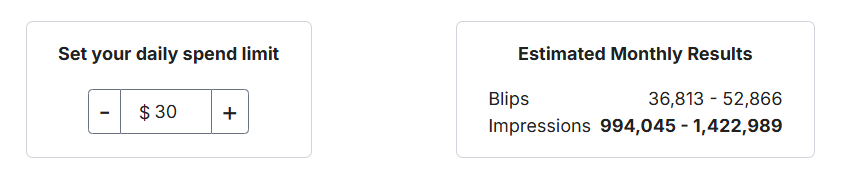
With Blip, billboard advertising in Madison can fit a wide range of budgets because you only pay when your ad actually appears. Each “blip” is a 7.5-to-10-second display on a rotating digital billboard, and pricing starts at just $0.01 per display. You set a daily budget, and Blip’s algorithm uses it to bid on open ad slots, with costs that can change based on time of day, location, and advertiser demand.
Where can I advertise with Blip in Madison on high-traffic roads?
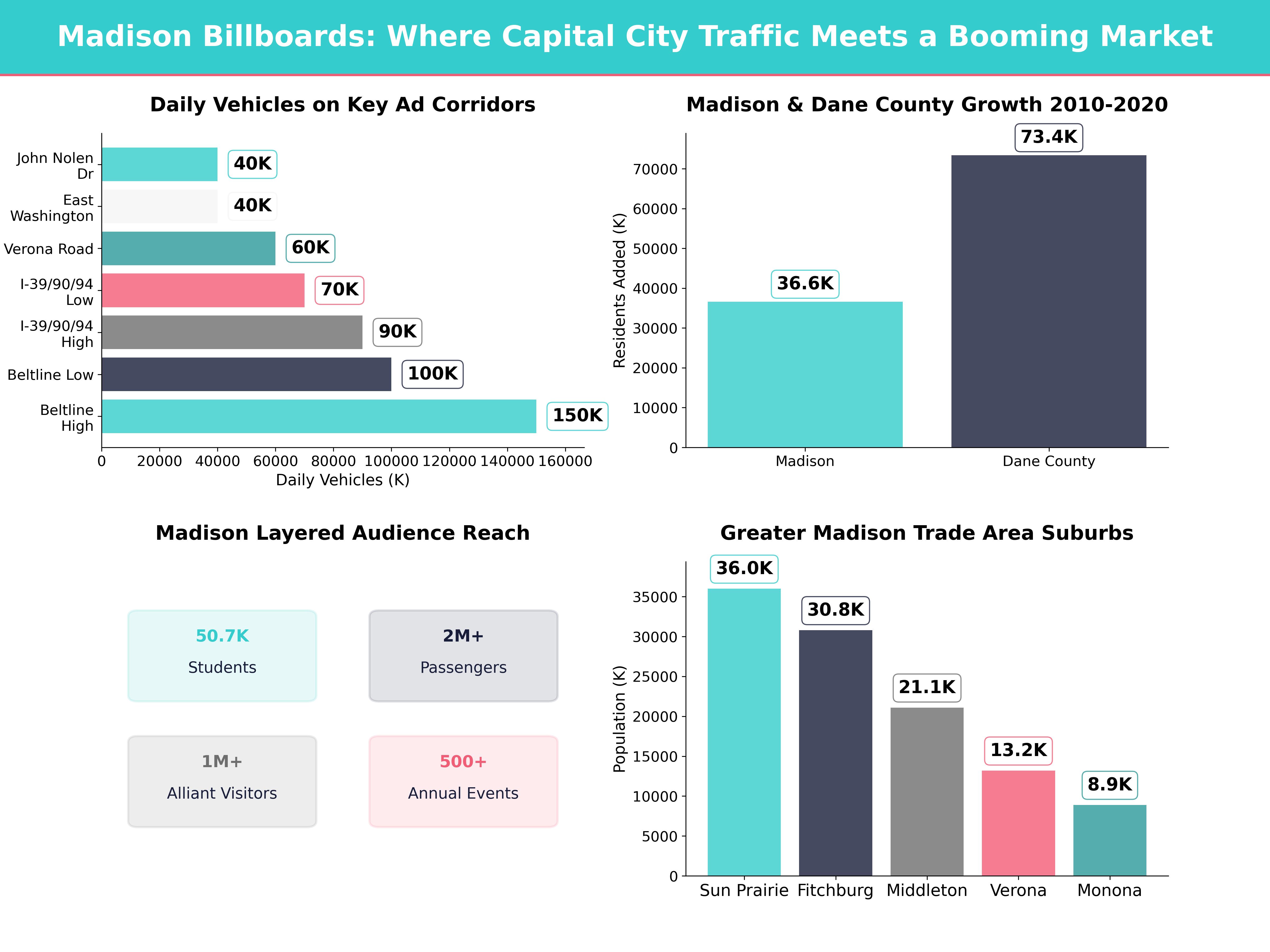
Madison’s strongest billboard opportunities come from a relatively small number of roads that carry outsized traffic and connect distinct audience groups. The Beltline is the market’s signature commuter corridor, with major segments in the 100,000 to 150,000+ vehicles-per-day range, and I-39/90/94 on Madison’s east and southeast side commonly lands in the 70,000 to 90,000 range. East Washington Avenue, John Nolen Drive, and Verona Road are also important for reaching residents, commuters, visitors, and students.
Why is Madison a strong market for Blip billboard ads?
Madison is a standout billboard market because it combines a fast-growing population, concentrated commuter traffic, and steady year-round visitation. The city had 269,840 residents in 2020, Dane County reached 561,504, and roughly 4 in 5 commute trips in Dane County are still made by private vehicle. The city’s four-lake geography also funnels drivers onto a short list of high-value roads.
What Madison audiences can I reach with Blip billboards?
Madison works well for billboard advertisers because the audience is not one-dimensional. We get commuters, state workers, students, faculty, young professionals, visitors, eventgoers, and suburban households. UW–Madison enrolled 50,662 students in fall 2023, and Dane County Regional Airport brings in more than 2 million passengers a year.
When is the best time to run billboard ads in Madison with Blip?
Late August through November is one of Madison’s best billboard windows because student move-in and fall semester startup bring a fresh wave of apartment shoppers, furniture buyers, internet customers, and restaurant traffic. Football also adds another surge, with roughly 6 to 7 home games in a typical Wisconsin Badgers season. Winter can be a good season for healthcare, urgent care, heating and home services, tax prep, and indoor entertainment.
Do I need a contract to advertise with Blip in Madison?
No, Blip has no long-term contracts or minimum commitments. You can start, pause, or stop your campaign at any time.
How fast can I launch a billboard campaign with Blip in Madison?
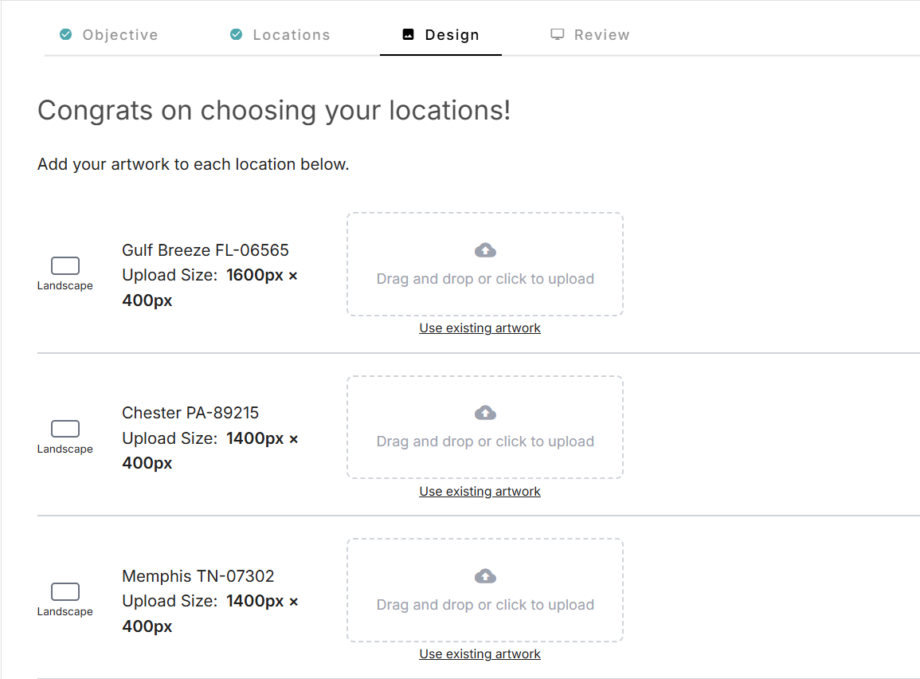
You can have your campaign live in minutes. Create a free account, select your locations, set your budget, upload your design, and start running once approved.
Where can I advertise with Blip in Madison?
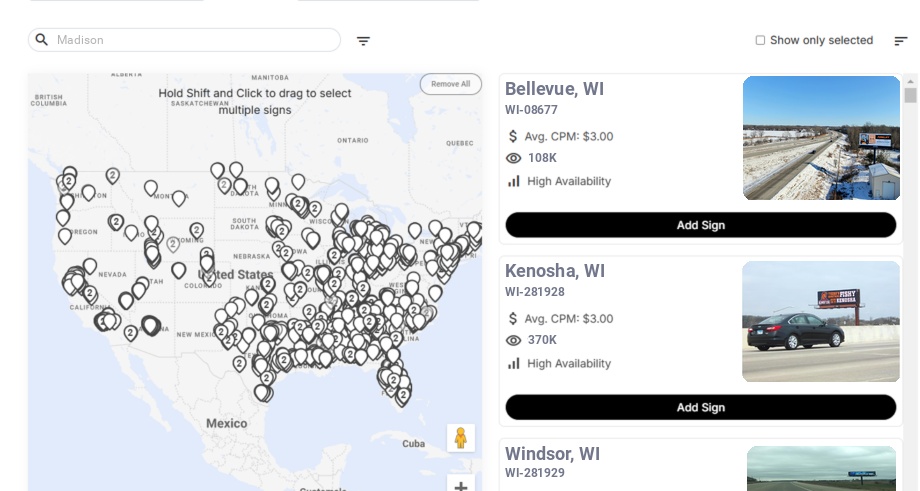
Blip has digital billboards in Madison. You can browse available locations on a map, choose the ones that fit your audience, and start advertising right away.
Still have questions? Launch a campaign in minutes — no contracts, no commitments.
Start Your CampaignMadison Billboard Advertising Guide
Madison is a standout billboard market because it combines a fast-growing population, concentrated commuter traffic—roughly 4 in 5 Dane County commute trips are still made by private vehicle—and steady year-round visitation. The City of Madison had 269,840 residents in 2020, and Dane County reached 561,504, with the city growing 15.7% and the county growing 15.0% from 2010 to 2020, according to the Wisconsin Department of Administration. Even in one of the Midwest’s most bike-aware cities, regional travel is still heavily car-based, and Madison’s four-lake geography funnels drivers onto a short list of high-value roads. When we add UW–Madison, with 50,662 students in fall 2023, more than 2 million annual passengers at Dane County Regional Airport, and more than 1 million yearly visitors to the Alliant Energy Center, we get a market where billboard frequency can build quickly.
Madison Market Overview for Billboard Advertisers
Madison gives us a rare mix of density, affluence, education, and regional draw, with 269,840 city residents and 561,504 county residents in 2020. It is Wisconsin’s second-largest city, and its growth has been durable rather than speculative. From 2010 to 2020, Madison added 36,631 residents, and Dane County added 73,431, which helps explain why new housing, healthcare, retail, restaurants, and service businesses continue to expand across the market.
Madison’s economy supports frequent, repeat exposure
The local economy is anchored by the State of Wisconsin, UW–Madison, UW Health, Epic Systems, Exact Sciences, Promega, and American Family Insurance. That employer mix matters because it creates both broad consumer demand and specialized B2B demand. We can advertise to state employees, university students, healthcare workers, biotech talent, suburban families, and convention visitors without leaving one metro.
Dane County also tends to post one of the lowest unemployment rates in Wisconsin. According to the Wisconsin Department of Workforce Development, the county has often operated in the low 2% to 3% range in recent years. That kind of labor market is especially useful for billboard advertisers because it supports strong household spending while also making recruitment campaigns highly relevant.
Madison’s travel patterns still favor outdoor advertising
Madison has a progressive transportation culture, but the region is still driven by private vehicles. Regional commute data from the Greater Madison MPO 4 in 5 commute trips in Dane County are still made by private vehicle when we combine driving alone and carpooling. That means digital billboards are not just branding tools here. They are practical reach tools for real daily travel behavior.
The geography reinforces that advantage. The lakes, isthmus, Beltline, and limited river and lake crossings push a large share of trips through the same corridors again and again. When we place boards on the right roads, we can build repetition with commuters who pass the same structures every weekday, students who circulate between campus and housing, and visitors who enter the market through the airport, interstate, or event venues.
Key Traffic Corridors for Madison Billboards
Madison’s strongest billboard opportunities come from a relatively small number of roads that carry outsized traffic and connect distinct audience groups. The Wisconsin Department of Transportation
US 12/18 Beltline in Madison
The Beltline 100,000 to 150,000+ vehicles-per-day range, with the busiest stretches topping 150,000 AADT. That is the kind of volume that gives us both reach and repetition.
This road connects Fitchburg Monona
I-39/90/94 on Madison’s east and southeast side
The interstate approach on Madison’s east and southeast side captures regional traffic entering the market from Milwaukee Chicago, the Wisconsin Dells, and the rest of southern Wisconsin. Around key Madison interchanges, WisDOT counts commonly land in the 70,000 to 90,000 vehicles-per-day range, depending on the segment. That makes this corridor ideal when we want more than local reach.
This is the right play for hotels, attractions, event marketing, travel plazas, colleges, healthcare brands, and employers hiring from a wider labor shed. It is also useful for advertisers who want to intercept visitors before they choose where to eat, stay, park, or shop after entering Madison.
Verona Road, US 18/151, and the southwest growth corridor
The Verona Road Project 60,000 vehicles per day near the Beltline. That number reflects how important the southwest side has become. This route connects Madison to Verona Fitchburg Epic Systems and University Research Park.
We like this corridor for recruitment, healthcare, childcare, financial services, restaurants, fitness, and home improvement brands. The audience includes white-collar professionals, growing family households, and daily commuters moving between newer residential areas and major job centers.
East Washington Avenue, US 151, and John Nolen Drive in Madison
For downtown access and east-side growth, East Washington Avenue and John Nolen Drive matter more than many national advertisers realize. East Washington segments often exceed 40,000 vehicles per day, while John Nolen carries roughly 40,000 vehicles into downtown and the campus-adjacent core. These roads reach residents, office workers, airport users, downtown visitors, and students.
East Washington is especially effective for apartments, entertainment, furniture, restaurants, convenience retail, and brands targeting Sun Prairie Monona Terrace.
Madison Audience Segments We Can Reach
Madison works well for billboard advertisers because the audience is not one-dimensional. We are not choosing between a commuter town and a tourist town. We get both, along with a large student market and fast-growing suburban households.
Madison commuters, state workers, and professional employees
The private-vehicle commute base is the foundation of local billboard performance. With about 4 in 5 county commute trips happening in private vehicles, frequency is attainable on the Beltline, Verona Road, I-39/90/94, and the main east-west arterials. Downtown adds a major concentration of state employees, legal professionals, and office workers, while the west side, southwest side, and east side add healthcare, insurance, biotech, and tech commuters.
That audience responds well to repeated exposure. If we are promoting a healthcare network, a bank, a law firm, a grocery chain, or a service business, we can benefit from the same driver seeing our message several times each week on the same route.
Madison students, faculty, and young professionals
UW–Madison enrolled 50,662 students in fall 2023, which gives Madison one of the largest built-in student audiences in the Midwest. That student population is paired with faculty, staff, researchers, hospital workers, and recent graduates who often live near downtown, the near east side, or the near west side. Madison College adds another important commuter-student audience to the region.
This segment is strong for apartments, mobile apps, telecom, banking, food delivery, nightlife, retail, urgent care, and entertainment. It is also highly seasonal, which means billboard timing around move-in, semester starts, game days, and graduation can be especially productive.
Madison visitors, eventgoers, and convention traffic
Madison’s visitor economy is larger than many advertisers assume. The Alliant Energy Center sits on a 164-acre campus, hosts more than 500 events annually, and draws more than 1 million guests each year. Monona Terrace adds another convention audience with a Frank Lloyd Wright-designed facility totaling 250,000 square feet. Dane County Regional Airport brings in more than 2 million passengers a year.
Sports add another layer. Camp Randall Stadium can seat about 80,000 fans, and the Kohl Center seats about 17,000 for basketball. For advertisers in hospitality, parking, dining, beverage, entertainment, healthcare, or retail, these visitor surges create ideal billboard windows.
Madison families and suburban households
The suburban ring around Madison is large enough to deserve its own strategy. In 2020, Sun Prairie 35,967 residents, Fitchburg 30,796, Middleton 21,104, Verona 13,233, and Monona 8,915. These communities feed Madison’s job centers, but they also support strong local demand for healthcare, childcare, schools, home services, auto care, grocery, and recreation.
For many local advertisers, this is where billboards become more efficient than broad digital targeting. A board on the route between home, school, errands, and work can stay relevant for months because the routine itself stays stable.
Seasonal and Timing Opportunities in Madison
Madison rewards advertisers who align campaigns with the academic calendar, sports calendar, convention schedule, and weather-driven behavior. The city is active year-round, but the audience mix changes noticeably by season.
Late summer and fall in Madison
Late August through November is one of Madison’s best billboard windows. Student move-in and fall semester startup bring a fresh wave of apartment shoppers, furniture buyers, internet customers, restaurant traffic, and nightlife spending. Football adds another surge, with roughly 6 to 7 home games in a typical Wisconsin Badgers season.
This is when we should think aggressively about campus-adjacent messaging, downtown hospitality, and commute-heavy routes. It is also a strong period for healthcare enrollment, financial services, and recruitment because people are resetting routines after summer.
Madison conventions, expos, and agricultural events
The meeting and expo calendar gives Madison unusually strong B2B and travel periods for a metro of its size. The Alliant Energy Center keeps traffic moving with more than 500 annual events, and Monona Terrace regularly pulls business visitors into the downtown core. Events such as World Dairy Expo create specialty audiences that matter for agriculture, equipment, insurance, software, food service, and regional hospitality brands.
When we know event dates in advance, we can schedule bursts on arrival corridors rather than running broad, generic flights. That usually means east-side interstate boards, south-side approach boards, and downtown access boards perform best.
Madison winter and early spring campaigns
Winter changes both traffic behavior and message relevance. Commutes feel longer, daylight is limited, and clear, high-contrast creative becomes even more important. This is a good season for healthcare, urgent care, heating and home services, tax prep, comfort food, winter retail, and indoor entertainment.
Sports also keep the market active after football ends. The Kohl Center extends downtown event traffic through basketball and hockey season, and Overture Center for the Arts
Madison summer weekends, lakes, and festivals
Summer in Madison has a different tone. Leisure traffic increases around the lakes, downtown, and the university area. The Wisconsin Union, Olbrich Botanical Gardens Henry Vilas Zoo, and the Dane County Farmers’ Market all help keep weekends active. On peak summer Saturdays, the farmers’ market can feature nearly 150 vendors around the Capitol Square.
This is a great time for restaurants, attractions, beverage brands, outdoor recreation, home improvement, and short-stay hospitality. It is also when creative should feel most local, because visitors want memorable Madison experiences and residents want to make the most of the season.
Billboard Design Tips for the Madison Market
Madison rewards creative that feels specific, informed, and local. We should not design for a generic Midwestern city and expect the market to respond the same way.
Use Madison cues that drivers instantly recognize
The Capitol dome, the lakefront, the isthmus, and familiar road names such as Beltline, East Wash, Monroe Street, and Verona Road all create quick local recognition. Even subtle cues can help. A Madison audience notices whether a message feels like it belongs here.
Color palettes matter too. Deep reds, lake blues, winter whites, and clean modern layouts tend to fit Madison’s mix of university culture, healthcare branding, and tech employers. If we are advertising to a west-side professional audience, polished and minimal often outperforms loud and cluttered. If we are advertising to event traffic or students, bolder color and urgency can work well.
Lead with specificity for Madison’s educated audience
Madison is a highly educated market with a research-minded culture. Broad slogans are less persuasive here than useful details. A line such as “Off the Beltline. Open late.” or “Near campus parking tonight.” does more work than a vague claim about being the best in town.
We should also make relevance obvious. If we are talking to parents in Sun Prairie Middleton Verona University Research Park, professional, concise, and credibility-driven creative is a better fit.
Design for commuter speed and seasonal context
The Beltline and interstate approaches demand disciplined design. We should keep the message short, put the brand name first or second, and use one clear call to action. Drivers have only a few seconds, and weather can reduce readability even further during winter.
Seasonal adaptation is especially useful in Madison. Fall creative can lean into football and back-to-school energy. Winter creative should use stronger contrast and practical offers. Summer creative can feel more lifestyle-oriented, especially near downtown, the airport approach, and festival corridors.
Regional Billboard Strategies Across Greater Madison
Greater Madison is not one uniform trade area. We get better results when we treat downtown, the west side, the east side, and the suburban ring as separate planning zones.
Downtown Madison, campus, and the Capitol corridor
Downtown and campus are the right choice when we want proximity to immediate decisions. This zone includes the Capitol State Street, Monona Terrace, UW–Madison, Downtown Madison Inc.
This zone responds best to timing. Midday, evening, and event-driven schedules are often stronger than an all-day approach because the audience mix changes quickly.
Madison’s west side, Middleton, Verona, and Fitchburg
The west and southwest side is one of the metro’s most valuable business and household zones. Middleton Verona Fitchburg Epic Systems, UW Health, and University Research Park.
We should use west-side boards for recruiting, healthcare, financial services, family retail, home improvement, and restaurants. Morning and evening commute dayparts are particularly valuable here because the travel pattern is consistent.
Madison’s east side, Sun Prairie, and the airport gateway
The east side has a different personality. It mixes new housing, industrial and logistics activity, airport traffic, and interstate arrivals. Sun Prairie 35,967 residents in 2020, is large enough to behave like a major suburban trade area, not just a bedroom community. The Dane County Regional Airport and east-side interstate interchanges also make this zone important for hospitality and visitor capture.
We like this area for hotels, quick-service restaurants, storage, moving services, healthcare, workforce recruiting, and family-oriented retail. If we want to reach both local residents and inbound travelers, this side of the market is often the most efficient place to start.
South Madison, Monona, and Beltline retail circulation
South Madison and Monona
This zone is especially useful when our goal is not just awareness but action within the same day. Drivers in this part of the market are often already on practical trips, which makes clear location cues and offer-driven creative especially effective.
Using Blip Tools and Capabilities in Madison
Madison is a great fit for flexible digital billboard buying because the audience changes by corridor, time of day, and season. We do not have to treat the whole metro the same way.
Match Madison dayparts to real travel behavior
Morning commute schedules usually make the most sense on the Beltline, Verona Road, and I-39/90/94. Midday schedules can be stronger for downtown, campus, and healthcare destinations. Evenings and weekends often work best for restaurants, entertainment, events, and retail near downtown or major shopping zones.
With Blip’s scheduling tools, we can support a very Madison-specific rhythm. We can emphasize weekday commuter bursts, increase delivery before home football weekends, or shift spend toward conference arrival days at Monona Terrace and Alliant Energy Center.
Test different Madison submarkets instead of guessing
Madison’s east side and west side often behave like different audiences. So do downtown and the suburbs. Blip’s map-based buying makes it practical for us to test separate creative and separate budgets in each area rather than assuming one message fits all.
For example, a hiring campaign might run one version near Verona Fitchburg Sun Prairie
Stay nimble around Madison weather, sports, and events
Madison is full of moments when timing matters more than duration. A snow event, a sold-out football game, a major expo, a move-in weekend, or a spring hiring push can all justify a short, focused flight. Blip lets us react to those windows without overcommitting to a long contract.
Real-time analytics also help us make better local decisions. If one corridor is clearly outperforming another, we can reallocate quickly instead of waiting through a full billing cycle.
Getting Started With Billboard Rental in Madison
Renting a billboard in Madison gets much easier when we start with a clear objective and then choose the roads that naturally match it. The city has enough distinct travel patterns that strategy matters, but it is still compact enough for a focused campaign to move quickly.
Start with one Madison objective and one primary corridor
We should decide whether the campaign is mainly about awareness, foot traffic, event attendance, or hiring. Then we should choose the corridor that best matches the decision moment. If our goal is broad awareness, we should start with high-frequency commuter routes such as the Beltline or Verona Road. If our goal is immediate visits, we should favor boards closer to downtown, East Washington, John Nolen, or retail-heavy south-side circulation. If our goal is visitor capture, we should prioritize the interstate approach, airport gateway, downtown access roads, and event corridors.
That simple framework keeps us from overbuying the wrong geography.
Expect Madison billboard demand to vary by corridor and season
In Madison, premium demand usually rises around football weekends, move-in periods, major conventions, and holiday retail. Traditional billboard companies often package that demand into fixed terms and longer commitments. Blip simplifies the process by letting us enter the market on our own schedule, adjust budgets as results come in, and pause when a local window closes.
That flexibility matters in a market where one month might be dominated by students, another by conventions, and another by winter service demand. We can plan like a local advertiser even if we are buying from outside Wisconsin.
Evaluate each Madison location by distance to action
Not every strong board serves the same purpose. Some boards are best when the destination is only a few minutes away. Others are best for repetition and memory over time.
As we evaluate locations, we should ask three practical questions. First, is the board close enough to influence the next decision, such as choosing a restaurant, parking garage, clinic, or hotel. Second, does the route repeat often enough to justify brand-building. Third, does the audience on that road actually match our customer, whether that is a suburban parent, a state worker, a student, or an expo visitor.
Launch small, learn fast, and expand across Madison
We do not need to dominate every board in Dane County to get traction. In many cases, the smartest first move is a 2- to 4-week test on one or two corridors with one clear message. Once we see which boards, times, and creative styles are working, we can expand to a second submarket, add event-triggered bursts, or build a longer always-on presence.
That approach is one of the biggest advantages of renting digital billboards through Blip in Madison. We can move with the city’s real travel patterns, rather than forcing our campaign into a rigid traditional buying model.