Billboards in Sun Prairie, WI
No Minimum Spend. No Long-Term Contracts. Just Results.
Trusted by Leading Brands


Billboard advertising
in Sun Prairie has never been easier
How much is a billboard in Sun Prairie?
Why Choose Blip for Billboard Advertising in Sun Prairie
-
Launch in Sun Prairie on your terms with Blip's self-serve platform—perfect for US 151 commuters and Main Street shoppers.
-
No contracts in Sun Prairie means you can test near I-39/90/94, then pause or shift spend as traffic and results change.
-
Use Blip dayparting to hit Sun Prairie's 6-9 a.m. and 4-7 p.m. commuter waves on the Madison corridor.
-
Track real-time analytics in Sun Prairie and refine creative fast for summer Corn Fest crowds or year-round family traffic.
-
Blip's creative tools help Sun Prairie ads stand out for school families, homeowners, and 50,000+ daily US 151 drivers.
Frequently Asked Questions About Billboard Advertising in Sun Prairie
How much does a billboard cost in Sun Prairie with Blip?
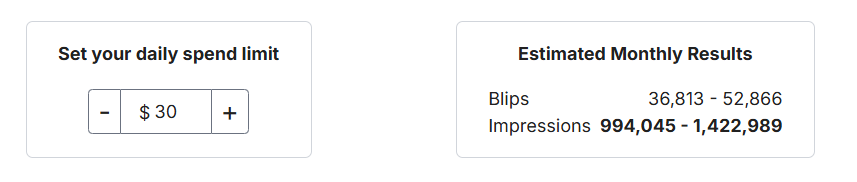
With Blip, billboard advertising in Sun Prairie is designed to fit real budgets. You choose a daily budget, and Blip only charges you when your ad actually appears as a 7.5-to-10-second “blip” on a rotating digital billboard, starting at just $0.01 per display. Pricing is dynamic, so the cost of each blip can change based on time of day, location, and advertiser demand, while Blip’s algorithm works to stretch your budget for the most reach possible.
Where can I advertise with Blip in Sun Prairie to reach commuters and local traffic?
Sun Prairie’s billboard value comes from the way local and regional travel compresses into a few major corridors. US 151 is the market’s most dependable commuter corridor, while I-39/90/94 gives us a high-speed regional reach play with selected segments commonly running in the 70,000s and 80,000s AADT. WIS 19 becomes Main Street through Sun Prairie, and it is one of the city’s most useful local-action corridors.
Why is Sun Prairie a strong billboard market for Blip?
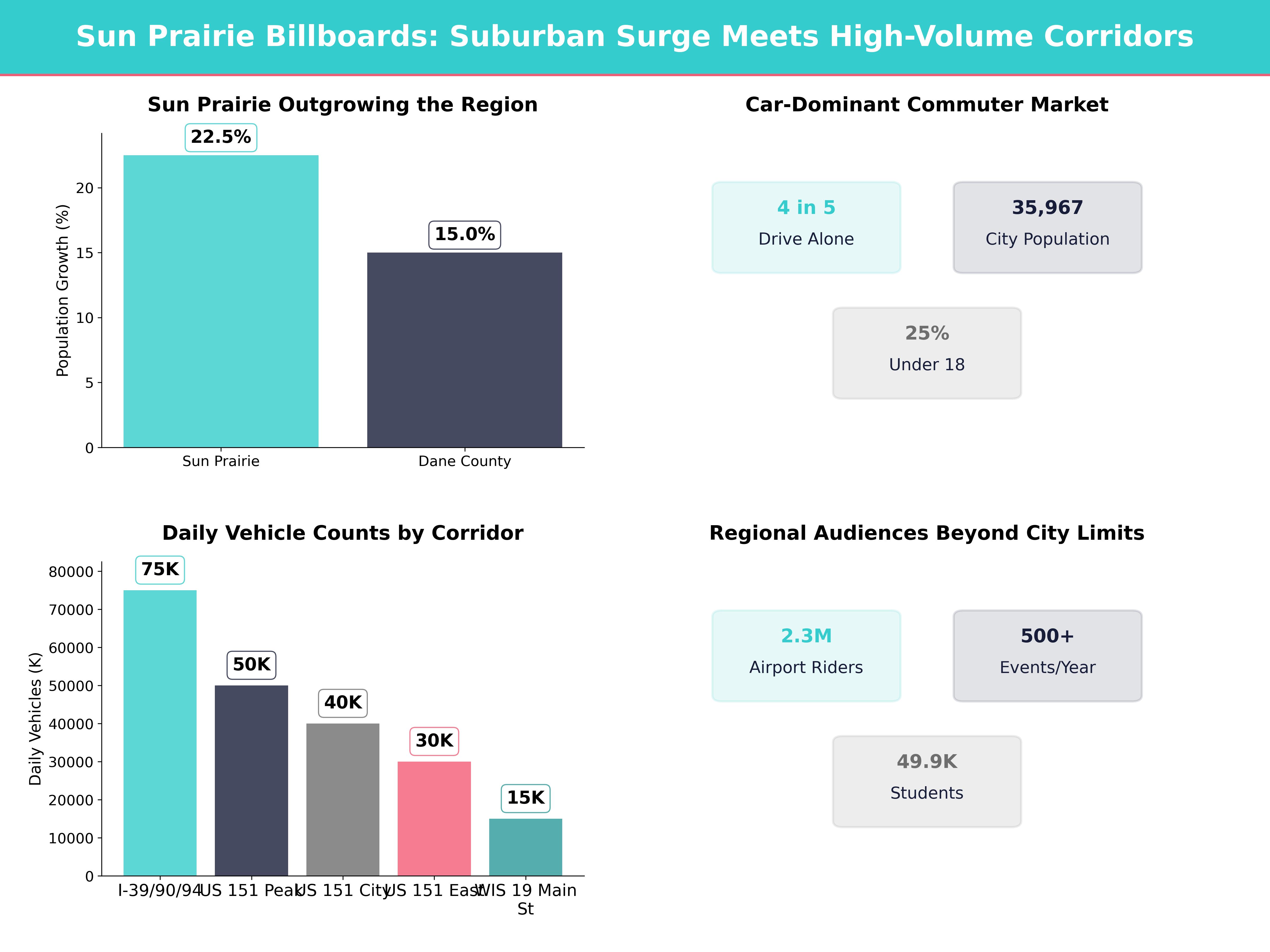
Sun Prairie gives us one of the strongest suburban billboard environments in south-central Wisconsin because it combines 22.5% population growth from 2010 to 2020, daily car commuting where about 4 in 5 workers drive alone, and steady regional traffic moving between Madison, Dane County, and the I-39/90/94 system. The city reached 35,967 residents in the 2020 census, up from 29,364 in 2010. For advertisers, that mix means we can build strong local frequency with residents while also capturing commuters, travelers, and visitors who pass through the area every day.
What kinds of businesses work well on billboards in Sun Prairie?
Roughly 1 in 4 Sun Prairie residents is under 18, which makes the market especially relevant for pediatric care, family dining, youth sports, tutoring, childcare, and entertainment. About 2 in 3 occupied homes are owner-occupied, which is useful for roofing, HVAC, remodeling, lawn care, solar, insurance, banking, and furniture brands. Sun Prairie works well because we are not limited to a single audience type, and we can reach daily commuters, fast-growing family neighborhoods, students, and regional travelers with different messaging on different corridors.
When should I run a billboard campaign in Sun Prairie with Blip?
Timing matters in Sun Prairie because the audience mix changes with weather, school schedules, local events, and regional travel patterns. Winter is a strong time for practical categories such as tires, auto service, urgent care, winter apparel, HVAC, plumbing, and insurance claims, while late August and early September are major reset moments for households. Summer gives us Sun Prairie’s broadest audience mix, and the Sun Prairie Sweet Corn Festival takes place each August.
Do I need a contract to advertise with Blip in Sun Prairie?
No, Blip has no long-term contracts or minimum commitments. You can start, pause, or stop your campaign at any time.
How fast can I launch a billboard campaign with Blip in Sun Prairie?
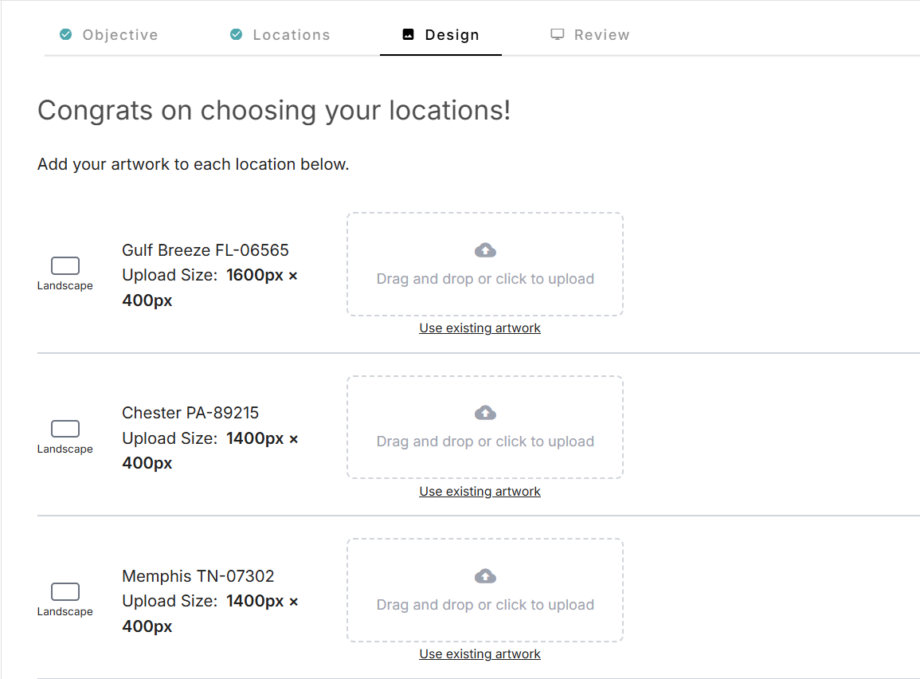
You can have your campaign live in minutes. Create a free account, select your locations, set your budget, upload your design, and start running once approved.
Where can I advertise with Blip in Sun Prairie?
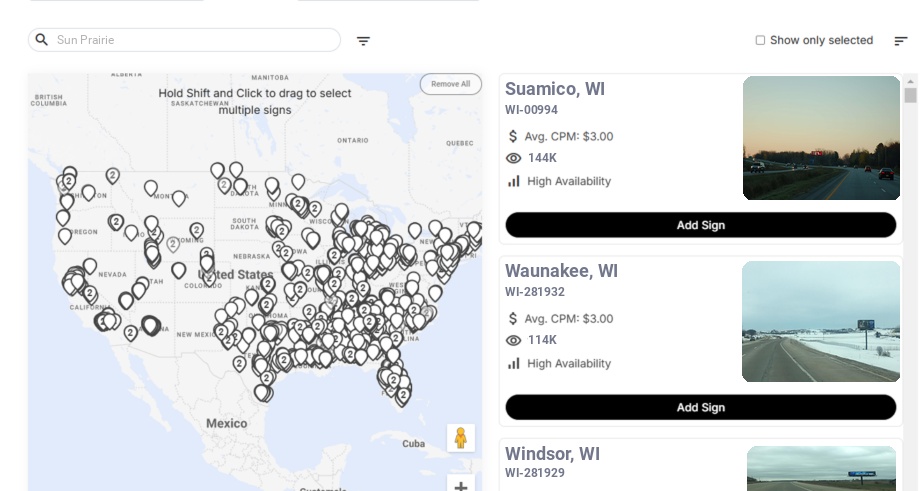
Blip has digital billboards in Sun Prairie. You can browse available locations on a map, choose the ones that fit your audience, and start advertising right away.
Still have questions? Launch a campaign in minutes — no contracts, no commitments.
Start Your CampaignSun Prairie Billboard Advertising Guide
Sun Prairie 22.5% population growth from 2010 to 2020, daily car commuting where about 4 in 5 workers drive alone, and steady regional traffic moving between Madison, Dane County, and the I-39/90/94 system, including 50,000+ vehicles per day on busy US 151 stretches and 70,000s to 80,000s AADT on key interstate segments. The city reached 35,967 residents in the 2020 census, up from 29,364 in 2010, while Dane County as a whole climbed to 561,504 residents. Sun Prairie also sits roughly 14 miles from downtown Madison, which keeps it tied to the region’s jobs, shopping, healthcare, higher education, and event economy. For advertisers, that mix means we can build strong local frequency with residents while also capturing commuters, travelers, and visitors who pass through the area every day.
Sun Prairie Market Overview
Growth, households, and local spending potential in Sun Prairie
Sun Prairie is one of Dane County’s clearest growth stories. Between 2010 and 2020, the city added 6,603 residents, which equals 22.5% growth. Over the same decade, Dane County added 73,431 residents, rising from 488,073 to 561,504, which equals 15.0% growth. When we plan billboard campaigns, that kind of population expansion matters because it usually translates into more school trips, more shopping trips, more medical visits, more home-service demand, and more repeat exposure on the same roads.
The city’s demographic profile also supports a wide range of consumer categories. Roughly 1 in 4 Sun Prairie residents is under 18 (about 25%), which makes the market especially relevant for pediatric care, family dining, youth sports, tutoring, childcare, and entertainment. About 2 in 3 occupied homes are owner-occupied, which is useful for roofing, HVAC, remodeling, lawn care, solar, insurance, banking, and furniture brands. We also benefit from the fact that Sun Prairie feels both suburban and independent, so advertisers can speak to local identity without losing access to the broader Madison trade area.
Education adds another layer of demand. The Sun Prairie Area School District serves more than 8,500 students, and the district now operates 2 comprehensive high schools, with Sun Prairie West High School 2022. That growth supports year-round traffic tied to school commuting, sports, arts, retail, and household purchases.
Commuting and economic drivers around Sun Prairie
Sun Prairie is still a car-first market, which is exactly what makes billboard advertising so effective here. Recent ACS commuting patterns indicate that about 4 in 5 workers drive alone, and roughly 1 in 14 carpool. Transit usage remains much smaller than driving, even with service from Metro Transit
The local economy also benefits from being plugged into the larger Madison region. Employers such as UW Health, SSM Health, American Family Insurance, Exact Sciences, Epic Systems, and Promega all help sustain commuter traffic across Dane County. On the east side of Madison, The American Center adds an important employment node of about 2,600 acres, which is especially relevant for Sun Prairie residents traveling west.
Sun Prairie also sits close to regional demand generators that extend audience reach beyond city residents alone. The University of Wisconsin–Madison enrolled 49,886 students in fall 2023. Dane County Regional Airport is roughly 10 miles from central Sun Prairie, and it handled more than 2.3 million passengers in 2023. The Alliant Energy Center hosts 500+ events annually, which reinforces the regional flow of visitors, vendors, exhibitors, and eventgoers. For our billboard strategy, that means Sun Prairie can support both neighborhood-level targeting and broader regional awareness campaigns.
Key Traffic Corridors Around Sun Prairie
Sun Prairie’s billboard value comes from the way local and regional travel compresses into a few major corridors. When we understand those routes, we can choose placements that match real intent, whether we want repeat commuter frequency, same-day local action, or wide regional reach.
US 151 in the Sun Prairie market
WisDOT traffic counts 50,000 vehicles per day on the busiest stretches, with some of the most active portions closer to the city running above 40,000 AADT. Segments closer to and east of the I-39/90/94 interchange still commonly remain above 30,000 AADT. This is the market’s most dependable commuter corridor because it ties Sun Prairie directly to Madison employment centers, east-side retail, healthcare, and event activity.
US 151 works especially well when we want to reach: Retail and restaurants, because commuters can act on a same-day offer once they reach Sun Prairie, East Towne Mall, or Madison’s east side; Healthcare brands, because patients frequently travel this route for appointments with systems such as UW Health and SSM Health; Employers and recruiters, because the corridor connects neighborhoods to The American Center, Madison offices, and regional job centers; and Home services, because repeated weekday exposure helps keep a local provider top of mind until a household need appears.
If our goal is reach plus frequency, US 151 usually deserves first consideration.
I-39, I-90, and I-94 near Sun Prairie
The I-39/90/94 system gives us a different kind of audience. Around Sun Prairie, selected interstate segments commonly run in the 70,000s and 80,000s AADT, making this the area’s high-speed regional reach play. This route carries long-haul freight, airport traffic, cross-metro travel, and leisure trips moving between Madison, Janesville Portage, and Wisconsin Dells.
This corridor is strongest for advertisers that benefit from broad geography or advance planning: Hotels, travel centers, and convenience brands, perform well because interstate travelers often need a stop within the next few exits; Tourism and entertainment brands, benefit from reaching weekend travelers heading toward Madison events or Wisconsin Dells leisure trips; Regional healthcare providers, can use these boards to build awareness across a wider referral area; and Manufacturing, warehousing, and logistics employers, can recruit from a larger labor shed than Sun Prairie alone.
On interstate placements, we should keep copy short, directional, and easy to process at speed.
WIS 19 and Main Street in Sun Prairie
WIS 19 becomes Main Street through Sun Prairie, and it is one of the city’s most useful local-action corridors. WisDOT count maps place commercial stretches of this route generally in the 12,000 to 18,000 AADT range, depending on the segment. Those numbers are lower than the freeway network, but the road offers slower speeds, more local intent, and stronger same-day conversion potential.
This corridor is often ideal for: Local restaurants and coffee shops, because drivers are already in an errand or meal mindset; Dental, vision, urgent care, and pediatric brands, because families are often traveling between home, school, and appointments; Banks, insurance agencies, and service businesses, because neighborhood familiarity matters; and Community events and local retail, because the message can feel more immediate and place-based.
If we want action from Sun Prairie residents instead of broad regional awareness, Main Street and WIS 19 are often where we should concentrate.
Madison-facing connectors and westbound commuter flows
The west side of Sun Prairie blends into the orbit of Madison’s east side, The American Center, Dane County Regional Airport, and major retail clusters. Even when individual feeder roads carry less traffic than US 151 or the interstate, they help us catch highly relevant movement before drivers disperse. For categories such as urgent care, auto repair, furniture, fitness, and grocery, those commuter connectors can outperform broader-reach locations because the audience is closer to a real purchasing decision.
Audience Segments We Can Reach in Sun Prairie
Sun Prairie works well because we are not limited to a single audience type. We can reach daily commuters, fast-growing family neighborhoods, students, and regional travelers with different messaging on different corridors.
Sun Prairie commuters traveling to Madison and east-side job centers
Commuters are the foundation of the market. Because about 4 in 5 workers drive alone, weekday repetition is strong. Westbound morning traffic and eastbound evening traffic are especially valuable for employers, healthcare systems, insurance providers, financial services, and subscription-based consumer brands.
These commuters are not only traveling into downtown Madison. They are also moving toward The American Center, east-side medical campuses, airport-related services, retail destinations, and office parks. That gives us room to tailor creative by direction of travel. A hiring message in the morning can feel very different from a dinner, grocery, or home-service message on the drive back.
Sun Prairie families, homeowners, and everyday local spenders
Sun Prairie’s family profile is a major reason billboard campaigns can work so consistently here. With roughly 1 in 4 residents under 18, and about 2 in 3 homes owner-occupied, the city supports steady demand for family-oriented products and local services. We can effectively reach parents making recurring trips for school, daycare, sports, shopping, and healthcare.
The Sun Prairie Area School District adds more than 8,500 student-related routines to the market, and the district’s 2 high schools create additional activity tied to sports, arts, and after-school events. Advertisers in categories such as orthodontics, tutoring, youth recreation, family restaurants, home improvement, pet care, and local banking can benefit from that repeated household movement.
Students, young adults, and workforce learners near Sun Prairie
Sun Prairie is not a classic college town, but it sits next to one of the Midwest’s biggest university audiences. UW–Madison enrolled 49,886 students in fall 2023, and Madison College adds another large commuter and workforce-training population. That matters because students, parents, faculty, staff, and recent graduates all create traffic on the east side of Madison and along Sun Prairie commuter routes.
This audience is useful for: Apartments and housing-related brands, especially near semester transitions; Food, entertainment, and healthcare brands, especially when they want east-side or airport-adjacent reach; and Employers, because college-age and early-career talent often travel through these corridors.
Regional travelers, eventgoers, and airport users around Sun Prairie
Sun Prairie also benefits from pass-through and destination traffic. Dane County Regional Airport handled more than 2.3 million passengers in 2023. The Alliant Energy Center hosts 500+ events each year. Destination Madison continuously promotes conventions, sports, festivals, and leisure travel across the county.
For us, this means billboards around Sun Prairie can do more than serve local residents. They can also reach: Visitors arriving by air, who may need hotels, transportation, attractions, or restaurants; Event attendees, who are often in an active decision mode; and Regional leisure travelers, especially on summer weekends and holiday periods.
Seasonal and Timing Opportunities in Sun Prairie
Timing matters in Sun Prairie because the audience mix changes with weather, school schedules, local events, and regional travel patterns. If we align creative and budgets with those patterns, we can often make the same inventory work much harder.
Winter campaigns in Sun Prairie
Winter in south-central Wisconsin changes driving behavior and message relevance. From roughly November through March, practical categories such as tires, auto service, urgent care, winter apparel, HVAC, plumbing, and insurance claims become especially timely. Local creative also benefits from the fact that in December, sunset arrives before 4:30 p.m., which increases the importance of bright, high-contrast nighttime readability.
Sun Prairie’s local identity gives us an additional winter hook. Groundhog Day February 2 is unusually relevant here because Sun Prairie is known for its groundhog tradition. For community brands, entertainment venues, restaurants, and retailers, that creates a small but very local moment when hometown-themed creative can feel more memorable.
Spring and school-driven timing in Sun Prairie
Spring is a strong planning season. Households start thinking about home improvement, landscaping, patio season, youth sports, tax refunds, and warm-weather purchases. We can also time campaigns around district milestones, graduations, and family scheduling as the school year winds down.
For local advertisers, it often helps to launch 2 to 3 weeks before a decision window. A spring HVAC tune-up ad, a summer camp promotion, or a graduation dining message tends to work better when people see it repeatedly before they need to act.
Summer travel and festival opportunities around Sun Prairie
Summer gives us Sun Prairie’s broadest audience mix. The Sun Prairie Sweet Corn Festival takes place each August, and community activity rises noticeably during festival season. Angell Park and other local recreation draw regular warm-weather traffic, and the broader region sees more driving toward Madison events, lakes, and weekend trips north.
This is also the season when interstate and US 151 placements become more valuable for travel-oriented categories. Brands tied to food, entertainment, family attractions, hotels, convenience retail, and regional healthcare can all benefit when summer leisure traffic increases. If our audience includes day-trippers heading toward Wisconsin Dells, summer is especially important.
Back-to-school and holiday timing in Sun Prairie
Late August and early September are major reset moments for Sun Prairie households. That is when routines around schools, commuting, sports, after-school care, and family shopping tighten again. Campaigns for pediatric care, tutoring, optical, quick-service dining, grocery, and family entertainment often fit well in this window.
The holiday stretch from November through December also matters. Shopping traffic rises, airport-related trips increase, and event traffic across Madison, Monona Terrace, and the Alliant Energy Center brings in additional demand. We should think of this period as both a retail opportunity and a travel opportunity.
Billboard Design Tips for the Sun Prairie Market
Sun Prairie does not respond best to generic “anytown USA” billboard creative. The strongest work usually reflects the area’s commuter patterns, suburban family identity, and Madison-connected economy.
Use Sun Prairie-specific relevance instead of generic metro copy
Creative works better here when it clearly answers why a Sun Prairie driver should care now. Phrases such as “Next exit,” “Near The American Center,” “Open weekends in Sun Prairie,” and “East-side care without the downtown hassle” fit the local travel context. The city is close enough to Madison that convenience framing matters, but it also has enough identity that explicitly naming Sun Prairie can increase relevance.
Design for fast roads and short viewing windows in Sun Prairie
On US 151 and I-39/90/94, we should design for speed. Because digital boards are viewed quickly, copy is most effective when it stays to about 6 to 8 words beyond the brand and call to action. Large numerals, one dominant image, and a clear directional cue usually outperform more descriptive copy.
That matters even more in winter. With sunset before 4:30 p.m. in December, low-contrast palettes can disappear into the evening commute. Bright whites, yellows, reds, and saturated blues generally read better than muted earth tones after dark.
Lean into family utility, trust, and practicality in Sun Prairie
Sun Prairie is growing through households, not just through transient traffic. That means local audiences often respond well to messages centered on convenience, value, trust, and family benefit. Home-service brands should emphasize reliability, financing, or emergency response. Healthcare brands should emphasize same-day care, weekend hours, or proximity. Restaurants and retail should emphasize ease, family fit, or immediate offers.
We should also remember that Sun Prairie sits at the intersection of suburban family life and Madison’s professional economy. Creative that feels polished, useful, and straightforward tends to fit better than something overly ironic or abstract.
Reflect local culture carefully in Sun Prairie creative
Seasonal visual cues can help. In late summer, imagery that nods to corn, prairie landscapes, fairs, or outdoor gatherings can feel locally grounded. In winter, subtle references to Groundhog Day or Wisconsin cold-weather routines can make an ad feel timely. We just need to keep those references authentic. Local pride works best when it supports the offer instead of replacing it.
Regional Strategies Around Sun Prairie
A strong Sun Prairie campaign usually works best when we separate the geography into functional sub-areas instead of treating everything as one undifferentiated suburb.
West and southwest Sun Prairie toward Madison
This is where we focus when the goal is commuter reach, recruiting, healthcare, airport services, and east-side retail. Boards facing Madison-bound traffic are well suited for weekday awareness and morning urgency. This is also the best zone when we want to connect with The American Center, Dane County Regional Airport, and Madison’s east-side employment clusters.
Central Sun Prairie and Main Street retail zones
This is where we focus when we want local action. Main Street, WIS 19, and nearby commercial corridors are best for family dining, clinics, schools, auto care, grocery, banking, and local events. If our business depends on Sun Prairie residents converting soon, these boards can be more valuable than a higher-traffic interstate board with a less local audience.
Interstate and eastbound regional reach from Sun Prairie
This is where we focus when our trade area stretches beyond city limits. Eastbound and northbound traffic can help us reach people moving toward Columbus Beaver Dam Portage, and Wisconsin Dells. This strategy makes sense for travel brands, destination retail, broad healthcare systems, attractions, and employers recruiting from a wider geography.
Using Blip Tools in Sun Prairie
Blip works especially well in Sun Prairie because the market has clear daypart patterns and clear corridor differences. We can use that structure to make campaigns more efficient without overcommitting budget.
Match Sun Prairie dayparts to real travel behavior
For commuter-oriented messages, we should usually prioritize 6–9 a.m. and 4–7 p.m. on US 151 and Madison-facing routes. For restaurants, clinics, and service businesses, 11 a.m.–1 p.m. can be valuable on local commercial corridors because lunch, errands, and appointment-setting often happen then. On Fridays in summer, it can also make sense to shift more weight to the afternoon as weekend travel builds.
Test Sun Prairie corridor hypotheses quickly
Instead of assuming one board is best, we can test several Sun Prairie-area boards at once and compare which route produces the strongest response. A good local approach is to run 2 to 4 placements that represent different travel contexts, such as one commuter board, one local retail board, and one regional travel board. After 7 to 14 days, we can review performance, adjust artwork, and move spend toward the best fit.
Refresh creative for Sun Prairie seasons and sub-audiences
Sun Prairie’s seasonal rhythm makes creative rotation useful. We can run one version for commuters, another for families, and a third for summer travelers or festival audiences. Blip’s artwork tools make it easier to localize messages quickly, which is especially helpful when we want to swap creative around school openings, holiday shopping, or the August Corn Fest window.
Getting Started with Billboard Rental in Sun Prairie
Renting a billboard in Sun Prairie works best when we begin with a specific business goal instead of trying to reach everyone at once. The city offers several different audience environments, and the right location depends on whether we want local households, commuters, or regional pass-through traffic.
Start with the goal before we choose Sun Prairie inventory
If we are promoting a local dental office, daycare, or restaurant, we should lean toward Main Street and neighborhood commercial routes. If we are promoting a hospital system, large retailer, or employer, we should look first at US 151 and the interstate approaches. If we are promoting a hotel, attraction, or airport-related service, interstate-oriented boards usually make more sense.
That is one of the biggest advantages of using Blip instead of a more traditional billboard buying process. We do not have to begin with a sales package and then force our goal to fit the package. We can begin with the actual objective, review the map, and build around the roads that serve that objective.
Evaluate each Sun Prairie billboard with practical location questions
Before we rent a Sun Prairie billboard, we should ask a few specific questions: Does the board face westbound morning traffic, eastbound evening traffic, or all-day local traffic? Is the board positioned before a useful decision point, such as an exit, retail cluster, or service area? Are drivers moving at interstate speed, commuter speed, or local errand speed? Does the surrounding land use support our category, such as schools, neighborhoods, offices, shopping, or travel services? Can we connect the message to something actionable, such as a nearby exit, a short drive time, a same-day offer, or a hiring message?
Those questions matter more than a simple “more traffic is better” mindset. In Sun Prairie, the best board is often the one that matches intent, not just the one with the biggest raw number.
Launch, learn, and scale in Sun Prairie
We usually recommend starting with a focused test, measuring what happens, and then scaling the winners. In practice, that means using trackable offers, branded search monitoring, promo codes, landing pages, or store-visit indicators to see which routes are producing lift. After the first 1 to 2 weeks, we can usually see whether the campaign is better aligned with commuters, local families, or regional travelers.
Sun Prairie rewards that disciplined approach. The city has enough traffic diversity to let us test intelligently, but it is compact enough that we can still learn quickly. When we combine local knowledge, corridor-specific placement, and flexible execution, billboard rental in Sun Prairie becomes much more approachable than the old model of long negotiations and fixed commitments.