Billboards in Menomonee Falls, WI
No Minimum Spend. No Long-Term Contracts. Just Results.
Trusted by Leading Brands


Billboard advertising
in Menomonee Falls has never been easier
How much is a billboard in Menomonee Falls?
Why Choose Blip for Billboard Advertising in Menomonee Falls
-
Blip lets Menomonee Falls brands launch fast on I-41/US 45 and County Line Road, reaching 100,000+ daily vehicles without sales hassles.
-
Set a Menomonee Falls daily budget and let Blip stretch it across commuter peaks on Appleton Avenue, Main Street, and Pilgrim Road.
-
No contracts in Menomonee Falls means you can test back-to-school, holiday, or State Fair traffic, then pause or pivot anytime.
-
Use Blip's real-time analytics in Menomonee Falls to see what works on freeway versus local routes and adjust quickly.
-
Create Menomonee Falls-ready ads with Blip's tools, adding 'off I-41' or 'near County Line' for clear, local calls to action.
Frequently Asked Questions About Billboard Advertising in Menomonee Falls
How much does a billboard cost in Menomonee Falls with Blip?
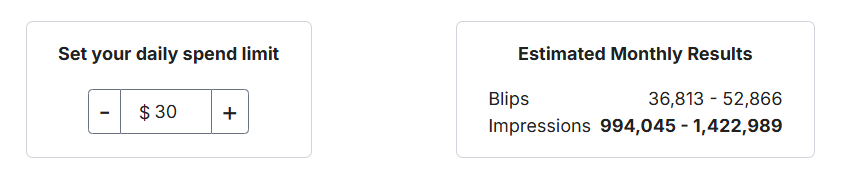
Each “blip” is a 7.5-to-10-second spot, with pricing starting at just $0.01 per display. Cost per blip changes based on time of day, location, and advertiser demand, so Blip works to stretch your budget and maximize reach without locking you into contracts or minimum spend requirements. You set a daily budget, and only pay when your ad actually displays.
Where can I advertise with Blip in Menomonee Falls?
I-41/US 45 is the dominant advertising spine for Menomonee Falls and commonly carries 100,000-plus vehicles per day in and around the village. County Line Road near the I-41 interchange often exceeds 30,000 vehicles per day, and Appleton Avenue, Main Street, and Pilgrim Road generally range from about 10,000 to 20,000-plus vehicles per day. These routes work well for both regional reach and local, neighborhood-scale campaigns.
Why is Menomonee Falls a good place for billboard advertising?
Menomonee Falls combines a sizable suburban population of 38,527 residents with steady regional movement on I-41/US 45. The village grew from 35,626 residents in 2010 to 38,527 in 2020, which signals new households and sustained residential demand. It also sits about 20 miles from downtown Milwaukee and is part of a broader economic corridor in southeastern Wisconsin.
When is the best time to run Blip billboards in Menomonee Falls?
Commuter windows are especially useful in Menomonee Falls, with morning traffic from about 6:00 to 9:00 a.m., lunch visibility from about 11:00 a.m. to 1:00 p.m., and evening traffic from about 3:00 to 7:00 p.m. Summer, back-to-school season, and the holiday period are also strong timing opportunities because travel and spending patterns shift noticeably. Blip also lets advertisers build seasonal bursts without locking themselves into a static long-term schedule.
What kind of audience can I reach in Menomonee Falls with Blip?
Menomonee Falls is a classic suburban family market with 4 elementary schools, 1 middle school, and 1 high school, which supports recurring parent and household traffic. The broader county commute pattern is dominated by drive-alone commuting above 80%, so many working adults are on the road every weekday. The market also includes workers in retail, healthcare, manufacturing, and corporate services, plus regional students and weekend event traffic.
Do I need a contract to advertise with Blip in Menomonee Falls?
No, Blip has no long-term contracts or minimum commitments. You can start, pause, or stop your campaign at any time.
How fast can I launch a billboard campaign with Blip in Menomonee Falls?
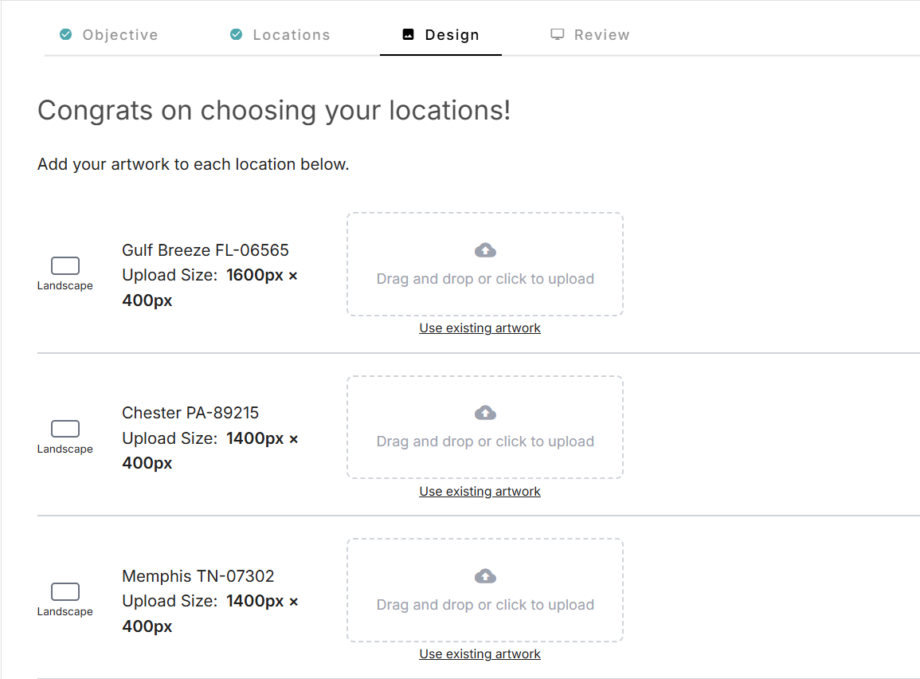
You can have your campaign live in minutes. Create a free account, select your locations, set your budget, upload your design, and start running once approved.
Where can I advertise with Blip in Menomonee Falls?
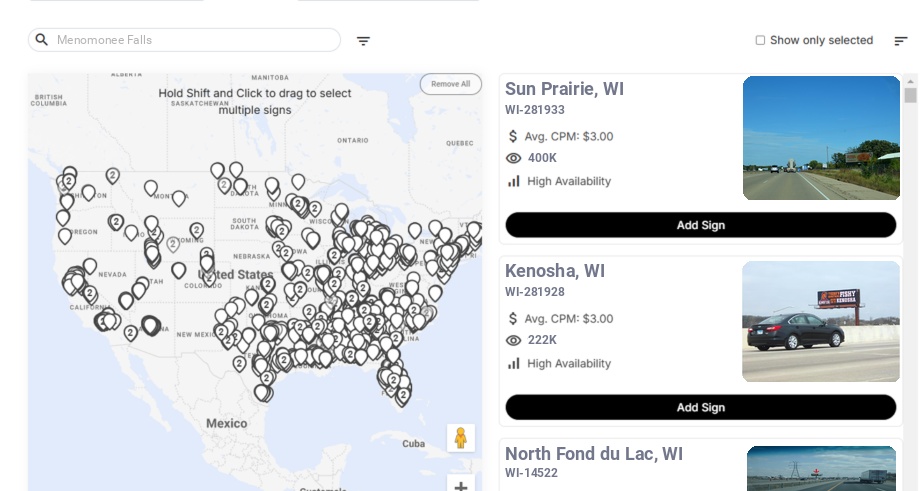
Blip has digital billboards in Menomonee Falls. You can browse available locations on a map, choose the ones that fit your audience, and start advertising right away.
Still have questions? Launch a campaign in minutes — no contracts, no commitments.
Start Your CampaignMenomonee Falls Billboard Advertising Guide
Menomonee Falls 38,527 residents with steady regional movement on I-41/US 45, which carries 100,000-plus vehicles per day in and around the village. State demographic records from the Wisconsin Department of Administration place the Village of Menomonee Falls 38,527 residents in 2020, and the community sits roughly 20 miles from downtown Milwaukee Waukesha County economy, and the pull of metro Milwaukee events, and we get a market where repeated roadside exposure can build awareness quickly. For brands that want families, professionals, shoppers, and event traffic in one plan, Menomonee Falls is an efficient place to advertise.
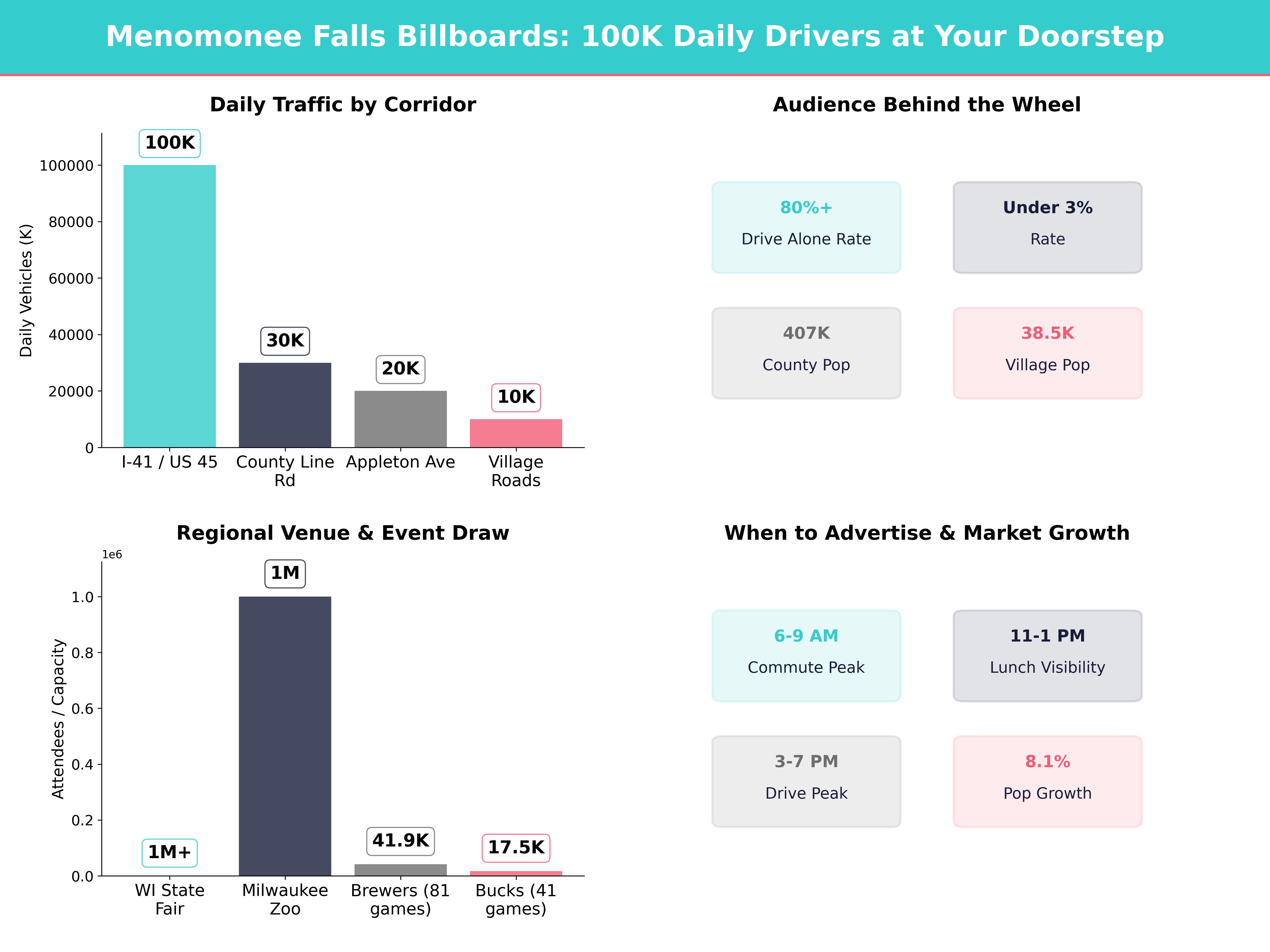
Menomonee Falls Market Overview
Menomonee Falls is one of Wisconsin’s largest villages, and its growth story matters for advertisers. The village increased from 35,626 residents in 2010 to 38,527 in 2020, which means it added 2,901 people and grew by about 8.1% during the decade. That is meaningful growth for an established suburb, because it signals new households, sustained residential demand, and a market that is still adding buyers rather than simply turning over the same audience.
The village also benefits from being part of a broader economic corridor that includes Milwaukee Brookfield Germantown Sussex Waukesha County with roughly 407,000 residents. Organizations like the Waukesha County Center for Growth Milwaukee 7
One of the clearest local signals is Kohl’s $17.5 billion in net sales for fiscal 2023. Even if we are not targeting Kohl’s directly, the presence of a retailer with more than 1,100 stores nationally reinforces Menomonee Falls as a place where retail, office, and consumer decision-making all overlap. That matters for billboards because the best outdoor markets are not just populated; they are economically active.
From a mobility standpoint, Menomonee Falls remains highly car oriented. Regional data from the Southeastern Wisconsin Regional Planning Commission and labor market reporting from the Wisconsin Department of Workforce Development show the larger Waukesha County commute pattern is dominated by driving, with drive-alone commuting consistently above 80% and county unemployment recently below 3%. For us, that combination is ideal. It means a large share of working adults are on the road every weekday, and many of them are moving through the same corridors often enough for billboard frequency to do real work.
Key Traffic Corridors for Digital Billboards in Menomonee Falls
Menomonee Falls travel patterns are concentrated on a few major corridors. When we understand which roads carry regional commuters versus local errand traffic, we can match each billboard to the right objective.
I-41/US 45 in Menomonee Falls
I-41/US 45 is the dominant advertising spine for Menomonee Falls. WisDOT traffic counts in and around the village commonly put this freeway corridor in the 100,000-plus vehicles per day range, which gives us large-scale reach across the northwestern Milwaukee suburbs. This route connects Menomonee Falls to Milwaukee Brown Deer Germantown
- Regional retail and dining brands, because they can build broad awareness across multiple suburbs in one buy.
- Healthcare systems and urgent care providers, because commuters often need a nearby option they can remember on the drive home.
- Recruitment campaigns, because freeway traffic captures office workers, skilled tradespeople, and shift employees repeatedly.
This is the corridor we should prioritize when our goal is top-of-funnel awareness, broad brand recognition, or metro-area recruiting.
County Line Road in Menomonee Falls
County Line Road Milwaukee County 30,000 vehicles per day, which makes this a strong zone for retailers, restaurants, banks, fitness brands, and home services that want people making practical daily decisions. Because the road literally marks a county boundary, it also catches cross-market travel from Brown Deer River Hills
For local advertisers, County Line Road is valuable because the audience is often closer to the point of purchase than freeway commuters are. We can use these placements for offers, exits, or “minutes away” messages that move people from awareness to action faster.
Appleton Avenue, Main Street, and Pilgrim Road in Menomonee Falls
Inside the village, Appleton Avenue Main Street Pilgrim Road 10,000 to 20,000-plus vehicles per day, with Appleton Avenue often landing above 20,000 on busier stretches. These are not just transportation routes; they are routine-life routes. People use them for school drop-offs, grocery trips, healthcare visits, restaurant stops, and errands.
This group of roads is especially effective for:
- Local retail, because shoppers are already in a decision-making mode.
- Family services, because parents travel these roads repeatedly during the week.
- Real estate, financial services, and community institutions, because the audience is highly local and highly relevant.
If we want Menomonee Falls residents to remember a business name and act within the next few days, these village routes are often the best fit.
I-94 Access Near Menomonee Falls
Menomonee Falls does not sit directly on I-94, but nearby access through Brookfield Wauwatosa 100,000 vehicles per day, which gives us another layer when we want Menomonee Falls exposure to overlap with west-suburban or downtown-bound travel. This pairing is useful for destination retailers, entertainment venues, medical groups, and higher education brands that draw from both Waukesha County and Milwaukee County.
Menomonee Falls Audience Segments We Can Reach
Menomonee Falls is not a one-audience market. It works because several strong segments overlap in a relatively compact geography.
Menomonee Falls Commuters and Cross-County Professionals
The first segment is the daily commuter base. With drive-alone commuting above 80% in the wider county pattern and freeway traffic above 100,000 on I-41/US 45, we can count on regular weekday repetition. These commuters include office professionals, healthcare workers, retail staff, financial services employees, and business owners moving between Menomonee Falls, Milwaukee Brookfield Germantown
This audience responds well to convenience, trust, and proximity. We do not need to overcomplicate the message. We simply need to show why our brand is relevant to the next stop in their day.
Menomonee Falls Families and Established Households
Menomonee Falls is a classic suburban family market. The Menomonee Falls School District includes 4 elementary schools, 1 middle school, and 1 high school, which gives us a useful proxy for the village’s family orientation. That school structure supports recurring parent traffic, youth activity traffic, and household purchase cycles tied to groceries, healthcare, extracurriculars, home improvement, insurance, and automotive services.
For advertisers, this segment rewards steady visibility more than flashy one-off impressions. If we keep appearing on the roads families already use, we become familiar, and familiarity matters in suburban purchase decisions.
Menomonee Falls Workers in Retail, Healthcare, and Industry
Menomonee Falls is not only residential. It also has a solid daytime worker base. Kohl’s Froedtert Health gives the village healthcare presence, and the broader Waukesha County economy brings in manufacturing, warehousing, and service-sector employment. That mix creates useful billboard opportunities for recruiting, B2B services, staffing firms, banking, workwear, industrial suppliers, and fast-casual dining.
This audience is especially important for dayparting. Morning, lunch, and late-afternoon windows can each serve different employer categories and different worker routines.
Menomonee Falls Students and Young Adults in the Greater Milwaukee Orbit
Menomonee Falls is also close enough to major campuses that student and young-professional spillover matters. The University of Wisconsin-Milwaukee enrolls roughly 23,000 students, and Marquette University enrolls about 11,000. Add nearby institutions like Waukesha County Technical College and Concordia University Wisconsin, and we get a meaningful regional student population within a roughly 20- to 30-mile drive.
This matters for advertisers in apartments, quick-service restaurants, entertainment, healthcare, internships, and recruiting. We should not think of Menomonee Falls as isolated from Milwaukee’s education market. It sits close enough to benefit from it.
Menomonee Falls Tourists, Eventgoers, and Weekend Traffic
Weekend and seasonal traffic expands the audience again. Wisconsin State Fair Park hosts the Wisconsin State Fair, an 11-day event that typically draws more than 1 million attendees. American Family Field hosts 81 regular-season Milwaukee Brewers home games in a ballpark with a listed capacity of 41,900. Fiserv Forum seats about 17,500 for basketball and gives the Milwaukee Bucks 41 regular-season home games, plus concerts and special events. The Milwaukee County Zoo 1 million visits in a typical year.
Menomonee Falls sits close enough to these regional draws that it can capture pre-event, post-event, and weekend discretionary traffic. That is a big reason hospitality, dining, entertainment, and destination retail campaigns can perform well here.
Seasonal and Timing Opportunities in Menomonee Falls
Timing matters in Menomonee Falls because the market’s rhythms change visibly by season. When we align our campaign windows with how people actually move, we make each impression work harder.
Spring in Menomonee Falls
Spring is a strong setup period for home services, landscaping, remodeling, healthcare, and outdoor recreation brands. As weather improves, local travel becomes more discretionary, and residents start planning projects they postponed during winter. This is a good time for us to emphasize roofing, windows, siding, lawn care, deck builders, orthopedic care, allergy relief, and spring retail launches.
We should also remember that spring creates more local circulation on roads like Appleton Avenue, Main Street, and Pilgrim Road, where traffic generally ranges from 10,000 to 20,000-plus vehicles per day. That makes village-focused digital inventory especially useful for neighborhood service brands.
Summer in Menomonee Falls
Summer expands the audience the most. Between the 11-day Wisconsin State Fair, the Brewers’ 81-game home schedule, concerts at Fiserv Forum, zoo trips, festivals, golf, and vacation traffic, we get more non-routine movement and more discretionary spending. Menomonee Falls is well positioned for brands that want to intercept people moving between suburban homes and Milwaukee attractions.
For summer campaigns, we often get the best results by increasing frequency on Thursdays through Sundays and by emphasizing convenience. Messages like “On the way,” “Next exit,” or “Before the game” fit real travel behavior in this market.
Fall in Menomonee Falls
Fall is a reset season for local spending. The return to school across 4 elementary schools, 1 middle school, and 1 high school brings back highly structured weekly routines. College traffic also intensifies again across the metro, with approximately 23,000 students at UWM and about 11,000 at Marquette reestablishing classes, events, and urban-suburban movement.
This is an excellent season for healthcare, tutoring, youth activities, family dining, auto service, financial planning, and recruiting. Fall also tends to be one of the best moments for local credibility messaging, because households are settling back into regular schedules and making longer-term decisions.
Winter and Holiday Timing in Menomonee Falls
Winter pushes Menomonee Falls drivers back into highly repetitive patterns, which makes frequency especially valuable. Holiday retail, gift purchases, healthcare, HVAC, tires, collision repair, and urgent services all become more relevant. Menomonee Falls also carries a strong retail association through Kohl’s $17.5 billion in fiscal 2023 net sales and operates more than 1,100 stores, so seasonal shopping messages feel natural in the market.
For timing, we should pay close attention to commuter windows. Morning runs from about 6:00 to 9:00 a.m., lunch visibility from about 11:00 a.m. to 1:00 p.m., and evening traffic from about 3:00 to 7:00 p.m. are especially useful. In winter, those evening hours matter even more because darkness increases the visual strength of digital boards.
Menomonee Falls Billboard Design Tips for the Local Market
Creative that works in Menomonee Falls usually feels practical, trustworthy, and geographically aware. We do not need to force an urban tone into a suburban market.
Use Menomonee Falls Place Cues
Local relevance matters here. Copy that mentions “Menomonee Falls,” “County Line,” “Main Street,” “Pilgrim,” or “off I-41” can feel more immediate than generic metro wording. Even a simple distance marker like “Next 2 exits” or “Just 5 minutes ahead” can outperform a broad branding line when the goal is store traffic or appointments.
This market rewards clarity. If residents can picture where we are, they are more likely to act.
Design for Fast Freeway Reads in Menomonee Falls
On I-41/US 45, we should assume high-speed viewing. That means short copy, strong contrast, and a single takeaway. In practice, that often means 6 to 8 words on the main line, one logo, and one action. Menomonee Falls commuters do not need a paragraph. They need a brand name, a reason to care, and a location cue.
High-contrast palettes also help because southeastern Wisconsin has long gray-weather stretches and early winter sunsets. Deep blues, clean whites, dark greens, and strong accent colors generally cut through better than soft pastel treatments on commuter routes.
Match Menomonee Falls Values in the Imagery
Menomonee Falls is suburban, established, and family oriented. Creative that signals reliability, health, savings, quality, and convenience usually feels more native here than edgy or abstract art direction. We should lean into clean storefront imagery, recognizable products, friendly faces, home-focused visuals, and clear service outcomes.
For local brands, authenticity often beats polish. A real product shot, a visible address cue, or a straightforward service promise can be more persuasive than a concept-heavy billboard.
Connect Menomonee Falls to the Greater Milwaukee Identity
Because Menomonee Falls sits inside the Milwaukee orbit, regional cues can help when used carefully. Sports-season colors, event tie-ins, or “Before the Brewers game” style messaging can work, especially in summer. We simply need to keep the message anchored to the actual route behavior of Menomonee Falls drivers rather than treating the village like downtown Milwaukee.
Regional Strategies Around Menomonee Falls
A smart Menomonee Falls campaign usually works better when we divide the area into sub-markets instead of treating every board the same.
Menomonee Falls Village Core
The village core around Appleton Avenue, Main Street, and nearby retail corridors is where we should focus when we want high local relevance. This is the right zone for restaurants, dental offices, gyms, chiropractors, financial advisors, childcare, real estate teams, and neighborhood retailers. These boards are less about broad awareness and more about becoming part of a resident’s weekly routine.
Menomonee Falls Freeway Interchanges
The I-41/US 45 interchanges give us Menomonee Falls reach plus regional reach. We should use these placements for big-category brands, destination shopping, healthcare systems, colleges, entertainment venues, and recruiting. If our customer will travel 10 to 25 miles for the offer, freeway inventory is usually the better fit.
South of Menomonee Falls Toward Milwaukee County
The southern edge of the market matters because it pulls in drivers from Brown Deer River Hills Milwaukee
West and Northwest of Menomonee Falls
The western and northwestern edges connect Menomonee Falls to Sussex Germantown Brookfield
Using Blip Tools in Menomonee Falls
Blip’s strengths line up well with how Menomonee Falls works. We do not need a rigid, one-size-fits-all billboard plan here.
We Can Daypart Menomonee Falls Around Actual Traffic Behavior
Because Menomonee Falls has clear commuter peaks, we can concentrate spend in windows like 6:00 to 9:00 a.m., 11:00 a.m. to 1:00 p.m., and 3:00 to 7:00 p.m. instead of buying every hour equally. That is especially useful for commuter services, healthcare, restaurant lunch traffic, and evening retail.
We Can Test Menomonee Falls Creative by Corridor
Blip makes it practical for us to run one creative version on I-41 and another on local roads. For example, we can use a broad brand message on freeway boards and a location-forward message on Appleton Avenue or County Line Road. Real-time analytics help us see which corridor is doing the better job for our objective.
We Can Build Menomonee Falls Seasonal Bursts
Menomonee Falls has obvious event windows, including summer sports, the 11-day State Fair period, back-to-school, and holiday retail. Blip lets us increase pressure during those windows without locking ourselves into a static long-term schedule. That flexibility is helpful in a market where demand changes noticeably by season.
We Can Localize Menomonee Falls Artwork Quickly
Blip’s artwork tools are useful in a place like Menomonee Falls because small localization touches matter. We can easily produce variants that mention “Menomonee Falls,” “off I-41,” “near County Line,” or “minutes from Main Street” without rebuilding the whole campaign from scratch.
Getting Started With Billboard Rental in Menomonee Falls
Starting a Menomonee Falls billboard campaign is easier when we begin with geography and objective rather than inventory alone.
Define the Menomonee Falls Goal First
We should first decide whether we want awareness, foot traffic, appointments, or recruiting. If the goal is local store traffic, a 5- to 10-mile trading area around Menomonee Falls often makes sense. If the goal is broader regional demand, we may want a 15- to 25-mile reach that includes Milwaukee Brookfield Germantown Sussex
Choose Menomonee Falls Boards Based on Route Fit
The best billboard is the one that sits on the right route for the audience. In Menomonee Falls, that usually means asking four practical questions:
- Is the board on a commuter route or an errand route? The answer changes the kind of message we should run.
- How close is the board to our destination? A local business often benefits from a “next exit” or “minutes away” setup.
- Which direction of travel matters most? Morning inbound traffic and evening outbound traffic can perform very differently.
- Do we need broad reach or local intent? Freeway boards and village-core boards solve different problems.
Start Small and Learn in Menomonee Falls
We often learn quickly by launching with 2 or 3 strategically different boards for 2 to 4 weeks. One placement can cover regional freeway traffic, one can cover a village retail route, and one can test a cross-county connector like County Line Road. That kind of structure helps us compare broad awareness against local action and then shift spend accordingly.
Why Blip Simplifies Menomonee Falls Billboard Rental
Traditional billboard buying in markets like Menomonee Falls can feel slower than it needs to be. We may have to wait for availability, commit to long terms, or work through a sales process before seeing options clearly. Blip simplifies that. We can browse boards on a map, set a budget that fits our goal, upload artwork, and adjust timing without committing to a fixed contract. Because pricing is pay-per-play and starts at $0.01 per display, we can test thoughtfully rather than overcommitting. Each digital ad display is only 7.5 to 10 seconds, so the creative needs to be tight, but the platform makes it easy for us to refine and relaunch fast.
For businesses that want Menomonee Falls visibility without traditional friction, that matters. We can move from idea to live campaign quickly, align placements to real local traffic patterns, and keep optimizing as we learn which routes, times, and messages produce the best results.