Billboards in Waunakee, WI
No Minimum Spend. No Long-Term Contracts. Just Results.
Trusted by Leading Brands


Billboard advertising
in Waunakee has never been easier
How much is a billboard in Waunakee?
Why Choose Blip for Billboard Advertising in Waunakee
-
Blip lets you launch in Waunakee in minutes and target WI 113 commuters heading to Madison or home.
-
No contracts in Waunakee means you can test WI 19 and scale up during school and Badger game traffic.
-
Use Blip's dayparting in Waunakee to hit 6-9 a.m. southbound commuters and 3-6:30 p.m. return trips.
-
Waunakee campaigns get real-time analytics, so you can shift spend as corridor traffic changes with expo and tourism seasons.
-
Blip's creative tools help Waunakee ads stay bold and readable for parents, students, and drive-by shoppers on repeat routes.
Frequently Asked Questions About Billboard Advertising in Waunakee
How much does a billboard cost in Waunakee with Blip?
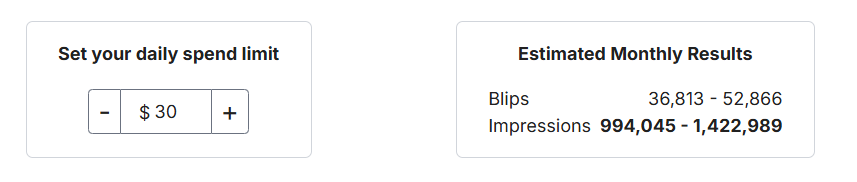
With Blip, billboard advertising in Waunakee can fit a wide range of budgets because you only pay when your ad actually appears. Pricing starts at just $0.01 per display. Your daily budget guides Blip’s algorithm as it bids for open ad slots, and the cost per blip can change based on time of day, location, and advertiser demand.
Where can I advertise with Blip in Waunakee to reach local commuters?
Wisconsin Highway 113 is Waunakee’s signature north-south route, and Wisconsin Department of Transportation traffic maps generally place Waunakee-area segments in roughly the 10,000 to 15,000 vehicles per day range. Wisconsin Highway 19 is the other essential Waunakee route, with village approaches commonly in the 8,000 to 12,000 vehicles per day range. These corridors work well for reaching southbound morning commuters, northbound evening commuters, and daytime errand traffic.
What kind of audience can Blip reach in Waunakee?
Waunakee is a classic household decision-maker market, and the Waunakee Community School District serves 4,000+ students. That means there is a large concentration of families making ongoing decisions about healthcare, food, enrichment, tutoring, sports, insurance, and home services. Waunakee also sits close enough to Madison to benefit from the constant churn around UW–Madison and UW Athletics.
Is Waunakee good for billboard advertising during school season?
Late summer and early fall are especially valuable in Waunakee because family routines tighten quickly. With 4,000+ students in the Waunakee Community School District, August and September bring sharp increases in routine travel for drop-offs, activities, and commuting. We usually like heavier schedules from 6:00 to 9:00 a.m. and 2:30 to 6:00 p.m. during this period.
Can I use Blip to advertise in Waunakee and the greater Madison area?
Yes, Waunakee gives us immediate access to the larger Madison economy, and Blip can help separate local frequency from metro reach. For broad awareness campaigns, US 151 on the Madison side commonly runs in the 50,000 to 70,000 vehicles per day range, and the Beltline regularly exceeds 100,000 vehicles per day, with some segments around 150,000. These corridors help Waunakee advertisers reach people moving between downtown Madison, Sun Prairie, Middleton, the east side, the west side, and major venues.
Do I need a contract to advertise with Blip in Waunakee?
No, Blip has no long-term contracts or minimum commitments. You can start, pause, or stop your campaign at any time.
How fast can I launch a billboard campaign with Blip in Waunakee?
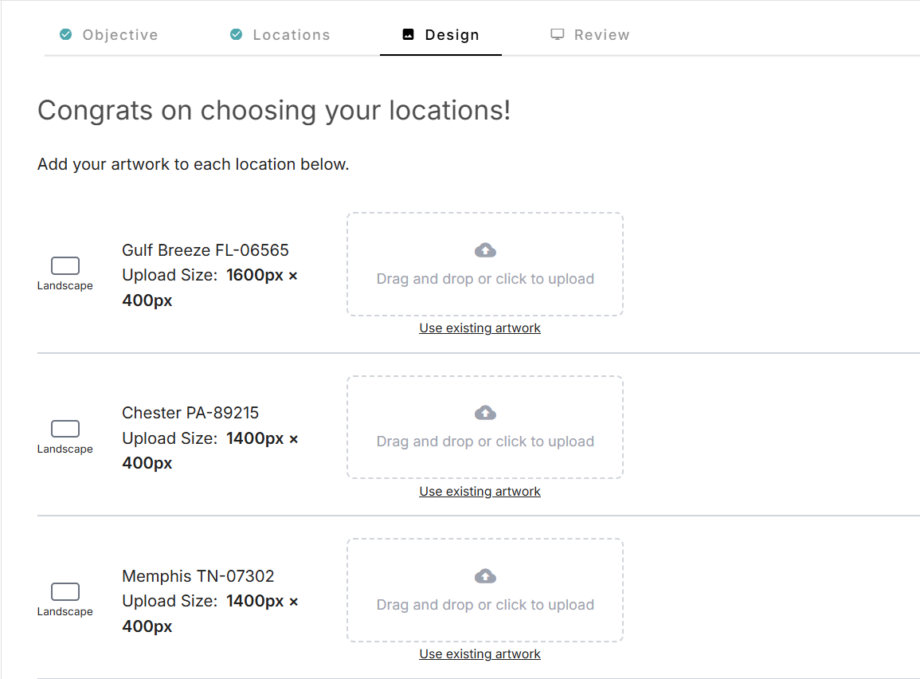
You can have your campaign live in minutes. Create a free account, select your locations, set your budget, upload your design, and start running once approved.
Where can I advertise with Blip in Waunakee?
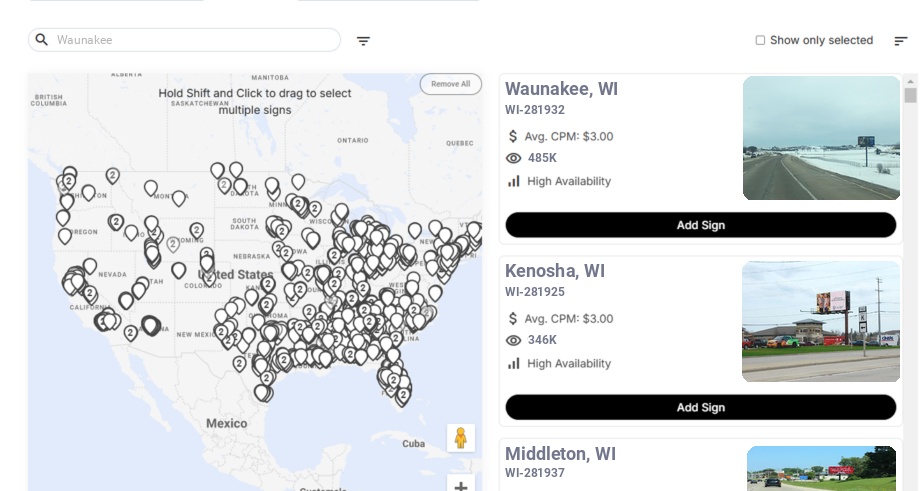
Blip has digital billboards in Waunakee. You can browse available locations on a map, choose the ones that fit your audience, and start advertising right away.
Still have questions? Launch a campaign in minutes — no contracts, no commitments.
Start Your CampaignWaunakee Billboard Advertising Guide
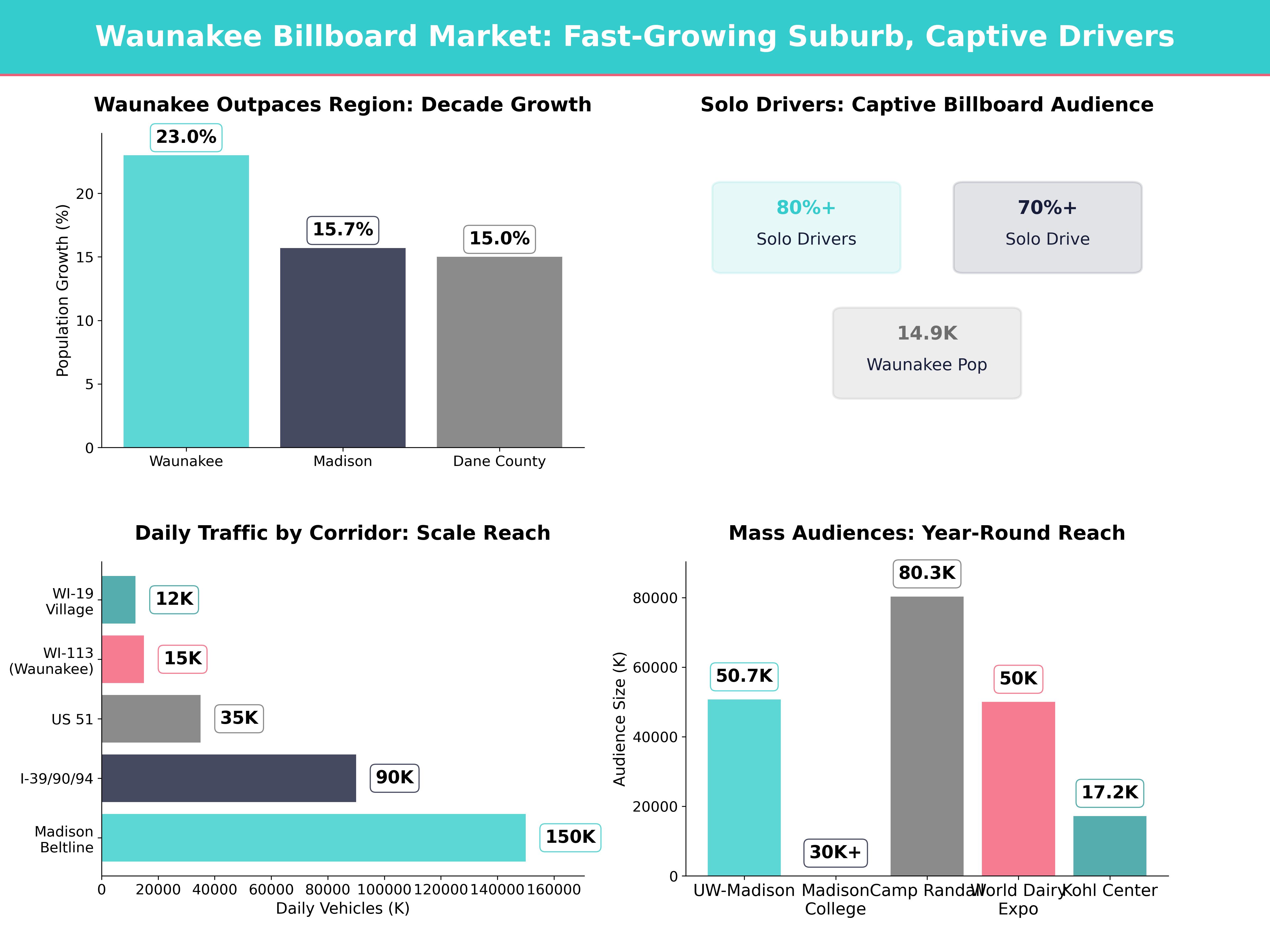
Waunakee Madison economy. The Village of Waunakee 14,879 residents in 2020, and it sits roughly 10 miles north of downtown Madison, inside Dane County, which reached 561,504 residents in 2020. Because most daily trips in and around Waunakee happen by car, outdoor advertising can build frequency on the same commuter and errand routes week after week. We also benefit from regional demand drivers, including University of Wisconsin–Madison, with 50,662 students in fall 2023, Dane County Regional Airport, which handled about 2.3 million passengers in 2023, conventions, sports, and year-round tourism across the Madison area.
Waunakee Market Overview for Billboard Advertising
Waunakee is small enough for local familiarity, but large enough to support sustained billboard demand. Between 2010 and 2020, Waunakee grew from 12,097 residents to 14,879, which was a gain of 23.0%. Over the same decade, Dane County grew from 488,073 to 561,504, or 15.0%, an increase of 73,431 residents, and Madison grew from 233,209 to 269,840, or 15.7%, a gain of 36,631 residents. Those growth rates matter because they tell us the north side of the Madison market is not static. It is adding households, adding workers, and expanding the number of people making repeat trips past the same roads every day.
The economy around Waunakee is unusually diversified for a village its size. We are plugged into state government activity in Madison, the research and talent pipeline at UW–Madison, the innovation cluster at University Research Park, and the west-side tech corridor anchored by employers such as Epic Systems in Verona Madison College serves 30,000+ students annually, and UW–Madison enrolled 50,662 students in fall 2023. University Research Park is home to 100+ companies and roughly 4,000 employees. For advertisers, that means we can target not only village residents, but also students, faculty, healthcare workers, office commuters, and business travelers.
Waunakee is also a drive-first market. Recent American Community Survey patterns place solo driving above 70% countywide, and outer-ring suburban communities like Waunakee typically clear 80%. That is exactly the kind of behavior pattern that makes billboard frequency valuable. If people are driving the same corridors to school, work, shopping, and recreation, then repeated digital exposure can move them from awareness to action much faster than in a transit-first market.
Key Traffic Corridors Around Waunakee
Waunakee’s strongest billboard opportunities come from a mix of local commuter roads and high-volume regional freeways. We usually think about these corridors in layers, because a business that needs village frequency should buy differently than a brand that wants metro-wide reach.
Wisconsin Highway 113 Through Waunakee
Wisconsin Highway 113 is Waunakee’s signature north-south route. Wisconsin Department of Transportation traffic maps generally place Waunakee-area segments in roughly the 10,000 to 15,000 vehicles per day range. That is meaningful volume for a village corridor, especially because the traffic is consistent and highly local. We use WI 113 to reach:
- Southbound morning commuters heading toward Madison jobs, schools, and services.
- Northbound evening commuters returning home to Waunakee, Westport, and nearby neighborhoods.
- Daytime errand traffic for restaurants, grocery, healthcare, banking, childcare, and home services.
For brands that need repeat exposure rather than one-time pass-through traffic, WI 113 is usually the first corridor we evaluate.
Wisconsin Highway 19 and East-West Local Movement
Wisconsin Highway 19 is the other essential Waunakee route. WisDOT counts on village approaches commonly fall in the 8,000 to 12,000 vehicles per day range. The exact location matters, but the strategic takeaway is simple: WI 19 pulls in east-west household traffic and connects Waunakee to outlying parts of Dane County.
This corridor works especially well for:
- Home improvement and contractors, because homeowners often make planning and purchasing decisions while running local errands.
- Retail and dining, because the route captures practical shopping trips rather than only work commutes.
- Medical, dental, and family services, because parents and caregivers are often on these roads throughout the day.
I-39/90/94, US 51, and the DeForest-Windsor Access Layer
Just east of Waunakee, the interstate system changes the scale of a campaign. Near DeForest Windsor, I-39/90/94 segments commonly run in the 60,000 to 90,000 vehicles per day range, while nearby US 51 segments often carry roughly 20,000 to 35,000 vehicles per day. These are not just local roads. They are regional movement corridors linking Waunakee-area consumers to Milwaukee, Chicago, Wisconsin Dells, and the rest of the upper Midwest.
We like this layer for:
- Travel and hospitality advertisers.
- Truck services, fuel, and convenience retail.
- Regional healthcare systems, colleges, and event venues.
- Workforce recruiting for manufacturing, logistics, and distribution.
If a Waunakee business serves customers beyond the village, interstate visibility can dramatically expand its trade area.
US 151 and the Madison Beltline for Metro Reach
When our goal is not just Waunakee frequency but full Madison-area reach, the strongest inventory often sits farther south and east. US 151 on the Madison side commonly runs in the 50,000 to 70,000 vehicles per day range, and the Beltline regularly exceeds 100,000 vehicles per day, with some segments around 150,000. That is where we go for scale.
These corridors help Waunakee advertisers reach people moving between downtown Madison, Sun Prairie Middleton Alliant Energy Center, and Monona Terrace. For broad awareness campaigns, these routes often outperform a purely local buy.
Audience Segments We Can Reach in Waunakee
Waunakee billboard advertising works best when we define the audience by travel behavior, not just by ZIP code. This market gives us access to several distinct groups.
Commuters, Parents, and Household Decision-Makers in Waunakee
Waunakee is a classic household decision-maker market. The Waunakee Community School District serves 4,000+ students, which tells us there is a large concentration of families making ongoing decisions about healthcare, food, enrichment, tutoring, sports, insurance, and home services. These buyers are on the road repeatedly, and many are balancing school trips, shopping, and Madison commutes in the same day.
That makes Waunakee especially strong for:
- Pediatric and family healthcare.
- Childcare and youth programs.
- Grocery, dining, and everyday retail.
- Roofing, plumbing, HVAC, landscaping, and real estate.
- Community events and fundraising campaigns.
Students, Faculty, and Badger Fans Across the Madison Orbit
Waunakee sits close enough to Madison to benefit from the constant churn around UW–Madison and UW Athletics. UW–Madison enrolled 50,662 students in fall 2023. Camp Randall Stadium holds 80,321 fans, and the Kohl Center seats 17,230 for basketball. Those are powerful audience multipliers for restaurants, bars, entertainment, apparel, insurance, mobile apps, telecom, and ticketed events.
If we add Madison College, with 30,000+ students annually, the education audience becomes even more significant. Even businesses located in Waunakee can benefit, because students, parents, and alumni circulate throughout the region for housing, errands, dining, and recreation.
Visitors, Convention Traffic, and Leisure Travelers Near Waunakee
Tourism and event travel matter more to Waunakee than many advertisers initially assume. Dane County Regional Airport handled about 2.3 million passengers in 2023, which gives the Madison area a steady flow of business travelers, visiting families, and leisure guests. Alliant Energy Center sits on a 164-acre campus, and Monona Terrace offers roughly 250,000 square feet of meeting and event space.
Two event anchors stand out:
- World Dairy Expo brings nearly 50,000 attendees from almost 100 countries.
- The Dane County Farmers’ Market can feature 150+ vendors on peak Saturdays.
Those audiences are valuable for hotels, restaurants, attractions, dealerships, retailers, financial services, and B2B brands that want face time with high-intent visitors.
Tech, Healthcare, Agricultural, and Professional Audiences Around Waunakee
Waunakee sits between suburban family demand and the broader professional economy of Greater Madison. University Research Park supports 100+ companies and about 4,000 employees. Madison also concentrates healthcare systems, biotech firms, software employers, and state-level business activity. At the same time, the rural edges north and west of Waunakee keep agricultural and trades audiences very relevant.
That dual identity matters. We can run one set of messages for professional services, recruiting, clinics, and education, and a different set for feed, equipment, farm finance, rural telecom, and agribusiness during key agricultural periods.
Seasonal and Timing Opportunities in Waunakee
Waunakee campaigns perform best when we align them with the rhythms of school, sports, weather, and regional events. This is not a market where the same schedule works equally well all year.
Back-to-School Season in Waunakee
Late summer and early fall are especially valuable in Waunakee because family routines tighten quickly. With 4,000+ students in the Waunakee Community School District, August and September bring sharp increases in routine travel for drop-offs, activities, and commuting. We usually like heavier schedules from 6:00 to 9:00 a.m. and 2:30 to 6:00 p.m. during this period.
This is an excellent window for:
- Family medicine, dental, and vision.
- After-school programs and youth sports.
- Quick-service dining and take-home meal offers.
- Home organization, storage, and back-to-school retail.
Fall Football, Conventions, and Dairy Industry Peaks Around Waunakee
Badger season creates recurring surges in regional traffic. Most seasons bring roughly 6 to 7 home football Saturdays, and each one can fill Madison-bound roads with alumni, tailgaters, and out-of-town visitors. We also see event-driven demand at Alliant Energy Center, especially during World Dairy Expo, which attracts nearly 50,000 people.
This is the best time for:
- Hotels, bars, restaurants, and entertainment venues.
- Apparel and promotional offers tied to game day.
- Agricultural products, finance, equipment, and B2B services.
- Recruitment campaigns for temporary staffing and seasonal labor.
Winter Demand and Weather-Driven Service Opportunities in Waunakee
Waunakee winters make practical categories more urgent. Snow, ice, shorter daylight, and holiday travel all increase the relevance of auto service, urgent care, heating, plumbing, indoor recreation, and comfort-focused retail. Because people spend more time in the car during darker afternoons, we often increase presence in the 3:00 to 6:30 p.m. window on northbound homebound routes.
For local brands, winter is also a strong frequency season. People may take fewer leisure trips, but they still make essential repeat drives for school, work, groceries, and appointments.
Spring and Summer Recreation Around Waunakee
Spring and summer add a different kind of mobility. Governor Nelson State Park Destination Madison, WaunaFest, and the Saturday draw of the Dane County Farmers’ Market all support warmer-weather traffic. We usually like Thursday evening through Sunday scheduling for restaurants, entertainment, patio dining, recreation, landscaping, boating-related services, and wedding-season businesses.
Billboard Design Tips for the Waunakee Market
Creative in Waunakee should feel local, practical, and easy to process at driving speed. We are speaking to people who know the area well and usually have a destination in mind.
Use Local Language That Feels Native to Waunakee
The Village of Waunakee
Build Waunakee Creative for Fast Commuter Reading
On WI 113 and WI 19, we usually have only a few seconds to communicate. That is why short headlines, bold numerals, and one clear takeaway tend to outperform dense copy. In this market, practical proof points resonate. Examples include:
- 24/7 care
- Same-day service
- 2 locations
- Open late
- Free estimate
Numbers help because drivers can absorb them quickly. For Waunakee advertisers, distance and convenience claims are especially persuasive when they are true.
Match Imagery to Waunakee’s Family-and-Region Identity
Waunakee sits between small-town familiarity and Madison-area sophistication. Creative should reflect that blend. We often see stronger performance from imagery tied to family life, clean neighborhoods, youth activities, home improvement, healthcare trust, lakes, or Wisconsin agriculture than from generic big-city stock scenes.
Seasonal adjustments also help:
- Fall: Badger-inspired reds, tailgate visuals, harvest, and event energy.
- Winter: Warm interior scenes, service reliability, safety, and urgency.
- Spring and summer: Outdoor recreation, patios, parks, water, and community activity.
If we are advertising during dairy, expo, or rural-trade periods, agricultural visuals can feel highly relevant in this market.
Regional Strategies Across Waunakee and Greater Dane County
A strong Waunakee billboard plan rarely treats the whole area as one undifferentiated market. We get better results when we separate village frequency from metro reach.
A Village-First Strategy for Waunakee and Westport
If our business depends on nearby households, we start tight. Local healthcare, dental, fitness, childcare, grocery, restaurants, and home services usually do best by concentrating on Waunakee-area routes first. WI 113 and WI 19 give us repeated exposure to residents in Waunakee and nearby Westport.
This strategy emphasizes:
- High repetition.
- Familiar geography.
- Convenience messaging.
- Immediate calls to action.
A Southbound Commute Strategy Into Madison
For businesses that need Waunakee residents while they are mentally planning the workday, southbound placements are powerful. This is the right approach for downtown events, professional services, Madison healthcare providers, and city-based employers.
We often pair Waunakee-facing boards with additional placements closer to Madison, Monona Terrace, and the UW–Madison area so the audience sees the message more than once before acting.
An East-Side and Interstate Strategy for DeForest, Windsor, and Airport Traffic
If the goal is regional pass-through traffic, recruiting, or travel demand, we shift east. DeForest Windsor, I-39/90/94, US 51, and the Dane County Regional Airport access layer reach travelers, warehouse workers, truck traffic, and visitors who may never drive through central Waunakee.
This strategy is especially effective for:
- Hotels and hospitality.
- Distribution and logistics recruiting.
- Fuel, convenience, and roadside retail.
- Workforce education and skilled trades programs.
A West-Side Strategy for Middleton, Verona, and Tech-Oriented Demand
To reach higher concentrations of office, biotech, and software professionals, we often extend west. Middleton Verona University Research Park, and west Madison carry a different audience profile than Waunakee’s household-heavy core.
This is where we look for campaigns focused on:
- B2B software and professional services.
- Specialty healthcare and elective care.
- Recruiting for high-skill roles.
- Regional shopping, entertainment, and destination dining.
Using Blip Tools for Waunakee Campaigns
Blip works especially well in a market like Waunakee because we can build campaigns around real travel patterns instead of buying a rigid package that treats every hour and every board the same.
Daypart Around Real Waunakee Traffic
We can schedule around actual decision windows. For many Waunakee campaigns, that means heavier southbound delivery from 6:00 to 9:00 a.m., northbound delivery from 3:00 to 6:30 p.m., and broader Friday coverage from 2:00 to 7:00 p.m. when weekend plans start to form. Event advertisers can concentrate around Badger kickoff windows, Saturday morning retail hours, or post-work dining periods instead of spending evenly across low-value times.
Separate Local Waunakee Goals From Regional Madison Goals
Blip makes it easy for us to build one campaign for local repetition and another for regional scale. We can test whether a Waunakee business performs better with tight local boards on WI 113 or with added reach on US 151 and the Beltline. That matters because some categories need depth, while others need breadth.
Rotate Creative by Season and Audience
Waunakee is a great market for creative variation. We can run one message for school-season family services, another for football weekends, another for World Dairy Expo or convention traffic, and another for winter weather demand. If a brand serves both local families and regional professionals, we can build separate art versions instead of forcing one message to do everything.
Scale Waunakee Spending Only When the Calendar Justifies It
Because Waunakee has predictable demand spikes, we do not always need the same budget every week. We can scale up during school start, football season, expo weeks, holiday retail, and spring event periods, then pull back or shift messaging when demand changes. That keeps the campaign aligned with actual market opportunity.
Getting Started With Billboard Rental in Waunakee
Renting a billboard in Waunakee works best when we start with the business outcome, then choose locations that match how local people actually move.
Start With the Goal Before We Choose the Board
A Waunakee restaurant, dental office, or contractor usually wants frequency close to home. A Madison event venue or regional healthcare provider may want Waunakee impressions during commuter travel. A recruiting campaign for a warehouse in Windsor may care more about interstate access than village center awareness.
Before launching, we should decide whether the campaign is meant to drive:
- Brand awareness.
- Foot traffic.
- Appointment bookings.
- Event attendance.
- Hiring and recruiting.
- Website or search lift.
That choice determines whether we prioritize WI 113, WI 19, I-39/90/94, US 151, or metro-wide Madison boards.
Evaluate Waunakee Billboard Locations Like a Local Buyer
When we review inventory, we should look beyond the map pin. The best-fit location depends on direction of travel, driving speed, nearby intersections, distance to the advertiser’s location, and whether the audience is commuting, shopping, or traveling through. A board that faces southbound traffic can be far more useful for a Madison clinic than for a Waunakee dinner special. A board near an interstate merge may be ideal for hospitality or recruiting, but less ideal for a neighborhood retailer.
We usually ask three practical questions:
- Who is on this road at that hour?
- What decision can they realistically make next?
- Will they see the message often enough to remember it?
Launch a Waunakee Test, Then Optimize
One of the biggest advantages of using Blip in Waunakee is that we can test without the friction of traditional billboard negotiations, long planning cycles, or fixed one-size-fits-all packages. We can start with a focused set of boards, watch performance, refine the dayparts, swap creative, and expand only after we learn which routes and messages fit our goals.
For many advertisers, the smartest path is simple. We begin with the corridor that matches the core audience, run a disciplined test, and then add regional Madison inventory if the business needs more reach. In a market like Waunakee, where local loyalty meets strong regional movement, that step-by-step approach usually produces the clearest results.