Billboards in Racine, WI
No Minimum Spend. No Long-Term Contracts. Just Results.
Trusted by Leading Brands


Billboard advertising
in Racine has never been easier
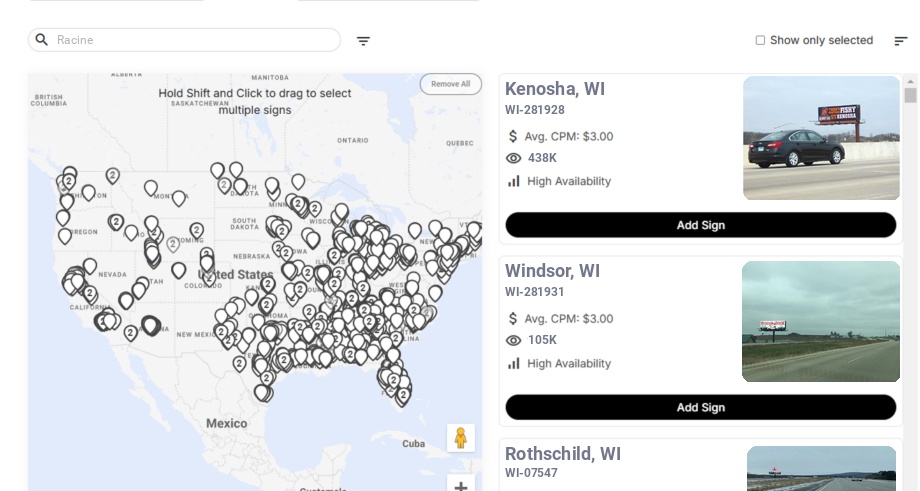
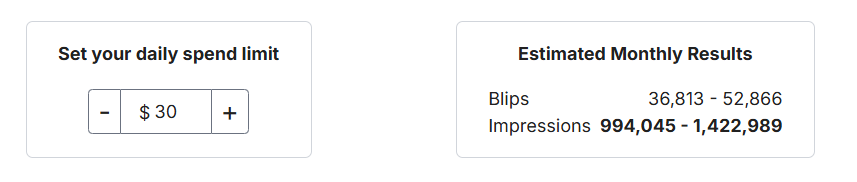
How much is a billboard in Racine?
Why Choose Blip for Billboard Advertising in Racine
-
Blip lets you launch in Racine in minutes, with self-serve access to I-94 and WI-20 traffic without long negotiations.
-
Set a flexible daily budget in Racine and reach commuters, plant workers, and shoppers across the I-94 corridor on your terms.
-
Daypart your Racine ads for morning commutes, afternoon retail runs, or summer lakefront evenings near North Beach.
-
No contracts mean you can test Racine's downtown, Green Bay Road, or Douglas Avenue audiences and pause anytime.
-
Track real-time results in Racine and shift spend toward the routes driving more response from Milwaukee-Kenosha travelers.
-
Use Blip's creative tools to build Racine billboard ads fast, whether you're targeting SC Johnson workers or local families.
Frequently Asked Questions About Billboard Advertising in Racine
How much does a billboard cost in Racine with Blip?
Blip’s billboard advertising in Racine starts at just $0.01 per display. You choose a daily budget, and Blip’s algorithm uses it to bid for open ad slots on rotating digital billboards. Pricing changes based on time of day, location, and advertiser demand, and you only pay when your ad actually appears.
Where can I advertise with Blip in Racine?
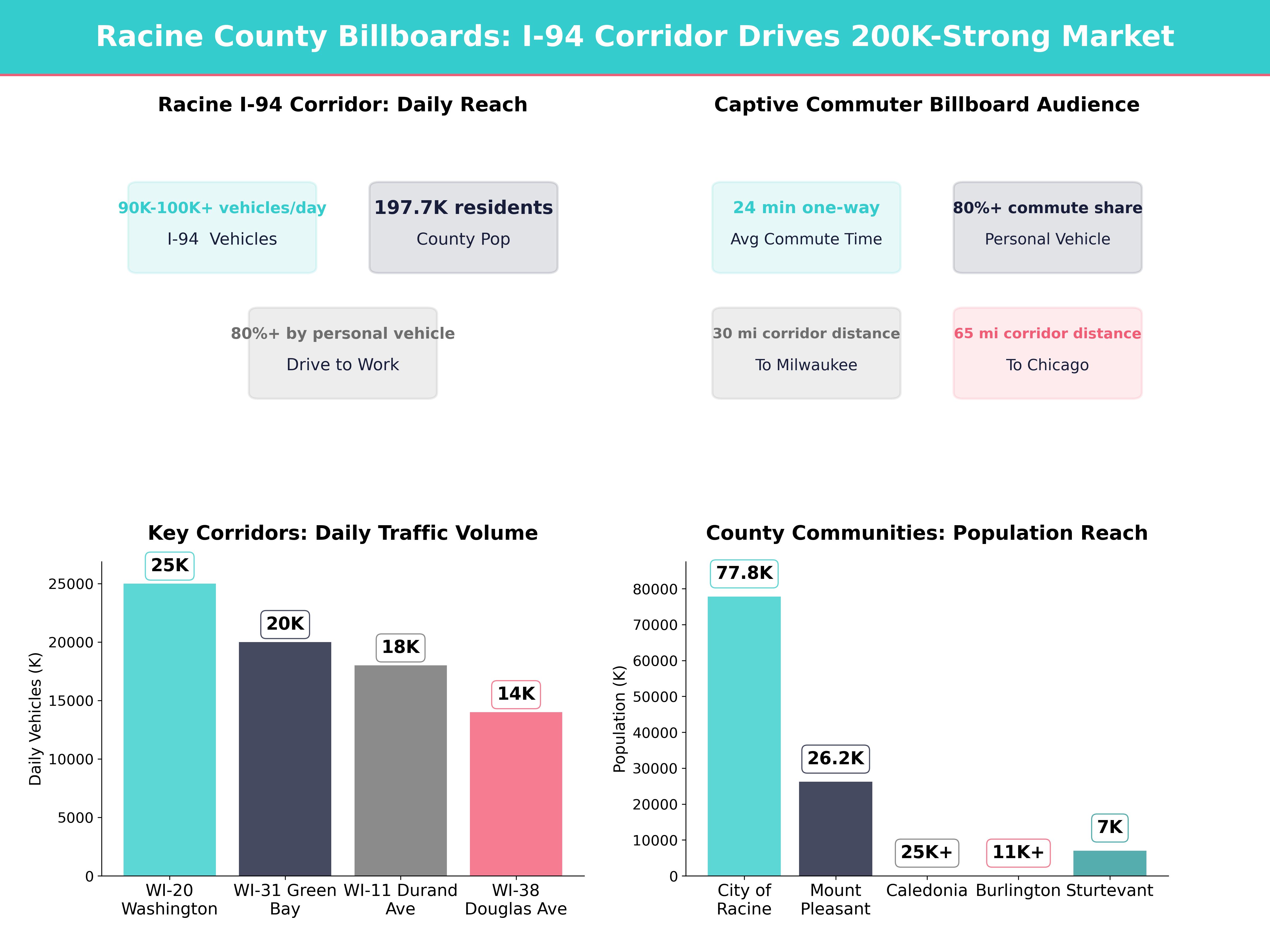
Racine is a strong billboard market because we can reach both a stable local population and a much larger regional audience moving through southeast Wisconsin every day. The city of Racine had 77,816 residents in the 2020 Census, and Racine County had 197,727, giving advertisers a meaningful base before we even count pass-through traffic from Milwaukee, Kenosha, and the wider I-94 corridor. This makes Racine practical for both local frequency and regional reach.
Which Racine traffic corridors are best for billboard advertising?
I-94 segments in western Racine County near Mount Pleasant and Sturtevant commonly operate around 90,000 to 100,000+ vehicles per day, making it the dominant regional corridor. WI-20 between I-94 and the city commonly sees around 20,000 to 30,000 AADT, while WI-31, or Green Bay Road, often falls in the 15,000 to 25,000 AADT range. WI-11 and WI-38 also provide strong local access for neighborhood commerce and trips toward downtown and the lakefront.
Is Racine a good market for Blip billboard ads during commuting hours?
More than 4 out of 5 workers in Racine County commute by personal vehicle, and the average one-way commute is roughly 24 minutes. That combination is ideal for repeated weekday exposure and broad visibility during both morning and afternoon drive times. Racine’s road network gives brands reliable repetition across commuter routes.
When is the best time to run billboard ads in Racine?
Summer is when Racine feels largest, with lakefront activity, weekend visitation, and a steady calendar of events. Around the June solstice, Racine gets roughly 15 hours of daylight, which stretches visible travel into the evening. Late August through October is also a strong window because family routines tighten up and commuter behavior becomes more predictable.
Do I need a contract to advertise with Blip in Racine?
No, Blip has no long-term contracts or minimum commitments. You can start, pause, or stop your campaign at any time.
How fast can I launch a billboard campaign with Blip in Racine?
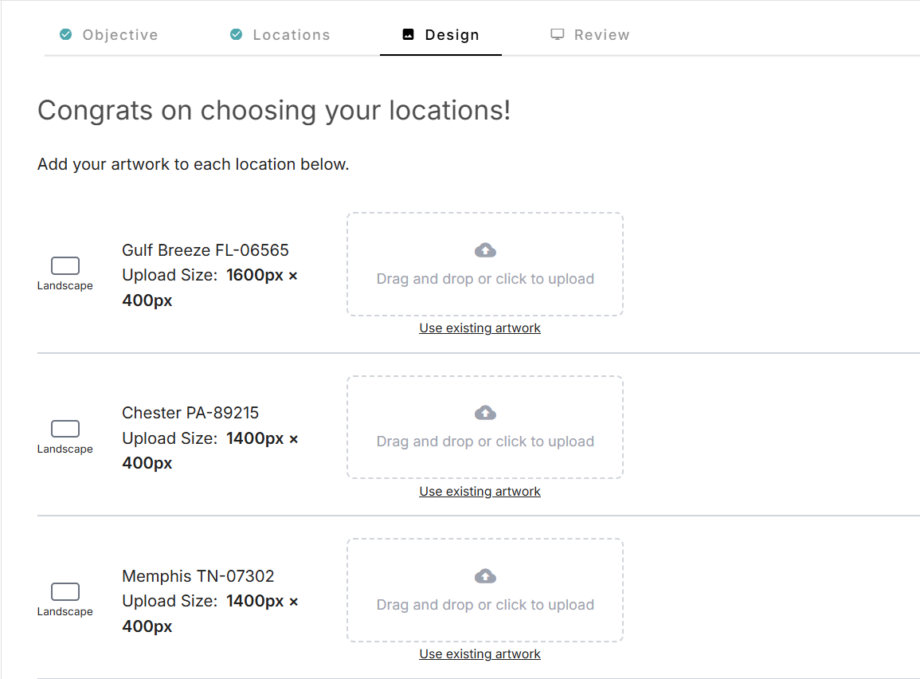
You can have your campaign live in minutes. Create a free account, select your locations, set your budget, upload your design, and start running once approved.
Where can I advertise with Blip in Racine?
Blip has digital billboards in Racine. You can browse available locations on a map, choose the ones that fit your audience, and start advertising right away.
Still have questions? Launch a campaign in minutes — no contracts, no commitments.
Start Your CampaignRacine Billboard Advertising Guide
Racine is a strong billboard market because we can reach both a stable local population and a much larger regional audience moving through southeast Wisconsin every day. The City of Racine had 77,816 residents in the 2020 Census, and Racine County 197,727, giving advertisers a meaningful base before we even count pass-through traffic from Milwaukee Kenosha 80% of workers in Racine County commute by car, truck, or van, which keeps out-of-home media in front of people during daily routines. When we add Lake Michigan tourism, industrial employment, college traffic, and suburban shopping patterns, Racine becomes one of the most practical digital billboard markets in Wisconsin.
Market Overview for Racine Advertisers
Racine’s population, geography, and growth patterns
For billboard planning, we usually think about Racine as both a city market and a county market. The city’s 77,816 residents anchor the urban core, while the county’s 197,727 residents spread across communities such as Mount Pleasant 26,200 residents, Caledonia, with more than 25,000, Burlington 11,000, and Sturtevant 7,000. Racine County added about 2,300 residents (roughly 1.2% growth) from 2010 to 2020, while the city of Racine declined by about 1,000 (roughly 1.3% decline), which tells us that suburban and corridor-oriented placements matter as much as downtown visibility.
That pattern is important for advertisers. We do not need to think only in terms of one downtown audience. We can build campaigns that speak separately to lakefront city residents, I-94 commuters, west-county families, and north-south traffic between Milwaukee and Kenosha.
Racine also sits in an advantageous physical position. It is about 30 miles south of downtown Milwaukee and about 65 miles north of downtown Chicago, which makes it part of a larger, high-mobility corridor rather than an isolated local market. That location gives digital billboard campaigns a hybrid benefit of local frequency and regional reach.
Racine’s economy, commuting patterns, and advertiser implications
Racine’s economy is still shaped by manufacturing, logistics, healthcare, education, and consumer services. SC Johnson has been headquartered in Racine since 1886, Modine 1916, and the local legacy of CNH Industrial 1842. The presence of long-established employers means we can reach steady weekday traffic, shift workers, vendors, and business decision-makers, not just weekend shoppers.
Mobility data matters just as much as employer names. Recent survey data shows that more than 4 out of 5 workers in Racine County commute by personal vehicle, and the average one-way commute is roughly 24 minutes. For billboard advertisers, that combination is ideal. It means we can count on recurring weekday exposure, repeated route habits, and broad visibility during both morning and afternoon drive times.
Racine also benefits from a business ecosystem that actively supports local commerce. Organizations such as Racine Area Manufacturers and Commerce Racine County Economic Development Corporation, Downtown Racine Corporation Visit Racine County
Key Traffic Corridors for Racine Billboard Campaigns
Racine’s travel patterns are shaped by a few essential highways and arterials. When we understand where people move, why they move, and how fast they move, we can match the right message to the right board.
Interstate 94 in western Racine County
According to Wisconsin Department of Transportation traffic counts Mount Pleasant 90,000 to 100,000+ vehicles per day. This is the dominant regional corridor for people moving between Milwaukee, Racine County, Kenosha County, and Chicagoland.
This corridor is especially effective for several advertiser categories.
- Regional healthcare systems can reach patients and family decision-makers traveling between Racine, Kenosha, and Milwaukee.
- Auto dealers, home services, and insurance brands can benefit from repeated weekday frequency among suburban commuters.
- Hotels, restaurants, attractions, and event venues can intercept travelers before they choose where to stop, eat, or stay.
- B2B, industrial, and recruiting campaigns can reach plant workers, drivers, and managers moving through the county’s employment belt.
The I-94 corridor also benefits from multimodal reinforcement. The Amtrak Sturtevant 7 daily Hiawatha round trips between Milwaukee and Chicago, and 1 daily Borealis round trip between Chicago and St. Paul, which underscores how strategically located this western county zone has become.
WI-20 and the Washington Avenue corridor in Racine
WI-20 is one of the most important east-west connectors in the Racine market. WisDOT counts show developed segments between I-94 and the city commonly around 20,000 to 30,000 AADT, with busier retail intersections reaching even higher volumes. This route helps us connect suburban households, destination shopping, and city-bound traffic.
For many local advertisers, WI-20 is the practical middle ground between interstate reach and neighborhood relevance. It works well for the following categories.
- Retailers and grocery brands can speak to weekly errand traffic and household purchasing behavior.
- Quick-service restaurants and coffee brands can win impulse visits from drivers already in decision mode.
- Entertainment venues and family attractions can capture weekend and evening traffic heading toward Racine’s urban core or west-county destinations.
- Colleges, trade schools, and training programs can reach prospective students and working adults who already use the corridor.
Because WI-20 acts as a feeder into Racine, campaigns here often perform best when the message is simple, directional, and time-sensitive.
WI-31, or Green Bay Road, in greater Racine
WI-31, known locally as Green Bay Road, is one of Racine’s most dependable north-south corridors. WisDOT counts on developed sections often fall in the 15,000 to 25,000 AADT range. The road links residential neighborhoods, schools, shopping areas, and employment destinations across the Racine area.
Green Bay Road is valuable when we want frequency more than sheer regional scale. It is particularly useful for the following advertisers.
- Healthcare clinics, dental offices, and urgent care providers can stay top of mind with residents making recurring local trips.
- Childcare providers, tutoring companies, and family services can target adults whose days revolve around school and household routines.
- Banks, credit unions, and legal services can benefit from repeated exposure among adults who live and spend locally.
- Political campaigns and community organizations can use the corridor for geographic saturation ahead of local elections or public events.
WI-11, or Durand Avenue, and WI-38, or Douglas Avenue
WI-11, or Durand Avenue, is another critical Racine commercial corridor. In built-up sections, WisDOT counts often land around 15,000 to 20,000 vehicles per day. WI-38, or Douglas Avenue, generally carries about 10,000 to 18,000 AADT through key north-side segments. Together, these roads give us strong access to neighborhood commerce, north-side travel, and trips toward downtown and the lakefront.
These routes are often ideal for advertisers that need local conversion rather than broad regional awareness.
- Furniture stores, appliance dealers, and home improvement brands can target shoppers who are already moving through commercial clusters.
- Restaurants, bakeries, and local retailers can drive same-day visits with highly localized messages.
- Schools, churches, nonprofits, and event organizers can build recognition inside the communities they serve.
- Tourism and culture brands can direct north-side and suburban residents toward downtown Racine, the harbor, and lakefront attractions.
Audience Segments We Can Reach in Racine
Racine commuters and regional travelers
Commuters are Racine’s foundational billboard audience. When more than 80% of workers drive to work and the average commute is about 24 minutes, we get the repeated visibility that billboard advertising needs to work. Many of those drivers are not simply moving within the city. They are moving between Racine, Mount Pleasant, Caledonia, Sturtevant, Kenosha, Oak Creek, and Milwaukee.
That means commuter-oriented campaigns can do more than build awareness. They can also influence where people stop for food, where they schedule appointments, which employer they remember, and which store they visit after work. For brands that rely on habitual exposure, Racine’s road network gives us reliable repetition.
Racine’s manufacturing, logistics, and shift-work audience
Racine has a blue-collar and industrial identity that still matters in media planning. SC Johnson, Modine CNH Industrial Mount Pleasant
This is a strong fit for recruiting, workwear, trucks, tools, financial services, healthcare, and prepared food. Shift-based dayparting is especially useful here because the people we want to reach are often on the road outside the classic 8-to-5 pattern.
Racine families, students, and household decision-makers
Racine’s countywide population gives us a meaningful family audience, especially in communities such as Mount Pleasant Caledonia, Burlington Sturtevant
Education adds another layer. Gateway Technical College serves students across 3 campuses, including its Racine campus, and University of Wisconsin-Parkside 1968. When we plan around semester starts, registration windows, and school-year routines, we can speak not only to students, but also to parents, adult learners, and employers looking for talent.
Racine tourists and cultural visitors
Racine is not just a commuter market. It is also a destination market, especially in warmer months. North Beach spans 50 acres along Lake Michigan, the Wind Point Lighthouse rises 108 feet, and the Racine Zoo has operated since 1923. The city also benefits from architecture tourism thanks to Johnson Wax Headquarters 1936, and Wingspread 1939, both tied to the Frank Lloyd Wright Trail
These visitors are highly valuable because they are already mobile, already spending, and often already looking for dining, entertainment, retail, and overnight options. Boards that point to downtown, the lakefront, museums, festivals, and local food can perform especially well during peak tourism windows.
Seasonal and Timing Opportunities in Racine
Summer in Racine brings the broadest audience mix
Summer is when Racine feels largest. Lakefront activity increases, weekend visitation rises, and Downtown Racine Corporation Visit Racine County
The timing logic is straightforward. Around the June solstice, Racine gets roughly 15 hours of daylight, which stretches visible travel into the evening. That longer day supports stronger performance for afternoon and evening schedules, especially on routes leading to the beach, harbor, downtown, and dining districts.
We should also watch summer destination events. The Racine County Fair in Union Grove is a recurring late-July draw, and venues such as Festival Hall Memorial Hall Racine Art Museum bring additional visitors into the core.
Back-to-school and fall routines in Racine
Late August through October is one of the most underused billboard windows in Racine. This is when family routines tighten up, colleges restart, youth activities return, and commuter behavior becomes more predictable after summer vacations. It is an ideal window for healthcare, tutoring, financial services, grocery, automotive, and subscription-style businesses.
Back-to-school timing works especially well around Racine Unified School District, Gateway Technical College, and University of Wisconsin-Parkside
Holiday retail and winter service demand in Racine
Winter requires a different approach, but it is still valuable. Racine continues to commute in all seasons, and shorter days can actually help digital billboard visibility. Near the December solstice, the area gets fewer than 9 hours of daylight, which gives us long stretches of darkness during morning and evening drive times.
This is when high-contrast creative matters most. It is also when advertisers for urgent care, HVAC, tires, auto service, grocery, holiday retail, and comfort food can perform well. Local brands can also lean into recognizable Racine traditions, including kringle from O&H Danish Bakery
Billboard Design Tips for the Racine Market
Creative themes that feel local in Racine
Racine responds well to creative that feels grounded, practical, and specific. We generally see stronger relevance when ads acknowledge one of the market’s real identities, including the Lake Michigan shoreline, manufacturing pride, family routines, architecture, or local food culture.
For summer and downtown campaigns, lakefront colors such as deep blue, white, and sand tones make sense because they visually connect to North Beach, the harbor, and shoreline recreation. For industrial and commuter corridors, bolder palettes with dark blue, black, red, or safety-orange accents often fit better because they feel more direct and more visible at speed.
Local references help when they are used sparingly. A headline that mentions downtown Racine, the lakefront, kringle, Frank Lloyd Wright, or an I-94 exit can feel much more native to the market than a generic statewide message.
Messaging that works on Racine’s commuter and industrial routes
Racine’s road network rewards concise, directional copy. On I-94 and fast-moving feeder roads, we should favor short messages, clear offers, and simple next-step language. Drivers there are processing a lot of movement quickly.
These message structures are often effective in Racine.
- Distance-based copy works well because many trips are destination-oriented. Phrases such as “Next Exit,” “10 Minutes to Downtown,” or “Near WI-20” reduce friction.
- Time-based offers work well for restaurants, coffee, and service brands because commuters are making decisions in the moment.
- Recruiting messages should foreground wage, shift, or location first, because industrial audiences want practical information quickly.
- Healthcare and family-service ads should emphasize trust, convenience, and proximity, especially on WI-31, WI-11, and WI-38.
Language, culture, and imagery for Racine audiences
Racine has a diverse population, and that should shape creative choices. In many parts of the city, bilingual or Spanish-forward creative can be a smart fit, especially for healthcare, retail, food, education, and community services. We should use that approach intentionally, matching language to neighborhood context and route audience.
Imagery should also feel credible to southeast Wisconsin. Clean family photography, recognizable local architecture, shoreline visuals, and practical product shots usually outperform abstract stock imagery here. Racine is a market that tends to respond to clarity and authenticity more than flash.
Regional Strategies Across Racine
Downtown Racine and the lakefront
Downtown and the lakefront are where we go for culture, dining, tourism, and civic visibility. This is the zone for restaurants, museums, events, arts organizations, wedding venues, apartments, and local retail. When we want to influence both residents and visitors, downtown-focused placements are a strong fit.
Messages here can be a little more lifestyle-oriented than they would be on I-94. We can reference the harbor, the lakefront, North Beach, Racine Art Museum, Memorial Hall Downtown Racine Corporation
Mount Pleasant, Sturtevant, and the I-94 employment belt
Western Racine County is the region’s efficiency play. Mount Pleasant
This zone is especially effective for healthcare, recruiting, logistics, automotive, QSR, convenience retail, and business services. It is also the best place to test messages aimed at both local residents and pass-through travelers on the same campaign.
Caledonia, northbound travel, and the Milwaukee connection
Racine does not stop at the city line from an advertising perspective. Caledonia, the north side, and northbound routes toward Oak Creek
This strategy works well for brands that serve the broader southeast Wisconsin trade area. It is particularly useful for medical providers, regional retail, higher education, and home services that can convert customers from both Racine County and southern Milwaukee County.
Burlington and western Racine County
Burlington
This region is ideal for local healthcare, grocery, hardware, auto repair, insurance, recreation, and community event promotion. If a business serves west-county households directly, a more local tone usually beats a big-city tone. We should sound nearby, trustworthy, and useful.
Using Blip Tools and Capabilities in Racine
We can match budgets to Racine’s corridor hierarchy
Racine is a good market for testing because the corridor structure is so clear. We can put more budget into I-94 when we need reach, then shift budget toward WI-20, WI-31, WI-11, or WI-38 when we need stronger local frequency. That lets us build a market-specific mix instead of treating every board the same.
A practical Racine strategy often starts with 2 to 4 boards across different travel patterns. One board might target interstate scale, while another focuses on neighborhood conversion. Blip’s map-based buying makes that kind of split-market testing much easier than a traditional one-size-fits-all contract.
We can use time targeting to reflect real Racine behavior
Dayparting matters in Racine because audience intent changes noticeably by route. Morning schedules on I-94 and major arterials are excellent for healthcare, coffee, recruiting, and commuter services. Midday can work well for restaurants, retail, and errands. Afternoon and early evening usually become the strongest windows for dining, grocery, family services, and event traffic.
We can also use seasonality inside the platform. Summer evenings deserve more emphasis near downtown and the lakefront, while winter budgets often work harder during the darker commute windows. That is a practical way to align ad spend with actual local visibility.
We can test creative by submarket instead of guessing
Racine is not one audience, so we should not rely on one creative concept. We can run one version for the I-94 business belt, another for downtown tourism, and another for family-heavy local corridors. That might mean changing the headline, the call to action, the language, or even the color palette.
Blip’s reporting helps us see which locations and schedules are delivering the strongest response patterns over time. The platform’s artwork tools also make it easier to quickly build Racine-specific variations without turning every revision into a long agency process.
Getting Started with Billboard Rental in Racine
How to choose the right Racine billboard locations
The best Racine billboard plan starts with the business goal, not the board itself. Before we rent anything, we should decide whether we need regional awareness, neighborhood frequency, event traffic, recruiting visibility, or immediate consumer action.
We usually evaluate Racine boards using a few simple criteria.
- If the goal is broad reach, we should start with I-94 and western county placements near Mount Pleasant or Sturtevant.
- If the goal is local household frequency, we should look harder at WI-31, WI-11, WI-38, and key city commercial routes.
- If the goal is tourism or entertainment, we should prioritize boards that feed downtown, the lakefront, North Beach, and cultural venues.
- If the goal is recruiting, we should focus on routes used by industrial workers and suburban commuters, then pair location with shift-based scheduling.
- If the goal is immediate store traffic, we should favor boards with clear directional relevance to an exit, corridor, or neighborhood retail cluster.
What to expect, and how Blip simplifies billboard rental in Racine
Traditional billboard buying in markets like Racine can feel slow, inflexible, and oversized for local advertisers. We often end up negotiating around fixed inventory packages, longer commitments, or boards that are not perfectly aligned with our audience. Blip simplifies that process by letting us choose boards directly, launch quickly, and adjust as we learn.
That flexibility is especially useful in Racine because the market has several distinct sub-areas. We can test interstate boards against city boards, compare summer lakefront messaging against commuter messaging, or increase spend only during the hours that match our audience’s routines. We do not have to overcommit just to get started.
Our best advice is to begin with a focused plan, use Racine’s corridor logic to select locations, and measure results consistently. In a market with nearly 200,000 county residents, strong car dependence, and one of Wisconsin’s most important interstate links, even a modest digital billboard campaign can become a very efficient local growth tool.