Billboards in Ithaca, NY
No Minimum Spend. No Long-Term Contracts. Just Results.
Turn heads with Ithaca billboards made easy. Blip lets you set your budget, pick prime digital locations, and control when your ads shine. Launch eye-catching campaigns on billboards in Ithaca, New York with real-time performance data and flexible, on-demand scheduling.
Trusted by Leading Brands


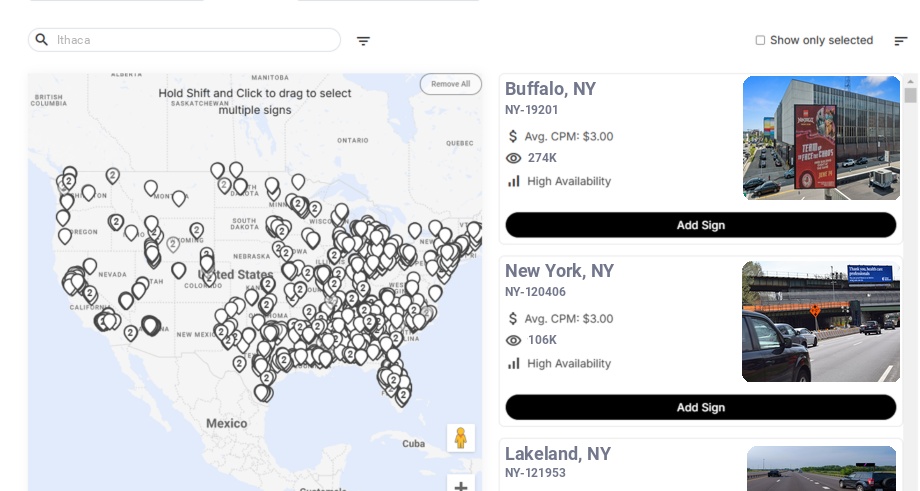
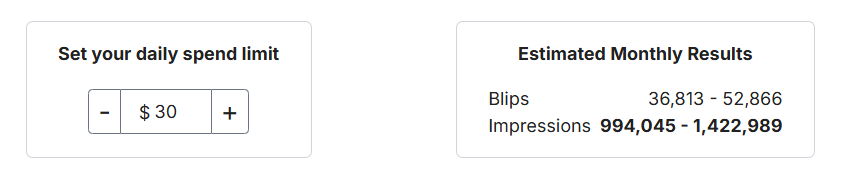
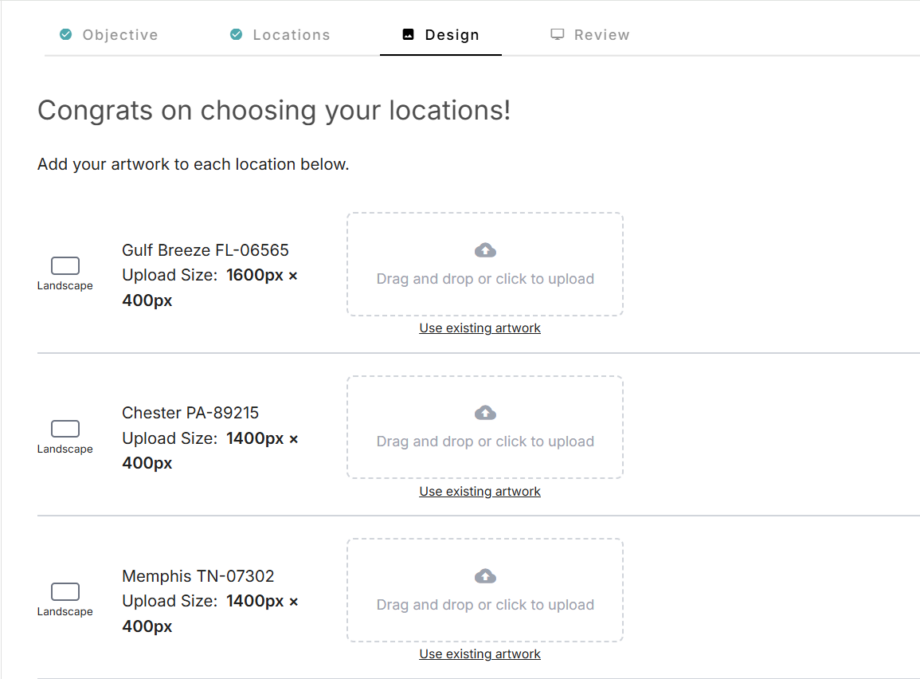
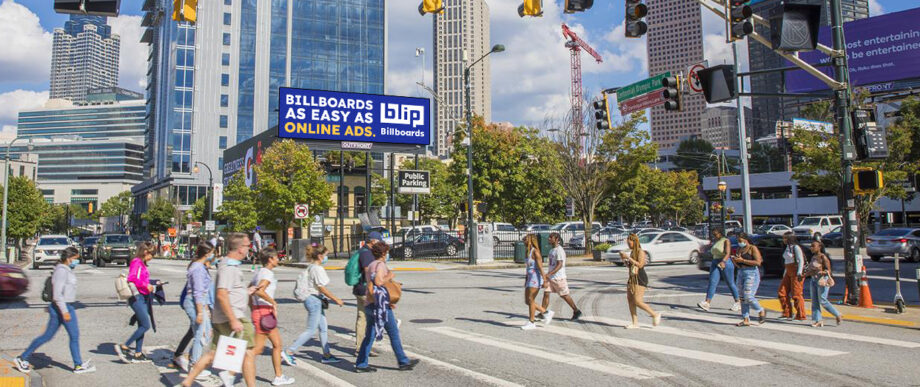
How much is a billboard in Ithaca?
Billboards in other New-york cities
Ithaca Billboard Advertising Guide
Ithaca may be small on the map, but it punches far above its weight in education, tourism, innovation, and culture. With a dense mix of students, year‑round residents, high‑income professionals, and seasonal visitors, it’s an ideal market for highly targeted digital billboard campaigns. In this guide, we’ll explore how to tailor your Blip campaigns and get the most from Ithaca billboards by matching your message to Ithaca’s rhythms, roads, and residents so your message hits the right people at the right time.
Understanding the Ithaca Market
Ithaca is the urban core of New York’s Finger Lakes region and the hub of Tompkins County. For advertisers considering billboards in Ithaca, understanding who is on the road, when, and why is essential to planning effective campaigns.
Key population and economic facts:
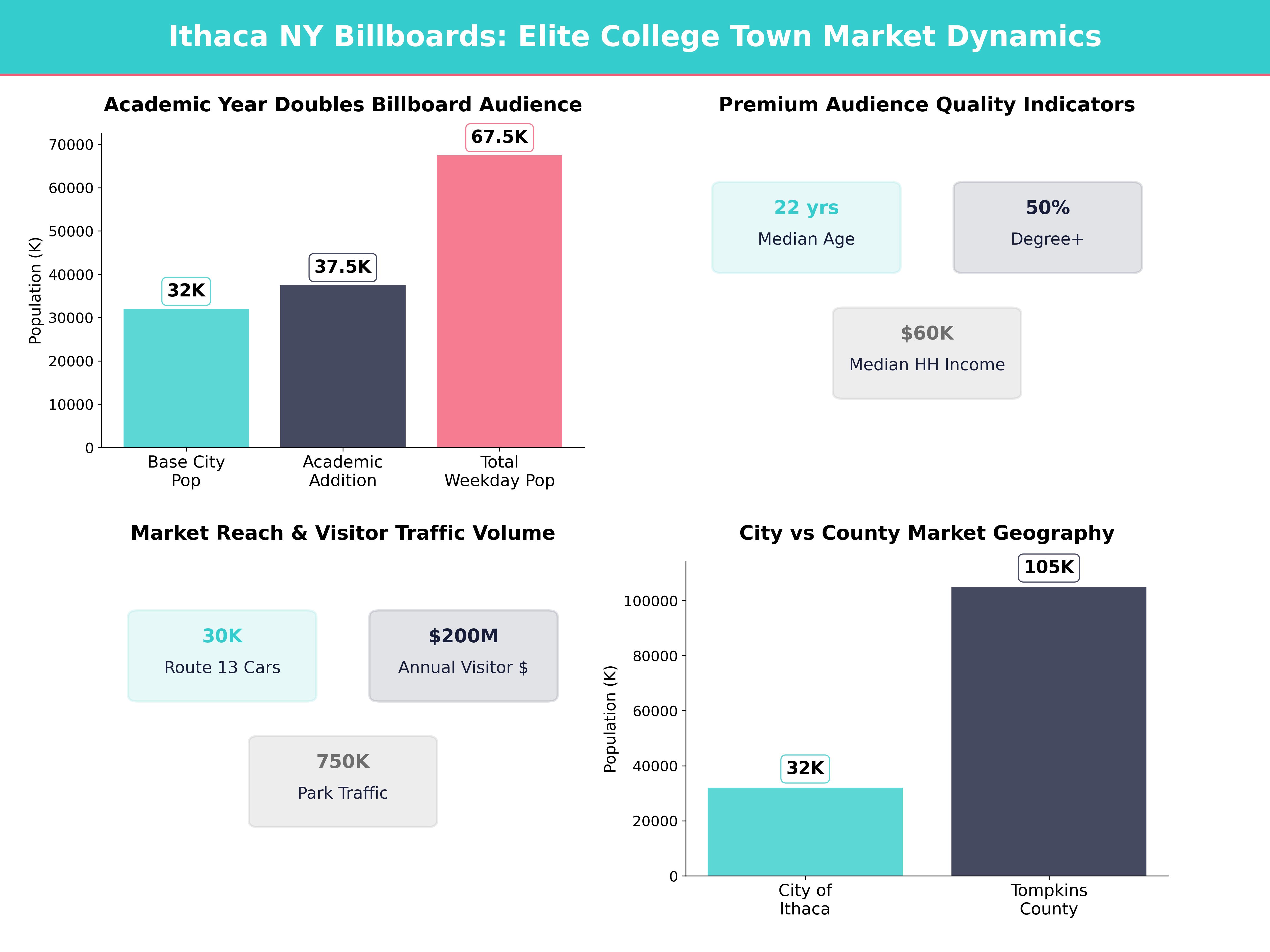
- The City of Ithaca has about 32,000 residents, while Tompkins County is home to roughly 105,000 people spread across suburbs and rural towns. The city’s median age is just over 22 years, far younger than the national median in the late 30s because of its large student population.
- Cornell University enrolls around 25,000 students (about 15,000 undergraduates and 10,000 graduate and professional students), plus more than 10,000 faculty and staff, according to Cornell.
- Ithaca College enrolls roughly 5,000 students, supported by about 800–1,000 faculty and staff.
- When school is in session, the combined daily academic population (students, faculty, and staff across Cornell, Ithaca College, and nearby institutions) commonly adds 35,000–40,000 people to the area, pushing the effective weekday population above 65,000–70,000 in and around the city.
- The city is highly mobile: more than 70% of housing units in the City of Ithaca are renter‑occupied, compared with roughly 35–40% renter share nationally, creating constant churn in apartments and services.
- Household income is polarized: Tompkins County’s median household income is in the mid‑$60,000s, while many student‑heavy neighborhoods report much lower formal incomes despite strong spending power backed by parents, loans, and stipends.
- Tourism is significant: before the pandemic, visitor spending in Tompkins County was around $220 million per year, and recent tourism reports shared by Visit Ithaca indicate that visitor spending has rebounded to $200 million+ annually, supporting an estimated 2,500–3,000 local jobs in lodging, dining, and attractions.
Local economic anchors and institutions:
- Major employers include Cornell University, Ithaca College, Tompkins County government, the Ithaca City School District (ICSD), Cayuga Medical Center (CMC), and regional professional services.
- The Ithaca Tompkins International Airport (ITH) serves about 100,000–120,000 passengers per year, concentrating high‑value business and leisure travelers on nearby roadways.
- The Tompkins Chamber represents 700+ member businesses, illustrating a dense local ecosystem of small and mid‑sized organizations that depend on regional visibility.
What this means for billboard advertisers:
- You’re not just advertising to 32,000 city residents—you’re tapping into a transient, high‑value audience of tens of thousands of students, thousands of staff and faculty, and hundreds of thousands of annual visitors. This makes Ithaca billboard advertising especially efficient when you need repeat exposures across diverse audiences.
- The population is relatively young and highly educated: well over 50% of adults in Ithaca have a bachelor’s degree or higher, more than double the national share. This, plus the 70%+ renter rate, makes the market ideal for services like housing, banking, healthcare, fitness, and local retail that need to reach frequent movers.
- Many residents and students are tech‑savvy and values‑driven. Surveys conducted by local institutions consistently show strong concern for sustainability, social justice, and local sourcing. Clear calls‑to‑action, strong digital tie‑ins (QR codes, short URLs), and mission‑oriented messaging tend to perform well on Ithaca billboards, especially when integrated with online campaigns.
Key Audience Segments in Ithaca
To build an effective campaign with billboards in Ithaca, we should think in terms of distinct audience groups and when they’re on the road.
1. University Students and Staff
- Cornell University sits on East Hill, with much of its population commuting along Route 13, Route 79, and Route 366. Cornell’s campus population alone is comparable to or larger than the total population of many nearby towns.
- Ithaca College lies on South Hill, feeding traffic via Route 96B and South Aurora Street between campus, downtown, and surrounding housing.
Academic calendar patterns:
- Peak on‑campus population: late August through early May, when upwards of 90–95% of enrolled students are in residence.
- Move‑in spikes: late August and January (spring semester start), with thousands of parents and out‑of‑town visitors. Dorm and apartment move‑in days can push traffic near campus routes 20–30% above typical weekday levels.
-
Major visitation weekends:
- New student orientation (August)
- Family weekends (typically September–October), each drawing thousands of visitors and filling local hotels to near 100% occupancy
- Admitted students / prospective student weekends (spring), when hundreds to thousands of families tour campuses
- Commencement and graduation events in May, when Cornell and Ithaca College together draw 10,000+ guests into the area over a single weekend, according to campus event estimates.
Messaging implications:
- Late summer / early fall: focus on student essentials (housing, mobile plans, furniture, local transport, food delivery), and family‑friendly services (restaurants, hotels, attractions for visiting parents). Many local landlords pre‑lease 60–80% of the next year’s student housing by late winter, so visibility in the fall and early spring is critical and a strong fit for Ithaca billboard advertising.
- Mid‑semester: highlight ongoing needs—groceries, cafés, tutoring, fitness, nightlife, rideshares, and mental health resources. Surveys at peer campuses show that 60–70% of students eat off‑campus at least weekly and 40%+ use delivery or takeout multiple times per week.
- Late spring: think moving, storage, travel, and career services, as many students relocate, intern, or graduate. Data from local storage operators indicate that student demand can spike 50–100% between April and June.
2. Year‑Round Residents and Commuters
Tompkins County workers cluster in:
- Downtown Ithaca and the West End,
- Cornell and Ithaca College campuses,
- The medical and research corridor near Cayuga Medical Center,
- Surrounding towns like Lansing, Dryden, and Trumansburg.
Roughly 60–65% of Tompkins County workers commute by car, while 10–15% use transit and another 10–15% walk or bike, creating steady daily flow on main corridors that are prime candidates for billboard rental in Ithaca.
Commuter flows:
- NY Route 13 (north–south) is the primary artery, funneling traffic from Lansing and the northern suburbs into the city and toward Cornell and downtown. New York State DOT counts on busy stretches of Route 13 near shopping centers and the Shops at Ithaca Mall show 25,000–35,000 vehicles per day.
- Route 79 brings drivers from rural communities and Cortland toward downtown and East Hill, typically carrying 10,000–18,000 vehicles per day near the city.
- Route 96B links Danby and South Hill to downtown and the campuses, with 8,000–15,000 vehicles per day on key segments.
Across these arterials, a conservative estimate of 60,000–80,000 daily vehicle trips pass through the greater Ithaca area, providing ample impressions for well‑placed digital boards.
Messaging implications:
- Morning drive (7–9 a.m.): commute‑oriented messages—coffee, breakfast, transit info, quick service restaurants, banking, and local news. Studies of commuter audiences show recall rates of 40–60% for simple billboard messages seen multiple times per week.
- Late afternoon (3–6 p.m.): focus on retail, grocery, childcare, after‑school activities, and healthcare appointments, when traffic volumes can be 20–30% higher than mid‑day on many corridors.
- Weekend mid‑day: highlight entertainment, dining, outdoor recreation, and regional attractions, especially as weekend traffic to state parks and wineries rises 30–50% in peak season.
3. Tourists and Weekend Visitors
Ithaca serves as both a destination and a gateway to the Finger Lakes:
- Visitors come for waterfalls, gorges, wine trails, and events like the Ithaca Festival (Ithaca Festival) and Apple Harvest Festival, promoted by the Downtown Ithaca Alliance. These signature events each attract 10,000–30,000 attendees over a weekend, depending on weather.
- Peak visitation runs May through October, with strong weekends tied to college events, foliage season, and regional wine tourism. Regional tourism data indicate that more than 60–70% of annual visitor spending occurs in this six‑month window.
- Nearby state parks such as Taughannock Falls State Park and Buttermilk Falls State Park together see well over 700,000–800,000 visitors per year, much of which passes through or near Ithaca’s road network.
Tourist flows:
- Many visitors enter via Route 13 from I‑81 and the north, or via Route 79 and Route 96 from other Finger Lakes and Southern Tier communities.
- Weekend traffic near hotels, downtown garages, and the Ithaca Commons increases significantly during festivals and college events; the Downtown Ithaca Alliance reports parking garages reaching 90–100% capacity during major festivals and graduation weekends.
Messaging implications:
- Use imagery that highlights natural beauty— Cayuga Lake short, clear directions (e.g., “Exit at Route 13—5 minutes to the Commons”). Wayfinding tests show that adding a simple distance or travel time can improve recall and follow‑through by 20–30%.
- Promote restaurants, wineries, breweries, attractions, and events with time‑sensitive, weekend‑focused schedules, especially Thursday–Sunday when hotel occupancy and restaurant demand are highest. Well‑timed Ithaca billboard advertising can capture tourists as they arrive and guide them toward partner businesses.
Seasonal Timing Strategies
Ithaca’s advertising calendar revolves around both academia and the four distinct seasons, and understanding these cycles is key to timing billboard rental in Ithaca.
Academic vs. Non‑Academic Months
- High student presence: late August–early May. During these months, students can represent 40–45% of the city’s total population on a typical weekday.
- Reduced student presence: mid‑May–mid‑August, with a partial “summer session” population. Even then, thousands of students and researchers remain on campus for classes, labs, and internships.
How to adapt campaigns:
- Fall and spring: ideal for brands targeting students and staff—housing, telecom, health services, fitness, local retail, and tech. Many local businesses see 20–30% upticks in sales when students return in late August, making these months a prime window for Ithaca billboard advertising.
- Summer: pivot to tourism and local families—outdoor recreation, summer camps, home improvement, and regional attractions. Visitor counts at nearby parks and trails often double between February and July.
Weather and Daylight Considerations
Ithaca is known for long winters and gray skies:
- Winters (December–March) bring significant snow, 100+ inches in some seasons, shorter daylight (sunset before 5 p.m. in mid‑winter), and slower driving speeds.
- Late spring through early fall offers longer days (sunset after 8 p.m. in June and July) and more outdoor activity, with walking and biking rates rising 30–50% compared to winter months.
Billboard creative implications:
- In winter, use high‑contrast color palettes and bolder typography to stand out in low‑light or overcast conditions. Research on outdoor readability shows that strong contrast can boost legibility distances by 25–40%.
- Emphasize indoor activities (museums, theaters, fitness, restaurants) and practical services (auto repair, heating, winter gear), which tend to see seasonal demand increases of 20–50%.
- In summer, feature bright, scenic imagery—waterfalls, trails, patios—and promote getaways, outdoor dining, and lake activities that align with peak park and waterfront use.
Digital scheduling tactics:
- Increase your presence during rush‑hour windows in winter, when darkness sets in early and illuminated digital boards stand out. Studies of digital out‑of‑home (DOOH) show higher ad recall in low‑light conditions, particularly for motion‑enabled or frequently refreshed creative.
- In summer, spread impressions into later evening periods when people are still out, especially around events and waterfront activity along Cayuga Lake.
Geographic Targeting and Local Movement Patterns
With Blip’s flexible location targeting, we can align message and placement with how people actually move through the Ithaca area, ensuring that Ithaca billboards reach the right drivers and passengers at the right moments.
Key Corridors to Consider
-
Route 13 Corridor (North–South Spine)
- Captures commuters from Lansing, the airport area, and northern suburbs entering the city, as well as shoppers heading to big‑box retail and the Ithaca Mall.
- Daily volumes of 25,000–35,000 vehicles on the busiest segments make this corridor a prime site for sustained reach.
- Ideal for: big‑ticket retail (cars, furniture), airport parking or shuttles tied to Ithaca Tompkins International Airport, chain and local restaurants, hotels, and service providers drawing from a wider radius.
-
East Hill / Campus Access Routes (Cornell)
- Routes 13, 79, and 366 lead toward Cornell’s campus and Collegetown, serving tens of thousands of daily campus‑related trips during the semester.
- Ideal for: student‑focused offers, campus events, transit info, and products/services that appeal to young professionals and faculty.
-
South Hill / 96B Corridor (Ithaca College and Southside)
- Route 96B funnels traffic from Danby and South Hill into downtown, intersecting Ithaca College housing and local neighborhoods.
- Ideal for: Ithaca College‑adjacent messaging, local services, and businesses on the south side of the city.
-
Downtown and West End Approaches
- Approaches to the Ithaca Commons, bus hubs, and central parking garages see heavy daily use, especially during rush hours and events. Parking facilities in this area can host thousands of vehicles per day, with sharp spikes on festival and game days.
- The Downtown Ithaca Alliance promotes the Commons and surrounding district as a year‑round destination, drawing both locals and visitors.
- Ideal for: downtown retail, restaurant, nightlife, and event promotions, including cross‑promotions with Commons businesses (Ithaca Commons).
Integrating Transit and Multi‑Modal Behavior
Ithaca has an active transit and cycling culture:
- The local bus system, TCAT, carries around 3 million trips per year in pre‑pandemic years and more than 2 million trips in recent years, many of which begin or end near downtown, campuses, and park‑and‑ride lots.
- The walkable Commons area sees sustained pedestrian traffic, amplified by students and downtown workers. On busy days, daily foot traffic can reach several thousand pedestrians, especially during lunch, early evenings, and events.
While billboards primarily reach drivers and passengers, many Ithacans move between modes (driving + walking, biking + bus). Use your board creative to:
- Reinforce brand presence they’ll see again on social, in local media such as the Ithaca Times or Ithaca Voice, or on TCAT shelters and interior ads.
- Make calls‑to‑action easy to remember until pedestrians are stationary (e.g., short URLs, short brand names, and clear value props). Marketing studies suggest that brand names of 12 characters or fewer are significantly easier to recall after short exposure.
Crafting Effective Creative for Ithaca
Ithaca’s audience responds well to visually strong, concise, and authentic messaging, especially when billboard rental in Ithaca is coordinated with other local touchpoints.
Visual Style and Tone
- Lean into local identity. References to the gorges, Cayuga Lake, campus icons, or the Commons can build instant affinity. Featuring recognizable landmarks can lift local relevance scores by 15–25% in brand surveys.
- Use real photography of local scenes when possible—vineyards, waterfalls like Buttermilk or Taughannock, local storefronts, or recognizable campus architecture.
- Keep copy to 7 words or fewer when possible; drivers may have only 2–4 seconds to process your message, and studies of roadside legibility recommend a maximum of 8–10 words.
Example creative frameworks:
- “New to Cornell? Bank Local in 5 Minutes →”
- “Hungry on Route 13? Exit Now for Tacos”
- “Gorges Views. Gorges Beer. Downtown Tonight.”
Values and Messaging
Given the highly educated and socially engaged population:
- Highlight sustainability, local sourcing, and community involvement when they’re authentic; link to local initiatives or recognitions from groups such as Visit Ithaca or the Tompkins Chamber when applicable.
- Avoid overly generic corporate language; favor concrete benefits (“Free delivery in Ithaca,” “Student discount with ID,” “Walkable from the Commons”). In A/B tests, clear benefit‑led headlines often see 20–40% higher response rates than vague slogans.
Calls‑to‑Action that Fit On‑The‑Go Lifestyles
Design for quick action:
- Use short URLs or branded domains (e.g., brandithaca.com) instead of long tracking links. Marketers frequently report 10–20% higher direct‑type traffic with simplified URLs.
- QR codes can work, but ensure they are large and high‑contrast; remember that scanning from a moving vehicle is difficult, so think more about passengers and stopped traffic at lights or congestion points.
- Feature simple next steps: “Search: [Brand Name] Ithaca,” “Text ITHACA to [short code],” or “Exit 13N – 2 mins left.” Simple search CTAs have been shown to outperform complex “learn more” language by 15–25% in mobile search lift studies.
Timing and Scheduling: Using Digital Flexibility
Digital billboards let us adjust in near real‑time. In a place with as many micro‑events as Ithaca, this flexibility is invaluable and a core advantage of modern Ithaca billboard advertising.
Dayparting Strategies
-
Morning (6–10 a.m.):
- Commuters, school runs, healthcare staff, and early‑shift workers.
- Great for coffee, breakfast, transit notifications, banking, and B2B services. National DOOH benchmarks show engagement rates 10–20% higher for commute‑time informational messages.
-
Midday (10 a.m.–3 p.m.):
- Errand‑running locals, tourists, and flexible‑schedule professionals.
- Focus on lunch, shopping, healthcare appointments, and tourism. Midday is also when many visitors first approach downtown or state parks.
-
Afternoon/Evening (3–8 p.m.):
- School and work departures, events, and dining.
- Promote happy hours, performances, sports, and family activities. Restaurant brands often see 30–40% higher redemption for offers shown in the two hours before typical dining peaks.
With Blip, we can concentrate impressions into the specific hours when your audience is most likely to be on a given route—for example, aligning student‑focused ads with class change peaks (often on the hour between 10 a.m. and 4 p.m.) or targeting restaurant promos around early evening.
Weather‑ and Event‑Responsive Campaigns
While we’re not running dynamic weather triggers directly inside the creative here, we can still plan for seasonal behavior:
- On snowy weeks, shift messaging to indoor offerings, winter services, and reminders about safety or convenience (delivery, telehealth, remote services). Local crash and delay data typically show travel times increasing by 20–30% during storms, which can also increase dwell time with your message.
- On sunny weekends in spring and fall, lean into parks, trails, wineries, and patio dining, which see visitor numbers jump by 30–50% relative to dreary days.
- For key local events—like Ithaca Festival, Apple Fest (Apple Harvest Festival), or major sports weekends—we can increase presence in the days leading up to and during the events to capture the surge in visitors and local traffic.
Use local sources like the City of Ithaca and Visit Ithaca event calendars, as well as updates from the Downtown Ithaca Alliance, to anticipate spikes well in advance.
Industry‑Specific Ideas for Ithaca
Restaurants, Bars, and Cafés
- Highlight proximity and ease: “2 minutes from the Commons,” “Next right off Route 13.” Wayfinding‑style messaging can increase store visit rates by 15–30% versus generic branding alone.
- Rotate creatives for lunch vs. late‑night audiences—quick lunch specials during midday; nightlife and music in the evening. In college towns, late‑night food orders can account for 20–35% of daily volume on Thursdays–Saturdays.
- Feature vegan, vegetarian, or local-sourcing credentials, which tend to resonate strongly in Ithaca, where local surveys show that 30–40% of residents regularly seek vegetarian/vegan options.
Real Estate and Housing
With thousands of students and staff moving annually, plus a tight rental market:
- Tompkins County’s rental vacancy rate often hovers in the 2–4% range—well below the 7–8% often cited as “balanced”—making visibility a key competitive advantage.
- Time campaigns around leasing seasons—late winter and early spring for the following academic year, when many property managers sign 50–70% of leases for the next fall.
- Use boards along campus routes to reach students who may be rethinking housing during the year; surveys indicate that 25–35% of students consider changing housing between academic years.
- Emphasize distance to campus and transportation options (walking, biking, bus routes) and mention proximity to TCAT lines, which can increase perceived value for car‑free students.
Education, Tutoring, and Test Prep
- Target board locations and dayparts aligned with school and campus commutes; the Ithaca City School District serves ~5,000–6,000 K–12 students, many of whose families travel along the same major corridors as university commuters.
- Promote SAT/ACT/MCAT/LSAT prep, tutoring, and continuing education programs for both high schoolers and university students. Nationally, more than 2 million students sit for college entrance exams each year, and Ithaca’s high college‑going rate means a larger local share of households engage in test prep.
- Tie messages into academic milestones: midterms, finals, and grad school application seasons. Tutoring and test prep inquiries often spike 20–40% in the 6–8 weeks before major exam dates.
Tourism, Attractions, and Hospitality
- Focus on weekends and summer months, when visitor volumes peak and hotel occupancy can climb into the 70–90% range during popular event weekends.
- Promote wineries, breweries, museums, and outdoor attractions with simple turn‑by‑turn directions from major corridors. Attractions that add billboards and clear wayfinding often report 10–25% increases in same‑day walk‑in visits.
- Use boards to cross‑promote events listed by Visit Ithaca or Downtown Ithaca Alliance, and mention partnerships or festival tie‑ins when relevant.
Healthcare and Wellness
Ithaca’s healthcare and wellness market serves both residents and thousands of students:
- Promote urgent care, primary care, dental, and mental health services along commuter and campus routes. The presence of Cayuga Medical Center, outpatient clinics, and campus health centers means a large local ecosystem of providers.
- Use easy, trust‑building messages: “New patients welcome,” “Same‑day appointments,” “Telehealth available.” Healthcare campaigns that stress access and convenience have been shown to drive 20–30% higher inquiry volumes than generic branding alone.
- Time campaigns around fall and winter for flu vaccines and cold/flu care; spring and early fall for sports physicals and preventive care. Many practices see seasonal swings of 30–50% in visit volume across these periods.
Integrating Billboards with Local Media and Digital
Billboards in Ithaca work best when they’re part of an integrated strategy that includes digital and local media.
- Coordinate campaign timing with coverage or ads in outlets like the Ithaca Times and Ithaca Voice. Cross‑channel campaigns (OOH + digital) can increase brand recall by 50–75% over single‑channel efforts.
- Mirror your billboard creative in social campaigns aimed at people living or traveling through Ithaca and Tompkins County; geo‑targeting radius settings of 10–25 miles around the city typically capture the core market.
- Use vanity URLs or offer codes specific to Ithaca to measure response and compare performance against other markets. Many advertisers find that OOH‑attributed web visits increase 10–20% after adding simple, trackable calls‑to‑action.
Because Blip campaigns can be adjusted quickly, we can:
- Test multiple creatives simultaneously, then allocate more impressions to the best‑performing versions. Even simple A/B testing (two versions) can reveal 20–30% performance gaps in click‑through or search lift.
- Align creative swaps with new product launches, seasonal offers, or coverage in local media, maximizing the chances that people who “just heard about you” also “just saw you” on their commute.
Community and Regulatory Considerations
Outdoor advertising in and around Ithaca exists within a strong community and regulatory framework.
- The City of Ithaca and Tompkins County maintain zoning and sign ordinances; details are available through the City of Ithaca and Tompkins County websites. Before committing to billboard rental in Ithaca, it’s wise to understand these guidelines and how they affect creative and placement.
- As a community with active civic engagement, Ithaca residents tend to respond positively to responsible, tasteful advertising and negatively to content that feels deceptive or out of step with local values. Local surveys frequently report 60–70% of residents engaging in some form of civic or community activity each year.
Best practices:
- Avoid overly cluttered or aggressive visuals; aim for clarity and respect for the local environment. Limiting creatives to one key image, one headline, and one logo/CTA aligns with best‑practice readability research.
- When appropriate, highlight your brand’s involvement in local initiatives, sponsorships, or partnerships—especially with organizations recognized in the community, such as schools, nonprofits, or arts groups supported by the Downtown Ithaca Alliance or Tompkins Chamber.
- Keep copy accurate and up to date; if you promote time‑limited offers or events, use Blip’s flexibility to end or update creatives promptly. Inaccurate time‑sensitive ads can erode trust—local consumer surveys show that 30–40% of people are less likely to revisit a business after encountering misleading promotions.
By understanding Ithaca’s unique blend of university life, tourism, and local community—and by leveraging the flexibility of digital billboards—we can craft campaigns that feel timely, relevant, and genuinely local. From synchronized academic‑year promotions to weather‑aware seasonal messaging, Ithaca gives us many opportunities to reach the right people with the right message at precisely the right moment, and to make the most of every impression delivered through Ithaca billboards.