Billboards near Beltsville, MD
No Minimum Spend. No Long-Term Contracts. Just Results.
Trusted by Leading Brands


Billboard advertising
near Beltsville has never been easier

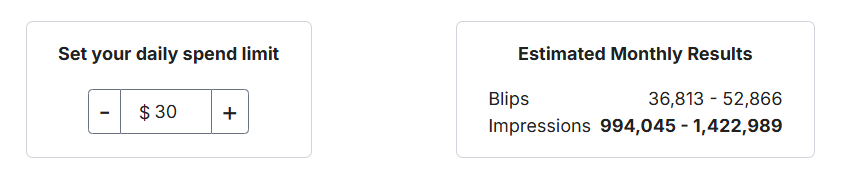
How much is a billboard near Beltsville?
Why Choose Blip for Billboard Advertising near Beltsville
-
Blip lets you launch fast in Beltsville, reaching I-95, I-495, and MD 295 commuters without a traditional buy.
-
Use Blip-optimized campaigns in Beltsville to let the platform auto-choose boards and timing for campus, shopper, and commuter reach.
-
No contracts in Beltsville means you can shift budget for UMD football weekends, Laurel Park traffic, or weekday rush hours.
-
Track Beltsville campaigns in real time and adjust as traffic shifts across U.S. 1, MD 198, and the Beltway.
-
Blip's flexible budgets fit Beltsville's mixed audience, from Prince George's families to UMD students and research workers.
Frequently Asked Questions About Billboard Advertising near Beltsville
How much does a billboard cost in Beltsville with Blip?
Blip makes billboard advertising in the Beltsville area flexible and budget-friendly. Instead of paying a fixed rate, you only pay when your ad actually appears as a 7.5-to-10-second “blip” on a rotating digital billboard serving the Beltsville area, with pricing starting at just $0.01 per display. Because cost varies by time of day, location, and demand, you stay in control while keeping advertising accessible.
Where can I advertise with Blip in Beltsville?
We can reach the Beltsville market effectively from our 7 digital billboards serving the Beltsville area from nearby College Park, Laurel, and Lanham, all within 10.0 miles of Beltsville. Our College Park boards are only 2.8 miles from Beltsville, our Laurel boards are 4.7 miles away, and our Lanham boards are 7.8 miles away. The strongest regional approach is often to use all 7 boards together so you create repeat exposure across multiple entry points.
What kind of traffic and commuters does the Beltsville area have for billboard ads?
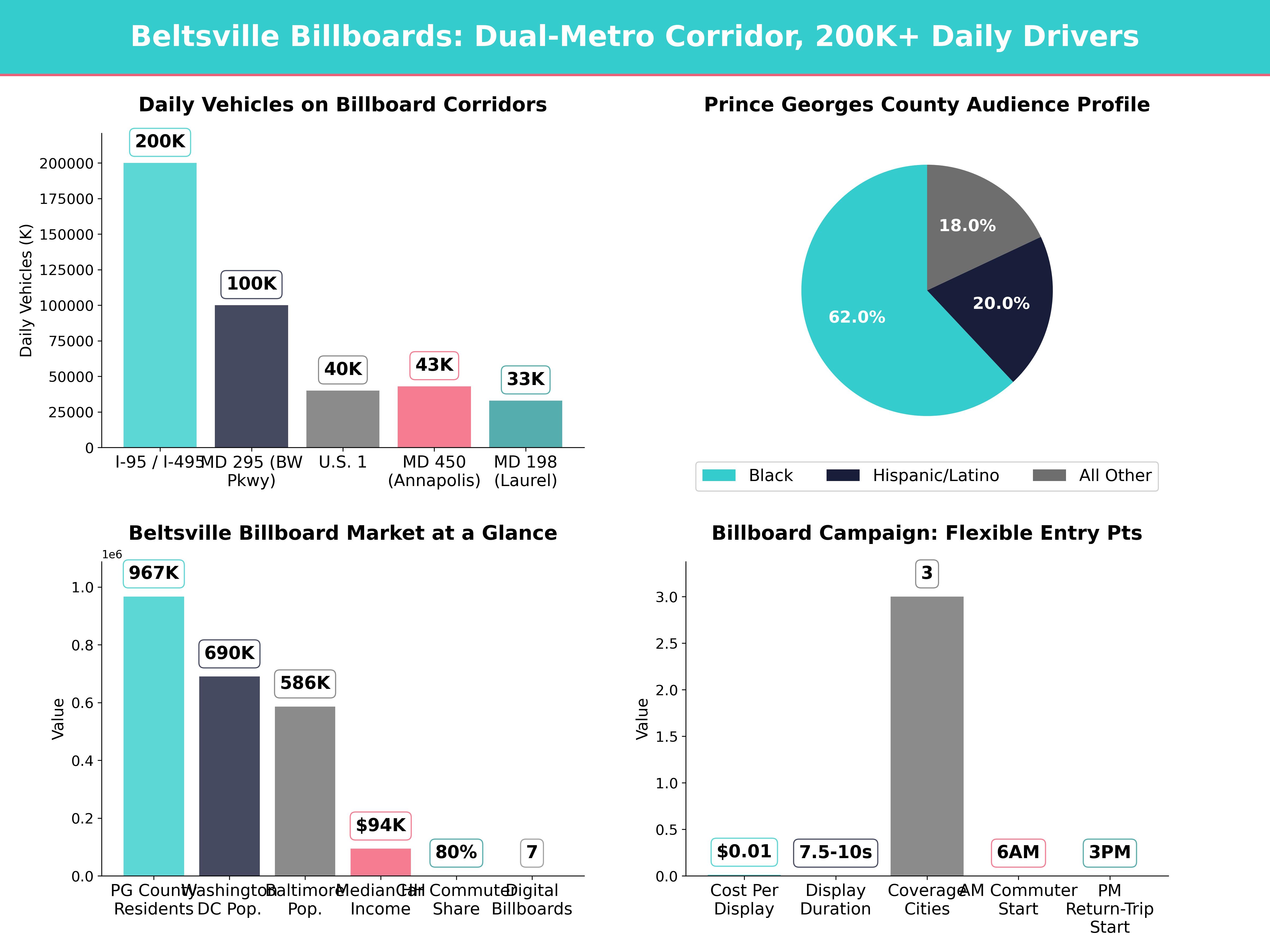
In the Beltsville area, roughly 80% of workers travel by car when we combine solo drivers and carpools. Segments of I-95 and I-495 near College Park and Greenbelt often exceed 200,000 vehicles per day, and the Baltimore-Washington Parkway, MD 295, is commonly above 100,000 vehicles per day. Those roads connect the Beltsville area to Washington, Laurel, Greenbelt, and points farther north.
When is the best time to run Blip ads in Beltsville?
For many Beltsville-area campaigns, we find the best starting windows are 6 a.m. to 10 a.m. for commuter awareness and 3 p.m. to 7 p.m. for return-trip reinforcement. Friday afternoons work well for dining, entertainment, and weekend events, and Saturday late morning through evening is strong for shopping and family outings. Seasonally, late July through September is ideal for back-to-school, apartments, furniture, telecom, banking, and food.
Who should advertise in Beltsville with billboard ads?
The Beltsville area sits in a county with a median household income above $90,000, and that supports strong demand for healthcare, retail, home services, education, dining, financial services, and professional recruiting. The area also benefits from commuters, University of Maryland traffic, families, neighborhood shoppers, and visitors. For restaurants, retail, healthcare, apartments, entertainment, test prep, telecom, and recruiting, this is a highly useful audience.
Do I need a contract to advertise with Blip near Beltsville?
No, Blip has no long-term contracts or minimum commitments. You can start, pause, or stop your campaign at any time.
How fast can I launch a billboard campaign with Blip near Beltsville?
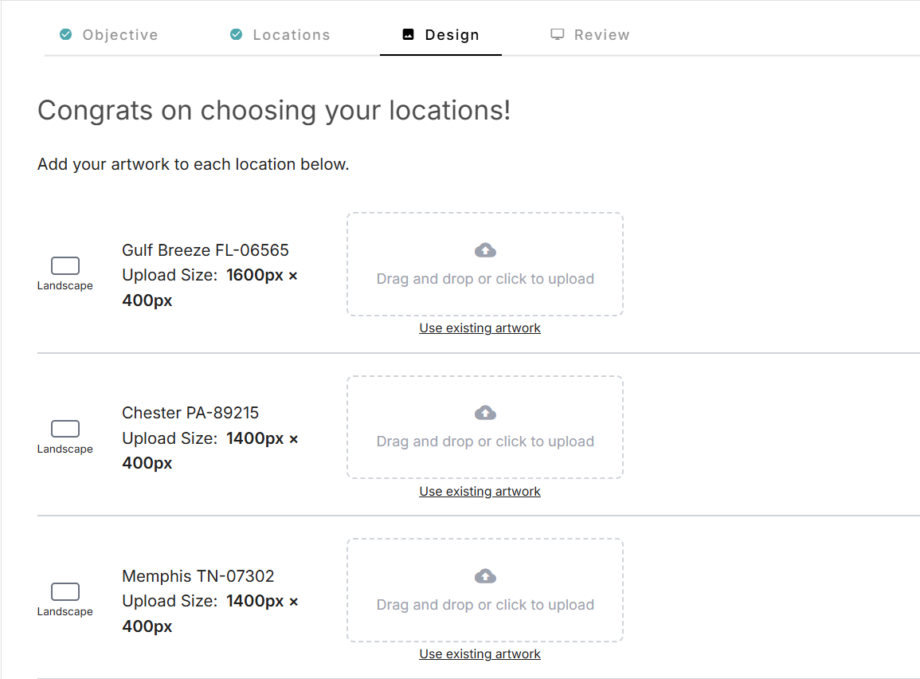
You can have your campaign live in minutes. Create a free account, select your locations, set your budget, upload your design, and start running once approved.
Where can I advertise with Blip near Beltsville?
Blip has digital billboards near Beltsville. You can browse available locations on a map, choose the ones that fit your audience, and start advertising right away.
Still have questions? Launch a campaign in minutes — no contracts, no commitments.
Start Your CampaignBeltsville Billboard Advertising Guide
The Beltsville area is one of the strongest billboard markets in central Maryland because it sits between Washington, D.C. (about 690,000 residents), and Baltimore (about 586,000 residents), and it pulls daily traffic from major commuter, education, research, and shopping corridors. We can reach this market effectively from our 7 digital billboards serving the Beltsville area from nearby College Park, Laurel 10.0 miles of Beltsville. That matters because consumers near Beltsville do not move through one single downtown core. They spread across I-95, I-495, MD 295, U.S. 1, and the retail and residential routes that connect the Beltsville area to the rest of Prince George’s County
Beltsville area market overview
Population, geography, and regional scale near Beltsville
We start with scale, because the Beltsville area is larger and more connected than many advertisers expect. Beltsville itself has a population of 18,335, and it sits within Prince George’s County 967,201 residents in the 2020 Census. Maryland had 6,177,224 residents in that same count, so the Beltsville area participates in one of the country’s densest and most affluent statewide consumer environments, with roughly 620 people per square mile and a median household income around $94,000.
Nearby population centers add immediate reach for campaigns serving the Beltsville area.
- College Park had 34,740 residents in 2020.
- Laurel 25,060 residents in 2020.
- Lanham had 11,282 residents in 2020.
- Prince George’s County Planning Department serves a county with 27 municipalities, which helps explain why audience movement near Beltsville is dispersed across multiple hubs.
The Beltsville area also benefits from pure location. It is roughly 15 miles from downtown Washington and about 25 miles from downtown Baltimore, which makes nearby boards useful for both local and regional awareness. Our billboard inventory reflects that reality, because we can approach the Beltsville market from 3 nearby cities rather than relying on a single corridor.
Economic strength and commuting behavior in the Beltsville area
The Beltsville area sits in a county with a median household income above $90,000, and that supports strong demand for healthcare, retail, home services, education, dining, financial services, and professional recruiting. We see a broad mix of employers near Beltsville, including higher education, public-sector and contractor work, healthcare, logistics, scientific research, and distribution. Organizations such as the Prince George’s County Economic Development Corporation, University of Maryland, and regional healthcare systems reinforce that employment base.
Commuting still drives the market. In the Beltsville area, roughly 80% of workers travel by car when we combine solo drivers and carpools. That matters for billboard planning because roadway exposure remains the most reliable way to build repeat local frequency. Even with access to MTA Maryland commuter rail and WMATA transit nearby, the Beltsville area remains strongly auto-oriented, especially for shopping, school runs, and suburban work trips.
Key traffic corridors serving the Beltsville area
Interstate and parkway routes near Beltsville
When we advertise near Beltsville, the biggest advantage is corridor quality. According to traffic data published by the Maryland State Highway Administration, several routes serving the Beltsville area operate at very high daily volumes.
- Segments of I-95 and I-495 near College Park and Greenbelt often exceed 200,000 vehicles per day.
- The Baltimore-Washington Parkway, MD 295, near the Beltsville area is commonly above 100,000 vehicles per day.
- Those two north-south routes are the backbone of commuter movement between Washington, the Beltsville area, Laurel Greenbelt, and points farther north.
These are exactly the kinds of roads where billboard advertising works well. Drivers use them repeatedly, they carry a mix of local and regional audiences, and they connect the Beltsville area to retail destinations, employment centers, and event venues.
Arterials and connectors that feed the Beltsville market
The second layer of reach comes from arterial roads that funnel local trips into the interstates.
- U.S. 1 near College Park and the Beltsville area often runs in the 30,000 to 50,000 vehicles per day range.
- MD 198 near Laurel 25,000 to 40,000 vehicles per day range.
- MD 450, Annapolis Road, near Lanham often operates in the 35,000 to 50,000 vehicles per day range.
- Local connectors such as Powder Mill Road, Rhode Island Avenue, and Edmonston Road feed shoppers, warehouse workers, school traffic, and neighborhood trips through the Beltsville area.
We use these corridors differently from the interstates. Interstate-facing boards help us build scale and frequency fast. Arterial-facing boards help us reach people closer to decision moments, such as meals, errands, appointments, service calls, and local retail stops. Because our Beltsville-area boards are placed in nearby College Park, Laurel
Audience segments we can reach in the Beltsville area
Commuters and working professionals near Beltsville
The first audience is the daily commuter. The Beltsville area pulls workers traveling between homes in northern and central Prince George’s County and jobs spread across Washington’s northeast suburbs. We can reach those people on the way to office campuses, industrial properties, healthcare facilities, and education centers.
This audience responds well to straightforward offers, clear brand names, and repeated exposure during peak travel windows. For categories such as banking, urgent care, legal services, car dealerships, recruiting, home improvement, and business services, commuter repetition matters more than novelty.
Students, faculty, and campus visitors serving the Beltsville area
The Beltsville area also benefits from one of the state’s biggest audience engines: University of Maryland in nearby College Park. The university enrolls about 41,000 students, and that number does not include faculty, staff, visiting families, event attendees, and conference guests. Athletic and entertainment traffic adds even more volume.
- SECU Stadium has a capacity of 51,802.
- Xfinity Center seats 17,950.
- The Clarice Smith Performing Arts Center and The Hotel at the University of Maryland add year-round cultural and hospitality traffic near the Beltsville area.
For restaurants, retail, healthcare, apartments, entertainment, test prep, telecom, and recruiting, this is a highly useful audience. We can use nearby College Park boards to capture it while still serving the Beltsville market.
Families, neighborhood shoppers, and household decision-makers near Beltsville
Family demand is another major segment. Prince George’s County Public Schools serves more than 130,000 students across more than 200 schools, which creates a steady flow of parents, staff, and after-school travel throughout the county. The Beltsville area also sits close to neighborhood retail patterns in Laurel Greenbelt, New Carrollton Bowie.
This audience is especially valuable for grocery, fast casual dining, family entertainment, healthcare, insurance, dentistry, child enrichment, and home services. Because many of these trips are repeated weekly, billboard frequency near Beltsville can reinforce local familiarity very quickly.
Visitors, sports fans, and leisure traffic near Beltsville
We should not overlook visitor traffic. The Beltsville area benefits from leisure movement tied to campus sports, horse racing at Laurel Park, community festivals, and county tourism promoted by Experience Prince George’s. Weekend exposure can be particularly useful for dining, lodging, attractions, medical services, and special events.
Seasonal and timing opportunities near Beltsville
Academic and sports calendars in the Beltsville area
The University of Maryland calendar gives the Beltsville area clear advertising windows. We usually think about the year in four major campus phases.
- Late July through September is ideal for back-to-school, apartments, furniture, telecom, banking, and food.
- September through November is strong for football traffic, alumni weekends, and student move-in routines.
- November through March supports basketball, holiday retail, and indoor entertainment.
- April and May bring spring events, open houses, graduations, and family visits.
Local events also matter. Maryland Day at UMD, community programming from PG Parks, and downtown events from Laurel Main Street
Retail, service, and weather-driven timing near Beltsville
Seasonality in the Beltsville area is not only about tourism. It is also about life-cycle demand.
- We usually like January through April for tax, legal, fitness, and healthcare campaigns.
- We like March through June for HVAC, roofing, landscaping, and remodeling.
- We like June through August for camps, family dining, travel-related brands, beverages, and auto services.
- We like November and December for holiday retail, gift services, urgent care, entertainment, and family events.
The climate near Beltsville also supports practical advertising. Humid summers, winter cold snaps, and stormy transition seasons create urgency for home services, tire shops, repair specialists, and medical providers. When we time those categories around forecast changes and commuter periods, response tends to improve.
Dayparting opportunities serving the Beltsville market
Timing by hour is just as important as timing by season. For many Beltsville-area campaigns, we find the best starting windows are:
- 6 a.m. to 10 a.m. for commuter awareness.
- 3 p.m. to 7 p.m. for return-trip reinforcement.
- Friday afternoons for dining, entertainment, and weekend events.
- Saturday late morning through evening for shopping, family outings, and service businesses with weekend demand.
Billboard design tips for the Beltsville market
Creative choices that fit Beltsville-area roads
The Beltsville market is driven by moving traffic, so our creative should be fast to read. On higher-speed corridors near Beltsville, we usually recommend 6 words or fewer on the main line, one clear brand mark, and one simple action. Short beats clever on I-95, I-495, and MD 295.
We also like to tailor the message to the road type.
- On interstate-oriented boards, we use big brand names, category cues, and broad offers.
- On U.S. 1 and MD 198 style corridors, we can add a stronger local cue such as “Next Exit,” “Near Route 1,” or “Minutes from Laurel.”
- For businesses serving multiple communities, we often list the market clearly, such as “Serving Beltsville, College Park, Laurel, and Lanham.”
Color and contrast matter. Creative that borrows from local visual cues, including Maryland-style red, gold, black, and white, can feel familiar without becoming cluttered. For campus-adjacent messaging near College Park, those tones often feel especially natural.
Cultural relevance and local resonance near Beltsville
The Beltsville area is diverse, and our creative should reflect that. Prince George’s County 1 in 5 residents is Hispanic or Latino (roughly 62% Black and about 20% Hispanic or Latino). That makes inclusive casting, bilingual or Spanish-language creative, and neighborhood-aware messaging especially useful for healthcare, retail, education, telecom, and public-service campaigns.
We also recommend imagery that matches the corridor audience.
- For commuter-heavy boards, we prefer professionals, families, and practical problem-solving visuals.
- For College Park-area boards, we often use younger talent, campus energy, and event-driven urgency.
- For Laurel-facing boards, we often emphasize household value, convenience, and everyday services.
- For Lanham-facing boards, we often lean into regional accessibility, healthcare, and broader Prince George’s County reach.
On high-speed roads, we usually avoid QR-heavy creative. A short URL, a memorable offer, or a simple brand promise tends to work better.
Regional strategies for advertising near Beltsville
Using College Park billboards to reach the Beltsville area
Our College Park boards are only 2.8 miles from Beltsville, so they are the closest way to intercept university traffic and southern approaches into the market. We like these boards for:
- Campus-oriented brands.
- Fast casual and restaurant campaigns.
- Healthcare and urgent care.
- Recruiting and employment advertising.
- Sports and event promotions.
These boards work especially well when we want exposure tied to U.S. 1, the Beltway, and university movement.
Using Laurel billboards to reach the Beltsville area
Our Laurel 4.7 miles from Beltsville, and they are excellent for northbound and southbound household traffic serving the Beltsville area. We like Laurel for:
- Home services.
- Grocery and retail.
- Automotive.
- Medical and dental campaigns.
- Family entertainment.
- Race-day and weekend promotions tied to Laurel Park.
Laurel helps us capture shoppers and residents moving between suburban neighborhoods, I-95, MD 198, and U.S. 1.
Using Lanham billboards to reach the Beltsville area
Our Lanham boards are 7.8 miles from Beltsville, and they help us cover the eastern and southeastern side of the market. These are especially useful when we want to reach beltway traffic coming from or heading toward New Carrollton Bowie, and central Prince George’s County. We often use Lanham boards for:
- Regional healthcare systems.
- Higher-ticket retail.
- Professional services.
- Event marketing.
- B2B and recruiting campaigns.
Building a surround-market strategy near Beltsville
The strongest regional approach is often to use all 7 boards together. When we do that, we create repeat exposure across multiple entry points instead of betting on one road. For the Beltsville area, that matters because local movement is split across campus traffic, Beltway commuters, I-95 travelers, and everyday suburban errands.
Blip tools and capabilities for Beltsville-area campaigns
How we use Blip’s tools to match Beltsville-area behavior
For the Beltsville area, Blip works well because traffic patterns are layered and time-sensitive. If we want fast setup and algorithmic allocation, we can start with a Blip-optimized campaign and let the platform distribute budget across the boards most likely to reach our target. If we want tighter local control, we can run a manual campaign and pick the specific boards near College Park, Laurel
We also like Blip for timing flexibility. We can focus spend on commuter windows, game days, weekend shopping, or back-to-school periods without committing to static schedules. Because pricing is pay-per-play and starts at $0.01 per display, we can test the Beltsville market without the barrier of a traditional fixed-location contract. Each ad display, or blip, runs for 7.5 to 10 seconds, which is enough time for strong billboard creative if we keep the message simple.
How analytics help us improve near Beltsville
Real-time reporting is especially helpful in the Beltsville area because nearby submarkets behave differently. We might learn that College Park boards outperform for restaurants and student offers, while Laurel boards outperform for dentists, HVAC, and family retail. We can then shift budget instead of waiting until the end of a long contract period.
That flexibility matters when local conditions change. A campaign can pivot around a weather event, a football weekend, a retail sale, or a recruiting push very quickly.
Getting started with billboard rental near Beltsville
How we evaluate the right billboard mix near Beltsville
When we begin a Beltsville-area campaign, we usually start with the goal, not the board. The right mix depends on what we want the audience to do.
- If we want broad awareness, we usually spread across all 7 boards serving the Beltsville area.
- If we want campus reach, we start with College Park.
- If we want household shoppers and suburban families, we lean toward Laurel
- If we want wider Prince George’s County commuter reach, we add Lanham.
- If we want immediate local reinforcement, we prioritize the boards closest to the advertiser’s trade area and open hours.
We also evaluate each location by route type, direction of travel, likely audience mindset, and distance from the actual business or offer. A medical office may want dependable commuter repetition. A restaurant may want lunch and dinner timing. A university-adjacent retailer may want semester-focused bursts.
What to expect when renting a billboard near Beltsville with Blip
Traditional billboard buying often involves long sales cycles, fixed inventory packages, and less flexibility after launch. Blip simplifies the process because we can launch online, adjust creative, modify budgets, and change timing without negotiating a new contract every time. That is especially useful near Beltsville, where one campaign may need to blend campus traffic, suburban families, and regional commuters.
For many advertisers, a smart starting point is a 2- to 4-week test with clear creative and defined time windows. We can review performance, compare nearby-city coverage, and decide whether to scale. Some brands begin with 1 to 3 core boards for a focused test. Others start with all 7 Beltsville-area boards to build reach quickly.
The key is to match the board to the movement pattern. If our audience uses I-95, the Beltway, U.S. 1, and MD 198 every week, billboard advertising near Beltsville can become one of the most efficient ways to stay visible. With the right corridor mix, the right timing, and concise local creative, we can build durable awareness across the Beltsville area without the complexity of a traditional billboard buy.