Billboards in Finksburg, MD
No Minimum Spend. No Long-Term Contracts. Just Results.
Trusted by Leading Brands


Billboard advertising
in Finksburg has never been easier



How much is a billboard in Finksburg?
Why Choose Blip for Billboard Advertising in Finksburg
-
Blip lets you self-serve Finksburg billboards fast, reaching MD 140 commuters without contracts or long lead times.
-
Set flexible budgets in Finksburg and pay only for blips earned along the Carroll County and northwest Baltimore County travel pattern.
-
Use Blip-optimized campaigns to auto-target Finksburg, Westminster, and Owings Mills corridors based on your goals and budget.
-
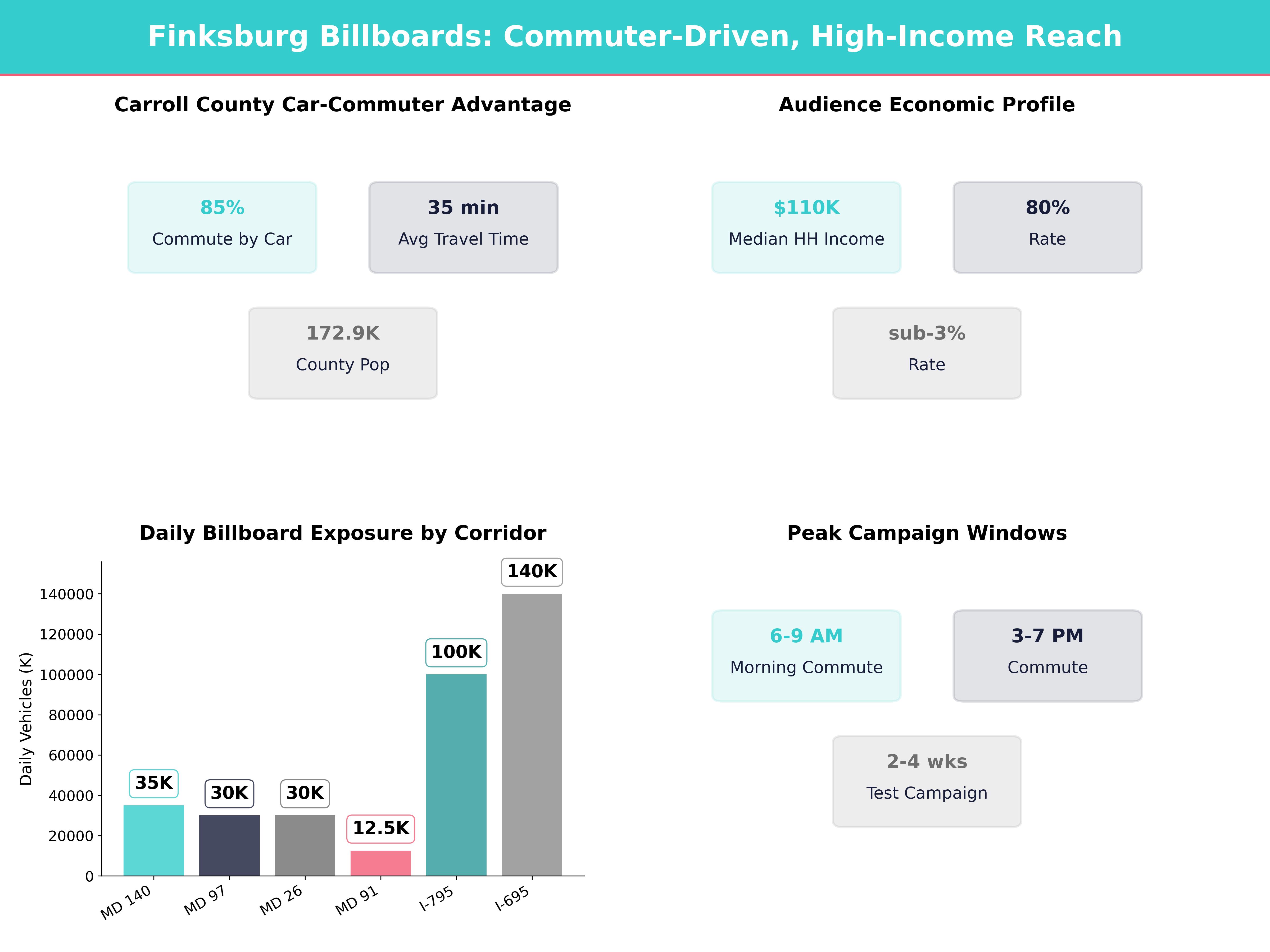
Daypart Finksburg ads for 6-9 a.m. and 3-7 p.m. commuter waves, plus weekend windows for agritourism and family traffic.
-
Track Finksburg performance in real time, then shift spend toward the MD 140 or MD 91 routes that drive the best response.
-
Blip’s creative tools make it easy to build clear Finksburg ads for homeowners, students, and school-year traffic.
Frequently Asked Questions About Billboard Advertising in Finksburg
How much does a billboard cost in Finksburg with Blip?
With Blip, billboard advertising in Finksburg can be surprisingly affordable because you only pay when your ad actually appears. Each “blip” is a 7.5-to-10-second display on a rotating digital billboard, and pricing starts at just $0.01 per display. You set a daily budget, and Blip’s system uses it to bid for open ad slots, helping maximize your reach based on time of day, location, and advertiser demand.
Where can I advertise with Blip in Finksburg along the main roads?
MD 140 is the backbone of the Finksburg market and generally shows volumes in the range of 30,000 to 40,000 vehicles per day, depending on the exact segment and year counted. Near Finksburg, MD 91 is generally around 10,000 to 15,000 vehicles per day and captures more localized, high-intent travel. I-795 and I-695 are also essential to the regional strategy because many Carroll County commuters funnel toward those corridors.
Why is Finksburg a good billboard market for Blip?
Finksburg is a strong billboard market because we are not only reaching one small community, but also tapping into the broader Carroll County and northwest Baltimore County travel pattern centered on Maryland Route 140. Carroll County had 172,891 residents in 2020, and about 85% of workers commute by car with average travel times near 35 minutes. That creates repeated exposure during daily drives, school trips, errands, and weekend recreation.
What kind of businesses do well with billboard ads in Finksburg?
From an advertiser’s perspective, Finksburg benefits from Carroll County’s relatively strong household profile, with median household income at roughly $110,000 and homeownership around 80%. That combination matters because homeowners and higher-income family households are prime audiences for healthcare, home services, auto dealers, financial services, education, insurance, and higher-ticket retail. Local service businesses, schools, childcare providers, and family entertainment can also fit well on the more localized corridors.
When is the best time to run billboard ads in Finksburg?
Spring is one of the best windows for home and family categories as homeowners begin booking landscaping, pressure washing, roofing, paving, HVAC tune-ups, decks, and remodels. Back-to-school and fall are also strong because Carroll County Public Schools typically start in late August, and fall adds orchard traffic, the Maryland Wine Festival in September, and weekend tourism. Winter can be useful too because sunset arrives before 5:00 p.m. in December, giving illuminated digital boards a longer evening relevance window during the drive home.
Do I need a contract to advertise with Blip in Finksburg?
No, Blip has no long-term contracts or minimum commitments. You can start, pause, or stop your campaign at any time.
How fast can I launch a billboard campaign with Blip in Finksburg?
You can have your campaign live in minutes. Create a free account, select your locations, set your budget, upload your design, and start running once approved.
Where can I advertise with Blip in Finksburg?
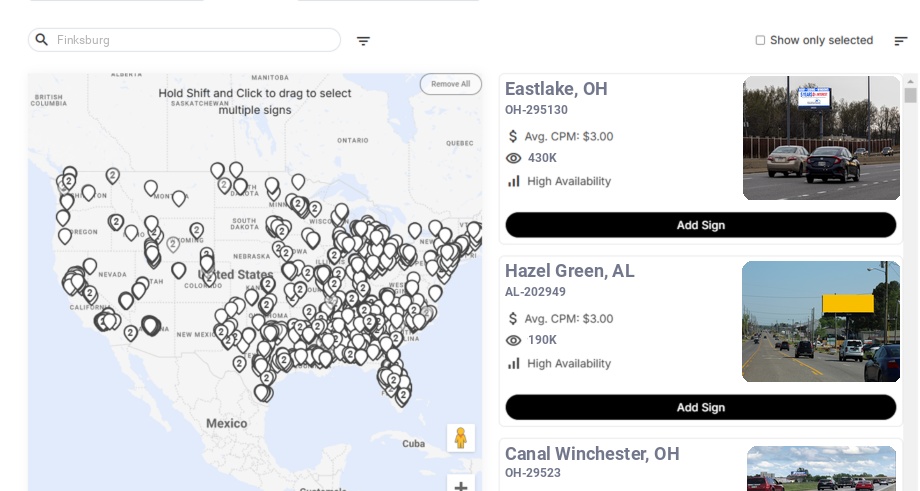
Blip has digital billboards in Finksburg. You can browse available locations on a map, choose the ones that fit your audience, and start advertising right away.
Still have questions? Launch a campaign in minutes — no contracts, no commitments.
Start Your CampaignFinksburg Billboard Advertising Guide
Finksburg is a strong billboard market because we are not only reaching one small community, but also tapping into the broader Carroll County and northwest Baltimore County Maryland Route 140. According to the Maryland Department of Planning, Carroll County had 172,891 residents in 2020, and Finksburg sits in one of the county’s most useful commuter positions between Westminster 85% of workers commuting by car and average travel times near 35 minutes, so our messages benefit from repeated exposure during daily drives, school trips, errands, and weekend recreation. We also gain seasonal boosts from agritourism, county events, and family travel promoted by Visit Carroll.
Finksburg Market Overview
When we evaluate Finksburg, we should think beyond the CDP itself and treat it as a strategic corridor market. Finksburg sits about 11 miles southeast of Westminster 30 miles northwest of Baltimore, and along the route many residents use to move between Carroll County and Baltimore-area job centers.
Finksburg’s population base and growth
The most dependable population story here is countywide. The Maryland Department of Planning reports that Carroll County grew from 167,134 residents in 2010 to 172,891 in 2020, which is an increase of about 3.4%. That is not explosive Sun Belt growth, but it is exactly the kind of stable, family-oriented growth that billboard advertisers often like because it supports repeat travel, predictable routines, and long-term customer value.
Carroll County also covers roughly 450 square miles, which means the population is spread across multiple towns, subdivisions, and rural roads, for a density of about 385 residents per square mile. In a geographically dispersed market like this one, roadside media can outperform channels that depend on dense pedestrian activity. We can stay visible to households moving between Finksburg, Westminster, Sykesville
Finksburg’s economic profile and spending power
From an advertiser’s perspective, Finksburg benefits from Carroll County’s relatively strong household profile. State and county profiles from the Maryland Department of Planning, Maryland Department of Commerce, and Carroll County Economic Development place county median household income at roughly $110,000, and homeownership is around 80%. That combination matters because homeowners and higher-income family households are prime audiences for healthcare, home services, auto dealers, financial services, education, insurance, and higher-ticket retail.
Carroll County’s labor market is also usually steady by Maryland standards. Recent county unemployment levels have generally been in the 2% to 3% range, according to the Maryland Department of Labor. When local employment is stable, billboard campaigns can focus less on broad awareness alone and more on action-oriented offers such as consultations, appointments, store visits, and weekend trips.
What car dependence means for our billboard strategy in Finksburg
This is the core reason Finksburg works. County commuting data compiled by the Maryland Department of Planning shows that about 85% of workers commute by car, and average travel time to work is roughly 35 minutes. In practical terms, we are reaching an audience that spends meaningful time behind the wheel and repeats the same directional trips several days each week.
That changes the billboard equation in our favor. Instead of needing one perfect impression, we can build familiarity over 5, 10, or 20 drives. For local businesses, that repeat exposure is often what moves someone from “I have seen that name before” to “I should stop there this week.”
Key Traffic Corridors for Digital Billboards in Finksburg
Finksburg advertising works best when we match our creative to the corridor’s actual trip purpose. The Maryland State Highway Administration publishes traffic count maps that show why a few roads matter much more than others.
Maryland 140 through Finksburg
MD 140 is the backbone of the Finksburg market. Through the Finksburg trade area, SHA traffic maps generally show volumes in the range of 30,000 to 40,000 vehicles per day, depending on the exact segment and year counted. That is substantial traffic for a suburban-rural corridor, and it reflects the route’s role as a connector between Westminster, Finksburg, Reisterstown, and the Baltimore beltway system.
This corridor is ideal when we want broad local frequency.
- Retail and restaurants perform well here because MD 140 carries daily errand traffic, not just long-distance through traffic.
- Healthcare, dental, orthodontic, and urgent care campaigns perform well because families regularly use this route for appointments in Westminster, Finksburg, and the Baltimore County edge.
- Home services such as HVAC, roofing, plumbing, remodeling, and pest control fit this corridor because the audience includes established homeowners in surrounding subdivisions and rural parcels.
- Auto dealers, repair shops, tire stores, and insurance brands also benefit because drivers are already in a driving mindset.
For businesses with a physical location in Finksburg, boards tied to MD 140 often work best when the message includes a simple directional cue such as “minutes ahead,” “near Route 91,” or “in Finksburg.”
Maryland 91 near Finksburg
MD 91 is the second corridor we should take seriously. Near Finksburg, SHA counts are generally around 10,000 to 15,000 vehicles per day, which is lower than MD 140 but still meaningful because it captures more localized, high-intent travel. People on MD 91 are often moving between residential areas, schools, churches, farms, and service destinations rather than simply passing through.
This corridor tends to reward more targeted advertisers.
- Local service businesses benefit because the audience is geographically relevant and often lives nearby.
- Schools, childcare providers, camps, youth sports, and family entertainment fit well because many trips are household-driven.
- Event promotion works well because MD 91 traffic includes residents who are likely to attend nearby community events, fairs, and seasonal attractions.
If we are choosing between reach and relevance, MD 140 usually wins on reach, while MD 91 often wins on neighborhood precision.
I-795 and I-695 as Finksburg’s regional gateway
Even though these roads are east and southeast of Finksburg, they are essential to our regional strategy. I-795 near Owings Mills regularly carries about 100,000 or more vehicles per day on core segments, and nearby portions of I-695 on the northwest beltway often exceed 140,000 vehicles per day. Those are metro-scale numbers, and they matter because many Carroll County commuters funnel toward these corridors.
When we want Finksburg-area customers but also need wider market visibility, this is where we scale.
- Hospitals, colleges, legal services, and major retail brands benefit because these boards can introduce the brand earlier in the trip.
- Regional attractions and destination businesses benefit because travelers may decide where to stop before they reach Carroll County.
- Business-to-business advertisers can use these corridors to stay visible to contractors, fleet drivers, and service professionals moving across county lines.
The Maryland Transit Administration also anchors commuter movement in the Owings Mills area, but most Finksburg households still drive to work, to park-and-ride lots, or to suburban job centers first. That keeps roadside media highly relevant.
MD 97 and MD 26 as supporting Carroll County corridors
We should also account for two important supporting routes outside Finksburg proper. MD 97 between Westminster and Reisterstown typically carries about 20,000 to 30,000 vehicles per day on busier segments, and MD 26 through the Eldersburg area often lands around 25,000 to 35,000 vehicles per day. These are useful when our service area stretches across central and southern Carroll County.
These roads are especially valuable for:
- Healthcare and specialty medical groups that draw patients from multiple towns.
- Higher education and workforce training tied to McDaniel College or Carroll Community College.
- Home improvement and consumer finance brands targeting family-heavy suburbs in south Carroll.
- Entertainment and dining campaigns aimed at weekend trips between Westminster, Sykesville, Eldersburg, and the Baltimore suburbs.
Finksburg Audience Segments We Can Reach
A good Finksburg billboard strategy starts by recognizing that this is not a one-audience market. We can reach several valuable groups if we align the board location and daypart with their routines.
Finksburg commuters and regional workers
Commuters are the largest and most reliable audience. As noted above, about 85% of workers in Carroll County commute by car, and the average trip is about 35 minutes. That is long enough for daily billboard exposure to build recall, especially on repeated eastbound morning and westbound evening trips.
This audience is ideal for:
- Coffee, breakfast, convenience retail, and QSR brands in the morning.
- Healthcare, fitness, grocery, and family dining in the afternoon.
- Professional services such as real estate, financial planning, legal help, and insurance because trust builds through repetition.
Because Finksburg sits between residential neighborhoods and larger employment centers, commuter-focused boards can serve both local businesses and regional brands.
Families and homeowners in the Finksburg area
Carroll County’s household profile is one of Finksburg’s biggest strengths. With median household income around $110,000 and homeownership around 80%, we are speaking to households that buy roofs, fences, windows, HVAC systems, landscaping, insurance, medical care, tutoring, and extracurriculars. These buyers also tend to be planners, so a billboard seen several times can influence a later online search or weekend visit.
This is why family-oriented categories often perform well here:
- Home services can lead with trust, speed, and local reputation.
- Healthcare can emphasize convenience, family care, and specialist access.
- Retail can use practical messages tied to value, seasonal needs, or limited-time offers.
Students, parents, and education audiences in Finksburg
Education is a meaningful audience layer in this market. Carroll County Public Schools operates 44 schools and serves roughly 25,000 students, creating a large parent-and-student travel network every weekday during the school year. The school calendar effectively gives us a 10-month rhythm from late August through June.
Higher education adds another layer. McDaniel College in Westminster enrolls about 1,800 students, and Carroll Community College adds a strong commuter college audience of its own. That combination supports campaigns for apartments, banking, wireless, food, healthcare, tutoring, test prep, staffing, and continuing education.
Weekend visitors and leisure travelers near Finksburg
Finksburg also benefits from the county’s visitor economy. Visit Carroll promotes agritourism, wineries, trails, festivals, and family attractions across the county. Nearby destinations such as Adventure Park USA, Baugher’s Orchard & Farm, the Carroll County Farm Museum, and downtown Sykesville
That gives us room for:
- Event promotion that needs a short burst of awareness.
- Hospitality, entertainment, and dining that depend on Friday-through-Sunday traffic.
- Seasonal retail tied to fall harvests, holiday shopping, and spring outings.
Seasonal and Timing Opportunities in Finksburg
Seasonality matters in Finksburg because traffic purpose shifts significantly throughout the year. We should plan our timing around school schedules, weather, commuter habits, and signature local events.
Spring in Finksburg: March through May
Spring is one of the best windows for home and family categories. As the weather improves from March through May, homeowners begin booking landscaping, pressure washing, roofing, paving, HVAC tune-ups, decks, and remodels. Tax season also supports financial services, auto sales, and big-ticket household decisions.
This is a smart time for us to emphasize practical, action-oriented offers. Messages such as “Schedule now,” “Free estimate,” or “Book before summer” feel timely in Carroll County’s homeowner-heavy market.
Summer in Finksburg: June through August
Summer brings school break, family outings, and more flexible weekday travel. Attractions such as Adventure Park USA gain relevance, and county event traffic increases. The Carroll County 4-H & FFA Fair 1 week of concentrated summer traffic and community attention, which is valuable for retailers, food brands, local sponsors, and civic messaging.
During summer, our best billboard categories often include:
- Family entertainment and attractions.
- QSR, ice cream, and casual dining.
- Pediatric, dental, ortho, and wellness campaigns tied to back-to-school prep.
- Travel and auto service offers timed to vacation driving.
Back-to-school and fall in Finksburg: late August through October
The back-to-school reset is one of the strongest annual triggers in Carroll County. Carroll County Public Schools typically start in late August, and McDaniel College also brings students back around that time. That means our billboard audience regains a highly predictable daily rhythm almost overnight.
Fall then adds some of the county’s best leisure traffic. The Maryland Wine Festival September, fall orchard traffic to places like Baugher’s, and weekend tourism promoted by Visit Carroll all create timely advertising windows. This is a strong season for healthcare, tutoring, apparel, grocery, dining, home heating services, and local events.
Holiday and winter opportunities in Finksburg: November through February
From early November through late December, we can lean into gift buying, dining, events, and family outings in Westminster Sykesville 5:00 p.m., so illuminated digital boards gain a longer evening relevance window during the drive home.
Winter-specific categories also matter here. Snow, ice, and cold weather make roadside reminders useful for:
- Urgent care, pharmacies, and healthcare systems.
- Tire, battery, and auto repair promotions.
- Heating, plumbing, and restoration services.
- Ski and winter recreation tied to Liberty Mountain Resort from December through March.
Billboard Design Tips for the Finksburg Market
Finksburg does not respond best to big-city creative that assumes dense foot traffic or impulse nightlife behavior. We usually do better with clear, practical, trustworthy creative that respects the area’s suburban-rural identity.
Use visuals that fit Finksburg’s suburban-rural mindset
This market sits between farmland, subdivisions, school campuses, and commuter roads. Creative that feels local tends to outperform creative that feels anonymous. We should use imagery that matches the audience’s life, such as family homes, service trucks, healthcare professionals, youth activities, fall scenery, or approachable retail environments.
High-contrast colors are especially useful here because many roads are lined with trees, open sky, or gray winter backdrops. Bold blues, reds, whites, and clean dark backgrounds tend to stand out better than muted palettes.
Keep our message practical and destination-oriented
On a corridor like MD 140, people are often deciding where to stop next, not browsing abstract brand stories. We should emphasize practical value points such as:
- “Same-day service in Finksburg.”
- “Minutes from Westminster.”
- “Family care, evening hours.”
- “Open late on Route 140.”
Location language works particularly well in this market because geography matters to the decision. A difference of 5 to 10 minutes can change where someone books an appointment or shops after work.
Match the copy to Carroll County’s trust-driven culture
Carroll County businesses often win on familiarity and reputation. Our billboard copy should reflect that. Messages about local service, family ownership, years in business, fast appointments, and clear offers can resonate more than vague lifestyle slogans.
This is also a strong market for community-adjacent cues. References to school season, harvest time, winter prep, and weekend family plans feel natural here because they align with how residents structure their year.
Design for repeat exposure, not just one impression
Because this market is heavily commuter-driven, we should treat each billboard as one step in a repeated sequence. That means we can keep the main idea simple and let frequency do the heavy lifting. In many Finksburg campaigns, one headline, one brand cue, and one call to action are enough.
Regional Strategies Around Finksburg
The smartest Finksburg campaigns usually combine local precision with regional reach. We do not have to choose one or the other if we organize the buy by sub-area.
Finksburg and immediate MD 140 trade area
For a business physically located in Finksburg, our first priority should be short-drive traffic. We should target boards that catch residents heading to groceries, school, restaurants, and everyday errands. This is where we can use directional creative and push immediate action.
A good Finksburg-first strategy works well for clinics, contractors, quick-service restaurants, convenience retail, churches, and local events.
Westminster as Finksburg’s western anchor
Westminster
This is especially useful for campaigns tied to McDaniel College, downtown retail, healthcare providers, and destination services.
South Carroll, Eldersburg, and Sykesville connections
The south Carroll corridor adds another family-heavy market to our reach. Sykesville
This is where an area-wide message often works better than hyperlocal copy. “Serving Carroll County families” can unify multiple communities under one offer.
Reisterstown, Owings Mills, and the Baltimore County edge
The eastern edge of our strategy should focus on the commuter gateway into Baltimore County
This submarket is strong for larger healthcare systems, colleges, legal services, entertainment brands, and destination retail. It is also the right place to build awareness before we ask people to act closer to Westminster or Finksburg.
Using Blip Tools in Finksburg
Blip fits Finksburg especially well because this is a market where timing and corridor choice matter as much as raw geography. We can use a manual campaign when we already know that MD 140 or the Westminster-to-Owings-Mills commute is our priority. We can use a Blip-optimized campaign when we want the platform to spread budget across Carroll County and nearby Baltimore County locations based on our goals.
How we can apply Blip strategically in Finksburg
We should use dayparting aggressively here. Morning windows like 6:00 to 9:00 a.m. are useful for eastbound commuter messaging, while 3:00 to 7:00 p.m. often work well for westbound “stop on your way home” messages. Weekend midday windows can be especially valuable for agritourism, dining, retail, and family entertainment.
We can also rotate creative by season without rebuilding the whole campaign. A spring home-services version, a late-summer back-to-school version, and a holiday or winter-prep version can all run against the same location strategy. Real-time analytics then help us see whether Finksburg-core boards, Westminster-area boards, or beltway gateway boards are driving the strongest response.
Getting Started with Billboard Rental in Finksburg
When we start renting a billboard in Finksburg, the first step is to define what success should look like. A local restaurant, a healthcare clinic, and a regional college all need very different location mixes, even if they are targeting the same county.
How we should evaluate Finksburg billboard locations
We should usually begin with three questions.
- Are we trying to reach nearby households or a broader commuter audience? A 5- to 15-mile service area usually points us toward Finksburg and Westminster placements, while a 20- to 30-mile reach may justify adding the Owings Mills or beltway gateway.
- Do we need immediate action or long-term awareness? Immediate action campaigns should sit close to the destination, while awareness campaigns can start farther out on commuter corridors.
- Which direction of travel matters most? In Finksburg, eastbound and westbound exposure can produce very different results depending on when people are making decisions.
What to expect from the rental process in Finksburg
Traditional billboard buying in smaller regional markets has often meant fixed packages, long lead times, and limited flexibility. Blip simplifies that process because we can browse available digital inventory, choose the locations that match our routes, launch quickly, and adjust based on actual results instead of waiting out a long contract.
That is particularly useful in Finksburg because local demand changes with the season. A contractor might emphasize spring and storm repair, a retailer might concentrate budget in the 8 weeks before the holidays, and a family attraction might lean hardest into weekends from May through October. We can fit the media plan to the local calendar instead of forcing the calendar to fit the media plan.
A practical way to launch our first Finksburg campaign
For many businesses, the smartest first move is a 2- to 4-week test with a tight geographic focus. We can start with a small cluster of boards along MD 140, add dayparts that match commuter or weekend behavior, and monitor performance. If results are strong, we can expand outward toward Westminster, south Carroll, or the Baltimore County gateway.
In other words, Finksburg is not a market where we need to guess. With the right corridor mix, local-seasonal timing, and flexible digital execution, we can build a billboard campaign that feels rooted in how Carroll County actually moves.