Billboards in Westminster, MD
No Minimum Spend. No Long-Term Contracts. Just Results.
Trusted by Leading Brands


Billboard advertising
in Westminster has never been easier
How much is a billboard in Westminster?
Why Choose Blip for Billboard Advertising in Westminster
-
Blip lets you launch in Westminster in minutes, reaching MD 140 shoppers and MD 97 commuters without the old buying hassle.
-
Use Westminster's 91% car-commute traffic to daypart Blip ads for 6-9 a.m. and 3-7 p.m. when drivers are on the road.
-
No contracts in Westminster means you can flex budget around McDaniel College, Carroll Hospital, and school-season traffic.
-
Blip-optimized campaigns can shift your Westminster spend across MD 140, MD 27, and MD 31 to match your goals and budget.
-
Track real-time performance in Westminster and adjust fast as spring festivals, summer fairs, and fall routines change traffic.
Frequently Asked Questions About Billboard Advertising in Westminster
How much does a billboard cost in Westminster with Blip?
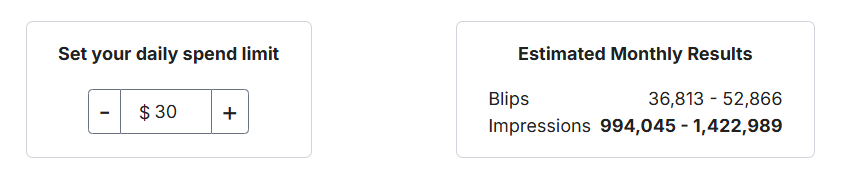
With Blip, billboard advertising in Westminster can fit a wide range of budgets because you only pay when your ad actually appears. Pricing starts at just $0.01 per display, and your daily budget helps Blip’s algorithm bid for open ad slots. The cost per blip can change based on time of day, location, and advertiser demand.
Where can I advertise with Blip in Westminster?
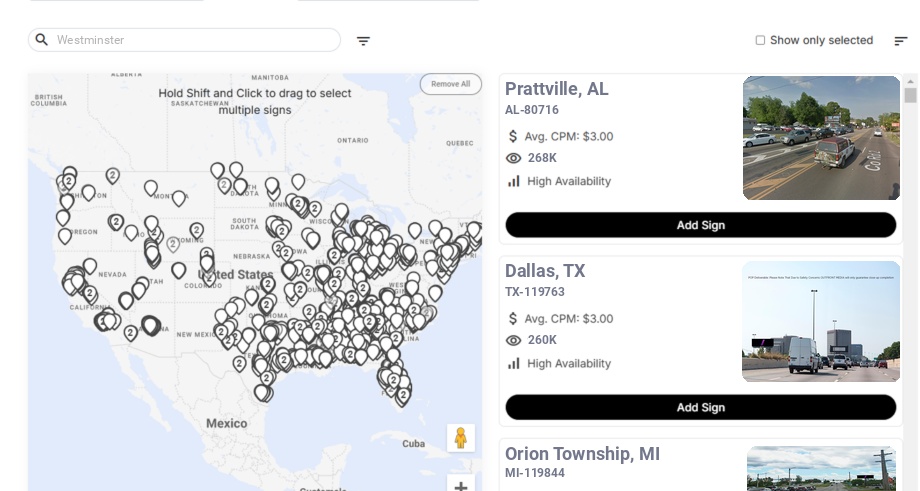
MD 140 is Westminster's signature advertising corridor, especially near the major retail strip and access points to shopping centers. MD 97 is the city's main north-south spine, and MD 27 and MD 31 are useful feeder routes for reaching residents traveling into Westminster. Downtown Westminster is also ideal when you want intent more than pure scale.
Why is billboard advertising effective in Westminster for Blip campaigns?
Westminster gives a rare mix of local frequency and regional reach. The City of Westminster had 19,161 residents in 2020, while Carroll County had 172,891, and about 91% of workers commute by car, truck, or van. That combination makes digital billboard advertising especially effective when you want to stay visible on the roads people use every day.
When is the best time to run billboard ads in Westminster?
Fall may be the most reliable advertising season in Westminster because schools and McDaniel College return to full routine in late August and commuter traffic normalizes after vacations. Winter can also create demand for healthcare, tires, batteries, and heating services, while summer brings family and visitor traffic. For dayparts, 6 a.m. to 9 a.m. is ideal for commuter-oriented services, and 3 p.m. to 7 p.m. is the strongest all-purpose window.
Do I need a contract to advertise with Blip in Westminster?
No, Blip has no long-term contracts or minimum commitments. You can start, pause, or stop your campaign at any time.
How fast can I launch a billboard campaign with Blip in Westminster?
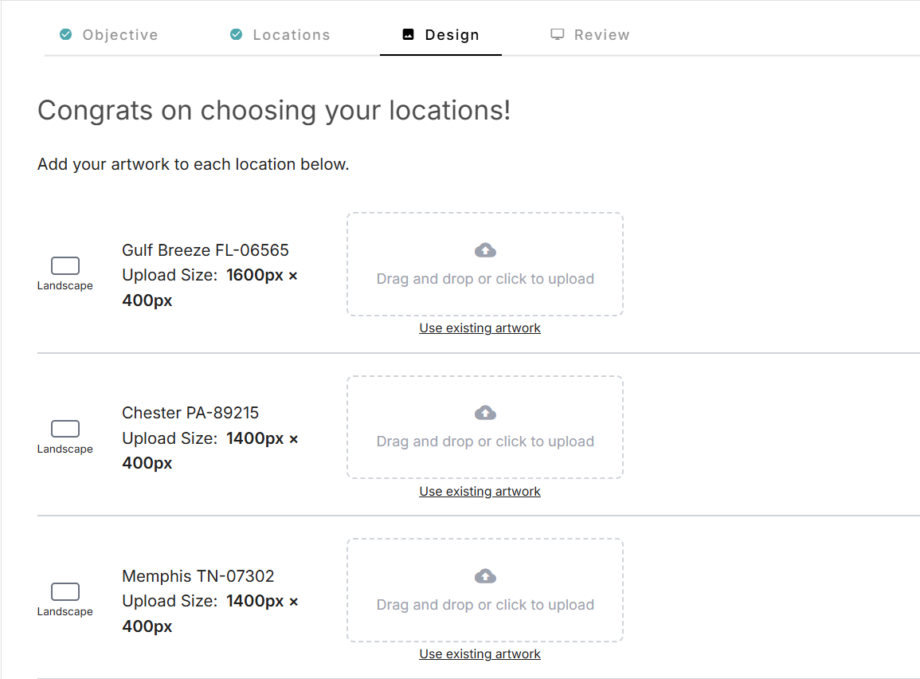
You can have your campaign live in minutes. Create a free account, select your locations, set your budget, upload your design, and start running once approved.
Where can I advertise with Blip in Westminster?
Blip has digital billboards in Westminster. You can browse available locations on a map, choose the ones that fit your audience, and start advertising right away.
Still have questions? Launch a campaign in minutes — no contracts, no commitments.
Start Your CampaignWestminster Billboard Advertising Guide
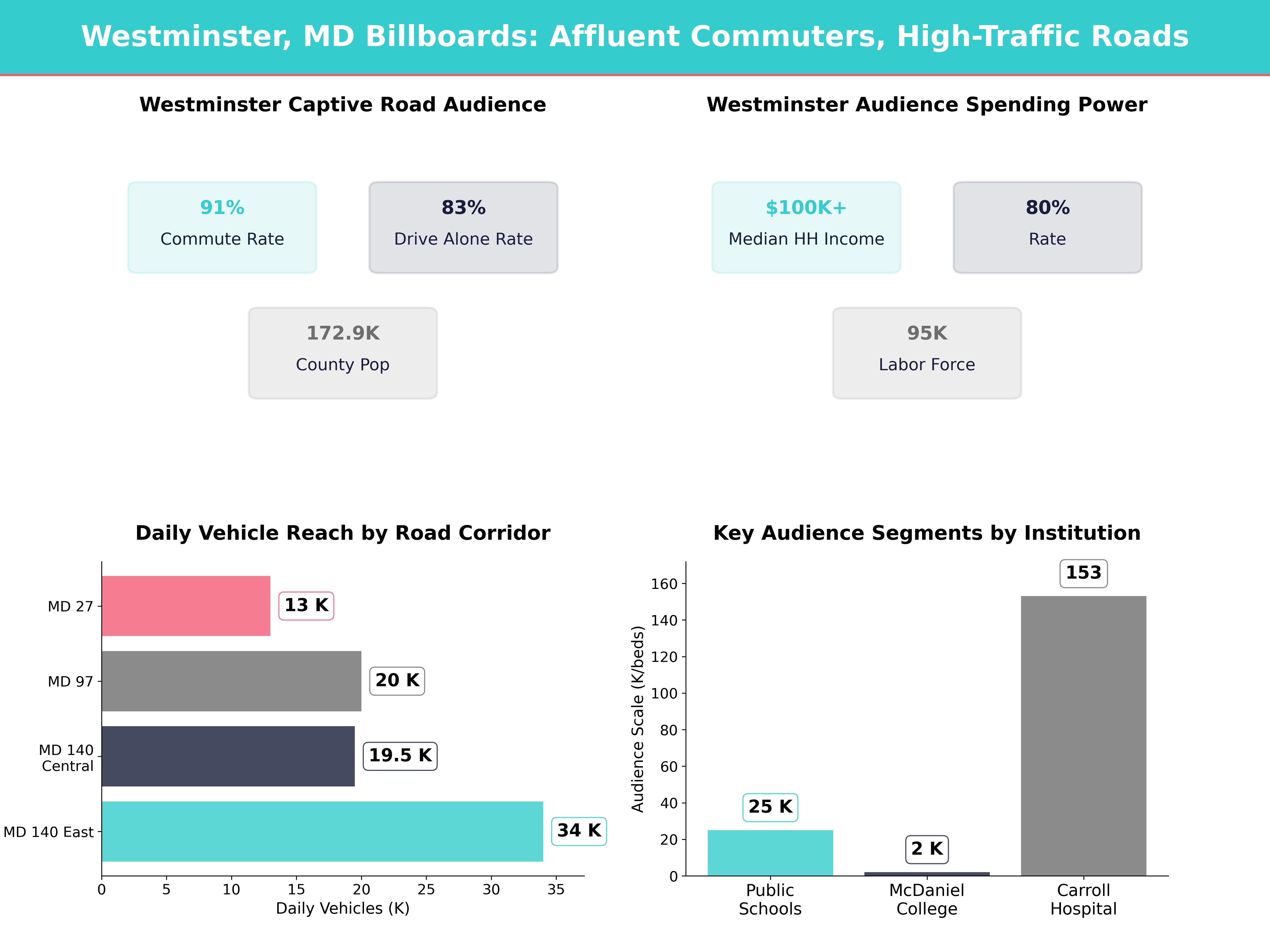
Westminster City of Westminster 19,161 residents in 2020, while Carroll County had 172,891, and most trips in the area are still made by car, with about 91% of workers commuting by car, truck, or van and roughly 83% driving alone in Carroll County. As the county seat and a major retail, healthcare, and education hub for northern Carroll County, Westminster pulls traffic well beyond its city limits from nearby towns and even southern Pennsylvania. That combination makes digital billboard advertising especially effective when we want to stay visible on the roads people use every day.
Westminster Market Overview
Westminster's size, growth, and regional role
Westminster is not a massive metro, but it does not need to be. It functions as the commercial center of Carroll County, and that role matters more for billboard planning than city limits alone. Using 2020 population counts compiled through the Maryland Department of Planning, Westminster grew from 18,590 residents in 2010 to 19,161 in 2020, which is about 3.1% growth over the decade. Carroll County grew from 167,134 to 172,891 over the same period, which is about 3.4% growth.
Those numbers tell us two important things. First, Westminster is stable, not transient, so businesses can build recognition over time instead of relying only on one-off bursts. Second, the county continues to add households, which supports steady demand for healthcare, home services, legal services, education, retail, dining, and financial services.
Westminster also sits about 35 miles northwest of Baltimore and less than 15 miles from the Pennsylvania line. That position gives us access to a practical trade area that is larger than the city itself. Drivers from Hampstead, Manchester, Taneytown, New Windsor, Mount Airy Sykesville
Westminster's economy and why it supports billboard demand
Westminster has the kind of economy that rewards repeated roadside exposure. Carroll County Department of Economic Development highlights a high-income, homeowner-heavy market, and county median household income is comfortably above $100,000, with homeownership near 80%. That tends to favor advertisers selling higher-consideration services, including roofing, HVAC, windows, healthcare, orthodontics, banking, insurance, senior services, and automotive.
The local employment base is also broader than many towns of similar size. The Maryland Department of Labor 95,000 people in Carroll County, with unemployment near 3%. Stable employment supports steady consumer spending, and steady consumer spending makes frequency more valuable.
Westminster is anchored by institutions that create recurring trips. McDaniel College enrolls about 2,000 students, Carroll Hospital 153-bed hospital, and Carroll County Public Schools serves nearly 25,000 students across 43 schools. Carroll Community College adds another layer of daily education and workforce traffic.
Commuting habits make the case even stronger. In Carroll County, about 91% of workers commute by car, truck, or van, and roughly 83% drive alone. That means Westminster advertisers are not competing with subway riders or dense pedestrian patterns the way they would in a core urban market. Instead, they are meeting people where attention is already fixed on the road.
For billboard advertisers, that translates into three advantages:
- We can build repetition with commuters who use the same arterial roads several times each week.
- We can reach families during practical errand trips, not just during destination visits.
- We can use Westminster as a hub market to influence purchases across much of Carroll County.
Key Traffic Corridors in Westminster
Westminster's travel patterns are concentrated on a relatively small number of roads, which is ideal for digital billboard strategy. Recent counts from the Maryland State Highway Administration Traffic Monitoring System
MD 140, Baltimore Boulevard, and Main Street in Westminster
MD 140 is Westminster's signature advertising corridor. On the east side of the city, especially near the major retail strip and access points to shopping centers, recent SHA counts generally place MD 140 in the 30,000 to 38,000 AADT range. Through more central Westminster segments, volumes are typically lower, but they still often land around 17,000 to 22,000 AADT.
That matters because MD 140 pulls together several distinct audiences. It carries local commuters, countywide shoppers, medical visitors, and people heading between Westminster and the Baltimore region. It also feeds destinations such as Downtown Westminster, The TownMall of Westminster, Carroll Hospital
Advertisers that usually benefit most from MD 140 include the following:
- Retailers and restaurants do well here because the corridor captures high-intent shopping traffic before and after store visits.
- Healthcare providers benefit because drivers are already oriented around medical, pharmacy, and appointment travel.
- Consumer services such as auto repair, banks, fitness clubs, and wireless stores benefit because MD 140 supports frequent repeat impressions.
- Home services benefit because this road reaches homeowners from Westminster and surrounding towns during weekday and Saturday errand patterns.
If we want broad awareness in Westminster first, MD 140 is usually the first corridor we evaluate.
MD 97, Littlestown Pike, and Washington Road in Westminster
MD 97 is the city's main north-south spine. Recent SHA counts around Westminster commonly place MD 97 segments in roughly the 16,000 to 24,000 AADT range, depending on where we measure. This route connects Westminster with communities to the north, and it also serves southbound commuters moving toward the Baltimore job market.
MD 97 is especially useful when we want a mix of local and regional relevance. Northbound traffic includes drivers connected to southern Pennsylvania, while southbound traffic often includes daily commuters and service vehicles. Because of that mix, MD 97 tends to work well for:
- Automotive dealers and repair shops, because vehicle-related messages fit the practical, high-frequency commuter audience.
- Healthcare, dental, and urgent care brands, because appointment-based businesses benefit from repeated visibility on a habitual route.
- Colleges, training programs, and employers, because recruitment messages work well where people are already thinking about work and school routines.
- Tourism and leisure brands, because the road also carries weekend visitors moving between Westminster, farm attractions, and Pennsylvania destinations.
MD 27, Manchester Road, and the southeast approach to Westminster
MD 27 is another important feeder into Westminster, especially for households traveling in from southeastern Carroll County and the broader commuter belt. SHA counts near Westminster often place MD 27 segments in the 10,000 to 16,000 AADT range. That is lower than MD 140, but it is still very usable traffic for targeted campaigns.
This corridor tends to be a strong fit when we want to reach residents who live outside the immediate city but rely on Westminster for services. That makes MD 27 a smart choice for:
- Roofing, HVAC, plumbing, landscaping, and remodeling companies, because the audience includes established homeowners in low-density residential areas.
- Childcare, tutoring, and family entertainment, because many trips on this route are tied to school, errands, and after-school routines.
- Recruiting campaigns, because employers can reach workers commuting toward Westminster from nearby communities.
MD 27 is often more about qualified local repetition than maximum raw volume, which can be exactly what certain advertisers need.
MD 31, New Windsor Road, and Westminster's west-side reach
MD 31 carries less traffic than MD 140 or MD 97, but it still matters. Recent SHA counts around the Westminster area commonly show MD 31 segments in roughly the 8,000 to 12,000 AADT range. This route helps connect Westminster with New Windsor, western Carroll County, and rural residential areas that still spend heavily in Westminster.
We usually like MD 31 for advertisers whose customers are willing to travel a little farther for value or trust. Examples include:
- Specialty medical practices that draw patients from across the county.
- Agricultural suppliers, equipment dealers, and feed or farm-adjacent businesses that need rural reach.
- Destination retail and dining that can win by standing out before drivers choose where to go.
In Westminster, lower-volume corridors are not necessarily secondary. They are often the best routes for precision.
Audience Segments We Can Reach in Westminster
Westminster commuters and county drivers
Commuters are the foundation of Westminster billboard strategy. When roughly 91% of workers are traveling by car, truck, or van, road-based media becomes a practical everyday touchpoint. Westminster commuters include people who work in the city, people who head south toward the Baltimore region, and people who travel across Carroll County for healthcare, education, and services.
This audience responds well to clear, useful messages. We usually see the strongest fit for quick-service restaurants, gas and convenience, healthcare, auto services, financial services, and recruiting.
Westminster families and homeowners
Carroll County's family-oriented profile makes Westminster unusually good for household-service advertisers. Median household income is above $100,000, and the market has a strong base of homeowners, long-tenured residents, and family households. Those traits support billboard campaigns for replacement windows, kitchens, baths, pest control, home security, childcare, and orthodontics.
The school footprint reinforces that family base. Carroll County Public Schools serves nearly 25,000 students in 43 schools, which means school calendars, sports schedules, and after-school routines shape local traffic all year long. When we advertise products tied to family decision-making, Westminster's roads give us repeat contact with the same households.
Westminster students, educators, and lifelong learners
Education is a bigger audience driver here than many advertisers expect. McDaniel College brings about 2,000 students to Westminster, along with faculty, staff, visiting families, alumni, and event attendees. Carroll Community College adds another stream of credit, workforce, and continuing-education traffic.
That audience creates demand for apartments, food, coffee, banking, healthcare, mobile plans, tutoring, bookstores, event promotion, and part-time hiring. It also gives us useful timing windows around move-in, graduation, homecoming, and the return to class in late August.
Westminster healthcare, government, and service workers
As the county seat, Westminster attracts routine weekday traffic for court, county offices, and professional services. Carroll Hospital 153 beds, brings in staff, patients, contractors, and visitors from a wide catchment area. Medical offices, labs, pharmacies, and specialists reinforce that healthcare cluster.
This is one reason billboard campaigns for urgent care, imaging, specialty care, elder law, rehabilitation, and insurance can perform well in Westminster. We are not relying only on neighborhood traffic. We are also tapping into appointment traffic, institutional routines, and care-related decision-making.
Westminster shoppers, visitors, and leisure travelers
Westminster also captures a weekend and leisure audience. Explore Carroll Carroll County Farm Museum, Downtown Westminster, and the Carroll County Farmers Market
Seasonal and Timing Opportunities in Westminster
Spring in Westminster
Spring is one of Westminster's best reset moments. Home improvement demand rises, outdoor activity returns, and event calendars become more active. The Westminster Flower & Jazz Festival May helps drive downtown attention, and graduation season starts to shape family spending decisions.
For spring campaigns, we usually like to emphasize:
- Home services from March through May.
- Wedding, event, and beauty services from April through June.
- Downtown dining and retail around festival weekends.
- College and school-year wrap-up offers in May and June.
Summer in Westminster
Summer gives us a broader mix of local and visitor traffic. The Carroll County 4-H & FFA Fair July and early August is a major seasonal draw, and Common Ground on the Hill brings summer arts programming to the area as well. Families are also making more discretionary trips for dining, entertainment, camps, and regional shopping.
This is a strong time to run billboard campaigns for family attractions, ice cream and dessert brands, casual dining, local events, youth programs, and healthcare services tied to sports physicals or back-to-school needs.
Fall in Westminster
Fall may be the most reliable advertising season in Westminster. Carroll County Public Schools and McDaniel College return to full routine in late August, commuter traffic normalizes after vacations, and sports, arts, and community events pick up. Retail and service businesses can build awareness in September and October before holiday decision-making begins in November.
This is also a strong season for recruiting, financial services, legal services, and home maintenance. People are back in schedule mode, and repeated roadside impressions tend to work especially well.
Winter in Westminster
Winter in Westminster changes both behavior and visibility. Days are shorter, commutes often happen in darker conditions, and weather can elevate demand for healthcare, tires, batteries, heating services, and urgent-response businesses. Westminster also benefits from regional cold-weather leisure traffic, including drives toward Liberty Mountain Resort in nearby Pennsylvania during the December through February ski season.
For timing, we usually think in practical dayparts:
- 6 a.m. to 9 a.m. is ideal for commuter-oriented services, coffee, breakfast, urgent care, and recruiting.
- 11 a.m. to 2 p.m. works well for lunch, errands, downtown dining, and appointment reminders.
- 3 p.m. to 7 p.m. is the strongest all-purpose window for commuters, parents, retail, and healthcare.
- Friday afternoons and Saturdays are especially useful for dining, entertainment, and retail offers.
Billboard Design Tips for Westminster
Creative cues that feel local in Westminster
Westminster creative works best when it looks like Westminster. We usually get stronger resonance with imagery tied to rolling farmland, small-town main street character, Friday-night sports energy, family life, and practical suburban routines than with generic coastal Maryland imagery. Harbor scenes and beach visuals may be beautiful, but they do not feel native to Carroll County.
Local cues can be subtle. Phrases such as “In Westminster,” “On MD 140,” “Near McDaniel,” “Downtown Westminster,” and “Minutes from Hampstead” can do a lot of work. So can visuals that suggest farms, historic brick storefronts, or county-fair energy without becoming cluttered.
Messaging that matches Westminster buying behavior
Westminster audiences tend to respond to messages that are clear, useful, and trustworthy. This is not a market where we want to sound vague or overly clever. We usually do better when we emphasize one strong benefit, one location cue, and one action.
Because digital billboard exposures are short, Westminster creative should usually keep copy to about 6 to 8 words, plus a simple brand mark or direction. That is especially important on MD 140 and MD 97, where people are processing retail signs, turns, and traffic signals.
Messages that often fit the local market include the following:
- “Same-Day Care in Westminster.”
- “Roofing Quotes on MD 140.”
- “Downtown Westminster Tonight.”
- “Carroll County Jobs Hiring Now.”
- “2 Miles to Better Brunch.”
Trust signals also matter here. Family-owned language, years in business, financing availability, weekend hours, and community familiarity can all strengthen response in a county where word of mouth still matters.
Regional Strategies Around Westminster
Downtown Westminster strategy
Downtown Westminster is ideal when we want intent more than pure scale. This submarket fits restaurants, boutiques, professional services, salons, events, arts programming, and destination retail. We often pair downtown-focused messaging with lunch, dinner, and weekend timing rather than broad all-day delivery.
Brands tied to nightlife, the Carroll Arts Center, seasonal festivals, and local shopping should emphasize atmosphere and immediacy here.
East Westminster and the MD 140 retail strip
If we want the broadest Westminster reach, east-side MD 140 is usually the workhorse. This is where shopping, healthcare, chain retail, grocery, and high-frequency errands cluster. It is the best fit for broad-reach consumer campaigns, including furniture, mattress, auto service, restaurants, telecom, urgent care, banking, and home improvement.
This area is also a strong entry point for advertisers that want to convert countywide traffic before people make a stop decision.
Northern Carroll County and Pennsylvania-bound traffic
The north and northeast approaches to Westminster are useful when we want cross-border reach. Drivers coming from Manchester, Hampstead, and southern Pennsylvania often use Westminster as their practical service center. That makes northern approaches strong for value retail, automotive, healthcare, and recruitment.
We also like these routes for advertisers that serve both Maryland and Pennsylvania customers, because Westminster sits close enough to the state line to function as a crossover market.
Southern and western feeder communities around Westminster
Southern and western routes connect Westminster with Sykesville Mount Airy New Windsor, and other county communities. These are excellent paths for countywide awareness campaigns, especially for home services, specialty healthcare, legal services, senior services, and educational programs.
When we want Westminster to be the destination, feeder-route billboards should tell people why the trip is worth it. When we want regional awareness, those same routes can reinforce name recognition before people ever reach the city.
Using Blip Tools in Westminster
When manual billboard selection works best in Westminster
Manual selection usually makes the most sense when we already know which Westminster trip pattern matters most. If we care about retail shoppers, we can concentrate on MD 140. If we care about commuter repetition, we can emphasize MD 97 and the strongest afternoon windows. If we care about downtown foot traffic, we can choose boards that support dining, events, and local shopping behavior.
This approach is especially useful for event promotion, directional campaigns, grand openings, and highly local service businesses.
When Blip optimization works best in Westminster
Blip optimization is often the better fit when we want the platform to spread budget across Westminster's different traffic types. That can help when we are targeting the whole Carroll County trade area rather than one street or one neighborhood. It is also helpful when we want the system to adapt across commuter peaks, weekend shopping windows, and seasonal changes without us manually micromanaging every placement.
In a market like Westminster, that often means better balance between high-volume corridors and lower-volume but highly qualified feeder roads.
How we can test Westminster creative and timing
Westminster is a great market for structured experimentation. We can rotate one creative for commuters, another for family households, and a third for weekends. We can also test different location cues, such as “Downtown Westminster” versus “Off MD 140,” to see which message better aligns with our goal.
We usually learn the most when we review results after the first 7 to 14 days, then shift budget toward the strongest time periods and corridors. In Westminster, small adjustments to timing can make a noticeable difference because traffic is concentrated and routines are predictable.
Getting Started with Billboard Rental in Westminster
How to choose the right Westminster billboard locations
When we start a Westminster campaign, we should first decide what success looks like. If we want broad awareness, we should prioritize MD 140 and strong commuter flows. If we want appointment bookings or service calls, we should focus on the routes our target households use most often. If we want restaurant visits or event attendance, we should lean into downtown and weekend traffic.
A simple planning framework usually works well:
- We should define whether the goal is awareness, foot traffic, recruiting, event promotion, or lead generation.
- We should identify whether the audience is commuters, families, students, healthcare users, or regional visitors.
- We should match that audience to the corridor that best reflects its travel habits.
- We should tailor timing so our budget appears when the audience is actually on the road.
What to expect when renting a billboard in Westminster
Traditional billboard buying can be slower and less flexible than many local advertisers want, especially when availability, pricing, and contract structure are not transparent. Blip simplifies the process because we can view locations, choose a budget that fits the campaign, upload creative, and adjust as we learn what Westminster responds to.
The most effective Westminster campaigns usually share a few habits. We keep creative simple, we align locations with real travel patterns, and we let performance data guide the next round of changes. We also avoid treating Westminster as only a city buy. The real opportunity is the larger Carroll County trade area that flows through the city every day.
For many advertisers, a smart starting point is to launch with one core corridor for clarity, then add supporting boards once we know where response is strongest. In Westminster, that usually means building from the roads people trust and use most, then expanding into the sub-areas that best match our audience.