Billboards near Largo, MD
No Minimum Spend. No Long-Term Contracts. Just Results.
Trusted by Leading Brands


Billboard advertising
near Largo has never been easier

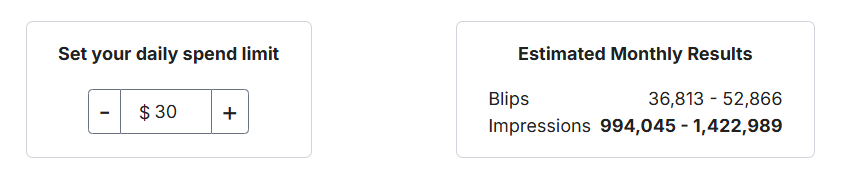
How much is a billboard near Largo?
Why Choose Blip for Billboard Advertising near Largo
-
Blip's self-serve setup lets you launch in Largo fast and target I-495/I-95, US 50, and MD 202 commuters without waiting on a rep.
-
In Largo, Blip-optimized campaigns can auto-pick billboards and timing around hospital, Metro, and retail traffic from Downtown Largo to nearby corridors.
-
No contracts or minimums make Largo billboard tests easy—start small, pause anytime, and scale into Beltway or US 50 reach as results grow.
-
Use Blip dayparting in Largo to hit 6-10 a.m. commuters, 11 a.m.-2 p.m. errand traffic, or pre-game rushes for Northwest Stadium.
-
Blip real-time analytics help you adjust in Largo as traffic shifts with school start, holiday shopping, and summer event season.
-
Blip creative tools make it easy to build bold Largo ads for commuter and student audiences near UM Capital Region Medical Center and College Park routes.
Frequently Asked Questions About Billboard Advertising near Largo
How much does a billboard cost in Largo with Blip?
Blip makes billboard advertising in the Largo area accessible with pay-per-play pricing, so you only pay when your ad actually displays. Each “blip” is a 7.5-to-10-second spot on a rotating digital billboard serving the Largo area, and pricing starts at just $0.01 per display. Your daily budget is used to bid for open ad slots, while Blip’s dynamic pricing adjusts based on time of day, location, and advertiser demand to help maximize reach for your spend.
Where can I advertise with Blip in Largo?
We serve the Largo area with 3 digital billboards, all within 10.0 miles of the market, including inventory in Lanham just 4.3 miles away and in College Park about 9.7 miles away. These nearby screens sit on approach routes, not random map pins, so they work well for reaching people moving into the Largo market. That makes billboard advertising near Largo especially effective for commuter, family, student, and visitor audiences.
What traffic makes billboard advertising in Largo with Blip effective?
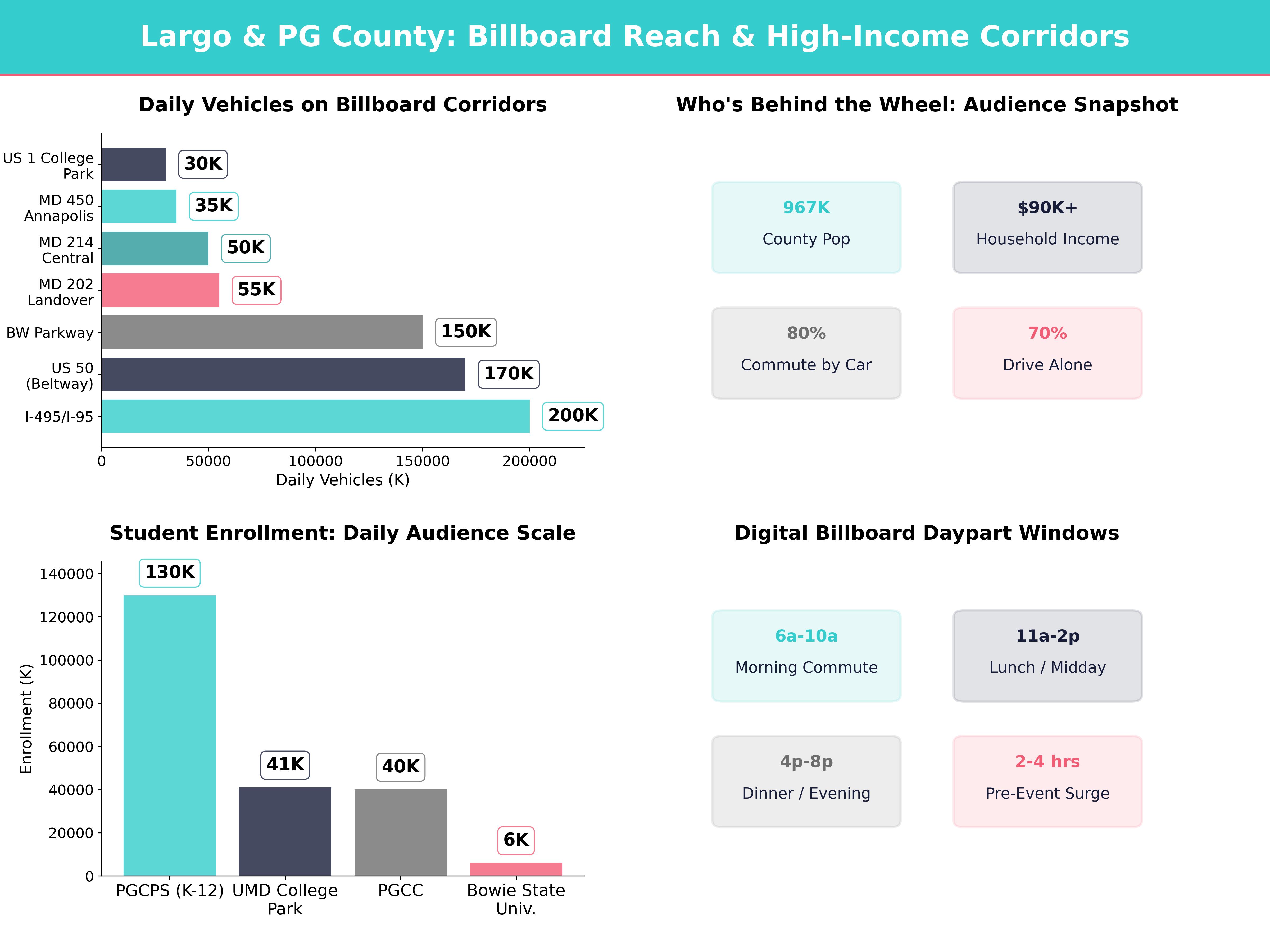
Largo sits at one of the most useful crossroads in Prince George's County, where the I-495/I-95 Beltway, US 50, and MD 202 bring Beltway traffic, medical visits, Metro trips, retail errands, and event travel together throughout the week. Key stretches of I-495/I-95 near the MD 202 and US 50 interchanges commonly exceed 200,000 vehicles per day, and US 50 often runs in the 160,000 to 180,000 vehicles per day range. That is the kind of volume that supports broad awareness campaigns for healthcare systems, regional retailers, telecom brands, colleges, banks, and entertainment venues.
Who can Blip reach near Largo, Maryland?
The Largo area draws drivers and shoppers from Bowie, New Carrollton, Hyattsville, and College Park, not just from the immediate neighborhoods around Downtown Largo. Recent state and county profiles also put county median household income above $90,000, which supports strong spending power for healthcare, retail, home services, education, and entertainment campaigns. Nearby anchors include the University of Maryland Capital Region Medical Center, the University of Maryland, College Park, Prince George's Community College, and Bowie State University.
What are the best times to run a billboard campaign in Largo with Blip?
For most campaigns serving the Largo area, we recommend prioritizing the workday commute first. Morning windows from 6 a.m. to 10 a.m. and evening windows from 3 p.m. to 7 p.m. usually provide the best commuter density. Restaurant, retail, and healthcare brands often do well with midday and early-evening reinforcement, while event advertisers should think in tighter bursts 2 to 4 hours before kickoff, concerts, or major weekend attractions.
Do I need a contract to advertise with Blip near Largo?
No, Blip has no long-term contracts or minimum commitments. You can start, pause, or stop your campaign at any time.
How fast can I launch a billboard campaign with Blip near Largo?
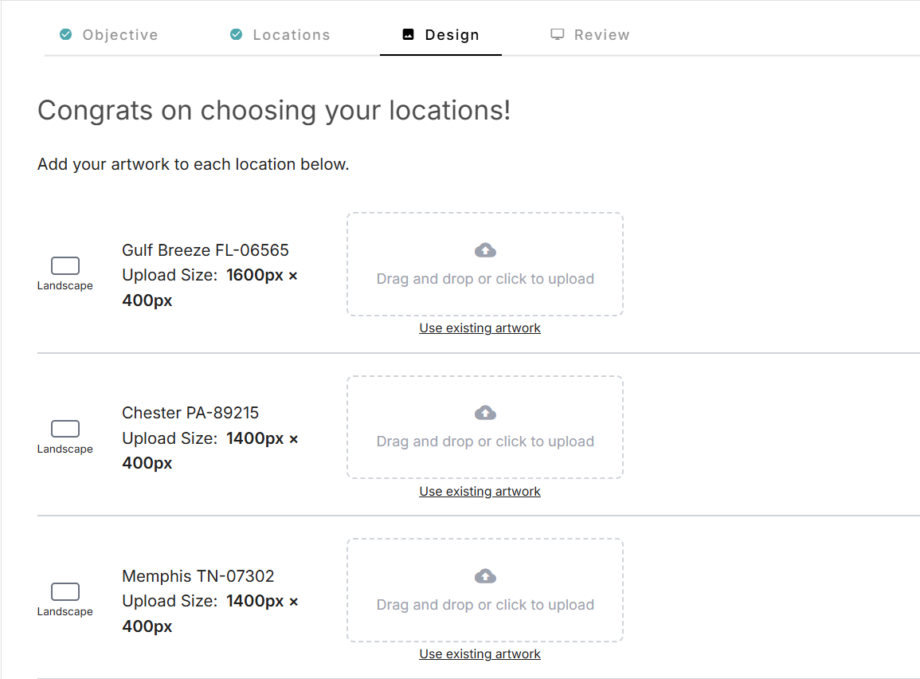
You can have your campaign live in minutes. Create a free account, select your locations, set your budget, upload your design, and start running once approved.
Where can I advertise with Blip near Largo?
Blip has digital billboards near Largo. You can browse available locations on a map, choose the ones that fit your audience, and start advertising right away.
Still have questions? Launch a campaign in minutes — no contracts, no commitments.
Start Your CampaignLargo Billboard Advertising Guide
Largo sits at one of the most useful crossroads in Prince George's County I-495/I-95 Beltway, US 50, and MD 202 bring Beltway traffic, medical visits, Metro trips, retail errands, and event travel together throughout the week. That makes billboard advertising near Largo especially effective, even when the screens themselves are in nearby markets rather than inside the community itself. We serve the Largo area with 3 digital billboards, all within 10.0 miles of the market, including inventory in Lanham just 4.3 miles away and in College Park about 9.7 miles away. For brands that want visibility across commuter, family, student, and visitor audiences in a county of 967,201 residents, the roads and destinations near Largo create a strong year-round canvas.
Largo area market overview
Population, income, and employment anchors
The Largo area benefits from its position inside Prince George's County 967,201 residents in the 2020 count and remains Maryland's second-most-populous county, according to the Maryland Department of Planning. That scale matters because the Largo area draws drivers and shoppers from Bowie, New Carrollton Hyattsville College Park, not just from the immediate neighborhoods around Downtown Largo. Recent state and county profiles also put county median household income above $90,000, which supports strong spending power for healthcare, retail, home services, education, and entertainment campaigns.
The local economy has several dependable audience anchors. Near Largo, the University of Maryland Capital Region Medical Center 205-bed teaching hospital that generates daily employee, patient, and visitor traffic. To the northwest, the University of Maryland, College Park enrolls more than 41,000 students, Prince George's Community College serves more than 40,000 students annually, and Bowie State University enrolls more than 6,000 students. Add in Prince George's County Public Schools, with more than 130,000 students, and we can see why the Largo area supports so many family, education, recruiting, and service-sector advertisers.
The Prince George's County Planning Department has also long positioned Downtown Largo as a regional center. That planning focus helps explain why the Largo area combines healthcare, housing, offices, retail, and transit rather than relying on a single industry.
Commuting behavior and everyday movement near Largo
For billboard strategy, the most important fact is simple: this is still a road-first market. Recent county commuting profiles show that roughly 70% of workers drive alone, and about 80% commute by car when carpools are included. That means roadside media remains one of the most efficient ways to build repeated visibility serving the Largo area.
Transit still matters, and it adds another layer of reach. Downtown Largo station is the eastern terminus for 2 Washington Metropolitan Area Transit Authority Metrorail lines, the Blue Line and the Silver Line. Even so, many of those transit trips begin or end with driving, which reinforces the value of digital billboards near Largo on the surrounding road network.
Traffic corridors serving the Largo area
Beltway and expressway routes near Largo
When we plan campaigns serving the Largo area, we start with the biggest reach engine: the Capital Beltway and Maryland State Highway Administration network. MDOT SHA traffic count maps show that key stretches of I-495/I-95 near the MD 202 and US 50 interchanges commonly exceed 200,000 vehicles per day. That is the kind of volume that supports broad awareness campaigns for healthcare systems, regional retailers, telecom brands, colleges, banks, and entertainment venues.
US 50 is just as important for the Largo market because it channels traffic between Washington, Bowie, Annapolis, and the Beltway. On major segments near the Beltway, US 50 often runs in the 160,000 to 180,000 vehicles per day range. For advertisers, that means we are not just reaching residents near Largo. We are also reaching regional travelers moving between major county population centers and the Washington metro core.
These high-volume routes matter because many people who live, work, shop, or attend events in the Largo area touch them every week. Even if a destination is near Downtown Largo, the trip that leads there often begins on the Beltway or US 50.
Arterials that feed the Largo area every day
The next layer is the arterial system. MD 202, Landover Road, commonly carries about 50,000 to 60,000 vehicles per day near the Beltway on heavily traveled segments, while MD 214, Central Avenue, is often around 50,000 vehicles per day on key approaches west of the Largo area. Those are meaningful numbers because they reflect everyday, repeatable trips rather than occasional long-distance travel.
These corridors connect the Largo area to Northwest Stadium, The Boulevard at Capital Centre, Woodmore Towne Centre, medical offices, neighborhood shopping, and residential communities across central Prince George's County. Arena Drive, Largo Center Drive, and Lottsford Road carry lower volumes than the Beltway, but they are still strategically important because they concentrate destination traffic around the hospital, Metro, retail nodes, and office space near Largo.
For practical media planning, we think of MD 202 and MD 214 as conversion corridors. They catch people who are no longer just traveling across the county. They are moving toward errands, appointments, shopping trips, and events serving the Largo area.
Why nearby Lanham and College Park billboards work for Largo
Our billboard locations near Largo are useful because they sit on approach routes, not random map pins. In the Lanham area, MD 450, Annapolis Road, typically runs around 30,000 to 40,000 vehicles per day on major segments, and nearby Beltway access captures drivers circulating between New Carrollton, Bowie, and the Largo area. Since Lanham is just 4.3 miles from Largo, it is especially efficient for campaigns that need geographic relevance and frequent local exposure.
The College Park option reaches a different but valuable stream of traffic. US 1, Baltimore Avenue, commonly carries 30,000+ vehicles per day through much of the College Park corridor, and nearby segments of the Baltimore-Washington Parkway carry 150,000+ vehicles per day. Those routes help us reach commuters, university audiences, hospitality guests, and regional travelers before they turn south or east toward the Largo area.
Together, these nearby screens give us a strong north and northwest approach strategy. That is exactly how billboard advertising near Largo should work: by intercepting the routes people actually use to enter the market.
Audience segments we can reach near Largo
Commuters, healthcare workers, and office visitors
The commuter audience near Largo is broad and dependable. The University of Maryland Capital Region Medical Center 205-bed campus. Nearby government offices, medical practices, shopping areas, and service businesses add even more daily movement.
This makes the Largo area especially strong for campaigns tied to healthcare, hiring, legal services, insurance, banking, urgent care, home improvement, and auto services. We can use digital boards in nearby Lanham and College Park to put those brands in front of people during the morning and evening rush, or during midday appointment windows when medical and retail trips are still active.
The Downtown Largo station audience also matters because transit users still generate road traffic around drop-offs, pickups, and park-and-ride patterns. Even when a commuter finishes part of the trip by train, the billboard impression often happens while that person is still behind the wheel.
Students, parents, and education households near Largo
Education is one of the biggest reasons the Largo-area audience is so layered. The University of Maryland, College Park has 41,000+ students, which creates heavy demand for food, retail, apartments, entertainment, financial services, mobile plans, and health services. Prince George's Community College serves 40,000+ students annually, giving the eastern side of the county another large education audience. Bowie State University adds 6,000+ students, faculty members, and campus visitors to the regional mix.
Family audiences are even larger. Prince George's County Public Schools enrolls more than 130,000 students, which means the Largo area is full of parents, guardians, teachers, coaches, and school staff members making daily road trips. That is why tutoring, pediatric care, orthodontics, after-school programs, youth sports, and family dining campaigns can all work well serving the Largo area.
The College Park side of the network also benefits from hospitality traffic. The Hotel at the University of Maryland has 297 rooms, and that visitor base adds conference guests, family visitors, and event travelers to the audience pool we can reach near Largo.
Sports, retail, and leisure audiences serving the Largo area
Sports and entertainment add another layer of frequency. SECU Stadium at Maryland seats 51,802, and the XFINITY Center seats 17,950. Those venues create recurring game-day and event traffic through the College Park corridor, which helps advertisers reach fans, students, alumni, and visiting families who also circulate through the broader county.
Closer to the Largo area, Northwest Stadium delivers at least 8 regular-season Washington Commanders home games each year, plus preseason games, concerts, and other large gatherings. That creates strong windows for restaurants, bars, rideshare alternatives, parking services, ticketing, retail, and event-driven promotions.
Family leisure traffic matters too. Six Flags America promotes more than 100 rides, shows, and attractions, and Experience Prince George's continues to market the county as a sports and leisure destination. For advertisers, that means the Largo area is not just a weekday commuter market. It is also a weekend and seasonal destination market.
Seasonal opportunities for campaigns serving the Largo area
Best times of year near Largo
We usually see the strongest seasonal opportunities near Largo in four predictable waves.
Late summer and early fall are excellent because schools and campuses restart at the same time. Prince George's County Public Schools brings back 130,000+ students, the University of Maryland, College Park welcomes 41,000+ students, and Maryland football usually gives us roughly 6 to 7 home games at SECU Stadium each season. That combination is ideal for healthcare, telecom, food, apartments, back-to-school retail, and hiring campaigns.
November and December are strong for holiday retail, restaurants, entertainment, and service businesses. Shopping traffic builds around Woodmore Towne Centre, The Boulevard at Capital Centre, and other county commercial nodes. Winter's earlier darkness also helps illuminated digital boards stand out during the evening commute serving the Largo area.
Spring is a powerful season for healthcare, home improvement, tax services, graduations, and moving-related campaigns. Campus events bring families back through College Park and Bowie, and warmer weather increases shopping and recreation trips throughout Prince George's County.
Summer is ideal for family entertainment, youth programs, quick-service restaurants, and tourism-related brands. Six Flags America and countywide leisure travel create more discretionary trips, which makes seasonal creative and short promotional bursts especially effective.
Best times of day for Largo-area billboard exposure
For most campaigns serving the Largo area, we recommend prioritizing the workday commute first. Morning windows from 6 a.m. to 10 a.m. and evening windows from 3 p.m. to 7 p.m. usually provide the best commuter density. Those are strong defaults for banks, hospitals, colleges, retail chains, and service providers.
Restaurant, retail, and healthcare brands often do well with midday and early-evening reinforcement. A lunch window from 11 a.m. to 2 p.m. can catch appointment traffic, errand traffic, and flexible workers, while a dinner window from 4 p.m. to 8 p.m. supports food, shopping, and family offers.
Event advertisers should think in tighter bursts. We often recommend increasing activity 2 to 4 hours before kickoff, concerts, or major weekend attractions. For recruiting campaigns tied to healthcare or shift work, early starts around 5 a.m. and later evening placements near 7 p.m. can outperform a generic all-day schedule.
Billboard design tips for the Largo area
Creative choices that feel local near Largo
The Largo-area audience is diverse, professional, family-oriented, and heavily commuter-driven, so local relevance matters. Maryland planning profiles show Prince George's County 1 in 5 residents is Hispanic or Latino. That means inclusive casting, authentic neighborhood imagery, and culturally aware messaging usually perform better than generic stock creative.
We recommend simple, high-contrast layouts for this market. On faster roads, we usually aim for 6 to 8 words of main copy, 1 clear visual focus, and 1 action cue, such as a short URL, memorable brand name, or location reference. Drivers near Largo often see the ad while navigating merges, exits, or busy corridor traffic, so visual clarity matters more than clever complexity.
Color choices can also be localized. Clean whites, deep blues, reds, golds, and high-contrast black text tend to stand out well against the gray pavement, green tree cover, and overcast winter skies common in the Washington suburban landscape. For healthcare, education, and finance brands, polished and trustworthy visuals often fit better than overly edgy creative.
Messaging angles that work on routes serving the Largo area
Route-based messages are especially effective near Largo because many viewers are actively moving toward specific destinations. We often see the best results from copy that acknowledges how people use the market. We use healthcare messaging like “Same-Day Care on Your Way Home” or “Now Hiring Near Downtown Largo” when the goal is patient acquisition or staff recruiting. We use retail and restaurant messaging like “Dinner Off MD 202” or “Shop Before the Beltway” when the goal is high-intent traffic. We use event language like “This Weekend,” “Tonight,” or “Before the Game” when the audience includes stadium, campus, or family-entertainment travelers. We use education and apartment messaging with cleaner layouts and stronger brand marks when the campaign needs to connect with students and young professionals near College Park.
We usually avoid QR codes on high-speed commuter corridors because drivers do not have enough dwell time to use them safely. A short URL, simple offer, or memorable phone number is usually the better choice serving the Largo area.
Regional billboard strategies near Largo
Start closest to the Largo market with Lanham
Lanham is our closest digital option at 4.3 miles from Largo, so it is usually the first place we look when a campaign needs efficient local reach. This location is especially useful for hospitals, clinics, dentists, banks, home services, local colleges, insurance agencies, and retail businesses that depend on repeat exposure from nearby residents and commuters.
We also like Lanham for campaigns targeting people moving between New Carrollton
Add College Park for north-county and university reach near Largo
Our digital inventory in College Park sits about 9.7 miles from Largo and adds a different kind of reach. It connects the campaign to university traffic, hospitality guests, fans heading to SECU Stadium or the XFINITY Center, and commuters traveling south through the county.
This is especially helpful for restaurants, telecom brands, entertainment offers, apartments, education providers, and regional healthcare systems. If the goal is not just proximity to Largo, but broader frequency across north-central Prince George's County, College Park is a smart addition.
Use all three billboards as a corridor network serving Largo
All 3 billboards work best when we treat them as a coordinated corridor network. We can use Lanham to stay tight to the Largo area, add College Park to widen reach across northern approaches, and then daypart the campaign around commute peaks, school cycles, or event windows.
That network approach works especially well for launches, seasonal retail pushes, recruiting campaigns, event promotions, and awareness flights lasting 2 to 4 weeks. It gives us multiple chances to reach the same person on different days and on different routes, which is exactly how out-of-home frequency builds memory.
Blip tools for billboard advertising near Largo
Choosing the right setup for a Largo-area campaign
Blip makes it easy to match the strategy to the market. If we already know that Lanham is the priority because it is just 4.3 miles from Largo, we can select that location manually and control the schedule ourselves. If we want broader reach across the 3 billboards serving the Largo area, we can let Blip optimize delivery across the available inventory.
That flexibility matters because the Largo market has multiple audience types. A hospital recruiter may want weekday commute concentration, while a restaurant may want heavier evening and weekend activity. A college-oriented brand may want extra weight around College Park, while a local retailer may want the closest possible reach near Largo.
Optimizing by corridor, daypart, and event window near Largo
Because Blip uses pay-per-play buying, with displays starting at $0.01 per display, we can test specific windows without overcommitting. Each ad display is a 7.5- to 10-second blip, which is enough time for a clean, direct message on a digital screen. We can also adjust bids as demand changes by time of day, route, and season.
For the Largo area, that means we can do very practical things quickly. We can increase exposure from 6 a.m. to 10 a.m. and 3 p.m. to 7 p.m. for commuters. We can push harder before Washington Commanders home games or University of Maryland sports weekends. We can compare how Lanham performs against College Park, watch analytics in real time, and move budget toward the better-performing approach.
Traditional billboard companies often require longer planning cycles, fixed terms, and more negotiation. Blip lets us react to what the Largo-area market is actually doing this week.
Getting started with billboard rental serving the Largo area
A practical launch plan for the Largo area
We recommend starting with a simple decision framework. We first define the core goal, whether that is awareness, foot traffic, recruiting, event attendance, or lead generation. We then identify where the audience is coming from, such as the hospital corridor, Beltway commuters, university traffic, or family retail routes. We choose the location mix based on that path, using Lanham for closer local coverage, adding College Park for student and north-county reach, or using all 3 boards for broader frequency serving the Largo area. We build a schedule around the most relevant windows, such as 6 a.m. to 10 a.m. for commuters, 11 a.m. to 2 p.m. for midday decision-makers, or pre-event bursts 2 to 4 hours before major games and shows. We launch with 2 to 3 creative versions when possible, because variation helps us learn which message resonates fastest.
A short test flight can teach us a lot. Even 14 days of focused activity can show whether the stronger response comes from local healthcare messaging, student-oriented offers, or broader commuter awareness.
How to judge whether a billboard location fits your Largo-area goal
The right billboard choice depends on the customer journey, not just the closest pin on the map. If the goal is patient acquisition, medical recruiting, or hyperlocal service awareness, Lanham is usually the first board we evaluate because it is just 4.3 miles from Largo. If the goal includes students, sports fans, campus visitors, or a younger regional audience, we add College Park because the market includes 41,000+ University of Maryland, College Park students and major venues seating 51,802 and 17,950 people. If the goal is countywide awareness or repeated commuter exposure, we use all 3 boards and let route overlap build frequency over time. If the goal is event traffic, we emphasize narrower timing windows around Northwest Stadium, SECU Stadium, holiday shopping peaks, and summer family attractions.
That is where Blip is especially helpful. We do not have to lock ourselves into the old billboard model of long commitments and limited flexibility. We can start with a smart hypothesis, measure what happens, and refine the campaign until the billboards serving the Largo area align with the audience we actually want to reach.