Billboards near Glen Burnie, MD
No Minimum Spend. No Long-Term Contracts. Just Results.
Trusted by Leading Brands


Billboard advertising
near Glen Burnie has never been easier

How much is a billboard near Glen Burnie?
Why Choose Blip for Billboard Advertising near Glen Burnie
-
Blip lets Glen Burnie advertisers launch in minutes and map spots near I-97, I-695, and MD 100 without traditional buying hassle.
-
Set any budget in Glen Burnie and pay only when your ad runs, ideal for commuter-heavy traffic where 80%+ drive to work.
-
Use Blip-optimized campaigns in Glen Burnie to match BWI, Arundel Mills, and Fort Meade traffic with the best timing and boards.
-
Daypart Glen Burnie ads for 4:30-7:00 p.m. commutes or weekend shopping surges, then shift spend as your goals change.
-
Track Glen Burnie performance in real time and adjust fast as airport, retail, and event traffic spikes across the market.
-
No contracts in Glen Burnie means you can test, pause, or scale around Ravens games, school seasons, and holiday shopping.
Frequently Asked Questions About Billboard Advertising near Glen Burnie
How much does a billboard cost in Glen Burnie with Blip?
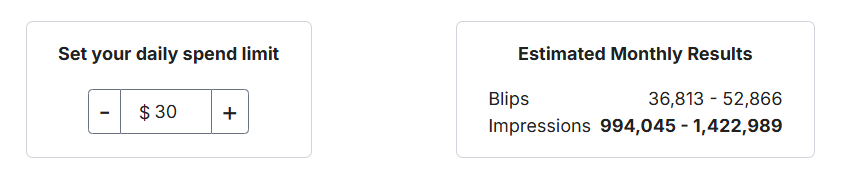
Blip makes billboard advertising in the Glen Burnie area flexible and affordable. You set a daily budget that fits your goals, and Blip only charges you when your ad actually appears as a 7.5-to-10-second “blip” on a rotating digital billboard serving the Glen Burnie area. Pricing is dynamic, so the cost per blip can change based on time of day, location, and advertiser demand.
Where can I advertise with Blip near Glen Burnie?
We currently have 14 digital billboards serving the Glen Burnie area, all in nearby Baltimore, about 8.5 miles away. That close placement helps capture the market’s most repeated travel patterns. Nearby digital boards can be a very efficient way to stay visible near Glen Burnie.
Why is Glen Burnie a strong market for billboard advertising with Blip?
Glen Burnie is a strong place to advertise because the market sits at the intersection of Baltimore, BWI Marshall Airport, major Anne Arundel County retail like Arundel Mills, and one of Maryland’s biggest commuter sheds. That gives us a mix of daily residents, airport travelers, military and defense workers, students, shoppers, and eventgoers moving through the same regional corridors again and again. For advertisers that want flexibility, frequency, and regional reach, nearby digital boards can be a very efficient way to stay visible near Glen Burnie.
What traffic routes around Glen Burnie are best for Blip billboard ads?
The main corridors near Glen Burnie include I-695 / Baltimore Beltway, I-97, MD 100, I-95, and I-895, which all operate at very high traffic levels. Secondary routes like MD 10 / Arundel Expressway, MD 2 / Ritchie Highway, and MD 648 / Baltimore-Annapolis Boulevard also carry heavy daily traffic. These roads matter because Glen Burnie is woven directly into Baltimore work trips, BWI access, stadium traffic, freight movement, and retail travel.
When is the best time to advertise in Glen Burnie with Blip?
Weekday mornings, roughly 6:00 a.m. to 9:00 a.m., are strong for recruiting, higher education, healthcare awareness, and business services. Weekday afternoons and evenings, roughly 3:30 p.m. to 7:00 p.m., are strong for family services, dining, retail, and action-oriented consumer offers. Friday afternoon through Sunday is strong for entertainment, shopping, casinos, hotels, and event-driven messaging.
Do I need a contract to advertise with Blip near Glen Burnie?
No, Blip has no long-term contracts or minimum commitments. You can start, pause, or stop your campaign at any time.
How fast can I launch a billboard campaign with Blip near Glen Burnie?
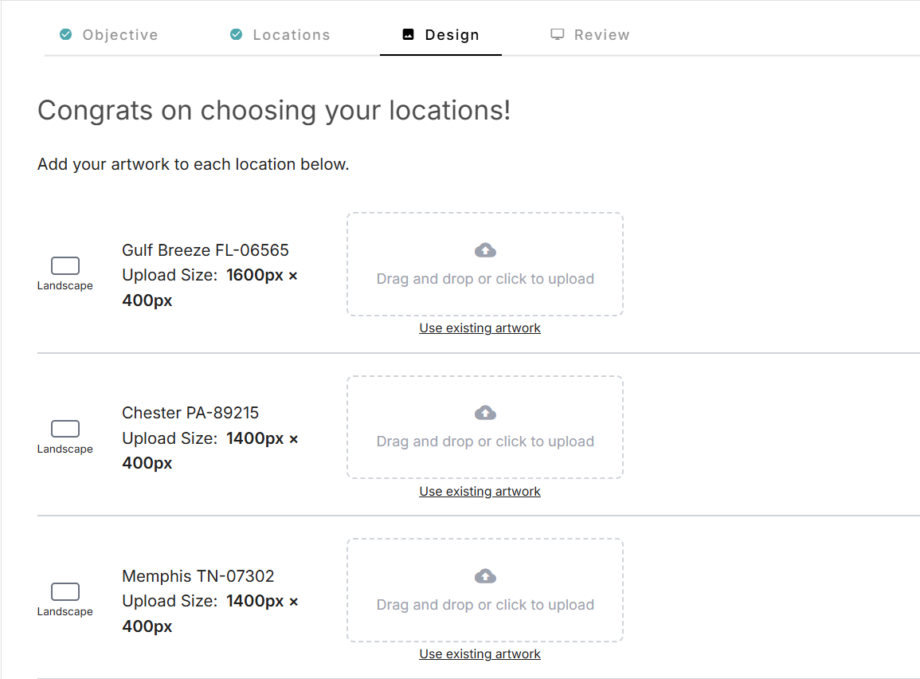
You can have your campaign live in minutes. Create a free account, select your locations, set your budget, upload your design, and start running once approved.
Where can I advertise with Blip near Glen Burnie?
Blip has digital billboards near Glen Burnie. You can browse available locations on a map, choose the ones that fit your audience, and start advertising right away.
Still have questions? Launch a campaign in minutes — no contracts, no commitments.
Start Your CampaignGlen Burnie Billboard Advertising Guide
Glen Burnie is a strong place to advertise because the market sits at the intersection of Baltimore, with 585,708 residents, BWI Marshall Airport 27 million passengers annually, major Anne Arundel County retail like Arundel Mills 1.93 million square feet with 200+ stores, and one of Maryland’s biggest commuter sheds, where more than 80% of workers commute by private vehicle. That gives us a mix of daily residents (72,891 in Glen Burnie), airport travelers, military and defense workers (57,000+ at Fort Meade), students (80,000+ in county schools), shoppers, and eventgoers moving through the same regional corridors again and again. We currently have 14 digital billboards serving the Glen Burnie area, all in nearby Baltimore, about 8.5 miles away, which is close enough to capture the market’s most repeated travel patterns. For advertisers that want flexibility, frequency, and regional reach, nearby digital boards can be a very efficient way to stay visible near Glen Burnie.
Glen Burnie Area Market Overview
Size, population, and buying power around Glen Burnie
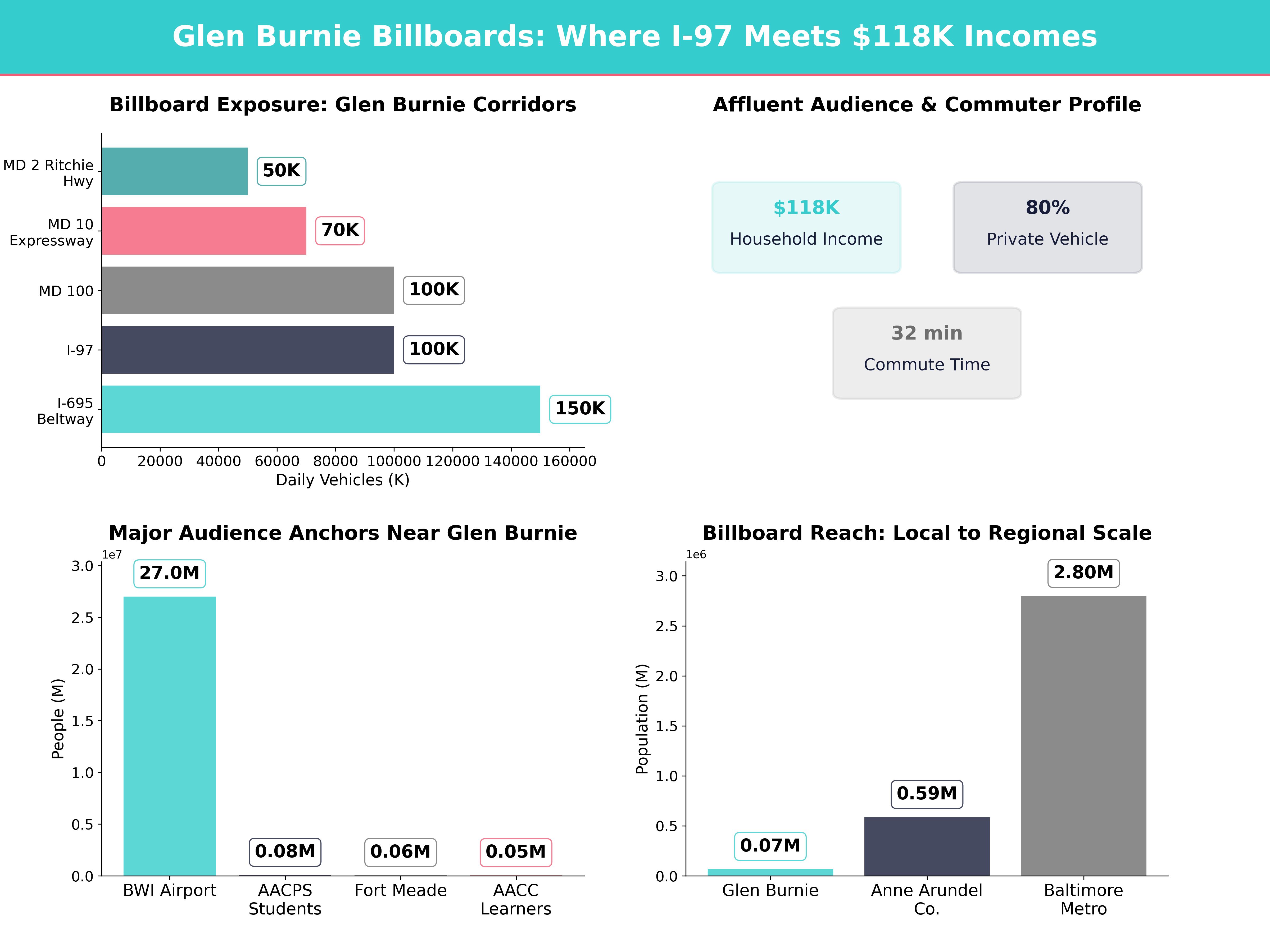
The Glen Burnie area is much larger than a single neighborhood trade area. At the 2020 Census, Glen Burnie had 72,891 residents. Anne Arundel County had 588,261 residents, and nearby Baltimore had 585,708 residents, which means advertisers near Glen Burnie are working inside a dense suburban-urban market rather than a small standalone town.
A few core market facts show why this matters.
- Glen Burnie had a 2020 population of 72,891.
- Anne Arundel County had 588,261 residents in 2020.
- Nearby Baltimore had 585,708 residents in 2020.
- The greater Baltimore metro area approaches 2.8 million residents.
- Recent Census estimates place Anne Arundel County median household income around $118,000.
That income profile is important because it supports strong demand for higher-consideration categories, including healthcare, home improvement, automotive, insurance, education, financial services, and local retail. The market also benefits from a good mix of homeowners, renters, military-connected households, airport workers, healthcare employees, and young families. In practical terms, that means we can build campaigns near Glen Burnie for both immediate-response offers and longer-term brand building.
Economy and commuting patterns serving the Glen Burnie area
The local economy is unusually diversified for a suburban market. Anne Arundel Economic Development Corporation Maryland Department of Commerce both emphasize the county’s strengths in aviation, logistics, health care, cyber, defense, retail, and professional services. That matters because diversified economies usually create steadier billboard demand across the year.
Commuting behavior is one of the biggest reasons billboard advertising works so well near Glen Burnie.
- More than 80% of workers in Anne Arundel County commute by private vehicle when drive-alone and carpool trips are combined.
- Mean commute time is about 32 minutes.
- BWI Marshall Airport 27 million passengers annually.
- Fort Meade supports more than 57,000 military and civilian personnel.
- University of Maryland Baltimore Washington Medical Center is a 285-bed hospital serving the Glen Burnie area.
Even though the region also has MTA Maryland, Light RailLink, and MARC Train connections, the Glen Burnie area remains decisively road-oriented. That auto dependence is exactly what makes nearby billboard inventory valuable. We can reach people repeatedly on commutes to Downtown Baltimore Port of Baltimore, BWI, health systems, warehouses, retail centers, and event districts.
Key Traffic Corridors Serving the Glen Burnie Area
Interstates and expressways that carry the Glen Burnie market
Because our inventory serving the Glen Burnie area is in nearby Baltimore, we focus first on the roads that Glen Burnie area drivers actually use to enter and exit the city. According to the Maryland Department of Transportation and the Maryland State Highway Administration
- I-695 / Baltimore Beltway regularly reaches more than 150,000 vehicles per day on major sections near the I-97 connection. This route captures cross-county commuters, airport trips, retail traffic, and regional through-movement.
- I-97 commonly tops 100,000 daily vehicles on busy stretches near Glen Burnie access points. This is the primary spine between Baltimore and Annapolis
- MD 100 runs in the 100,000+ vehicles-per-day range on major segments near I-97. It pulls east-west traffic tied to Arundel Mills
- I-95 and I-895 on the Baltimore approach also operate at six-figure daily traffic levels, which makes them strong choices for advertisers that want both Glen Burnie area reach and broader regional awareness.
These corridors matter because Glen Burnie is not isolated from the metro. The area is woven directly into Baltimore work trips, BWI access, stadium traffic, freight movement, and retail travel. When we place digital boards on nearby Baltimore approaches, we are often catching Glen Burnie area audiences before they reach a final destination.
Local arterials and feeder routes near Glen Burnie
Secondary routes reinforce the same pattern. They tell us that the Glen Burnie area is not only a pass-through market, but also a high-frequency local errands market.
- MD 10 / Arundel Expressway carries around 70,000 vehicles per day on busy stretches near the Glen Burnie area.
- MD 2 / Ritchie Highway often carries 30,000 to 50,000+ vehicles per day, depending on the segment.
- MD 648 / Baltimore-Annapolis Boulevard also posts mid-five-figure daily traffic on commercial sections serving local retail and service trips.
For categories like urgent care, dental, auto service, legal, staffing, storage, quick-service dining, and home services, these feeder patterns are valuable. Even if the billboard itself is in nearby Baltimore, the audience is still the Glen Burnie area audience because the trip chain starts and ends near Glen Burnie. That is why nearby boards can outperform a purely local mindset.
Audience Segments We Can Reach Near Glen Burnie
Commuters and workforce travelers in the Glen Burnie area
The first major audience is the everyday commuter. The Glen Burnie area sits between employment hubs in Downtown Baltimore Port of Baltimore, BWI Marshall Airport 80% of county work trips and average commute times around 32 minutes, we can build campaigns that hit the same people several times each week.
This audience is especially strong for:
- Recruitment campaigns.
- Trade schools and colleges.
- Healthcare systems and specialty care.
- Automotive brands and repair shops.
- Insurance, legal, and financial services.
- Restaurants and convenience retail.
- Home service providers.
For these advertisers, the Glen Burnie area is valuable because drivers are already in motion, already thinking about tasks, and already following repeat routes that support message recall.
Airport, military, retail, and visitor audiences near Glen Burnie
The second major audience is the destination traveler. Very few suburban Maryland markets have this combination of airport, defense, entertainment, and shopping volume so close together.
- BWI Marshall Airport 27 million passengers per year.
- Fort Meade supports more than 57,000 military and civilian personnel.
- Arundel Mills 1.93 million square feet and features more than 200 stores.
- Live! Casino & Hotel Maryland offers nearly 200,000 square feet of gaming space.
That cluster gives us a wide range of use cases near Glen Burnie. Travel brands can target airport trips. Restaurants can target shopping and entertainment traffic. Colleges can target younger adults and career changers. Hotels, attractions, and event venues can target weekend leisure movement. Consumer brands can use the market for broad frequency because one traveler may move from home to work to shopping to entertainment over the same week.
Families, students, and healthcare consumers serving the Glen Burnie area
The Glen Burnie area is also a family market with a steady education and healthcare base.
- Anne Arundel County Public Schools serves more than 80,000 students.
- Anne Arundel Community College serves about 45,000 learners each year.
- University of Maryland Baltimore Washington Medical Center has 285 beds.
Those numbers support consistent campaigns for pediatric care, orthodontics, tutoring, childcare, after-school programs, family entertainment, back-to-school retail, and healthcare service lines. This audience also responds well to convenience messaging because daily life near Glen Burnie is often schedule-driven and car-based.
Sports and event audiences connected to the Glen Burnie area
Nearby Baltimore adds another audience layer that matters for Glen Burnie area campaigns.
- Oriole Park at Camden Yards hosts 81 regular-season home games each year.
- M&T Bank Stadium brings at least 8 regular-season home games, plus preseason games and other events.
- CFG Bank Arena and the Baltimore Convention Center add year-round concerts, shows, and conventions.
For entertainment, hospitality, bars and restaurants, rideshare-adjacent services, legal services, and awareness campaigns, these event-driven surges can create excellent timing windows near Glen Burnie.
Seasonal and Timing Opportunities Near Glen Burnie
Spring and summer campaigns for the Glen Burnie area
Spring and summer are strong because regional travel expands. Baseball season alone gives us 81 Orioles home-game opportunities between spring and early fall. Preakness Stakes in May, graduation season, and rising summer travel through BWI Marshall Airport
We usually like spring and summer for:
- Travel and hospitality campaigns.
- Restaurants and entertainment.
- Home improvement and landscaping.
- Urgent care, dental, and elective healthcare.
- Tourism and regional attractions.
- Recruitment for seasonal and service roles.
This is also a good time to lean into weekend targeting, especially from Thursday afternoon through Sunday evening.
Fall and holiday timing near Glen Burnie
Fall gives us one of the best advertising mixes of the year because school, football, fairs, shopping, and conventions all overlap.
- Anne Arundel County Public Schools return in late August.
- Anne Arundel Community College fall schedules restart at the same time.
- M&T Bank Stadium brings at least 8 regular-season Ravens home dates.
- The Maryland State Fair
- The Annapolis Boat Shows create major October traffic in the region.
- Holiday shopping ramps up in November and December around Arundel Mills
This is an excellent season for retail, healthcare enrollment, education, events, legal services, staffing, and family-focused offers. It is also one of the best periods for commuter dayparting because routines become more predictable after summer.
Winter and early-year opportunities near Glen Burnie
Winter is a good reminder that digital billboards do not need to be static to be effective. In the Glen Burnie area, shorter daylight hours make illuminated screens especially useful during the evening commute, particularly from about 4:30 p.m. to 7:00 p.m. We often use winter for always-on categories such as urgent care, tax and legal services, auto repair, insurance, and home services.
Weather-related disruptions can also make timing more valuable. If traffic slows, drivers have more time to absorb a clear message. If schedules tighten, convenience-focused offers such as “Open Late,” “Same-Day Care,” or “Book Online” can become even more compelling.
Billboard Design Tips for the Glen Burnie Area
Creative choices that fit Glen Burnie area traffic patterns
The Glen Burnie area is a highway-and-arterial market, so we design for speed and clarity first. Drivers on routes like I-97, I-695, I-95, and MD 100 have only moments to process a message, especially when traffic is moving well. We usually recommend 7 words or fewer, one dominant visual, one offer, and one clear action.
A few creative approaches tend to fit this geography well.
- High-contrast color palettes work best. Navy, white, bright yellow, orange, and bold red tend to cut through gray pavement, overcast skies, and dense roadside visual clutter.
- Local cues help. References to “Near BWI,” “Off I-97,” “By Arundel Mills,” “Minutes from Baltimore,” or “Serving the Glen Burnie area” make the message feel immediately relevant.
- Value and convenience matter. This is a practical market, so “Free Estimate,” “Open 24/7,” “Now Hiring,” “Same-Day Appointments,” and “Book Today” often fit the audience well.
- Trust signals perform well. Healthcare certifications, years in business, or well-known regional affiliations can help reduce friction for family and service categories.
We also like imagery that feels regionally grounded without becoming cliché. Clean travel icons, roadway cues, Chesapeake-inspired blues, skyline silhouettes, and straightforward service visuals usually perform better than busy stock art.
Messaging strategies that resonate near Glen Burnie
We typically build different messages for different trip purposes. A morning commuter on the way toward Baltimore may respond to recruiting, education, coffee, healthcare, or awareness messaging. That same person on the evening drive back toward the Glen Burnie area may respond better to dining, family entertainment, urgent care, auto service, or home services.
For many campaigns, we recommend creating 2 creative versions.
- Version one can target weekday commuter needs.
- Version two can target evening and weekend action.
If the advertiser has a location serving the Glen Burnie area, we also keep addresses simple. A short URL, one phone number, or a landmark-based location cue usually works better than a full street address.
Regional Strategies Near Glen Burnie
Northbound and southbound commuter strategies near Glen Burnie
Because our Glen Burnie area inventory is in nearby Baltimore, direction of travel matters. Northbound approaches tend to be strongest for awareness, recruiting, education, events, and appointment-setting. Southbound return-home routes often perform better for action-oriented offers, including dinner, urgent care, home repair, storage, and next-step reminders.
We often plan the market like this:
- Weekday mornings, roughly 6:00 a.m. to 9:00 a.m., are strong for recruiting, higher education, healthcare awareness, and business services.
- Weekday afternoons and evenings, roughly 3:30 p.m. to 7:00 p.m., are strong for family services, dining, retail, and action-oriented consumer offers.
- Friday afternoon through Sunday is strong for entertainment, shopping, casinos, hotels, and event-driven messaging.
This directional thinking is one of the best ways to make nearby Baltimore boards work harder for the Glen Burnie area.
Airport, interchange, and entertainment strategies serving the Glen Burnie area
The second regional strategy is to treat Glen Burnie as a triangle of airport, retail, and entertainment movement. BWI Marshall Airport Arundel Mills Live! Casino & Hotel Maryland, downtown event venues, and stadium districts all generate overlapping traffic patterns.
This approach works especially well for:
- Hotels and travel services.
- Restaurants and nightlife.
- Attractions and events.
- Telecom and consumer apps.
- Personal injury and legal advertising.
- Staffing and hourly recruitment.
When we build campaigns around this triangle, we usually emphasize afternoons, evenings, weekends, game days, and travel-heavy periods.
Household service strategies near Glen Burnie
The third strategy is to use frequency for local household demand. Home services, healthcare, legal, insurance, auto repair, and storage do not always depend on one big event spike. They usually benefit from repeated exposure over time. For those categories, we often prefer a steady 2- to 4-week presence with commuter-focused timing over a short burst.
That approach fits the Glen Burnie area because daily errands are highly repetitive. People drive to work, to school, to appointments, to shopping, and back again. Nearby digital billboards can turn that repetition into recall.
Blip Tools for Glen Burnie Area Campaigns
When we use Blip-optimized campaigns near Glen Burnie
For advertisers that want broad reach across the Glen Burnie area, we often start with a Blip-optimized campaign. This works well when the goal is awareness across our 14 digital billboards serving the market, rather than tight control over a single route. It is especially useful for healthcare, recruiting, regional retail, entertainment, and service businesses that need a balanced mix of commute and leisure impressions.
In this market, optimized campaigns help us respond to changing demand across times of day, event spikes, and seasonal travel patterns. They also let us learn quickly which windows are producing the best mix of reach and efficiency.
When we choose manual billboard selection near Glen Burnie
Manual selection makes more sense when we already know the route we want to own. If an advertiser cares most about stadium traffic, airport movement, or a specific Baltimore approach used by Glen Burnie area commuters, we can choose boards individually on the map and pair them with custom dayparting.
This is where Blip’s flexibility matters most.
- We can run commuter-heavy schedules on weekdays.
- We can shift budget to weekends for retail or entertainment.
- We can test more than one creative version.
- We can start small because pricing begins at $0.01 per display.
- We can use short digital ad plays of 7.5 to 10 seconds to build frequency efficiently.
Real-time analytics then help us decide whether to keep scaling, adjust the creative, or move spend into a better-performing time window.
Getting Started With Billboard Rental Near Glen Burnie
How we evaluate billboard locations serving the Glen Burnie area
The best starting point is not the board. The best starting point is the goal. We usually begin by asking whether we want awareness, store visits, recruiting, event attendance, appointment bookings, or website traffic. Once we know that, we can match nearby billboard locations to the routes that best serve the Glen Burnie area audience.
A simple planning framework works well.
- We identify the top 1 primary objective for the campaign.
- We list the top 3 trip generators, such as BWI, downtown Baltimore jobs, Arundel Mills, Fort Meade, or medical appointments.
- We decide whether morning, evening, weekday, or weekend traffic matters most.
- We build 2 creative versions if the audience behavior changes by time or direction of travel.
- We run a 2- to 4-week test, review analytics, and expand the best-performing pattern.
When we evaluate locations, we look at direction of travel, likely audience intent, distance from the advertiser’s destination, route repetition, and whether the board sits before or after a decision point. For example, a recruiter may prioritize weekday commuter boards, while a family attraction may prefer Friday and weekend visibility.
What to expect from billboard rental near Glen Burnie with Blip
Traditional billboard buying often starts with fixed terms, limited flexibility, negotiation, and higher entry costs. Blip is different because we can launch digitally, adjust quickly, and pay only when the ad actually runs. That matters in a market like Glen Burnie, where timing can change with traffic, school calendars, sports schedules, airport travel, and retail seasons.
For advertisers near Glen Burnie, that means we can:
- Start with any budget.
- Pause or revise without a long-term contract.
- Shift spend to better-performing nearby billboards.
- Daypart around commuter peaks, game days, or holiday shopping.
- Measure performance and optimize as the campaign runs.
The biggest advantage is practical. We do not need to guess once and hope for the best. We can start with the routes and times most likely to influence the Glen Burnie area, learn from the data, and improve from there. In a market defined by repeat driving, nearby digital billboard advertising can become a very efficient way to stay visible, relevant, and top of mind.