Billboards near Greenbelt, MD
No Minimum Spend. No Long-Term Contracts. Just Results.
Trusted by Leading Brands


Billboard advertising
near Greenbelt has never been easier

How much is a billboard near Greenbelt?
Why Choose Blip for Billboard Advertising near Greenbelt
Blip lets Greenbelt advertisers launch fast and self-serve, reaching Beltway, MD 295, and Route 1 drivers without traditional buying delays.
Use Blip-optimized campaigns in Greenbelt to auto-shift spend across commuter, student, and weekend traffic near College Park, Lanham, and Laurel.
No contracts and flexible budgets make Greenbelt easy to test for UMD games, Greenbelt Road shopping, or Beltway commute windows.
Blip's real-time analytics help Greenbelt campaigns track what works on I-95/I-495 and MD 295, then adjust quickly by route and daypart.
Create and upload billboards fast with Blip, then tailor Greenbelt creative for commuters, families, and UMD event crowds in minutes.
Frequently Asked Questions About Billboard Advertising near Greenbelt
How much does a billboard cost in Greenbelt with Blip?
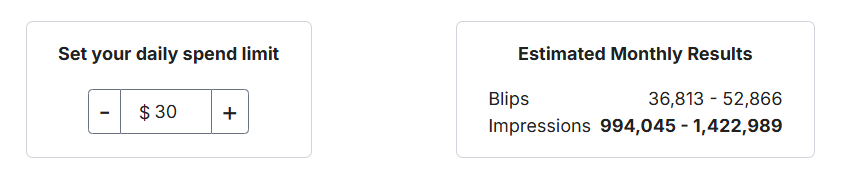
You only pay when your ad actually displays, with each 7.5-to-10-second “blip” starting at just $0.01 per display. Because pricing changes based on time of day, location, and advertiser demand, Blip works to maximize your reach for what you spend. Your total cost is simply the sum of your individual blips over time, so there are no minimums and no contracts.
Where can I advertise with Blip near Greenbelt?
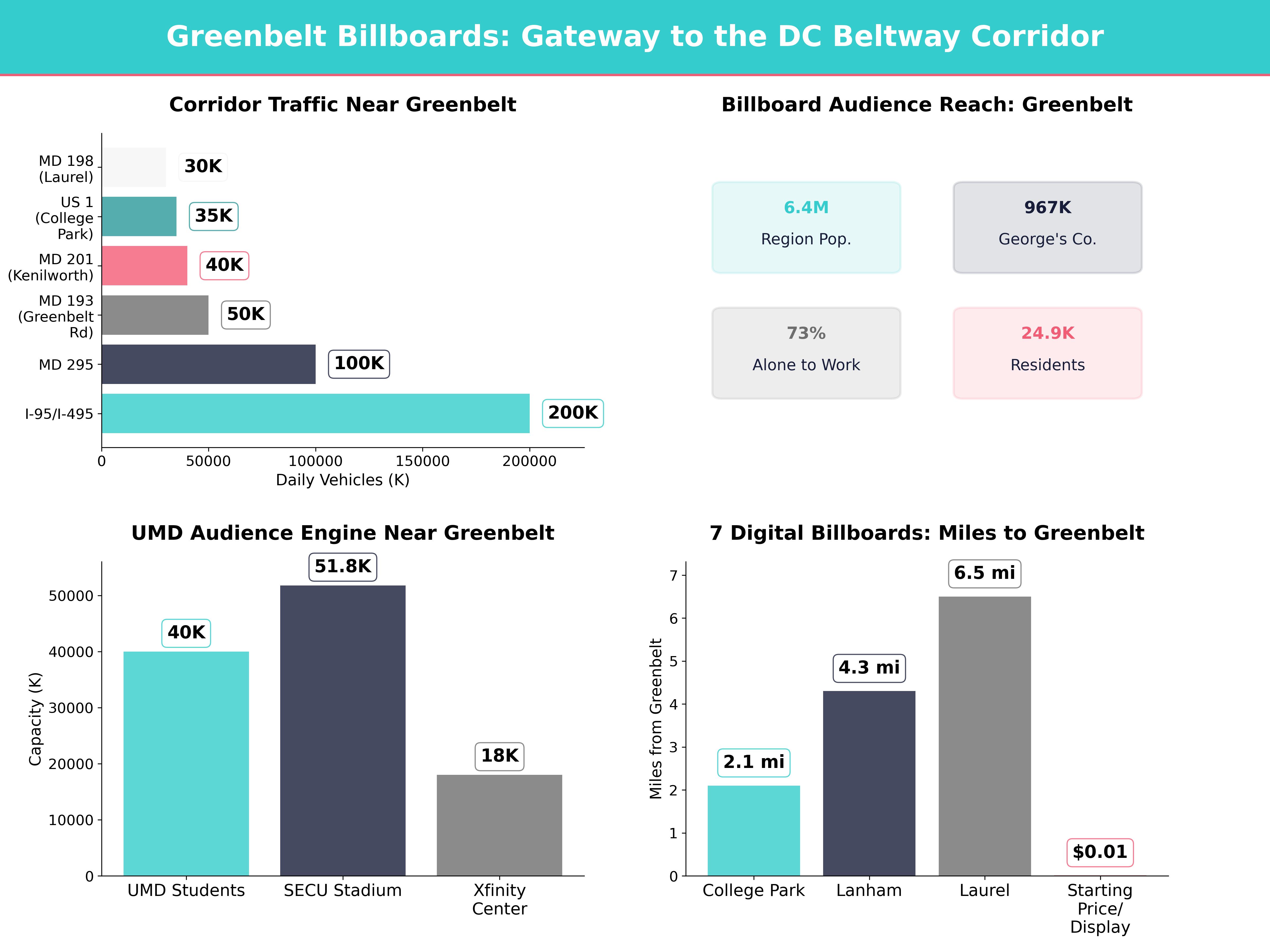
Our 7 digital billboards in nearby College Park, Lanham, and Laurel serve the Greenbelt area from just 2.1, 4.3, and 6.5 miles away, all within 10.0 miles of Greenbelt. That placement gives advertisers efficient access to commuters, students, families, and regional shoppers without needing inventory inside the city itself. For brands that want flexible spending and strong geographic targeting, the Greenbelt area is one of the better suburban Washington markets to test, refine, and scale.
Why is the Greenbelt area a strong place for Blip billboard advertising?
Advertising near Greenbelt works especially well because the market sits where the Capital Beltway, the Baltimore-Washington Parkway, and the University of Maryland, College Park orbit all overlap. The Greenbelt area is not just another anonymous suburb. It is a place where local relevance, convenience, and trust matter.
What kind of people does Blip reach in Greenbelt?
The Greenbelt area is not a single-audience market. It is a layered suburban market with commuter, student, family, and visitor traffic all moving through the same nearby corridors. That makes nearby College Park boards useful for higher education brands, apartments and student housing, quick-service and casual dining, events and entertainment, and tech, telecom, and app-based services.
When is the best time to advertise in Greenbelt with Blip?
Timing matters near Greenbelt because the audience mix changes during the year. We often suggest launching K-12 focused campaigns 2 to 3 weeks before school starts, and college-focused campaigns 3 to 4 weeks before university move-in and the start of classes. Spring is one of the best seasons to advertise serving the Greenbelt area, and winter is also better than many advertisers expect.
Do I need a contract to advertise with Blip near Greenbelt?
No, Blip has no long-term contracts or minimum commitments. You can start, pause, or stop your campaign at any time.
How fast can I launch a billboard campaign with Blip near Greenbelt?
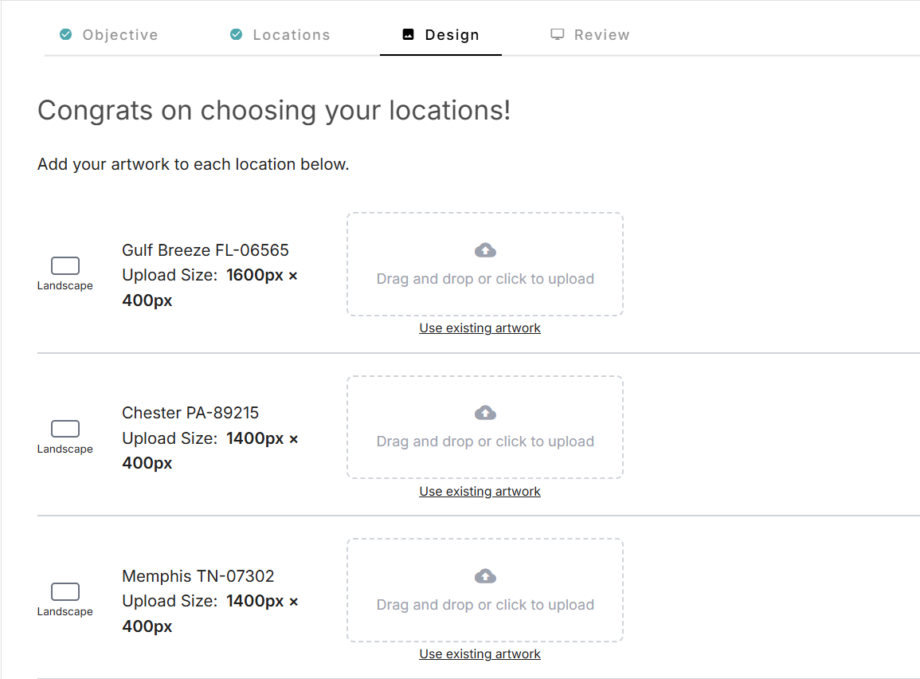
You can have your campaign live in minutes. Create a free account, select your locations, set your budget, upload your design, and start running once approved.
Where can I advertise with Blip near Greenbelt?
Blip has digital billboards near Greenbelt. You can browse available locations on a map, choose the ones that fit your audience, and start advertising right away.
Still have questions? Launch a campaign in minutes — no contracts, no commitments.
Start Your CampaignGreenbelt Billboard Advertising Guide
Advertising near Greenbelt works especially well because the market sits where the Capital Beltway, the Baltimore-Washington Parkway, and the University of Maryland, College Park orbit all overlap. Our 7 digital billboards in nearby College Park, Lanham, and Laurel 2.1, 4.3, and 6.5 miles away, all within 10.0 miles of Greenbelt. That placement gives advertisers efficient access to commuters, students, families, and regional shoppers without needing inventory inside the city itself. For brands that want flexible spending and strong geographic targeting, the Greenbelt area is one of the better suburban Washington markets to test, refine, and scale.
Market Overview for the Greenbelt Area
The City of Greenbelt is a compact but strategically located market with roughly 6.2 square miles and 24,921 residents, and it sits inside Prince George’s County 967,201 residents at the 2020 count. Prince George’s County includes 27 municipalities, and the larger Metropolitan Washington Council of Governments region has about 6.4 million residents, so the Greenbelt area pulls from a far broader consumer base than the city population alone suggests.
Greenbelt also has a distinct identity that helps advertising land. The community dates to 1937, when it was developed as a planned New Deal town, and that civic history still shows up in strong neighborhood recognition, park usage, and community event participation. For advertisers, that means the Greenbelt area is not just another anonymous suburb. It is a place where local relevance, convenience, and trust matter.
Demographics, economy, and consumer context near Greenbelt
The Greenbelt area benefits from a diversified economic base. We can reach households tied to education, healthcare, county government, professional services, logistics, and retail, with support from nearby institutions such as the University of Maryland, College Park, Prince George’s County Economic Development Corporation, and the broader Washington employment market.
The Greenbelt area is also unusually well positioned for repeat exposure because people travel through it for multiple reasons during the same week. A resident might commute toward Washington on Monday, shop along Greenbelt Road on Wednesday, head toward Laurel on Saturday, and visit College Park for a game or event on Sunday. That kind of repeated circulation is ideal for digital billboard frequency.
Commuting patterns that support billboard advertising near Greenbelt
Commuting behavior reinforces out-of-home value near Greenbelt. The Greenbelt Metrorail station is the northern terminus of the Green Line and offers more than 3,300 parking spaces, while the nearby College Park–University of Maryland station adds MARC Train access and additional WMATA connections. TheBus
Even with that transit access, the surrounding Prince George’s County market remains heavily car-oriented. About 73% of county workers drive alone to work, and Greenbelt itself still depends on road access for shopping, school trips, and cross-county errands. That combination matters because it gives us both a commuter audience and a resident audience, while keeping roads near Greenbelt central to daily life.
Key Traffic Corridors Serving the Greenbelt Area
Roadway access is the reason nearby billboard inventory can serve the Greenbelt area so effectively. Maryland State Highway Administration traffic counts vary by segment and year, but the major approaches near Greenbelt consistently rank among the busiest roads in the county and the wider Washington region.
I-95, I-495, and the Capital Beltway near Greenbelt
The 64-mile Capital Beltway is the backbone of regional movement, and the Greenbelt side of that loop is one of its strongest advertising zones. Segments of the I-95/I-495 complex near Greenbelt exceed 200,000 vehicles on an average day. That is exactly the kind of high-volume corridor where digital billboards build reach quickly.
This corridor matters because it does more than move Greenbelt-area residents. It also carries traffic between Washington, Baltimore, Montgomery County, Prince George’s County, and major employment nodes across the region. If we want broad brand awareness serving the Greenbelt area, Beltway-facing inventory is often the first place to look.
MD 295, US 1, and local arterials feeding the Greenbelt market
The Baltimore-Washington Parkway, signed as MD 295, is another core route serving the Greenbelt area. Nearby segments often carry 100,000-plus vehicles per day, which makes the parkway a strong option for campaigns aimed at north-south commuters, airport travelers, regional dining, and service businesses.
US 1 through College Park is smaller than the interstate network but highly valuable because it is so targeted. Traffic on that corridor is commonly in the 30,000 to 40,000 daily range, and the route concentrates students, faculty, apartment renters, restaurant customers, and event traffic linked to the university.
Other important feeders include these routes:
- MD 193, better known as Greenbelt Road, carries 50,000-plus vehicles on heavily commercial stretches serving the Greenbelt area.
- MD 201, Kenilworth Avenue, reaches 40,000-plus vehicles on key segments that connect Greenbelt-area travel to southern Prince George’s County and the District.
- MD 198 near Laurel 30,000-plus vehicles on active segments, helping capture travelers moving between the Greenbelt area and northern retail destinations.
When we combine boards near College Park, Lanham, and Laurel
Audience Segments We Can Reach Near Greenbelt
The Greenbelt area is not a single-audience market. It is a layered suburban market with commuter, student, family, and visitor traffic all moving through the same nearby corridors.
Commuters and working professionals serving the Greenbelt area
Commuters are the most obvious audience near Greenbelt, and they are also one of the most dependable. The county’s strong drive-alone rate, the volume on I-95/I-495, and the daily use of MD 295 and Greenbelt Road create reliable weekday repetition.
This audience is especially useful for:
- Healthcare providers.
- Home services companies.
- Legal, insurance, and financial firms.
- Automotive businesses.
- Hiring campaigns.
- Retailers with easy Beltway access.
We usually recommend commuter-focused creative when the advertiser’s goal is top-of-mind awareness and fast recall during routine travel. Near Greenbelt, repetition often matters more than novelty.
Students, faculty, staff, and game-day audiences near Greenbelt
The nearby University of Maryland, College Park is one of the biggest audience engines serving the Greenbelt area, with more than 40,000 students alone. Add faculty, staff, visiting families, alumni, and sports attendees, and the market becomes even stronger.
Event traffic is especially important. SECU Stadium holds 51,802 fans, and the Xfinity Center seats 17,950. The Clarice Smith Performing Arts Center adds arts and cultural traffic that is often affluent and event-oriented.
For advertisers, that makes nearby College Park boards useful for:
- Restaurants and bars.
- Apartments and student housing.
- Telecom and technology brands.
- Tutoring, education, and training programs.
- Entertainment and live events.
- Health and wellness offers.
Families, school households, and local shoppers in the Greenbelt area
Family traffic is just as important as commuter traffic near Greenbelt. Prince George’s County Public Schools serves more than 130,000 students, and that school-year routine creates recurring drives for drop-offs, shopping, dining, healthcare, and after-school activities.
The Greenbelt area also benefits from strong local recreation. Prince George’s County Parks and Recreation supports a broad network of facilities, and Greenbelt Park adds 1,100 acres of nearby green space that helps drive weekend movement. We often see family-oriented advertisers perform well when they emphasize convenience, value, and location clarity.
This audience is strong for:
- Grocery and retail.
- Urgent care and pediatric services.
- Childcare and education.
- Family dining.
- Community events.
- Fitness and recreation programs.
Visitors, weekend explorers, and cultural audiences near Greenbelt
Not every Greenbelt-area trip is a commute. Experience Prince George’s promotes a steady mix of sports, cultural, dining, and leisure travel across the county. Visitors also move through the Greenbelt area on their way to Laurel College Park, and destinations such as the Greenbelt Museum.
Weekend and event audiences are valuable because they are often in decision mode. They are choosing where to eat, where to stop, what to do next, or which destination to visit. That makes digital billboards near Greenbelt especially effective for short-fuse offers and time-sensitive messages.
Seasonal and Timing Opportunities in the Greenbelt Area
Timing matters near Greenbelt because the audience mix changes during the year. We can usually improve results by matching campaigns to school calendars, sports schedules, weather patterns, and major local events.
Spring opportunities near Greenbelt
Spring is one of the best seasons to advertise serving the Greenbelt area. Maryland Day brings visitors to the university, and UMD commencement drives family travel, dining, lodging, and celebratory spending. We often recommend launching graduation-related campaigns 2 to 4 weeks before commencement activity peaks.
Spring is also a strong period for home improvement, landscaping, medical services, and apartment leasing. Warmer weather increases movement across the Greenbelt area, and drivers are often more receptive to destination-based messages after winter.
Summer opportunities near Greenbelt
Summer brings a different mix. School is out, family schedules shift, and weekends become more leisure-driven. That makes summer useful for camps, entertainment, restaurants, attractions, retail, and travel-related services.
The Greenbelt area also sees seasonal movement tied to park use, day trips, and student housing turnover. If we are targeting students or renters, we usually want creative live before late-summer move cycles begin. For family brands, summer is often the right time to emphasize flexibility, fun, and quick decision-making.
Fall opportunities near Greenbelt
Fall is a major advertising season near Greenbelt because several audience streams overlap at once. Prince George’s County Public Schools are back in session, University of Maryland returns to full activity, and football season starts pulling crowds toward SECU Stadium.
We often suggest these timing windows:
- We usually launch K-12 focused campaigns 2 to 3 weeks before school starts.
- We usually launch college-focused campaigns 3 to 4 weeks before university move-in and the start of classes.
- We often tighten commuter targeting in September and October because weekday travel patterns stabilize after summer.
Local civic events can help too. The annual Greenbelt Labor Day Festival adds another reason to be visible serving the Greenbelt area around the start of fall.
Winter opportunities near Greenbelt
Winter is better for billboard advertising near Greenbelt than many advertisers expect. Earlier darkness can make digital creative more visually striking during the afternoon commute, and cold-weather errands still keep the Beltway, Greenbelt Road, and Laurel corridors active.
Winter is especially effective for:
- Holiday retail.
- Tax preparation.
- Healthcare and urgent care.
- Fitness offers.
- Home services.
- Indoor entertainment.
Basketball season also boosts visibility opportunities around Xfinity Center, especially from November through March.
Billboard Design Tips for the Greenbelt Market
Creative that works near Greenbelt usually feels practical, local, and easy to process. This is a fast-moving suburban market, so clarity wins.
Build creative for speed and route recognition near Greenbelt
On I-95, I-495, and MD 295, we usually keep primary copy to 6 to 8 words because drivers have only a few seconds to absorb the message. Large route numbers also work well in this market. Phrases like “Off 495,” “Near Route 1,” “Minutes from Greenbelt Road,” and “Next Exit” fit how drivers actually navigate near Greenbelt.
We also recommend high-contrast color palettes on these routes. Tree-lined corridors such as MD 295 can create shifting light conditions, and darker winter commutes can reduce readability for low-contrast designs. Clean backgrounds, bold typography, and a single focal image generally perform better than dense layouts.
Match the visual tone to the Greenbelt-area audience
The Greenbelt area is diverse, educated, and locally aware. We usually advise advertisers to avoid generic Washington monument imagery unless the offer truly depends on a downtown DC association. Suburban relevance is often stronger than big-city symbolism here.
Creative approaches that tend to resonate serving the Greenbelt area include these tactics:
- We use inclusive casting that reflects Prince George’s County’s diverse households.
- We emphasize convenience, trust, and everyday utility for family and service brands.
- We use more energetic, event-driven visuals for College Park-oriented campaigns.
- We keep one offer, one brand cue, and one action on the board whenever possible.
Greenbelt’s community identity can also be a useful cue. Because the city traces to 1937 and still values neighborhood character, messaging that feels civic, helpful, and rooted in real local use cases often outperforms abstract brand language.
Regional Strategies Serving the Greenbelt Area
Because our billboard inventory sits in several nearby cities, we can build different strategies around different travel patterns. That is one of the main advantages of advertising near Greenbelt rather than trying to depend on one corridor.
College Park strategy for the Greenbelt area
Our College Park boards are just 2.1 miles from Greenbelt, and they are excellent for reaching university energy and Route 1 traffic. We use this zone when the target audience includes students, faculty, renters, restaurant diners, sports fans, or arts attendees.
College Park is especially strong for:
- Higher education brands.
- Apartments and student housing.
- Quick-service and casual dining.
- Events and entertainment.
- Tech, telecom, and app-based services.
If the advertiser wants fast awareness among younger adults serving the Greenbelt area, College Park is usually the first nearby submarket we test.
Lanham and New Carrollton strategy for the Greenbelt area
Our Lanham boards are 4.3 miles from Greenbelt and are useful for capturing Beltway and interchange traffic tied to office commuters, service businesses, and regional movement around New Carrollton
We commonly recommend Lanham-area inventory for:
- Healthcare systems.
- Home improvement companies.
- Insurance, finance, and legal services.
- Hiring and recruitment.
- Retailers serving east Prince George’s County.
This submarket works well when the campaign needs a practical, commuter-first audience serving the Greenbelt area.
Laurel strategy for the Greenbelt area
Our Laurel 6.5 miles from Greenbelt and add valuable north-south regional reach. Laurel helps us catch travelers using I-95, MD 295, and MD 198, including people moving between the Greenbelt area, northern Prince George’s County, and the Baltimore-facing side of the corridor.
Laurel is often a strong fit for:
- Regional retail.
- Auto dealerships and repair.
- Family entertainment.
- Medical and dental practices.
- Logistics and workforce recruiting.
When we want broader catchment beyond immediate Greenbelt-area routines, Laurel helps extend the campaign without moving too far away.
Using all 7 billboards together near Greenbelt
The strongest regional strategy is often to layer all 7 boards. That gives us multiple approach angles into the Greenbelt area and helps build frequency across weekday and weekend travel. Instead of depending on a single route, we can reach the same consumer on a Beltway commute, a College Park errand, and a Laurel weekend trip.
Blip Tools and Capabilities for Greenbelt-Area Campaigns
Blip’s tools are useful in the Greenbelt area because this market rewards timing, corridor selection, and quick optimization.
Using manual control for Greenbelt-area corridor strategy
When we know exactly which audience we want, manual campaign setup makes sense. We can select the nearby boards that fit a commuter plan, a university plan, or a regional retail plan, then focus spend during the hours that matter most.
For example, we might manually emphasize College Park during lunch and evening periods for a restaurant or entertainment brand, while using Lanham and Laurel more heavily during weekday commute windows for a healthcare or home services advertiser.
Using Blip optimization across the Greenbelt area
When the goal is broad awareness serving the Greenbelt area, Blip-optimized campaigns are often the simplest choice. We can set the goals, targets, and budget, and let the platform distribute spend across the nearby inventory based on demand and opportunity.
That matters because the Greenbelt area has several different traffic personalities. Some campaigns need student-heavy exposure. Others need family retail traffic or commuter repetition. Optimization helps the system learn where the budget stretches furthest.
Budget flexibility and measurement near Greenbelt
Blip is also well suited to test-and-learn advertising. Each digital “blip” runs for about 7.5 to 10 seconds, and pricing starts at $0.01 per display. That flexibility lets us test messaging, compare dayparts, and scale what works without locking into a rigid approach from day one.
Real-time analytics are especially helpful in the Greenbelt area because we can compare:
- College Park versus Laurel performance.
- Weekday versus weekend delivery.
- Commuter windows versus midday.
- Student-focused creative versus family-focused creative.
Getting Started with Billboard Rental Near Greenbelt
Renting a billboard near Greenbelt is usually easier when we start with the market logic first and the map second. The most effective campaigns begin with a clear objective, then match that objective to the nearby corridors and audience types.
Start with a practical goal for the Greenbelt area
Before we choose boards, we should define what success looks like. The right setup for brand awareness is not always the right setup for immediate store traffic.
We usually start with questions like these:
- Do we want broad awareness serving the Greenbelt area, or do we want action from one nearby corridor?
- Are we targeting commuters, students, families, or event-goers?
- Do we care more about weekday frequency or weekend intent?
- Is the campaign tied to a season, an opening, a sale, or a hiring push?
Those answers make location selection much easier.
Evaluate nearby billboard locations with Greenbelt in mind
When we compare locations near Greenbelt, we usually look at five practical factors. We look at direction of travel, because the best board is the one drivers see before they make a decision.
- We look at direction of travel, because the best board is the one drivers see before they make a decision.
- We look at corridor type, because I-95 and MD 295 behave differently from US 1 and Greenbelt Road.
- We look at audience fit, because College Park skews differently from Lanham and Laurel.
- We look at time of day, because some businesses need the 7 to 10 a.m. window, while others win later in the day.
- We look at proximity to the destination, because a board 2.1 miles away supports a different call to action than one 6.5 miles away.
Expect a simpler process than traditional billboard buying
Traditional billboard buying often involves back-and-forth availability checks, longer commitments, and less flexibility once a campaign is live. Blip simplifies that process. We can choose boards on a map, upload creative, set timing, adjust budgets, and make changes without waiting through the usual offline process.
For many advertisers serving the Greenbelt area, a smart first move is a 2- to 4-week test campaign. We can start with one strong creative, watch delivery patterns, then expand into additional dayparts or nearby cities once we see which routes and audience mixes respond best.
If the goal is wide reach, we can spread across all 7 nearby digital billboards. If the goal is more specific, we can narrow the campaign to the boards closest to the route, audience, and timing that matter most. Either way, the Greenbelt area is a strong market for flexible digital billboard rental because the roads are busy, the audience mix is deep, and nearby inventory in College Park, Lanham, and Laurel