Billboards near Ardmore, PA
No Minimum Spend. No Long-Term Contracts. Just Results.
Trusted by Leading Brands


Billboard advertising
near Ardmore has never been easier
How much is a billboard near Ardmore?
Why Choose Blip for Billboard Advertising near Ardmore
Blip lets you launch Ardmore billboards in minutes, reaching Main Line drivers on I-76, I-476, and Lancaster Ave without traditional ad-buy delays.
Set any budget in Ardmore and pay only for each 7.5-10 second blip, so you can test premium Main Line reach without contracts or minimums.
Daypart your Ardmore campaign for commuter peaks, Suburban Square shoppers, and weekend traffic from King of Prussia and Philadelphia.
Track Ardmore results in real time and shift spend fast as traffic builds on City Avenue, US-30, and the King of Prussia corridors.
Use Blip's creative tools to tailor sharp, upscale ads for Ardmore's educated, high-income Main Line audience near Suburban Square and Lower Merion.
Frequently Asked Questions About Billboard Advertising near Ardmore
How much does a billboard cost near Ardmore, Pennsylvania with Blip?
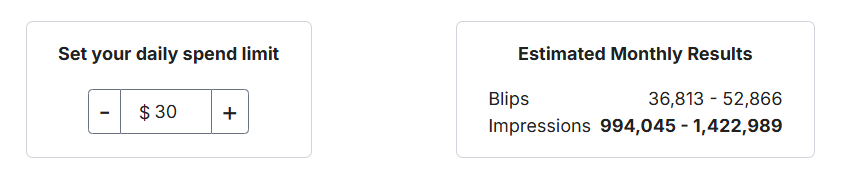
With Blip, you can run Ardmore billboards on any budget because you set your own daily limit and only pay each time your ad is displayed for 7.5 to 10 seconds. Costs for billboards near Ardmore, Pennsylvania are based on when and where your ad runs and on advertiser demand, so you get flexible pricing that matches your goals. Your total spend over time is simply the sum of each individual blip your campaign receives, and you can adjust your daily budget whenever you like.
Where can I advertise with Blip near Ardmore, Pennsylvania?
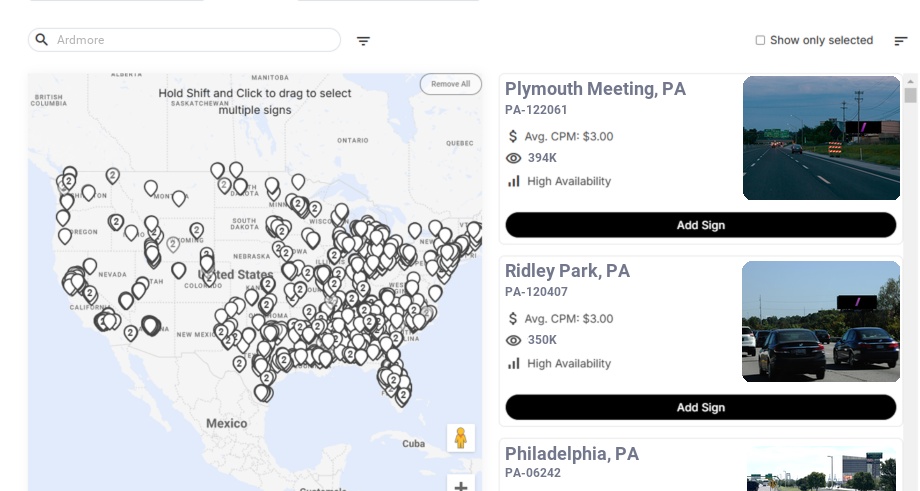
Blip’s 16 digital billboards serving the Ardmore area are strategically placed within about 10 miles in King of Prussia, Plymouth Meeting, Wayne, and Philadelphia. These locations create a ring of Ardmore billboards that intersect with some of the region’s highest-traffic highways and arterials. By placing digital billboards along these routes, we can reach commuters, shoppers, students and faculty, and regional visitors moving through the area.
Why is Ardmore, Pennsylvania a strong market for billboard advertising?
Ardmore is one of the Main Line’s busiest commercial hubs and is part of Lower Merion Township in Montgomery County, one of the wealthiest municipalities in Pennsylvania. Lower Merion’s median household income is routinely reported above $150,000, and the area has substantial disposable income and strong buying power. The combination of affluence, educated consumers, and strong retail and service sectors makes digital billboards serving the Ardmore area especially valuable.
When should I run Blip billboards near Ardmore, Pennsylvania to reach commuters?
Morning drive from 6:30–9:30 a.m. is ideal for coffee shops, quick-service restaurants, fitness studios, healthcare reminders, financial services, and local headlines. Midday from 10:00 a.m.–3:00 p.m. is perfect for retailers, appointment-based services, and B2B advertisers, while evening from 4:00–7:30 p.m. is best for restaurants, entertainment venues, and at-home services. For many verticals, the page recommends weighting impressions toward Thursday evening through Sunday to capture dining, retail, and family activities.
How should I target billboard ads in Ardmore, Pennsylvania with Blip?
Blip lets you assign different creatives or budgets to specific dayparts, so you can run heavier during 7–9 a.m. and 4–7 p.m. on commuter routes or emphasize late afternoon and weekend slots for retail and restaurant traffic. The page also suggests using geographic allocation across King of Prussia, Plymouth Meeting, Wayne, and Philadelphia to ring the Ardmore area. Then you can adjust as you see which combinations drive results.
Do I need a contract to advertise with Blip near Ardmore?
No, Blip has no long-term contracts or minimum commitments. You can start, pause, or stop your campaign at any time.
How fast can I launch a billboard campaign with Blip near Ardmore?
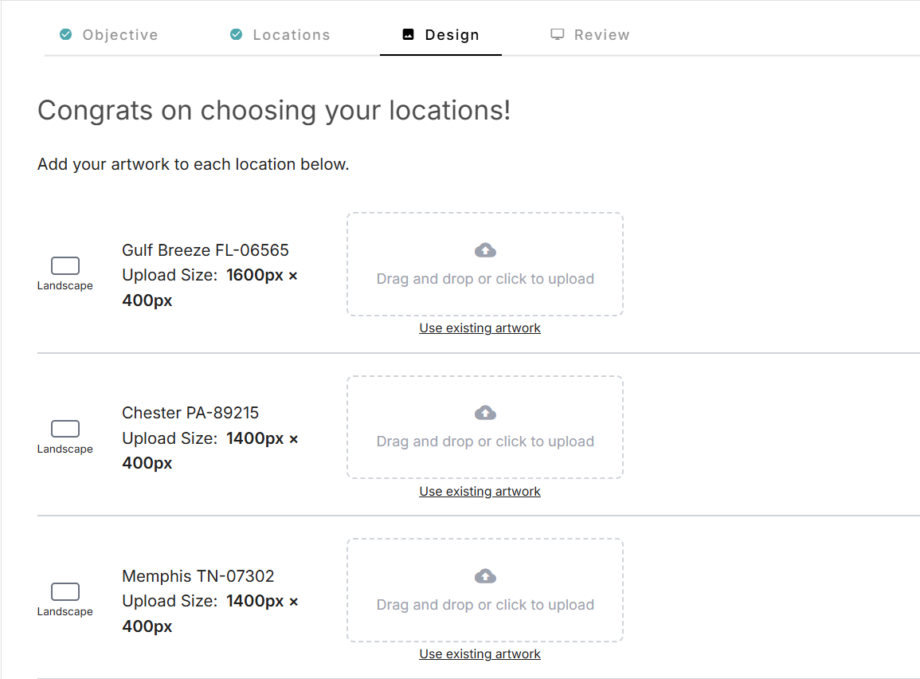
You can have your campaign live in minutes. Create a free account, select your locations, set your budget, upload your design, and start running once approved.
Where can I advertise with Blip near Ardmore?
Blip has digital billboards near Ardmore. You can browse available locations on a map, choose the ones that fit your audience, and start advertising right away.
Still have questions? Launch a campaign in minutes — no contracts, no commitments.
Start Your CampaignArdmore Billboard Advertising Guide
The Ardmore, Pennsylvania Philadelphia King of Prussia, Plymouth Meeting
Why the Ardmore Area Is a High-Value Market
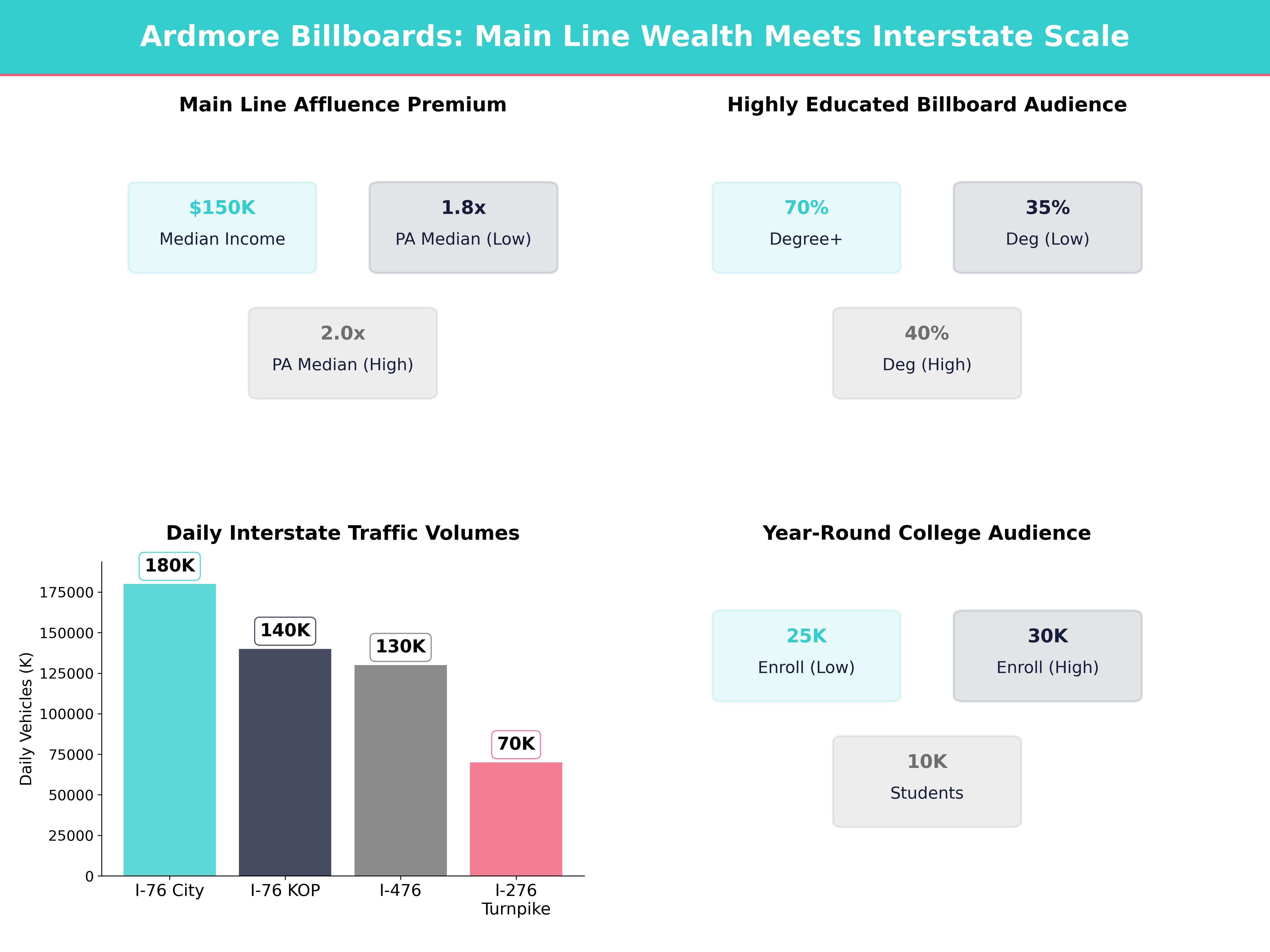
Ardmore is one of the Main Line’s busiest commercial hubs. It’s part of Lower Merion Township in Montgomery County, one of the wealthiest municipalities in Pennsylvania. Lower Merion’s population is roughly 63,000 residents according to township summaries from Lower Merion Township median household income is routinely reported above $150,000, more than 1.8–2.0 times the Pennsylvania median and nearly double many nearby counties. That means substantial disposable income and strong buying power for advertisers using billboard advertising near Ardmore.
Key local market characteristics:
- Population density and catchment: The Ardmore census-designated place has roughly 13,000–14,000 residents, but the effective trade area is much larger. Lower Merion Township, neighboring Haverford Township and Radnor Township 200,000–250,000 residents within an easy 15–20 minute drive. According to recent Montgomery County planning profiles from the Montgomery County Planning Commission, Lower Merion alone averages over 3,900 residents per square mile, among the highest suburban densities in the county.
- Education level: Lower Merion and the Main Line are known for very high educational attainment. Township and county profiles show well over 70% of adult residents (25+) holding a bachelor’s degree or higher, and more than 35–40% holding a graduate or professional degree in many Main Line census tracts. This far exceeds both state and national averages and typically correlates with high responsiveness to premium brands, professional services, financial products, and healthcare.
- Strong local economy: Lower Merion and the surrounding Main Line host healthcare systems, higher education institutions, professional services, and high-end retail. Local economic snapshots from Lower Merion Township Montgomery County Commerce Department highlight unemployment rates often 2–3 percentage points below state averages, a diversified tax base, and ongoing commercial investment along Lancaster Avenue, City Avenue
- Destination retail: Ardmore’s Suburban Square 50 shops and restaurants and draws shoppers from across the Main Line with national brands and local boutiques. Nearby, the business improvement district, the Ardmore Initiative dozens of public events annually and supporting hundreds of local businesses, which helps generate steady foot traffic and repeat visitation.
This combination of affluence, educated consumers, and strong retail and service sectors makes digital billboards serving the Ardmore area ideal for:
- Luxury and premium consumer brands
- Healthcare, legal, and financial services
- Education and tutoring
- Real estate and home services
- Restaurants, entertainment, and events
Where Our Digital Billboards Reach People Near Ardmore
Our 16 digital billboards serving the Ardmore area are strategically placed within about 10 miles, in key traffic corridors in:
- King of Prussia (about 7.3 miles from Ardmore)
- Plymouth Meeting (about 7.3 miles)
- Wayne (about 9.4 miles)
- Philadelphia (about 9.7 miles)
These locations create a ring of Ardmore billboards that intersect with some of the region’s highest-traffic highways and arterials, according to PennDOT traffic counts and the Delaware Valley Regional Planning Commission (DVRPC), both of which publish detailed annual average daily traffic (AADT) reports on corridors throughout Montgomery and Delaware counties via PennDOT District 6 and DVRPC:
- I-76 (Schuylkill Expressway) near King of Prussia: often carries 130,000–140,000 vehicles per day, including commuters from the Main Line heading to Center City Philadelphia and King of Prussia’s employment and retail centers. DVRPC data shows segments closer to the city exceeding 180,000 vehicles per day.
- I-476 (Blue Route) near Plymouth Meeting: supports around 110,000–120,000 vehicles per day on most segments, with some stretches carrying more than 130,000 daily vehicles as it connects Ardmore-area residents to the Pennsylvania Turnpike, I-95, and other suburbs.
- I-276 / PA Turnpike near Plymouth Meeting: handles 50,000–70,000 vehicles per day in many sections, including regional freight and business travelers, according to recent Turnpike Commission reporting referenced by DVRPC.
- US-202 and US-422 near King of Prussia: together add another 70,000+ daily vehicles in key segments, feeding King of Prussia’s office parks and the King of Prussia Mall 20 million visitors annually, according to Visit King of Prussia / King of Prussia District.
- US-30 (Lancaster Avenue) near Wayne and through the Main Line: typically sees 25,000–35,000 vehicles per day on key stretches, capturing local residents on their everyday trips between Ardmore, Bryn Mawr, Villanova, Wayne, and beyond. Some Main Line segments identified by DVRPC exceed 35,000 AADT during peak shopping and commuter periods.
By placing digital billboards along these routes, we can reach:
- Commuters traveling between the Ardmore area and Center City Philadelphia (Philadelphia reports over 300,000 daily inbound commuters citywide, many via I-76 and City Avenue corridors, according to regional summaries highlighted by The Philadelphia Inquirer).
- Shoppers en route to King of Prussia Mall, Suburban Square, and other retail destinations. Regional tourism reports cited by Visit Philadelphia 46 million domestic visitors to the Greater Philadelphia region in a typical year, a significant portion of whom spend time in suburban retail hubs.
- Students and faculty moving between campuses like Villanova University Bryn Mawr College, Haverford College Saint Joseph’s University, which collectively enroll over 25,000–30,000 students plus thousands of faculty and staff, according to institutional fact books and regional higher-ed profiles.
- Regional visitors attending concerts, sports games, and cultural events in Philadelphia and the suburbs, with venues like the Wells Fargo Center and Citizens Bank Park hosting hundreds of events annually and drawing millions of attendees, as regularly covered by local outlets such as 6abc / WPVI.
Because our inventory is spread across multiple nearby cities, Blip campaigns can “ring” the Ardmore area, reinforcing your message as your audience moves through their day and maximizing the impact of billboard advertising near Ardmore.
How People Move Around the Ardmore Area
Understanding daily movement patterns in the Ardmore area is critical for dayparting and message timing.
Commuter flows
- Ardmore–Philadelphia corridor: Many professionals living along the Main Line commute to jobs in Center City, University City, and other Philadelphia employment hubs. SEPTA regional rail (Paoli/Thorndale Line) and bus routes support this, but a substantial share of commuters still drive via US-30, I-76, and City Avenue. Pre-pandemic, SEPTA’s Paoli/Thorndale Line carried on the order of 20,000–25,000 weekday passenger trips, with Ardmore as one of the higher-usage suburban stations; even as ridership has rebounded gradually, local coverage from The Philadelphia Inquirer notes that regional rail has recovered to roughly 60–70% of prior levels, leaving a high proportion of commuters in personal vehicles.
- Ardmore–King of Prussia link: King of Prussia is one of the largest employment and retail centers in the region. The King of Prussia District reports over 60,000 workers, more than 4,000 hotel rooms, and 400+ stores and restaurants, pulling daily traffic from the Main Line via I-476, I-76, and local roads. Local business reports indicate King of Prussia Mall alone generates more than $1.1 billion in annual retail sales, helping sustain all-day vehicle flows.
- Suburban-suburban commuting: Many residents in the Ardmore area work in suburban office parks around Plymouth Meeting, Conshohocken, and Radnor, creating robust cross-traffic patterns across I-476, I-76, and US-30. Montgomery County employment data summarized by the Montgomery County Planning Commission show that more than half of county residents work outside the municipality where they live, highlighting the extent of cross-suburban commuting.
What this means for advertisers:
- Morning drive (6:30–9:30 a.m.): Ideal for coffee shops, quick-service restaurants, fitness studios, healthcare reminders, financial services, and headlines from local media like The Philadelphia Inquirer or Main Line Today. Regional travel-time studies by DVRPC show that over 40% of daily traffic volume on major expressways occurs during the morning and evening peaks, making these hours especially valuable.
- Midday (10:00 a.m.–3:00 p.m.): Perfect for retailers, appointment-based services (doctors, dentists, salons), and B2B advertisers targeting professionals on lunch breaks or daytime errands. For many office and healthcare users in the region, local surveys cited by Montgomery County show flexible or hybrid work patterns, with midday trips increasing compared to pre-2020 norms.
- Evening (4:00–7:30 p.m.): Best for restaurants, entertainment venues, local events, sports bars, and at-home services (home improvement, delivery, streaming, and telecom). Evening AADT on key arterials like City Avenue and Lancaster Avenue commonly exceeds 30,000 vehicles in combined directions, according to PennDOT’s latest corridor profiles.
Weekend and leisure travel
Weekends look different from weekday patterns:
- Shopping trips increase to King of Prussia, Suburban Square, and downtown Ardmore. King of Prussia District reports that weekends account for a disproportionate share of mall visitation, with some retail categories seeing 30–40% of weekly sales on Saturday and Sunday.
- Entertainment and dining traffic grows, especially around Ardmore, Wayne, Manayunk, and Center City. Local restaurant and nightlife coverage in Main Line Today and The Philadelphia Inquirer frequently highlight packed weekend corridors along Lancaster Avenue and in nearby neighborhoods.
- Seasonal tourism drives more trips toward Philadelphia attractions promoted by Visit Philadelphia tens of millions of annual leisure visitors to the region, with hotel occupancy peaking on weekends and during major event periods, boosting both inbound traffic and spending.
For many verticals, we recommend weighting impressions toward Thursday evening through Sunday to capture dining, retail, and family activities. For example, shifting 60–70% of your weekly impressions into this window can align your message with peak shopping and entertainment demand and maximize the performance of billboard advertising near Ardmore.
Crafting Creative That Resonates Near Ardmore
The Main Line and Ardmore area have a distinct identity: educated, discerning, and community-oriented, with pride in local institutions. Your creative should reflect that.
Tone and messaging
- Smart and concise: With such a high share of residents holding college and graduate degrees, audiences are used to high-quality media and professional services. Headlines should be sharp, confident, and straightforward—ideally 8 words or fewer, which industry research and traffic-speed studies suggest is a practical upper limit for at-speed readability.
- Local cues: References to the “Main Line,” “Suburban Square,” “Lancaster Ave,” or “near the Ardmore train station” can make ads feel more relevant. Surveys of suburban audiences reported in outlets like Main Line Today consistently show strong local pride and preference for businesses that “feel Main Line.”
- Family and lifestyle focus: Many households have children in the Lower Merion School District—a district that serves over 8,500 students and is frequently ranked among the top in Pennsylvania—and nearby private schools, plus ties to local colleges. Emphasizing education, safety, health, and quality-of-life benefits plays well with this audience.
Example messages:
- “Your Main Line Mortgage Specialists – 10 Minutes from Ardmore”
- “Dinner Before the Show at Ardmore Music Hall? Reserve Your Table on Lancaster Ave.”
- “Top-Rated Pediatric Care for Main Line Families – Same-Day Appointments”
Visual style
- Clean, upscale design: Use simple layouts, generous white space, and high-quality imagery that matches an upscale retail or professional-services look. Market research shared by major OOH associations and summarized in local business media indicates that minimalist designs can improve recall by 20–30% versus cluttered layouts.
- Readable fonts: Bold sans-serif typefaces with high contrast are essential. Aim for 6–8 words of primary copy plus a clear logo and URL or call-to-action, to stay legible at highway speeds where drivers often have only 5–8 seconds of viewing time.
- Color choices: Deep blues, greens, and neutrals often fit the Main Line aesthetic. Brighter colors work well for QSRs, entertainment, and student-focused campaigns but should still be clear at high speed and in mixed weather conditions, which PennDOT notes can reduce contrast and legibility during over 100 days per year of rain or snow across southeastern Pennsylvania.
Calls to action
Because drivers often see a billboard for only 5–8 seconds:
- Focus on one primary action: “Exit at King of Prussia,” “Book at [yourURL].com,” or “Text MAINLINE to 12345.”
- Use short, memorable URLs or QR codes for boards near lower-speed segments (e.g., local arterial roads), but keep QR codes large and high-contrast. For arterials like Lancaster Avenue, where typical speeds are 25–35 mph, QR codes are more realistic than on interstates where traffic typically exceeds 55–65 mph.
Using Blip’s Flexibility to Target the Ardmore Area
Blip’s platform allows advertisers to buy individual “blips” of time on screens, set maximum bids, and control when and where messages appear. For the Ardmore area, that flexibility translates into highly strategic campaigns and makes billboard rental near Ardmore accessible to businesses of almost any size.
Dayparting strategies
- Commuter-focused brands: Run heavier during 7–9 a.m. and 4–7 p.m. on billboards near I-76 and I-476 in King of Prussia and Plymouth Meeting, when traffic volumes on those corridors reach their highest 15-minute peaks, according to DVRPC congestion analyses.
- Retailers and restaurants in the Ardmore area: Emphasize late afternoon and weekend slots to influence shoppers visiting Suburban Square, King of Prussia Mall, and Center City, when mall and shopping district parking utilization can approach 90–100% of capacity on key days.
- Professional services and healthcare: Mix peak hours with midday impressions when people can call, book online, or walk in. Local healthcare systems report that midday (10 a.m.–2 p.m.) accounts for a large share of same-day appointment bookings, according to provider commentary covered by The Philadelphia Inquirer.
Within Blip, you can assign different creatives or budgets to specific dayparts—for example:
- Morning creative: “Open at 7 a.m.” message for a cafe near Ardmore.
- Lunch creative: “Lunch Specials 11–3” for a restaurant near Suburban Square.
- Evening creative: “Tonight Only” for shows at Ardmore Music Hall or promotions tied to Villanova Wildcats Philadelphia Eagles games, which can draw tens of thousands of fans per event, as regularly reported by 6abc / WPVI.
Geographic allocation
With 16 boards serving the Ardmore area, we can create blends of screens by corridor:
- Main Line emphasis: Weight impressions toward Wayne and Philadelphia screens that align with US-30 and City Avenue, capturing Main Line commuters and urban trips. City Avenue, the border between Philadelphia and Lower Merion, carries 35,000–45,000 vehicles per day on many segments, according to PennDOT.
- Regional reach: Add more impressions around King of Prussia and Plymouth Meeting to reach a wider suburban and regional audience, including travelers on the Pennsylvania Turnpike, US-202, and US-422.
- Center City tie-in: Use Philadelphia boards to extend your Ardmore-area presence into the city, ideal for brands with locations in both suburbs and downtown. Philadelphia remains the region’s largest employment center with hundreds of thousands of daily workers, amplifying brand reach far beyond Ardmore.
You might, for example, allocate:
- 40% of impressions to King of Prussia screens
- 25% to Plymouth Meeting
- 20% to Wayne/Main Line screens
- 15% to key Philadelphia entry corridors
Then adjust as you see which combinations drive results. Even small reallocations—such as shifting 10–15% of impressions toward better-performing corridors—can produce measurable lifts in web traffic or in-store visits.
Budget control and testing
Because Blip lets you start with low daily budgets and change bids at any time, advertisers can test billboard rental near Ardmore with minimal risk:
- Start small with A/B tests: Run two creatives simultaneously on the same set of boards near the Ardmore area and track response via unique URLs or promo codes. Marketers often see 10–30% performance differences between variants, so testing can materially improve ROI.
- Shift budget dynamically: Increase bids on days or times that correlate with higher conversions (for example, game days, paydays, or special events highlighted by Visit Philadelphia Ardmore Initiative payday weeks producing 15–25% higher revenue, making those ideal times to boost impression share.
- Seasonal flighting: Pause or reduce campaigns during off-peak weeks and reinvest during key periods like back-to-school, holidays, or local festival seasons. Local event calendars from Visit Philadelphia King of Prussia District, and Ardmore Initiative
Seasonality and Local Event Opportunities
The Ardmore area has pronounced seasonal patterns that advertisers can leverage.
Back-to-school and academic calendar
The region is dense with schools and colleges:
- Lower Merion School District serves 8,500+ students across multiple elementary schools, middle schools, and two high schools. The district’s academic calendars and enrollment trends are published on its website and frequently referenced in local reporting by Main Line Times & Suburban and Main Line Today.
- Colleges like Haverford, Bryn Mawr, Villanova, and Saint Joseph’s collectively enroll tens of thousands of students. Villanova alone reports undergraduate and graduate enrollment of roughly 10,000–11,000 students, while Bryn Mawr and Haverford each enroll around 1,300–1,700 undergraduates plus graduate and post-baccalaureate students, and Saint Joseph’s has more than 7,000 students across its campuses, according to institutional fact books and local coverage.
Key windows:
- Late July–September: Back-to-school and college move-in. Ideal for furniture, electronics, banking, wireless, transportation, storage, and local retail. Many retailers see double-digit percentage increases in sales during these weeks, as documented in seasonal retail roundups by The Philadelphia Inquirer.
- November–December: Students home for breaks and holiday shopping seasons. Great for entertainment, restaurants, and gift-focused retail. Regionally, Visit Philadelphia has reported that holiday tourism and shopping can account for a significant share of annual visitor spending, with hotel occupancy and retail sales peaking in December.
Coordinate your messaging with school calendars posted by institutions and covered by outlets such as Main Line Today.
Holiday and shopping seasons
- King of Prussia Mall’s 20+ million yearly visitors and Suburban Square’s events spur heavy traffic from November through early January. King of Prussia District notes the mall’s peak days can draw upwards of 100,000 visitors per day, making nearby highways some of the busiest in the state.
- Local coverage from The Philadelphia Inquirer and regional TV news like 6abc / WPVI often highlights shopping weekends, small business events, and holiday attractions. These outlets regularly report on Small Business Saturday, local holiday markets, and Main Line shopping nights that can drive 20–40% above-average sales for participating merchants.
Use Blip to:
- Launch “doorbuster” or “this weekend only” creatives on Fridays and Saturdays, when mall and downtown Ardmore shopping peaks.
- Shift more impressions to mall and Main Line corridors during major shopping days like Black Friday, Small Business Saturday, and the last weekend before Christmas, which are frequently identified in local news as some of the highest-traffic retail days of the year.
Sports and entertainment
Philadelphia-area sports and local venues offer recurring advertising hooks:
- Pro sports: Eagles, Phillies, 76ers, Flyers drive spikes in bar, restaurant, and sports retail traffic. Game days can generate tens of thousands of additional trips on I-76, I-95, and Schuylkill-area arterials, according to traffic stories and fan coverage by The Philadelphia Inquirer and 6abc / WPVI.
- College sports: Villanova basketball, in particular, has strong Main Line fandom. Home games at Finneran Pavilion and Wells Fargo Center frequently draw 10,000–20,000 fans, many of them traveling from Main Line communities.
- Local entertainment: Ardmore Music Hall, suburban theaters, and festivals bring in visitors from across the region. Ardmore Music Hall’s own promotions and regional arts calendars list hundreds of shows per year, adding consistent evening and weekend traffic to Ardmore’s core.
Consider Blip campaigns:
- Before and during games, increasing bids around kickoff or tip-off on Philadelphia and King of Prussia screens to capture fans on their way to or from stadiums.
- Promoting pre-game specials or post-game celebrations at restaurants near the Ardmore area, especially on nights when local teams are featured prominently on TV, as highlighted by regional sports coverage.
Sample Campaign Playbooks for the Ardmore Area
To make these concepts practical, here are a few campaign blueprints you can adapt.
1. Local Retailer Near Suburban Square
Objective: Increase foot traffic and awareness among Main Line shoppers.
- Screens: Emphasize Wayne and Philadelphia corridor boards, plus some King of Prussia to reach cross-shoppers who split their visits between King of Prussia Mall and the Main Line. King of Prussia District data indicates that a meaningful share of shoppers visit both suburban retail hubs within the same month, making dual-market exposure valuable.
- Dayparts: Heavy on Thursday–Sunday, 10 a.m.–8 p.m., aligning with mall and Suburban Square’s busiest hours when parking lots can reach 80–100% utilization.
-
Creative rotation:
- Ad A: Brand awareness (“New on Lancaster Ave – Women’s Boutique for Main Line Style”).
- Ad B: Offer-driven (“20% Off This Weekend – Show This Screen at Checkout”).
- Measurement: Track in-store mentions and use a custom short URL for online lookups. Even a 5–10% uplift in weekend foot traffic can translate to substantial incremental revenue for Main Line retailers, given high average transaction values.
2. Healthcare Provider Serving the Ardmore Area
Objective: Build trust and drive appointment volume.
- Screens: Mix King of Prussia, Plymouth Meeting, and Wayne to blanket commuter routes, plus a few high-traffic Philadelphia boards. This allows you to tap into both local residents and the tens of thousands of workers who commute through the region daily.
- Dayparts: 7 a.m.–9 a.m., 11 a.m.–2 p.m., and 4 p.m.–7 p.m., matching commute and call-in windows.
-
Creative rotation:
- Ad A: “Top-Rated Primary Care for Main Line Families – New Patients Welcome.”
- Ad B: “Same-Day Appointments – Book at MainLineHealthExample.com.”
- Seasonality: Heavier in late summer (back-to-school physicals) and winter (flu/RSV/COVID messaging). Local health reports covered by The Philadelphia Inquirer show sharp spikes in urgent care and pediatric visits during these times, often 20–30% above baseline.
- Measurement: Dedicated phone number or booking URL; monitor appointment sources and look for week-over-week increases in new patient calls during active billboard flights.
3. Restaurant or Entertainment Venue in the Ardmore Area
Objective: Fill tables or tickets on specific nights.
- Screens: Wayne/Main Line, King of Prussia, and strategic Philadelphia entry routes to capture both local residents and visitors heading toward the suburbs.
- Dayparts: 3 p.m.–10 p.m., heavier on Thursday–Saturday, when regional dining and entertainment spending typically peaks by 25–35% compared with early-week days, according to hospitality coverage in Main Line Today and The Philadelphia Inquirer.
-
Creative rotation:
- Weekly special: “Live Music Tonight – 10 Min from Ardmore Train Station.”
- Day-of-event: “Tickets Still Available for Tonight’s Show – Book Now.”
- Tactics: Increase your Blip bid 3–4 hours before showtime or peak dining times, capitalizing on last-minute decision-making, which many restaurants report can account for more than half of same-day reservations.
4. Regional Brand with Multiple Locations
Objective: Reinforce brand presence and steer customers to the nearest location.
- Screens: All 16 serving the Ardmore area, with slightly higher weight in King of Prussia and Plymouth Meeting for broad coverage.
- Dayparts: All-day presence, with peaks around drive times, mirroring when the majority of daily vehicle miles traveled occur according to DVRPC regional mobility reports.
-
Creative rotation:
- Location-based messages dynamically referencing “near the Main Line,” “near King of Prussia Mall,” or “just off I-476,” helping drivers contextualize distance and directions in under 3 seconds of viewing.
- Measurement: Compare store-level sales and traffic in the Ardmore and King of Prussia areas during campaign vs. control periods. Many multi-location brands find that markets with sustained OOH exposure can see 5–15% higher same-store sales growth than markets without, particularly during high-demand seasons.
Measuring and Optimizing Campaign Performance
To get the most from your Blip investment near the Ardmore area, build a measurement plan from the start.
Tracking tools
- Website analytics: Use UTM parameters on URLs shown on billboards to differentiate Ardmore-area traffic from other channels. Watch for spikes in direct and branded search traffic in the hours immediately following your heaviest billboard flights.
- Promo codes: Offer Ardmore-specific codes (“MAINLINE10”) and track redemptions in your POS or e-commerce system. Even if only 2–5% of customers use the code, the data can reveal which dayparts and locations are most effective.
- Location data: Compare foot traffic data or customer origin ZIP codes pre- and post-campaign. Local merchants interviewed by outlets such as Main Line Today have reported noticeable increases in visits from neighboring ZIP codes after launching high-visibility campaigns on regional corridors.
Optimization process
- Launch with multiple creatives and locations rather than a single, untested concept. Industry benchmarks suggest that campaigns with 3–4 creative variants are more likely to find a top performer that outperforms the average by 20–30%.
- Review performance weekly: Look at which dayparts or corridors correlate with more web visits, calls, or sales. For example, you may find that Thursday evenings and Saturday afternoons produce a disproportionate share of redemptions or online lookups.
- Shift budget and bids toward top-performing times and locations using Blip’s controls, moving 10–20% of spend at a time to avoid overreacting to short-term variability.
- Refine creative: Simplify copy, emphasize the strongest offer, or add local references that have resonated in other channels. Local marketing case studies covered by Main Line Today and The Philadelphia Inquirer often emphasize that tailoring messages to “Main Line” identity can significantly improve engagement.
By combining the Ardmore area’s strong demographics, well-documented traffic volumes, and our flexible network of 16 digital billboards in nearby King of Prussia, Plymouth Meeting, Wayne, and Philadelphia, we can build campaigns that are both efficient and powerful. Leveraging local data, thoughtful creative, and Blip’s real-time tools, advertisers can consistently stay in front of the Main Line audience that matters most to their business and get maximum value from billboard advertising near Ardmore.