Billboards near Darby, PA
No Minimum Spend. No Long-Term Contracts. Just Results.
Trusted by Leading Brands


Billboard advertising
near Darby has never been easier
How much is a billboard near Darby?
Why Choose Blip for Billboard Advertising near Darby
Blip lets Darby advertisers launch fast on I-95, I-76, and Chester Pike commuters with self-serve control.
Set flexible budgets in Darby and let Blip scale with rush-hour traffic from Center City, University City, and PHL.
No contracts means Darby brands can test weekday commuter ads, then shift to MacDade weekend shoppers anytime.
Use real-time analytics to track Darby campaigns and react as traffic moves toward Chester, Camden, or the airport corridor.
Blip's creative tools help Darby businesses build bold local ads for Delco families, young renters, and diverse neighborhoods.
Frequently Asked Questions About Billboard Advertising near Darby
How much does a billboard cost near Darby, Pennsylvania with Blip?
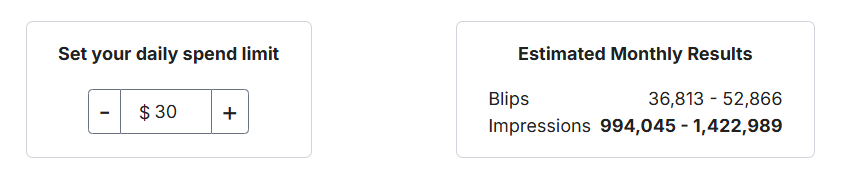
With Blip, you can advertise on Darby billboards on any budget by setting a daily amount that works for you, and Blip will automatically keep your campaign within that limit. Each “blip” is a brief 7.5 to 10-second ad on rotating digital billboards serving the Darby area, and you only pay for the blips you receive. The price of each blip varies based on when and where you choose to appear and current advertiser demand, so you stay in control.
Where can I advertise with Blip near Darby, Pennsylvania?
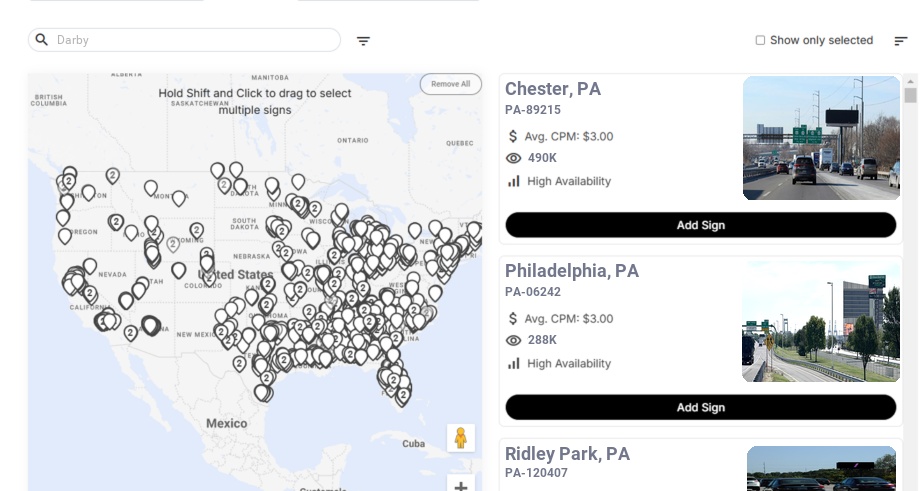
With 18 digital billboards serving the Darby area, nearby inventory is positioned in Philadelphia, Gloucester City, Camden, and Chester. Philadelphia boards are ideal for reaching Darby residents commuting into the city, while Chester is strategic for workers in logistics, port operations, manufacturing, and at Subaru Park. Camden and Gloucester City are powerful for catching Delaware County drivers crossing the river and for broader regional visibility.
Who lives and works around Darby, Pennsylvania for billboard ads?
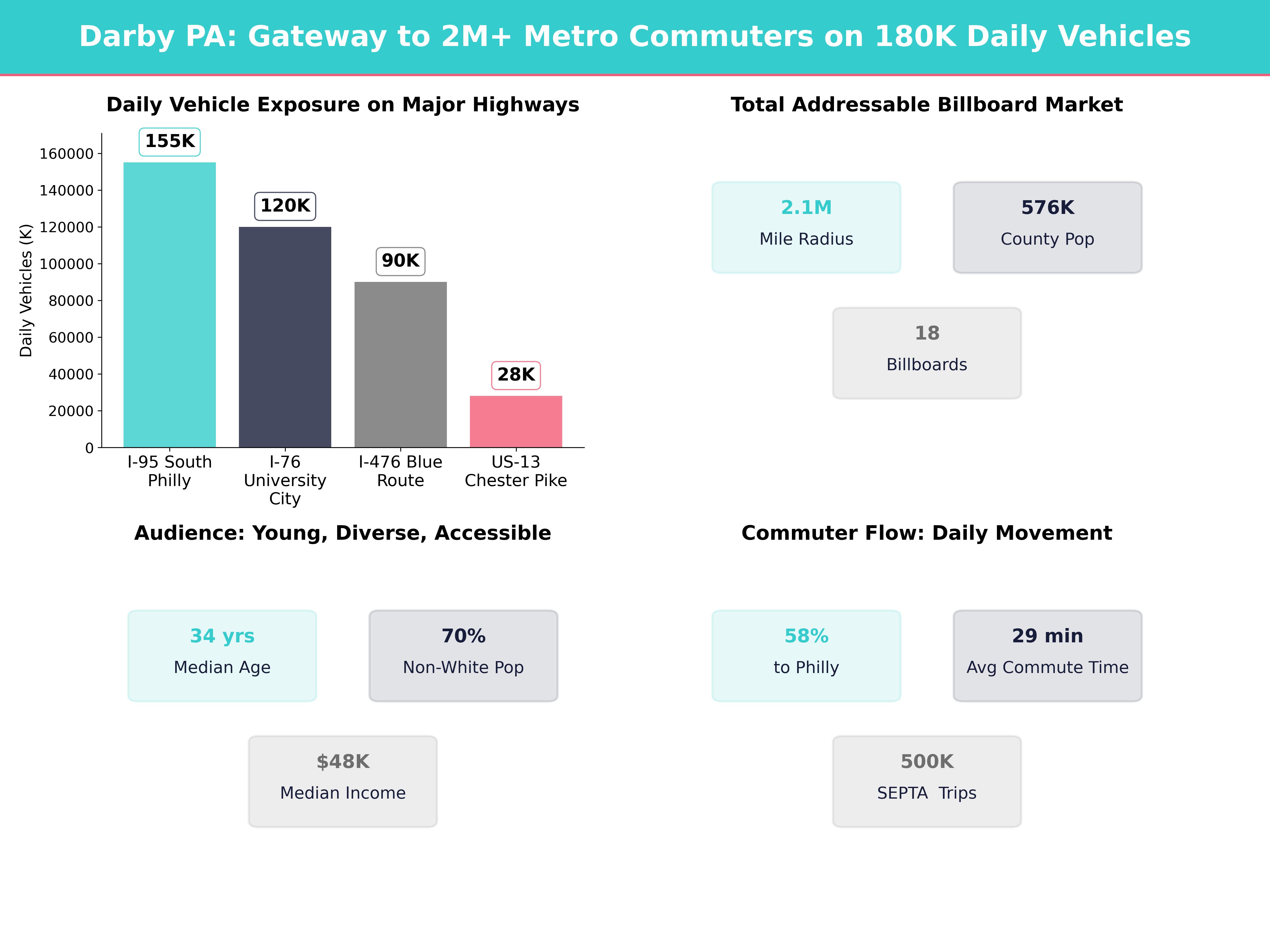
Darby Borough is just over 10,000 residents packed into roughly 0.8 square miles, making it more than 12,000 residents per square mile. Within a 10–12 mile radius of Darby, you are realistically touching a market of 2.0–2.2 million people who can see or be influenced by boards on their regular trips. The area also skews relatively young and is racially and culturally diverse, with many nearby tracts having 70%+ non-white residents.
When is the best time to run Blip billboard ads near Darby, Pennsylvania?
For commuter-focused campaigns, Blip recommends concentrating impressions on weekday morning (6–10 a.m.) and evening (3–7 p.m.) rush hours. Retail, dining, and family entertainment often perform better during midday and weekends, when traffic on Chester Pike and MacDade Boulevard becomes more shopping-oriented. You can also shift toward seasonal spikes like back-to-school, holiday shopping, and tax season.
What kind of traffic do Darby, Pennsylvania billboards reach?
Several high-volume corridors sit within a short distance of the borough, including I-95, I-76, I-476, US-13, Chester Pike, and MacDade Boulevard. I-95 through South Philadelphia and near the airport regularly carries 130,000–180,000 vehicles per day, and I-76 often sees 120,000+ vehicles daily. Bridges into New Jersey collectively carry well over 200,000 vehicles on a typical day.
Do I need a contract to advertise with Blip near Darby?
No, Blip has no long-term contracts or minimum commitments. You can start, pause, or stop your campaign at any time.
How fast can I launch a billboard campaign with Blip near Darby?
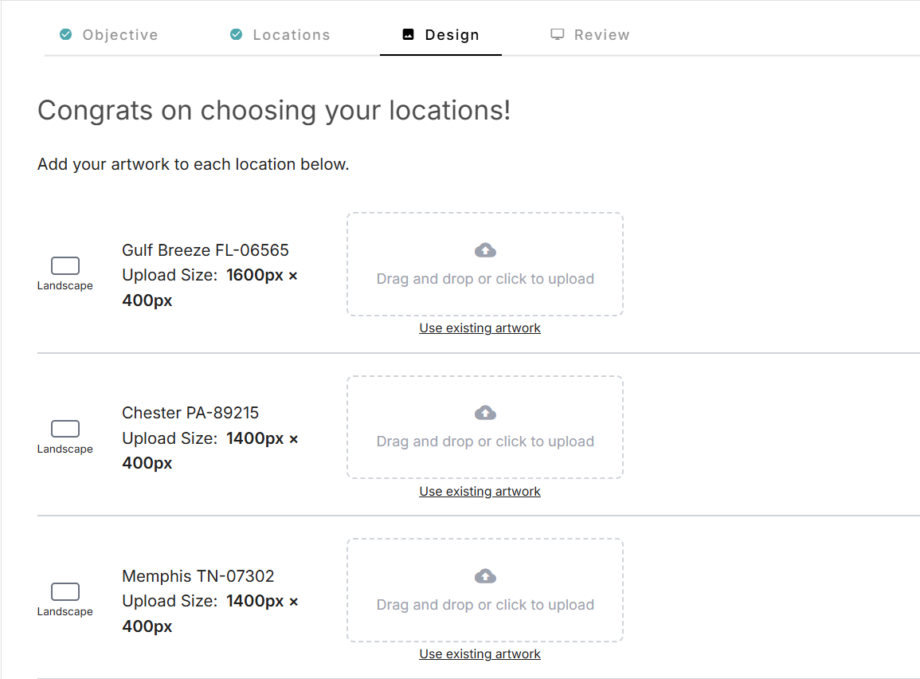
You can have your campaign live in minutes. Create a free account, select your locations, set your budget, upload your design, and start running once approved.
Where can I advertise with Blip near Darby?
Blip has digital billboards near Darby. You can browse available locations on a map, choose the ones that fit your audience, and start advertising right away.
Still have questions? Launch a campaign in minutes — no contracts, no commitments.
Start Your CampaignDarby Billboard Advertising Guide
The Darby, Pennsylvania area sits at the crossroads of dense neighborhoods, major commuter corridors, and the Philadelphia metro’s economic gravity. With 18 digital billboards serving the Darby area from nearby Philadelphia Chester, Camden
Understanding the Darby Area Audience
Darby Borough anchors a tight-knit community within Delaware County, one of the most densely populated counties in Pennsylvania. A few key numbers:
- Darby Borough’s population is just over 10,000 residents, packed into roughly 0.8 square miles, which works out to more than 12,000 residents per square mile—over 3× denser than the overall Delaware County average.
- Delaware County as a whole has around 576,000 residents, while neighboring Philadelphia has about 1.6 million. Within a 10–12 mile radius of Darby, you are realistically touching a market of 2.0–2.2 million people who can see or be influenced by boards on their regular trips.
- Local planning data show that roughly 55–60% of workers living in inner‑Delaware County commute into Philadelphia, while another 15–20% travel to nearby suburbs such as Upper Darby, Springfield, Radnor 28–30 minutes, which translates into many repeated daily billboard exposures.
- The Darby area skews relatively young; median ages in adjacent census tracts are often in the 32–36 range, compared with about 40 statewide. Nearly 1 in 4 residents in many nearby neighborhoods are under age 18, supporting campaigns aimed at young families, renters, and early‑career professionals.
- Household incomes vary block to block. In parts of Darby and surrounding communities, median household income can sit in the $40,000–$55,000 range, while nearby neighborhoods of Delaware County and Southwest Philadelphia range from $55,000–$85,000+. This supports both value‑oriented offers and aspirational, “step‑up” products.
- The area is racially and culturally diverse, with large Black, African, Caribbean, and immigrant communities, alongside long-time white and multi-generational families. In many nearby tracts, residents identifying as non‑white make up 70%+ of the population. Inclusive visuals and messaging perform especially well.
Darby sits just west of Philadelphia and east of major suburban job centers. Many residents commute to work in Center City Philadelphia, University City, the airport/industrial corridor, and Chester. That gives us a clear roadmap for billboard placement and timing:
- Boards serving the Philadelphia area capture Darby residents heading into and out of the city, along with city residents who shop and visit family in Delaware County.
- Boards near Chester reach workers in the port, industrial, casino, and logistics sectors, plus fans traveling to Subaru Park, home of the Philadelphia Union.
- Boards near Camden and Gloucester City intercept cross-river traffic and regional commuters. On an average weekday, more than 250,000 vehicles cross the Delaware River via the major bridges combined.
When we plan campaigns, we treat the Darby area as a “bridge” market between city and suburb, designing creative and schedules that speak to both urban and suburban lifestyles in a single, cohesive strategy. This is where well-chosen Darby billboards can repeatedly reach the same commuters as they move between home, work, school, and shopping.
Traffic Patterns & Commuter Flows Around Darby
To reach people near Darby efficiently, we focus on the routes they actually drive. Several high-volume corridors sit within a short distance of the borough:
- I‑95 (Philadelphia–Chester corridor): According to PennDOT traffic volume data, segments of I‑95 through South Philadelphia and near the airport regularly carry 130,000–180,000 vehicles per day. That’s more than 45–65 million vehicle trips per year on stretches that Darby-area commuters use heading to Center City, the Navy Yard, and the airport.
- I‑76 (Schuylkill Expressway): Portions near University City and South Philadelphia often see 120,000+ vehicles daily, or roughly 44 million trips annually. This is a critical route for Darby residents commuting to hospitals, universities, and corporate offices.
- I‑476 (Blue Route): The corridor between Springfield and Radnor typically handles around 80,000–100,000 vehicles per day, connecting Darby-area households to western suburbs, Conshohocken, and King of Prussia. That’s approximately 30–36 million annual vehicle trips.
- US‑13 / Chester Pike & MacDade Boulevard: PennDOT counts commonly show 20,000–35,000 vehicles per day on key segments of Chester Pike through Delaware County and 18,000–25,000 vehicles per day on MacDade Boulevard near Darby. These roads are where many local residents run daily errands, shop, and attend school or church.
- Bridges and crossings into New Jersey (Walt Whitman, Ben Franklin, Commodore Barry) collectively carry well over 200,000 vehicles on a typical day, funneling traffic toward Camden and Gloucester City, where several of our digital billboards are located.
Public transit is also a big part of the picture:
- SEPTA’s nearby services (including the Media/Elwyn Regional Rail, Route 11 & 13 trolleys, and multiple bus lines) move hundreds of thousands of riders weekly across Delaware County and Philadelphia. In its most recent reports, SEPTA has documented weekday ridership rebounding to well over 500,000 trips per weekday systemwide as it rebuilds toward a pre‑2020 baseline of nearly 900,000 weekday trips.
- In some adjacent Philadelphia neighborhoods, 30–40% of workers commute primarily by transit, walking, or biking, and 20–30% of households have no car available. Even though our billboards serve drivers and passengers, this multimodal landscape means many Darby-area residents are regularly riding in cars for shared trips, household errands, and ride-hail—even if they don’t personally own a vehicle.
With Blip, we can align your ads with these flow patterns by:
- Concentrating impressions on weekday morning (6–10 a.m.) and evening (3–7 p.m.) rush hours for commuter-focused campaigns, when combined traffic on I‑95, I‑76, I‑476, and local arterials can exceed 300,000 vehicles in a single peak period across the region.
- Shifting to midday and weekend exposure for retail, dining, and family entertainment, when traffic on Chester Pike and MacDade Boulevard becomes more shopping‑oriented.
- Prioritizing boards closest to Philadelphia and Chester for Darby-area reach, while using Camden/Gloucester City boards to add cross-river and regional exposure.
This kind of time- and route-based planning is the backbone of effective billboard advertising near Darby, ensuring that your messages run where and when your best customers are actually on the road.
Key Economic Drivers & Local Institutions
Knowing who powers the local economy helps us choose messages that resonate. Within a 10‑mile radius of the Darby area, we find:
-
Healthcare and Higher Education:
- Major employers such as the University of Pennsylvania and Penn Medicine, Drexel University, Children’s Hospital of Philadelphia, and Temple University collectively support well over 100,000 jobs in education and healthcare across the Philadelphia area.
- Region-wide, “eds and meds” account for roughly 1 in 4 jobs in the Philadelphia metro, with tens of thousands of staff, students, and visitors commuting daily through corridors that serve Darby.
- Large hospital campuses within a 15–25 minute drive of Darby treat millions of patient visits annually, driving demand for urgent care, primary care, pharmacies, and support services.
-
Logistics, Manufacturing, and Port Activity:
- The Port of Philadelphia (PhilaPort) handled more than 7 million metric tons of cargo in recent years and supports an estimated 30,000 direct and indirect jobs across the region.
- Industrial and warehouse clusters in Chester, Tinicum Township, and South Philadelphia host thousands of workers in distribution, food processing, and light manufacturing. These jobs rely heavily on truck traffic along I‑95, I‑76, I‑476, and US‑13—exactly where many of our digital billboards serve the Darby area.
-
Airport & Hospitality:
- Philadelphia International Airport (PHL), located just a few miles southeast of Darby, regularly handles 25–33 million passengers per year in typical years.
- The airport supports an estimated 96,000 jobs in the region when including airlines, concessions, hotels, and related services. Within a 5‑mile radius of PHL there are dozens of hotels and hospitality businesses competing for travelers’ attention—prime candidates for targeted billboard campaigns.
-
Local Government & Services:
- The Darby Borough government and Delaware County government support local services, small business development, and community programming, including grants, façade-improvement programs, and public‑safety initiatives that draw residents to downtown areas.
- Nearby city governments such as Philadelphia, Chester, Camden, and Gloucester City highlight ongoing redevelopment, waterfront projects, and neighborhood investments that increase foot traffic and attract new residents.
-
Retail & Small Business:
- Delaware County alone is home to 10,000+ business establishments, with a high concentration of small businesses employing fewer than 20 people.
- Regional retail hubs like Springfield Mall, MacDade Boulevard, and neighborhood shopping districts in Southwest Philadelphia collectively draw tens of thousands of shoppers weekly.
For advertisers, this translates into:
- Strong B2C opportunities in healthcare (urgent care, dental, clinics), education (training programs, community colleges, trade schools), and retail (grocery, convenience, quick service restaurants). Healthcare and retail are among the most common day‑to‑day reasons residents travel across Darby’s neighboring corridors.
- High-value B2B and workforce-recruitment campaigns targeting logistics, manufacturing, and service-sector workers who travel these corridors daily. For example, even a modest hiring campaign that reaches 50,000–100,000 impressions per week can be enough to move the needle on applications if the offer is competitive.
- Community-focused messaging that respects Darby’s working-class, family-oriented roots while speaking to upward mobility, education, and opportunity—values that consistently rate highly in regional community surveys.
Seasonal, Cultural, and Event-Driven Opportunities
The Darby area moves to the rhythm of both local traditions and Philadelphia’s big-city calendar. That creates powerful windows for time-sensitive campaigns.
Sports & City Pride
Philadelphia-area sports loyalties run deep and translate into measurable spikes in media consumption and spending:
- Eagles (NFL) home games at Lincoln Financial Field 69,000 fans per game, with regular-season TV broadcasts reaching hundreds of thousands of households across the region. Game days see increased traffic hours before and after kickoff.
- Phillies (MLB) games at Citizens Bank Park average 30,000–40,000 fans per home game, with sellouts during key series and playoffs.
- Sixers (NBA) and Flyers (NHL) together bring well over 1 million total attendees per season to the South Philadelphia Sports Complex.
- Philadelphia Union (MLS) plays at Subaru Park in nearby Chester, roughly 8 miles from Darby, with typical attendance around 17,000–19,000 fans per match.
- Regional economic studies estimate that the South Philadelphia sports complex generates hundreds of millions of dollars in annual economic impact, including spending on food, parking, merchandise, and transportation.
Ideas:
- Swap creatives on game days to feature limited-time offers (“Show your Eagles gear and save today”) or event tie-ins. A short run concentrated on 8–10 home dates can produce repeated exposures to the same highly engaged fan base.
- Use boards serving the Darby area plus Chester-facing boards for Union-related promotions that highlight “Just 10–15 minutes from Darby” to emphasize convenience.
Education & School-Year Cycles
Within 10 miles of the Darby area, you have:
- Multiple public school districts (e.g., William Penn School District 5,000 students, and neighboring districts in Upper Darby School District, Southeast Delco School District, and the School District of Philadelphia),
- Dozens of private and charter schools, enrolling tens of thousands of students combined, and
- Major higher-education institutions in Philadelphia with a combined enrollment well above 100,000 students.
Key timing windows:
- Back-to-school (late July–September): Families in Delaware County and Southwest Philadelphia can easily spend hundreds of dollars per child on clothing, supplies, and electronics. Running a 4–6 week back-to-school push with value-driven messaging can capture this concentrated spending.
- Graduation and early summer (May–June): Ideal for colleges, trade schools, apprenticeships, and workforce recruitment campaigns. Many programs report application spikes of 20–40% around graduation season when advertising is well-timed.
- Report-card and midyear periods (January–February): Good for tutoring centers, after-school programs, and test-prep services.
With Blip, we can increase your bid and frequency during these periods, then scale back to a baseline level afterward, maximizing return on spend.
Holidays & Tourism
The broader Philadelphia region welcomes tens of millions of visitors each year, generating billions in economic impact. Visit Philadelphia 30 million annual visitors, with total visitor spending in the $7–9 billion range in a typical year.
For Darby-area audiences, we typically prioritize:
- November–December holiday shopping: National data show retailers can make 20–30% of annual revenue during the holiday period, and local malls, outlet centers, and shopping corridors mirror this spike. Use time-limited gift offers (“3‑day sale,” “This Weekend Only”) and location cues like “10 Minutes from Darby.”
- Memorial Day through Labor Day: Many local families take day trips to New Jersey shore towns, Delaware beaches, or local attractions. On peak summer weekends, daily traffic volumes on shore-bound routes can rise 10–25% above typical levels. Highlight outdoor dining, amusement parks, and summer programs along these paths.
- Tax season (February–April): With average refunds often in the $2,000–3,000 range for many households, this period is ideal for tax prep, financial services, furniture, auto repair, and big-ticket retail purchases.
Because Blip lets you schedule by date and time, we can synchronize your campaigns exactly with these seasonal spikes—down to specific weekends and holidays. For example, a 10‑day pre‑Black‑Friday push plus 3–4 shorter weekend bursts in December can generate strong recall without year-round spend.
Crafting High-Impact Creative for the Darby Area
Darby-area drivers often view billboards at highway speeds, which means we focus on clarity, contrast, and cultural relevance.
Design Best Practices
- Limit text to 7 words or fewer: Studies on roadside readability show recall drops sharply beyond 6–8 words at highway speeds. Use concise lines like “New Urgent Care, 10 Minutes from Darby” or “Darby Families Save Big on Groceries.”
- Use bold, high-contrast colors: Dark backgrounds with white or bright lettering (or vice versa) can improve legibility by 20–30% compared with low-contrast combinations.
-
Feature one clear call to action:
- “Exit at 420 – Chester Pike”
- “Order at PhillyPizza.com”
- “Text DARBY to 55555”
Keep phone numbers to 10 digits only and avoid clutter—drivers often have just 3–5 seconds to process your message.
- Leverage local landmarks and language: Mention “Delco,” “near Darby,” “minutes from 69th Street,” or familiar routes like MacDade and Chester Pike to build trust and boost recognition. Localized creative often tests 10–20% better in recall studies than generic messaging.
Tailoring Messages to Darby’s Demographics
Because the Darby area is younger and highly diverse:
- For family-oriented campaigns, show parents with children, after-school activities, and budget-conscious offers such as “Feed a Family of 4 Under $25.” Price points that clearly communicate value resonate strongly in neighborhoods where a meaningful share of households are managing tight monthly budgets.
- For workforce recruitment, feature real people in uniforms or on job sites, benefit highlights (e.g., “$20/hr + overtime,” “Health & Dental Day One”), and “Now Hiring Near Darby” messages. Employers in logistics and hospitality who advertise clear starting wages often see noticeable increases in applications within 2–3 weeks of starting OOH campaigns.
- For healthcare and community services, emphasize trust, accessibility, and walk-in convenience; mention evening/weekend hours to align with shift workers. Callouts like “Open 7 Days,” “Walk‑Ins Welcome,” and “Most Insurance Accepted” reduce friction and tend to improve response.
We can also rotate multiple creatives in a single Blip campaign:
- Version A: Focused on price (“$0 Enrollment Fee – This Week Only”)
- Version B: Focused on convenience (“5 Minutes from Darby, Free Parking”)
- Version C: Focused on emotion or outcome (“Feel Better, Live Better – Same-Day Appointments”)
By comparing performance over time (via web traffic, calls, redemptions), you can see which angle resonates most with the Darby-area audience. Even small improvements—such as a 5–10% increase in coupon redemptions—can justify expanding your campaign or keeping a winning creative in rotation longer.
Smart Budgeting & Scheduling with Blip
Digital billboards serving the Darby area allow you to buy individual ad “blips”—single 8–10 second plays—rather than long-term, fixed contracts. That flexibility is particularly valuable in a compact but high-traffic market like this, where you may want to test different forms of billboard advertising near Darby without committing to a long lease.
On many boards in the Philadelphia region, a typical ad loop might run 6–8 advertisers, with each ad showing every 60–90 seconds. By adjusting your bid, you effectively choose how often your blip appears in that loop.
Setting a Budget for the Darby Area
A few guidelines:
- Local small businesses often start with $10–$25 per day, focusing on just a few nearby boards and peak commute hours. This can translate into hundreds to a few thousand impressions per day, depending on traffic and bid levels.
- Regional brands looking to saturate the Darby area and adjacent cities (Philadelphia, Chester, Camden) might allocate $50–$150 per day, spreading impressions throughout the day and week. Over a 30‑day period, that can build into tens of thousands to low hundreds of thousands of impressions, enough to create strong brand familiarity in a 10‑mile radius.
- Time-sensitive campaigns (events, grand openings) can temporarily increase spend (e.g., $200–$500 total over a week) to dominate attention ahead of the date. Concentrating spend in the 7–10 days leading up to an event often yields the best cost-per-attendee.
Because you only pay for the blips that actually run, you can test different boards and time slots cheaply, then reallocate budget to the best performers. Many advertisers see meaningful results by:
- Running a 2‑week test at a modest budget,
- Identifying the top 3–5 boards by downstream response, and
- Redirecting 50–70% of spend to those boards for the next phase.
This approach turns what used to be static billboard rental near Darby into a more dynamic, performance-driven channel that smaller advertisers can afford to test and refine.
Dayparting Strategy
We recommend tailoring schedules to your specific goals:
-
Commuter campaigns (jobs, auto, coffee, quick service restaurants)
- Focus: Weekdays 6–10 a.m. and 3–7 p.m.
- Rationale: Captures Darby-area residents traveling to and from Philadelphia, Chester, and New Jersey job centers, when major highways can see combined directional flows of 10,000–15,000 vehicles per hour.
-
Retail, grocery, services
- Focus: Weekdays 11 a.m.–3 p.m., Saturdays and Sundays 10 a.m.–6 p.m.
- Rationale: Aligns with shopping and errand-running windows. Retail destinations in Delaware County often report weekend foot traffic 1.5–2× weekday levels.
-
Nightlife, streaming, delivery, and entertainment
- Focus: Evenings 7–11 p.m., particularly Thursday–Sunday
- Rationale: Leverages after-work and weekend leisure time, when takeout, streaming, and bar/restaurant spending spikes.
With Blip, you can mix these patterns within a single campaign—for example, running hiring ads during rush hours and product ads during midday and weekends. Advertisers who layer 2–3 distinct dayparts often see stronger overall performance than those who run 24/7 with no targeting.
Choosing the Right Boards Serving the Darby Area
Within about 10 miles of Darby, our 18 digital billboards are positioned in:
-
Philadelphia, PA (~6.6 miles from Darby)
- Ideal for reaching Darby residents commuting into the city, plus city residents who shop and work near Darby.
- Strong for healthcare, education, nightlife, and urban retail. Boards near University City and Center City tap into daily inflows of hundreds of thousands of workers and students.
-
Gloucester City, NJ (~7.5 miles from Darby) and Camden, NJ (~7.7 miles)
- Powerful for catching Delaware County drivers crossing the river and for reaching South Jersey commuters heading toward Philadelphia.
- Great for regional brands, tourism, and service businesses drawing from both sides of the river. Camden’s proximity to attractions like the Adventure Aquarium and Freedom Mortgage Pavilion brings in concertgoers and families from across the metro area.
-
Chester, PA (~8.1 miles)
- Strategic for targeting local workers in logistics, port operations, manufacturing, and at Subaru Park (home of the Philadelphia Union). Subaru Park alone hosts dozens of matches and events annually, each drawing 15,000–20,000 visitors.
- Excellent for workforce recruitment, industrial services, and entertainment tied to Union games and concerts.
For campaigns primarily focused on households, we usually:
- Start with boards closest to Philadelphia and Chester, which intercept large, consistent traffic flows connected to Darby and regularly deliver high daily impression counts.
- Add Camden/Gloucester City boards when your target market includes South Jersey or when you want broader regional brand visibility, particularly for tourism, higher education, and healthcare.
- Review performance (site visits, calls, conversions) and shift budget among boards accordingly. Even moving 20–30% of your budget from lower-performing boards to stronger ones can noticeably improve your cost per lead or sale.
This selection process helps you build a custom network of billboards near Darby that matches your actual trade area instead of relying on guesswork.
Sample Campaign Playbooks for the Darby Area
To make this concrete, here are a few proven approaches tailored to Darby-area realities.
1. Local Retailer or Restaurant Near Darby
Goal: Increase foot traffic and awareness.
- Boards: Focus on Philadelphia-facing boards closest to Darby and one or two boards near Chester, emphasizing routes like Chester Pike and MacDade Boulevard.
-
Schedule:
- Weekdays 11 a.m.–2 p.m. & 4–7 p.m.
- Weekends 10 a.m.–6 p.m.
-
Creative:
- “Family Meals Near Darby – Exit at [Nearest Route]”
- “Darby’s Newest Restaurant – Kids Eat Free Tue”
- Show clear photos of your top-selling dish, coupon code, or price point. Including a price (e.g., “Lunch Specials from $9.99”) can increase response by 10–20% in value-focused markets.
- Budget: $15–$30 per day for 2–4 weeks, targeting a cumulative tens of thousands of impressions in your local trade area.
This type of campaign is a good entry point into billboard advertising near Darby for independent restaurants, salons, gyms, and retailers because you can start small and scale up what works.
2. Hiring Campaign for a Chester or Airport-Based Employer
Goal: Attract Darby-area and Delaware County job seekers.
- Boards: Chester-facing boards, plus select Philadelphia boards along I‑95 and I‑76 serving the Darby area and the airport corridor.
-
Schedule:
- Weekday rush hours (6–9 a.m., 3–7 p.m.)
- Saturday mid-morning for weekend job seekers.
-
Creative:
- “Now Hiring Near Darby – $20/hr + Benefits”
- “Airport Jobs: Free Parking + Paid Training”
- Include short URL or QR code to apply; QR-based campaigns often see 2–3× higher direct response than generic “visit our website” lines.
- Budget: $20–$50 per day for 3–6 weeks, ramping up ahead of hiring events or new-shift launches. Employers frequently report noticeable increases in applications within 10–14 days of launching a visible hiring campaign.
Because these Darby billboards sit along key commuting routes, they are well suited to reaching employed workers who may be open to a better offer but are not actively browsing job boards.
3. Community Event or Church Outreach
Goal: Promote a time-bound event with broad local appeal.
- Boards: A mix of Philadelphia and Chester boards serving the Darby area.
-
Schedule:
- 10–14 days before the event, with heavier weight in the final 5 days.
- Late afternoon and evening slots when families are planning their weekends.
-
Creative:
- “Darby Community Day – Free Food & Music, Sat 12–4”
- “Youth Sports Sign‑Ups – Sat 10–2, Near Darby Borough Hall”
- Date, time, simple location cue like “Near Darby Borough Hall,” and a short URL for details.
- Budget: $150–$300 total concentrated over the two weeks before the event. Even with modest budgets, community campaigns can generate hundreds of thousands of impressions when scheduled strategically.
Measuring and Optimizing Your Darby-Area Campaign
Local advertisers often underestimate how measurable billboard advertising can be when paired with digital tools.
To track impact from boards serving the Darby area:
- Watch web analytics: Look for spikes in direct traffic (people typing your URL), brand-name search, and visits from ZIP codes around Darby, Chester, Southwest Philadelphia, and adjacent New Jersey communities. Compare a 2–4 week pre‑campaign baseline to the campaign period and look for 10%+ lifts in these metrics.
- Use memorable, campaign-specific URLs or promo codes: For example, “Use code DARBY10” or “Visit YourBrand.com/Darby”. If even 2–5% of new customers use the code, that gives you concrete evidence of billboard-driven response.
- Monitor call volume and walk-ins: Ask “How did you hear about us?” and log responses for at least 30 days before and during your campaign. Many small businesses discover that 10–30% of new customers first learned about them from “a sign” once they start asking systematically.
- Align with news and community context: Local outlets such as the Philadelphia Inquirer, Delaware County Daily Times, and KYW Newsradio provide insight into local issues, school happenings, and economic changes that may affect response. When major local stories, school calendar changes, or economic developments hit the headlines, you can quickly adjust your creative to stay relevant.
Over time, we can:
- Identify which boards deliver the strongest response by mapping changes in leads or sales against where and when your ads run.
- Refine dayparts (e.g., discovering that Saturday mornings outperform weekday evenings by 20–30% for your particular offer).
- Test new creative angles and messages tuned to Darby-area sensibilities, keeping the top 1–2 highest performing creatives in rotation while experimenting with new ideas on a smaller share of impressions.
When we understand how people in the Darby area live, commute, and make decisions, digital billboards become more than background scenery—they become a precise, flexible tool for growth. By combining hyper-local creative, data-informed scheduling, and Blip’s pay-per-blip model, advertisers of any size can build campaigns that punch above their weight in this dense, well-connected corner of the Philadelphia region, and get more value from every dollar invested in billboard advertising near Darby.