Billboards in Scranton, PA
No Minimum Spend. No Long-Term Contracts. Just Results.
Trusted by Leading Brands


Billboard advertising
in Scranton has never been easier
How much is a billboard in Scranton?
Why Choose Blip for Billboard Advertising in Scranton
Blip lets you self-serve Scranton billboards near I-81 and I-84, so you can launch fast for commuter and freight traffic without buying a long-term package.
Set flexible budgets in Scranton and reach Dickson City shoppers on the Viewmont Mall corridor or weekend travelers headed to the Pocono Mountains.
Use dayparting in Scranton to hit 6-9 a.m. commuters, lunch errand runs, or 4-7 p.m. return traffic on I-81 and I-380.
No contracts means Blip can fit Scranton's seasonal spikes, from Montage Mountain ski trips to summer PNC Field and Mohegan Arena events.
Track real-time analytics in Scranton and shift spend toward the corridors driving the best results, whether that's Pittston airport traffic or Dunmore retail.
Use Blip's creative tools to make Scranton ads that stand out in winter weather and speak to drivers with short, clear 'next exit' messaging.
Frequently Asked Questions About Billboard Advertising in Scranton
How much does a billboard cost in Scranton, Pennsylvania with Blip?
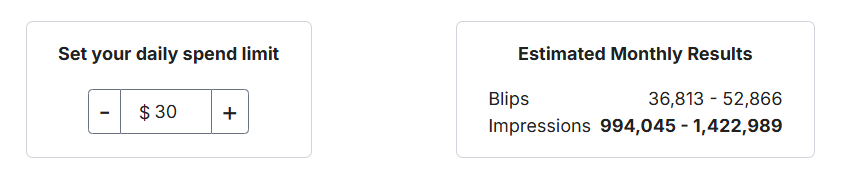
Blip makes billboard advertising in the Scranton area flexible and affordable. You choose a daily budget, and Blip only charges when your ad actually appears as a 7.5-to-10-second “blip” on a rotating digital billboard serving the Scranton area, with pricing starting at just $0.01 per display. Because cost per blip changes based on time of day, location, and advertiser demand, Blip’s algorithm works to get you the most reach for your budget.
Where can I advertise with Blip in Scranton, Pennsylvania?
The best billboard strategies near Scranton usually start with the interstates, including I-81, I-84, I-380, and I-476. The market also includes local arterials feeding the Scranton area retail market, especially the commercial strip around Viewmont Mall in Dickson City along with nearby US 6 and Route 11 connections. Blip can also reach nearby corridors serving Dunmore, Pittston, Wilkes-Barre, and other nearby communities.
What kind of audience does Scranton, Pennsylvania billboard advertising reach with Blip?
The market sits at the crossroads of regional commuting, interstate freight movement, higher education, and four-season tourism, serving a three-county metro of 567,559 people and a visitor market of more than 30 million annual visitors in the Pocono Mountains. The City of Scranton anchors a broader trade area that extends into Lackawanna County, Luzerne County, Dickson City Borough, Dunmore Borough, the City of Pittston, and the City of Wilkes-Barre. That geography is exactly why billboard advertising serving the Scranton area works so well.
When is the best time to run billboards in Scranton, Pennsylvania?
We usually see the strongest commuter-oriented delivery in three windows: morning commute from 6 a.m. to 9 a.m., midday errand and lunch traffic from 11 a.m. to 2 p.m., and evening commute from 4 p.m. to 7 p.m. Spring, summer, and fall also bring strong event, tourism, and back-to-school opportunities. For event-led campaigns, we usually recommend launching 2 to 4 weeks before the target date so the message has time to build familiarity.
What traffic corridors matter most for billboards in Scranton, Pennsylvania?
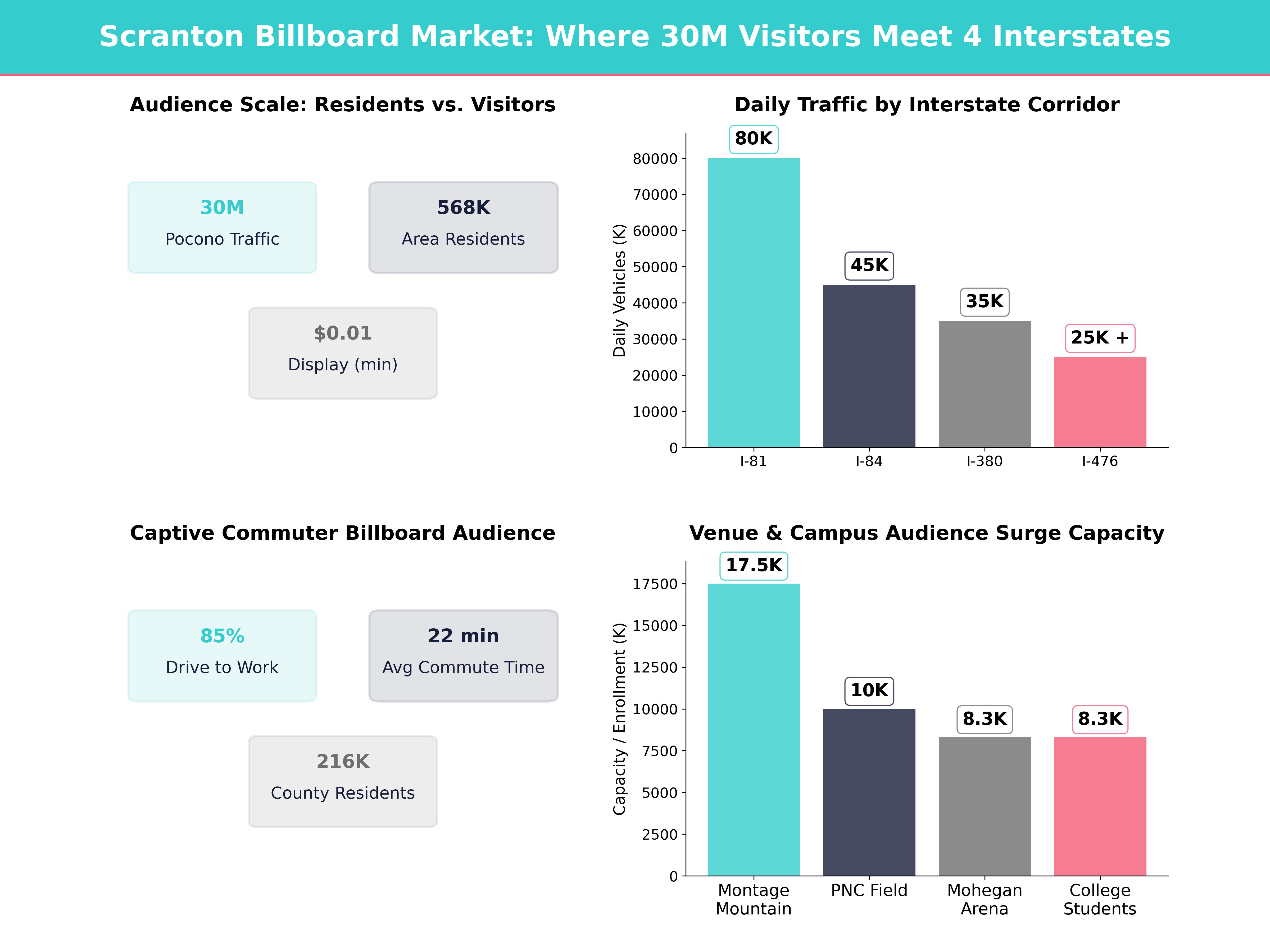
According to PennDOT traffic data, I-81 through the Dunmore-to-Dickson City corridor typically carries about 70,000 to 90,000 vehicles per day, depending on the segment. I-84 near the Dunmore split generally carries about 40,000 to 50,000 vehicles per day, while I-380 south of I-84 commonly runs around 30,000 to 40,000 vehicles per day. These routes serve different slices of the Scranton area audience, from commuter and freight traffic to tourism and weekend leisure travel.
Do I need a contract to advertise with Blip in Scranton?
No, Blip has no long-term contracts or minimum commitments. You can start, pause, or stop your campaign at any time.
How fast can I launch a billboard campaign with Blip in Scranton?
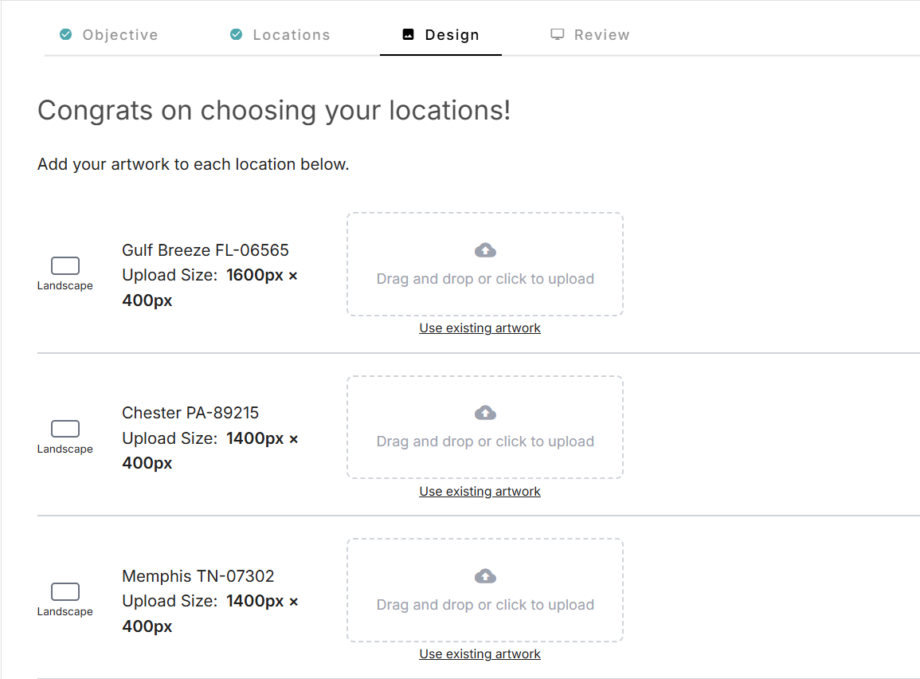
You can have your campaign live in minutes. Create a free account, select your locations, set your budget, upload your design, and start running once approved.
Where can I advertise with Blip in Scranton?
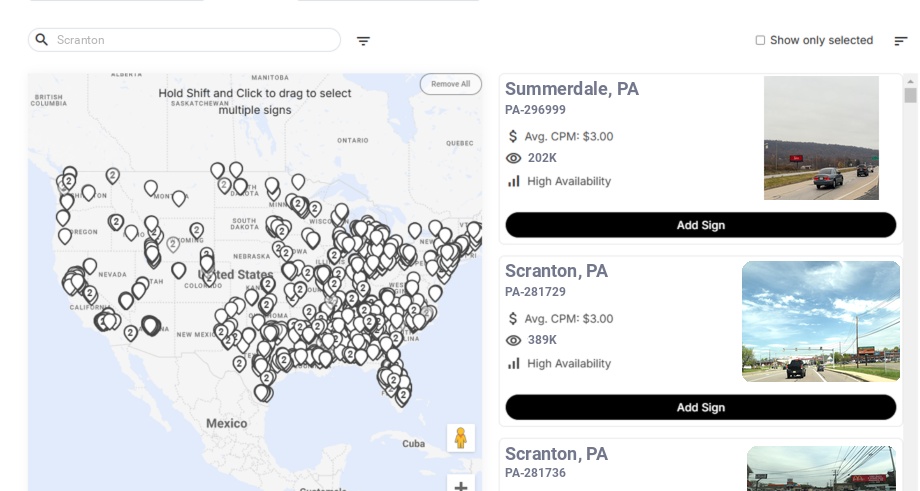
Blip has digital billboards in Scranton. You can browse available locations on a map, choose the ones that fit your audience, and start advertising right away.
Still have questions? Launch a campaign in minutes — no contracts, no commitments.
Start Your CampaignScranton Billboard Advertising Guide
Advertisers can do a lot with digital billboards near Scranton because the market sits at the crossroads of regional commuting, interstate freight movement, higher education, and four-season tourism, serving a three-county metro of 567,559 people and a visitor market of more than 30 million annual visitors in the Pocono Mountains. The City of Scranton Lackawanna County, nearby Luzerne County, Dickson City Borough, Dunmore Borough City of Wilkes-Barre. That geography is exactly why billboard advertising serving the Scranton area works so well. We can reach daily drivers on I-81 and I-84, which typically carry about 70,000 to 90,000 vehicles per day and 40,000 to 50,000 vehicles per day in key segments, weekend travelers headed toward the Pocono Mountains, and families moving between retail centers, campuses, and entertainment venues near Scranton.
Scranton Area Market Overview
Population, scale, and regional reach
The City of Scranton has 76,328 residents, based on the 2020 Census, but the practical audience for outdoor media serving the Scranton area is much larger than the city proper. Lackawanna County has 215,896 residents, nearby Luzerne County has 325,594 residents, and the broader Scranton-Wilkes-Barre-Hazleton metro area totals 567,559 people. That means a billboard near Scranton is often speaking to a regional consumer base, not just one municipality.
We see this market behave like a connected corridor rather than a single downtown-centered city. Shoppers, patients, students, office workers, and logistics employees move across municipal lines every day between the Scranton area, the Pittston area, and the Wilkes-Barre area. For advertisers, that creates repeat exposure on a relatively compact road network.
Economic anchors and commuter habits
The local economy is diversified, which helps billboard campaigns perform across multiple categories. Organizations such as The Greater Scranton Chamber of Commerce, Penn's Northeast, and the Northeastern Pennsylvania Alliance continue to promote healthcare, education, logistics, warehousing, manufacturing, retail, and professional services throughout Northeastern Pennsylvania.
Road travel is the dominant habit. American Community Survey estimates consistently show that about 85% of workers in Lackawanna County commute by car, truck, or van, and average travel time to work is roughly 22 minutes. That combination matters because it gives us frequent, repeated impressions on the same routes week after week. Public transportation still plays a role through COLTS, especially for urban trips and healthcare access, but the Scranton area remains a car-first market.
The Wilkes-Barre/Scranton International Airport 8 miles from downtown Scranton, which reinforces the value of billboard placements near Pittston, Avoca, and I-81 for business travel, hospitality, rental cars, and regional service brands.
Key Traffic Corridors Serving the Scranton Area
Interstates that carry the market
The best billboard strategies near Scranton usually start with the interstates. According to PennDOT traffic data, several core routes carry heavy, dependable daily volume.
- I-81 through the Dunmore-to-Dickson City corridor typically carries about 70,000 to 90,000 vehicles per day, depending on the segment.
- I-84 near the Dunmore split generally carries about 40,000 to 50,000 vehicles per day.
- I-380 south of I-84, heading toward the Poconos and the Lehigh Valley connection, commonly runs around 30,000 to 40,000 vehicles per day.
- I-476, the Northeast Extension of the Pennsylvania Turnpike, often carries more than 25,000 vehicles per day near the Clarks Summit
Those numbers matter because each road serves a slightly different slice of the Scranton area audience. I-81 is the core commuter and freight spine. I-84 captures east-west movement, including trips toward New York and the Poconos. I-380 is especially important for tourism, airport traffic, and weekend leisure travel. I-476 adds long-distance regional flow from the Lehigh Valley and Greater Philadelphia.
Retail and cross-town routes near Scranton
The interstate story is only part of the picture. Local arterials feeding the Scranton area retail market also matter, especially for restaurants, furniture stores, healthcare providers, auto dealers, and home services. The commercial strip around Viewmont Mall
Viewmont Mall 1.1 million square feet of retail, which makes the Dickson City corridor especially useful for brands that want family and shopper frequency. We often think of this zone as the “errand belt” serving the Scranton area, because consumers use it for apparel, electronics, dining, groceries, and household purchases.
Dayparts that fit local movement
We usually see the strongest commuter-oriented delivery in three windows.
- Morning commute: 6 a.m. to 9 a.m.
- Midday errand and lunch traffic: 11 a.m. to 2 p.m.
- Evening commute: 4 p.m. to 7 p.m.
Those windows are especially effective on I-81, I-84 interchange approaches, and retail-heavy corridors near Dickson City, Dunmore, and Pittston. Weekend traffic becomes more important when campaigns target shopping, attractions, casinos, concerts, baseball, or Pocono-bound travel.
Audience Segments Near Scranton
Commuters and workforce audiences
Commuters are the foundation of billboard reach serving the Scranton area. The region’s road-heavy travel pattern, combined with major employment centers in healthcare, education, local government, warehousing, and retail, means we can build campaigns around repeated weekday exposure.
Healthcare is one of the strongest examples. Systems such as Geisinger, Commonwealth Health, and other regional providers generate daily travel from employees, patients, and caregivers. That makes boards near interstate exits, hospital approaches, and retail corridors useful for urgent care, orthopedics, dental, specialty medicine, and legal advertising.
Students and young adults
Higher education gives the Scranton area a meaningful student audience even though the market is not dominated by one giant state university. Nearby campuses include the University of Scranton, with about 4,700 students, Marywood University, with roughly 2,700 students, and Penn State Scranton 900 students. Together, those three institutions alone represent roughly 8,300 students.
That audience matters for apartments, banking, wireless, healthcare, food delivery, tutoring, entertainment, and early-career recruiting. Student traffic also creates seasonal pulses around move-in, move-out, orientation, commencement, and sports seasons. Because these campuses are spread across the market, nearby billboard coverage can speak to them efficiently without needing inventory inside one campus district.
Families, shoppers, and eventgoers
Families are a major audience near Scranton because so much regional activity concentrates around retail and entertainment nodes. Dickson City, Montage Mountain, Pittston, and Wilkes-Barre all pull household traffic from across the market.
Several venues provide especially strong event-based audiences.
- PNC Field, home of the Scranton/Wilkes-Barre RailRiders, seats 10,000.
- Mohegan Arena at Casey Plaza seats about 8,300.
- The concert venue at Montage Mountain Resorts has a capacity of about 17,500.
Those numbers tell us that entertainment-driven traffic spikes are not small. They are meaningful regional audience surges, and they can support campaigns for restaurants, rideshare alternatives, beverages, casinos, retail promotions, and medical or legal services.
Tourists and weekend visitors
Tourism is one of the best reasons to advertise near Scranton rather than thinking of the market only as a local commuter base. The Pocono Mountains Visitors Bureau says the region welcomes more than 30 million visitors annually. Much of that travel passes through corridors that serve the Scranton area, especially I-380 and I-84.
Key tourism and recreation draws include.
- Montage Mountain Resorts, with 26 trails and a 1,000-foot vertical drop.
- Elk Mountain Ski Resort, with 27 trails, 7 lifts, and a 1,000-foot vertical drop.
- Pocono Raceway, a 2.5-mile superspeedway.
- Kalahari Resorts & Conventions 220,000 square feet.
- Camelback Resort, another major all-season Pocono destination.
For advertisers, that means the market near Scranton includes tourists, day-trippers, skiers, concertgoers, baseball fans, and race fans, not just local residents.
Seasonal and Timing Opportunities Near Scranton
Winter campaigns near Scranton
Winter is a real advertising season in Northeastern Pennsylvania, not just a weather obstacle. Ski traffic, holiday shopping, healthcare demand, and winter driving conditions all increase the value of clear, high-contrast billboard creative.
We often like winter campaigns near Scranton for.
- Ski and snow-sport promotions tied to Montage Mountain Resorts and Elk Mountain Ski Resort.
- Heating, plumbing, roofing, and emergency home services.
- Urgent care, orthopedics, pharmacies, and insurance.
- Holiday retail and dining around Dickson City, Wilkes-Barre, and Pittston.
Because daylight is shorter and roads are often gray, snowy, or wet, simpler creative tends to outperform cluttered layouts during winter months.
Spring events and college timing
Spring brings a different type of movement serving the Scranton area. Tax season, home improvement, medical scheduling, and graduation-related spending all pick up. College calendars matter here, especially at the University of Scranton, Marywood University, and Penn State Scranton
We also see strong event energy from local traditions such as the St. Patrick's Parade Association of Lackawanna County, La Festa Italiana, and the Scranton Jazz Festival. For event-led campaigns, we usually recommend launching 2 to 4 weeks before the target date so the message has time to build familiarity.
Summer leisure and entertainment
Summer expands the radius of the market. Baseball at PNC Field, concerts at Montage Mountain Resorts, casino trips to Mohegan Pennsylvania, and Pocono-bound leisure travel all create strong weekend volume.
This is a strong season for.
- Attractions and ticketed events.
- Casual dining and family restaurants.
- Waterparks, hotels, resorts, and campgrounds.
- Retail, especially Thursday through Sunday.
- Auto services, convenience stores, and travel-oriented brands.
Back-to-school and fall strategy
Late August through October is one of the most dependable windows near Scranton. Colleges restart, K-12 traffic normalizes, fall sports return, and leaf-peeping travel adds scenic-road volume. It is an excellent time for healthcare, apartments, financial services, education, fitness, and local retail.
Fall also works well for home services because homeowners respond to weather-prep messaging before winter. Campaigns that stress timing, such as “Schedule before the first freeze” or “Book before holiday travel,” usually fit the local mindset well.
Billboard Design Tips for the Scranton Area
Use creative that fits Northeastern Pennsylvania visually
The Scranton area has a practical, local-first feel. We usually recommend straightforward creative over polished-but-generic national imagery. Billboards serving the Scranton area often perform best when they look relevant to mountain weather, regional roads, and local routines.
A few creative choices tend to work well.
- Dark blue, charcoal, black, or forest green backgrounds with white or yellow text for contrast.
- Winter-ready visuals from November through March, because snow, slush, and overcast skies are common.
- Imagery that feels regionally believable, such as hillsides, pines, stadium lights, fall foliage, or family outings.
- Direct references to route logic, such as “Off I-81,” “Next Exit,” “Near Montage,” or “On the way to the Poconos.”
Keep the message short and directional
Interstate-driven markets reward clarity. We usually recommend 6 to 8 words of primary copy, a bold logo, and one clear call to action. In the Scranton area, directional language is especially useful because so much travel is route-based rather than pedestrian-based.
Good local examples include.
- “Next Exit for Urgent Care.”
- “Dickson City Deals Ahead.”
- “Pittston Lunch, 5 Minutes.”
- “Legal Help After a Crash.”
- “Skip the Wait. Book Today.”
Distance cues such as 5 minutes, 10 minutes, or “next exit” can outperform abstract brand statements when we are targeting active drivers making near-term decisions.
Match offers to the local calendar
Local creative should also reflect seasonal realities. Heating, roofing, and snow-removal messages fit winter. Sports bars, live events, and family attractions fit summer. Tax prep fits January through April. College-oriented financial and apartment promotions fit late summer and early fall.
We can also rotate creative quickly when promotions change, which is useful in a market with visible seasonality.
Regional Strategies Near Scranton
North of Scranton: Dickson City and the retail belt
The Dickson City corridor is one of the strongest family-and-shopping zones serving the Scranton area. We like it for furniture, mattresses, automotive, home improvement, medical practices, quick-service restaurants, and major retail promotions.
Because this area captures errands as well as destination shopping, we often recommend all-day schedules with extra weight on afternoons, evenings, and weekends. If a brand wants household visibility rather than pure commuter frequency, this is often our first zone to evaluate.
East and southeast of Scranton: Dunmore, I-84, and I-380
Dunmore and the I-84/I-380 split are ideal for capturing gateway traffic near Scranton. This zone is especially valuable for tourism, hospitality, attractions, healthcare, legal services, airport parking, and any brand that wants both local commuters and pass-through travelers.
We think of this area as the “decision corridor” for people choosing whether they are heading toward work, toward the Poconos, or farther south. It is a strong place for concise creative and directional calls to action.
South of Scranton: Pittston, Avoca
The Wilkes-Barre/Scranton International Airport City of Pittston
Because airport and logistics traffic starts early, morning scheduling matters here. Evening return traffic also works well, especially for dining, entertainment, and healthcare reminders.
West and southwest: Clarks Summit
The Clarks Summit side of the market helps us reach suburban households and Turnpike-related travel. Southbound toward Wilkes-Barre, we gain access to event traffic, casino traffic, and a deeper Luzerne County audience.
For brands that want to own the broader regional conversation, rather than one neighborhood, combining a north-side retail board, an I-81 commuter board, and a south-side regional board is often a smart three-part approach.
Blip Tools and Capabilities for the Scranton Area
Build around corridors, not just one point on a map
The biggest advantage of a flexible digital approach near Scranton is that we do not have to guess on one location and commit for months. We can choose boards on a map near Dunmore, Dickson City, Pittston, Wilkes-Barre, and other nearby corridors that serve the Scranton area, then weight the budget where traffic and audience intent are strongest.
That is especially useful in a multi-node market. A retail advertiser can lean into Dickson City. A legal advertiser can prioritize I-81 commuter routes. A resort or attraction can focus on I-380 weekends. We can shape the campaign around the audience instead of forcing the audience into one fixed board.
Use timing and creative rotation strategically
Blip’s scheduling tools make a lot of sense in this region. We can emphasize commuter windows on weekdays, shift spend to weekends for tourism and entertainment, or add burst campaigns around concerts, baseball, graduation, and holiday shopping. Because each display is only 7.5 to 10 seconds, the creative needs to stay clear, but the short format also encourages disciplined messaging.
The pay-per-play structure, starting at $0.01 per display, is useful for local advertisers who want to test multiple corridors without taking on a traditional long-term obligation. We can also swap artwork quickly, which helps when a ski resort wants winter creative, a clinic wants seasonal flu messaging, or a retailer needs a fresh weekend offer.
Optimize based on real performance
In a market like the Scranton area, performance often varies by corridor more than by city name. Real-time analytics help us see whether the Dickson City retail audience, the I-84 gateway audience, or the Pittston airport audience is producing the best engagement pattern for our goal. Once we learn that, we can increase, reduce, pause, or reallocate budget without rebuilding the whole campaign.
Getting Started with Billboard Rental Near Scranton
Start with the objective, not the board
When we rent a billboard near Scranton, we should first decide what success looks like. Are we trying to reach daily commuters, retail shoppers, college students, eventgoers, tourists headed to the Poconos, or regional households across both Lackawanna and Luzerne Counties?
That answer determines which nearby billboard locations make sense. A restaurant or furniture brand may want Dickson City visibility. A law firm or medical group may prefer I-81 commuter frequency. A resort, concert, or hotel campaign may perform better closer to I-380 or southbound gateway traffic.
What to expect from the rental process
Traditional billboard buying often means longer commitments, manual proposals, fixed contracts, and slower changes. A self-serve digital platform is simpler. We can review locations, set a daily budget, choose dayparts, upload artwork, and launch without waiting for a print posting cycle or negotiating a custom contract for each board.
For many advertisers serving the Scranton area, that changes the economics of testing. Instead of locking into one expensive decision, we can begin with a focused plan, measure response, and expand from there.
A practical launch plan for the Scranton area
We usually recommend a starting framework like this:
- Choose 3 to 5 nearby billboard locations that match the audience goal.
- Run for at least 2 weeks, and ideally 4 weeks, so frequency can build.
- Use one main creative concept and one alternate version.
- Daypart around real behavior, such as weekday commute windows or weekend leisure travel.
- Review which corridors deliver the best fit, then reallocate budget.
That process works well because the Scranton area is compact enough for repeated exposure, but varied enough that the right corridor makes a big difference.
How to evaluate the best nearby billboard locations
When we compare boards serving the Scranton area, we like to ask four questions.
- Does the route match our audience’s actual travel pattern.
- Is the surrounding area commuter-heavy, retail-heavy, or tourism-heavy.
- Do we need weekday frequency, weekend bursts, or both.
- Can the creative be understood in one fast glance.
If we answer those questions clearly, the right location usually becomes obvious. Near Scranton, billboard success rarely comes from picking the closest board on a map. It comes from choosing the corridor that best matches the customer’s routine, then using flexible digital scheduling to stay visible when that routine happens.