Billboards near Atlantic City, NJ
No Minimum Spend. No Long-Term Contracts. Just Results.
Trusted by Leading Brands


Billboard advertising
near Atlantic City has never been easier
How much is a billboard near Atlantic City?
Why Choose Blip for Billboard Advertising near Atlantic City
-
Blip lets you launch Atlantic City billboard ads fast, reaching ACX, White Horse Pike, and Black Horse Pike commuters without long contracts.
-
In Atlantic City, set a daily budget that fits your goals and let Blip follow it—ideal for summer visitor spikes from Memorial Day to Labor Day.
-
Use dayparting in Atlantic City to hit 5–9 a.m. workers, Friday arrivals, or late-night casino traffic when it matters most.
-
Atlantic City campaigns stay agile with Blip: no contracts, so you can shift from weekday local service ads to weekend Boardwalk visitor offers.
-
Track real-time analytics in Atlantic City and optimize around ACX, Parkways, and event weekends as traffic and demand change.
-
Blip's creative tools make it easy to swap Atlantic City messages for rain days, concerts, or shore-season promos in seconds.
Frequently Asked Questions About Billboard Advertising near Atlantic City
How much does a billboard cost near Atlantic City, New Jersey with Blip?
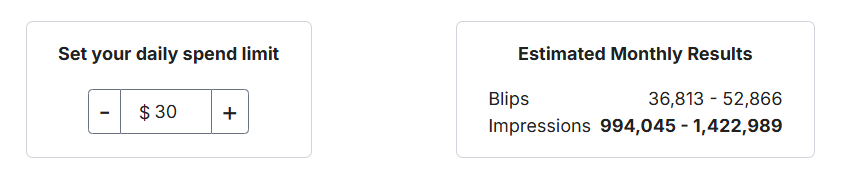
With Blip, you can advertise on Atlantic City billboards on any budget, because you set a daily spend that Blip automatically follows. Each ad play, or “blip,” is a 7.5 to 10-second spot, and you only pay for the blips you receive, making it simple to control costs while targeting digital billboards serving the Atlantic City area. The price of individual blips on billboards near Atlantic City, New Jersey varies based on time, location, and advertiser demand, so your total cost is just the sum of the blips you choose to run.
Where are Blip's digital billboards near Atlantic City, New Jersey located?
Our 8 digital billboards near Atlantic City are located in Pleasantville, NJ and Galloway, NJ. Pleasantville is about 4.3 miles from Atlantic City, and Galloway is about 7.5 miles from Atlantic City. These locations sit on key approaches into the Atlantic City area and along important local commuting arteries.
Who do Atlantic City billboards with Blip reach?
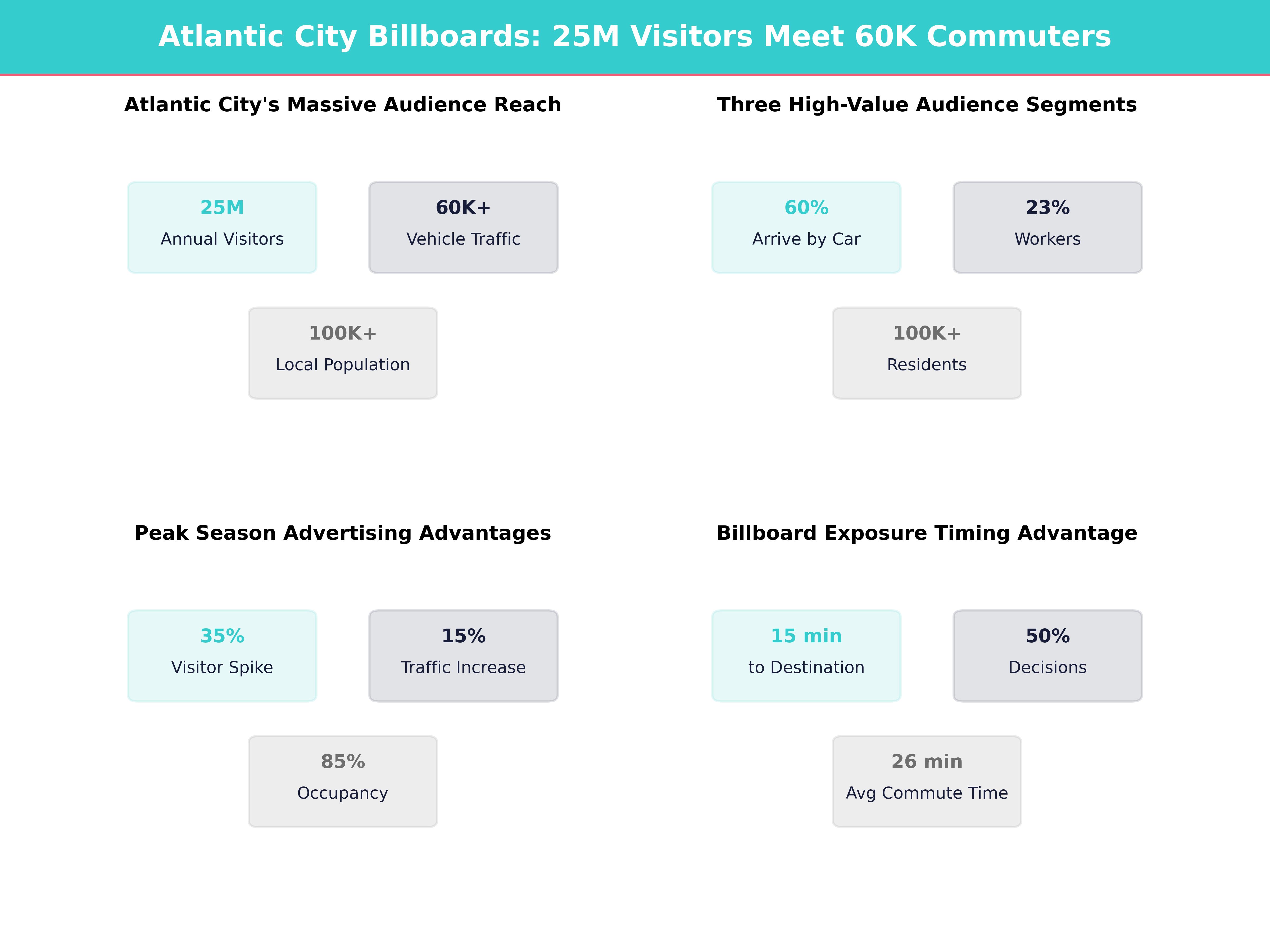
You are advertising to three overlapping audiences: local residents of Atlantic City, Pleasantville, Galloway, and surrounding towns; daily commuters; and short-stay and day-trip visitors from Philadelphia, North Jersey, and New York. In Atlantic County, the leisure and hospitality sector alone employs roughly 20–25% of the local workforce, much of it on non-standard shifts. Regional tourism studies indicate that more than 60% of Atlantic City visitors arrive by car, with strong feeder traffic from I‑95, the Atlantic City Expressway, and the Garden State Parkway.
When should I run billboard ads in Atlantic City with Blip?
For visitor-focused campaigns near Atlantic City, the page recommends heavy spend from Memorial Day to Labor Day, when visitor counts and hotel occupancy are at their highest. It also suggests concentrating impressions on Thursdays through Sundays, especially Friday afternoon and Saturday morning inbound traffic. For local and commuter-focused campaigns, it recommends 5–9 a.m., 3–7 p.m., and late night if you are targeting nightlife or late-shift workers.
What traffic routes make Atlantic City billboards effective?
The Atlantic City Expressway is the primary route from the Philadelphia region, with nearby segments typically running in the 50,000–70,000 vehicles per day range during much of the year. U.S. Route 30, U.S. Route 40/Route 322, and Garden State Parkway interchanges near Galloway also carry heavy traffic. By using boards near Pleasantville and Galloway, advertisers can catch visitors before they reach casinos, hotels, attractions, and the Boardwalk.
Do I need a contract to advertise with Blip near Atlantic City?
No, Blip has no long-term contracts or minimum commitments. You can start, pause, or stop your campaign at any time.
How fast can I launch a billboard campaign with Blip near Atlantic City?
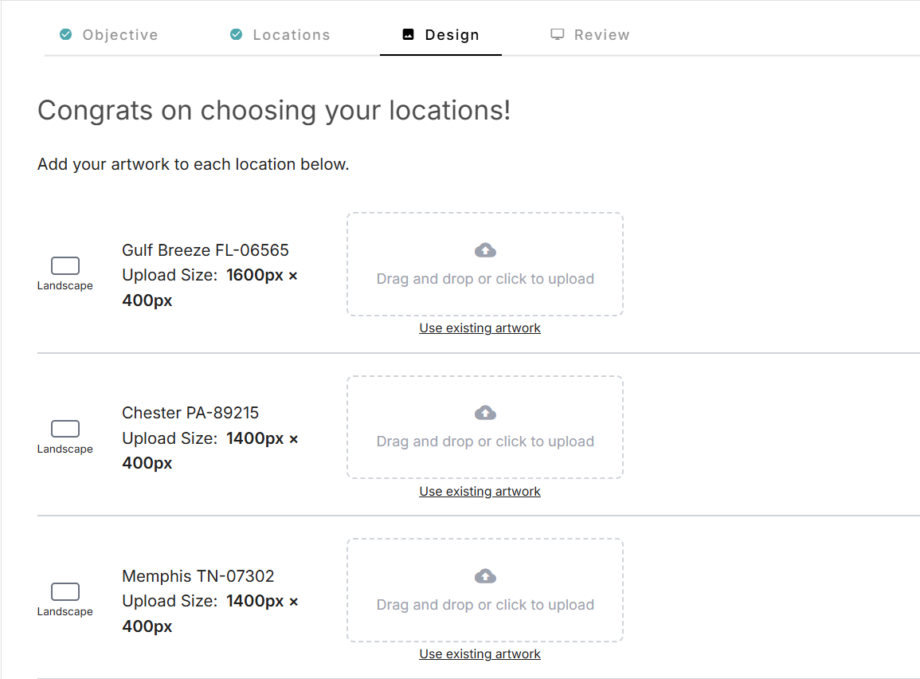
You can have your campaign live in minutes. Create a free account, select your locations, set your budget, upload your design, and start running once approved.
Where can I advertise with Blip near Atlantic City?
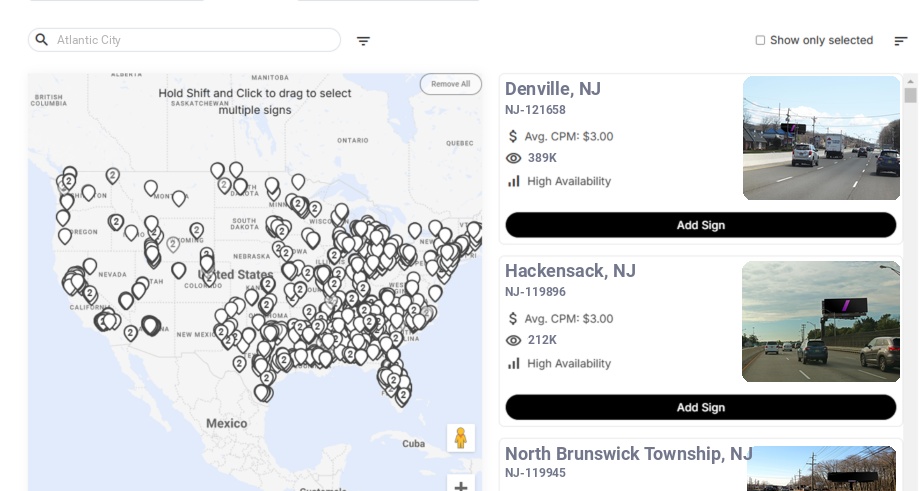
Blip has digital billboards near Atlantic City. You can browse available locations on a map, choose the ones that fit your audience, and start advertising right away.
Still have questions? Launch a campaign in minutes — no contracts, no commitments.
Start Your CampaignAtlantic City Billboard Advertising Guide
Atlantic City is one of the most unique advertising markets on the East Coast: a compact seaside resort with big-city visitor volumes, strong commuter patterns, massive seasonal swings, and a 24/7 entertainment economy. With 8 digital billboards near Atlantic City—strategically placed in Pleasantville Galloway Township
Understanding the Atlantic City Area Audience
To build an effective campaign near Atlantic City, we need to understand who is on the roads and when. Strong-performing billboard advertising near Atlantic City always starts with a clear picture of both locals and visitors.
- The City of Atlantic City 38,500 people (2020 Census), but it serves as the entertainment and employment hub for Atlantic County’s 274,500 residents. Nearby Pleasantville adds around 20,000 residents and Galloway Township about 37,000, creating a dense cluster of daily drivers in and out of the resort area.
- According to tourism and convention sources like Visit Atlantic City and statewide tourism reports, the Atlantic City area draws approximately 24–27 million visitors annually, accounting for a significant share of New Jersey’s over 110 million statewide visitors each year. Visitor volume routinely spikes by 30–40% between Memorial Day and Labor Day.
- Tourism and casino gaming remain dominant economic engines. Atlantic County data and local reporting from outlets such as The Press of Atlantic City show that Atlantic City’s 9 casinos collectively generate over $3 billion in annual gaming revenue and support tens of thousands of direct and indirect jobs in hospitality, restaurants, transportation, and retail.
- Atlantic County’s economy is heavily influenced by hospitality, gaming, retail, healthcare, and education, including major employers in and near the city such as casinos, resorts, AtlantiCare, and Stockton University, as cited by Atlantic County government
What this means for your billboards:
-
You are advertising to three overlapping audiences:
- Local residents of Atlantic City, Pleasantville, Galloway, and surrounding towns—collectively more than 100,000 people within a short drive of your boards.
- Daily commuters (casino and resort staff, service workers, government employees, students). In Atlantic County, the leisure and hospitality sector alone employs roughly 20–25% of the local workforce, much of it on non-standard shifts.
- Short-stay and day-trip visitors from Philadelphia, North Jersey, and New York. Regional tourism studies indicate that more than 60% of Atlantic City visitors arrive by car, with strong feeder traffic from I‑95, the Atlantic City Expressway Garden State Parkway
Digital billboards serving the Atlantic City area are especially powerful because they let you talk to each audience at different times of day and different seasons, without changing your contract—just your artwork and scheduling. If you’re considering billboard rental near Atlantic City for the first time, this flexibility can make testing the market far more affordable and efficient.
Where Our Billboards Fit in the Atlantic City Area Travel Pattern
Our 8 digital billboards near Atlantic City are located in:
- Pleasantville, NJ – about 4.3 miles from Atlantic City.
- Galloway, NJ – about 7.5 miles from Atlantic City.
These locations sit on key approaches into the Atlantic City area and along important local commuting arteries, making them some of the most impactful placements for billboard advertising near Atlantic City:
- Atlantic City Expressway (ACX): The primary route from the Philadelphia region. NJDOT traffic counts in nearby segments typically run in the 50,000–70,000 vehicles per day range during much of the year, with summer weekends and holiday peaks often pushing daily volumes 10–20% higher. Over the course of a year, that translates into 18–25 million vehicle trips on the main approach into Atlantic City.
- U.S. Route 30 (White Horse Pike): A major east–west corridor bringing traffic from suburban Atlantic County into the Atlantic City area, running through Pleasantville and Galloway. Depending on the segment, average annual daily traffic (AADT) often ranges from 20,000 to 35,000 vehicles per day, serving both commuters and local shoppers.
- U.S. Route 40 / Route 322 (Black Horse Pike): Another heavily traveled commuter and retail corridor through Pleasantville toward the city, with many segments carrying 25,000–40,000 vehicles per day past shopping centers, auto dealers, and service businesses.
- Garden State Parkway interchanges near Galloway: Feeding both north–south beach traffic and local residential trips. AADT figures along the Parkway in the Atlantic County stretch frequently exceed 80,000 vehicles per day, surging higher during peak summer travel weekends.
By using boards near Pleasantville and Galloway, advertisers can:
- Catch visitors before they reach casinos, hotels, attractions, and the Boardwalk—often 10–20 minutes before they park and make spending decisions.
- Capture daily workers on their way into and out of the city. In Atlantic County, the average one-way commute is about 25–27 minutes, giving your message repeated exposure for regular commuters from inland towns.
- Reach local families heading to shopping centers, schools, and medical offices in Pleasantville, Galloway, and surrounding communities, which together account for tens of thousands of daily local trips on White Horse Pike and Black Horse Pike alone.
When planning a campaign, think in terms of “gateway messaging”—your board may be the last big reminder someone sees before entering the entertainment district or heading home. Many advertisers use these gateway Atlantic City billboards to promote final-chance offers, last exits, or “on your way home” reminders.
Seasonality: When to Turn Up (or Dial Back) Your Spend
The Atlantic City area is highly seasonal, but with different peaks depending on your audience. Smart billboard rental near Atlantic City should mirror those seasonal shifts so you’re spending more when traffic and intent are highest.
Tourist & Visitor Traffic
Data shared by tourism and hospitality sources such as Atlantic City’s official tourism site and statewide lodging reports show:
- Peak tourist season: Late May through early September, when some hotels and casinos report room demand 30–50% higher than off-season months like January and February.
- Weekend summer occupancy often rises above 80–90% at major hotels, with select high-demand weekends selling out or approaching 100% occupancy across large properties.
- On peak summer Saturdays, local transportation and traffic monitoring regularly report noticeable travel-time increases on the Atlantic City Expressway and Garden State Parkway, reflecting heavy inbound visitor volumes.
- Summer weekends, holiday periods (Memorial Day, Fourth of July, Labor Day), and big events (concerts, festivals, boxing/MMA, esports, and conventions) drive sharp spikes in road traffic. Major event weekends promoted through Visit Atlantic City can add thousands to tens of thousands of additional visitors on top of baseline summer volume.
For visitor-focused campaigns near Atlantic City, we recommend:
- Heavy up your budget from Memorial Day to Labor Day, when visitor counts and hotel occupancy are at their highest and out-of-town spending can be 20–40% higher per trip than in shoulder seasons.
- Concentrate impressions on Thursdays–Sundays, especially Friday afternoon and Saturday morning inbound traffic—periods when inbound traffic on key routes can be 15–25% higher than weekday averages.
- Add event-based bursts during big shows and festivals promoted on sites like Visit Atlantic City, when a single concert, sports event, or convention can drive 5,000–20,000 additional attendees in a single day.
Local & Commuter Traffic
While tourist volume fluctuates, the local workforce and resident base is more stable:
- In a typical year, Atlantic County has well over 100,000 employed residents, with 20–25% working in leisure and hospitality and thousands more in retail, healthcare, logistics, and education. Many of these employees commute along the Expressway, Garden State Parkway, and the White/Black Horse Pikes.
- Casinos and entertainment venues employ tens of thousands of workers, many commuting daily from Pleasantville, Galloway, Egg Harbor Township, and other inland towns. Major casino properties each employ between 2,000 and 5,000 workers, spread across multiple shifts.
- Shifts often start and end outside typical 9–5 hours (early mornings, late nights). It’s common for casinos and 24/7 venues to run three or more daily shifts, ensuring steady road activity well into the late night and early morning.
For local and commuter-focused campaigns:
-
Run year-round, but adjust scheduling:
- 5–9 a.m. for inbound work traffic and school runs, when many school districts and colleges around Atlantic County start classes.
- 3–7 p.m. for outbound workers and after-school/errand trips, overlapping with the local peak-hour congestion on key pikes.
- Late night (10 p.m.–2 a.m.) if you’re targeting nightlife or late-shift workers, when casino shifts turn over and ride-share/taxi demand ramps up.
Using Blip’s flexible scheduling, you can increase your “blips” during your best-performing hours while lowering or pausing spend during lower-value periods. This is especially useful if you’re new to billboard advertising near Atlantic City and want to test performance before fully scaling.
Dayparting Strategy: Matching Message to Movement
Digital billboards serving the Atlantic City area are most effective when your message aligns with what drivers are doing at that time. Well-planned dayparting lets your Atlantic City billboards speak differently to morning workers than to late-night visitors.
Morning (5–10 a.m.)
Audience:
- Workers commuting into casinos, hotels, government offices, and big employers such as AtlantiCare, Stockton University, and Atlantic County government facilities.
- Parents dropping kids at schools and colleges, including campuses in Galloway and surrounding towns.
- Overnight visitors heading out of town after weekday or weekend stays.
Best for:
- Coffee shops, breakfast spots, and quick-service restaurants near Atlantic City.
- Employers recruiting staff (“Start your new career near Atlantic City – Hiring Today”), especially when regional unemployment trends show thousands of open hospitality and service roles at any given time.
- Healthcare, banking, and education reminders.
Creative tips:
- Emphasize convenience, speed, and reliability.
- Use time-based copy: “Order by 10 a.m., ready by noon,” “Open at 7 a.m. in Pleasantville.”
Midday (10 a.m.–3 p.m.)
Audience:
- Tourists exploring attractions near Atlantic City, including the Boardwalk, beaches, shopping, and indoor attractions promoted on Visit Atlantic City.
- Shoppers, retirees, and service appointments, including the large daytime population using medical, financial, and government services around Pleasantville and Galloway.
- Mid-shift workers heading to or from casino and hospitality jobs.
Best for:
- Attractions, tours, and museums near Atlantic City.
- Retail, outlet centers, and big-box stores along the Black Horse and White Horse Pikes.
- Medical offices, dental practices, auto service.
Creative tips:
- Highlight special offers, “today only” deals, and walk-in availability.
- Use strong calls to action like “Exit in 3 Miles – Turn Right on [Road Name].”
Evening & Night (3 p.m.–12 a.m.)
Audience:
- Visitors headed to casinos, concerts, dining, and nightlife, including events listed on Atlantic City’s event calendar.
- Workers ending or starting evening and night shifts.
- Local families and couples going out.
Best for:
- Entertainment venues, bars, restaurants, and late-night services.
- Ride-share, taxi services, and parking apps, especially around weekends when nightlife demand can increase 30–50% over weekday levels.
- Casino promotions, shows, and nightlife experiences near Atlantic City.
Creative tips:
- Use bold, high-contrast visuals that pop after dark.
- Emphasize experiences: “Live Music Tonight,” “Half-Price Apps After 9 p.m.”
Crafting Creative for the Atlantic City Area
The Atlantic City area has a strong visual identity—boardwalk lights, ocean views, casino skylines, and iconic New Jersey shore imagery. Your creative should reflect that energy while staying simple and bold. Whether you’re using static-style digital designs or more dynamic Atlantic City billboards, clear, high-impact visuals win.
Visual Style
- Use large, high-contrast fonts readable at highway speeds (aim for letters at least 12–18 inches tall in real-world size). Highway readability studies suggest that each inch of letter height supports about 25 feet of viewing distance, so larger fonts dramatically improve legibility at 55 mph.
- Limit copy to 6–8 words; traffic near Pleasantville and Galloway generally moves at 40–55 mph, giving viewers only 3–6 seconds to process your message.
- Use one dominant image: a product shot, smiling face, or recognizable building, not a collage. Ads with a single focal point typically yield higher recall than crowded layouts.
- Colors that stand out against the environment: bright yellows, oranges, and whites against evening skies, or deep blues against daylight.
Messaging Angles that Work Well
-
Distance & Directions
- “Only 5 Minutes from the Atlantic City Area – Exit 37”
- “On the Way to the Casinos? Stop at [Your Business].”
- Use real distances: “2 miles ahead in Pleasantville,” “Next exit in Galloway.” Directional copy is particularly effective near interchanges and has been shown in OOH studies to lift navigation-related actions (like map searches) by 10–20%.
-
Urgency & Limited-Time Offers
- “Tonight Only – Tickets Starting at $25.”
- “Weekend Sale – This Fri–Sun in Galloway.”
- Time-limited promotions are especially potent in tourist corridors, where a high share of visitors—often 40–60%—are making same-day decisions on dining, entertainment, and retail.
-
Local Pride
- Reference familiar landmarks and local identity.
- Mention neighborhoods or nearby towns: “Serving Pleasantville & the Atlantic City Area Since 1998.”
- Localized messages tend to feel more trustworthy to residents and can help convert repeat business from the 100,000+ people living within a short radius of the boards.
-
Visitor-Focused Messaging
- “First Time Near Atlantic City? Try [Your Brand].”
- “Rainy Day at the Shore? Visit Our Indoor Attraction.”
- Weather-driven calls to action work well in coastal markets, where a single rainy day can shift thousands of visitors from beach plans to indoor entertainment.
Because Blip allows you to upload multiple creatives and set different rules, you can tailor:
- One set of ads for weekends (tourist-heavy, entertainment-driven).
- Another for weekdays (local services, employment, education, healthcare).
- Holiday-specific versions for Fourth of July, Labor Day, and big event weekends promoted on Atlantic City’s event calendar.
Local Market Opportunities by Industry
Casinos, Entertainment, and Nightlife
With multiple large casinos and venues near Atlantic City, entertainment competition is intense—but so is demand. Strategic use of billboards near Atlantic City lets casinos and nightlife brands influence visitors while they are still choosing where to play, dine, and stay.
The city’s 9 casinos and major venues collectively attract millions of admissions annually, with individual headline concerts drawing 5,000–15,000 attendees and casino events ranging from small tournaments to citywide festivals.
Opportunities:
- Promote headliner shows, tournaments, and nightlife to inbound traffic on weekends, particularly on Fridays between 3–8 p.m., when many visitors arrive.
- Use boards near Pleasantville and Galloway to steal share (“Before you hit the Boardwalk, hit [Your Venue]”).
- Target late-night hours (10 p.m.–2 a.m.) when visitors and workers are out on the roads. Ride-share and taxi demand is often significantly higher during these hours around major events and holiday weekends.
Hotels, Short-Term Rentals, and Attractions
The Atlantic City area hosts millions of overnight stays and short trips:
- Local tourism data indicates that Atlantic City’s hotel-casino properties alone offer tens of thousands of rooms, with annual occupancy rates often averaging 70% or higher, and peak-season weekend occupancy above 80–90%.
- Drive-in visitors from within a 2–3 hour radius (Philadelphia, North Jersey, New York, Delaware) represent a large share of overnight stays and day trips. This heavily car-based visitor profile makes roadside media especially effective.
- Shoulder-season months like April–May and September–October can still deliver strong weekend visitation, but often with 10–20 percentage points lower midweek occupancy than peak summer months—creating an opportunity to promote value packages and off-peak deals.
Use billboards to:
- Catch drive-in visitors who have not yet decided where to stay next time. OOH research shows that a substantial portion of travelers—often 30–40%—remain open to trying a new property on their next visit.
- Emphasize free parking, family-friendliness, or pet-friendly claims to stand out in a crowded lodging marketplace.
- Promote shoulder-season deals (April–May and September–October), when hotels push occupancy but still benefit from favorable weather and lower competition for guest attention compared to midsummer.
Local Services & Small Businesses
Residents in Pleasantville, Galloway, and the broader Atlantic County region rely on local providers for day-to-day needs. With a combined local population well above 100,000 in these communities and nearby townships, recurring exposure on commuter routes can build strong brand familiarity.
Local sectors include:
- Auto dealers, repair shops, and tire centers.
- Medical practices, urgent care, dental, and specialists.
- Home services: HVAC, roofing, landscaping, cleaning.
- Education and training programs at local colleges and trade schools, including institutions like Stockton University and regional vocational programs highlighted by Atlantic County government
Strategy:
- Run steady, lower-frequency campaigns focused on name recognition and trust, rather than only short-term promotions.
- Feature phone number or short URL plus a clear benefit: “Same-Day Brakes,” “Walk-In Urgent Care – Open 7 Days.”
- Coordinate with local outreach in media like The Press of Atlantic City and neighborhood sponsorships. Combining digital billboards with local news advertising and community events can increase overall campaign reach and frequency across the county.
Real Estate and Development
Rising interest in shore-area housing and investments near Atlantic City means:
- Atlantic County’s housing market includes a mix of primary residences, second homes, and investment properties. Many prospective buyers and renters drive through Pleasantville and Galloway on their way to the beaches and Boardwalk.
- Use boards serving the Atlantic City area to reach investors, second-home buyers, and renters driving through. In shore-adjacent markets, a meaningful slice of buyers—often 20–30%—comes from out-of-area ZIP codes, making roadside impressions particularly valuable.
- Focus on new developments in Galloway, Pleasantville, Egg Harbor Township, and other nearby communities featured on local planning and development pages, such as those maintained by Atlantic County government Atlantic County Economic Alliance
- Promote limited inventory: “Only 5 Homes Left,” “New Luxury Rentals – Now Leasing.” Scarcity messaging can prompt quicker inquiries from visitors who are already in-market and physically close to the property.
Using Blip’s Flexibility to Your Advantage
Digital billboards near Atlantic City are not locked into static, months-long creative runs. You can take a more agile approach to billboard rental near Atlantic City that lets you adapt quickly to what’s working.
1. Start Small and Scale
- Set a daily budget you’re comfortable with, even if it’s initially modest.
- Focus initially on one or two time windows (e.g., 7–10 a.m. and 4–7 p.m.) that align with peak commuter or visitor flows based on local traffic counts and business hours.
- As you see response (site traffic, calls, coupon redemptions), increase your budget or add more hours. Local advertisers often find that concentrating budget into higher-performing hours yields a better cost-per-response than spreading impressions evenly all day.
2. A/B Test Creatives
Run two or more creatives simultaneously:
- Version A: Price-focused (“$9.99 Lunch Specials in Pleasantville”).
- Version B: Experience-focused (“Ocean-View Dining Minutes from the Atlantic City Area”).
Track response via:
- Unique URLs or landing pages.
- Different promo codes (e.g., “Show this code ATLANTIC10”).
- Call tracking numbers.
After a few weeks, shift more of your budget to the better-performing creative. Even a small difference—say 10–20% higher redemption or call volume—can translate into meaningful revenue gains over a full season.
3. Align With Local News and Events
Stay current with:
- Weather (rainy or cold days drive visitors to indoor attractions). In a coastal climate like Atlantic City’s, weather can change day plans for thousands of visitors in a single afternoon.
- Major concerts, festivals, or sports events listed on Atlantic City’s events page.
- Community news from outlets like The Press of Atlantic City and announcements from City of Atlantic City Atlantic County government
Update creative quickly for:
- “Rainy Day? Indoor Fun Exit 5.”
- “Big Game Weekend – Watch at [Your Sports Bar].”
- “Teacher Appreciation Week – 20% Off with ID.”
Digital flexibility lets you respond to what’s happening in the Atlantic City area today, not what you guessed months ago. Over time, this responsiveness can make your Atlantic City billboards feel more current and relevant than static, unchanging campaigns.
Measuring Success and Optimizing Over Time
To get the most from your campaign near Atlantic City, treat it as an ongoing experiment.
Key metrics to track:
- Website traffic from Atlantic County and nearby ZIP codes before and after your campaign. Look for percentage lifts in sessions (e.g., 10–30% increases) during your active weeks.
- Direct visits and branded search (people typing your name into search engines).
- Coupon redemptions or offers shown on the board.
- Call volume during your scheduled billboard hours.
Practical steps:
- Create a simple landing page like
yourbrand.com/acand feature that URL on the billboard. - Use different pages or codes for weekday vs weekend creative sets to see which audience converts best.
-
Review data at least once per month and adjust:
- Shift spend to the best-performing time slots.
- Pause underperforming creatives, update messaging, and relaunch.
- Test new offers during peak months (May–September) and maintain branding-focused creative during off-peak months, when impressions may be cheaper and competition for visitor attention lower.
Bringing It All Together
The Atlantic City area combines the energy of a major tourist destination with the reliability of a strong local commuting base. With 8 digital billboards in Pleasantville and Galloway—just a few miles from Atlantic City—we can help you:
- Reach millions of annual visitors as they arrive by car from across the Mid-Atlantic and Northeast.
- Stay top-of-mind with tens of thousands of local workers and residents every day along the Expressway, Garden State Parkway, and the White and Black Horse Pikes.
- Adapt your message in real time to seasons, events, and local conditions using flexible scheduling and creative swapping.
By understanding how people move through the Atlantic City area, tailoring creative to those patterns, and using Blip’s flexible scheduling and testing tools, you can turn those fleeting highway seconds into measurable business results—and make your billboard advertising near Atlantic City a reliable driver of revenue all year long.