Billboards near Short Hills, NJ
No Minimum Spend. No Long-Term Contracts. Just Results.
Trusted by Leading Brands


Billboard advertising
near Short Hills has never been easier

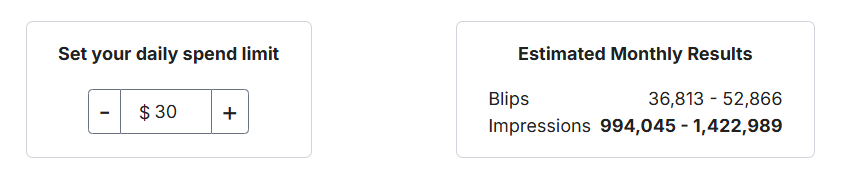
How much is a billboard near Short Hills?
Why Choose Blip for Billboard Advertising near Short Hills
-
Blip lets you launch Short Hills billboards yourself and target I-78, Route 24, or the Garden State Parkway without sales calls.
-
Set flexible budgets for Short Hills and reach affluent shoppers at the Mall at Short Hills, then scale up when results hit.
-
Use dayparting in Short Hills to catch 6:30-9:30 a.m. commuters and 4-8 p.m. return traffic on Newark and Elizabeth corridors.
-
No contracts means you can test Short Hills billboards during holiday shopping or back-to-school season, then pause anytime.
-
Blip's real-time analytics help Short Hills advertisers see which boards drive clicks, calls, and visits across Caldwell, Newark, and Elizabeth.
-
Quickly update creative for Short Hills families, luxury shoppers, or airport travelers with easy tools built for fast-turn billboard ads.
Frequently Asked Questions About Billboard Advertising near Short Hills
How much does a billboard cost near Short Hills, New Jersey with Blip?
With Blip, you control exactly what you spend on Short Hills billboards by setting a daily budget that can be adjusted anytime. Each ad “blip” is a 7.5 to 10-second spot on digital billboards near Short Hills, New Jersey, and you only pay for the blips you receive. Costs vary based on the time of day, the locations serving the Short Hills area, and real-time advertiser demand, so every budget level can get exposure.
Where can I advertise with Blip near Short Hills, New Jersey?
We have 12 digital billboards serving the Short Hills area, all within roughly 10 miles, strategically positioned in Caldwell, Newark, and Elizabeth. These locations tap into several of New Jersey’s busiest and most influential roadways, giving advertisers who want billboards near Short Hills multiple options to match their budget, timing, and targeting needs. Because these boards are digital, you can appear only on the screens, directions, and time windows that best match Short Hills-area traffic patterns.
What kind of people see Short Hills, New Jersey billboards?
The Short Hills area sits at the crossroads of some of New Jersey’s highest-income households, busiest commuter corridors, and most influential shopping destinations. Short Hills CDP has about 14,400–14,500 residents with a median household income comfortably above $250,000, and Millburn Township has roughly 21,000–22,000 residents with a median household income above $220,000. Many residents commute to Midtown and Downtown Manhattan or to corporate hubs in Newark, Jersey City, and along I-78/I-287.
When is the best time to run Blip ads near Short Hills, New Jersey?
Regional traffic patterns near Short Hills, Newark, and Elizabeth show clear weekday peaks and strong weekend shopping and airport flows. The morning commute from 6:30–9:30 a.m. is heavy outbound traffic, while the evening commute and early evening from 4–8 p.m. brings congestion and longer dwell times on digital boards. Saturday shopping and leisure from 10 a.m.–7 p.m. is also prime time for retail sales, seasonal promotions, and events.
Why should businesses advertise on billboards near Short Hills, New Jersey?
The combination of high income, strong retail draw, and heavy daily travel makes the Short Hills area uniquely well suited to out-of-home campaigns that drive both brand prestige and measurable response. National OOH studies routinely show digital billboard recall rates exceeding 50–60%, and audiences in affluent, commute-heavy markets like Short Hills tend to over-index on responsiveness to premium and service-oriented advertising. When you layer in precisely placed Short Hills billboards and nearby digital boards, your message can follow these audiences throughout their daily journeys.
Do I need a contract to advertise with Blip near Short Hills?
No, Blip has no long-term contracts or minimum commitments. You can start, pause, or stop your campaign at any time.
How fast can I launch a billboard campaign with Blip near Short Hills?
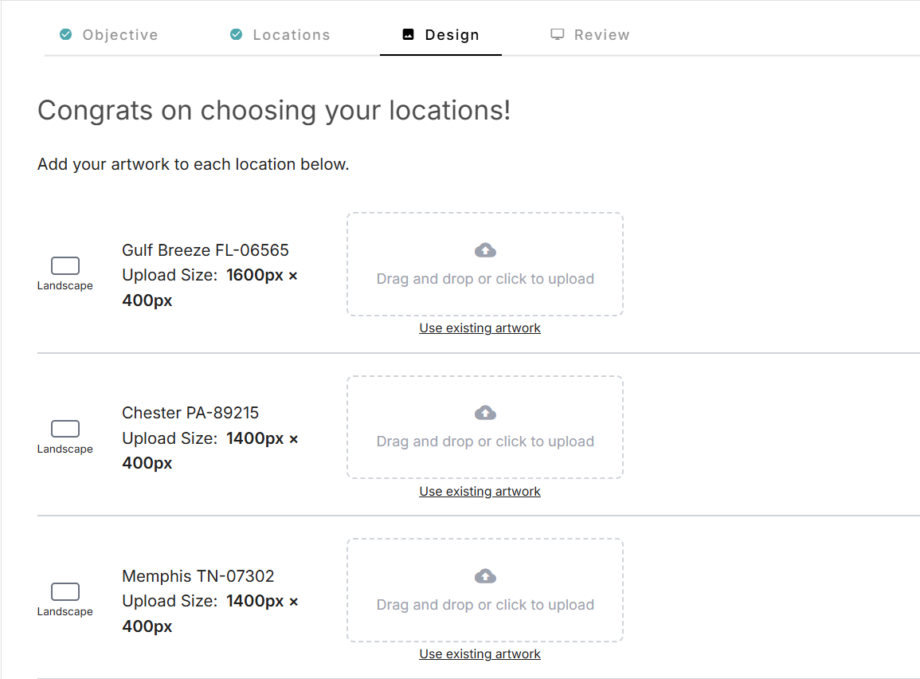
You can have your campaign live in minutes. Create a free account, select your locations, set your budget, upload your design, and start running once approved.
Where can I advertise with Blip near Short Hills?
Blip has digital billboards near Short Hills. You can browse available locations on a map, choose the ones that fit your audience, and start advertising right away.
Still have questions? Launch a campaign in minutes — no contracts, no commitments.
Start Your CampaignShort Hills Billboard Advertising Guide
Short Hills may be small on a map, but the Short Hills area sits at the crossroads of some of New Jersey’s highest-income households, busiest commuter corridors, and most influential shopping destinations. With 12 digital billboards in nearby Caldwell, Newark, and Elizabeth—each within about 10 miles—we can help you tap into this concentrated purchasing power with flexible, data‑driven campaigns that match real traffic and travel patterns. For brands specifically looking for billboards near Short Hills, these locations function like an extension of the local market, giving you Short Hills billboards–level visibility without paying Short Hills–core real estate prices.

The Short Hills Area Market at a Glance
The Short Hills area is part of Millburn Township
-
Population & income
- Short Hills CDP: about 14,400–14,500 residents packed into roughly 5 square miles, with a median household income comfortably above $250,000 and per‑capita income over $110,000, putting the community among the very highest earning in New Jersey.
- Millburn Township: roughly 21,000–22,000 residents and a median household income above $220,000, far higher than the New Jersey median (around $96,000). Nearly 70–75% of adult residents hold a bachelor’s degree or higher, supporting demand for professional services and premium brands. Details on community profile and services are highlighted by Millburn Township
- Essex County: around 860,000–870,000 residents, with more than 415,000 jobs spread across Newark, suburban office parks, healthcare institutions, and logistics hubs, according to county economic development summaries from Essex County government
-
Affluence & spending
- Typical home values in the Short Hills area are well above $1.5 million, and many properties sell in the $1.8–$3+ million range. In some neighborhoods, over 80% of homes are owner‑occupied, and annual property tax bills often exceed $25,000, signaling substantial discretionary spending power.
- Household retail spending levels in affluent New Jersey suburbs like Short Hills frequently run 2–3x state averages in categories such as jewelry, luxury apparel, home services, and travel.
- The Mall at Short Hills 150 stores, draws shoppers from across North Jersey and New York City and reports millions of visits annually. It is promoted as a key economic driver by Millburn Township
-
Commuter profile
- A large share of Short Hills‑area residents commute to Midtown and Downtown Manhattan or to corporate hubs in Newark, Jersey City, and along I‑78/I‑287. Regional planning data for similar inner‑ring suburbs show that 40–50% of employed residents work outside their home county.
- Many residents rely on the NJ TRANSIT rail line from the nearby Short Hills and Millburn stations, which sit on the Morris & Essex Lines, carrying tens of thousands of riders each weekday according to NJ TRANSIT system reports.
- Residents commonly report commute times in the 45–60 minute range, and more than 70% of workers in Essex and Union counties commute by car, truck, or van—meaning they regularly pass through high‑traffic roadways where our nearby billboards are located.
The combination of high income, strong retail draw, and heavy daily travel makes the Short Hills area uniquely well suited to out‑of‑home (OOH) campaigns that drive both brand prestige and measurable response. National OOH studies routinely show digital billboard recall rates exceeding 50–60%, and audiences in affluent, commute‑heavy markets like Short Hills tend to over‑index on responsiveness to premium and service‑oriented advertising. When you layer in precisely placed Short Hills billboards and nearby digital boards, your message can follow these audiences throughout their daily journeys.
Key Audience Segments in the Short Hills Area
Given the local demographics and commuting patterns, we can think about the Short Hills‑area audience in a few high‑value segments. Understanding these segments helps ensure your billboard advertising near Short Hills is tailored to the people most likely to respond:
-
Affluent families and professionals
- High dual‑income households with children, often in professional, financial, legal, technology, or healthcare roles. In comparable North Jersey communities, more than 40% of workers are in management, business, science, and arts occupations.
-
In towns like Millburn and Short Hills, it’s common to see:
- Household incomes of $250,000–$500,000+
- Luxury vehicle ownership rates well above 40% of households
- Annual household spending on financial services and insurance that’s 70–100% above national averages.
-
Strong demand for:
- Private education and enrichment (in high‑performing districts, 60–70% of students participate in extracurricular tutoring, test prep, or enrichment programs at some point in their K‑12 years)
- Financial services, wealth management, and real estate
- Premium home services (landscaping, renovations, design)
- Luxury auto, travel, and retail
- The Millburn Township Public Schools system, highlighted on the district site, consistently appears near the very top of New Jersey rankings. In many recent years, district graduation rates hover around 98–99%, and standardized test performance is significantly above state averages—drawing education‑focused families who respond to messages about tutoring, test prep, camps, and extracurriculars.
-
Luxury and destination shoppers
- Shoppers traveling to the Mall at Short Hills and nearby downtowns (Millburn, Summit, Livingston). Retail trade‑area studies typically show that more than 50% of visitors to the mall come from outside Millburn Township, and a significant share cross county lines.
- Many come from Union, Morris, and even New York City via I‑78, Route 24, and the Garden State Parkway; these approaches collectively handle several hundred thousand vehicles per day (see NJDOT statistics below).
-
Luxury centers like the Mall at Short Hills often report:
- Average household incomes in their core trade area exceeding $175,000
- Per‑visit spending 30–50% higher than regional averages
-
Ideal for:
- Luxury retail and jewelry
- Upscale dining
- Beauty, medical aesthetics, and wellness
-
Regional commuters
- Residents of Newark, Elizabeth, Union, and neighboring towns commuting past Short Hills‑area corridors. Cities such as Newark (about 310,000 residents, per City of Newark) and Elizabeth (about 140,000 residents, per City of Elizabeth 100,000 local jobs.
-
A significant mid‑ to upper‑middle‑income segment:
- Median household incomes in many nearby suburbs run in the $80,000–140,000 range.
- Household car ownership exceeds 90% in many commuter towns feeding into I‑78, the Garden State Parkway, and the Turnpike.
-
Excellent for:
- Higher education
- Healthcare systems
- Insurance and financial products
- Automotive dealers and services
-
Airport and logistics travelers
- Proximity to Newark Liberty International Airport, managed by the Port Authority of NY & NJ, means steady flow of business travelers, hospitality patrons, and logistics workers on the Turnpike and I‑78.
- Newark Liberty handled on the order of 45–50 million passengers per year in recent years, plus well over 1 million tons of air cargo annually, creating continuous demand for transportation, hospitality, and staffing services.
- The surrounding warehouse and distribution districts in Newark and Elizabeth support tens of thousands of logistics and industrial jobs, with shift changes that keep traffic steady outside traditional rush hours.
-
Strong opportunity for:
- Hotels, parking, rideshare, and airport services
- B2B logistics and staffing
- Tourist attractions in New Jersey and NYC (aligned with Visit New Jersey travel patterns and North Jersey tourism campaigns)
When we plan creative and flighting for digital billboards serving the Short Hills area, tailoring messages to these segments can boost engagement metrics significantly; industry data shows tailored OOH creative can deliver 20–30% higher recall and response compared with generic messaging. This audience‑first approach is especially important when you’re investing in billboard rental near Short Hills and want each impression to work harder.
Where Our Nearby Billboards Reach Short Hills Audiences
We have 12 digital billboards serving the Short Hills area, all within roughly 10 miles, strategically positioned in:
- Caldwell, NJ (about 8.3 miles from Short Hills) – an affluent western Essex community of roughly 25,000 residents (including neighboring West Caldwell and North Caldwell), with strong connections via Route 280; learn more from the Borough of Caldwell.
- Newark, NJ (about 8.7 miles from Short Hills) – New Jersey’s largest city, with more than 310,000 residents and over 50,000 students across its colleges and universities, per City of Newark.
- Elizabeth, NJ (about 8.8 miles from Short Hills) – the county seat of Union County, hosting the Port Newark–Elizabeth Marine Terminal and more than 5,000 businesses, as described by the City of Elizabeth
These locations tap into several of New Jersey’s busiest and most influential roadways, giving advertisers who want billboards near Short Hills multiple options to match their budget, timing, and targeting needs:
-
I‑78 and Route 24 corridor (west–east)
- Connects suburban Morris/Union/Essex counties to Newark and New York City.
- NJ Department of Transportation (NJDOT) data for recent years often shows I‑78 segments near Newark carrying around 130,000–150,000 vehicles per day; even modest directional campaigns here can generate hundreds of thousands of weekly impressions.
- Route 24 near its I‑78 interchange typically sees 70,000–90,000 vehicles per day, serving commuters from towns like Summit, Chatham, and Madison into the Short Hills area and beyond.
- This corridor is a major path for Short Hills‑area commuters and Mall at Short Hills visitors, as well as regional shoppers headed to big‑box centers and office parks.
- Reference volumes and map layers using NJDOT traffic count resources
-
Garden State Parkway & NJ Turnpike (north–south)
- Near Elizabeth and Newark, segments of the Garden State Parkway frequently exceed 180,000–200,000 vehicles per day, including a mix of commuters, shoppers, and vacation traffic, according to the New Jersey Turnpike Authority
- The New Jersey Turnpike (I‑95) near Newark/Elizabeth reliably posts over 140,000 vehicles per day in NJDOT counts, a key route for long‑haul trucking and regional business travel.
- These routes give your message reach to drivers from southern and central New Jersey heading toward the Short Hills area, Newark, and New York. A conservative planning assumption of 1.2–1.5 occupants per vehicle suggests potential daily audience exposures well into the hundreds of thousands on peak days.
-
Local and regional connectors (Route 280, local arterials)
- Route 280, linking west Essex towns like Caldwell to Newark, typically sees 70,000–90,000 vehicles per day around key interchanges—capturing affluent commuters, college students, and healthcare workers.
- Local arterials in our Caldwell locations capture consistent traffic between western Essex suburbs and major employment centers. In many segments, daily traffic counts range from 15,000–30,000 vehicles, which is ideal for targeted, higher‑frequency digital billboard rotations.
Because these boards are digital, you can appear only on the screens, directions, and time windows that best match Short Hills‑area traffic patterns, rather than paying for a full‑time static presence. Advertisers commonly achieve tens of thousands of targeted impressions per day in corridors like these on modest budgets, with the flexibility to ramp up during key seasons. If you’re testing billboard rental near Short Hills for the first time, this flexibility makes it easy to start small, see what works, and then scale.
For context on the regional road network and planning environment, it’s useful to review:
- Millburn Township transportation and planning
- Essex County government
- NJDOT traffic count resources
Timing Your Campaign: When Impressions Peak
To reach the Short Hills area efficiently, timing is as important as location. Blip lets you purchase digital “blips” in specific time blocks, so we can align your spending with the busiest—and most valuable—moments. This applies whether you’re running region‑wide creative or a more localized Short Hills billboards campaign.
Regional traffic patterns near Short Hills, Newark, and Elizabeth show clear weekday peaks and strong weekend shopping and airport flows.
Weekday patterns
-
Morning commute (6:30–9:30 a.m.)
- Heavy outbound traffic toward Newark, Jersey City, and NYC, especially on I‑78 and Route 24. In this window, many highway segments carry 40–45% of their daily traffic volume.
-
Great for:
- Coffee, breakfast, gyms, and quick‑service restaurants near commuter routes
- Financial services and B2B brands planting a “top‑of‑mind” seed before the workday
- Education and healthcare messaging timed to when parents plan for their families’ schedules
-
Midday (11 a.m.–2 p.m.)
-
Strong for:
- Mall at Short Hills shoppers and lunch crowds heading to downtown Millburn and nearby town centers like Summit and Livingston
- Local services (medical, dental, beauty, car care) where same‑day decisions happen; in many service businesses, 20–30% of appointments are booked same‑day or day‑before
- Midday traffic volumes are typically 60–70% of peak, but dwell times near shopping exits often increase as drivers slow for turns and parking.
-
Strong for:
-
Evening commute and early evening (4–8 p.m.)
- Congestion brings slower speeds and longer dwell times on digital boards, particularly near Newark and Elizabeth. For many commuters, evening trips take 10–25% longer than morning trips, amplifying billboard exposure.
-
Ideal for:
- Restaurants, grocery and prepared foods—categories that often see 30–40% of daily sales in late afternoon and evening
- Streaming, entertainment, and family activities
- After‑school programs and kids’ activities, especially around sports seasons and performance calendars
Weekend patterns
-
Saturday shopping & leisure (10 a.m.–7 p.m.)
- The Mall at Short Hills, downtown Millburn, and nearby towns see strong weekend traffic. Regional mall studies show Saturdays can account for 20–25% of a week’s in‑person visits.
- Many drivers pass through our nearby corridors en route to retail, entertainment, or dining. Weekend leisure trips often span 15–20 miles from home, extending your reach beyond core zip codes.
-
This is prime time for:
- Retail sales, seasonal promotions, and events
- Attractions, museums, and family venues across New Jersey
-
Sunday travel & airport flow
- Travelers to and from Newark Liberty International Airport swell traffic volumes, especially late afternoon and evening when return flights peak. On busy travel Sundays, passenger volumes can run 10–20% above weekday averages.
-
Excellent for:
- Airport parking, hotels, and car services
- Travel insurance, mobile apps, and tourist experiences
- Restaurant and entertainment offers targeting returning travelers and their families
Using Blip’s scheduling, we can concentrate your impressions into the windows that match your target audience—e.g., weekday rush hours to target professionals, or weekends to reach family shoppers near Short Hills. Many advertisers find that concentrating 60–80% of their budget into their top 3–4 dayparts delivers the best cost‑per‑result, especially when testing new billboard advertising near Short Hills and wanting quick, measurable feedback.
Crafting Effective Creative for the Short Hills Area
The visual and verbal cues that work best near Short Hills reflect its upscale, time‑sensitive, and often brand‑conscious audiences. In affluent commuter markets, eye‑tracking and recall studies show that clean, simple digital billboard designs can achieve 20–40% higher recall than cluttered ones.
1. Design for fast, high‑end impact
- Keep copy to 7 words or fewer whenever possible—drivers typically have only 6–8 seconds of viewing time at highway speeds.
- Use clean, premium‑feeling layouts with strong contrast.
-
Choose typefaces and colors consistent with luxury or professional brands:
- For high‑end retail/real estate: neutral palettes (white, black, gold, navy) and minimalism, which perform well in surveys of high‑income shoppers.
- For family and education: brighter colors, but still polished, with clear, legible fonts at 18–24 inches equivalent letter height on large digital faces.
2. Lead with value and proximity
Because many people commute through the area:
-
Emphasize time and convenience:
- “10 minutes from the Mall at Short Hills”
- “Off Exit XX – Tonight Only”
-
Use clear calls to action that are easy to recall:
- Short URLs (e.g., Brand.com/ShortHills)
- Memorable phone numbers or QR codes for slower‑moving traffic corridors; in slower urban segments, QR scans can account for 5–10% of digital billboard‑driven responses.
3. Reflect local identity
Residents are proud of local institutions and lifestyle. You can:
- Reference the Mall at Short Hills, Millburn‑Short Hills community, or area school pride (e.g., “Serving Millburn‑Short Hills families since 1998”).
- Highlight affiliations with local organizations such as the Millburn‑Short Hills Chamber of Commerce or mentions in regional press like NJ.com Millburn/Short Hills Patch.
4. Adapt creative by direction and time
With digital, you can rotate multiple creatives:
-
Morning commuters toward Newark/NYC:
- “Schedule your weekend showroom visit”
- “Plan your child’s summer camp now”
-
Evening traffic heading back toward the Short Hills area:
- “Tonight: Dinner 5 minutes from home”
- “Last chance to enroll before school starts”
Use A/B testing—two or three variants of the same campaign—to see which message drives more website visits, search queries, or promo‑code use. Many advertisers find that a winning creative can outperform weaker variants by 30–50% on key metrics such as direct traffic or coupon redemptions. This data can guide your longer‑term strategy if you plan to maintain an ongoing presence with Short Hills billboards or rotate offers seasonally.
Strategy Ideas by Industry
Because of the area’s profile, some verticals particularly benefit from billboards serving the Short Hills market.
Real estate & home services
- Short Hills‑area home values are well above $1 million, and in many neighborhoods the median list price exceeds $1.7–2.0 million. High‑end households commonly invest 1–3% of home value per year in improvements and maintenance.
-
Use:
- High‑end photography of homes and interiors.
- Proof points like “Over $100M in local homes sold” or “Serving Millburn‑Short Hills since 2005.”
- Geographic targeting: reference Millburn, Short Hills, Summit, Livingston, and Maplewood to signal local expertise.
- For contractors and design firms, highlighting “completed 250+ local projects” or similar metrics can build immediate credibility with data‑conscious homeowners.
Education & enrichment
- With top‑ranked public schools and heavy emphasis on achievement, education businesses thrive. In high‑performing North Jersey districts, 80–90% of graduates go on to 4‑year colleges, and families often spend thousands per year on supplemental education.
-
Ideal advertisers:
- Test prep, tutoring, STEM camps, language schools, arts and music programs.
-
Strategy:
-
Time campaigns around:
- Spring (test prep, AP/college entrance)—when standardized testing participation and tutoring demand often spike 20–30%
- Late summer (back‑to‑school, enrichment signups)—a critical window when half or more of annual enrollments for some programs are decided.
-
Use concise CTAs:
- “Summer STEM Camp – Grades 3–8”
- “SAT Scores +150 Pts on Average”
-
Time campaigns around:
Healthcare & medical specialties
-
Short Hills‑area residents often seek premium care in:
- Dermatology, pediatrics, orthodontics, fertility, orthopedics, and concierge medicine.
- Essex and Union counties together host dozens of major hospitals and specialty centers, employing more than 60,000 healthcare workers, with many facilities in Newark, Livingston, and Summit.
-
Focus creatives around:
- Board certifications
- Short wait times (e.g., “Same‑week appointments”
- Access to top regional hospitals in Newark and beyond
- Healthcare campaigns that feature clear benefits and easy appointment access often see 15–25% increases in inquiry volume during billboard flights compared with baseline periods.
Luxury retail, auto, and services
- Many Short Hills‑area consumers purchase luxury brands and vehicles; in nearby affluent zip codes, premium brands can account for 40–50% of new vehicle registrations.
-
Strategies:
-
Rotate “event” creatives during:
- Holiday shopping season (November–December, when some luxury categories see 25–30% of annual sales)
- New model year launches
- Special trunk shows or exclusive collections
- Combine digital billboards near Newark/Elizabeth with geo‑targeted mobile ads to reinforce exposure; cross‑channel OOH plus mobile strategies have been shown to lift ad recall by up to 2x versus single‑channel campaigns.
-
Rotate “event” creatives during:
B2B & recruiting
- Nearby Newark, Elizabeth, and the airport area host major logistics, corporate, and healthcare employers. Port and airport‑related zones around Newark and Elizabeth alone support tens of thousands of jobs.
-
Use billboards to:
- Recruit high‑skill workers commuting across Essex and Union counties.
- Promote staffing firms and training programs.
- Drive awareness for conferences and trade events in Newark or Jersey City, leveraging downtown venues promoted by the Newark Alliance
- Simple “Now Hiring – Up to $XX/hr + benefits” messages on key commuter routes can produce quick spikes in applications; many recruiters report 20–40% of new applicants citing roadside signage as a discovery source in industrial zones.
Using Blip Tools to Optimize Your Short Hills‑Area Campaign
Blip’s flexibility is especially powerful for a market as concentrated and schedule‑driven as the Short Hills area, and it’s ideal if you’re testing billboard rental near Short Hills without committing to long‑term static contracts.
1. Start with a focused daily budget
- Many advertisers begin with a daily budget as low as $10–20, then scale to $50–100+ per day as they see results.
- On high‑traffic corridors like I‑78 or the Garden State Parkway, even a $20–30/day test can deliver thousands to tens of thousands of impressions per day, depending on bid levels and competition.
-
Allocate more budget on:
- Thursday–Sunday for retail and restaurants, which often see 55–65% of weekly revenue during these days.
- Monday–Friday rush hours for B2B, education, and financial services.
2. Target by time of day and days of week
-
Use dayparting to:
- Focus on weekday 6–9 a.m. and 4–7 p.m. for commuters.
- Emphasize Saturday midday for mall and local shopping.
-
Run experimental “bursts”:
- Two weeks of heavy exposure, then a light “maintenance” schedule. For example, run at 2–3x your normal daily budget during key enrollment or sale weeks, then scale back while maintaining presence.
3. Rotate creatives strategically
-
Load 3–6 creatives into a Short Hills‑area campaign:
- Variant A: Brand awareness
- Variant B: Offer or promotion
- Variant C: Event or seasonal message
- Industry benchmarks suggest campaigns with at least 3 creative variations often see 10–20% better performance because they reduce fatigue among frequent commuters.
-
Monitor which variant coincides with spikes in:
- Direct website visits (type‑in traffic)
- Brand searches (via tools like Google Trends or your analytics)
- Store visits or calls
4. Use location reporting and local feedback
-
Correlate which boards (Caldwell vs. Newark vs. Elizabeth) and times produce the most:
- Form fills
- Coupon redemptions
- Walk‑ins mentioning the billboard
- Ask new customers, “Where did you hear about us?” and track “billboard near Newark/Short Hills” responses. Aim for at least 10–20% of new customers to reference your billboard during active flights as a sign of strong attribution.
- Supplement this with simple region‑level reports from platforms like Google Analytics to see percentage lifts in key metrics during your campaigns.
Seasonal, Weather, and Event‑Based Opportunities
The Short Hills area has strong seasonality that you can mirror with your flights. Local calendars and tourism trends from Visit New Jersey and Essex County show consistent spikes around holidays, school milestones, and outdoor seasons. Adapting your billboard advertising near Short Hills to these rhythms helps keep your messaging timely and relevant.
Seasonal rhythms
-
Back‑to‑school (August–September)
- Excellent for education, clothing, sports programs, and healthcare checkups. Retailers often see 15–25% of annual clothing and school‑related sales in this short window.
- Promote physicals, eye exams, and dentistry as families prepare for school requirements.
-
Holiday season (November–December)
- The Mall at Short Hills is a major luxury destination; malls across New Jersey typically log 20–30% of yearly sales during this period.
- Traffic increases not only at the mall, but also on feeder roads and highways; some segments see 10–20% higher weekend volumes.
-
Promote:
- Gift guides
- Limited‑time offers
- Holiday events and performances advertised through township channels such as Millburn Township’s community calendar
-
Spring & early summer (April–June)
- Home improvement, real estate listing season, landscaping, and outdoor living.
- Local real estate data often show 30–40% of annual listings hitting the market in this window.
- Rotating “before and after” home imagery performs especially well for contractors, landscapers, and pool companies.
Weather‑responsive concepts
While Blip doesn’t automatically change creative based on weather, you can plan:
- “Heat wave” messages for HVAC, pools, and ice cream shops around periods where temperatures exceed 85–90°F.
- Snow and winter storm messaging for auto service, snow removal, or delivery, especially on high‑volume winter travel days when accident and breakdown rates can spike 10–15%.
Events and local news tie‑ins
Stay aligned with local calendars and news sources:
-
Check Millburn Township’s community calendar Millburn/Short Hills Patch for:
- Street fairs and festivals
- School events and graduations (local graduations can generate surges of hundreds to thousands of visitors on single days)
- Regional sports playoffs and major events in Newark or at nearby venues
-
Launch short, high‑frequency campaigns around these events:
- “After the game, celebrate with us – 10% off tonight”
- “Visit us before the Short Hills street fair”
- Local event‑driven bursts of 3–7 days often deliver noticeable, trackable spikes in traffic and sales when combined with a compelling limited‑time offer. These are perfect use cases for flexible billboard rental near Short Hills, allowing you to turn exposure on and off around specific community moments.
Measuring Success and Iterating
To make the most of billboards serving the Short Hills area, we recommend building a simple measurement framework from day one. Advertisers who actively measure and iterate can improve campaign ROI by 25–50% over the first few months.
1. Establish clear goals
Carefully define what success means:
-
Brand awareness:
- Increase in branded search volume or direct website traffic by 10–20% over a baseline period.
- Lift in unaided brand recall when you survey customers (aim for 5–10 percentage‑point improvements).
-
Leads or appointments:
- Target 5–20 more calls per week or 10–30 extra form submissions per month during campaign weeks, depending on your baseline.
-
In‑store traffic:
-
Track foot traffic with:
- Point‑of‑sale data
- Coupon or promo‑code use
- Simple “mention this billboard for…” incentives
- For many local businesses, getting even 1–3 additional transactions per day from a campaign can cover and exceed media costs.
-
Track foot traffic with:
2. Use trackable offers and URLs
- Create a landing page like
yourbrand.com/shorthillsand track traffic, conversions, and bounce rate. -
Use simple promo codes:
- “Mention SHORT HILLS for 10% off”
- “Use code MILLBURN at checkout”
- Where possible, segment analytics by geography, looking for lifts in traffic from Essex, Union, and Morris counties during your campaign period.
3. Compare pre‑, during‑, and post‑campaign data
- Measure at least 2–4 weeks of “before” data if possible.
-
Run your Short Hills‑area campaign for 4–8 weeks, then compare:
- Sales
- Leads
- Web metrics (sessions, conversions, call clicks)
-
Adjust:
- Budget (increase on days/times that perform best; some advertisers ultimately concentrate 70–80% of budget into their top two performing dayparts)
- Creatives (phase out low‑performing messages; keep those delivering higher conversion rates)
- Geographic emphasis (e.g., more weight on Newark vs. Caldwell boards depending on where you see higher response)
By combining the Short Hills area’s exceptional demographics with nearby high‑traffic digital billboards in Caldwell, Newark, and Elizabeth, we can build campaigns that punch far above their weight in terms of influence and ROI. With precise scheduling, carefully crafted creative, and ongoing optimization, advertisers of all sizes—local boutiques, regional healthcare systems, national brands, and more—can use Blip to effectively reach and persuade Short Hills‑area audiences. For any marketer evaluating billboards near Short Hills or broader billboard advertising near Short Hills, this approach turns the area’s high incomes, dense commuter flows, and strong retail draw into measurable business outcomes.