Billboards near Ridgefield Park, NJ
No Minimum Spend. No Long-Term Contracts. Just Results.
Trusted by Leading Brands


Billboard advertising
near Ridgefield Park has never been easier
How much is a billboard near Ridgefield Park?
Why Choose Blip for Billboard Advertising near Ridgefield Park
-
Blip lets Ridgefield Park brands launch fast on I-95, I-80, and US-46 commuter corridors—no agency delays, just self-serve control.
-
Set a flexible budget for Ridgefield Park and pay only for the blips you need, whether you're testing local reach or scaling across Bergen County.
-
Use dayparting in Ridgefield Park to hit Manhattan-bound mornings and evening return traffic, plus weekend shoppers heading to Hackensack and Secaucus.
-
No contracts with Blip means Ridgefield Park advertisers can pivot around Meadowlands games, holiday shopping, or local school events anytime.
-
Track real-time results in Ridgefield Park and shift spend toward the boards driving clicks, calls, and commuter traffic near the George Washington Bridge.
-
Blip's creative tools help Ridgefield Park ads stay clear and bold for dense, bilingual North Jersey audiences on the move.
Frequently Asked Questions About Billboard Advertising near Ridgefield Park
How much does a billboard cost near Ridgefield Park, New Jersey with Blip?
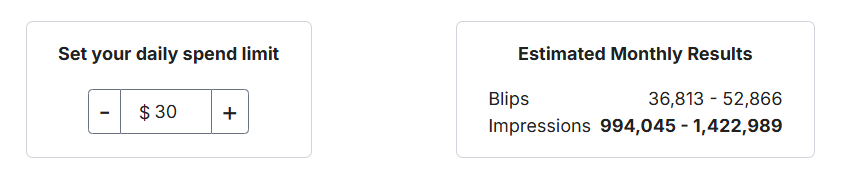
With Blip’s flexible, pay-per-blip model, you control exactly what you spend on Ridgefield Park billboards by setting a daily budget that fits your marketing goals, whether you’re testing the waters or scaling up a proven message. Each 7.5 to 10-second blip on digital billboards near Ridgefield Park, New Jersey is priced based on when and where your ad appears and current advertiser demand, and you only pay for the blips you receive. With Blip, you can start on any budget, adjust it at any time, and let the platform automatically manage your spend while your message runs on eye-catching billboards serving the Ridgefield Park area.
Where can I advertise with Blip in Ridgefield Park, New Jersey?
The Ridgefield Park area sits at the crossroads of North Jersey and New York City, making it one of the most efficient places to reach both local residents and daily commuters. With 168 nearby digital billboards serving the Ridgefield Park area through Blip, advertisers can tap into dense traffic, strong household incomes, and constant cross-river movement between Bergen County and Manhattan. This cluster of billboards near Ridgefield Park allows campaigns to scale from hyper-local awareness to broader regional impact with a single, coordinated buy.
Why are Ridgefield Park, New Jersey billboards a strong option for local advertising?
Ridgefield Park is a historic village in Bergen County with roughly 13,000–13,500 residents and easy access to major regional highways and transit. Dense populations near major roadways help ensure high impressions per board, and make Ridgefield Park billboards especially efficient for cost-per-impression-focused campaigns. Bergen County as a whole has about 950,000–960,000 residents, so campaigns near Ridgefield Park also reach surrounding communities and commuters heading to and from Manhattan, Jersey City, and the Meadowlands.
When is the best time to run Blip billboards in Ridgefield Park, New Jersey?
The Ridgefield Park area experiences classic commuter peaks plus strong weekend retail flows. In North Jersey commuter markets, weekday morning and evening peaks often account for 50–60% of total weekday traffic on major highways, with weekend volumes sometimes reaching 90–100% of weekday levels near malls, outlets, and stadiums. With Blip, we can bid for specific times of day and days of the week to match these patterns, optimizing your billboard rental near Ridgefield Park so you pay for impressions when your audience is most likely to be on the road.
Who do Ridgefield Park, New Jersey billboards reach besides local residents?
Campaigns near Ridgefield Park reach local Ridgefield Park households, surrounding Bergen County communities like Bogota, Hackensack, Lodi, Maywood, and Ridgefield, and commuters heading to and from Manhattan, Jersey City, and the Meadowlands. The area also benefits from strong road and transit patterns, including heavy traffic on nearby interstates and steady exposure from NJ Transit bus routes and rail lines. This combination makes the Ridgefield Park area particularly strong for commuter-focused offers, NYC-oriented services, and daily-needs brands.
Do I need a contract to advertise with Blip near Ridgefield Park?
No, Blip has no long-term contracts or minimum commitments. You can start, pause, or stop your campaign at any time.
How fast can I launch a billboard campaign with Blip near Ridgefield Park?
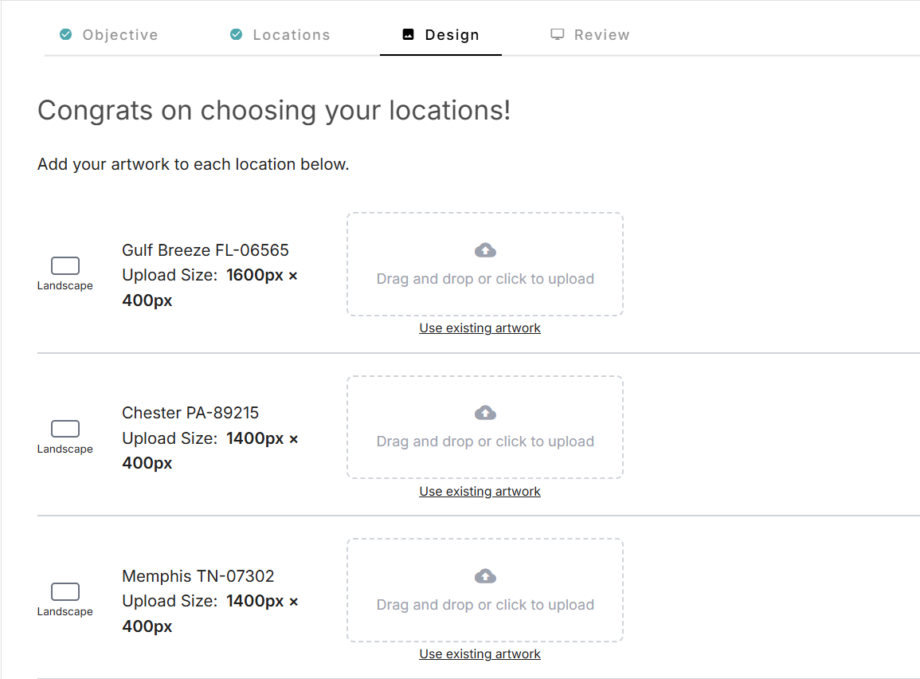
You can have your campaign live in minutes. Create a free account, select your locations, set your budget, upload your design, and start running once approved.
Where can I advertise with Blip near Ridgefield Park?
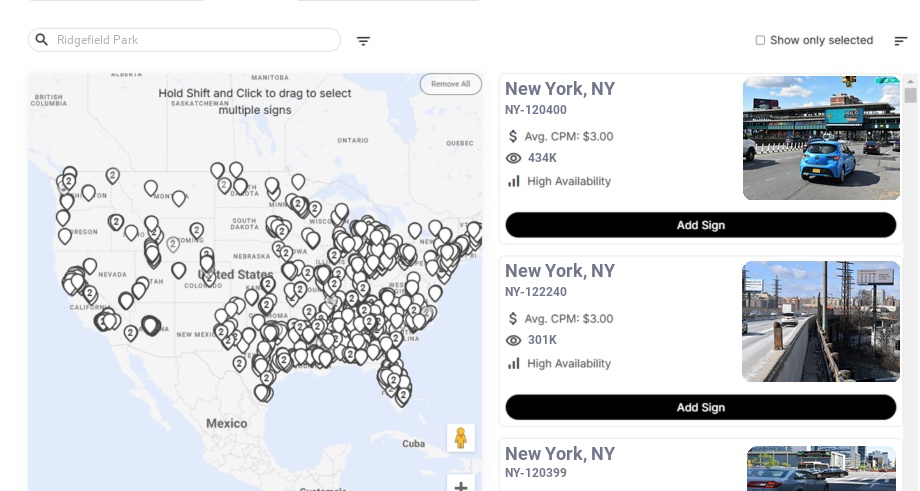
Blip has digital billboards near Ridgefield Park. You can browse available locations on a map, choose the ones that fit your audience, and start advertising right away.
Still have questions? Launch a campaign in minutes — no contracts, no commitments.
Start Your CampaignRidgefield Park Billboard Advertising Guide
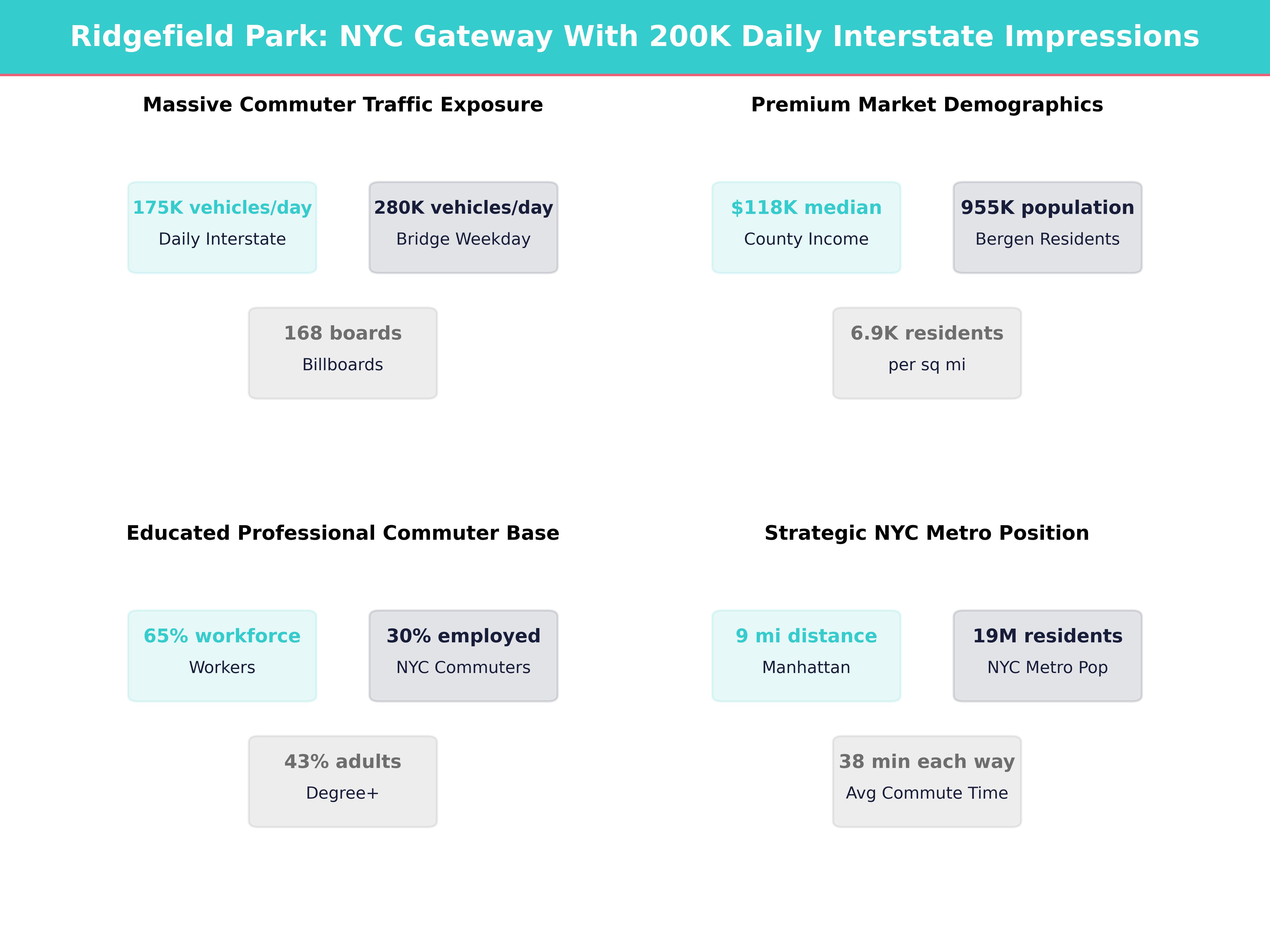
The Ridgefield Park area sits at the crossroads of North Jersey and New York City, making it one of the most efficient places to reach both local residents and daily commuters. With 168 nearby digital billboards serving the Ridgefield Park area through Blip, advertisers can tap into dense traffic, strong household incomes, and constant cross‑river movement between Bergen County and Manhattan. This cluster of billboards near Ridgefield Park allows campaigns to scale from hyper‑local awareness to broader regional impact with a single, coordinated buy.
Why the Ridgefield Park Area Is a High-Impact OOH Market
Ridgefield Park is a historic village in Bergen County with roughly 13,000–13,500 residents and easy access to major regional highways and transit. The Village of Ridgefield Park 1.9 square miles, which means a population density of roughly 6,800–7,000 residents per square mile—much denser than the New Jersey average of around 1,300 residents per square mile. Dense populations near major roadways help ensure high impressions per board, and make Ridgefield Park billboards especially efficient for cost‑per‑impression–focused campaigns.
Bergen County as a whole has about 950,000–960,000 residents and is New Jersey’s most populous county, according to the County of Bergen. That means campaigns near Ridgefield Park reach:
- Local Ridgefield Park households
- Surrounding Bergen County communities like Bogota, Hackensack, Lodi, Maywood, and Ridgefield
- Commuters heading to and from Manhattan, Jersey City, and the Meadowlands
A few data points that make the Ridgefield Park area especially attractive:
- Affluent households: Bergen County’s median household income is around $115,000–$120,000, and several nearby communities such as Ridgefield and Maywood commonly report median household incomes in the $90,000–110,000 range. This income profile supports higher‑value categories like auto, healthcare, financial services, education, and home improvement and rewards well‑targeted billboard advertising near Ridgefield Park.
- NYC proximity: Downtown Ridgefield Park is about 8–10 miles from Midtown Manhattan via the George Washington Bridge or Lincoln Tunnel corridors. In many North Jersey towns, 25–35% of employed residents commute to jobs in New York City or Hudson County, expanding your reach far beyond the village itself.
- Strong road network: The New Jersey Department of Transportation (NJDOT), notes that the New Jersey Turnpike (I‑95), I‑80, US‑46, and Routes 1&9 all run near the Ridgefield Park area, supporting some of the highest traffic volumes in the state. New Jersey Department of Transportation traffic counts on nearby interstate segments frequently exceed 150,000–200,000 vehicles per day, creating a deep pool of daily impressions.
With 168 digital billboards located in nearby cities like Bogota (0.9 miles away), Ridgefield (1.6 miles), Hackensack (2.8 miles), North Bergen (5.5 miles), Secaucus (5.9 miles), Weehawken (6.3 miles), New York City (about 8.2 miles), and Jersey City (8.9 miles), Blip lets us blanket the Ridgefield Park area with targeted coverage. This multi‑city footprint means you can reach hundreds of thousands of potential viewers across a typical week with a carefully timed schedule whenever you need billboards near Ridgefield Park without being limited to a single board inside the village limits.
For background on the broader regional context, see the Bergen County Division of Economic Development, which highlights the county’s diverse business base and high‑income consumer market.
Understanding Local Audience & Commuter Patterns
To build an effective campaign, it helps to understand who is traveling through the Ridgefield Park area and when, especially if you are planning billboard rental near Ridgefield Park as part of a larger media mix.
Demographics and lifestyle
- Ridgefield Park and nearby Bergen County communities are highly diverse and family‑oriented, with a mix of long‑time residents and newer arrivals who work in Manhattan, Hudson County, or at regional corporate campuses. Bergen County’s age structure is balanced, with roughly 22–24% of residents under age 18 and 16–18% age 65+, helping support both youth‑focused and senior‑focused services.
- A significant share of residents are renters and condo owners in multi‑family buildings along major corridors. In many nearby Hudson and Bergen County municipalities, rental housing accounts for 45–60% of occupied units—far higher than the national average. That makes roadside media particularly powerful because many homes do not have traditional yard signage opportunities and residents are more likely to notice public‑space advertising on their daily routes.
- High educational attainment and white‑collar employment mean messaging can support premium products, financial services, higher education, and professional services. In much of the North Jersey/NYC commuter belt, 40–45% of adults hold a bachelor’s degree or higher, and 60–70% of workers are employed in management, professional, office, or service occupations—audiences that respond to convenience, time savings, and quality cues.
Local news outlets such as NorthJersey.com regularly profile the Ridgefield Park and Bergen County lifestyle, including dining, schools, and neighborhood events, and can be a good reference for tone and local interests that you can reflect on Ridgefield Park billboards and nearby boards.
Commuter dynamics
According to the Port Authority of New York and New Jersey, the George Washington Bridge carries around 270,000–290,000 vehicles per average weekday and more than 100 million vehicles per year, making it one of the busiest bridges in the world. Many of those vehicles originate in or pass near the Ridgefield Park area via:
- New Jersey Turnpike / I‑95
- I‑80
- US‑46
- Local connectors through Bogota, Ridgefield, Hackensack, and North Bergen
The NJ Turnpike Authority 160,000–200,000 vehicles per day, and I‑80 around Hackensack and Lodi often exceeds 130,000 vehicles per day. Even if only a fraction of those trips intersect your chosen billboards, the potential daily impressions are substantial.
Layer on NJ Transit bus routes and rail lines (detailed at NJ Transit) funneling riders into park‑and‑ride facilities near the area, and you get a steady stream of both drivers and transit users exposed to digital billboards. Hudson‑Bergen and Bergen‑to‑Manhattan bus routes can carry tens of thousands of riders per weekday, many of whom pass the same roadside signage every commuting day.
This combination makes the Ridgefield Park area particularly strong for:
- Commuter‑focused offers (coffee, quick service restaurants, convenience stores, gas, car washes)
- NYC‑oriented services (law firms, healthcare, cosmetic services, language schools, test prep, arts and events)
- Daily‑needs brands (grocers, pharmacies, local retailers)
For a sense of regional commuting patterns and employment hubs, consult the North Jersey Transportation Planning Authority
Key Corridors and Nearby Cities to Target
Blip’s 168 digital billboards serving the Ridgefield Park area are distributed across critical neighboring cities, each tapping into distinct traffic flows. Together, they function like a flexible network of Ridgefield Park billboards even when some individual structures stand just outside the village line.
Bogota & Ridgefield (0.9–1.6 miles away)
Bogota and Ridgefield sit directly adjacent to Ridgefield Park and share key river crossings and arterial roads. Combined, they add roughly 20,000–23,000 additional residents to your hyper‑local audience. Traffic along local connectors and US‑46 can easily exceed 30,000–40,000 vehicles per day, depending on the segment, according to typical NJ Department of Transportation counts.
These immediate neighbors capture:
- Short local trips for school drop‑offs, grocery runs, and neighborhood services
- Traffic crossing the Hackensack River and heading toward US‑46, I‑80, and I‑95
Use nearby Bogota and Ridgefield boards to push:
- Local restaurants, salons, gyms, and medical offices
- Community events, school programs, and local government or nonprofit campaigns
Check municipal sites like the Borough of Bogota and the Borough of Ridgefield for school calendars, community events, and local initiatives that you can reference or time your campaigns around.
Hackensack & Lodi (2.8–3.0 miles away)
Hackensack is a major county seat with the City of Hackensack highlighting ongoing downtown development, court complexes, and the Hackensack University Medical Center. Hackensack alone has roughly 46,000–47,000 residents and serves as the administrative hub for a county of nearly one million people. Daily daytime population swells significantly due to the county courthouse complex, county offices, and one of the region’s largest medical centers.
Lodi, with around 25,000–26,000 residents, adds residential and retail traffic and sits directly on I‑80, where traffic can exceed 120,000–140,000 vehicles per day. Together, these communities funnel large numbers of workers, patients, shoppers, and jurors across your boards.
These boards are ideal for:
- Healthcare providers and specialists
- Legal and professional services
- Big‑ticket retail and auto dealerships
The Hackensack University Medical Center
Maywood & Woodland Park (3.7–9.9 miles away)
Maywood is a compact borough of about 10,000–10,500 residents just west of Hackensack, with direct access to major shopping and healthcare hubs. Woodland Park, farther west in Passaic County, adds another 11,000–12,000 residents and sits astride key I‑80 and Route 46 corridors.
These communities attract shoppers to regional retail centers and serve as feed corridors for I‑80 traffic, where average daily traffic often surpasses 100,000–120,000 vehicles west of the Hackensack area.
Focus here on:
- Regional retail campaigns (malls, furniture, appliances)
- Home services targeting single‑family homeowners
For retail‑oriented campaigns, you can time messaging to align with shopping seasons at nearby centers featured on local tourism and business sites such as VisitNJ.org and the Bergen County Division of Economic Development.
Hudson County: North Bergen, Secaucus, Weehawken, Jersey City (5.5–8.9 miles)
Hudson County’s riverfront and Meadowlands area form a dense urban and job center, with Hudson County’s total population exceeding 700,000 residents within a very small geographic footprint of approximately 46–47 square miles—a density of over 15,000 residents per square mile.
- Secaucus, highlighted at SecaucusNJ.gov 22,000–23,000 residents but an outsized employment base due to corporate offices, logistics centers, and the Secaucus Junction rail hub. The Secaucus Junction station serves tens of thousands of NJ Transit rail passengers daily, creating strong opportunities for commuter‑oriented ads on nearby boards.
- Weehawken and North Bergen capture Lincoln Tunnel and riverfront traffic, with tens of thousands of vehicles moving daily toward Midtown Manhattan. Lincoln Tunnel portals see around 120,000 vehicles per day on average, while key riverfront arterials in North Bergen and Weehawken have daily traffic counts in the 30,000–50,000 range.
- Jersey City, profiled at Jersey City’s official site 280,000 residents and is one of the fastest‑growing cities in New Jersey. It hosts major office towers in the Jersey City waterfront and Journal Square areas, and its PATH and ferry connections to Manhattan carry well over 100,000 riders per weekday across multiple lines and services.
Boards here extend your Ridgefield Park area campaign to:
- White‑collar professionals commuting to Jersey City and Manhattan
- Shoppers visiting Secaucus outlets and Hudson County retailers
- Riverfront and tunnel traffic with high disposable income
For Hudson County news, events, and lifestyle coverage, see The Jersey Journal via NJ.com
New York City (about 8.2 miles)
Nearby New York City boards provide an opportunity to:
- Reinforce your brand to Ridgefield Park area residents once they’re across the river
- Capture reverse commuters who live in NYC but work or shop in North Jersey
- Promote destination venues in North Jersey (restaurants, entertainment, casinos, sports, hotels) to NYC audiences
New York City’s population exceeds 8.3 million residents, and the larger New York metropolitan area includes more than 19 million people. PATH, MTA subway, commuter rail, and bus systems together move several million riders per weekday, many of whom feed into the same cross‑river corridors that your Ridgefield Park‑area billboards serve. Strategically chosen NYC‑side boards can therefore amplify your visibility to both local residents and regional visitors.
For cross‑river tourism and attractions ideas, consult NYC Tourism + Conventions alongside New Jersey’s own VisitNJ.org.
Timing Your Campaign: When Impressions Spike
The Ridgefield Park area experiences classic commuter peaks plus strong weekend retail flows. With Blip, we can bid for specific times of day (dayparting) and days of the week to match these patterns, optimizing your billboard rental near Ridgefield Park so you pay for impressions when your audience is most likely to be on the road.
In North Jersey commuter markets, weekday morning and evening peaks often account for 50–60% of total weekday traffic on major highways, with weekend volumes sometimes reaching 90–100% of weekday levels near malls, outlets, and stadiums. That means carefully timed campaigns can capture a large share of real‑world impressions without needing 24/7 coverage.
Weekday morning (6:30–9:30 a.m.)
- Heavy eastbound and southbound traffic toward Manhattan, Jersey City, and Secaucus, especially on I‑95, I‑80, and US‑46
- Parents on school drop‑off routes through Bogota, Hackensack, and Ridgefield; local school districts often report that 80–90% of students travel during this narrow morning window
Best for:
- Quick breakfast and coffee offers
- Transit‑related services (parking, shuttles, rideshare promos)
- Urgent‑care clinics and same‑day services (“Seen today, on your way home”)
Midday (10:00 a.m.–3:00 p.m.)
- Local errands, retail and grocery runs, medical appointments
- Contractors and trades moving between job sites; in construction‑heavy counties like Bergen and Hudson, 5–8% of the workforce is in construction or related trades, frequently on the roads mid‑day
Best for:
- Retail sales, grocery promotions, pharmacies
- B2B and trade services (suppliers, equipment rental, wholesale)
Evening commute (3:30–7:30 p.m.)
- Westbound traffic returning to Bergen County from Hudson County and New York City
- Activity around schools, parks, and recreational facilities; many youth sports leagues and school activities start between 5:00 and 7:00 p.m.
Best for:
- Restaurants and delivery services (“Order now, dinner in 30 minutes”)
- Gyms, fitness studios, and after‑school programs
- Family entertainment and local sports
Weekends
Weekends bring:
- Shoppers heading to malls, outlets, and big‑box stores in Hackensack, Paramus (just beyond the immediate list but within the broader trade area), and Secaucus. Regional malls like those in Paramus tens of millions of visits per year, with peak holiday days drawing 50,000–80,000 shoppers each.
- Visitors heading to Meadowlands events and attractions such as MetLife Stadium American Dream complex. Major NFL games at MetLife routinely draw 75,000–80,000 attendees, plus staff and media, while large concerts and events can approach similar figures.
- Leisure trips into and out of Manhattan
Use weekend dayparting for:
- Retail and outlet promotions
- Tourism and events (festivals, concerts, sports)
- Real estate open houses and model home tours
To track specific event dates that can spike traffic near your boards, follow the New Jersey tourism site and Meadowlands‑area event calendars accessible via county and local tourism resources such as the County of Bergen and Meadowlands Live! VisitNJ.org.
Creative Strategies That Resonate in the Ridgefield Park Area
The mix of commuters, families, and urban professionals in the Ridgefield Park area should shape your creative decisions so that billboard advertising near Ridgefield Park feels both relevant and easy to act on.
1. Speak to commuters directly
Because so many impressions are commute‑driven, simple, action‑oriented lines work best:
- “Next exit: Coffee, Wi‑Fi, and breakfast under $5”
- “Stuck on I‑95? Schedule your dentist visit at tonight’s last red light.”
Use 6–8 words max, large fonts, and high contrast. Research on out‑of‑home readability shows that ads with fewer than 10 words can be processed in under 3 seconds, which aligns with average glance times at highway speeds.
Show a single product image or logo. With average travel speeds often under 25–30 mph near major junctions in North Jersey’s peak periods, drivers have only a few seconds to absorb your message but may see your board multiple times per week, reinforcing recall.
2. Use hyper‑local references
Local cues build trust quickly:
- Mention “Bergen County,” “Hackensack Riverfront,” “near the Turnpike,” or “minutes from the George Washington Bridge.”
- Tie into local institutions like the Village of Ridgefield Park NorthJersey.com.
Example:
- “Bergen County’s easiest urgent care – 6 minutes off I‑95”
- “Family‑owned Ridgefield Park‑area auto repair since 1985”
Referencing local sports teams, high school mascots, or familiar intersections can also boost relevance. Community calendars and announcements on the Village of Ridgefield Park SecaucusNJ.gov
3. Plan for bilingual or multicultural audiences
Ridgefield Park, Bogota, North Bergen, and surrounding towns have substantial Hispanic and multilingual populations. Many North Jersey municipalities report that 30–50% of residents speak a language other than English at home, and Spanish is often the second‑most common language.
Consider:
- Bilingual creatives (English + Spanish) for healthcare, education, financial services, and family products
- Culturally relevant visuals and holiday tie‑ins (e.g., Día de los Muertos, Lunar New Year, local cultural festivals)
If using two languages, keep each message extra concise to maintain readability—aim for 4–5 words per language and prioritize key benefits (price, speed, location, or phone/URL).
4. Align visuals with NYC-adjacent lifestyles
Many residents have city‑centric work lives but suburban or small‑town home lives. In Bergen and Hudson counties, commute times of 30–45 minutes each way are common for those working in Manhattan or Jersey City, making time‑saving and stress‑reducing offers especially appealing.
Creatives can highlight:
- Time‑saving solutions (“30‑minute oil change on your commute home”)
- Hybrid work tools and coworking (appealing to the large share of professional and tech workers in the region)
- After‑work leisure (dining, entertainment, fitness) close to home
Lifestyle coverage on NorthJersey.com and Hudson County features on NJ.com
Using Blip Tools to Own the Ridgefield Park Area
Blip’s flexible model lets us fine‑tune how your campaign shows on the 168 boards serving the Ridgefield Park area, giving you the equivalent of on‑demand billboard rental near Ridgefield Park without long‑term contracts or fixed flight schedules.
1. Start with a “ring” around Ridgefield Park
Launch by focusing on nearby cities within 0–4 miles: Bogota, Ridgefield, Hackensack, Lodi, and Maywood. This ring primarily reaches:
- Ridgefield Park area residents
- Parents and students using local schools
- Workers in nearby office and retail centers
Each of these municipalities adds 10,000–45,000 residents within a short drive, and many residents in this ring share the same commuting routes past your boards. That repetition increases effective frequency—an important factor, as advertising studies often show that 3–7 exposures significantly boost brand recall compared to a single exposure.
As results come in, expand to Hudson County (North Bergen, Secaucus, Weehawken, Jersey City) and selected New York City boards for broader brand awareness, using them to complement core billboards near Ridgefield Park that keep you visible to your home audience.
2. Use dayparting to match your business hours
With Blip, you only pay for the “blips” (individual ad plays) you schedule. Match your spending to:
- Business hours (for walk‑in locations)
- Booking or call center hours
- High‑margin times (e.g., dinner rush for restaurants, weekend open houses for real estate)
For example:
- A coffee shop might run 5:30–10:00 a.m. weekdays and 7:00–11:00 a.m. weekends near North Bergen and Secaucus boards. In commuter corridors, 60–70% of daily coffee sales often occur before 11:00 a.m., making this window especially valuable.
- A restaurant might focus on 4:00–9:00 p.m. across Hackensack, Bogota, and Ridgefield locations, when 40–50% of daily restaurant revenue typically occurs.
3. Rotate multiple creatives for micro‑testing
Because each blip is independent, you can run several creative versions at once:
- Version A: Price‑driven offer
- Version B: Brand / reputation message
- Version C: Location‑driven (“2 minutes off Exit X”)
Compare performance by watching website traffic, direct calls, coupon redemptions, or promo codes tied to each creative. Many small and mid‑sized advertisers see 10–30% performance differences between top‑ and bottom‑performing creatives; systematically testing can help you shift budget toward winners.
4. Adjust budgets around local events and news
Use local news and event calendars from sources like NorthJersey.com, The Jersey Journal via NJ.com New Jersey tourism site to identify spikes in traffic:
- Meadowlands events (NFL, concerts, trade shows), where single events can draw 50,000–80,000+ attendees
- Holiday shopping season (Thanksgiving–New Year), when some North Jersey malls report 20–30% of their annual sales
- Local festivals, parades, and school events promoted by the Village of Ridgefield Park SecaucusNJ.gov
Increase your Blip budget for those days and times to ride the extra volume, and consider creative that explicitly references the event (“Park here before the game,” “Show this screen for a game‑day discount,” etc.).
Sample Tactics by Advertiser Type
Local retail (boutiques, furniture, electronics, auto parts)
- Focus: Bogota, Ridgefield, Hackensack, Lodi, Secaucus boards
- Timing: Weekday evenings + weekends, when many retailers see 50–60% of weekly foot traffic
- Creative: “This weekend only – 30% off sofas on Route 46, 10 min from Ridgefield Park area”
- Tip: Use a countdown style (“Ends Sunday”) and update artwork weekly. Limited‑time offers can lift response by 20–40% compared with evergreen messages, based on common retail promotion benchmarks.
Restaurants and cafes
- Focus: Boards on commuter corridors near North Bergen, Secaucus, Hackensack
- Timing: Breakfast (6–10 a.m.) or dinner (4–9 p.m.) depending on your core traffic
- Creative: “Exit now for tacos & margaritas – free parking, 7 min away”
- Tip: Pair mouth‑watering food photography with a single call‑to‑action. Restaurant studies frequently find that strong food imagery can increase ad engagement by 30–50% compared to text‑only creative.
Professional services (law, medical, dental, financial)
- Focus: Hackensack, Jersey City, Weehawken, and New York City boards to hit both sides of the river
- Timing: Weekdays, 7 a.m.–7 p.m., when 90%+ of appointments and calls typically occur
- Creative: “Bergen County injury attorneys – call [phone]” or “Same‑day appointments – Ridgefield Park area pediatrician”
- Tip: Emphasize trust (years in practice, “Top‑rated on…”) and convenience (parking, evening hours). Professional‑services advertisers often see conversion lifts of 15–25% when they clearly highlight “same‑day” or “next‑day” availability.
Education & activities (tutoring, private schools, camps, sports)
- Focus: Short‑radius boards (Bogota, Maywood, Lodi) used by families
- Timing: Afternoons (2–8 p.m.) and weekends. Parents typically make after‑school and weekend activity decisions during these windows.
- Creative: “STEM summer camp – 10 min from Ridgefield Park area – Enroll now”
- Tip: Use seasonal rotations (back‑to‑school, exam season, summer). Many programs see 40–60% of annual enrollments in just a few weeks around these seasonal peaks, making precise timing crucial.
For ideas on family‑friendly positioning and local events that draw parents’ attention, check local school and recreation pages via the Village of Ridgefield Park
Real estate (agents, brokers, new developments)
- Focus: Ridgefield Park area commuter paths + NYC and Jersey City to attract potential movers
- Timing: Evenings and weekends; national real estate data shows 60–70% of home searches and inquiries happen outside standard business hours.
- Creative: “Trade your city rent for Bergen County space – townhomes from $X00k”
- Tip: Drive users to a simple, mobile‑friendly URL and consider using unique URLs or QR codes for tracking. Real‑estate campaigns that include a clear price range can see 10–20% higher click or inquiry rates than generic “now selling” messages.
Measuring, Learning, and Improving
Digital billboards serving the Ridgefield Park area work best when we treat them like a test‑and‑learn channel rather than a static placement.
Key metrics to watch
- Website traffic lifts during your scheduled blip windows (compare against similar days/times with no ads)
- Call volume or chat sessions during and just after your ads run; many service businesses see 10–30% call spikes during strong OOH pushes
- Store traffic and point‑of‑sale data correlated with days/times of heaviest advertising
- Promo code usage tied to specific creative (“Use code RP10”)
Practical optimization steps
- Start with 2–3 creatives and a focused set of nearby cities (Bogota, Ridgefield, Hackensack).
-
Run for 2–4 weeks, then:
- Pause underperforming creatives
- Shift more budget to the best‑performing dayparts
- Add boards in North Bergen, Secaucus, and Weehawken to broaden reach
- For strong campaigns, extend onto select New York City and Jersey City boards to build regional brand recognition.
As a rule of thumb, many advertisers begin to see clear performance patterns after 30–60 days of consistent exposure. Use that data, combined with local insights from sources such as NorthJersey.com, The Jersey Journal via NJ.com Village of Ridgefield Park
By leaning into the Ridgefield Park area’s unique blend of suburban neighborhoods, dense commuting patterns, and proximity to New York City, and by using Blip’s flexibility to test, time, and target your messages, we can build digital billboard campaigns that consistently reach the right audience at the right moment—without wasting budget on impressions that don’t matter to your business. Whether you need a single test board or a full network of billboards near Ridgefield Park, this approach helps turn every impression into a measurable opportunity.