Billboards in Galloway, NJ
No Minimum Spend. No Long-Term Contracts. Just Results.
Trusted by Leading Brands


Billboard advertising
in Galloway has never been easier
How much is a billboard in Galloway?
Why Choose Blip for Billboard Advertising in Galloway
-
Blip lets you launch Galloway billboards fast on U.S. 30 and the Parkway, reaching commuters and AC-bound traffic without a long setup.
-
In Galloway, set flexible budgets and test small, then scale up for Stockton students, summer shore visitors, or holiday weekends.
-
Use dayparting in Galloway to hit 6–9 a.m. commuters, noon campus traffic, or Friday evening Atlantic City arrivals.
-
No contracts with Blip means Galloway brands can shift spend for Stockton move-in, graduation, or peak summer Parkway traffic.
-
Real-time analytics help Galloway advertisers track what works on White Horse Pike and adjust fast as visitor traffic changes.
-
Blip's creative tools make it easy to tailor Galloway ads for Stockton students, hospitality hires, or shore-bound families on the way to Atlantic City.
Frequently Asked Questions About Billboard Advertising in Galloway
How much does a billboard cost in Galloway, New Jersey with Blip?
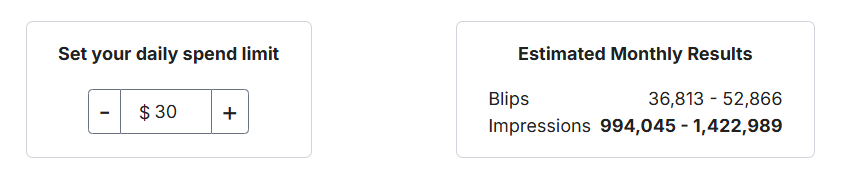
With Blip, you control exactly how much you spend on Galloway billboards by setting a daily budget that can be adjusted anytime. Each 7.5 to 10-second “blip” plays on rotating digital billboards in Galloway, New Jersey, and you only pay for the blips you receive. Costs vary based on when and where your ad appears and current advertiser demand, so you can start small, test what works, and scale up as you go.
Where can I advertise with Blip in Galloway, New Jersey?
Galloway’s value as an advertising market comes mainly from its arterial roads that tie Atlantic City to the broader South Jersey region. Primary routes include U.S. Route 30 (White Horse Pike), the Garden State Parkway, and U.S. Route 9, all of which carry substantial daily traffic near Galloway. These corridors make billboard rental in Galloway especially effective for reaching commuters, students, and visitors.
What makes Galloway, New Jersey a good place for Blip billboard advertising?
Galloway, New Jersey, gives us the rare combination of year‑round suburban stability, a major university, and proximity to one of the East Coast’s most active tourism corridors: Atlantic City and the Jersey Shore. This mix of steady locals and high‑volume visitors makes the township an especially efficient place to test and scale campaigns. Brands can reach commuters, families, students, and visitors with high relevance and strong frequency.
What traffic and visitor patterns should I know about for Galloway billboards with Blip?
Thousands of daily commuters traverse Galloway along U.S. Route 30 and the Garden State Parkway, and summer weekends push traffic even higher. Stockton’s 9,000 students plus staff generate dense weekday flows to and from campus, especially during the academic year. Nearby Atlantic City also draws in the range of 23–27 million visitors annually, adding a large stream of regional and tourist traffic.
When is the best time to run billboards in Galloway, New Jersey with Blip?
Daypart matters in Galloway because morning, midday, evening, and late-night audiences each behave differently. For example, weekday rush hours are strong for commuters and hiring, while Friday through Sunday is strongest for tourism, hospitality, and entertainment. With Blip, you can selectively purchase impressions only in the dayparts that matter most to you.
Do I need a contract to advertise with Blip in Galloway?
No, Blip has no long-term contracts or minimum commitments. You can start, pause, or stop your campaign at any time.
How fast can I launch a billboard campaign with Blip in Galloway?
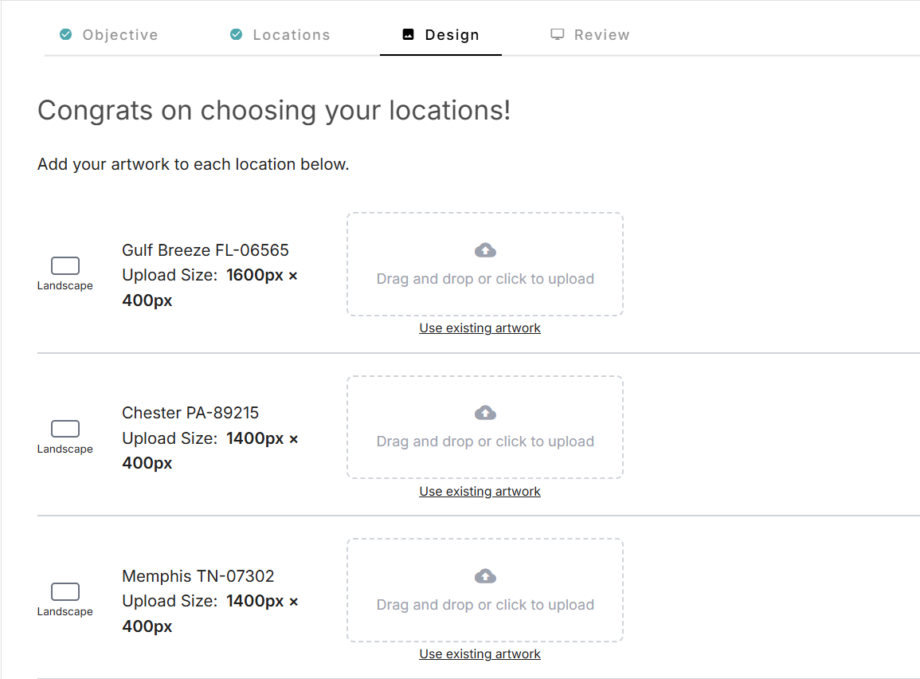
You can have your campaign live in minutes. Create a free account, select your locations, set your budget, upload your design, and start running once approved.
Where can I advertise with Blip in Galloway?
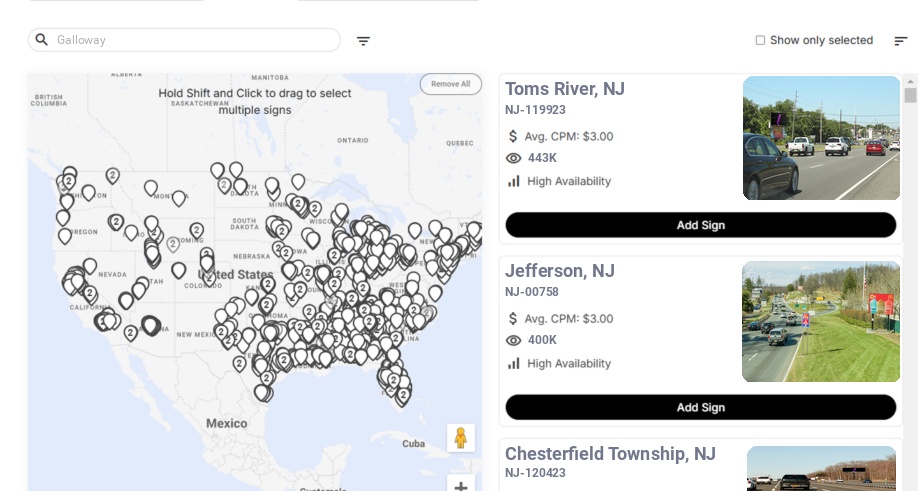
Blip has digital billboards in Galloway. You can browse available locations on a map, choose the ones that fit your audience, and start advertising right away.
Still have questions? Launch a campaign in minutes — no contracts, no commitments.
Start Your CampaignGalloway Billboard Advertising Guide
Galloway, New Jersey, gives us the rare combination of year‑round suburban stability, a major university, and proximity to one of the East Coast’s most active tourism corridors: Atlantic City and the Jersey Shore. When we use Blip’s flexible tools to tap into these overlapping audiences, we can build digital billboard campaigns that reach commuters, families, students, and visitors with high relevance and strong frequency—without overcommitting our budget. For brands exploring Galloway billboards for the first time, this mix of steady locals and high‑volume visitors makes the township an especially efficient place to test and scale campaigns.

Understanding the Galloway Market
Galloway Township Atlantic County 115 square miles—and one of its largest by population. According to 2020 data, Galloway has roughly 37,800–38,000 residents, while Atlantic County as a whole is around 274,500 residents. That means any local billboard strategy in Galloway inevitably participates in a larger regional story that includes nearby townships like Egg Harbor, Absecon, and the Atlantic City
Some key local anchors within or immediately around Galloway:
- Stockton University enrolls around 9,000 undergraduate and graduate students on its main campus in Galloway, plus approximately 1,500–1,800 faculty and staff, creating a daily population comparable to a small city.
- Atlantic City International Airport (ACY), just southwest of Galloway in Egg Harbor Township and operated by the South Jersey Transportation Authority 430,000–450,000 passengers in 2023, with summer months often running 25–30% higher in traffic than winter months.
- Nearby Atlantic City draws in the range of 23–27 million visitors annually in recent years, according to tourism and gaming reports from sources like Visit Atlantic City and VisitNJ.org, making it one of the most visited destinations on the East Coast.
For context and planning, we can rely on local information sources such as:
- Galloway Township’s official site
- Atlantic County government
- New Jersey’s official tourism site for the Atlantic City region
- Regional news from The Press of Atlantic City
- Atlantic City government
These outlets regularly publish updates on development, tourism, events, housing, and infrastructure that can inform our billboard timing and messaging—for example, road projects, new casino openings, university expansions, and seasonal event calendars. When we keep up with these sources, we can match billboards in Galloway to real‑time local trends and traffic shifts.
Who We’re Reaching: Demographics and Lifestyles
To shape our creative and targeting, we need to understand who actually drives past Galloway billboards.
Population & age mix
- Galloway’s median age is around 40 years, slightly older than the U.S. median (about 38), but the presence of nearly 9,000 Stockton students injects a large 18–24 cohort into the daytime population. In fall and spring semesters, the student population can account for 20–25% of the people present in the township on a typical weekday.
- Atlantic County as a whole has a median age around 41–42, with roughly 61–63% of residents between ages 18 and 64, signaling a strong base of working‑age adults and middle‑aged households.
This mix supports two broad strategic directions:
- Household‑oriented messaging (home services, healthcare, retail, financial, family attractions) tailored to 30–60‑year‑olds, who make up a majority of homeowners and decision‑makers in the area.
- Youth/young adult messaging for 18–29 (education, nightlife, quick‑serve restaurants, events, gaming, tech, entry‑level recruitment), especially along routes used heavily by Stockton students and casino employees.
Income & employment
- Atlantic County’s median household income is in the $65,000–$68,000 range, versus a New Jersey statewide median near $95,000–100,000, highlighting a more value‑sensitive local market.
-
In recent labor reports from Atlantic County Workforce Development
- Leisure and hospitality (casinos, hotels, restaurants), which can represent 20–25% of all local jobs.
- Healthcare and social assistance, accounting for roughly 15–18% of employment.
- Retail trade, roughly 10–12%.
- Education and public sector jobs associated with Stockton University, local school districts, and county government.
Implications for billboard strategy:
- Value‑oriented offers and clear price points work very well, especially for consumer services, auto, retail, and dining. People working in hospitality and retail tend to respond strongly to visible discounts and limited‑time promotions.
- Recruiting ads for healthcare, education, public safety, and service industries can perform strongly, as these are core local employers and often report hundreds of vacancies across the county in any given quarter.
Commuters & students
-
Thousands of daily commuters traverse Galloway along U.S. Route 30 (White Horse Pike) and the Garden State Parkway, moving between inland communities, Galloway, and Atlantic City. New Jersey Department of Transportation (NJDOT) traffic count data show:
- Sections of U.S. 30 near Galloway/Absecon averaging around 30,000–35,000 vehicles per day.
- The Garden State Parkway between Exits 38–44 (serving Galloway and ACY) often exceeding 65,000–75,000 vehicles per day, with peak summer Saturdays running even higher.
- U.S. Route 9 capturing an additional 15,000–22,000 vehicles per day in local and regional traffic.
- Stockton’s 9,000 students plus staff generate dense weekday flows to and from campus, especially during the academic year (late August–early May). Campus updates and scheduling details are available on Stockton’s website, which can help time student‑focused campaigns to move‑in, midterms, and graduation.
For these groups, we should emphasize:
- Short, bold headlines that can be read quickly at 60–70 mph
- “Next exit,” “5 minutes ahead,” or similar directional copy tied to specific exits or landmarks
- Time‑sensitive calls‑to‑action keyed to class schedules, rush hours, and exam periods (for student‑focused campaigns)
Traffic Corridors and Daily Patterns
Galloway’s value as an advertising market comes mainly from its arterial roads that tie Atlantic City to the broader South Jersey region, which is why billboard rental in Galloway is especially effective along these high‑flow corridors.
Primary routes
- U.S. Route 30 (White Horse Pike): A major east–west corridor from the Camden/Philadelphia area into Atlantic City, running right through Galloway. NJDOT data show certain segments near Galloway consistently above 30,000 vehicles per day, with Friday and Sunday volumes often 10–20% higher than midweek.
- Garden State Parkway: New Jersey’s main north–south coastal artery, managed by the New Jersey Turnpike Authority 70,000 vehicles, rising to 80,000+ on peak summer weekends.
- U.S. Route 9: A parallel north–south route capturing more local and regional traffic, often in the 15,000–22,000 vehicles per day range near Galloway and Absecon.
Publicly reported traffic counts from NJDOT and regional planning agencies often exceed 30,000–50,000 vehicles per day on sections of these roads near Galloway and Absecon, with summer weekends pushing volumes 25–35% higher as beach and casino visitors surge.
Daypart dynamics
-
Morning (6–9 a.m.)
- Heaviest commuter volumes toward Atlantic City, Pleasantville, and Egg Harbor Township as casino, hospitality, and office workers travel to early shifts. Some resort properties report 50–60% of their workforce commuting in from surrounding townships.
- Strong window for employment ads, coffee/breakfast QSR, transit‑related services, and “today‑only” promotions.
-
Midday (11 a.m.–2 p.m.)
- Local errands, seniors, tourists, and shift changes, plus Stockton mid‑day class transitions. In many suburban markets, 20–30% of daily trips occur in this band, and Galloway follows a similar pattern.
- Great for restaurants, retail, healthcare (urgent care/clinics), and tourism activities.
-
Evening (4–7 p.m.)
- Return‑commute traffic plus people heading to entertainment, casinos, and dining in Atlantic City and the shore towns. Visitor counts reported by Visit Atlantic City show strong arrival spikes on Friday afternoons and early evenings during summer and major event weekends.
- Ideal for restaurants, shows, nightlife, and same‑day promotions in Atlantic City.
-
Late night (after 9 p.m.)
- Smaller but highly targeted stream of hospitality workers and casino/nightlife visitors. Atlantic City casinos and entertainment venues often operate 24/7, with shift changes around 11 p.m. and 3 a.m., feeding late‑night traffic.
- Useful for bars, late‑night dining, convenience stores, rideshare promotions, and responsible‑driving messages.
With Blip, we can selectively purchase impressions only in the dayparts that matter most to us—for example, buying heavy rotation from 7–9 a.m. and 4–6 p.m. on weekdays near Galloway for a hiring campaign, while focusing on late‑afternoon and weekend slots for tourism marketing.
Seasonality: Balancing Locals and Visitors
Atlantic County is highly seasonal due to beach and casino tourism, and Galloway sits right on the path of that seasonal flow, which directly affects how Galloway billboard advertising performs throughout the year.
Summer surge (Memorial Day–Labor Day)
- Tourism authorities such as VisitNJ.org report that New Jersey’s shore counties can capture 40–50% of their annual visitor spending in the June–August window, and Atlantic City is a major contributor.
- Atlantic County’s coastal towns and Atlantic City routinely see summer visitor counts spike by multiple millions over baseline months. Hotel occupancy in Atlantic City can climb into the 80–90% range on peak weekends, compared with 50–60% in shoulder seasons.
- Weekend traffic volumes on the Garden State Parkway and U.S. 30 can rise by 20–40% compared with winter weekdays, with some Parkway segments near Atlantic City exceeding 90,000 vehicles per day on peak Saturdays.
For summer campaigns:
- Emphasize immediate value and convenience: “Exit now for…” or “Tonight only…” messaging works very well when visitors are already in a buying mindset.
- Focus creative on beach, boardwalk, casinos, and family fun themes to tap into visitor mindsets, using imagery recognizable from sites like the Atlantic City Boardwalk and local beaches.
- Consider Thursday–Sunday heavy weight with Blip scheduling to match peak leisure travel, potentially allocating 60–75% of impressions to those four days during July and August.
Shoulder seasons (April–May, September–October)
- Often strong periods for Atlantic City conventions, festivals, and events promoted via sources like Visit Atlantic City and VisitNJ.org. Convention calendars frequently list dozens of events per month, supporting thousands of additional room nights.
- Weather is milder, and retirees plus off‑peak travelers populate the roads. Many shore businesses report 15–25% of their annual revenue in these shoulder months as crowds thin but stay active.
Use this window to:
- Promote local experiences (golf courses, wineries, local restaurants, wellness retreats, indoor attractions) that appeal to visitors and locals who avoid peak‑season crowds.
- Run membership and subscription offers (gyms, clubs, services) as locals reset routines after winter or summer.
Winter and early spring (November–March)
- Visitor volumes slow, but local residents and workers become a higher share of the audience. In some casino and tourism reports, weekday winter visitation can run at 50–60% of peak summer weekday levels.
- Atlantic City still draws event and gaming visitors (holiday weekends, New Year’s, indoor concerts and tournaments), but traffic is more predictable and less congested.
This is the best time to:
- Focus on brand‑building among locals: healthcare systems, banks, schools, home services, and auto dealers, all of which rely on year‑round demand.
- Take advantage of lower competition for attention on the roads versus peak summer, while billboard CPMs and competing advertisers may also ease.
With Blip, we can deliberately ramp up spending in summer weeks, then maintain a lower, always‑on presence in the off‑season to build familiarity with permanent residents. This flexible approach to billboard rental in Galloway helps brands stay visible without locking into rigid seasonal contracts.
Creative Strategy: Artwork That Works in Galloway
Because most impressions in Galloway occur at highway speeds, our artwork must be ruthlessly simple and tailored to the local environment.
Visuals that resonate locally
- Coastal and pine‑barrens themes: Images referencing the shore, boardwalks, lighthouses (e.g., nearby Absecon Lighthouse), and the Pine Barrens landscape immediately feel “South Jersey” and connect with both residents and visitors who recognize these icons.
- Atlantic City skyline or casino lights: Powerful for campaigns aimed at visitors, entertainment, or night‑life, especially when targeting traffic that is physically headed toward Atlantic City along U.S. 30 or the Parkway.
- University and student life cues: Caps, books, campus scenes, and stock photography that implies college age, when targeting Stockton students and staff, complementing on‑campus marketing and digital outreach.
Copy guidelines
Aim for:
- 6–8 words or fewer in the main line, in line with industry research showing that shorter OOH headlines can boost recall by 20–30%.
- Font sizes that are legible from 500–600 feet, which typically means keeping only 1–2 short lines of large text.
- High‑contrast color schemes (e.g., dark background with white/yellow text) to maximize readability in bright coastal light and at night.
Examples tailored to local behavior:
-
Restaurant near White Horse Pike:
- “Hungry? Exit 30 – 5 Minutes Ahead”
-
AC attraction:
- “Tonight in Atlantic City – Live Comedy 8PM”
-
Stockton‑focused offer:
- “Stockton Students: 20% Off with ID”
Use dynamic & rotating messages
Digital boards in Galloway let us rotate multiple creatives:
- One creative for locals (e.g., “Local’s Weeknight Specials – Galloway Only”)
- Another for visitors (“Vacay Treat: 10% Off Tonight – Show This Code”)
- A third for recruitment (“Now Hiring – $18/hr + Tips – Apply Today”)
Blip allows us to upload multiple designs and run them concurrently, then monitor which messages yield the best response through associated digital metrics (web traffic, promo codes, call volume). Advertisers frequently see 10–25% differences in response rates between creative variants, so testing multiple designs is especially valuable for Galloway billboard advertising, where audiences can shift dramatically between weekdays and summer weekends.
Targeting Local Segments: From Students to Shore Visitors
We can sharpen our Galloway strategy even further by planning around distinct audience segments and matching specific billboards in Galloway to each segment’s travel patterns.
1. Stockton University students and staff
- ~9,000 students plus several thousand employees frequent campus daily during the academic year. Residence life stats often show 40–50% of students living on or very near campus, with the remainder commuting from surrounding towns, which increases exposure to roadside media.
- Traffic spiking around 8–10 a.m., noon, and 3–6 p.m. on roads feeding campus, aligning with class change and commuting windows.
Best campaign types:
- Food & beverage within a 10–15 minute drive (pizza, coffee, bars, QSR). College‑age consumers can dine out or order in multiple times per week, and local operators often report student spending as 30–40% of total sales during the school year.
- Student housing, textbooks, tech, and student discounts.
- Local part‑time jobs; hospitality and retail recruitment, especially during periods when casinos, hotels, and boardwalk businesses hire hundreds of seasonal workers.
Tactics using Blip:
- Daypart between 11 a.m.–2 p.m. and 3–7 p.m., Monday–Thursday, to catch lunch and post‑class travel.
- Run heavier frequency during back‑to‑school (late August–September) and finals periods (late November, April–May) when spending on food, tutoring, and services spikes.
- Mirror key academic dates listed on Stockton’s academic calendar
2. Casino, beach, and boardwalk visitors
Visitors heading into Atlantic City often pass through or near Galloway via U.S. 30 or the Parkway. Tourism data show that more than 60% of Atlantic City visitors arrive by car, which makes pre‑arrival messaging especially powerful.
High‑performing offers include:
- Parking, dining, and attractions “just off” primary exits, especially when they can save guests 5–15 minutes of circling for parking in the casino core.
- Last‑minute show tickets, tours, spas, or nightlife, which can boost per‑visitor spending—regional tourism reports frequently note that entertainment and dining can add 20–30% to average trip revenue.
- Shore‑adjacent experiences like golf, fishing charters, or outlet shopping at places such as Tanger Outlets Atlantic City.
With Blip, we can:
- Emphasize weekend and holiday coverage, concentrating impressions on Fridays, Saturdays, and Sundays when visitor volumes can be 2–3 times weekday off‑season levels.
- Use countdown‑style copy: “Tonight Only,” “This Weekend,” or “Last Chance” to spur immediate decisions.
3. Year‑round residents and regional commuters
These are the people who see our boards repeatedly, building brand familiarity through frequency. OOH studies commonly show that 5–7 exposures per month can significantly lift brand recall, and commuters on the same route can see the same board dozens of times.
Valuable categories:
- Healthcare systems and clinics (Galloway and nearby towns), especially as they advertise on channels like local outlets and Atlantic County
- Financial services, insurance agencies, and real estate, targeting homeowners and aspiring buyers in a market where median home values in Atlantic County have hovered in the $250,000–$300,000 range.
- Home services: HVAC, roofing, landscaping, pest control, and contractors, which benefit from both seasonal demand (e.g., pre‑summer A/C tune‑ups) and storm‑related work.
A solid approach is to maintain always‑on, moderate‑budget presence with locally grounded messages, then temporarily layer in heavy bursts for promotions or seasonal pushes (e.g., tax season for accountants, back‑to‑school for pediatric practices). Local service providers often find that a long‑term presence on Galloway billboards helps anchor them as “the neighborhood choice” among these year‑round audiences.
Timing and Budget Strategy With Blip
Because Blip sells digital billboard space on a per‑“blip” basis (each blip being 7.5–10 seconds of display time), we can shape our spend with precision and treat billboard rental in Galloway the same way we would manage a digital ad budget.
Day‑of‑week strategy
- Monday–Thursday: Best for commuters, locals, and B2B messaging. In many markets, 60–65% of weekly work‑related trips occur in these four days.
- Friday–Sunday: Strongest for tourism, hospitality, and entertainment, especially from May through September when weekend leisure trips surge.
We might, for example:
- Allocate 60–70% of impressions Mon–Thu for a healthcare or banking brand focused on local residents and workers.
- Shift to 50–70% of impressions Fri–Sun for restaurants, resorts, and entertainment brands targeting weekend visitors and night‑life traffic.
Event‑based bursts
Monitoring calendars from sources like:
- Galloway Township Events
- Atlantic City event listings
- Coverage by The Press of Atlantic City
…lets us schedule custom bursts around:
- Big concerts, boxing/MMA events, and shows in Atlantic City, which can draw 5,000–15,000 attendees each and spike traffic on approach routes.
- Stockton graduation, move‑in days, and homecoming, each bringing thousands of family members and alumni to Galloway.
- Local festivals, parades, or seasonal attractions in Galloway and neighboring towns, often promoted by Atlantic County tourism
Because we can adjust budgets daily, we might triple our blip budget for a 3–5 day window around a major event, then drop back to baseline afterward. Advertisers frequently see 20–40% higher response rates when aligning bursts with high‑traffic event periods versus flat, year‑round schedules.
Local Regulations and Community Sensitivities
While Blip and the sign operators handle permitting and legal compliance, it’s wise for us to be aware of local context when planning any Galloway billboard advertising.
- Galloway Township enforces sign regulations detailed on Galloway’s official site
- New Jersey generally restricts offensive, misleading, or unsafe content on outdoor advertising and may require specific disclaimers for industries like gaming, cannabis, and alcohol. Guidance and updates can often be found through the New Jersey Division of Consumer Affairs and relevant regulatory agencies.
To stay on the right side of local expectations:
- Avoid creative that could be construed as explicit, discriminatory, or misleading.
- Use clear disclaimers for contests, promotions, and time‑limited offers (e.g., “Offer ends 8/31,” “Must be 21+”).
- Be especially cautious with content related to gaming and cannabis, which are heavily regulated in New Jersey, particularly in and around Atlantic City’s casino district.
Building goodwill in a close‑knit community like Galloway means our campaigns should feel like they belong: respectful, relevant, and visually appropriate for a family‑oriented region that also hosts major entertainment.
Putting It All Together: Sample Galloway‑Focused Plays
To translate these insights into action, here are a few campaign frameworks that use Blip’s flexibility and Galloway’s geography:
1. Local restaurant between Galloway and Atlantic City
- Audience: Commuters + visitors on U.S. 30. Daily traffic on key segments is 30,000–35,000 vehicles, so even a modest share of impressions can translate into thousands of views per day.
-
Strategy:
- Daypart 11 a.m.–2 p.m. and 4–8 p.m.; heavier on Friday–Sunday in summer and around major events.
- Two creatives: “Lunch Specials – Exit Now” and “Tonight: Family Dinner 10 Min Ahead.”
- Include a simple URL or QR code for online menus and reservations.
- Goal: Increase immediate visits with directional and time‑sensitive messaging; track lift via POS data and web traffic on days with higher Blip spend.
2. Stockton student discounts for a fitness center
- Audience: Students and young staff who pass local boards multiple times per week.
-
Strategy:
- Run August–October and January–March to align with semester starts when gym sign‑ups spike.
- Focused weekday blocks around 9 a.m.–noon and 3–8 p.m., capturing pre‑ and post‑class trips.
- Simple copy: “Stockton Students: $0 Join Fee – This Month Only.”
- Add a short URL or promo code (“STOCKTONFIT”) to measure billboard‑driven conversions.
- Goal: Capture new memberships at semester start, with a target of 10–20% of new sign‑ups referencing the billboard code.
3. Regional healthcare brand awareness
- Audience: Year‑round residents of Galloway and Atlantic County, including commuters and families.
-
Strategy:
- Always‑on Blip presence at modest budget, aiming for 5–10 average weekly impressions per commuter on key corridors.
- Stable creative with brand name, ER/urgent care wait time URL, and nearest location.
- Seasonal variants for flu shots, screenings, and wellness campaigns—e.g., flu vaccine pushes October–December, heart‑health messaging in February.
- Goal: Build durable brand recall among locals and increase awareness of closest care options, measured via brand surveys or web‑traffic growth from local ZIP codes.
4. Atlantic City attraction, targeting arrivals
- Audience: Visitors heading into AC via Parkway and U.S. 30, including the 23–27 million who visit annually.
-
Strategy:
- Concentrate Thursday–Sunday afternoons and evenings, May–September, plus specific bursts for big concerts and holiday weekends.
- Use “Tonight Only,” “Tickets at Exit X,” and notable images (boardwalk, skyline).
- Rotate creatives for different acts or promotions; for example, one creative per headliner or per ticket type (VIP, family packs, etc.).
- Goal: Drive last‑minute ticket sales and on‑site spending; track response through promo codes, URL tags, or “show this ad” offers.
By aligning our creative, timing, and targeting with how people actually move through Galloway and the Atlantic City corridor, we can use Blip’s digital billboards to punch far above our budget. The combination of steady local residents, a major university, and one of the nation’s largest tourism draws gives us a uniquely rich audience—if we plan our campaigns with data, geography, and seasonality in mind and treat Galloway billboards as a flexible, test‑friendly channel within our broader media mix.