Billboards near Middlesex, NJ
No Minimum Spend. No Long-Term Contracts. Just Results.
Trusted by Leading Brands


Billboard advertising
near Middlesex has never been easier
How much is a billboard near Middlesex?
Why Choose Blip for Billboard Advertising near Middlesex
-
Blip lets you launch fast near Middlesex on I-287 and U.S. 1, reaching commuters in Piscataway, Edison, and North Brunswick without traditional buying hassles.
-
Set a Middlesex daily budget and start small; Blip auto-controls spend while you test ads against commuter, student, and retail traffic along Route 27.
-
Time Middlesex blips for rush hour, Rutgers game days, or weekend shopping surges on Route 1—dayparting puts your message in front of the right crowd.
-
No contracts means Middlesex brands can flex campaigns for back-to-school, holiday retail, or hiring needs tied to Edison and Piscataway logistics traffic.
-
Track Middlesex results in real time with Blip, then shift budget to the boards and times that perform best on the 30-35 minute commuter corridors.
-
Use Blip's creative tools to tailor Middlesex ads for families, students, and healthcare buyers—simple, bold copy wins on fast-moving highway traffic.
Frequently Asked Questions About Billboard Advertising near Middlesex
How much does a billboard cost near Middlesex, New Jersey with Blip?
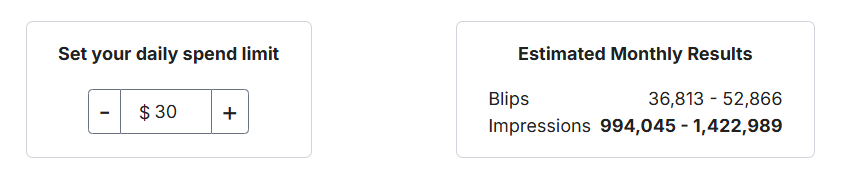
With Blip, you control exactly what you spend on Middlesex billboards by setting a daily budget that fits your needs, and the system automatically keeps your campaign within that amount. Each blip is a 7.5–10 second ad on digital billboards near Middlesex, New Jersey, and you only pay per blip, similar to pay-per-click online ads. Costs vary depending on when you choose to run your ads, where your ads appear on billboards serving the Middlesex area, and overall advertiser demand.
Where can I advertise with Blip near Middlesex, New Jersey?
With 10 nearby digital billboards in Piscataway Township, Edison, and North Brunswick Township serving the Middlesex area, advertisers can tap into a dense and diverse audience that is on the move all day long. Our 10 nearby digital billboards are positioned in Piscataway, Edison, and North Brunswick Township. These locations hug several of New Jersey’s most heavily traveled corridors, giving billboards near Middlesex strong daily reach.
What kind of audience does Middlesex, New Jersey billboards with Blip reach?
The Middlesex area sits at the crossroads of powerful commuter, suburban, and student traffic flows. Middlesex County has about 860,000+ residents, a median household income around $97,000–$100,000, and nearly 40% of residents hold a bachelor’s degree or higher. The area benefits from a significant commuter base traveling to New Brunswick, Edison, Piscataway, and North Jersey/NYC every weekday.
When is the best time to run billboard ads in Middlesex, New Jersey with Blip?
Because the boards rotate messages throughout the day, you can time your presence for the exact mix of traffic you want to reach—morning commuters, mid-day shoppers, or evening leisure traffic returning to the Middlesex area. Morning commute runs from 6:30–9:30 a.m., midday from 10:00 a.m.–3:00 p.m., and evening commute from 4:00–7:00 p.m. With Blip, you can increase your share of blips on weekday rush hours, shift spend to weekends, or run limited-time bursts around Rutgers home games or local festivals.
What roads get the most traffic for Middlesex, New Jersey billboard advertising?
Interstate 287 near Piscataway carries approximately 120,000–140,000 vehicles per day, depending on the segment. U.S. Route 1 through Edison and North Brunswick Township typically sees 90,000–110,000 vehicles per day on key sections, and Route 27 also connects commuter, student, and local residential traffic. Major local roads like Stelton Road, Woodbridge Avenue, and Easton Avenue link the Middlesex area to these highways and to big-box retail corridors.
Do I need a contract to advertise with Blip near Middlesex?
No, Blip has no long-term contracts or minimum commitments. You can start, pause, or stop your campaign at any time.
How fast can I launch a billboard campaign with Blip near Middlesex?
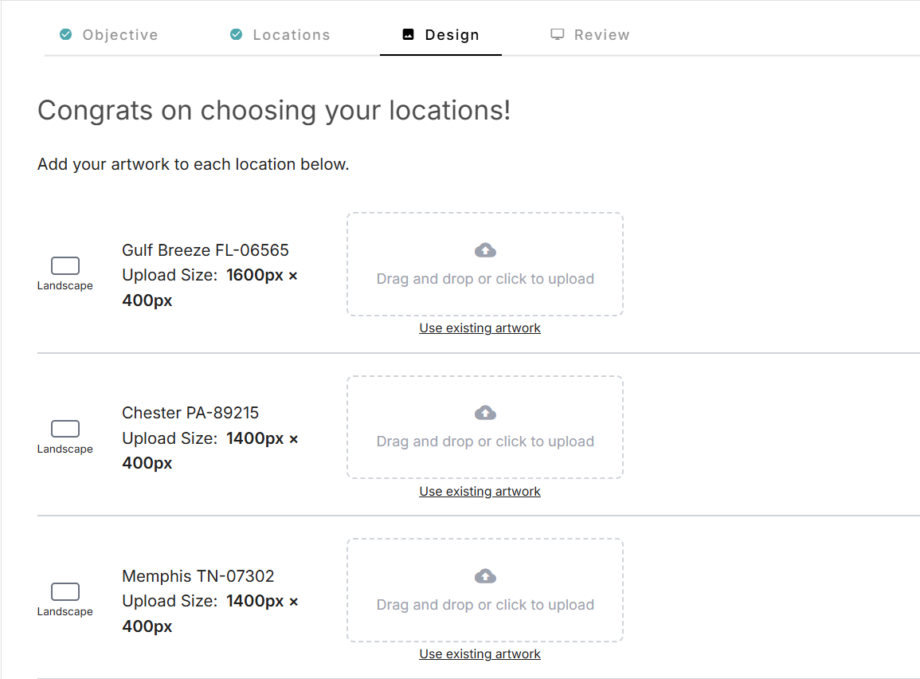
You can have your campaign live in minutes. Create a free account, select your locations, set your budget, upload your design, and start running once approved.
Where can I advertise with Blip near Middlesex?
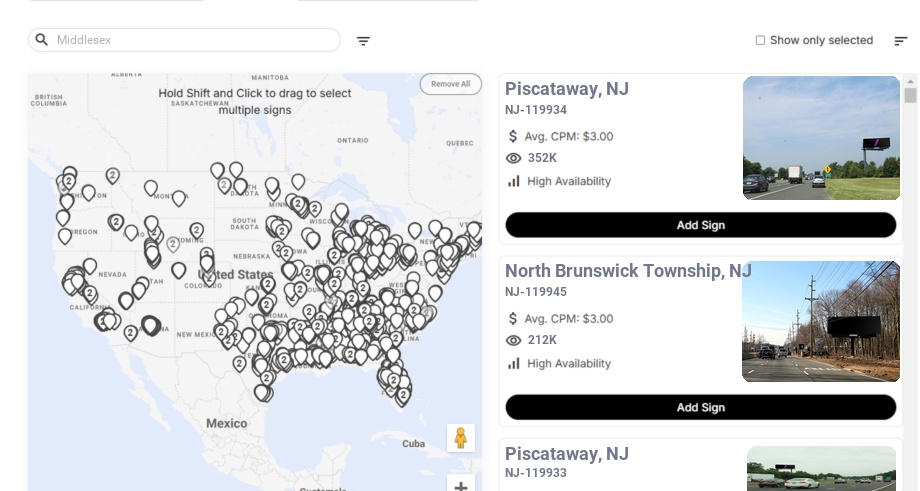
Blip has digital billboards near Middlesex. You can browse available locations on a map, choose the ones that fit your audience, and start advertising right away.
Still have questions? Launch a campaign in minutes — no contracts, no commitments.
Start Your CampaignMiddlesex Billboard Advertising Guide
Nestled along the Raritan Valley corridor, the Middlesex, New Jersey area sits at the crossroads of powerful commuter, suburban, and student traffic flows. With 10 nearby digital billboards in Piscataway Township, Edison, and North Brunswick Township serving the Middlesex area, we can help advertisers tap into a dense and diverse audience that is on the move all day long. These billboards near Middlesex give local and regional brands a highly visible way to stay in front of people during their daily routines.
Understanding the Middlesex Area Market
The Middlesex area is part of the larger Middlesex County
Key demographic and economic indicators:
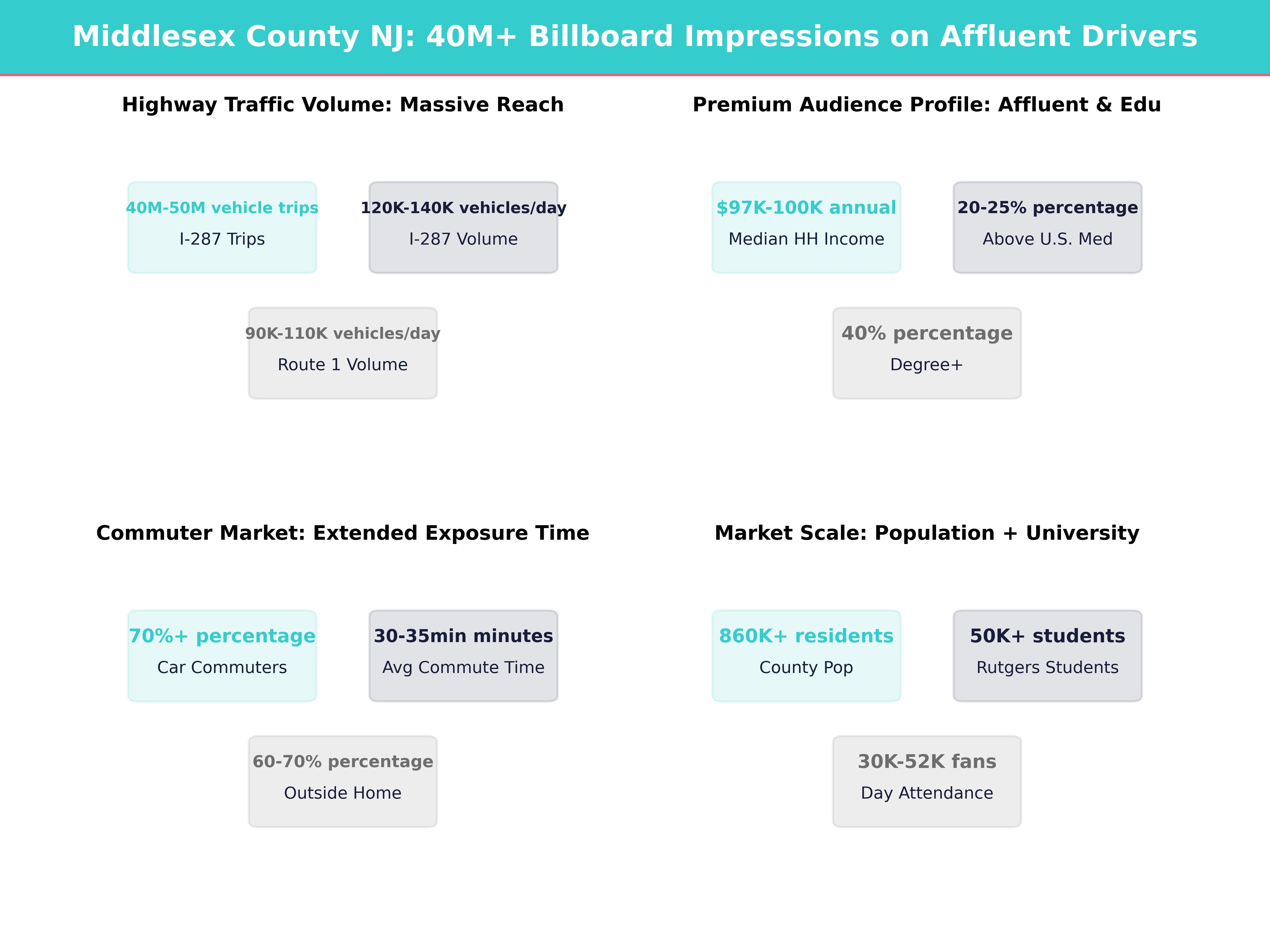
- Middlesex Borough 15,000 residents, while Middlesex County totals about 860,000+ residents spread across 25 municipalities, making it one of the top 5 most populous counties in New Jersey.
- The median household income in Middlesex County is around $97,000–$100,000, roughly 20–25% higher than the U.S. median, indicating strong purchasing power for discretionary and premium goods.
- Nearly 40% of county residents have a bachelor’s degree or higher, and more than 15% hold a graduate or professional degree, supporting demand for specialized services, education, healthcare, and tech-oriented offerings.
- The county’s labor force is approximately 470,000–480,000 workers, with unemployment generally hovering around 3–4% in recent years, signaling a stable employment base.
- Professional and business services, healthcare, education, and logistics are key sectors; each employs tens of thousands of residents, with education/healthcare alone accounting for roughly 20–25% of all jobs in the county.
- The area’s residents are an ideal match for billboard advertising near Middlesex because they combine strong incomes with frequent travel between towns and job centers.
- The area benefits from a significant commuter base traveling to New Brunswick, Edison, Piscataway, and North Jersey/NYC every weekday. In many nearby ZIP codes, more than 70% of workers commute by car, and average commute times are around 30–35 minutes, meaning long daily exposure to roadside media.
Local context resources you can review when planning campaigns include the Borough of Middlesex Discover Middlesex MyCentralJersey, NJ.com’s Middlesex County section
For advertisers, this combination of high incomes, education levels, and constant movement means digital billboards near the Middlesex area can effectively drive awareness for everything from local shops and professional services to healthcare, events, recruiting, and higher-ticket purchases like vehicles, home improvement, and specialty medical services. When you invest in billboard advertising near Middlesex, you are tapping into a market that consistently sees and responds to out-of-home messages.
Traffic Patterns and Where Our Billboards Fit
Our 10 nearby digital billboards are positioned in:
- Piscataway (about 2.3 miles from Middlesex)
- Edison (about 7.8 miles from Middlesex)
- North Brunswick Township (about 9.0 miles from Middlesex)
These locations hug several of New Jersey’s most heavily traveled corridors, giving billboards near Middlesex strong daily reach:
- Interstate 287 near Piscataway carries approximately 120,000–140,000 vehicles per day, depending on the segment, according to the New Jersey Department of Transportation (NJDOT). Annualized, that can mean 40–50 million vehicle trips passing key billboard locations.
- U.S. Route 1 through Edison and North Brunswick Township typically sees 90,000–110,000 vehicles per day on key sections, supporting major regional retail centers and auto corridors.
- Route 27 (Lincoln Highway), connecting Edison, Highland Park 30,000–40,000 vehicles per day on busy stretches, mixing commuter, student, and local residential traffic.
- Major local roads like Stelton Road, Woodbridge Avenue, and Easton Avenue link the Middlesex area to these highways and to big-box retail corridors, often carrying 15,000–25,000 vehicles per day depending on the segment.
This traffic is not just volume—it’s variety. You have:
- Daily commuters heading toward New Brunswick, Newark, and NYC along I‑287, Route 1, Route 27, and the Northeast Corridor rail line.
- Students and staff traveling to and from Rutgers–New Brunswick and Rutgers–Piscataway campuses, which together bring tens of thousands of trips through the area each weekday.
- Local families driving for shopping, youth sports, healthcare, and entertainment; many suburban households in the region own 2 or more vehicles, amplifying drive-time frequency.
- Industrial and logistics traffic moving through Edison and Piscataway’s warehouse/distribution zones; some nearby truck routes see thousands of heavy vehicles daily, providing extra reach for B2B and workforce campaigns.
Because our boards rotate messages (“blips”) throughout the day, you can time your presence for the exact mix of traffic you want to reach—morning commuters, mid-day shoppers, or evening leisure traffic returning to the Middlesex area. This flexibility makes Middlesex billboards especially useful for campaigns that need to adjust quickly to demand, promotions, or seasonal trends.
Key Audience Segments in the Middlesex Area
When designing campaigns for the Middlesex area, it helps to think in terms of distinct, high-value segments:
1. Commuters and Working Professionals
- Middlesex County sends tens of thousands of commuters daily to employment hubs along the Northeast Corridor rail line and major roadways.
-
NJ Transit data show strong weekday ridership at:
- Edison Station (Northeast Corridor): roughly 3,500–4,000 weekday boardings pre-pandemic, with ridership recovering steadily.
- New Brunswick Station: roughly 7,000–8,000 weekday boardings, making it one of the busier stations in central New Jersey.
- Many of these rail commuters still drive to park-and-ride lots, putting them on local roads and highways our billboards serve for 10–30 minutes per trip.
- In nearby townships, 60–70% of employed residents work outside their home municipality, creating substantial “cross-traffic” between Middlesex, Piscataway, Edison, New Brunswick, and North Brunswick.
Best fits: B2B services, professional services (law, accounting, finance), higher education, enterprise tech, real estate, and healthcare providers seeking insured, career-focused customers.
2. Families and Suburban Households
- The Middlesex area and surrounding communities have high rates of owner-occupied housing; in many neighborhoods, 60–70% of homes are owner-occupied, suggesting long-term, community-invested residents.
- The median age in Middlesex County is about 39 years, with roughly 25% of residents under 18 and about 13–14% over 65, creating demand for both family and senior-focused services.
- Household sizes average close to 3.0 persons, higher than the national average, reflecting strong family and multigenerational living patterns.
- Retail corridors in Edison and North Brunswick—such as the Route 1 big-box clusters and nearby destinations like Menlo Park Mall millions of visits annually, pulling heavily from the Middlesex area and adjacent towns.
Best fits: Retail, grocery, family entertainment, youth sports programs, medical and dental practices, insurance, home services, and after-school programs.
3. College Students and University Community
- Rutgers University–New Brunswick, just across the river from Piscataway and close to North Brunswick Township, enrolls roughly 50,000+ students across undergraduate and graduate programs, plus an estimated 20,000+ faculty and staff.
- Major venues like SHI Stadium and Jersey Mike’s Arena 30,000–52,000 fans on football game days and 8,000–9,000+ attendees for major basketball games or events, producing concentrated spikes in traffic on I‑287, River Road, and surrounding routes.
- Rutgers operates multiple campuses (Busch, Livingston, College Avenue, Douglass, and Cook), all connected by bus and local roads that intersect with key billboard corridors.
You can explore the broader university ecosystem via Rutgers University–New Brunswick.
Best fits: Restaurants, quick-service food, nightlife, events, fitness, student housing, tutoring/test prep, and brands targeting Gen Z and young professionals.
4. Industrial, Logistics, and Trade Workers
- Edison and Piscataway host extensive warehouse, light manufacturing, and logistics facilities due to proximity to the New Jersey Turnpike (I‑95), I‑287, and Port Newark/Elizabeth. Several large industrial parks in these towns each house dozens of facilities.
- Logistics and warehousing employment in the county has grown significantly over the past decade, with thousands of workers employed in distribution, trucking, and fulfillment roles.
- These facilities generate heavy truck and shift-worker traffic on local roads and highways that carry billboards serving the Middlesex area, especially in early-morning and late-night windows.
Best fits: Staffing agencies, industrial suppliers, safety gear, training programs, automotive repair, convenience stores, and quick-service restaurants.
Crafting Billboard Creative for the Middlesex Area
To stand out near the Middlesex area, billboard artwork should reflect both the high traffic speed and the local culture. Strong creative is the backbone of effective billboard advertising near Middlesex because it turns drive-by impressions into real awareness and action.
1. Design for Fast-Moving Traffic
Highways like I‑287 and U.S. 1 demand ultra-clear visuals:
- Word count: Aim for 7 words or fewer as a rule of thumb; research shows recall drops sharply once drivers must process more than 8–10 words at highway speeds.
- Font size: Use large, bold sans-serif fonts with strong contrast. White or yellow text on dark backgrounds, or dark text on bright, solid backgrounds, works well for the 2–4 seconds many drivers will glance at your message.
- Single focus: Communicate one big idea—brand, offer, or call-to-action—not all three at once. Single-focus creatives can improve recall by 20–30% versus cluttered designs.
- Readable URLs and short codes: Use short domains, QR codes with large contrast blocks, or simple search prompts like “Search: [Your Brand Middlesex NJ]”. Campaigns that include a memorable vanity URL or keyword often see higher direct-type traffic in web analytics.
2. Lean Into Local Cues
Referencing familiar places and routines helps viewers in the Middlesex area feel you “speak their language”:
- Mention local reference points: “Minutes from Route 287,” “Off Route 1 Edison,” or “Serving families near Middlesex Borough.”
- Call out regional identities: “Proud to serve central Jersey,” “Rutgers fan specials,” or “Raritan Valley residents save here.”
- Use time-based messages connected to local behavior, such as “Beat Route 287 traffic—schedule online,” or “Order ahead before the rush on Route 1.”
- Incorporate local events listed on Middlesex County’s events calendar TAPinto Piscataway TAPinto New Brunswick
3. Match Messaging to Audience Segments
-
Commuters: Emphasize convenience and time savings.
- Example: “Skip the ER wait. Check in online – [HospitalName].com”
-
Families: Highlight safety, value, and convenience in the Middlesex area.
- Example: “Family dental care 10 min from Middlesex – New patients welcome.”
-
Students: Use bolder colors, playful language, and clear value propositions.
- Example: “Rutgers game-night eats – 10% off with student ID.”
-
Industrial/logistics workers: Focus on pay, benefits, and accessibility.
- Example: “Hiring now in Edison – $22/hr + benefits. Text JOB to 55555.”
Timing and Dayparting Strategy
Digital billboards give us the power to choose when our messages appear. For the Middlesex area, timing is a strategic advantage and a key part of getting the most from billboard advertising near Middlesex.
Weekday Patterns
-
Morning commute (6:30–9:30 a.m.)
Heavy flows toward Edison, Piscataway, and New Brunswick. Key segments of I‑287 and Route 1 can experience peak-hour speeds dropping below 35 mph, increasing dwell time with your message. Ideal for:- Coffee and breakfast QSRs
- Healthcare and professional services
- B2B and recruitment campaigns
-
Midday (10:00 a.m.–3:00 p.m.)
More local errand and delivery traffic, including service technicians, retirees, and work-from-home residents making trips. Ideal for:- Retail, grocery, and personal services
- Medical/dental practices with same-day availability
- Restaurants pushing lunch specials
-
Evening commute (4:00–7:00 p.m.)
Return traffic toward the Middlesex area suburbs; some corridors see 30–40% higher volumes than non-peak hours. Ideal for:- Restaurants, grocery, and prepared meals
- Entertainment and family activities
- Home services and large purchases (furniture, auto, home improvement)
Weekend Patterns
- Saturdays often bring high traffic to retail zones in Edison and North Brunswick along U.S. 1 and nearby malls; regional shopping centers can see double their weekday visit counts on peak Saturdays.
- Rutgers sporting events and campus activities drive surges near Piscataway and New Brunswick on weekends and evenings; home football games can add tens of thousands of extra vehicle trips over a few hours.
- Sundays see drives to religious services, family gatherings, and big-box stores, with midday traffic often peaking between 10:00 a.m. and 2:00 p.m.
With Blip, you can:
- Increase your share of “blips” on weekday rush hours for commuter-heavy offers.
- Shift spend to weekends when promoting shopping, events, or dining.
- Run limited-time “bursts” around Rutgers home games or local festivals highlighted by Middlesex County’s events calendar or the statewide Visit New Jersey listings.
Location Strategy: Piscataway, Edison, and North Brunswick Township
Because our 10 digital billboards are spread across these three nearby municipalities, we can tailor campaigns to how people move around the Middlesex area, ensuring billboard rental near Middlesex aligns with your audience’s actual travel patterns.
You can learn more about each municipality through Piscataway Township, the Township of Edison, and North Brunswick Township.
Piscataway (approx. 2.3 miles from Middlesex)
- Proximity to Rutgers–Piscataway campus (Busch and Livingston), SHI Stadium, and large corporate/industrial parks that employ thousands of workers in tech, pharma, and logistics.
- Strong flows from the Middlesex area via local connectors to I‑287 and River Road; these routes tie Middlesex Borough to New Brunswick/Piscataway in 10–15 minutes under typical conditions.
Best uses:
- Sports, entertainment, and food campaigns for Rutgers events.
- B2B, staffing, or logistics-focused ads reaching corporate parks and warehouse districts.
- Healthcare and professional services drawing from both Middlesex and Piscataway.
Edison (approx. 7.8 miles from Middlesex)
- Major retail corridors on U.S. 1 and Route 27, and strong commuter flows. Edison alone has a population of over 105,000 residents, one of the largest municipalities in New Jersey.
- Access to Edison Station on the Northeast Corridor line and extensive bus routes; combined, these support thousands of daily transit riders in addition to drivers.
Best uses:
- Retail, auto dealerships, and big-box anchored promotions pulling shoppers from the Middlesex area.
- Healthcare networks, urgent care centers, and specialists seeking high-income, insured patients.
- Restaurants and QSR chains competing for daily traffic between Middlesex and Edison.
North Brunswick Township (approx. 9.0 miles from Middlesex)
- U.S. 1 corridor with chain retail, dining, and services that cater to both local residents and through-traffic.
- Strong link to New Brunswick employment and Rutgers campus; many residents commute less than 20 minutes to jobs in the city and surrounding campuses.
Best uses:
- Regional brands wanting visibility near both New Brunswick and the suburban Middlesex area.
- Multi-location franchises (gyms, medical groups, fast-casual restaurants).
- Event and seasonal campaigns (fairs, festivals, holiday retail); North Brunswick and nearby municipalities frequently host community events promoted by Middlesex County and Discover Middlesex.
For maximum impact, we often recommend:
- Awareness + proximity combo: Use Edison and North Brunswick Township boards for broad awareness and retail traffic on U.S. 1, complemented by Piscataway boards for commuter and university traffic closer to the Middlesex area.
- Directional messaging: For example, “Exit off 287 • 10 minutes to [Business Name]” on Piscataway boards, and “Next right on [local road]” on boards nearest your location.
Using Blip’s Flexibility to Your Advantage
With Blip, you can buy as few or as many “blips” as you need, and you can dynamically tune your campaign, making it an accessible option for billboard rental near Middlesex for businesses of all sizes:
- Budget control: Set daily or total budgets to match what you’re comfortable investing, then increase during key periods (e.g., back-to-school, tax season, or holiday shopping). Even budgets of $10–$20 per day can generate hundreds of daily impressions on certain boards.
- Time-of-day filters: Only show messages during specified hours, such as after-school, lunch, or evening commute windows, aligning with when your core audience is most likely on the road.
- Day-of-week targeting: Focus on Friday–Sunday for restaurants, events, or furniture stores, and Monday–Friday for B2B and healthcare. Many retailers see 20–30% of their weekly sales on weekends, making weekend-heavy billboard schedules particularly powerful.
-
Creative rotation: Run several pieces of copy simultaneously:
- One ad focused on “near Middlesex Borough”
- One tailored to Edison shoppers
- One speaking directly to Rutgers students or commuters
Think of your campaign as multiple overlapping mini-campaigns, all served via the same digital billboard network. This approach lets you treat Middlesex billboards as a flexible, testable marketing channel instead of a one-size-fits-all buy.
Creative Ideas Tailored to the Middlesex Area
To spark ideas, here are some sample approaches different advertisers can take:
Local Healthcare Provider
- Target: Families and commuters in the Middlesex area.
-
Strategy:
- Morning and evening campaign on Piscataway and Edison boards, when many residents make their twice-daily commute.
- Copy like: “Primary care 10 min from Middlesex Borough – Same-day visits” with clear URL or short code.
-
Variation:
- Weekend creative promoting walk-in hours: “Sore throat? Open Sat–Sun. Walk right in.”
- Add a ZIP- or town-specific promo code (e.g., “MIDDLESEX10”) to track billboard impact.
Restaurant or QSR Chain
- Target: Students, commuters, and families driving between Middlesex, Piscataway, and Edison.
-
Strategy:
- Lunch-focused blips on boards along U.S. 1 and key connectors when restaurant traffic can spike by 30–40% over mid-morning levels.
- Creative: “Rutgers lunch special – Exit now for [Brand].”
- Evening creative: “Skip cooking. Order online – Ready when you get home to Middlesex.”
-
Data tie-in:
- Track increases in online orders or app downloads from ZIP codes around Middlesex, Edison, and Piscataway during campaign periods.
Retailer or Shopping Center
- Target: Shoppers in the Middlesex area planning weekend outings.
-
Strategy:
- Heavy weekend presence on Edison and North Brunswick Township boards, when Route 1 retail visits surge.
- Use clear directional language: “2 miles ahead on Route 1 North – [Shopping Center].”
- Rotate limited-time offers: “This weekend only: 20% off home essentials.”
-
Measurement:
- Use POS data to compare weekend traffic and sales during billboard flights vs. non-flight weekends.
Recruitment or Staffing Firm
- Target: Industrial and logistics workers traveling to Edison and Piscataway.
-
Strategy:
- Early-morning (5:00–8:00 a.m.) and shift-change (2:00–4:00 p.m. / 10:00 p.m.–midnight) scheduling to match typical warehouse shifts.
- Copy: “Now hiring in Edison – $23/hr + overtime. Apply today: [ShortURL].”
- Add a second creative version: “Tired of your warehouse job? Better benefits with [Brand].”
-
Performance tracking:
- Monitor applications and calls from local area codes and track where candidates heard about the job.
Measuring and Refining Your Campaign
To get the best ROI from billboard campaigns near the Middlesex area, build a simple feedback loop:
-
Trackable calls-to-action:
- Use unique URLs or promo codes for billboard viewers (e.g., “/middlesex” or “MIDDLESEX23”).
- Offer time-bound deals (“This week only”) to correlate response spikes with specific billboard schedules.
-
Align with digital analytics:
- Watch for branded search volume increases from ZIP codes near Middlesex, Piscataway, Edison, and North Brunswick Township.
- Monitor website traffic and conversions during your scheduled billboard times; advertisers often see noticeable lifts in direct and branded traffic within the first 2–4 weeks of a billboard campaign.
-
Test and refine:
- A/B test different short headlines or offers on rotating creatives. In many campaigns, top-performing creatives outperform weaker ones by 30–50% in response.
- Shift budget toward the times and locations that drive the most measurable response, using sales, leads, or appointment data segmented by day and time.
Over time, you’ll learn when, where, and how people in the Middlesex area are most likely to respond, letting you sharpen your message and timing and improving the long-term performance of your billboard advertising near Middlesex.
By combining rich local knowledge about the Middlesex area with the flexibility of Blip’s digital billboard network in nearby Piscataway, Edison, and North Brunswick Township, we can help you reach commuters, families, students, and workers with precision. With data-driven scheduling, locally resonant creative, and ongoing measurement, your billboard campaign can become a powerful, always-on presence in the daily lives of the people you most want to reach—and a cost-effective way to secure billboard rental near Middlesex that truly supports your broader marketing strategy.