Billboards near Westfield, NJ
No Minimum Spend. No Long-Term Contracts. Just Results.
Trusted by Leading Brands


Billboard advertising
near Westfield has never been easier
How much is a billboard near Westfield?
Why Choose Blip for Billboard Advertising near Westfield
-
Blip lets you launch fast in Westfield and hit NJ TRANSIT commuters on the Raritan Valley Line plus drivers on Route 22 and the Parkway.
-
Use flexible budgets in Westfield to target weekday rush hour, school drop-off, or Downtown Westfield weekend shoppers without overcommitting.
-
No contracts means you can test Westfield billboards during AddamsFest, holiday events, or back-to-school season, then adjust on the fly.
-
Blip's real-time analytics help Westfield advertisers track what works across Elizabeth, Woodbridge, Edison, and Piscataway commuter traffic.
-
Create and rotate fresh ads with Blip for Westfield's affluent, family-focused audience—perfect for premium offers, dining, and local services.
Frequently Asked Questions About Billboard Advertising near Westfield
How much does a billboard cost near Westfield, New Jersey with Blip?
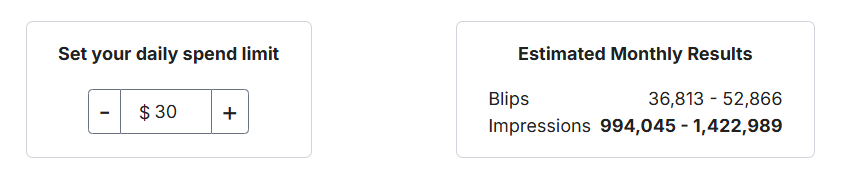
With Blip, you choose your own daily budget for Westfield billboards and only pay for the brief “blips” your ad actually appears, each lasting about 7.5 to 10 seconds on rotating digital signs serving the Westfield area. Costs per blip change based on when and where you run your ad and on local advertiser demand, and Blip automatically keeps your campaign within the budget you set. You can adjust that budget whenever you like, making it easy to test and refine your approach with billboards near Westfield, New Jersey.
Where can I advertise near Westfield, New Jersey with Blip billboards?
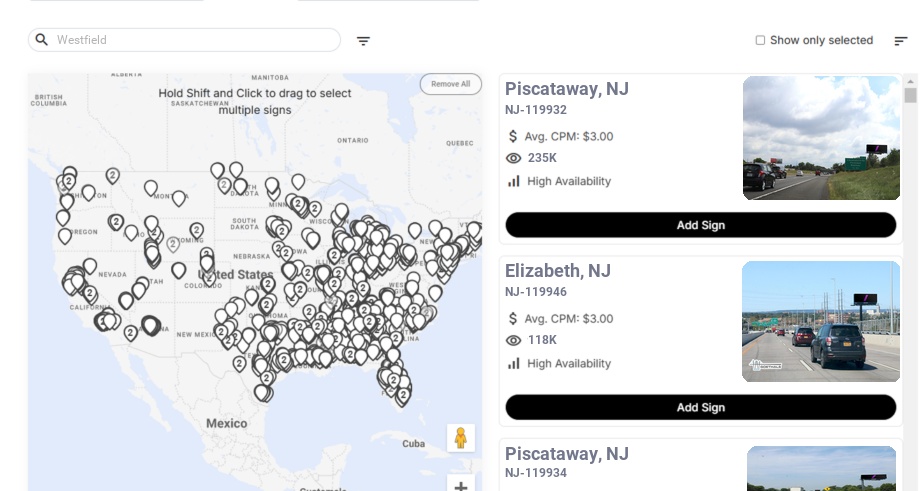
We have 17 digital billboards serving the Westfield area, all within about 10 miles of town, strategically placed in high-traffic corridors of Elizabeth, Woodbridge Township, Edison, and Piscataway. Even though these boards are not physically inside Westfield, they sit on the main commuting and shopping routes Westfield residents use every day. For most advertisers, these are effectively billboards near Westfield that capture both local and regional audiences.
When is the best time to run Blip ads near Westfield, New Jersey?
Because Westfield is so commute-driven and family-oriented, timing is crucial. Morning peak is roughly 6:30 a.m.–9:00 a.m. and evening peak is about 4:00 p.m.–7:00 p.m., making those windows valuable for commuter traffic. Westfield’s downtown and nearby malls get their heaviest leisure traffic evenings and weekends, especially around dining, events, and shopping.
Who sees billboard advertising near Westfield, New Jersey?
Westfield sits at the crossroads of affluent suburban living and high-volume commuter traffic. It is one of Union County’s higher-income communities, with a significant share of adults holding bachelor’s or advanced degrees. The broader catchment area also includes hundreds of thousands of regional drivers moving through nearby corridors, creating repeated billboard impressions.
What kinds of businesses work well for Blip billboards in Westfield, New Jersey?
The page says billboard campaigns near Westfield are especially useful for retail, restaurants, professional services, healthcare, education, tutoring, real estate, home services, and contractors. Messages should speak to busy, affluent, family-centered lifestyles where many households have limited free time. Value propositions can lean into quality, trust, and convenience more than discount-only language.
Do I need a contract to advertise with Blip near Westfield?
No, Blip has no long-term contracts or minimum commitments. You can start, pause, or stop your campaign at any time.
How fast can I launch a billboard campaign with Blip near Westfield?
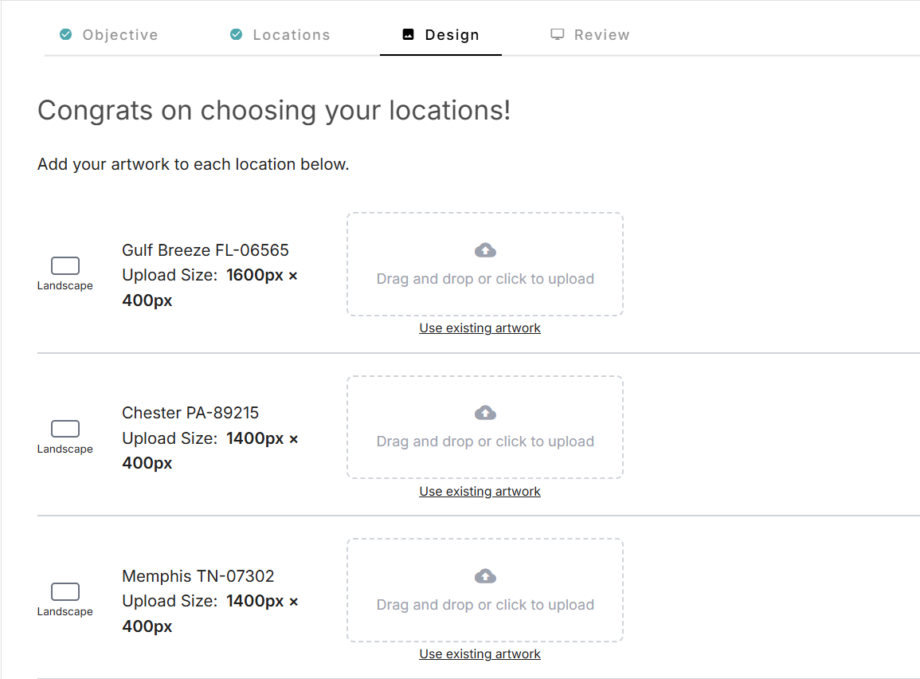
You can have your campaign live in minutes. Create a free account, select your locations, set your budget, upload your design, and start running once approved.
Where can I advertise with Blip near Westfield?
Blip has digital billboards near Westfield. You can browse available locations on a map, choose the ones that fit your audience, and start advertising right away.
Still have questions? Launch a campaign in minutes — no contracts, no commitments.
Start Your CampaignWestfield Billboard Advertising Guide
Westfield, New Jersey sits at the crossroads of affluent suburban living and high‑volume commuter traffic. With 17 digital billboards serving the Westfield area from nearby cities like Elizabeth, Woodbridge Township, Edison, and Piscataway, we can help advertisers tap into a well‑educated, high‑income audience that spends a lot of time on the road. For marketers specifically looking for billboards near Westfield or flexible billboard rental near Westfield, these locations offer powerful, high‑visibility options. This guide walks through how to plan, target, and design a digital billboard campaign that effectively reaches people who live, work, shop, and commute near Westfield using Blip’s flexible tools.
Understanding the Westfield Area Audience
Westfield is one of Union County’s
Population & households
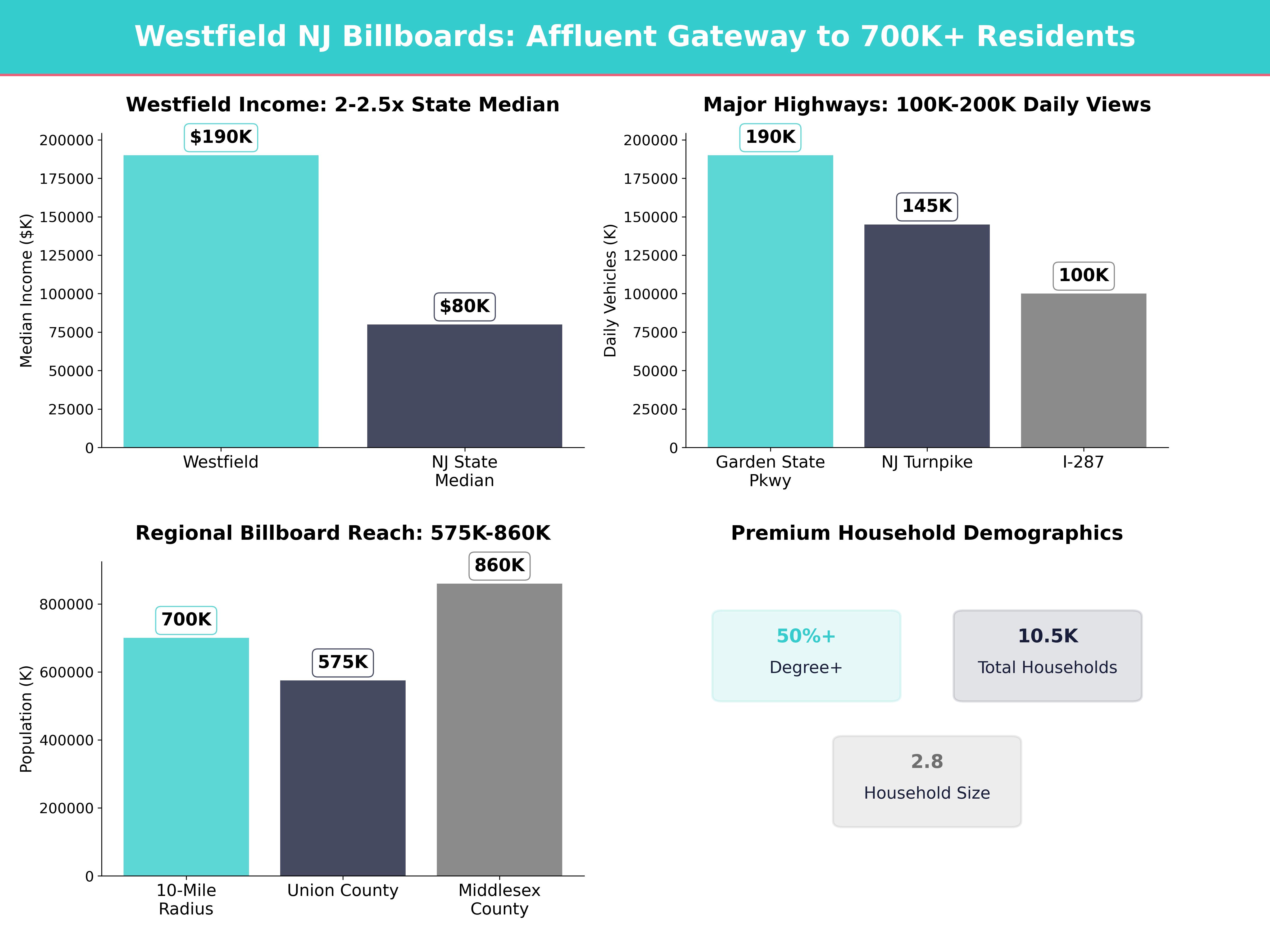
- Westfield’s population is just over 30,000 residents, with about 10,000–11,000 households spread across its neighborhoods, according to local municipal and school planning documents from the Town of Westfield Westfield Public Schools. Local planning data show an average household size of about 2.7–2.9 people, reflecting the town’s family focus.
- The broader Union County region, where Westfield sits, has roughly 575,000+ residents, per Union County
- Within a 10‑mile radius of downtown Westfield, local economic development sources estimate well over 700,000 residents when you include surrounding areas of Union and Middlesex counties, creating a dense catchment area for repeat billboard impressions and highly efficient billboard advertising near Westfield.
Income & education
- Westfield is consistently cited among New Jersey’s higher‑income communities. Local revaluation and school budget reports reference median household incomes well over $150,000, with many estimates in the $180,000–$200,000 range. That places Westfield substantially above New Jersey’s statewide median household income, which state sources place around the mid‑$80,000s.
- Property tax assessment data referenced by the Town of Westfield
- A significant share of adults in the Westfield area hold bachelor’s or advanced degrees, reflected in the strength of its school system and professional workforce. Local school district data regularly report graduation rates in the upper‑90% range at Westfield High School, and community surveys indicate that well over half of adult residents have completed at least a four‑year degree.
Commuting & mobility
- Westfield is a classic commuter town, anchored by the NJ TRANSIT Raritan Valley Line. According to NJ TRANSIT, the Raritan Valley Line logs more than 20,000 passenger trips on a typical weekday across the line, with Westfield among its busier intermediate stations serving Manhattan‑ and Newark‑bound commuters.
- NJ TRANSIT reports more than 160 million systemwide passenger trips annually in recent pre‑pandemic years, illustrating how rail commuting threads together towns like Westfield with regional job hubs.
- Many Westfield residents drive to work or to nearby employment hubs (Newark, Elizabeth, Woodbridge/Edison corporate centers, and the I‑287 corridor). State travel surveys for similar suburban communities in North/Central New Jersey show that around 70–80% of workers commute primarily by car, van, or truck, with typical one‑way commute times of 30–40 minutes.
-
Major nearby highways include Route 22, the Garden State Parkway, the New Jersey Turnpike (I‑95), I‑78, and I‑287. New Jersey Department of Transportation counts, available through NJDOT, show:
- Garden State Parkway near Woodbridge: roughly 180,000–200,000 vehicles per day on busy segments, with annual average daily traffic (AADT) regularly above 185,000 vehicles.
- New Jersey Turnpike near Edison/Woodbridge: often over 140,000–150,000 vehicles per day, with truck traffic representing 15–20% of total volume on some segments.
- I‑287 near Edison/Piscataway: commonly 100,000+ vehicles per day, making it one of Central Jersey’s primary freight and commuter corridors.
- Newark Liberty International Airport, accessed from nearby Elizabeth, handled about 46–50 million passengers annually in recent pre‑pandemic years according to the Port Authority’s Newark Airport site, feeding a constant flow of regional vehicle trips on Turnpike and Route 1&9 corridors where our boards appear.
Lifestyle & local culture
- Downtown Westfield is a major retail and dining destination, with over 200 shops and restaurants promoted by the Downtown Westfield Corporation
- The town is heavily family‑oriented: Westfield Public Schools enroll roughly 6,000+ students across its elementary, intermediate, and high school campuses according to Westfield Public Schools, and youth sports leagues register thousands of participants each year in soccer, baseball/softball, basketball, and other programs.
- Community events like AddamsFest, the Sweet Sounds Downtown Music Festival, and seasonal downtown promotions draw crowds throughout the year, regularly covered by TAPinto Westfield NJ.com Westfield’s event promotions
- Tourism and leisure statistics from VisitNJ.org show that New Jersey welcomed more than 100 million visitors in recent years, who generated tens of billions of dollars in direct spending statewide; shopping, dining, and visiting downtowns like Westfield rank among the top trip activities.
For advertisers, this means:
- Messages should speak to busy, affluent, family‑centered lifestyles where many households have two working adults, multiple school‑aged children, and limited free time.
- Calls to action should be clear and quick, fitting 2–3 second glances from commuters traveling at 50–65 mph on major roadways.
- Value propositions can lean into quality, trust, and convenience more than discount‑only language, since higher‑income consumers in places like Westfield often prioritize reliability, reputation, and time savings over purely lowest price.
How Our Nearby Billboards Cover the Westfield Area
We have 17 digital billboards serving the Westfield area, all within about 10 miles of town, strategically placed in high‑traffic corridors of:
- Elizabeth (≈7.3 miles from Westfield)
- Woodbridge Township (≈7.7 miles)
- Edison (≈9.2 miles)
- Piscataway (≈9.2 miles)
Even though these boards are not physically inside Westfield, they sit on the main commuting and shopping routes Westfield residents use every day. For most advertisers, these are effectively billboards near Westfield that capture both local and regional audiences.
Elizabeth: Gateway for airport, port, and retail traffic
- Elizabeth is home to major arteries like Route 1&9 and the New Jersey Turnpike, plus proximity to Newark Liberty International Airport, managed by the Port Authority of New York and New Jersey and detailed on Newark Airport’s website. Local transportation data highlight that Route 1&9 in the Elizabeth–Newark area can see 70,000–90,000 vehicles per day, much of it airport‑related traffic.
- Elizabeth has a population of roughly 135,000–140,000 residents according to City of Elizabeth
- It also hosts Jersey Gardens (The Mills at Jersey Gardens), one of New Jersey’s largest outlet malls. Local tourism and economic development sources report that the mall attracts roughly 9–10 million visitors annually, including a significant share of out‑of‑state and international shoppers.
-
Boards here are excellent for:
- Targeting Westfield‑area residents heading to/from Newark, the airport, and port‑related jobs—tens of thousands of daily trips flow between Union County suburbs and Elizabeth/Newark.
- Reaching travelers and shoppers who might drive back through the Westfield area or consider services there (home services, real estate, healthcare, etc.), particularly those using Route 22 or the Garden State Parkway for return trips.
Woodbridge Township: Garden State Parkway & Turnpike hub
- Woodbridge, with about 100,000 residents per Woodbridge Township
- NJDOT traffic counts show the Garden State Parkway near Woodbridge carrying close to 200,000 vehicles per day and the Turnpike in this area handling around 150,000 vehicles per day, making Woodbridge one of New Jersey’s most heavily traveled nodes.
- Massive daily commuter volumes connect the Westfield area to New York City, North Jersey employment centers, and shore destinations; Port Authority data show hundreds of thousands of daily peak‑period trips heading toward the New York metro via these corridors.
-
Boards serving the Westfield area here are perfect for:
- Grabbing attention during longer highway commutes, when drivers have slightly more time to absorb a clear message than on short local hops.
- Positioning regional brands (banks, hospitals, colleges, auto dealers) as “on the way” to Westfield or easily accessible from it, especially for the estimated tens of thousands of Westfield‑area residents who drive on the Parkway or Turnpike at least weekly.
Edison: Corporate, tech, and retail corridor
- Edison, highlighted in Edison Township and Middlesex County’s
- Middlesex County overall has more than 860,000 residents and supports over 400,000 jobs, with local economic development reports emphasizing strong employment in healthcare, logistics, professional services, and technology.
- Retail corridors in Edison, including large power centers and malls along Route 1, generate daily traffic counts in the 60,000–80,000 vehicle range on major segments, according to NJDOT data.
- Many Westfield residents work in and around Edison or pass through it for employment, college (Rutgers, Middlesex College), or big‑box retail. Rutgers University’s New Brunswick–Piscataway campus alone enrolls roughly 50,000+ students across undergraduate and graduate programs, as reported by Rutgers University–New Brunswick, feeding daily travel on Route 1 and I‑287.
- Boards here are strong for B2B, professional services, higher education, and healthcare campaigns aimed at decision‑makers who live in the Westfield area but work in Middlesex County’s dense employment centers. For advertisers comparing options for billboard advertising near Westfield, Edison placements can be especially cost‑efficient given their mix of commuter and shopper traffic.
Piscataway: I‑287 spine and university nexus
- Piscataway, with around 60,000+ residents per Piscataway Township, is home to key Rutgers University campuses and research facilities, including the Busch and Livingston campuses and major athletics venues like SHI Stadium.
- University and township sources note that Rutgers home football games and large campus events can draw crowds of 40,000–50,000 people on peak days, causing significant short‑term surges in traffic along I‑287 and surrounding connectors.
- I‑287 through Piscataway carries in excess of 100,000 vehicles daily, with a high share of commercial trucks serving Central Jersey’s warehouse and logistics clusters.
- Boards near Piscataway connect you to tech, logistics, and university populations that overlap with Westfield‑area households through jobs, school, and sports events, especially families with college‑bound students and alumni traveling between Union and Middlesex counties.
By selecting and combining these locations in Blip, we can design campaigns that:
- Concentrate spend on corridors Westfield residents are most likely to use, maximizing frequency against the 30,000+ locals plus hundreds of thousands of regional drivers who traverse these routes weekly.
- Pair “commuter‑route” boards (GSP, Turnpike, I‑287) with “shopping and errands” corridors (Route 1, Route 22, Elizabeth retail routes) to cover multiple daily touchpoints—work commute, school drop‑off, weekend shopping, and leisure trips. In practice, this gives you a virtual network of Westfield billboards that surround the town and follow your audience throughout their day.
Timing Your Campaign: When to Run Blips Near Westfield
Because Westfield is so commute‑driven and family‑oriented, timing is crucial. Blip’s scheduling lets us buy only the hours and days that matter most, making billboard rental near Westfield highly flexible and budget‑friendly.
Weekday commute peaks
- Morning peak: roughly 6:30 a.m.–9:00 a.m. toward Newark, New York, and major employment nodes. State and regional traffic studies often show that 40–50% of weekday vehicle trips on major corridors occur during the combined morning and evening peaks, underscoring the value of these windows.
- Evening peak: about 4:00 p.m.–7:00 p.m. heading back toward the Westfield area and nearby suburbs. On NJ highways, speed drops and congestion commonly extend these peaks for 2–3 hours, increasing dwell time near digital billboards.
-
Use these dayparts to:
- Promote professional services (law, finance, healthcare, consulting) to commuters starting and ending their day, especially the large share of Westfield‑area workers in management, business, science, and professional occupations highlighted in local planning documents.
- Run simple, directional messages like “Exit X, 10 minutes to Westfield” or “Westfield pickup today” for restaurants, retailers, and curbside services that benefit from immediate after‑work decisions.
Midday and school‑related traffic
- 10:00 a.m.–3:00 p.m. sees a mix of remote workers, retirees, stay‑at‑home parents, and service workers. Since the pandemic, many New Jersey employers have shifted to hybrid work; local and regional surveys indicate that a substantial share—often 25–35%—of office workers now work from home at least part‑time, increasing midday local mobility for errands and appointments.
- School start and dismissal spikes around 7:15–8:15 a.m. and 2:30–4:00 p.m., with heavy youth sports and activity traffic in late afternoons. With more than 6,000 students in Westfield Public Schools and thousands more in neighboring districts, these windows generate noticeable congestion around main corridors and activity centers.
-
Ideal for:
- Local storefronts (boutiques, salons, fitness studios, medical practices) trying to capture daytime appointments from flexible‑schedule workers and parents.
- Youth‑focused offerings (tutoring centers, extracurriculars, camps) with messages timed around drop‑off and pick‑up windows for maximum parental attention.
Evenings and weekends
- Westfield’s downtown and nearby malls get their heaviest leisure traffic evenings and weekends, especially around dining, events, and shopping. Local business district reports from the Downtown Westfield Corporation
- Tourism and leisure data from VisitNJ.org show that shopping and dining are among the top reasons people travel within New Jersey, and weekend trips account for a significant portion of intrastate tourism spending.
-
Use these slots for:
- Restaurants, bars, and entertainment pushing reservations, specials, or events to the large share of households that dine out at least once or twice per week.
- Retail and seasonal promotions (holiday shopping, back‑to‑school, Mother’s Day, etc.), when statewide retail sales regularly spike 20–40% above off‑season baselines during major holidays according to state economic reports.
With Blip, we can set different bids for peak vs. off‑peak hours, stretch a budget over a month, or “burst” heavy exposure during key weeks like:
- Back‑to‑school (late August–September), when Westfield Public Schools and surrounding districts reopen and families concentrate spending on clothes, supplies, and activities.
- Holiday season (mid‑November through December), when New Jersey tourism and retail spending peak and downtowns like Westfield host tree lightings, holiday markets, and late‑night shopping events promoted on the Town of Westfield Downtown Westfield Corporation
- Spring real estate surge (March–June), when local real estate boards report a rise in new listings and contract signings as families aim to move between school years.
- Major local events like AddamsFest in October, which draws thousands to downtown according to Westfield’s event promotions
Creative Strategy for Westfield‑Area Billboards
The creative that works near Westfield should reflect its mix of sophistication, family life, and time‑starved commuters. Thoughtful creative turns basic billboard rental near Westfield into a recognizable, memorable presence that locals associate with their daily routes.
Message length & structure
- Aim for 7 words or fewer of main copy; drivers often have 3–5 seconds at highway speed, and transportation safety research shows that comprehension drops sharply as word counts rise above 7–10 words on roadside signs.
- Use a single, clear call to action (e.g., “Book Westfield Pickup Tonight” or “Visit Our Westfield Showroom”). Campaigns that ask viewers to do one specific thing—call, visit, search, or exit—tend to outperform those with multiple competing CTAs.
- Avoid long URLs; use short domains or direct people to search (“Search: ‘Westfield Orthopedics’”). Short, brand‑centric search terms are easier to recall after a brief 2–3 second exposure.
Visual style
- High contrast: dark background with bright text, or vice versa. White or yellow on dark blue/navy often reads well at night and in poor weather, and vision‑research summaries used by transportation departments indicate that high‑contrast color pairings can improve legibility distance by 20–40%.
- One dominant image: product photo, smiling local‑looking family, or simple icon communicates faster than a collage and reduces cognitive load for drivers traveling at 50+ mph.
- If your brand is premium (common in the Westfield area), lean into clean, minimalist layouts rather than cluttered sale graphics; luxury and professional brands in high‑income markets often see better results from sparse, elegant designs that match their in‑store and digital branding.
Local framing & identity
-
Reference local context to feel relevant:
- “Trusted by Westfield Families Since 1995.”
- “5 Minutes from Downtown Westfield.”
- “Proud Partner of Westfield Blue Devils.”
-
Tie into local events covered by TAPinto Westfield
- “AddamsFest Special: Free Dessert with Dinner.”
- “Back‑to‑School Eye Exams – Westfield Office.”
- Consider aligning with the Greater Westfield Area Chamber of Commerce calendar of street fairs and community events so that your billboard creative echoes messaging seen on local posters, email newsletters, and social media.
Directional and commute‑aware messages
Because many boards are outside the town itself, directional creative is powerful:
- “Next 2 Exits: Westfield Shopping & Dining.”
- “Turn Right on Route 22 for Westfield.”
- “On Your Way Home to Westfield? Stop at…”
By matching direction of travel with your message (“Heading home to Westfield? Order Pizza Now.”), we can make the ad feel perfectly timed. Commuter marketing studies show that relevance to immediate next steps—such as an upcoming exit or that evening’s meal—meaningfully improves recall and response compared with generic branding.
Using Blip Tools to Target the Westfield Area Efficiently
Blip’s flexibility is ideal for a suburban market like the Westfield area, where advertisers may want precise geographic and time control. This makes it easy to treat our network as a custom cluster of Westfield billboards, focused only on the routes that matter most to your customers. Here’s how we can use the platform strategically:
Location selection
- Choose only the boards in Elizabeth, Woodbridge Township, Edison, and Piscataway that align with your customers’ typical routes. Traffic flow data from NJDOT and county planning offices indicate that tens of thousands of daily trips move between Union and Middlesex counties via these corridors, so precise board selection can significantly improve cost‑per‑impression among your true target audience.
-
Example: A Westfield‑based children’s therapy practice may prioritize:
- Edison and Piscataway boards to reach parents working along I‑287 and near Rutgers or major corporate parks.
- Elizabeth boards for those commuting toward Newark and the airport.
- A Woodbridge‑area furniture store drawing customers from Westfield might lean heavier on Woodbridge and Edison placements tied to Route 1 and the Parkway, where household income profiles and homeownership rates are similar to the Westfield area.
Dayparting and budgeting
- Use weekday rush‑hour bids for professional services, healthcare, and B2B. For many of these sectors, local business data show that a high share of leads—often 50% or more—originate from working‑age adults reachable during commute windows.
- Shift more impressions to evenings and weekends for restaurants, entertainment, and retail, which typically see 60–70% of their weekly revenue in the Thursday–Sunday period according to many small business surveys.
- Start with a modest daily budget spread across multiple time blocks, then reallocate spend to the slots that respond best. Even a small increase in frequency (for example, doubling impressions during top‑performing hours) can produce disproportionate gains in response as awareness compounds.
Creative rotation and testing
- Upload multiple creatives and let them rotate. After 2–4 weeks, evaluate which designs correlate with better website traffic, calls, or store visits.
-
Test variables such as:
- Headline style (“Premium Care Close to Home” vs. “Westfield Dentist – Same‑Day Appointments”).
- Offer vs. no offer (“$50 Off” vs. pure branding).
- Local mention vs. more generic.
- Use A/B insights to focus long‑term spend on the top‑performing messages. Even a 10–20% difference in response rate between creatives can have a major impact over months of impressions.
Scaling up or down quickly
- Increase frequency during critical windows (e.g., open house weekend, new product launch, seasonal sale) and dial back between events.
- Westfield’s calendar has multiple shopping peaks—Mother’s Day, prom and graduation season, fall fundraising events, holiday markets—which we can support with short, intense bursts of impressions. Prom and graduation alone can generate substantial spikes in spending on apparel, dining, and events among the area’s thousands of high school students and families.
Campaign Playbooks for Key Local Industries
Below are example strategies tailored to common businesses serving the Westfield area and using billboard advertising near Westfield as part of their marketing mix.
Retail & Downtown Businesses
With more than 200 shops, services, and eateries promoted by the Downtown Westfield Corporation Greater Westfield Area Chamber of Commerce note that small retail and service businesses employ hundreds of workers in and around downtown, underscoring the importance of steady customer flow.
Strategy
- Emphasize convenience and uniqueness: “Skip the Mall – Shop Westfield Boutiques.” Downtown surveys often find that a substantial share of visitors—30–50%—cite “unique local businesses” and “walkable atmosphere” as key reasons for visiting.
- Highlight free parking, curbside pickup, or walkable charm to contrast with big‑box and outlet centers, especially when regional shopping centers can draw millions of annual visitors.
-
Run campaigns heavier:
- Thursday–Sunday, when leisure shopping spikes and retail sales commonly peak for the week.
- Around major local events and sidewalk sales promoted on WestfieldToday.com
Target boards
- Elizabeth: capture outlet and airport traffic, inviting them to “Discover Downtown Westfield – 15 Minutes Away.” Even a small conversion rate among Jersey Gardens’ 9–10 million yearly visitors can translate into thousands of additional Westfield visits.
- Woodbridge/Edison: reach shoppers comparing big‑box options, positioning Westfield as the upscale alternative with boutique experiences and independent retailers.
Restaurants, Cafés, and Hospitality
Westfield and surrounding communities have vibrant dining scenes, with constant coverage in local news
Strategy
- Time messages right before meal periods (7–9 a.m., 11 a.m.–2 p.m., 4–8 p.m.) to capture breakfast, lunch, and dinner decisions. Quick‑service and casual dining brands frequently report that a high share of “day‑of” decisions happen within 30–60 minutes of the meal, making real‑time roadside prompts highly effective.
- Use simple offers: “Kids Eat Free Tues,” “Happy Hour 4–6,” “Order Online, Pickup in Westfield.” Clear, time‑bound offers can help smooth traffic into traditionally slower early‑week slots.
- Emphasize ambiance and quality: “Dinner on Quimby Street? Reserve Now.” High‑income diners in the Westfield area often prioritize atmosphere, walkability, and experience alongside cuisine.
Target boards
- Commuter‑heavy boards in Woodbridge and Elizabeth with “On Your Way Home to the Westfield Area? Stop In Tonight.” This aligns with the many thousands of daily vehicles returning to suburbs via the Parkway, Turnpike, and Route 22.
- Weekend‑focused rotations for brunch and evening dining on boards that feed traffic toward downtown Westfield, nearby malls, and entertainment hubs.
Professional Services & Healthcare
With high incomes and a well‑educated population, demand for professional and medical services in the Westfield area is strong. Local hospital systems, specialty practices, and law and accounting firms draw patients and clients from multiple surrounding towns.
Strategy
-
Focus on trust, expertise, and convenience of location:
- “Westfield Orthopedics – Same‑Week Appointments.”
- “Trusted Westfield CPA for Busy Families.”
- “Urgent Care 10 Minutes from Westfield.”
- Pair brand awareness with simple, memorable contact info. Research on healthcare and professional services marketing often shows that brand familiarity significantly increases the likelihood that consumers will choose a provider when a need arises, even if they do not convert immediately upon seeing an ad.
- Consider highlighting credentials (“Board‑Certified,” “Top‑Rated Locally”) and local affiliations (sponsorships of Westfield school teams or charities) to reinforce credibility.
Target boards
- All four cities, leaning heavily into rush hours when professionals commute. This taps into the large pool of white‑collar workers traveling between Union and Middlesex counties.
- Segment by direction: messages about your Westfield‑area office shown to traffic heading toward home, while messages about satellite offices (for example, in Edison or Elizabeth) appear to inbound commuters.
Education, Tutoring, and Youth Activities
Westfield’s schools are among its biggest draws, and parents invest heavily in supplemental education and activities. Local PTA and booster organizations routinely raise hundreds of thousands of dollars annually across various programs, reflecting a strong culture of educational and extracurricular investment.
Strategy
-
Align campaigns with school calendar:
- Back‑to‑school enrollment and test prep (late summer/early fall).
- SAT/ACT seasons, college application windows, and summer camp sign‑ups. For example, SAT test dates typically cluster in March, May, June, August, October, November, and December, providing predictable windows for focused campaigns.
- Use age‑specific creatives: “STEM Camps for Grades 3–8 in the Westfield Area.” Targeted messaging tends to perform better than generic “for all ages” offerings.
- Emphasize outcomes and convenience: “Westfield Math Tutoring – Boost Grades in 8 Weeks,” or “After‑School Music Lessons, 5 Minutes from Downtown.”
Target boards
- Edison and Piscataway near Rutgers and I‑287 to reach education‑minded families commuting through those corridors, including staff and students at Rutgers and Middlesex College highlighted on Middlesex County
- Elizabeth and Woodbridge for broad commuter coverage and regional draw from households that may be willing to travel 15–20 minutes for the right program.
Real Estate, Home Services, and Contractors
High property values and frequent renovations in the Westfield area drive strong demand for home improvement, landscaping, and related services. Local real estate market reports for Union and Middlesex counties often show median home prices well above state averages, with competitive inventory and relatively low days‑on‑market in desirable neighborhoods like Westfield.
Strategy
-
For real estate agents:
- “Westfield Homes Wanted – Inventory Needed” or “Thinking of Selling in Westfield? Call [Name].” Tight inventory periods, where months‑of‑supply can drop below 3 months, are ideal times to prompt potential sellers.
-
For contractors and home services:
- “Roofing & Siding Experts Serving the Westfield Area.”
- “Kitchen & Bath Remodels – Westfield Specials.”
- “Lawn & Tree Care for Westfield Properties.”
- Align heavier schedules with spring and fall listing/renovation seasons, when regional building permit activity and home sales volume commonly spike 20–30% compared with winter months.
Target boards
- Boards in Elizabeth, Woodbridge, Edison, and Piscataway catching commuters who own or aspire to own homes near Westfield. Many buyers who work in Middlesex County consider Westfield and nearby Union County towns for their schools and quality of life, making cross‑county billboard exposure particularly valuable.
Measuring Success and Integrating With Other Channels
To make the most of a Westfield‑area billboard campaign, we should define clear success metrics and connect billboards with your other marketing. Whether your primary goal is branding, lead generation, or driving store visits, measuring response helps you refine your billboard advertising near Westfield over time.
Key performance indicators (KPIs)
- Web traffic lift: Track direct and organic search traffic to your site during campaign dates. Look for spikes in searches including “Westfield” plus your category (e.g., “Westfield dentist,” “Westfield tutoring”). Even a 10–20% lift in branded or local search volume during your billboard flight can signal strong awareness impact.
- Call and form volume: Use call tracking numbers or dedicated landing pages where possible. Businesses often see 5–25% increases in inquiries when combining outdoor with digital campaigns over a sustained period.
- In‑store metrics: For Westfield‑area retailers and restaurants, compare foot traffic and sales against similar weeks without billboard exposure. Track metrics like average ticket size, number of new customers per day, or table turns per evening.
Attribution tactics
- Use memorable, billboard‑only promo codes (“WESTFIELD10”). If even 2–5% of your new customers redeem a billboard‑specific code, you gain a clear view into minimum attributable revenue.
- Ask new customers, “How did you hear about us?” and log “Billboard” responses. Over a month or quarter, this can quantify percentage of new business influenced by outdoor—sometimes 5–15% for local service providers running consistent campaigns.
- Geo‑fence your storefront and run digital ads to measure uplift in visits when boards are active. Many advertisers see higher click‑through rates and store visit metrics when billboards and digital campaigns run in tandem than when digital runs alone.
Integration with local media and events
- Coordinate timing with stories and coverage in TAPinto Westfield Union County NJ.com
- Sponsor or participate in town events promoted through Westfield’s official site Downtown Westfield Corporation Greater Westfield Area Chamber of Commerce, and align your billboard creative with that sponsorship to reinforce recognition.
- Cross‑promote with email and social media: when your boards go live, share photos or short videos on your channels and reference the exact highway or exit, encouraging local followers to watch for your message during their commute.
By understanding who lives and travels near Westfield, how they move through nearby corridors like Elizabeth, Woodbridge Township, Edison, and Piscataway, and when they are most reachable, we can use Blip’s 17 digital billboards serving the Westfield area to build smart, efficient campaigns. For any brand comparing billboards near Westfield or exploring billboard rental near Westfield for the first time, this approach turns a loose network of signs into a coordinated, data‑driven presence. With data‑driven timing, locally resonant creative, strong connections to trusted local organizations, and clear metrics, advertisers can turn this suburban commuter hub into a reliable engine for brand awareness, foot traffic, and long‑term growth.