Billboards in Pennsauken, NJ
No Minimum Spend. No Long-Term Contracts. Just Results.
Trusted by Leading Brands


Billboard advertising
in Pennsauken has never been easier
How much is a billboard in Pennsauken?
Why Choose Blip for Billboard Advertising in Pennsauken
-
Blip lets Pennsauken brands launch on U.S. 130, Route 73, or Route 38 in minutes—perfect for dense commuter and retail traffic.
-
No contracts in Pennsauken means you can test bridge-bound Route 90 and Betsy Ross Bridge traffic, then pause or scale anytime.
-
Use Blip dayparting to hit Pennsauken’s rush windows—6-9 a.m. commuters and 3-7 p.m. shoppers on local corridors.
-
Pennsauken campaigns stay flexible with budgets you control, so you can chase cross-river traffic without a big upfront spend.
-
Track Pennsauken results in real time and shift creative fast for Cherry Hill Mall shoppers, waterfront events, or healthcare visits.
Frequently Asked Questions About Billboard Advertising in Pennsauken
How much does a billboard cost in Pennsauken with Blip?
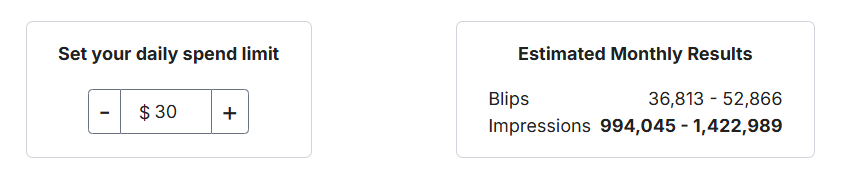
With Blip, billboard advertising in Pennsauken can fit a wide range of budgets because you only pay when your ad actually appears. Each “blip” is a 7.5-to-10-second display on a rotating digital billboard, with pricing starting at just $0.01 per display. Your daily budget is then used by Blip’s algorithm to bid on open ad slots, and the cost per blip can change based on time of day, location, and advertiser demand.
Where can I advertise with Blip in Pennsauken?
Pennsauken gives us one of South Jersey’s most useful billboard markets because it sits at the intersection of dense local traffic, cross-river commuting, and regional retail movement, with nearby corridors routinely carrying 35,000 to 100,000+ vehicles per day. U.S. 130, Route 73, Route 38, Route 90, Route 30, I-676, and I-295 all help create strong billboard opportunities. The township also has quick access to Philadelphia, which broadens the daily trade area.
What kind of traffic and audience can Pennsauken billboards reach?
The bigger story is how Pennsauken fits into the wider South Jersey economy, with a blend of office commuters, healthcare visitors, industrial workers, students, shoppers, and eventgoers. Roughly 4 out of 5 employed residents commute by car, truck, or van, so billboards meet people where they already spend time. The Pennsauken Transit Center also reinforces the township’s role as a gateway rather than a purely local neighborhood market.
When is the best time to run billboard ads in Pennsauken with Blip?
Pennsauken rewards smart dayparting, and four especially useful windows are 6:00 a.m. to 9:00 a.m., 11:00 a.m. to 2:00 p.m., 3:00 p.m. to 7:00 p.m., and 7:00 p.m. to 10:00 p.m. Spring and summer bring stronger leisure movement tied to the Camden Waterfront, concert traffic, and South Jersey weekend travel. November and December are prime months for retail corridors near Cherry Hill Mall, Route 38, and Route 73.
Why is Pennsauken a strong billboard market for Blip?
Pennsauken is a mature, built-out suburb, which is exactly why billboard advertising can work so efficiently here. The township covers just 12.13 square miles, creating a population density of roughly 3,000 residents per square mile and concentrating daily movement along a relatively short list of major roads. Between 2010 and 2020, Pennsauken grew steadily, which supports retail, healthcare, service, and awareness campaigns.
Do I need a contract to advertise with Blip in Pennsauken?
No, Blip has no long-term contracts or minimum commitments. You can start, pause, or stop your campaign at any time.
How fast can I launch a billboard campaign with Blip in Pennsauken?
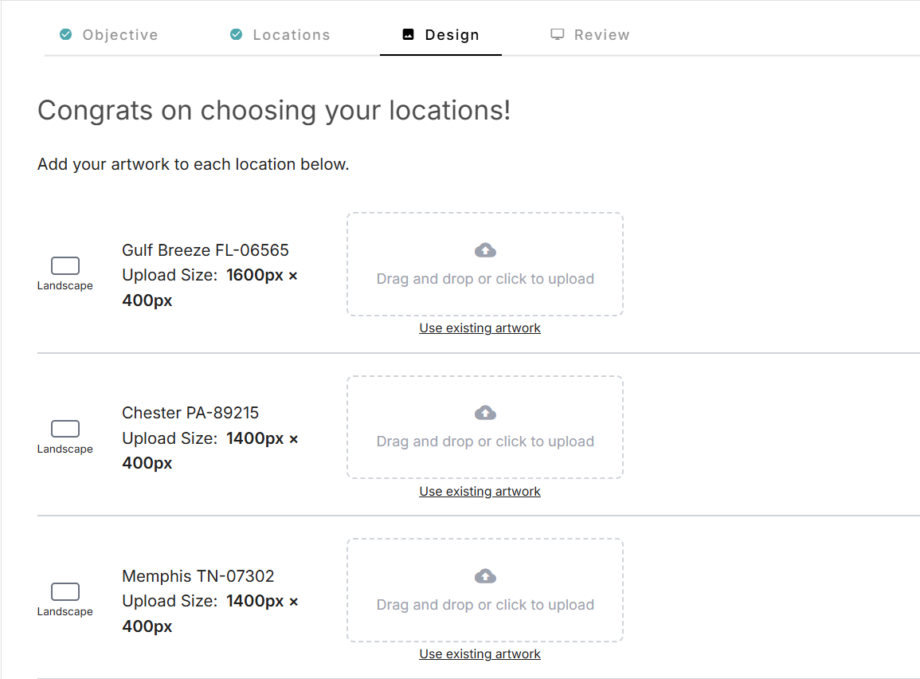
You can have your campaign live in minutes. Create a free account, select your locations, set your budget, upload your design, and start running once approved.
Where can I advertise with Blip in Pennsauken?
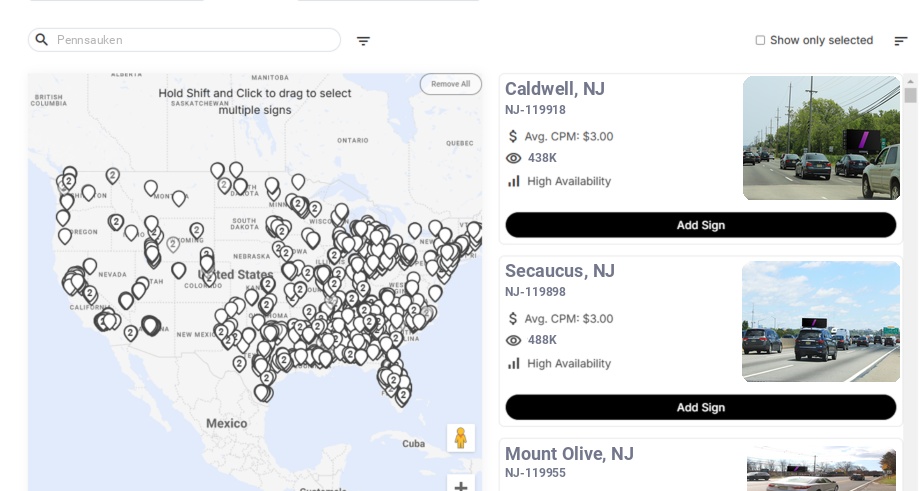
Blip has digital billboards in Pennsauken. You can browse available locations on a map, choose the ones that fit your audience, and start advertising right away.
Still have questions? Launch a campaign in minutes — no contracts, no commitments.
Start Your CampaignPennsauken Billboard Advertising Guide
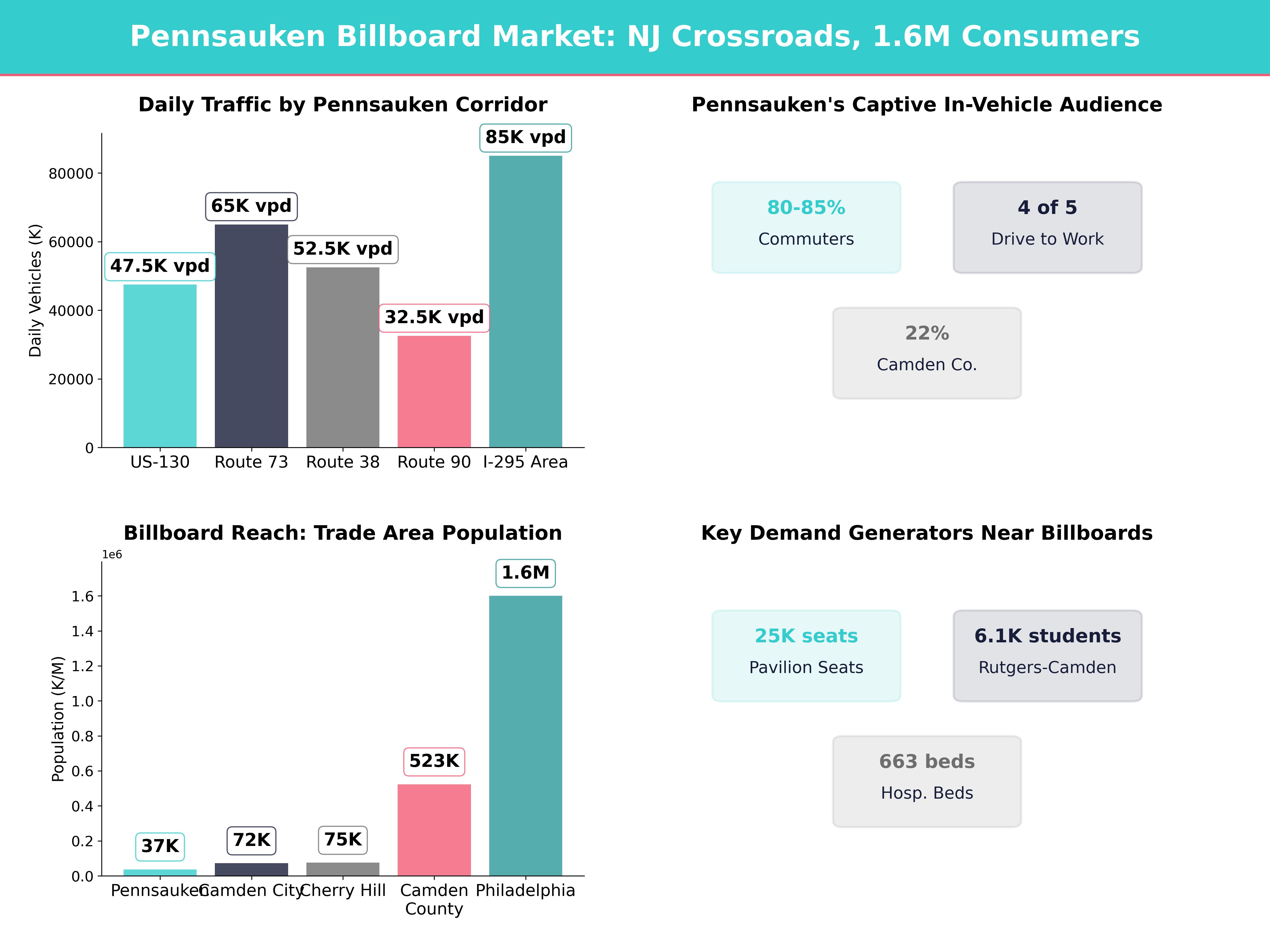
Pennsauken gives us one of South Jersey’s most useful billboard markets because it sits at the intersection of dense local traffic, cross-river commuting, and regional retail movement, with nearby corridors routinely carrying 35,000 to 100,000+ vehicles per day. The township had 37,074 residents in the 2020 Census, and it sits inside Camden County 523,485 residents, so even a small geographic buy can tap into a much larger daily trade area. We also benefit from a road network that includes U.S. 130, Route 73, Route 38, Route 90, and quick access to Philadelphia 1.6 million residents. When we add nearby shopping, healthcare, waterfront entertainment, and bridge traffic, Pennsauken becomes a strong place to build frequency and local relevance with digital billboards.
Market Overview for Pennsauken
Pennsauken is a mature, built-out suburb, which is exactly why billboard advertising can work so efficiently here. The township covers just 12.13 square miles, which creates a population density of roughly 3,000 residents per square mile and keeps daily movement concentrated along a relatively short list of major roads, many of which carry 35,000 to 80,000 vehicles per day. Between 2010 and 2020, Pennsauken grew from 35,885 residents to 37,074, or about 3.3%, while Camden County grew from 513,657 to 523,485, or about 1.9%. That is not explosive Sun Belt growth, but it is steady enough to support retail, healthcare, service, and awareness campaigns.
For advertisers, the bigger story is how Pennsauken fits into the wider South Jersey economy. We are next door to Camden, near Cherry Hill Rutgers University–Camden, Cooper University Health Care Jefferson Health New Jersey South Jersey Port Corporation. That mix gives us a strong blend of office commuters, healthcare visitors, industrial workers, students, shoppers, and eventgoers.
Travel in Pennsauken is still overwhelmingly road-based. Recent ACS patterns indicate that roughly 4 out of 5 employed residents commute by car, truck, or van, including both drive-alone and carpool trips. That matters because billboards in Pennsauken are not fighting for attention in a transit-first market. They are meeting people where they already spend time, especially on habitual routes.
Transit still adds useful audience depth. NJ Transit opened the Pennsauken Transit Center in 2013, creating a direct connection between the 34-mile River LINE with its 21 stations, and the roughly 60-mile Atlantic City Rail Line with its 9 stations. Even though most impressions still come from motorists, this transit node reinforces Pennsauken’s role as a gateway rather than a purely local neighborhood market.
Key Traffic Corridors for Pennsauken Billboards
Pennsauken’s billboard value is concentrated along a handful of corridors that combine local errands with regional pass-through traffic. When we choose boards here, we are usually choosing between repeat-frequency commuter routes, retail approaches, and bridge connectors.
U.S. 130 and Airport Circle
U.S. 130 is one of the township’s core billboard corridors because it carries both local and regional traffic through the heart of Pennsauken. Around Pennsauken and the Airport Circle, NJDOT and DVRPC count locations commonly show traffic in roughly the 35,000 to 60,000 vehicles per day range, depending on the exact segment and year. The circle’s importance comes from the fact that it ties together three major routes: U.S. 130, U.S. 30, and Route 38.
This corridor works especially well for advertisers that want routine, repeat visibility. We tend to like it for quick-service restaurants, urgent care, grocery, auto repair, furniture, telecom, banks, home services, and local entertainment. Drivers on U.S. 130 are often on familiar, repeatable trips, which means a clear message can build recall quickly.
Route 73 and Route 38
Route 73 and Route 38 form one of the strongest retail-and-commuter combinations in the Pennsauken trade area. Near Pennsauken, Maple Shade, and Cherry Hill, Route 73 count stations commonly fall in the 50,000 to 80,000 AADT range, while Route 38 segments near the Airport Circle and major retail nodes often land around 40,000 to 65,000 AADT. Those are meaningful numbers because they bring us both everyday residents and destination shoppers.
This pair is especially valuable for retailers and family-oriented brands. Cherry Hill Mall offers about 1.3 million square feet of retail space, and the surrounding corridor is packed with restaurants, medical offices, services, and destination shopping. When we advertise along this corridor, we are often reaching people who are already in a transaction mindset.
Route 90 and the Betsy Ross Bridge Approach
Route 90 is short, but it punches above its weight. The route is just 3.88 miles long, and it gives Pennsauken direct access to the Betsy Ross Bridge, which opened in 1976 and is operated by the Delaware River Port Authority. Traffic counts on the Route 90 approach and adjacent segments commonly run in the 25,000 to 40,000 vehicles per day range.
This is one of our favorite corridors for campaigns that need Philadelphia relevance without paying only for center-city placements. Legal services, sports bars, concerts, casinos, healthcare, trades, and regional colleges can all benefit here because the route catches travelers moving between South Jersey and Northeast Philadelphia.
Route 30, I-676, and I-295 Connections
Pennsauken also benefits from its proximity to Route 30, I-676, and I-295. DRPA operates 4 Delaware River bridges, and the Pennsauken area feeds traffic toward the Ben Franklin Bridge, while nearby freeway segments often carry 70,000 to more than 100,000 vehicles per day. Portions of I-295 in the broader Camden-Burlington submarket regularly exceed 100,000 daily vehicles.
These connections are best for broad-reach campaigns. If we want regional awareness for hospitals, universities, entertainment venues, insurance, or major retail, this is where we can scale beyond township-only exposure.
Audience Segments We Can Reach in Pennsauken
Pennsauken’s strength is not that it serves one audience. Its strength is that several high-value audiences overlap in a compact area.
Commuters and Cross-River Travelers
The first audience is the daily commuter. With roughly 80% to 85% of workers traveling by car, truck, or van, Pennsauken’s roadway audience is large and dependable. We can reach workers heading to Camden, Cherry Hill
Transit riders add a second layer. The River LINE serves 21 stations from Camden to Trenton, and the Atlantic City Rail Line serves 9 stations across South Jersey. The Pennsauken Transit Center gives us a recognizable local node for commuters who switch modes or combine car and rail trips. Nearby PATCO service in Camden further expands the regional commuter base.
Retail Households and Family Decision-Makers
Pennsauken also gives us a practical, household-oriented audience. Residents move constantly between Pennsauken (37,074 residents), Cherry Hill 74,553), Collingswood (14,186), and nearby retail corridors, which makes billboard frequency especially valuable for products and services with short consideration windows. We see strong fit here for grocery, pediatric care, family entertainment, home improvement, tax services, mattresses, tires, furniture, and financial offers.
The family audience is reinforced by nearby recreation and shopping anchors. Cooper River Park 346 acres, and Cherry Hill Mall remains one of the region’s biggest shopping destinations at roughly 1.3 million square feet. Those places pull households that are already out, moving, and ready to act.
Students, Educators, and Healthcare Visitors
Education and healthcare are major demand generators in the market. Rutgers University–Camden enrolls more than 6,100 students, and Camden County College serves thousands more across its campuses. Those student populations support campaigns for apartments, food, telecom, banking, entertainment, and career services.
Healthcare is just as important. Cooper University Hospital 663-bed academic medical center in Camden, and Jefferson Health New Jersey
Industrial, Port, and Trade Workers
Pennsauken’s location also puts us near blue-collar and logistics audiences. The South Jersey Port Corporation operates 3 marine terminals in Camden, and the wider corridor supports trucking, warehousing, construction, manufacturing, and building trades. That makes Pennsauken a good billboard market for staffing agencies, equipment dealers, union apprenticeship programs, B2B suppliers, workwear, and service contractors.
Eventgoers and Regional Visitors
Even though Pennsauken is not a pure tourism town, it is a gateway to high-traffic leisure destinations. The Freedom Mortgage Pavilion seats about 25,000 people, Adventure Aquarium features more than 2 million gallons of exhibits, and the Battleship New Jersey adds another recognizable waterfront draw. We can also tap visitors using Visit South Jersey itineraries, especially in warm-weather months and on weekends.
Seasonal and Timing Opportunities in Pennsauken
Timing matters in Pennsauken because the market changes shape by season, by weekday, and even by hour.
Spring and Summer in Pennsauken
From roughly May through September, Pennsauken benefits from stronger leisure movement tied to the Camden Waterfront, concert traffic, and South Jersey weekend travel. Concert nights at Freedom Mortgage Pavilion create sharp spikes in afternoon and evening traffic, while waterfront attractions such as Adventure Aquarium and the Battleship New Jersey bring in family audiences.
Summer is also valuable because Pennsauken sits on the way to other destinations. We often use boards along Route 73, Route 38, and bridge connectors for restaurants, convenience retail, urgent care, beverage, lodging, and last-minute entertainment offers.
Back-to-School and Fall Campaign Windows
Late August and September are strong reset periods. Pennsauken School District, Rutgers University–Camden, and Camden County College all bring back regular commuting patterns, while families reestablish shopping and service routines. This is a good time for after-school programs, healthcare appointments, orthodontics, tutoring, internet service, banking, and community events.
Fall also tends to favor practical categories. Home services, roofing, heating, auto maintenance, and insurance often perform well because residents are preparing for colder weather and end-of-year spending.
Holiday Retail and Winter Service Needs
November and December are prime months for retail corridors near Cherry Hill Mall, Route 38, and Route 73. Holiday shoppers make more destination trips, and gift-oriented, entertainment, and restaurant offers can all benefit from high-frequency roadside visibility.
In January and February, Pennsauken’s weather can make service messaging even more relevant. We like to shift toward heating, plumbing, tax preparation, urgent care, auto service, and value-focused retail. The message should usually be direct and practical because winter drivers are often prioritizing speed and convenience.
Pennsauken Dayparting Windows
Pennsauken also rewards smart dayparting. We usually see four especially useful windows.
- 6:00 a.m. to 9:00 a.m. works best for commuter-focused categories such as coffee, healthcare, schools, legal services, and recruiting.
- 11:00 a.m. to 2:00 p.m. often performs well for lunch, same-day retail, appointments, and convenience-driven offers.
- 3:00 p.m. to 7:00 p.m. is the strongest general-purpose window for families, commuters, and after-work errands.
- 7:00 p.m. to 10:00 p.m. becomes more valuable on concert nights, weekend evenings, and entertainment-heavy dates.
Billboard Design Tips for the Pennsauken Market
Pennsauken is not a place for vague creative. The strongest designs here usually feel local, direct, and easy to process at speed.
Use Local Navigation Language
Pennsauken drivers respond well to place-based shorthand because so much of the market revolves around familiar routes. We should not be afraid to mention local cues such as “Airport Circle,” “Route 73,” “Betsy Ross Bridge,” “Camden Waterfront,” or “near Cherry Hill Mall.” In a market built on habitual driving, directional credibility often beats abstract branding.
Design for Speed and Roadway Clutter
Several of Pennsauken’s strongest corridors carry 35,000 to 80,000 vehicles per day, and that means our copy has to survive speed, lane changes, and retail clutter. On high-speed corridors like Route 73 or freeway connectors, we usually want 6 to 8 words of primary copy, one dominant image, and one clear action. On slower retail approaches, we can sometimes add a neighborhood cue, phone number, or short URL, but we still need discipline.
High contrast matters here. South Jersey skies can be gray in winter and bright in summer, so strong contrast such as dark text on light backgrounds, or vice versa, generally performs better than subtle palettes.
Reflect Pennsauken’s Diversity and Practicality
Pennsauken and Camden County are diverse markets, and that should shape our creative choices. Hispanic residents make up about 22% of Camden County’s population, so simple bilingual English-Spanish versions can be worth testing for healthcare, education, legal services, grocery, and community-focused campaigns. We do not need to overload the board with text. We just need language that signals relevance.
Imagery should also match the local mindset. South Jersey suburban audiences often respond better to messages about convenience, value, financing, speed, and proximity than to luxury-first positioning that ignores everyday practicality.
Match the Creative to the Corridor
A Route 90 board aimed at bridge traffic can carry a different message than a U.S. 130 board aimed at local errands. We should use commuter boards for broad awareness, event dates, hiring pushes, and brand recognition. We should use retail-corridor boards for offers, limited-time pricing, openings, and service calls. Pennsauken rewards that kind of route-by-route discipline.
Regional Strategies Across Pennsauken
Pennsauken is small enough to feel unified, but different parts of the township behave differently from an advertising standpoint. We usually get better results when we plan by sub-area instead of treating every board as interchangeable.
West Pennsauken and the Camden Edge
The western side of Pennsauken, especially routes feeding Camden and Philadelphia Camden had 71,791 residents in the 2020 Census, and its employment, education, and entertainment base pulls in many more daily visitors than that resident count alone suggests. We like this zone for hospitals, universities, legal services, concerts, sports bars, and regional brands that want city-adjacent reach.
Central Pennsauken Along U.S. 130
Central Pennsauken is the practical heart of the township. U.S. 130 gives us frequent, local impressions from shoppers, workers, and residents running errands. This is the zone where urgency and convenience matter most. Auto service, furniture, dental, tax prep, telecom, grocery, and fast-casual brands usually fit well here because drivers can act quickly after seeing the message.
North and East Toward the Bridge and Burlington County Side
The north and east side of the market is more connector-driven. Boards feeding Route 90, Route 73, and the Burlington County side are useful when we want to catch suburban households traveling between Pennsauken and neighboring communities. This area can work well for regional healthcare, family attractions, big-box retail, and recruiting because it sits between local errands and larger destination trips.
South Toward Cherry Hill and Collingswood
Southbound movement toward Cherry Hill Collingswood gives us a slightly different audience mix. Cherry Hill 74,553 residents in the 2020 Census, and it functions as one of South Jersey’s strongest retail and professional-service hubs. We often favor this side of the market for elective healthcare, higher-ticket retail, dining, education, and home improvement because the audience is already accustomed to destination purchasing.
Using Blip Tools for Pennsauken Campaigns
Pennsauken is a great market for Blip because we can be precise without becoming rigid. The geography is compact, the corridors are distinct, and the audience shifts by route and time of day.
Build Around Commute Windows
We can use Blip’s scheduling tools to concentrate spend during Pennsauken’s strongest commuter windows instead of spreading budget evenly across the entire day. That is especially useful on U.S. 130, Route 90, and the I-676 approach, where morning and evening visibility often matters more than overnight reach. If we are promoting restaurants, events, or same-day services, we can also bias toward lunch and late afternoon.
Test Corridor-Specific Creative
Pennsauken is ideal for creative testing because the use cases differ so clearly by road. We can run one version aimed at bridge commuters, another aimed at retail shoppers, and a third aimed at Camden Waterfront visitors. With Blip’s map-based selection and real-time reporting, we can compare which locations actually generate the reach and pacing we want, then shift budget quickly.
Optimize for Events, Weather, and Short Bursts
Because Pennsauken sits near concert venues, waterfront attractions, and high-volume retail, it responds well to short, tactical bursts. We can increase activity around concert nights, holiday shopping weekends, school starts, and weather-driven service demand. If a cold snap hits in January, a heating company can react. If a major show lands at Freedom Mortgage Pavilion, a restaurant can lean into pre-event traffic.
Keep Production Flexible
Pennsauken also rewards message freshness. With Blip’s artwork tools, we can build localized versions that reference “Route 73,” “Airport Circle,” or “5 minutes from the Camden Waterfront” without the long lead times that usually slow down traditional out-of-home campaigns. That flexibility is valuable in a market where context matters.
Getting Started with Billboard Rental in Pennsauken
Renting a billboard in Pennsauken works best when we start with the movement pattern we want, not just the first available screen on the map.
Start with the Pennsauken Objective First
We should first decide whether our goal is local household reach, commuter frequency, bridge traffic, retail conversion, or regional awareness. A restaurant in Pennsauken may want U.S. 130 frequency. A hospital or university may prefer freeway and bridge connectors. An event venue may care most about afternoon and evening traffic heading toward Camden.
Evaluate Each Pennsauken Location Practically
When we compare boards, we should look at more than raw traffic. We should ask four practical questions.
- Does the board sit on a routine commuter path or a one-off pass-through route?
- Is the audience moving fast, or do nearby signals and merges create more reading time?
- Does the location line up with our service area, whether that is Pennsauken only, Camden County, or cross-river Philadelphia traffic?
- Does the creative match the road, especially if the corridor is visually crowded?
Those questions usually matter more than chasing the single highest count location.
Launch Small, Learn Fast, and Scale
Pennsauken is a very testable market, so we do not need to overcommit on day one. We can start with a small cluster of boards, watch how pacing and visibility line up with our goals, then add or remove locations. Because Blip is self-serve and pay-per-play, with pricing that can start at $0.01 per display, we can test Pennsauken without the large upfront commitment that often comes with traditional billboard buying.
The biggest advantage is simplicity. Instead of waiting through long negotiations, static packages, or fixed-term commitments, we can choose Pennsauken boards directly, align them to the routes that matter, and refine the campaign as local results come in. In a market built on daily repetition, commuter rhythm, and regional access, that flexibility gives us a real edge.