Billboards near Cliffside Park, NJ
No Minimum Spend. No Long-Term Contracts. Just Results.
Trusted by Leading Brands


Billboard advertising
near Cliffside Park has never been easier
How much is a billboard near Cliffside Park?
Why Choose Blip for Billboard Advertising near Cliffside Park
-
Blip lets Cliffside Park advertisers launch fast and self-serve, reaching GWB and Lincoln Tunnel commuters without agency delays.
-
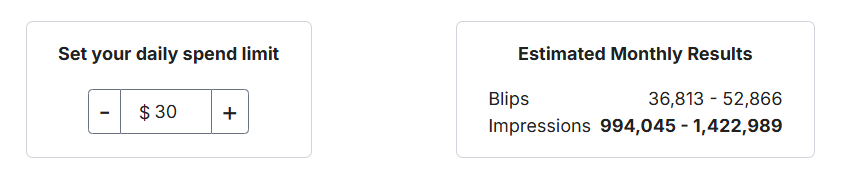
Set a daily budget on Cliffside Park billboards and Blip keeps spend controlled, ideal for testing dense Bergen County traffic.
-
Daypart Cliffside Park ads for 6:30-9:30 a.m. and 4-8 p.m. rushes, when Manhattan-bound commuters are most attentive.
-
No contracts means you can tune Cliffside Park campaigns around Meadowlands events, weekend shopping, or seasonal demand.
-
Track Cliffside Park results in real time and shift budget toward Route 46, US 1/9, and I-95 placements that perform best.
-
Use Blip's creative tools to build bold, bilingual Cliffside Park ads for its multilingual, high-density audience.
Frequently Asked Questions About Billboard Advertising near Cliffside Park
How much does a billboard cost near Cliffside Park, New Jersey with Blip?
With Blip, you control the cost of advertising on Cliffside Park billboards by setting your own daily budget, and Blip automatically keeps your campaign within that amount. Each “blip” is a short 7.5–10 second ad on rotating digital billboards near Cliffside Park, New Jersey, and you only pay for the blips you receive. Pricing for each blip depends on when and where you choose to advertise in the Cliffside Park area, along with overall advertiser demand, so you can start small and adjust whenever you’re ready.
Where can I advertise with Blip near Cliffside Park, New Jersey?
We don’t place digital billboards on the narrow local streets that run through the Cliffside Park area itself, but we do saturate the major corridors where residents drive, bus, and rideshare every day. Some of the most important nearby routes and structures include the George Washington Bridge, Lincoln Tunnel approaches, Route 46, US 1/9, I-95, and Route 3 near Secaucus. With 191 digital billboards spread across Ridgefield, Bogota, North Bergen, Weehawken, Secaucus, Hackensack, Lodi, Maywood, Kearny, and New York City, we can help you build coverage that mirrors exactly how people from the Cliffside Park area actually move through the region.
What kind of audience will my Cliffside Park, New Jersey billboard reach with Blip?
The Cliffside Park area is compact, dense, and highly urbanized, with more than 25,000 residents in about 0.9 square miles. This hyper-density has major implications for billboard strategy, because a 3–5 mile geofence around the area captures parts of Ridgefield, North Bergen, Fairview, Fort Lee, Edgewater, and portions of Hudson County. The local population also skews working-age and is highly diverse, with large immigrant communities and more than half of students in borough schools speaking a language other than English at home.
When is the best time to run Cliffside Park, New Jersey billboards with Blip?
The Cliffside Park area operates on a hybrid schedule: classic commuter rush hours plus evening and weekend neighborhood activity. Morning peaks typically run from about 6:30–9:30 a.m., while evening peaks often span 4–8 p.m. Weekend retail and leisure traffic can increase mall- and outlet-adjacent volumes by 20–30% versus weekdays, making Friday evenings, Saturdays, and Sunday afternoons useful times to advertise.
What roads near Cliffside Park, New Jersey get the most traffic for billboard advertising?
The George Washington Bridge carries roughly 289,000 vehicles per average day across both decks, and the Lincoln Tunnel carries over 120,000 vehicles per day. Route 46, US 1/9, and I-95 in this region often carry between 70,000 and 150,000 vehicles per day, and sections of Route 3 near Secaucus carry well over 100,000 vehicles per day. With 191 digital billboards spread across the region, those corridors can deliver potential daily exposures to hundreds of thousands of vehicle trips.
Do I need a contract to advertise with Blip near Cliffside Park?
No, Blip has no long-term contracts or minimum commitments. You can start, pause, or stop your campaign at any time.
How fast can I launch a billboard campaign with Blip near Cliffside Park?
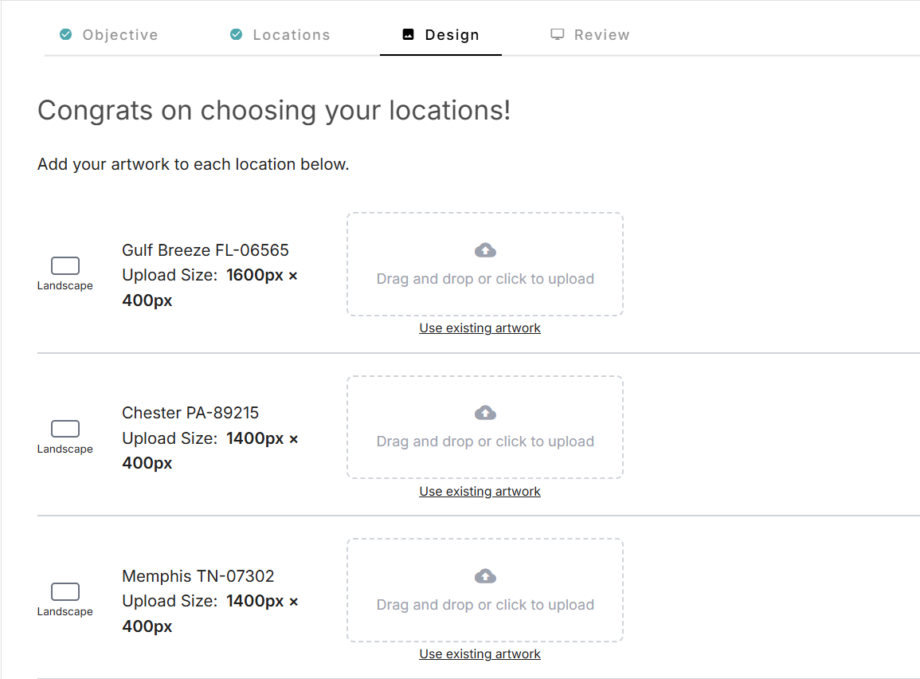
You can have your campaign live in minutes. Create a free account, select your locations, set your budget, upload your design, and start running once approved.
Where can I advertise with Blip near Cliffside Park?
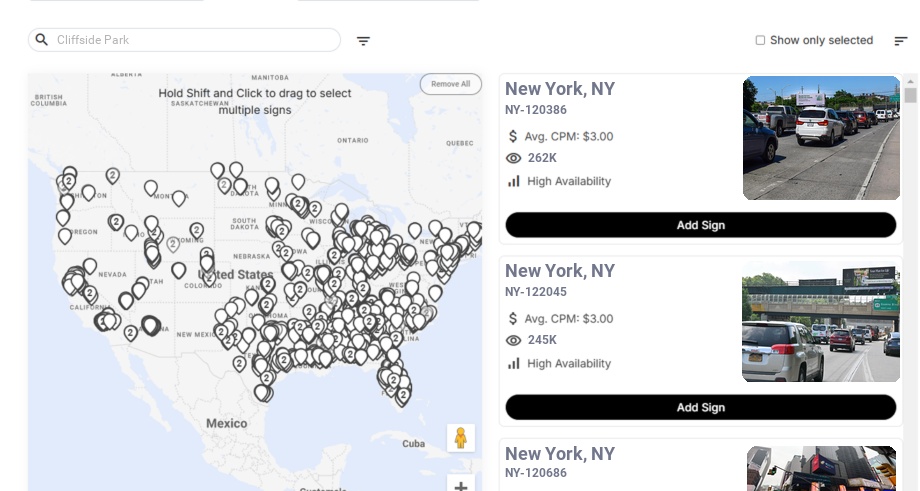
Blip has digital billboards near Cliffside Park. You can browse available locations on a map, choose the ones that fit your audience, and start advertising right away.
Still have questions? Launch a campaign in minutes — no contracts, no commitments.
Start Your CampaignCliffside Park Billboard Advertising Guide
Perched high on the Palisades with sweeping views of Manhattan, the Cliffside Park area sits at the crossroads of dense Bergen County suburbs and some of the busiest commuter corridors in the United States. With 191 digital billboards within about 10 miles—spread across Ridgefield, North Bergen, Weehawken Secaucus
Understanding the Cliffside Park Area Market
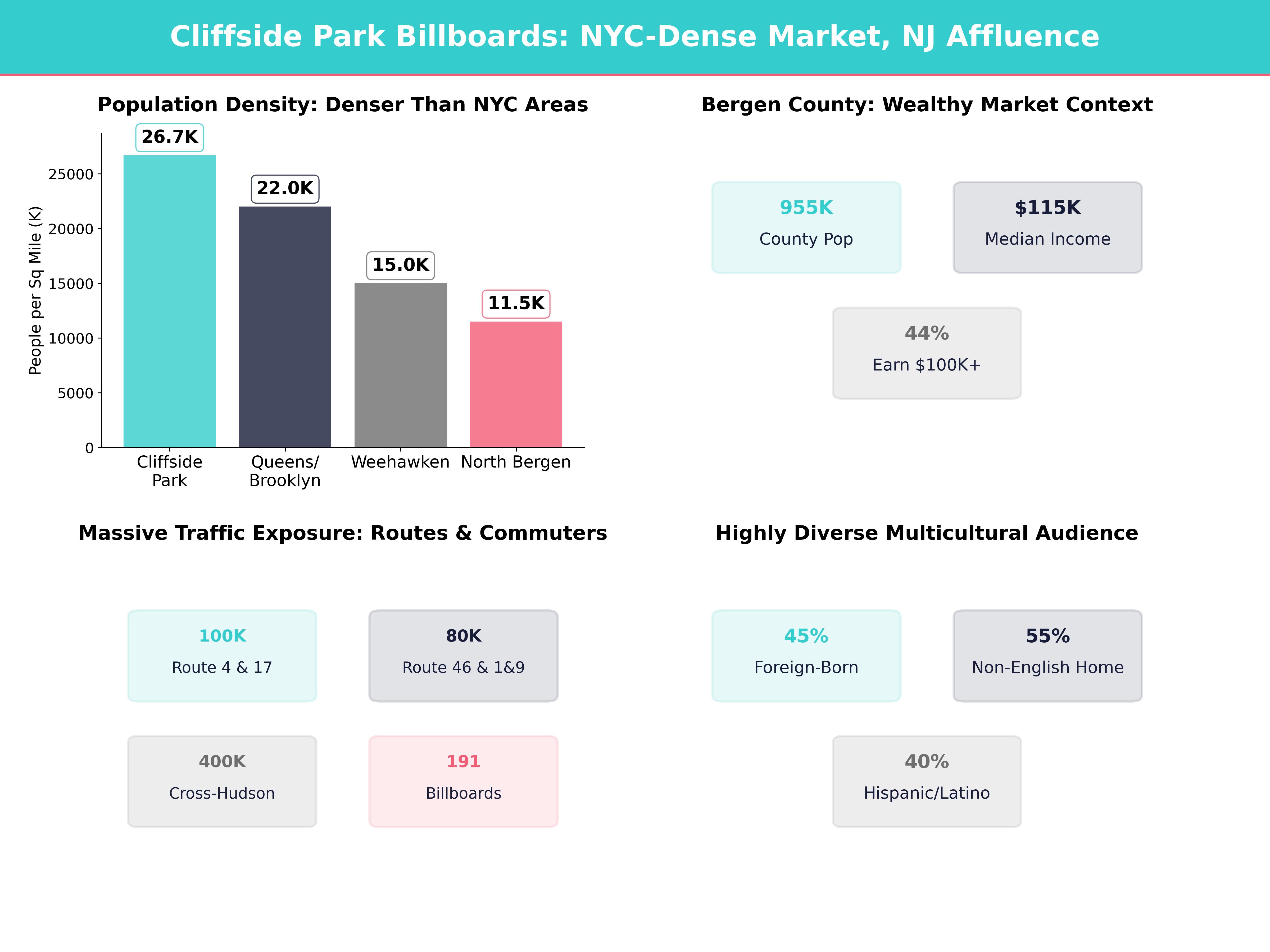
The Cliffside Park area is compact, dense, and highly urbanized. According to the Borough of Cliffside Park’s municipal profile, the borough covers only about 0.9 square miles yet is home to more than 25,000 residents, translating to a density of over 27,000 people per square mile—among the highest in New Jersey. For comparison, Bergen County overall averages roughly 4,100 people per square mile, and nearby Fort Lee
This hyper‑density has major implications for billboard strategy and for anyone exploring billboard advertising near Cliffside Park:
- Tight radius, big impact: A 3–5 mile geofence around the Cliffside Park area captures parts of Ridgefield, North Bergen, Fairview Edgewater
- Commuter-heavy lifestyle: Many residents work across the Hudson River. Regional commuting studies indicate that in some riverfront Bergen and Hudson County communities, more than 35–45% of working residents commute to New York City on a typical weekday. Bergen County as a whole sends well over 60,000 daily commuters into Manhattan via the George Washington Bridge, Lincoln Tunnel, and bus routes, and the Cliffside Park area is one of the closest residential pockets to Midtown.
- Diverse, multilingual audience: Cliffside Park and neighboring towns have large Hispanic, Turkish, Korean, and Eastern European communities. In the borough’s schools, more than half of students speak a language other than English at home (Cliffside Park Public Schools). In some nearby districts, such as Union City
Local and regional tourism and business organizations—such as Bergen County, Hudson County’s tourism office, and the Meadowlands Chamber—highlight the area’s strong mix of residential, commercial, and entertainment destinations, all within a 10–20 minute drive from the Cliffside Park area.
For advertisers, this means that a relatively small number of strategically placed digital billboards near the Cliffside Park area can repeatedly reach the same, highly targeted audiences throughout their daily routines. Whether you’re looking at a short-term billboard rental near Cliffside Park or an always-on presence, density ensures that frequency builds quickly.
Key Traffic Corridors Serving the Cliffside Park Area
We don’t place digital billboards on the narrow local streets that run through the Cliffside Park area itself, but we do saturate the major corridors where residents drive, bus, and rideshare every day. These corridors are the backbone of effective Cliffside Park billboards.
Some of the most important nearby routes and structures include:
- George Washington Bridge (GWB): Just north of the Cliffside Park area, the GWB carries roughly 289,000 vehicles per average day across both decks, according to the Port Authority of New York & New Jersey
- Lincoln Tunnel approaches (Weehawken / North Bergen / Jersey City): The Lincoln Tunnel carries over 120,000 vehicles per day; surrounding approach roads and viaducts in Weehawken, North Bergen, and Jersey City see daily volumes in the tens of thousands ( Port Authority
- Route 46, US 1/9, and I‑95 (Ridgefield / Bogota / North Bergen): NJDOT traffic counts show many segments of these highways carrying between 70,000 and 150,000 vehicles per day in this region. For instance, sections of I‑95 near Ridgefield and Leonia New Jersey Department of Transportation (NJDOT) and local planning offices in towns like North Bergen and Bogota.
- Route 3 near Secaucus: Sections of Route 3 carry well over 100,000 vehicles per day as they funnel traffic between the New Jersey Turnpike, Lincoln Tunnel, and Meadowlands complex. On major event nights (NFL games, concerts, and exhibitions), traffic counts spike even higher, as documented by East Rutherford and Meadowlands event reports. Boards in Secaucus (about 4.9 miles from the Cliffside Park area) are perfect for broader North Jersey and Manhattan-bound reach.
With 191 digital billboards spread across Ridgefield, Bogota, North Bergen, Weehawken, Secaucus, Hackensack Lodi Maywood Kearny, and New York City, we can help you build coverage that mirrors exactly how people from the Cliffside Park area actually move through the region. In practice, that translates into potential daily exposures to hundreds of thousands of vehicle trips, with many of those drivers passing the same locations 10–20 times per month, maximizing efficiency for billboard advertising near Cliffside Park.
Who You’re Reaching: Demographics and Lifestyles
Understanding who lives and works near the Cliffside Park area helps shape what your billboard should say and when it should run.
1. Dense, mixed-income suburban-urban audience
- The Cliffside Park area combines high‑rise apartment living along the Palisades, mid‑rise buildings on Anderson Avenue, and low‑rise neighborhoods inland. This creates a mix of renters, condo owners, and single‑family homeowners. In some nearby waterfront corridors such as Edgewater and Fort Lee, more than 70% of housing units are renter-occupied, while inland pockets show homeownership rates above 50%, giving you both transient and long-term audiences.
- Bergen County’s median household income is around $115,000, but within the Cliffside Park area and adjacent communities, incomes range widely from under $50,000 to well above $150,000. Neighborhood profiles from the Bergen County planning division show that in some high-rise corridors, over 30% of households earn $150,000+ annually, while in older inland neighborhoods, 25–35% of households fall below $60,000. That mix makes clear value propositions important, whether you’re offering premium services or budget-friendly options.
- The local population skews working-age: in many riverfront and inner-ring suburbs, roughly 60–65% of residents are between 18 and 64 years old, with median ages in the mid‑30s to mid‑40s. That creates strong audiences for family-focused services, professional services, and leisure spending.
2. Highly diverse, multicultural population
Local officials highlight the Cliffside Park area’s significant immigrant communities, with large Brazilian, Turkish, Korean, Italian, and Hispanic populations (Borough of Cliffside Park). Nearby towns like North Bergen and Union City are majority Hispanic, while Fort Lee has a large Korean-American population. In several neighboring municipalities, more than 40% of residents are foreign-born, and in some pockets of Hudson County that share shopping and commuting patterns with Cliffside Park, that share rises above 50%.
Implications for your campaigns:
- Bilingual or multilingual creative (e.g., English/Spanish, English/Portuguese, or English/Turkish) can dramatically improve relevance. In local schools where 50–70% of students speak another language at home, bilingual signage is viewed more positively and is more likely to be understood by the entire household.
- Visual cues—such as culturally resonant colors, foods, or celebrations—often outperform text-heavy messages. Community coverage by outlets like NorthJersey.com and the Hudson Reporter
- Trust factors (family imagery, local landmarks, community phrases) resonate strongly in immigrant communities. Local businesses often highlight “family-owned since…” or “serving Cliffside Park area families for 20+ years” in print and digital ads, and that strategy can effectively extend to digital billboards.
3. Heavy commuter and transit usage
Residents of the Cliffside Park area rely on:
- NJ Transit buses along Anderson Avenue and nearby routes, many feeding into the Lincoln Tunnel and Port Authority Bus Terminal (NJ Transit). Several local routes carry thousands of riders per weekday; systemwide, NJ Transit buses handle hundreds of thousands of daily passenger trips, and the Bergen-Hudson corridor is among the busier segments.
- Rideshare and livery vehicles connecting to Manhattan and Jersey City. In riverfront communities, it’s common for 20–30% of households to report using a carpool, rideshare, or transit as their primary commute mode instead of driving alone.
- Key “park and ride” and transfer points in North Bergen, Weehawken, and Secaucus, where daily parking counts reach into the thousands on weekdays, according to municipal and county transportation studies.
Translate that into:
- Strong morning/evening commute spikes on roads with Blip coverage. In many commuter corridors, peak-hour volumes jump 30–50% above mid-day baselines, which is precisely when time-sensitive offers perform best.
- A large portion of your audience seeing your boards multiple times per week—even if they live on the same few square blocks. With typical 5‑day commute patterns, a daily commuter may pass a given board 10–20 times per month, compounding awareness even at modest budgets.
Strategic Placement: How to Use Our 191 Nearby Boards
Because our 191 digital billboards create a perimeter around the Cliffside Park area, you can use Blip to design a layered campaign strategy that makes the most of billboards near Cliffside Park:
1. Core local reach
To focus tightly on people who live or shop near the Cliffside Park area:
- Prioritize billboards in Ridgefield, North Bergen, and Hackensack—all within roughly 5–6 miles. These municipalities together account for more than 150,000 residents, tens of thousands of jobs, and multiple regional shopping clusters, according to their respective municipal profiles (Ridgefield, North Bergen, Hackensack).
- Choose faces on corridors that residents are most likely to use: Route 46, local connectors feeding to Anderson Avenue, and GWB/Lincoln Tunnel approach routes. Traffic counts on these corridors range roughly from 25,000 to 100,000 vehicles per day depending on the segment, giving you a base to model potential impressions.
- Schedule heavier frequency during key local patterns (weekday commutes, after‑school hours, weekend shopping errands). Local retail studies show that in many Bergen and Hudson County communities, 55–65% of in-person shopping trips occur between 3–8 p.m. on weekdays and midday to early evening on Saturdays.
2. Manhattan and regional commuter capture
To reach residents of the Cliffside Park area plus similar audiences from Edgewater, Fort Lee, Fairview, and North Bergen:
- Layer in boards in Weehawken, Secaucus, Jersey City, and Kearny along approaches to the Lincoln Tunnel, Holland Tunnel, and I‑95/NJ Turnpike. Municipal economic development offices—such as Weehawken, Secaucus, Jersey City, and Kearny—note that tens of thousands of commuters and shoppers pass through their communities daily en route to New York City and major job centers.
- Include select New York City boards (within about 5.4 miles) for upper Manhattan and Midtown West exposure if you sell to Manhattan customers but want to keep a strong connection back to your New Jersey base. Upper Manhattan neighborhoods alone account for hundreds of thousands of residents plus heavy inbound commuter and tourist traffic, further amplifying your reach.
3. Destination and retail focus
To reach shoppers, diners, and entertainment seekers:
- Use Secaucus and Jersey City boards that capture traffic heading to retail, outlet centers, the Meadowlands, and waterfront districts. The Town of Secaucus notes that its retail and entertainment hubs—such as outlet centers and big-box clusters—draw visitors from across North Jersey and Manhattan, especially on weekends. The City of Jersey City highlights major mixed-use waterfront and downtown destinations that generate strong evening and weekend traffic.
- Consider boards near key shopping destinations covered in regional reporting by outlets like NorthJersey.com and NJ.com
With Blip, you pay per “blip” (a single 7.5–10 second ad play), so you can experiment with combinations of these zones, then shift budget quickly to the locations delivering the most engagement or conversions. Many advertisers start with a test budget that buys a few hundred to a few thousand daily plays spread across 10–20 boards, then narrow to the top‑performing 5–10 locations as data accumulates. This flexible model makes it easy to scale or test billboard rental near Cliffside Park without long-term contracts.
Timing Your Campaign: When the Cliffside Park Area Is Most Attentive
The Cliffside Park area operates on a hybrid schedule: classic commuter rush hours plus evening and weekend neighborhood activity. Regional traffic and transit data show that:
- Morning peaks typically run from about 6:30–9:30 a.m., with volumes 30–40% higher than midday.
- Evening peaks often span 4–8 p.m., sometimes with two mini‑peaks (leaving Manhattan and entering local neighborhoods).
- Weekend retail and leisure traffic can increase mall- and outlet‑adjacent volumes by 20–30% versus weekdays.
We typically see advertisers perform best when they align dayparting with:
Weekday patterns
- Morning commutes (6:30–9:30 a.m.): Target boards near Ridgefield, North Bergen, and Weehawken to reach Cliffside Park area residents heading toward Manhattan or regional hubs. Ideal for coffee shops, breakfast spots, gyms, transit‑adjacent retail, and service businesses that want to be “top of mind” all day.
- Midday (11 a.m.–2 p.m.): Capture local errand‑runners and shift workers moving between Cliffside Park area neighborhoods, Hackensack, and Secaucus. Great for quick-service restaurants, medical/dental practices, and local retailers. Local health care and retail surveys often show that 25–35% of weekday walk‑in appointments and purchases cluster in this window.
- Evening commutes (4–8 p.m.): Focus on “welcome back” messaging and dinner/entertainment offers. People are deciding where to shop, eat, and unwind as they return to the Cliffside Park area. Restaurant and grocery operators in Bergen and Hudson Counties frequently report that more than half of their weekday revenue occurs during these hours.
Weekend and nightlife
- Friday evenings and Saturdays: Traffic along regional routes toward malls, restaurants, and nightlife spots increases. Boards in Secaucus, Jersey City, and North Bergen are ideal for promoting dining, events, and weekend sales targeting Cliffside Park area residents. Weekend traffic counts near Secaucus retail clusters often exceed weekday volumes by 10–20%, according to local transportation studies.
- Sunday afternoon and evening: Use softer calls-to-action—family activities, religious services, grocery shopping, or home services that fit into “reset for the week” behavior patterns. Many family-focused destinations report steady Sunday visitation rates, with some religious communities drawing hundreds or thousands of congregants to a single campus.
With Blip’s scheduling tools, you can:
- Run weekday-only, weekend-only, or specific rush-hour campaigns.
- Allocate more budget to the highest‑value hours for your category.
- Turn campaigns up or down around local events promoted by the Borough of Cliffside Park or regional happenings covered by Bergen County and local news sites such as NorthJersey.com, NJ.com, and the Cliffside Park Daily Voice
Crafting Creative That Works for the Cliffside Park Area
Because drivers and bus riders near the Cliffside Park area get only a few seconds to process your message, clear and locally tuned creative is non‑negotiable for effective billboard advertising near Cliffside Park.
1. Keep it bold and instantly legible
- Limit yourself to 7 words or fewer when possible. Studies of roadside advertising recall consistently show that shorter messages are remembered at higher rates—sometimes 20–30% better—than long, text-heavy layouts.
- Use high-contrast color combinations: dark text on a light background, or vice versa, so your message stands out against skyline views and urban clutter.
- Choose large, bold fonts and avoid script or overly decorative typefaces. At 50–60 mph, drivers often have only 2–3 seconds of clear viewing time per pass.
2. Localize your message
Specificity builds trust in the Cliffside Park area:
- Reference local landmarks or corridors: “Minutes from Anderson Ave,” “Near the George Washington Bridge,” or “Just off Route 46 in Ridgefield.”
- Mention nearby neighborhoods your audience identifies with: “Serving the Cliffside Park area and North Bergen,” or “Your Fort Lee & Cliffside Park area tax pro.”
- Consider bilingual lines where appropriate, especially English/Spanish, for widespread reach. In some nearby communities where 60–70% of residents speak Spanish at home, bilingual signage can substantially increase comprehension for the entire household.
3. Lean into community and family themes
Local news outlets like NorthJersey.com frequently highlight the family‑oriented events, school achievements, and community festivals of the Cliffside Park area and neighboring towns. That same mindset responds well to:
- Family imagery and inclusive visuals.
- Emphasis on safety, reliability, and long‑term relationships for professional services. Local surveys often show that trust and recommendations from family/friends are top decision factors for services like healthcare, finance, and education.
- Clear promotions for youth programs, schools, healthcare, and community organizations. For example, school districts and recreation departments in nearby municipalities sometimes enroll hundreds or thousands of children per season in sports, arts, and academic programs—prime audiences for family-focused messaging.
4. Use multiple creatives for different audiences
One advantage of Blip’s digital billboards is the ability to rotate several creatives at once:
- A commuter-focused ad during weekday rush hours (“Skip the city dentist—see us near the Cliffside Park area”).
- A family/weekend ad for Saturdays and Sundays (“Family brunch just 10 minutes from the Cliffside Park area”).
- A bilingual ad targeted at boards with higher Hispanic or Brazilian audience concentrations in North Bergen or Jersey City.
You only pay when your specific creative plays, so you can A/B test alternate messages without committing to a full, static buy. Over time, you can compare clickthroughs, calls, or in‑store visits during periods when each creative was live to see which drives the best return. This makes it easy to refine what performs best on Cliffside Park billboards over time.
Using Data to Optimize Your Cliffside Park Area Campaign
The density and complexity of traffic near the Cliffside Park area can work to your advantage if you use performance data thoughtfully.
Here’s how to approach optimization with Blip:
-
Start with a clear geographic hypothesis
- Example: “My core customers live in the Cliffside Park area and work in Manhattan.”
Strategy: Prioritize Weehawken, Ridgefield, and North Bergen boards on Lincoln Tunnel and GWB approaches during 6–10 a.m. and 4–8 p.m. Given that tens of thousands of commuters cross these corridors daily, even a small share of impressions converting can produce measurable results. - Example: “I want shoppers from the Cliffside Park area plus broader North Jersey.”
Strategy: Add Hackensack, Secaucus, and Lodi boards, with heavier weekend spend. Retail corridors in these towns collectively serve hundreds of thousands of square feet of shopping space, attracting regional visitors whose trips often begin or end in the Cliffside Park area.
- Example: “My core customers live in the Cliffside Park area and work in Manhattan.”
-
Monitor impressions and budget allocation
- Track which boards consume the most budget and which placements align most closely with spikes in web traffic, phone calls, or store visits. Many advertisers see distinct differences: a few boards may deliver 30–40% of total impressions while also aligning with the strongest response.
- Shift budget from under‑performing zones to higher‑performing ones—e.g., if Ridgefield and Secaucus deliver more conversions than inner‑city Manhattan boards, double down on New Jersey placements. Over a few weeks, it’s common to improve cost‑per‑lead or cost‑per‑visit by 20–50% simply by reallocating spend to the highest-yield locations.
-
Align with local calendars
- Time campaigns around local events posted on Cliffside Park’s official website and Bergen County’s calendar—street fairs, cultural festivals, school events, and holiday parades often increase local travel by several thousand extra trips in a single day.
- Increase presence ahead of major shopping holidays and regional events at the Meadowlands, which draw visitors from the Cliffside Park area via Secaucus and Kearny. NFL games, concerts, and expos can pull tens of thousands of attendees per event, significantly boosting impressions on Route 3 and Turnpike-adjacent boards.
-
Refresh creative regularly
- Swap in new imagery or copy every 4–8 weeks to keep frequent commuters from tuning out. In high-frequency environments where commuters may see the same board 40–80 times over a few months, rotating creative helps maintain attention.
- Use performance data to refine your messages: if a short, promotion‑led layout performs better than a brand‑only one, lean into that style across your campaign. Some advertisers find that including a simple offer (“$10 off,” “Free consultation,” “2‑for‑1 Tuesdays”) can increase engagement rates by 20–30% versus generic awareness ads.
Campaign Ideas Tailored to the Cliffside Park Area
To make this more concrete, here are a few types of advertisers and how they might use Blip near the Cliffside Park area:
-
Local restaurants & cafés:
- Run morning ads on Ridgefield and North Bergen boards: “Breakfast 5 minutes from the Cliffside Park area.”
- Switch to lunch & dinner messaging afternoons/evenings. Feature high‑impact food photography and simple directions (“On Palisade Ave, near Anderson Ave”). Given that local dining guides in outlets like NorthJersey.com and NJ.com frequently spotlight new restaurants along the Palisades and in nearby towns, pairing your billboard messaging with online buzz can be especially effective.
-
Medical, dental, and wellness clinics:
- Target commuters who would prefer appointments near home rather than Manhattan. Many healthcare providers find that 60–70% of their patients come from within about a 5–7 mile radius, which maps well to the Cliffside Park area and adjoining towns.
- Use trust‑oriented language: “Cliffside Park area families trust us with their smiles,” plus a simple phone number or URL. Consider highlighting years in business (“Serving local families for 15+ years”) and key services.
-
Real estate agents & property managers:
- Highlight new condo developments or rentals along the Palisades with sky‑view imagery. Riverfront and cliffside markets in places like Cliffside Park, Fort Lee, and Edgewater often have listing prices and rents well above county averages, attracting higher-income renters and buyers.
- Focus on boards visible to Manhattan workers heading home through Weehawken, North Bergen, and Ridgefield. Emphasize commute times (“15 minutes to Midtown via GWB or Lincoln Tunnel”) and amenities.
-
Education, tutoring, and after‑school programs:
- Time campaigns to school calendar peaks (back‑to‑school, exam seasons). Local districts often see enrollment surges in tutoring and enrichment programs around state testing periods and at the start of each semester.
- Use family-friendly visuals and bilingual lines where appropriate. In areas where more than half of students grow up in multilingual households, bilingual ads can resonate strongly with both students and parents.
-
Home services (HVAC, plumbing, renovation):
- Emphasize fast response “in the Cliffside Park area,” and clearly display a phone number. Many home service businesses report that more than 70% of calls come from within a 10–15 minute drive, making tightly geofenced boards a strong fit.
- Increase presence around seasonal weather changes covered by local outlets like NJ.com that drive spikes in demand. For example, cold snaps and heat waves often trigger sharp jumps in HVAC calls over the course of a few days.
Bringing It All Together
Advertising on digital billboards serving the Cliffside Park area is about more than just being seen—it’s about being strategic in one of the most densely populated, commuter‑driven markets in New Jersey.
By:
- Leveraging 191 digital billboards across nearby cities like Ridgefield, North Bergen, Weehawken, Secaucus, Hackensack, Jersey City, and New York,
- Timing your ads to match real commuter and shopping patterns backed by local traffic and transit data,
- Crafting simple, localized, and culturally aware creative for a diverse, multilingual audience, and
- Using performance data to refine your placements and messages over time,
we can help you turn the everyday journeys of Cliffside Park area residents into consistent, measurable growth for your business. Whether you need a nimble test of a few billboards near Cliffside Park or a full-scale, year-round presence, the same platform lets you adapt as your goals evolve.
When you’re ready, you can choose your nearby boards, set your budget, upload your creative, and start reaching the Cliffside Park area within minutes—all with the flexibility to adjust as you learn what works best from your Cliffside Park billboards.