Billboards near Gloucester City, NJ
No Minimum Spend. No Long-Term Contracts. Just Results.
Trusted by Leading Brands


Billboard advertising
near Gloucester City has never been easier
How much is a billboard near Gloucester City?
Why Choose Blip for Billboard Advertising near Gloucester City
-
Blip lets you launch fast on Gloucester City's I-76 and Walt Whitman Bridge commuter flow with self-serve control.
-
Set flexible daily budgets in Gloucester City and reach Route 42 shore traffic or U.S. 130 locals without contracts.
-
Use Blip dayparting in Gloucester City to hit 6-10 a.m. commuters and 3-7 p.m. return traffic when roads are busiest.
-
Track real-time results in Gloucester City and shift spend toward the corridor working best, from I-295 to the waterfront routes.
-
Blip's creative tools make it easy to tailor Gloucester City ads for Camden Waterfront events, students, and healthcare workers.
Frequently Asked Questions About Billboard Advertising near Gloucester City
How much does a billboard cost in Gloucester City with Blip?
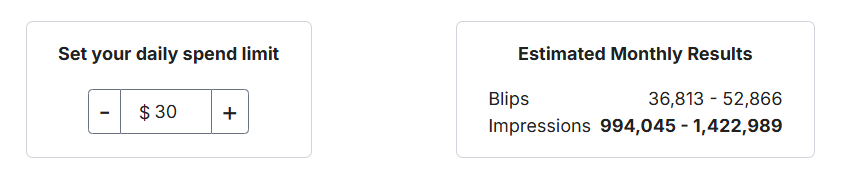
With Blip, billboard advertising in Gloucester City is built to fit your budget. You set a daily budget, and Blip’s algorithm uses it to bid for open ad slots on rotating digital billboards, so you only pay when your ad actually appears. Each “blip” is a 7.5-to-10-second display, and pricing starts at just $0.01 per display.
Where can I advertise with Blip in Gloucester City to reach the most traffic?
The best corridor for regional reach fast is I-76 and the Walt Whitman Bridge approach, where nearby segments commonly land in the 120,000 to 150,000 AADT range. I-295 near the Bellmawr interchange is one of the region’s most important distribution and commuter connectors, with nearby segments often running in the 90,000 to 120,000 AADT range. Route 42 and U.S. 130 are also strong options depending on whether you want shore-bound travel, local conversion, or broader South Jersey reach.
Why is Gloucester City a strong billboard market for Blip?
Gloucester City is a small riverfront community, but it sits at the doorstep of Camden County and within immediate reach of Philadelphia. Roughly 80% of Camden County workers commute by car, truck, or van, and the average one-way commute is about 29 minutes. That creates repeated exposure on the same bridge approaches, freeway merges, and retail arterials.
When is the best time to run billboard ads in Gloucester City?
From roughly April through September, tourism and leisure traffic become much more important. Late August and early September bring a strong reset in travel behavior as students return to Rutgers University–Camden, Camden County College, and Rowan University. From November through December, retail urgency increases and local-service messaging often performs well.
What kinds of businesses work best on Gloucester City billboards with Blip?
The Gloucester City area supports healthcare, education, logistics, public employment, and destination entertainment. Healthcare providers, legal services, insurance, financial services, home services advertisers, staffing firms, auto dealers, and local retailers can all benefit from the corridor mix. This market also works well for recruitment campaigns, B2B services, and consumer categories tied to commuter and event traffic.
Do I need a contract to advertise with Blip near Gloucester City?
No, Blip has no long-term contracts or minimum commitments. You can start, pause, or stop your campaign at any time.
How fast can I launch a billboard campaign with Blip near Gloucester City?
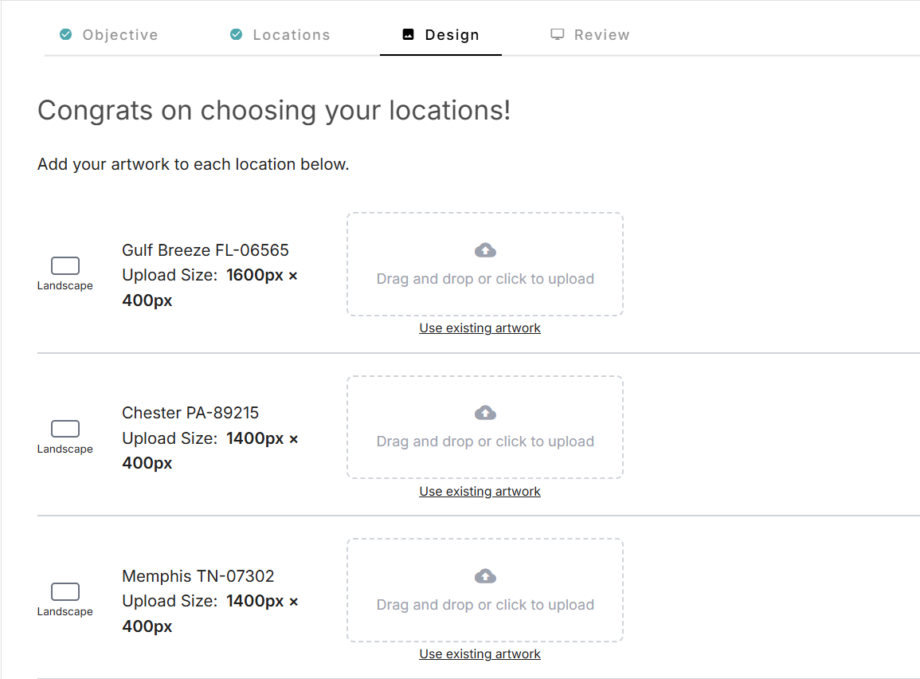
You can have your campaign live in minutes. Create a free account, select your locations, set your budget, upload your design, and start running once approved.
Where can I advertise with Blip near Gloucester City?
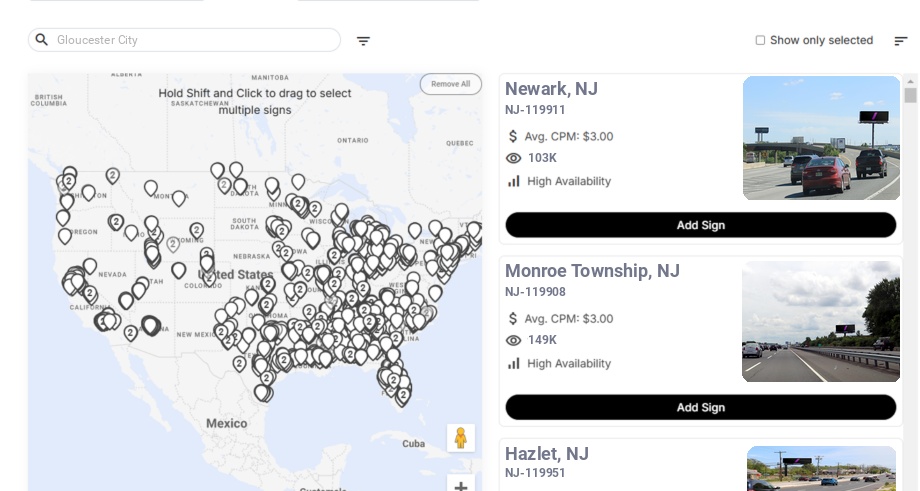
Blip has digital billboards near Gloucester City. You can browse available locations on a map, choose the ones that fit your audience, and start advertising right away.
Still have questions? Launch a campaign in minutes — no contracts, no commitments.
Start Your CampaignGloucester City Billboard Advertising Guide
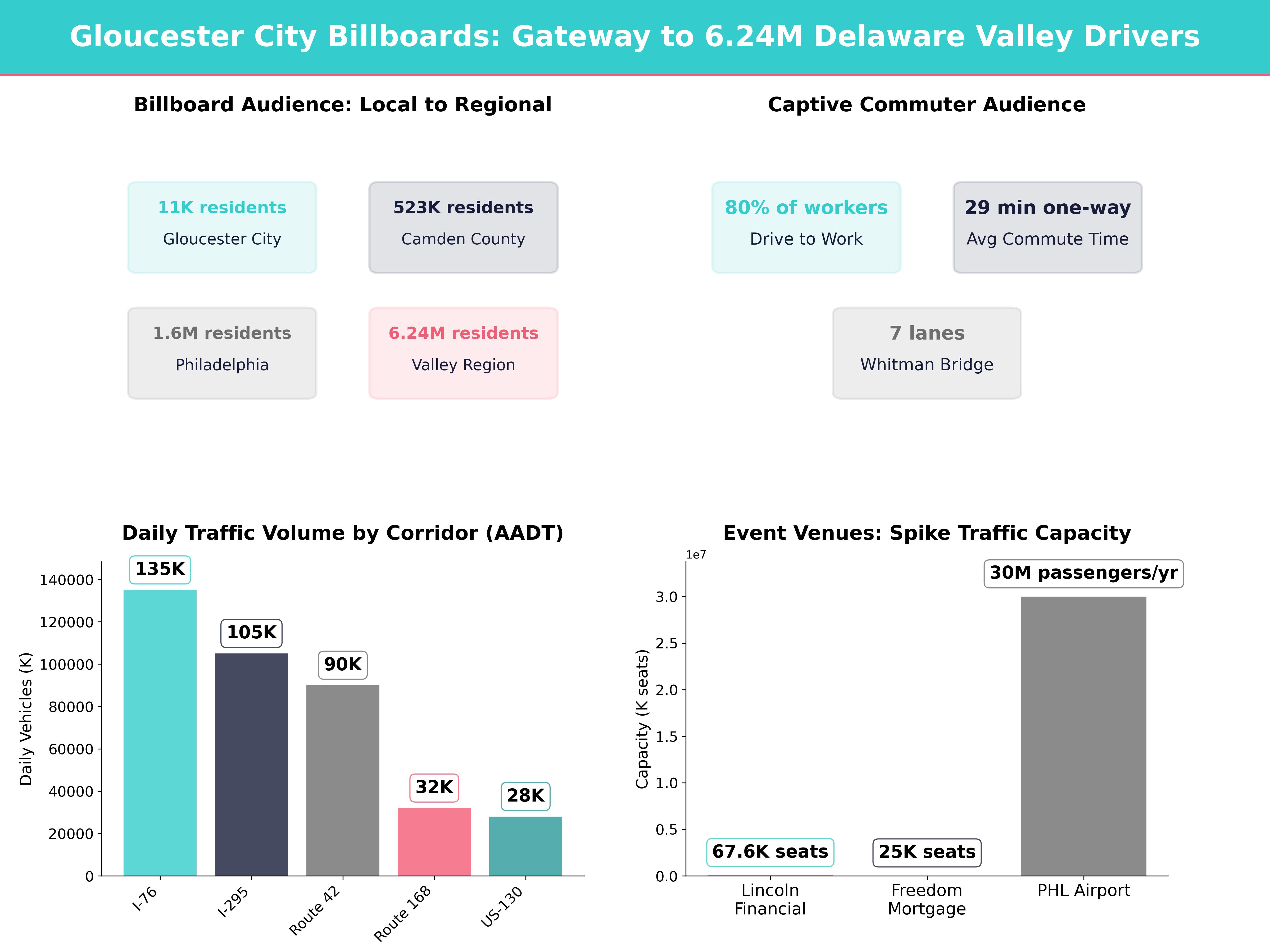
Gloucester City 11,000 city residents, tap into 523,485 people across Camden County 6.24 million people. Because so much movement here happens by car, with about 80% of Camden County workers commuting by car, truck, or van and an average one-way commute of about 29 minutes, billboard campaigns can build both frequency and urgency. We also gain spillover from tourism, concerts, healthcare, higher education, and logistics activity concentrated in nearby Camden, Philadelphia Camden Waterfront
Gloucester City Market Overview
When we plan billboard campaigns in Gloucester City Camden County Philadelphia
Gloucester City Has Small-City Scale and Big-Market Reach
Camden County 523,485 residents in the 2020 Census, up from 513,657 in 2010. That means the county added 9,828 residents over the decade, a gain of about 1.9%, which matters because stable-to-growing suburban counties support repeat billboard exposure. Across the river, Philadelphia 1,603,797 residents in 2020, giving Gloucester City advertisers access to a much larger cross-state consumer base than the city’s footprint alone suggests.
For advertisers, that combination is powerful. We can use Gloucester City inventory to reach local households, South Jersey commuters, and Pennsylvania-bound traffic in the same campaign.
Car Dependence Supports Billboard Frequency
Recent commuting patterns in Camden County remain strongly auto-oriented. Roughly 80% of workers commute by car, truck, or van, and the average one-way commute is about 29 minutes. That is ideal billboard territory because drivers are exposed repeatedly on the same bridge approaches, freeway merges, and retail arterials.
Transit still matters in the region through NJ TRANSIT, PATCO, and nearby rail and bus connections, but Gloucester City’s billboard strength comes from roadway concentration. We are not advertising into a market where most people walk past the same storefront. We are advertising into a market where the same drivers cross the same bottlenecks day after day.
The Local Economy Is Broader Than It Looks
The economy around Gloucester City is supported by healthcare, education, logistics, public employment, and destination entertainment. Cooper University Health Care 11,000 people. Rutgers University–Camden serves more than 6,000 students. Rowan University enrolls more than 23,000 students in the wider South Jersey market. The nearby South Jersey Port Corporation, Campbell Soup Company American Water add to a steady base of professional, industrial, and shift-based traffic.
We also benefit from regional travel demand. Philadelphia International Airport handles more than 30 million passengers in a typical year, and many airport trips from New Jersey funnel through corridors connected to Gloucester City. That means even hyperlocal advertisers can buy into a market with regional mobility built in.
Key Traffic Corridors Around Gloucester City
Gloucester City’s value for billboard advertisers comes down to one word: convergence. According to the New Jersey Department of Transportation and the Delaware River Port Authority, several of South Jersey’s most important traffic flows compress into a small geographic area around Gloucester City, Bellmawr Camden.
I-76 and the Walt Whitman Bridge
The Walt Whitman Bridge 7-lane Delaware River crossing that links Gloucester City directly to South Philadelphia. On nearby I-76 segments, recent traffic counts commonly land in the 120,000 to 150,000 AADT range, with the heaviest bridge-approach sections running above 140,000 vehicles per day.
This is the best corridor for advertisers who need regional reach fast.
- Healthcare providers benefit because the corridor captures daily commuters moving between South Jersey neighborhoods and major medical centers.
- Entertainment brands benefit because I-76 feeds drivers headed toward the South Philadelphia stadium district, Lincoln Financial Field
- Legal services, insurance, and financial services benefit because repeated weekday exposure works well for high-consideration categories.
The bridge approach is especially useful when we want visibility among drivers who are already committed to a route and cannot easily avoid the message.
I-295 and the Bellmawr Interchange Area
I-295 near the Bellmawr interchange is one of the region’s most important distribution and commuter connectors. Nearby segments often run in the 90,000 to 120,000 AADT range. This roadway links Gloucester City to the southern suburbs, industrial properties, and residential trade areas stretching toward Deptford Township Westville, and beyond.
This corridor is especially strong for:
- Home services advertisers because homeowners along the suburban ring often use I-295 for work and errands.
- Staffing firms and trade schools because the roadway attracts logistics, warehouse, construction, and shift-based workers.
- Auto dealers and repair shops because vehicle-related decisions map naturally to high-traffic commuting corridors.
If our goal is broad South Jersey reach rather than only bridge traffic, I-295 often deserves a dedicated share of budget.
Route 42 and Shore-Bound Travel
Route 42, just south of Gloucester City, is the classic South Jersey funnel. Northbound segments toward Bellmawr often carry about 80,000 to 100,000 AADT, and the route acts as a sorting lane for daily commuters, suburban shoppers, and seasonal shore traffic.
This corridor works well for advertisers with a wider trade area.
- Family attractions, restaurants, and retail centers benefit because Route 42 carries weekend and leisure traffic as well as weekday commuters.
- Summer tourism campaigns benefit because shore-bound drivers start moving heavily in late spring and stay active through early fall.
- Colleges and training programs benefit because the corridor connects population centers deeper into South Jersey with Camden and Philadelphia.
When we want Gloucester City campaigns to capture movement from both the city and the suburbs, Route 42 is one of the smartest extensions.
U.S. 130 and Route 168 for Local Conversion
For businesses that need local action, not just awareness, U.S. 130 and nearby Route 168 matter a great deal. U.S. 130 through Gloucester City and Brooklawn commonly runs around 20,000 to 35,000 AADT, while Route 168 through Bellmawr and nearby commercial stretches often lands in the 25,000 to 40,000 AADT range.
These roads are ideal for advertisers who want to drive near-term response.
- Quick-service restaurants, banks, urgent care clinics, and auto service brands benefit because drivers are close to actual purchase points.
- Local retailers benefit because the routes sit nearer to intersections, parking lots, and neighborhood shopping patterns.
- Municipal, education, and community campaigns benefit because the audience is more local and more likely to recognize neighborhood references.
If freeway boards create reach, these arterials create conversion.
Gloucester City Audience Segments
The best Gloucester City campaigns reflect the fact that we are not speaking to one audience. We are speaking to overlapping groups who share roads, but not always the same motivations.
Daily Commuters and Cross-River Workers
Our largest addressable audience is still the daily commuter. With about 4 in 5 county workers using personal vehicles and average commutes around 29 minutes, billboard frequency can stack quickly. Morning visibility is strongest from about 6 a.m. to 10 a.m., and afternoon visibility is strongest from about 3 p.m. to 7 p.m.
This audience responds well to practical categories such as healthcare, legal services, financial products, home repair, and food. It also responds well to directional convenience, including messages like “next exit,” “before the bridge,” and “minutes from I-76.”
Tourists, Event-Goers, and Weekend Visitors
The nearby Camden Waterfront Adventure Aquarium features more than 2 million gallons of water and more than 15,000 aquatic animals. The Battleship New Jersey is 887 feet long and remains one of the waterfront’s signature destinations. The Camden amphitheater, now known as Freedom Mortgage Pavilion, has a capacity of about 25,000.
That mix creates a meaningful summer and weekend audience for restaurants, hotels, family entertainment, attractions, parking, and event-related services. Because Gloucester City sits on the approach side of these destinations, we can often reach visitors before they have finalized their plans.
Students, Parents, and Education Seekers
Education is a larger audience here than many advertisers first assume. Rutgers University–Camden brings more than 6,000 students into the urban core. Rowan University serves more than 23,000 students in the wider South Jersey market. Camden County College adds another important student and adult-learner audience to the region.
This segment is useful for apartments, healthcare, telecom, financial services, tutoring, training, and food brands. It is also very seasonal, with especially strong windows in August, September, and January.
Healthcare, Industrial, and Trades Audiences
The Gloucester City area also over-indexes for healthcare and working-class trades. Cooper University Health Care 11,000 people, while the Port of Camden
This audience is a strong fit for:
- Recruitment campaigns for hospitals, schools, logistics firms, and skilled-trade employers.
- B2B services such as payroll, insurance, fuel, fleet maintenance, and equipment rental.
- Consumer categories such as workwear, auto parts, tax services, and neighborhood retail.
Because many of these workers travel early, late, or overnight, Gloucester City can reward schedules that go beyond standard office-hour advertising.
Seasonal and Timing Opportunities in Gloucester City
Timing matters in Gloucester City because traffic purpose changes with the calendar. The same board can reach commuters in February, concertgoers in July, and back-to-school families in September.
Spring and Summer in Gloucester City
From roughly April through September, tourism and leisure traffic become much more important. The Camden waterfront gets busier, Visit South Jersey pushes regional attractions, and the 25,000-seat amphitheater schedule creates concentrated event nights. Route 42 also starts carrying more shore-bound traffic as weekend travel picks up.
This is the right time for us to promote:
- Family attractions.
- Restaurants and nightlife.
- Hospitality offers.
- Beverage, C-store, and impulse categories.
- HVAC, landscaping, and other seasonal home services.
If we want event-driven results, we should often increase spend on concert afternoons, Friday evenings, and summer weekends.
Back-to-School and Fall Sports Around Gloucester City
Late August and early September bring a strong reset in travel behavior. Students return to Rutgers University–Camden, Camden County College, and Rowan University, while parents and commuters fall back into regular weekday routines.
Fall also benefits from sports traffic. Lincoln Financial Field 67,594 fans, and South Philadelphia game-day traffic travels directly through the I-76 and bridge system that Gloucester City inventory can intercept. This window is excellent for sports bars, parking apps, tailgate products, quick-service restaurants, and any brand that wants a local, high-energy tone.
Holiday and Winter Opportunities
From November through December, retail urgency increases and local-service messaging often performs well. In January through April, tax services, healthcare, gyms, legal services, and weather-related home repair categories usually become more relevant.
Winter is also a smart time for lower-funnel local campaigns because traffic remains commuter-heavy even when leisure travel softens. If our objective is steady frequency among residents and workers rather than tourists, Gloucester City can be very efficient in the colder months.
Billboard Design Tips for the Gloucester City Market
Creative that works in Gloucester City usually feels direct, local, and route-aware. This is not a market where vague branding alone does all the work. Drivers are moving quickly, making practical decisions, and often comparing us with an immediate alternative.
Use South Jersey-Specific Context in Gloucester City Creative
We should lean into location cues that make the ad feel native to the market. References to Gloucester City, Brooklawn Bellmawr Camden, the bridge, the waterfront, or a familiar route number can increase relevance quickly.
Messages like these tend to fit the local audience well:
- “Before the Bridge.”
- “Off 130.”
- “Minutes from I-76.”
- “Serving Gloucester City and Bellmawr.”
Those phrases work because they map to how people actually travel.
Keep the Message Bold and Practical
Freeway traffic near Gloucester City moves fast, so we should usually keep the primary message to about 6 to 8 words and use only 1 clear call to action. Price points, deadlines, short benefit statements, and neighborhood proof can all outperform abstract copy here.
Color and imagery should also reflect the setting. Strong contrast works well against industrial corridors and gray roadway infrastructure. Blue, white, black, and bright accent colors often read cleanly in this market. For family and tourism campaigns, riverfront or skyline imagery can work. For trades and healthcare, trustworthy faces, simple icons, and clear service promises usually feel more credible than overly polished stock art.
Match Tone to the Audience Segment
We should not use the same creative for every Gloucester City audience.
- For commuters, we should emphasize speed, convenience, and immediate relevance.
- For event traffic, we should emphasize excitement, timing, and location.
- For local households, we should emphasize trust, price, and neighborhood familiarity.
- For bilingual or multicultural neighborhoods near Camden, we should consider alternate creative versions that feel more inclusive and more specific.
Small creative shifts can make the same geography perform very differently.
Regional Strategies for Gloucester City Campaigns
Gloucester City works best when we separate the market into functional zones rather than treating the whole area as one audience.
Gloucester City, Brooklawn, and Bellmawr
This cluster is our local-conversion zone. Boards near U.S. 130, Route 168, and neighborhood commercial strips are strongest for restaurants, urgent care, dentists, auto service, furniture, discount retail, and service businesses that depend on nearby households.
If we want calls, walk-ins, or immediate website visits from people who already know the area, this is where we should start.
Camden Waterfront and Bridge Approaches
The Camden Waterfront
This zone is ideal for:
- Entertainment and attractions.
- Higher education.
- Healthcare systems.
- Legal services.
- Hotels, dining, and parking-related offers.
If our customer base extends into both New Jersey and Pennsylvania, this area usually deserves premium attention.
The South Jersey Suburban Ring
The wider ring that includes Deptford Township Cherry Hill Township Collingswood, and Westville is where we scale. These areas bring more rooftops, more retail trips, and more routine household spending than the immediate Gloucester City core alone.
For many advertisers, the strongest strategy is layered:
- We use freeway boards for reach.
- We use local arterial boards for conversion.
- We use waterfront or bridge boards for event and visitor traffic.
That combination gives us both awareness and action.
Using Blip Tools in Gloucester City
Blip fits Gloucester City especially well because this market rewards flexibility. Traffic purpose changes by corridor, by weekday, and by season, so we benefit when we can adjust quickly instead of locking ourselves into a static plan.
Use Blip to Test Gloucester City Corridors Efficiently
We can start by comparing 2 to 4 board clusters instead of committing to one long-term guess. For example, we can test an I-76 board for regional reach, a U.S. 130 board for local conversion, and an I-295 board for broader South Jersey frequency. Once we see which corridor drives the best response, we can shift budget toward the winner.
That is especially useful in Gloucester City because local businesses often serve several different customer types at once.
Daypart Around Real Gloucester City Behavior
Blip’s scheduling tools are a natural fit for Gloucester City’s traffic rhythms. We can weight commuter messaging toward 6 a.m. to 10 a.m. and 3 p.m. to 7 p.m., shift event creative to concert nights and weekends, and increase seasonal spend during back-to-school or holiday retail periods.
We can also rotate different creative by audience. A healthcare ad can run in the morning, a restaurant message can run in the late afternoon, and an entertainment message can run before waterfront events. That kind of local timing usually matters more here than simply buying more impressions at random.
Optimize with Analytics and Fast Creative Updates
Because Gloucester City sits at a crossroads, small adjustments can produce outsized gains. If one message works better on bridge traffic than on neighborhood traffic, we should split the creative. If local boards outperform freeway boards for calls, we should rebalance. If summer concert traffic lifts evening response, we should lean into it.
Blip’s map-based workflow, analytics, and artwork tools make that kind of optimization practical without adding much friction.
Getting Started With Billboard Rental in Gloucester City
Renting a billboard in Gloucester City is easiest when we start with the business goal, not the map. This market has enough traffic variety that the “best” board depends entirely on who we want to reach and what action we want them to take.
Define the Goal Before We Pick the Board
We should first decide whether we want:
- Broad awareness across South Jersey.
- Cross-river reach into Philadelphia.
- Local foot traffic in Gloucester City and nearby towns.
- Event-driven exposure tied to concerts, sports, or waterfront visits.
- Recruitment or B2B visibility among workers and industry audiences.
Once we know that, the location choices become much clearer.
Match the Board to Driving Context
When we evaluate Gloucester City boards, we should look for:
- The direction of travel.
- The likely speed of the audience.
- The proximity to an exit or business district.
- Whether the board sits on a commuter route, an event route, or a local errand route.
- Whether the message needs awareness or immediate action.
A business with one location in Gloucester City may get better results from U.S. 130 or Route 168 than from a premium bridge approach. A regional healthcare, education, or entertainment brand may need the opposite.
Start Small, Measure, and Expand
A practical Gloucester City launch often begins with 2 creative versions and 2 to 4 boards for 2 to 4 weeks. That is usually enough time to learn whether commuters, local shoppers, or event traffic respond best. From there, we can add boards, narrow dayparts, or refresh creative.
Compared with traditional billboard buying, Blip makes this process much simpler. We can browse inventory on a map, align spend with local timing, adjust creative when seasons shift, and avoid waiting through a long fixed contract cycle just to learn what works.
If we stay focused on corridor purpose, audience timing, and local relevance, Gloucester City can be one of the most efficient billboard markets in South Jersey.