Billboards in Englewood, NJ
No Minimum Spend. No Long-Term Contracts. Just Results.
Trusted by Leading Brands


Billboard advertising
in Englewood has never been easier
How much is a billboard in Englewood?
Why Choose Blip for Billboard Advertising in Englewood
-
Blip lets you launch on Englewood routes like Route 4 and I-95 in minutes, reaching daily commuters without traditional buying barriers.
-
In Englewood, set a budget that fits your goals and scale up as Route 4 traffic and George Washington Bridge commuters respond.
-
Daypart with Blip for Englewood rush hours, weekends at bergenPAC, or holiday shopping surges near Hackensack and Paramus.
-
No contracts means you can test Englewood billboards during back-to-school or summer travel, then shift spend as demand changes.
-
Track Englewood campaigns in real time and see what works across healthcare, retail, and Manhattan-bound audiences.
-
Use Blip's creative tools to tailor Englewood ads for diverse, bilingual households and fast-moving drivers with clear, high-impact copy.
Frequently Asked Questions About Billboard Advertising in Englewood
How much does a billboard cost near Englewood, New Jersey with Blip?
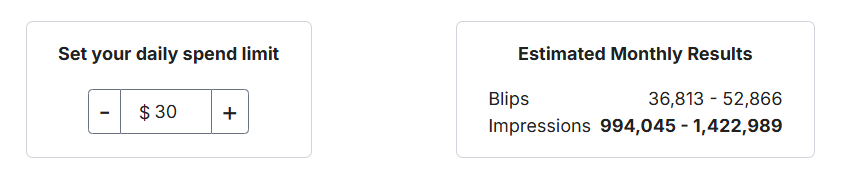
With Blip, you control exactly what you spend on Englewood billboards by setting your own daily budget, whether that’s a few dollars a day or more. Each ad is a short “blip,” a 7.5–10 second display on digital billboards near Englewood, New Jersey, and you only pay for the blips you receive. The price of each blip varies based on the time of day, location, and advertiser demand in the Englewood area, so your total campaign cost is simply the sum of all those individual blips.
Where can I advertise with Blip near Englewood, New Jersey?
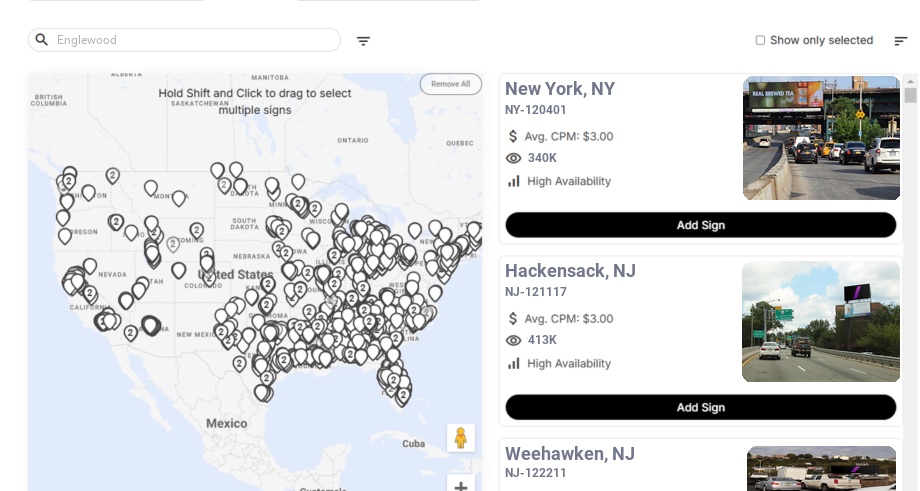
There are 154 digital billboards near Englewood serving the broader area, spread across nearby cities like Bogota, Hackensack, Ridgefield, Maywood, Lodi, Yonkers, North Bergen, New York City, Secaucus, and Weehawken. These locations are strategically placed along commuter and traffic flows that connect Englewood to surrounding markets. By selecting placements across these corridors, advertisers can reach people commuting, shopping, going to healthcare, and attending entertainment venues.
Who can I reach with Englewood billboards in New Jersey?
Englewood is a compact city with outsized influence in Bergen County, with about 29,300 residents and a median age of about 40 years. The area includes affluent suburban families, urban-oriented professionals, healthcare-driven traffic, culturally diverse households, and students and arts patrons. This mix creates strong opportunities for industries like healthcare, education, real estate, dining, and retail.
When is the best time to run Blip ads on Englewood billboards?
Weekday morning and evening commute windows are often recommended because they target Englewood-area commuters heading toward Hackensack, Secaucus, and Manhattan. Weekends are especially effective for malls, local events, auto dealers, furniture/home improvement, and attractions. Late-night impressions can also be cost-efficient due to lighter demand from other advertisers.
What areas around Englewood, New Jersey get the most commuter traffic for billboard ads?
Key corridors such as Route 4, I-95 (New Jersey Turnpike), Route 17, and local arterials move hundreds of thousands of vehicles daily. Bogota and Hackensack capture daily flows between Englewood and government offices, hospitals, and shopping, while Ridgefield, North Bergen, and Weehawken serve traffic feeding the George Washington Bridge and Lincoln Tunnel. Secaucus, Lodi, Maywood, Yonkers, and New York City also extend reach into retail, transit, and regional commuter flows.
Do I need a contract to advertise with Blip in Englewood?
No, Blip has no long-term contracts or minimum commitments. You can start, pause, or stop your campaign at any time.
How fast can I launch a billboard campaign with Blip in Englewood?
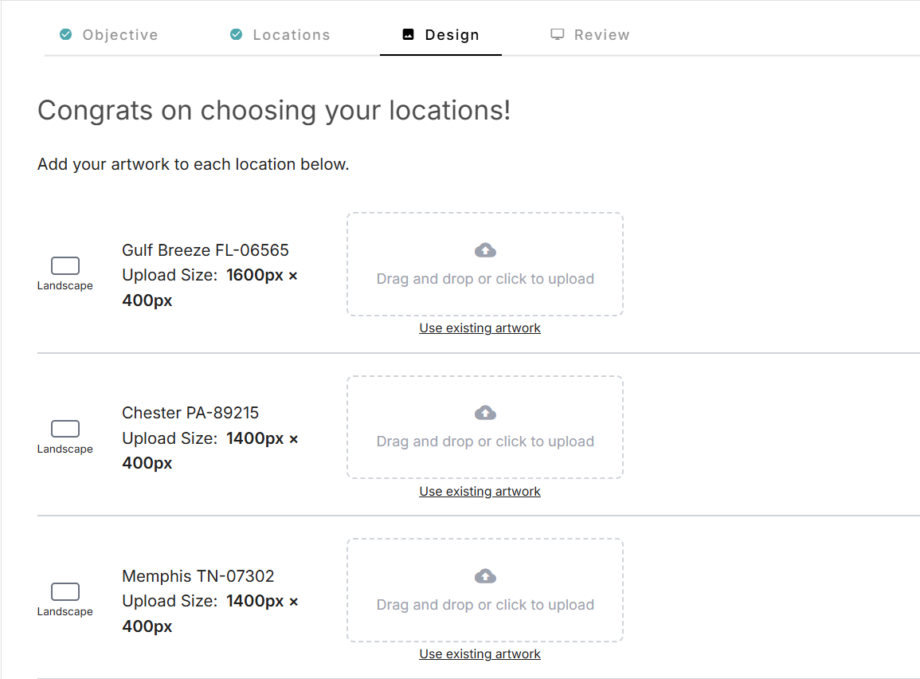
You can have your campaign live in minutes. Create a free account, select your locations, set your budget, upload your design, and start running once approved.
Where can I advertise with Blip in Englewood?
Blip has digital billboards in Englewood. You can browse available locations on a map, choose the ones that fit your audience, and start advertising right away.
Still have questions? Launch a campaign in minutes — no contracts, no commitments.
Start Your CampaignEnglewood Billboard Advertising Guide
Englewood, New Jersey

Understanding the Englewood Area Market
Englewood is a compact city with outsized influence in Bergen County:
- Population: About 29,300 residents across roughly 4.9 square miles, giving a density of around 5,980 people per square mile—more than double the New Jersey average of roughly 1,270 people per square mile.
-
Age profile: The median age is about 40 years, with a balanced spread that supports multiple verticals:
- Young adults 25–44 account for roughly 29–30% of residents.
- Children and teens: Around 22–24% of residents are under age 18, supporting steady demand for schools, pediatric care, and youth activities.
- Seniors 65+ make up about 15% of the population, a strong base for healthcare, home services, and financial planning.
- Income: Englewood’s median household income is in the low‑to‑mid $90,000s, and estimates for Bergen County are around $115,000–$120,000. In East Hill and other upscale pockets, median household incomes frequently exceed $150,000, and many owner‑occupied homes are valued above $700,000, creating a robust market for premium goods and services.
-
Diversity: No single racial or ethnic group holds a majority. Englewood’s population is roughly:
- 30–35% Black or African American
- 30–35% White (non‑Hispanic)
- 25–30% Hispanic or Latino
- 5–10% Asian
More than 25–30% of residents are foreign‑born, and over 35% speak a language other than English at home. Multilingual, culturally nuanced creative can perform exceptionally well across this mix.
The city’s location is a major advertising advantage:
- Englewood is less than 10 miles from Midtown Manhattan; typical drive times via the George Washington Bridge range from 20–35 minutes in normal traffic. Roughly 15,000–18,000 Englewood residents commute out of the city for work, many along regional highways.
- Bergen County as a whole has about 955,000–960,000 residents and is consistently ranked among the wealthiest counties in the U.S., with a homeownership rate around 65% and median home values near $550,000.
- Key corridors such as Route 4, I‑95 (New Jersey Turnpike), Route 17, and local arterials move hundreds of thousands of vehicles daily. For example, average daily traffic on Route 4 between Englewood and Hackensack can exceed 90,000 vehicles, according to New Jersey Department of Transportation traffic counts
- Englewood is a cultural and healthcare hub, anchored by Englewood Health and the Bergen Performing Arts Center, which together draw hundreds of thousands of visitors a year from surrounding communities. bergenPAC alone hosts more than 200 events annually, attracting an estimated 180,000–200,000 patrons.
Because our 154 digital Englewood billboards serving the Englewood area are clustered in high‑traffic nearby cities, advertisers can reach both everyday local life and the regional commuter flow that ties Englewood closely to New York City.
For more local context, advertisers can explore:
- City government: City of Englewood
- Business community: Englewood Chamber of Commerce
- County government & resources: Bergen County and the county’s official tourism bureau Visit Bergen County
- Local news: NorthJersey.com – Englewood coverage Daily Voice Englewood
- Tourism: VisitNJ – Bergen County and Bergen County Division of Cultural & Historic Affairs
Key Traffic Patterns and Commuter Flows Near Englewood
To design an effective digital billboard campaign near Englewood, it helps to understand how people actually move through the area and where billboard advertising near Englewood will be seen most often:
- Driving dominance: In Bergen County, roughly 68–72% of workers drive alone to work and another 8–10% carpool, meaning around 3 out of 4 commuters are reachable by roadside signage. Only about 10–15% use public transit as their primary mode, which underscores the importance of road‑based impressions.
-
NYC commute ties: Englewood has strong ties to New York City and Hudson County job centers:
- An estimated 15–20% of Englewood workers commute into Manhattan, often using Route 4 and I‑95 to access the George Washington Bridge.
- Another 10–15% commute to nearby urban centers like Hackensack, Jersey City, and Secaucus.
- The George Washington Bridge carries roughly 280,000 vehicles per weekday and over 100 million vehicles annually, a massive exposure opportunity for brands that advertise along its feeder roads.
- Average commute: Bergen County’s mean commute time is about 31–33 minutes, compared with a national average of about 26 minutes. Many Englewood‑area workers spend 45 minutes or more on the road each day, creating repeated daily exposure opportunities as drivers pass the same billboards twice per commute.
Public transit still plays a supporting role. The county is served by NJ TRANSIT, which carries over 800,000 passenger trips system‑wide on a typical weekday, including key bus routes from Englewood and Fort Lee into Manhattan. Digital billboards near major Park & Ride lots and bus corridors can influence mode‑switching commuters multiple times per week.
Our billboards serving the Englewood area are strategically placed along these flows:
-
Bogota & Hackensack (3.1–3.5 miles from Englewood)
These corridors capture:- Daily trips to the Bergen County Courthouse and government complex in Hackensack.
- Shopping and errands around The Shops at Riverside, a 674,000‑square‑foot luxury mall drawing an estimated 7–8 million visitors annually; see The Shops at Riverside
- Healthcare visits to Hackensack University Medical Center
-
Ridgefield, North Bergen, and Weehawken (4.8–9.2 miles)
These locations serve heavy traffic feeding the George Washington Bridge and Lincoln Tunnel:- The Lincoln Tunnel alone carries roughly 113,000 vehicles per weekday.
- Parallel arterials in Ridgefield and North Bergen can see 40,000–70,000 vehicles per day, creating high‑frequency reach among Manhattan‑bound workers and delivery fleets.
-
Lodi, Maywood, and Secaucus (5.1–9.2 miles)
These spots connect Englewood‑area residents to big‑box retail, outlets, and employment centers:- Lodi and Maywood sit near retail nodes that benefit from spillover from Paramus, including access to Westfield Garden State Plaza, a 2.1‑million‑square‑foot mall that reports over 18–20 million visitors annually.
- Secaucus American Dream retail and entertainment complex, which has drawn millions of visitors since opening.
-
Yonkers and New York City (7.2–9.1 miles)
Useful for Englewood‑based businesses looking to extend reach into Westchester and Manhattan:- Yonkers, with a population of about 210,000, and upper Manhattan
- River crossings like the Henry Hudson Bridge
By selecting placements across these corridors, we can help you surround Englewood‑area residents multiple times per week in different contexts—commuting, shopping, healthcare, and entertainment. With typical area drivers making 10–12 trips per week on their main commute and shopping routes, even modest impression frequency can translate into dozens of brand exposures per month from billboard advertising near Englewood.
Who You’re Reaching in the Englewood Area
The Englewood area delivers several high‑value audience segments:
-
Affluent Suburban Families
- In many Englewood and nearby Bergen County neighborhoods, over 40% of households are married‑couple families, and more than one‑third of households have children under 18.
- High participation in extracurriculars: local school districts routinely report 60–70%+ participation rates in sports, music, and clubs.
- Strong demand for private schools, after‑school programs, healthcare, and home services, with per‑pupil private school tuition in Northern New Jersey often ranging from $10,000 to over $30,000 per year.
- These households frequently shop in Hackensack, Paramus, Yonkers, and Manhattan, visiting major centers like Westfield Garden State Plaza, The Shops at Riverside
-
Urban‑Oriented Professionals
- A sizable share of Englewood residents work in Manhattan, Jersey City, and Hoboken in finance, media, law, healthcare, and technology. In some census tracts, over 25% of workers are employed in professional and business services.
- Median household incomes for these commuters often exceed $125,000, and dual‑income households with no children can have combined incomes well over $175,000.
- They are heavy consumers of time‑saving services, premium dining, boutique fitness, and luxury retail, and are more likely to respond to convenience‑driven or status‑oriented messaging.
-
Healthcare‑Driven Traffic
- Englewood Health employs more than 3,000 people and logs hundreds of thousands of outpatient visits annually.
- Hackensack University Medical Center
- This constant inflow of staff, patients, and visitors creates strong audiences for healthcare providers, specialists, dental practices, pharmacies, and wellness brands.
-
Culturally Diverse Households
-
Significant Latino, Black, Korean, and other communities across Englewood, Teaneck, Palisades Park, Fort Lee, Ridgefield, and North Bergen:
- In some neighboring towns, Korean and other Asian communities make up 25–35% of residents.
- In parts of North Bergen and West New York, more than 65% of residents are Hispanic or Latino and over 70% speak a language other than English at home.
- This creates powerful opportunities for bilingual (English/Spanish or English/Korean) messaging, especially for community services, education, banking, healthcare, and retail.
-
Significant Latino, Black, Korean, and other communities across Englewood, Teaneck, Palisades Park, Fort Lee, Ridgefield, and North Bergen:
-
Students and Arts Patrons
- Englewood is home to strong public and private schools; see the Englewood Public School District, which serves roughly 3,000 students across its schools.
- Within a 10–15 minute drive, there are dozens of additional K–12 public schools and private academies, contributing to a K–12 population in Bergen County of over 130,000 students.
- The Bergen Performing Arts Center brings in regional audiences for concerts, comedy, and family events and supports education programs that serve thousands of students annually.
When we plan campaigns serving the Englewood area, we recommend tailoring creative and scheduling to these specific groups rather than treating the market as a generic suburb. Segment‑based approaches consistently show higher response rates—often 20–40% better click‑through or call‑volume lifts when paired with digital tracking—than one‑size‑fits‑all creative.
Seasonal and Event‑Driven Opportunities
Englewood‑area traffic and consumer behavior shift across the year in predictable ways that we can leverage with flexible Blip scheduling and targeted billboard rental near Englewood:
-
Back‑to‑School (late August–September)
- Bergen County has more than 130,000 K–12 students across over 75 public school districts plus numerous private schools.
- National retail data show back‑to‑school spending now exceeds $35 billion annually, and Northern New Jersey’s high‑income profile means per‑household spending is often 10–20% above the U.S. average.
- Great window for education, tutoring, after‑school programs, kids’ healthcare, apparel, and tech.
- Focus creative on busy parents, clear offers, and proximity to major retailers near Hackensack, Paramus, and Secaucus.
-
Holiday Shopping (November–December)
- New Jersey’s northern retail corridors, including Hackensack, Paramus, Secaucus, and Yonkers, see some of the state’s highest seasonal traffic.
- Paramus alone generates over $5 billion in annual retail sales, largely concentrated in a few miles of Route 4 and Route 17.
- Nationally, more than 30% of annual retail sales can occur between November and December, and local malls like Westfield Garden State Plaza and American Dream report double‑digit percentage increases in foot traffic on peak weekends.
- Black Friday weekend and the two weeks before Christmas are especially high‑volume; hourly traffic counts on approach roads can spike 20–40% above normal.
-
Summer Travel and Leisure (June–August)
- Many Englewood‑area residents travel to the Jersey Shore, upstate New York, and New England. New Jersey tourism agencies estimate hundreds of millions of day and overnight visitors statewide each year, with peak months in July and August.
- Outbound routes frequently run through our locations in Lodi, Secaucus, and Yonkers before branching to the Garden State Parkway, I‑80, and the New York Thruway.
- Ideal for tourism, attractions, outdoor dining, summer camps, and events. Travel‑related spending can rise 20–30% in these months compared with spring.
-
Local Events and Cultural Programming
- The City of Englewood calendar
- Street fairs, food festivals, parades, and charity walks can draw thousands of attendees per event.
- Short, high‑impact flights scheduled 7–14 days before a major event often correspond to noticeable bumps in web traffic and ticket sales, especially when paired with social media.
Because Blip campaigns can be turned up or down by time of day, day of week, and budget, we can help you align spend with the most valuable seasons and events for your category, maximizing ROI during periods when consumer spending in your vertical is 20–50% above baseline.
Crafting Effective Creative for the Englewood Area
Englewood‑area drivers have limited time to process messages—typically 6–8 seconds per view—so clear, high‑contrast creative is essential. Studies of roadside ad effectiveness consistently show that shorter copy (7 words or fewer) and strong imagery can increase recall by 20–30%. We recommend:
-
Hyper‑Local Positioning
- Reference local landmarks and neighborhoods: “Minutes from Englewood Hospital,” “Serving Englewood & Hackensack Families,” or “Just off Route 4 near Bogota.”
- For events, use recognizable anchors like bergenPAC, downtown Englewood, or nearby shopping centers (e.g., “Near Garden State Plaza” or “By The Shops at Riverside”).
- Where appropriate, call out that you’re using Englewood billboards so local audiences immediately understand you serve their community.
-
High‑Contrast, Simple Design
- Use 1 main image, 1 dominant message, and 1 call‑to‑action.
- Large fonts (minimum 24–30 pt at design scale) and strong color contrast (light text on dark background or vice versa) can improve legibility by 25% or more at highway speeds.
- Limit text to about 6–10 words in total; each additional word can reduce comprehension rates in a 6‑second exposure window.
- Avoid long URLs; use short domains or simple search prompts (“Search: ‘Englewood Orthodontics’”).
-
Multilingual Messaging Where Relevant
- In corridors with strong Latino or Korean populations (e.g., parts of North Bergen, Ridgefield, and Hackensack), bilingual creative can significantly boost engagement. In some campaigns, bilingual boards have outperformed English‑only versions by 15–25% on associated web traffic from target ZIP codes.
- Keep translations concise; prioritize a short brand promise and a short call‑to‑action.
-
Value and Convenience
- Englewood‑area households are time‑pressed and value high quality and efficiency. Over 60% of Bergen County households have two or more workers, and average weekly work hours are above the national average.
- Emphasize conveniences like “Same‑Day Appointments,” “Curbside Pickup,” “Open Late,” “No‑Wait Urgent Care,” “Free Parking off Route 4.”
- Including a clear value statement (discount, guarantee, or time‑saver) can increase response rates by 20–50% compared with generic branding alone.
-
Directional and Proximity Cues
- Phrases like “5 minutes from here,” “Next right,” or “Exit now for Englewood” perform well on commuter routes and can drive immediate foot traffic.
- Reinforce that your location is easy to reach off major corridors (Route 4, I‑95, Route 17). Simple arrows or exit numbers often increase in‑store visits, particularly from new customers, by 10–20% during campaign periods.
Where to Focus: Billboard Placement Strategy Around Englewood
With 154 digital billboards serving the Englewood area, you can mix broad coverage with pinpoint targeting. Effective campaigns often start with a focused cluster (10–20 boards) for 4–8 weeks, then expand once winning creative is identified. This approach lets you treat billboard rental near Englewood as a flexible, testable media investment rather than a fixed, long‑term commitment.
1. Englewood Core Commuters (Bogota, Hackensack, Maywood)
Best for: local service businesses, schools, healthcare, retail, restaurants.
-
Bogota & Hackensack (3.1–3.5 miles): Capture daily flows between Englewood and:
- County government offices, which employ thousands of workers and serve hundreds of visitors daily.
- Hackensack’s major hospitals and business districts, where daytime populations can swell to 50,000+ workers and visitors.
- Riverside shopping and dining around The Shops at Riverside
- Maywood & Lodi (5.1–5.2 miles): Reach households deviating for shopping, auto services, and regional retail. Retail centers along Route 4 and Route 17 nearby can see weekend traffic volumes 20–30% higher than weekdays.
2. Manhattan‑Bound Professionals (Ridgefield, North Bergen, Weehawken, Secaucus)
Best for: B2B services, high‑end retail, financial services, fitness, and urban entertainment targeting Englewood‑area residents and coworkers.
- Ridgefield & North Bergen (4.8–8.8 miles): Sited along routes feeding the George Washington Bridge and Lincoln Tunnel, where combined daily traffic exceeds 350,000 vehicles. Billboards along these legs can deliver very high impression counts at commuter hours.
- Secaucus & Weehawken (9.2 miles): Hit commuters using Park & Ride, office parks, and train‑to‑bus links into New York City. Major transit nodes like Secaucus Junction handle tens of thousands of passengers per weekday, amplifying brand awareness when drivers see your message immediately before or after transit trips.
3. Expanded Regional Reach (Yonkers & New York City)
Best for: Brands based near Englewood but seeking regional recognition.
- Yonkers (7.2 miles): Access Westchester County drivers who also visit Bergen County for shopping or healthcare. Yonkers’ population of about 210,000 and its busy commercial corridors generate significant cross‑county travel.
- New York City (9.1 miles): Strategically selected placements can present Englewood‑based brands as credible metro‑area players. With Manhattan’s daytime population exceeding 3 million people (workers plus visitors), even a small share of impressions can generate strong referral business back to Englewood.
We can help you test different combinations: for example, starting with a Hackensack–Bogota core for four weeks, then layering in North Bergen and Weehawken to broaden commuter reach once message fit is validated. In many campaigns, expanding from a local core to regional corridors has produced 20–30% lifts in web sessions from outside the home ZIP code.
Timing and Dayparting: When to Run Your Ads
Blip’s flexibility allows you to choose exactly when your messages appear on screens serving the Englewood area. Based on traffic and lifestyle patterns, we often suggest:
-
Weekday Morning (6–10 a.m.)
- Best for: coffee shops, childcare, healthcare reminders, traffic or transit services, and B2B ads.
- Targets Englewood‑area commuters heading toward Hackensack, Secaucus, and Manhattan. Regional traffic volumes typically peak between 7–9 a.m., often 30–40% higher than mid‑day.
- Morning billboard exposure has been shown in some studies to drive higher same‑day search and map lookup activity, particularly for food and service categories.
-
Weekday Evening (4–8 p.m.)
- Best for: restaurants, grocery and retail, gyms, entertainment, and appointment‑based services.
- High visibility when families are picking up kids, shopping, and returning home. Evening rush can account for 40–45% of daily traffic on some corridors.
- Evening campaigns aligned with “after work” offers can see redemption rates 10–25% higher than all‑day offers.
-
Weekends (10 a.m.–8 p.m.)
- Best for: malls, local events, auto dealers, furniture/home improvement, and attractions.
- Heavy traffic toward retail clusters in Hackensack, Paramus, Secaucus, and Yonkers, with Saturday often the single busiest traffic day for shopping routes.
- Weekend campaigns are especially effective for big‑ticket purchases; auto dealers often report that 50% or more of weekly showroom traffic occurs on weekends.
-
Late Night (8 p.m.–Midnight)
- More niche, but effective for nightlife, delivery apps, and streaming or entertainment brands, especially in New York City and North Bergen placements where dining and entertainment traffic continues late.
- Late‑night impressions can be cost‑efficient due to lighter demand from other advertisers, lowering your effective cost per thousand impressions (CPM).
We recommend starting with heavier weight in morning and evening commuter windows, then optimizing based on web analytics, store traffic, and any response data you can attribute. Many advertisers see 15–30% performance improvement after the first optimization cycle.
Industry‑Specific Opportunities in the Englewood Area
Because of the area’s demographics and infrastructure, some verticals are particularly well‑suited to digital billboards near Englewood:
-
Healthcare and Wellness
- Leverage proximity to Englewood Health and Hackensack’s medical district, which together employ well over 10,000 workers and attract thousands of patients daily.
- Promote specialists, urgent care, imaging centers, dental and orthodontics, physical therapy, mental health services, and senior care. About 15% of Englewood residents are 65+, and in Bergen County the senior population tops 150,000, fueling demand for healthcare and home‑based services.
- Use direct, reassuring language and highlight convenience: “Same‑Day Appointments 5 Minutes from Englewood.” Campaigns that mention specific benefits (same‑day care, walk‑ins welcome, evening hours) typically see higher conversion rates than generic branding.
-
Education and Enrichment
- With over 130,000 K–12 students in Bergen County and several thousand more in nearby Westchester and the Bronx, there’s strong demand for tutoring, test prep, music and arts education, and sports training.
- Bergen County households often spend above the national average on education and extracurriculars; in some high‑income ZIP codes, annual spending on child enrichment can exceed $3,000–$5,000 per child.
- Feature testimonials or clear outcome‑oriented copy: “Raise Your SAT Score,” “College Prep from Englewood Experts.” Track performance with unique URLs or promo codes for each creative theme.
-
Real Estate and Home Services
- Bergen County’s median home value is around $550,000, and in Englewood and nearby towns many properties exceed $700,000–800,000. This supports robust markets for real estate agents, mortgage brokers, landscapers, contractors, solar installers, and luxury home services.
- Homeownership rates in the county (around 65%) translate into a large base of owners making ongoing improvement and maintenance decisions.
- Highlight neighborhood expertise: “Buying or Selling in Englewood & Teaneck?” Use simple calls‑to‑action like “Text ENGLEWOOD to [shortcode]” or QR codes on slower corridors for easy lead capture.
-
Auto Dealers and Services
- The Englewood area feeds heavy traffic to major dealership clusters in Paramus, Hackensack, and Yonkers. Auto sales are a major economic driver in Northern New Jersey, and local dealers often move thousands of new and used vehicles annually.
- Within a short drive of Englewood, there are dozens of dealerships, tire shops, and repair centers competing for attention. Digital billboards along Route 4, Route 17, and I‑95 allow brands to stand out.
- Use limited‑time offers and inventory highlights timed to month‑end and quarter‑end sales pushes; auto campaigns that emphasize deadline‑driven incentives regularly see 20–30% stronger lead volumes.
-
Dining, Culture, and Entertainment
- Promote downtown Englewood restaurants, cafes, and nightlife, as well as bergenPAC shows and nearby entertainment venues in Secaucus, the Meadowlands, and Manhattan.
- Dining and entertainment typically capture a higher share of discretionary spending in affluent areas; restaurant sales in Bergen County are measured in the hundreds of millions of dollars annually.
- Use schedule‑based creative for shows: one design counted down by weeks, then another by days for the final push. Event campaigns that ramp up frequency 7–10 days before showtime often see notable last‑minute ticket spikes.
Using Data and Testing to Improve Results
To get maximum value from digital billboards serving the Englewood area, we encourage a test‑and‑learn approach:
-
Create 2–3 Variants of Creative
- Test different headlines, offers, or imagery.
-
Run them simultaneously across similar boards (e.g., several Hackensack‑area faces) and compare results via:
- Web traffic by hour and day
- Promo code usage
- Call volume or form fills tied to campaign dates
- Even simple A/B tests can produce 10–40% performance differences between variants, helping you concentrate budget on top performers.
-
Align with Digital Campaigns
- Pair billboard flights with geofenced mobile ads or social campaigns targeting Englewood and nearby ZIP codes such as 07631, 07601, 07666, and 07047.
- Watch for correlated lifts in click‑through rates or conversions within the Englewood audience. Many advertisers see a 15–25% lift in brand search queries and direct traffic when out‑of‑home and digital campaigns are synchronized.
-
Track by Time and Place
- Use Google Analytics or similar tools to tag campaigns by launch date and major shifts in schedule or geography.
- Example: Run a four‑week core campaign targeting Bogota/Hackensack, then expand to North Bergen/Weehawken and monitor whether leads from Englewood and adjacent ZIP codes increase. Look for 5–10% or greater lifts to validate impact.
- Align your reporting windows with campaign phases (e.g., pre‑campaign baseline, weeks 1–4, weeks 5–8) to clearly see changes.
-
Use Clear, Trackable Calls‑to‑Action
- “Show this ad for 10% off,” unique URLs, QR codes (where safe), or campaign‑specific phone numbers make ROI easier to quantify.
- For service businesses, asking new customers how they heard about you and tallying “billboard” responses during and after the campaign period can provide a quick read on impact. Many local advertisers report that 10–25% of new customers mention having “seen the sign” when campaigns featuring billboards near Englewood are running.
Putting It All Together
The Englewood area offers a rare mix of high‑income households, dense commuter traffic, cultural activity, and proximity to New York City. With 154 digital billboards serving this market from surrounding cities like Bogota, Hackensack, Ridgefield, Maywood, Lodi, Yonkers, North Bergen, New York City, Secaucus, and Weehawken, we can help you:
- Surround Englewood‑area residents on their most common routes, from local errands to daily commutes into Manhattan, using strategically placed billboards near Englewood.
- Tailor creative to specific neighborhoods, languages, and lifestyles, leveraging the area’s high diversity and above‑average incomes.
- Adjust spend by time of day, day of week, and season to match spikes in demand—back‑to‑school, holidays, summer travel, and major local events.
- Test, measure, and continually improve your campaign performance using clear data signals from web analytics, in‑store traffic, and tracked offers.
By combining strong local insights, disciplined creative, and Blip’s flexible buying tools, advertisers can build efficient, high‑impact campaigns that make their brands impossible to miss near Englewood through targeted billboard advertising near Englewood and smart, data‑driven billboard rental near Englewood.