Billboards near Carrollwood, FL
No Minimum Spend. No Long-Term Contracts. Just Results.
Trusted by Leading Brands


Billboard advertising
near Carrollwood has never been easier
How much is a billboard near Carrollwood?
Why Choose Blip for Billboard Advertising near Carrollwood
Blip lets you launch fast in Carrollwood on Dale Mabry and I-275, reaching daily commuters without contracts.
Set flexible budgets for Carrollwood and scale up for spring break, Bucs games, or holiday shopping traffic.
Use Blip dayparting in Carrollwood to hit 7-9 a.m. commuters and 4-7 p.m. return trips toward Tampa.
Track Carrollwood ad performance in real time and shift spend as traffic flows change near Veterans Expressway and USF.
Blip creative tools help Carrollwood ads stand out with clear, local copy for families, homeowners, and higher-income shoppers.
Frequently Asked Questions About Billboard Advertising near Carrollwood
How much does a billboard cost near Carrollwood, Florida with Blip?
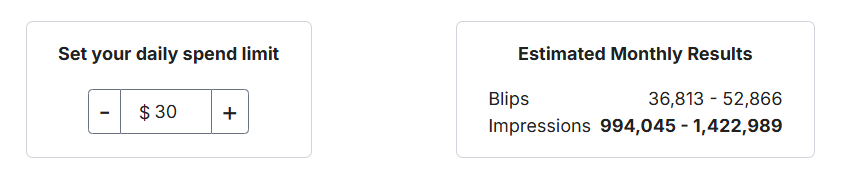
With Blip, you control exactly what you spend on Carrollwood billboards by setting your own daily budget, even if you’re working with a small amount. Each “blip” is a brief 7.5 to 10-second ad display on digital billboards near Carrollwood, Florida, and you only pay for the blips you receive. The cost of each blip varies based on when and where your ad runs and on advertiser demand, so your total spend is simply the sum of all your blips over time.
Where can I advertise with Blip near Carrollwood, Florida?
Our 64 digital billboards near the Carrollwood area are primarily in nearby Tampa and Temple Terrace. These placements line up with high-value commuter and visitor corridors, where daily traffic counts often exceed 40,000–150,000 vehicles depending on the roadway. This network makes billboard advertising near Carrollwood accessible for both local and regional brands looking to expand reach.
Who can Blip reach in the Carrollwood, Florida area?
The Carrollwood area skews slightly older, higher income, and more suburban than central Tampa. The median age in the Carrollwood CDP is around 42–43 years, and the median household income is around $70,000–$75,000. The area is dominated by single-family homes and established subdivisions, with a mix of townhomes and condos around lakes and golf courses.
What roads get the most billboard traffic around Carrollwood, Florida?
Dale Mabry Highway is the spine of the Carrollwood area, and segments in north Tampa carry 50,000–70,000 vehicles per day, with some busy commercial stretches approaching 75,000 vehicles per day. I-275 is the main interstate for commuters traveling between the Carrollwood area and central Tampa, with several segments carrying 140,000–170,000 vehicles per day. Veterans Expressway corridor counts frequently exceed 90,000–110,000 vehicles per day, making it another major route for reaching suburban commuters.
When is the best time to run billboards in Carrollwood, Florida with Blip?
For the Carrollwood area, the page highlights a pronounced morning peak around 7:00–9:00 a.m. and an evening peak around 4:30–6:30 p.m. It also notes that midday and weekend traffic remain strong, especially for errands, shopping, and dining. Seasonally, January through April is a peak travel window, along with March spring break, late summer and early fall football season, and the holiday season in November and December.
Do I need a contract to advertise with Blip near Carrollwood?
No, Blip has no long-term contracts or minimum commitments. You can start, pause, or stop your campaign at any time.
How fast can I launch a billboard campaign with Blip near Carrollwood?
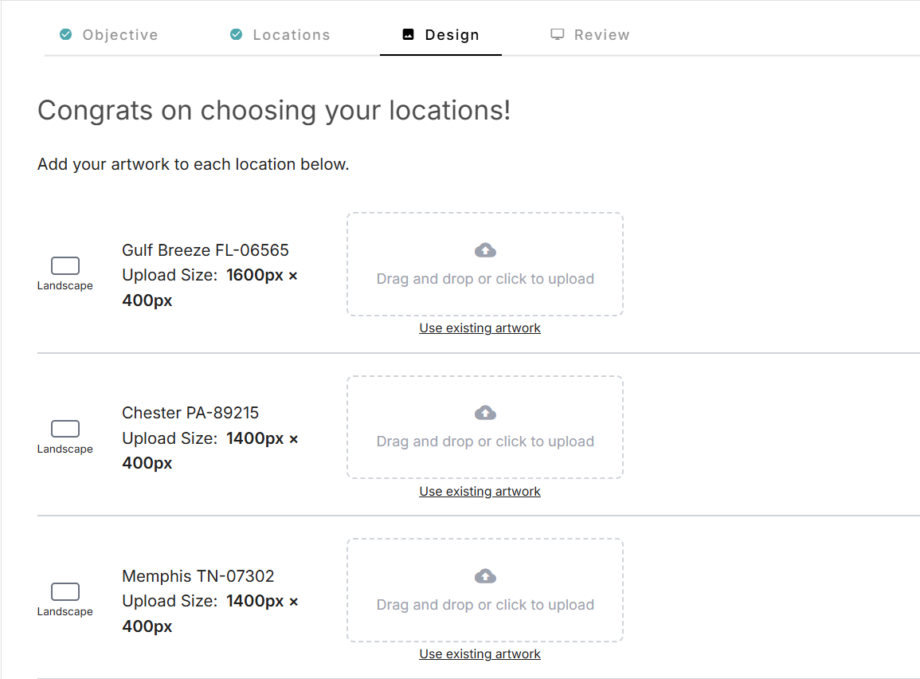
You can have your campaign live in minutes. Create a free account, select your locations, set your budget, upload your design, and start running once approved.
Where can I advertise with Blip near Carrollwood?
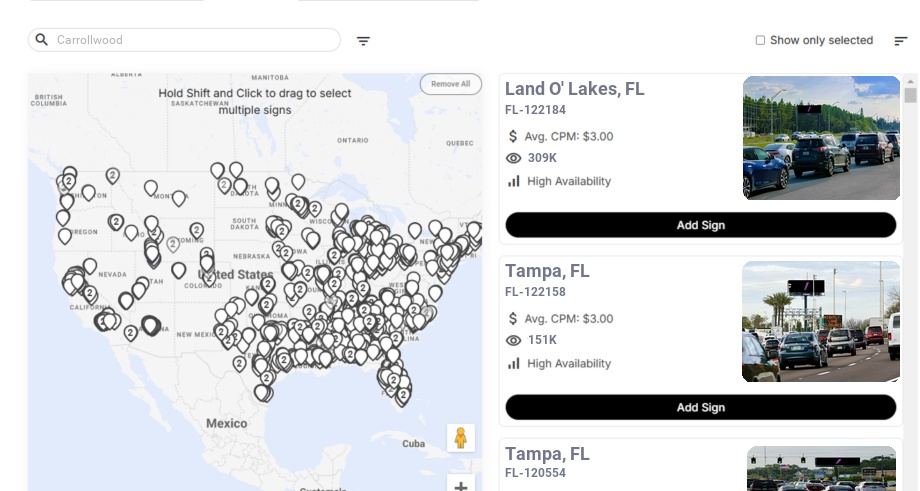
Blip has digital billboards near Carrollwood. You can browse available locations on a map, choose the ones that fit your audience, and start advertising right away.
Still have questions? Launch a campaign in minutes — no contracts, no commitments.
Start Your CampaignCarrollwood Billboard Advertising Guide
The Carrollwood area combines mature suburban neighborhoods, strong household incomes, and proximity to Tampa’s major job centers and attractions. With 64 digital billboards serving the Carrollwood area from nearby Tampa and Temple Terrace, we can help brands stay top of mind along the daily routes residents already drive, making it simple to find billboards near Carrollwood that match your goals and budget.
Understanding the Carrollwood Area Market
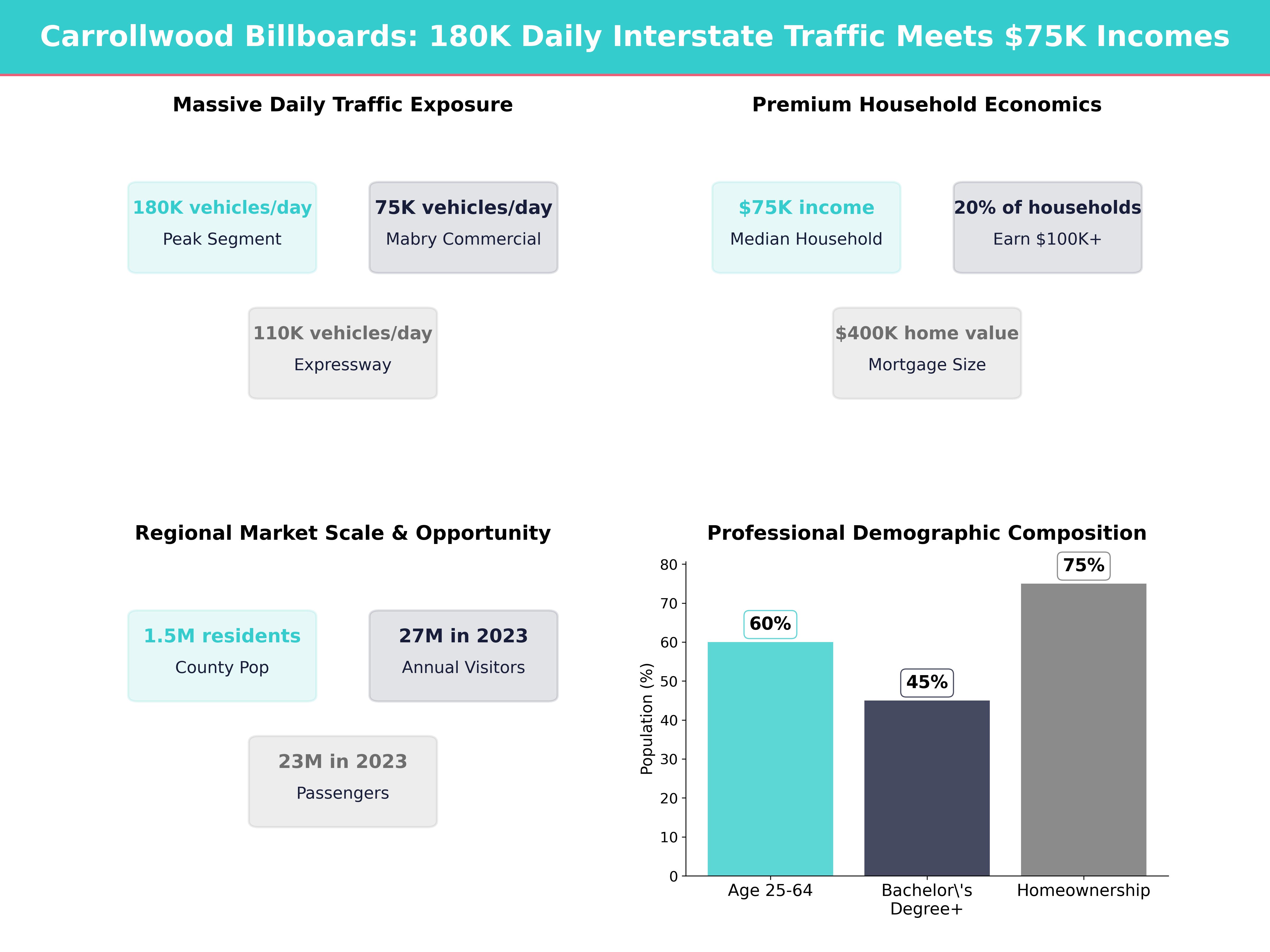
Carrollwood is an unincorporated community just northwest of Tampa, centered around Dale Mabry Highway and North Village Drive. The official Census-designated place of Carrollwood reported about 37,600 residents in 2020, with steady growth as Tampa’s suburbs continue to expand. Local planning data indicate that the broader north Tampa/Carrollwood trade area captures closer to 80,000–90,000 residents when nearby communities such as Carrollwood Village, Northdale, and Lake Magdalene are included.
The broader context matters even more for advertisers. Carrollwood sits in Hillsborough County, which the county estimates at over 1.5 million residents in 2024, up from about 1.28 million in 2010—an increase of roughly 220,000–250,000 residents over a little more than a decade. The Hillsborough County government notes that the county has been adding an average of 20,000–25,000 residents per year, reflecting a sustained in‑migration trend and one of the fastest‑growing large counties in Florida.
Key market anchors and nearby destinations influencing traffic patterns include:
- Downtown Tampa (about 10–11 miles south), with more than 90,000–100,000 daytime workers and rapidly growing residential towers, per City of Tampa economic reports.
- Tampa International Airport 23 million passengers in 2023, an increase of more than 10% compared with 2022.
- The University of South Florida (USF) area and Busch Gardens Tampa Bay near Temple Terrace (about 8–10 miles east-southeast), with USF reporting 50,000+ students systemwide and Busch Gardens drawing 4–5 million visitors annually.
- Major shopping corridors like Citrus Park Town Center
From a visitor perspective, the Carrollwood area benefits from Tampa’s regional tourism pull. According to Visit Tampa Bay, Hillsborough County welcomed roughly 26–27 million visitors in 2023, generating around $8.4 billion in direct visitor spending and supporting more than 50,000 tourism-related jobs. Hotel occupancy in the Tampa area regularly averages 70–75% in peak months. Many of these visitors stay in north Tampa hotels or drive through the Carrollwood area en route to Busch Gardens, USF, downtown, Raymond James Stadium, and the airport, where well-placed Carrollwood billboards along major corridors can capture both residents and tourists.
Our 64 digital billboards near the Carrollwood area—primarily in nearby Tampa (about 3.5 miles away) and Temple Terrace (about 8.3 miles away)—place your message along these high‑value commuter and visitor corridors, where daily traffic counts often exceed 40,000–150,000 vehicles depending on the roadway. This network makes billboard advertising near Carrollwood accessible for both local and regional brands looking to expand reach.
Who You’ll Reach: Demographics & Lifestyles
The Carrollwood area skews slightly older, higher income, and more suburban than central Tampa, which affects both creative tone and product fit.
Using 2020 data for the Carrollwood CDP and county-level trends:
-
Age profile
- Median age in the Carrollwood CDP is around 42–43 years, compared to about 35–37 for the city of Tampa, indicating a more established, family‑oriented population.
- Roughly 55–60% of Carrollwood residents are between 25 and 64, aligning with prime working and spending years.
- Seniors (65+) account for roughly 15–20% of local residents, supporting demand for healthcare, retirement planning, and home‑service offerings tailored to aging in place.
-
Household income
- The median household income in the Carrollwood CDP is around $70,000–$75,000, above both state and city averages (Tampa’s citywide median is closer to the $60,000 range).
- Hillsborough County reports that about 40%+ of households countywide earn $75,000 or more, and roughly 20% earn $100,000+, consistent with a sizable middle‑to‑upper‑middle class audience.
- Consumer spending models used by local economic agencies estimate that households in the Carrollwood/Northdale area spend 10–20% more than the national average on home improvement, fitness, and dining out.
-
Housing & family structure
- The Carrollwood area is dominated by single-family homes and established subdivisions, with a mix of townhomes and condos around lakes and golf courses.
- Owner-occupancy in many Carrollwood-area neighborhoods is estimated at 65–75%, compared with closer to 50–55% in some central Tampa neighborhoods, according to Hillsborough County Property Appraiser
- Average household size hovers around 2.4–2.6 persons, reflecting a mix of families with children and empty nesters.
-
Education & employment
- North Tampa and the USF area foster a concentration of college‑educated professionals. In many zip codes near Carrollwood, 35–45% of adults hold a bachelor’s degree or higher, above the Florida statewide share.
- Hillsborough County employment data show large concentrations of jobs in healthcare, education, finance, professional services, and hospitality—sectors that collectively account for 50%+ of local employment.
- The Carrollwood area is a bedroom community for major employment centers in downtown Tampa, the Westshore District 15–30 minutes in typical traffic.
These characteristics make the Carrollwood area especially attractive for:
- Healthcare providers, dentists, and clinics
- Financial advisors, banks, and credit unions
- Home improvement, roofing, HVAC, and landscaping
- Real estate teams and new communities
- Private schools, tutoring centers, and after‑school programs
- Automotive dealers and service shops
- Restaurants, fitness studios, and family entertainment
Key Roads & Traffic Patterns Near Carrollwood
Even though our digital billboards serving the Carrollwood area are in nearby Tampa and Temple Terrace, they align closely with the real-world paths Carrollwood residents drive every day. Businesses using billboard rental near Carrollwood can take advantage of these existing commuting patterns to reach customers multiple times per week.
Some of the most important corridors and traffic volume insights:
-
Dale Mabry Highway (U.S. 41/SR 597)
- This is the spine of the Carrollwood area, lined with retail, restaurants, gyms, and services stretching from the Carrollwood/Northdale area south through Tampa.
- The Hillsborough County Metropolitan Planning Organization and FDOT data show segments of Dale Mabry in north Tampa carrying 50,000–70,000 vehicles per day, with some busy commercial stretches approaching 75,000 vehicles per day.
- Average daily traffic around the intersection of Dale Mabry and Waters Avenue—just south of Carrollwood—routinely exceeds 60,000 vehicles, providing high‑frequency exposure.
- Our digital billboards in north Tampa along or near Dale Mabry can repeatedly reach Carrollwood commuters heading toward downtown, Raymond James Stadium, and the Westshore business district, making these some of the most valuable Carrollwood billboards for everyday reach.
-
I‑275
- I‑275 is the main interstate for commuters traveling between the Carrollwood area and central Tampa, extending south toward Downtown Tampa
- The Florida Department of Transportation ( FDOT District 7 140,000–170,000 vehicles per day on several segments, with peak segments exceeding 180,000 vehicles.
- Morning peak speeds can drop below 30 mph during rush hour, increasing dwell time and billboard visibility for drivers.
- By targeting our boards near I‑275 interchanges, advertisers can intercept large volumes of Carrollwood‑area drivers on their way to work, school, and events, extending the impact of billboards near Carrollwood far beyond the immediate neighborhood.
-
Veterans Expressway (SR 589) / Suncoast Parkway
- A major toll road west of the Carrollwood area that funnels suburban commuters toward Tampa, the Westshore business district
- FDOT counts along the Veterans Expressway corridor in northwest Hillsborough frequently exceed 90,000–110,000 vehicles per day, with heavy use by higher‑income commuting households.
- Average weekday usage on key toll segments increased by more than 20% over the past decade, reflecting continued suburban growth.
- Boards near access points to the Veterans Expressway allow you to reach upwardly mobile suburban commuters from Carrollwood, Citrus Park, and Westchase and are ideal for advertisers seeking premium billboard advertising near Carrollwood.
-
Fowler Avenue & Busch Boulevard (near Temple Terrace/USF)
- These east‑west arterials serve USF (enrollment over 50,000 students, per USF) and Busch Gardens.
- Traffic volumes on these roads reach 45,000–65,000 vehicles per day, with a mix of students, staff, residents, and tourists.
- Busch Gardens and nearby attractions can draw tens of thousands of visitors on busy days, creating periodic traffic surges.
- Our Temple Terrace‑area boards are ideal when you want to capture Carrollwood residents heading to USF, Busch Gardens, or I‑75, as well as visitors staying in nearby hotels.
By combining these corridors in your Blip targeting, you can design a “halo” that surrounds the Carrollwood area, hitting residents on multiple legs of their regular routines and capturing both local and visitor traffic that routinely tops hundreds of thousands of impressions per day across the full network of Carrollwood billboards and nearby Tampa placements.
Timing Your Campaign: Commuters, Seasons, and Events
Blip’s flexibility allows you to adjust your spend by hour, day of week, and even season. For the Carrollwood area, aligning your schedule with actual behavior is critical.
Weekday commuter peaks
According to regional travel patterns tracked by Plan Hillsborough, Hillsborough County commuters show:
- A pronounced morning peak around 7:00–9:00 a.m.
- An evening peak around 4:30–6:30 p.m.
Regional traffic studies indicate that more than 60% of trips on major arterials like Dale Mabry and I‑275 occur during these broad daytime windows, with roughly 30–35% of daily volume concentrated in the two peak periods. For many Carrollwood‑area residents, these peaks reflect trips as they commute along Dale Mabry, I‑275, or the Veterans Expressway toward downtown Tampa, Westshore, or the USF area. We suggest:
- Prioritizing 7–9 a.m. for coffee, quick‑service restaurants, radio/streaming, fitness, and school‑related messages, when school drop‑offs and work commutes overlap.
- Investing in 4–7 p.m. slots for family dining, retail, events, and reminders to book services (medical, home improvement, auto) as people plan their evenings and the next day.
Midday & weekend traffic
The Carrollwood area is strong for daytime errands and weekend outings:
- Hillsborough County labor data show that roughly 25–30% of workers are in occupations (healthcare, education, retail, hospitality) with variable schedules that generate sustained midday traffic.
- Regional mobility reports note that midday volumes on major commercial corridors often remain at 60–75% of peak hour levels, meaning billboards continue to generate substantial reach outside rush hour.
- Retail centers around Dale Mabry, Citrus Park, and the USF area attract steady daytime volumes, with many big‑box stores and shopping centers reporting weekend sales that are 20–40% higher than typical weekdays.
For brands targeting stay‑at‑home parents, retirees, or weekend shoppers, it often makes sense to:
- Shift a meaningful portion of impressions into 10 a.m.–3 p.m. on weekdays to capture errand runs, medical appointments, and lunch breaks.
- Increase weekend budgets, especially Saturday midday and Sunday afternoon, when families are out for sports, shopping, and dining and when many local churches and youth leagues are active.
Seasonality and tourism surges
Visit Tampa Bay notes that tourism typically peaks during the cooler months and around major events. Key windows for the Carrollwood area include:
- January–April: Peak “snowbird” and spring travel season. In some years, hotel occupancy across Tampa Bay has exceeded 80% in March, and visitor spending can run 15–25% higher than summer lows.
- March (Spring Break): Heavier youth and family travel to Busch Gardens, beaches, and downtown, with airport passenger counts often 10–20% above the annual monthly average, per Tampa International Airport
- Late summer–early fall: NFL and college football season, with major events at Raymond James Stadium and USF’s on‑campus venues. A sold‑out Tampa Bay Buccaneers game brings 65,000+ fans into the stadium area, and even partial-capacity games drive large game‑day traffic volumes along Dale Mabry.
- Holiday season (November–December): Retail and dining see increased traffic as residents and visitors shop and gather. Local retail data often show 20–30% higher sales in December versus a typical month.
Blip’s ability to dial budgets up during these windows and down during slower weeks ensures you can ride the tourism waves without overcommitting, particularly if you align flights with major events listed by Visit Tampa Bay and local event calendars.
Creative Strategies That Resonate in the Carrollwood Area
Because the Carrollwood area audience is a blend of families, professionals, and long‑time residents, your creative should strike a balance between aspirational and practical.
1. Lead with benefits, not just branding
Given the higher household incomes and homeownership rates, residents respond well to clear value propositions:
- “Cut your electric bill by 30%” for solar or HVAC.
- “Same‑day pediatric appointments near the Carrollwood area” for clinics.
- “Refinance to lower your payment by $400/month” for lenders based on average local mortgage sizes in the $300,000–$400,000 range.
Keep copy tight: aim for 7 words or fewer on each line, with 1–2 lines of primary text. Eye‑tracking and OOH readability studies frequently show that messages with 10 words or fewer total are significantly more likely to be fully processed by drivers at 35–65 mph.
2. Make it hyper‑local
Signal that you understand the Carrollwood area by referencing landmarks and familiar routes. Compliant examples (always include “area”):
- “Trusted by families in the Carrollwood area”
- “New showroom minutes from the Carrollwood area on Dale Mabry”
- “Serving the Carrollwood area from our Tampa location”
You can further localize billboard advertising near Carrollwood by mentioning specific intersections or nearby destinations that residents recognize, which builds trust and improves recall. Pair these references with simple icons—like a map pin—and short directional cues (“2 miles south via Dale Mabry”). Local shoppers often travel 3–7 miles for everyday services, so emphasizing proximity is critical.
3. Design for high-speed readability
With traffic on I‑275 and Dale Mabry often moving at 35–65 mph, your design needs to be legible in 2–4 seconds:
- Use high-contrast color combinations (dark text on light background or vice versa); contrast ratios of 3:1 or higher improve legibility at a glance.
- Favor bold, sans‑serif fonts and avoid script or thin weights; aim for letter heights of at least 12–18 inches on screen, which typically equates to 120–180 pixels on many digital boards.
- Limit yourself to one main image or icon and one dominant call to action so the viewer can instantly understand what you do.
4. Align creative with time of day
Use Blip’s scheduling tools to match visuals with likely mindsets:
- Morning: Coffee, breakfast, traffic or weather sponsorship tones, “start your day” messaging.
- Afternoon: Errands, medical/dental, home services, “get it done today.”
- Evening: Dining, entertainment, streaming, and appointment booking for the next day.
Running time-specific creatives (“Tonight only,” “This weekend,” “Book by midnight”) can help create urgency without long copy. Time‑limited offers often see higher response rates in digital advertising tests, and billboards scheduled around specific hours help reinforce those triggers.
Using Nearby Tampa and Temple Terrace Boards Strategically
Our 64 digital billboards serving the Carrollwood area allow you to build phased funnels around how people move. When you think of billboard rental near Carrollwood, it helps to plan how each board position supports a different stage of your customer journey.
1. Awareness on major highways
- Use boards near I‑275 and the Veterans Expressway for broad awareness and brand recognition, where combined daily traffic can exceed 200,000–250,000 vehicles across multiple segments.
- Focus messaging on your brand name, primary benefit, and a short tagline (e.g., “Top‑Rated AC Repair Serving the Carrollwood Area”).
- Highway boards are ideal for reaching both local commuters and regional visitors heading to destinations like downtown, Ybor City
2. Consideration along commercial arterials
- Use Tampa boards on or near Dale Mabry and Bruce B. Downs to reinforce your offer closer to decision points like shopping centers and restaurant rows.
- Include distance and direction (“1.5 miles ahead on your left”)—directional cues have been shown in OOH case studies to increase in‑store visitation when paired with proximity.
- Align creatives with specific destinations: for example, highlight lunch specials on routes toward major employment hubs like the Westshore District
3. Action near destinations
- Temple Terrace boards near USF or Busch Gardens can feature promotions tied to those destinations (“Show your game ticket for 15% off dinner tonight”).
- These placements work especially well for restaurants, entertainment venues, and retailers that see game‑day or event‑driven spikes tied to USF athletics, concerts, or Busch Gardens festivals.
- Many venues in this area draw thousands to tens of thousands of attendees per event, magnifying the impact of tightly targeted, time‑sensitive messaging.
With Blip, you can assign different creatives to different boards, effectively building a funnel: broad awareness on interstates, detailed offers on local streets, and event-specific messages near venues. This layered approach mirrors techniques used by large regional advertisers and can improve campaign efficiency without increasing total spend, especially when you strategically combine multiple billboards near Carrollwood into a cohesive plan.
Local Verticals Poised to Win Near the Carrollwood Area
While nearly any business can benefit from reaching the Carrollwood area, certain sectors have an especially strong fit:
-
Healthcare & wellness
- The region is served by large health systems and many independent practices, including hospitals and clinics in the Tampa General Hospital network and facilities near USF’s Morsani College of Medicine.
- Hillsborough County’s population growth and aging segments mean rising demand for primary care, pediatrics, dentistry, and specialty care.
- Use billboards to highlight new clinics, urgent care, specialists, and dental practices, focusing on convenience (“open 7 days”) and trust (“20+ years serving the Carrollwood area”).
-
Home services
- With a high share of owner‑occupied homes and a housing stock that includes many properties built in the 1970s–1990s, services like roofing, pool care, pest control, landscaping, solar, and remodeling are in constant demand.
- Property appraiser data show that a substantial portion of single‑family homes in nearby zip codes are now 25+ years old, a key age for major repair and upgrade cycles.
- Rotate creatives by season (e.g., AC tune‑ups before summer when average highs exceed 90°F, roof checks before hurricane season June–November).
-
Education & youth activities
- The School District of Hillsborough County is one of the largest in the U.S., serving 200,000+ students, with multiple public and private schools in and around Carrollwood.
- Schools, tutoring centers, dance/cheer/karate studios, and youth sports leagues can use campaigns timed to enrollment or sign‑up periods (typically late summer and early January).
- Emphasize safety, results, and proximity to the Carrollwood area, since many parents prefer programs within a 10–15 minute drive of home.
-
Auto sales & service
- The area’s heavy car dependence (Hillsborough County reports that more than 85% of workers commute by car, truck, or van, with less than 2% using public transit) supports consistent demand for auto dealers, repair shops, tire stores, and car washes.
- Local households often own 2 or more vehicles, especially in suburban neighborhoods like Carrollwood and Northdale.
- Use directional messages from I‑275 and Dale Mabry to your lot or shop and highlight fast service (“oil change in 30 minutes”) or financing offers.
-
Restaurants & local retail
- Dining and retail are key spend categories for higher‑income suburban households, with local expenditure estimates showing double‑digit percentages of disposable income allocated to food away from home.
- Highlight lunch specials near office hubs, family dinner deals, or weekend brunch around the Carrollwood area.
- Feature appetizing imagery and very short calls to action (“Exit now,” “Tonight only”)—OOH research consistently finds that strong food imagery can increase spontaneous visit intent.
Practical Campaign Setups for the Carrollwood Area
To turn these insights into action, we recommend structuring your Blip campaigns with the Carrollwood area’s geography and behavior in mind so you get the most from billboard advertising near Carrollwood, even if your physical locations are in nearby Tampa or Temple Terrace.
1. Start with a commuter-focused launch
- Allocate 60–70% of your initial budget to weekday 7–9 a.m. and 4–7 p.m. on boards near I‑275 and Dale Mabry, where combined daily traffic volumes are among the highest in the region.
- Use broad awareness creative emphasizing your main value proposition and location relative to the Carrollwood area (“On Dale Mabry, 5 minutes south of the Carrollwood area”).
- Plan for at least 4–6 weeks at this level to achieve meaningful frequency; many OOH planners target 10–20 impressions per person per month in key trade areas.
2. Layer on daytime and weekend reach
After 2–4 weeks of data:
- Add 10 a.m.–3 p.m. weekday slots on boards closer to shopping centers or medical districts to reach flexible‑schedule workers, retirees, and parents.
- Shift 20–30% of your total impressions to weekends for B2C brands, particularly restaurants, entertainment venues, and retail, since Saturday and Sunday can account for 30–40% of weekly foot traffic for many brick‑and‑mortar businesses.
- Consider heavier weekend presence during major events and holidays flagged by Visit Tampa Bay and local tourism calendars.
3. Use multiple creatives with A/B testing
-
Run at least 2–3 versions of your artwork simultaneously:
- Version A: Brand‑heavy, minimal offer.
- Version B: Strong offer (percent off, dollar savings, or clear benefit).
- Version C: Hyper‑local message referencing the Carrollwood area or a nearby landmark (Dale Mabry, USF, Busch Gardens, Raymond James Stadium).
- Many advertisers find that offer‑driven creatives can generate 20–50% higher response rates, but hyper‑local messages can build trust and brand recall over time.
- Track response indirectly through changes in branded search volume, website traffic, and calls during your scheduled hours, using tools like Google Analytics and call‑tracking. Over 4–8 weeks, shift budget toward the creatives that drive the best results.
4. Align with local news and events
Stay plugged into Tampa Bay‑area media such as the Tampa Bay Times, WFLA News Channel 8 10 Tampa Bay (WTSP) to anticipate spikes in attention:
- Promote watch parties or game‑day specials around Bucs or USF football games listed on the Tampa Bay Buccaneers and USF Bulls
- Push storm-prep or recovery services during hurricane season, when local news coverage drives increased search and purchase activity for generators, roofing, and insurance.
- Advertise tax, legal, or financial services ahead of key deadlines (January–April for tax prep, late summer for back‑to‑school and college‑planning campaigns).
Blip lets you adjust your campaign quickly to ride these news cycles without reprinting any static materials, which can save weeks of lead time compared to traditional billboards and makes ongoing billboard rental near Carrollwood both flexible and efficient.
Bringing It All Together
The Carrollwood area offers advertisers a powerful combination: affluent, family‑oriented households; heavy reliance on cars; and constant cross‑traffic with Tampa’s core employment, education, and entertainment districts. With 64 digital billboards serving the Carrollwood area from nearby Tampa and Temple Terrace, we can help you surround residents on the roads they use most—without the high, fixed costs of traditional boards.
By grounding your campaign in local traffic flows, demographics, and seasonal patterns—and by using Blip’s scheduling and creative flexibility—you can build an efficient, data‑informed presence that keeps your brand in front of the Carrollwood‑area audience year‑round, capturing both everyday commuters and the tens of millions of annual visitors moving through greater Tampa. Whether you need just a few billboards near Carrollwood for a short promotion or a full-scale, ongoing Carrollwood billboards strategy, this market can support measurable growth for businesses across many different industries.