Billboards in West Park, FL
No Minimum Spend. No Long-Term Contracts. Just Results.
Trusted by Leading Brands


Billboard advertising
in West Park has never been easier

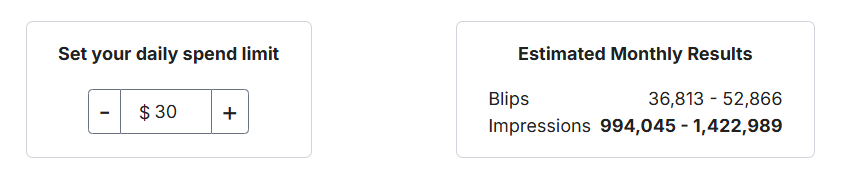
How much is a billboard in West Park?
Why Choose Blip for Billboard Advertising in West Park
Blip lets West Park brands launch fast on SR-7 and I-95 commuter corridors, reaching daily traffic in minutes without a long setup.
In West Park, set budgets by daypart so your ads hit rush hour, beach-bound weekends, or event surges from Hard Rock Stadium.
No contracts means West Park businesses can test offers near Hallandale Beach Blvd and County Line Road, then scale what works.
Track West Park blips in real time and shift spend as winter tourism, casino traffic, and commuter peaks change.
Use Blip's creative tools to swap bilingual West Park ads anytime, matching South Broward's multicultural audience and local routes.
Frequently Asked Questions About Billboard Advertising in West Park
How much does a billboard cost in West Park, Florida with Blip?
With Blip, you’re in control because you only pay for the individual ad displays, called “blips,” that you receive on West Park billboards. Each blip is a 7.5 to 10-second spot, and you set a daily budget that Blip automatically honors, so you never overspend. The cost of billboards in West Park, Florida changes based on when and where your ad shows and on advertiser demand, letting you scale your exposure up or down as needed.
Where can I advertise with Blip in West Park, Florida?
West Park is wedged between Miami-Dade County and the beach cities of Hollywood and Hallandale Beach, which gives advertisers access to dense commuter traffic, tourism spillover from the coast, and a deeply multicultural, year-round audience. The relevant coverage area is the south Broward / north Miami-Dade commute zone, and advertisers can focus on I-95, Florida’s Turnpike, US-441 / SR-7, Hallandale Beach Boulevard, and County Line Road / Pembroke Road. This flexibility makes it easy to reach both local and regional audiences.
What kind of traffic do West Park, Florida billboards with Blip reach?
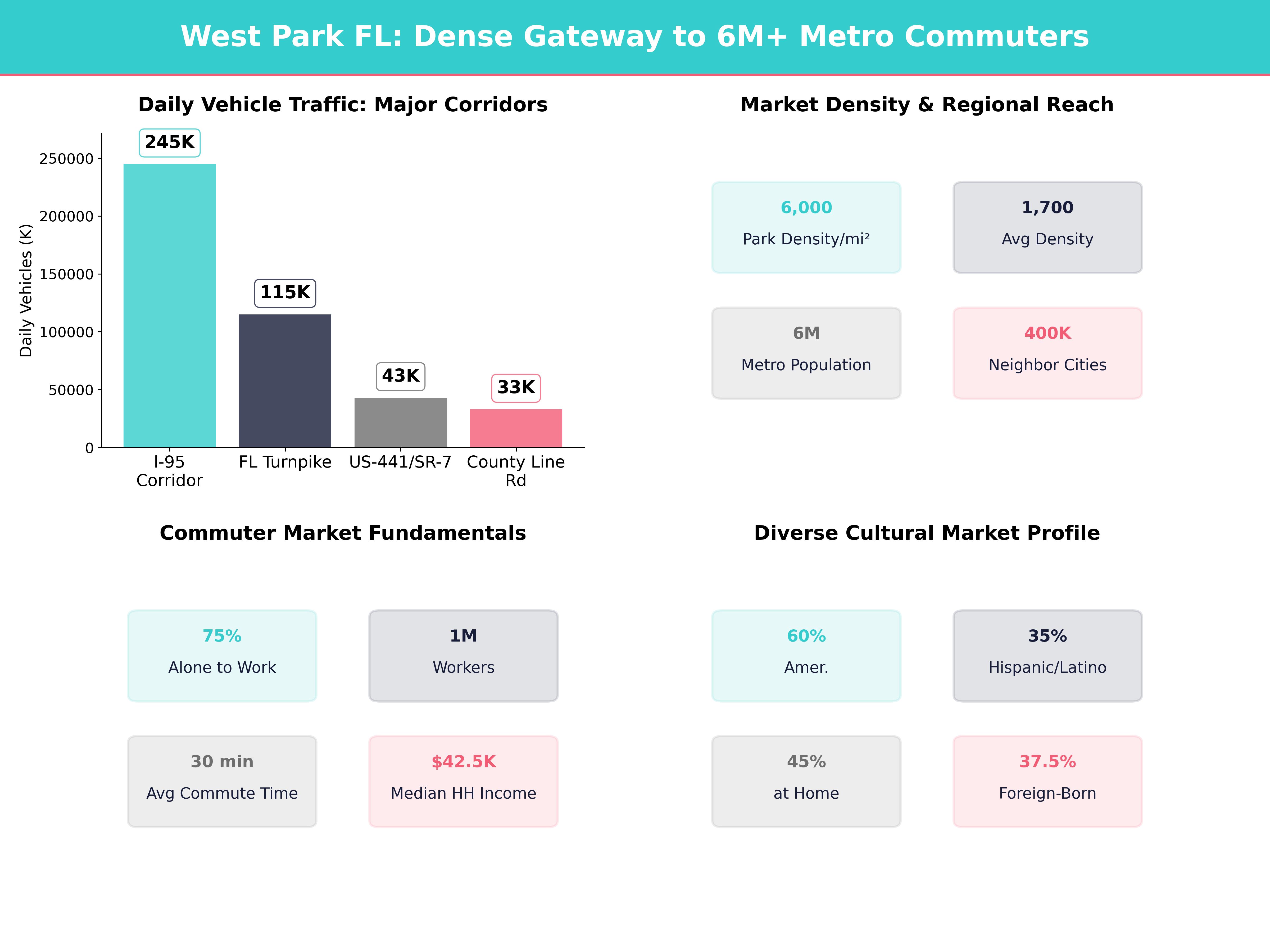
West Park is a small city with big-city traffic around it, and nearby Hollywood, Miramar, and Miami Gardens together represent nearly 400,000 people within a 15–20 minute drive. I-95 through South Broward often carries 230,000–260,000 vehicles per day, while US-441 / State Road 7 handles 35,000–50,000 vehicles per day on many segments. Hallandale Beach Boulevard and County Line Road also bring substantial commuter and cross-border traffic through the area.
When should I run Blip ads on West Park, Florida billboards?
Weekday morning (6:30–9:00 a.m.) and evening (4:00–7:00 p.m.) commute windows are important, plus weekend mid-days for errands. For tourists and visitors, late mornings to early evenings are strongest, especially weekends and holidays. The page also recommends increasing budget Friday–Sunday during high tourist season and around major events when traffic and impressions spike.
What types of businesses work best on Blip billboards in West Park, Florida?
The page highlights strong opportunities for restaurants, auto sales and service, insurance, healthcare, personal services, events, entertainment, and nightlife. Local traffic includes commuters, cross-county travelers, and visitors heading to beaches, casinos, and stadium events, which supports both value-focused and higher-ticket messaging. Industries that emphasize convenience, price, or location can fit especially well in this market.
Do I need a contract to advertise with Blip in West Park?
No, Blip has no long-term contracts or minimum commitments. You can start, pause, or stop your campaign at any time.
How fast can I launch a billboard campaign with Blip in West Park?
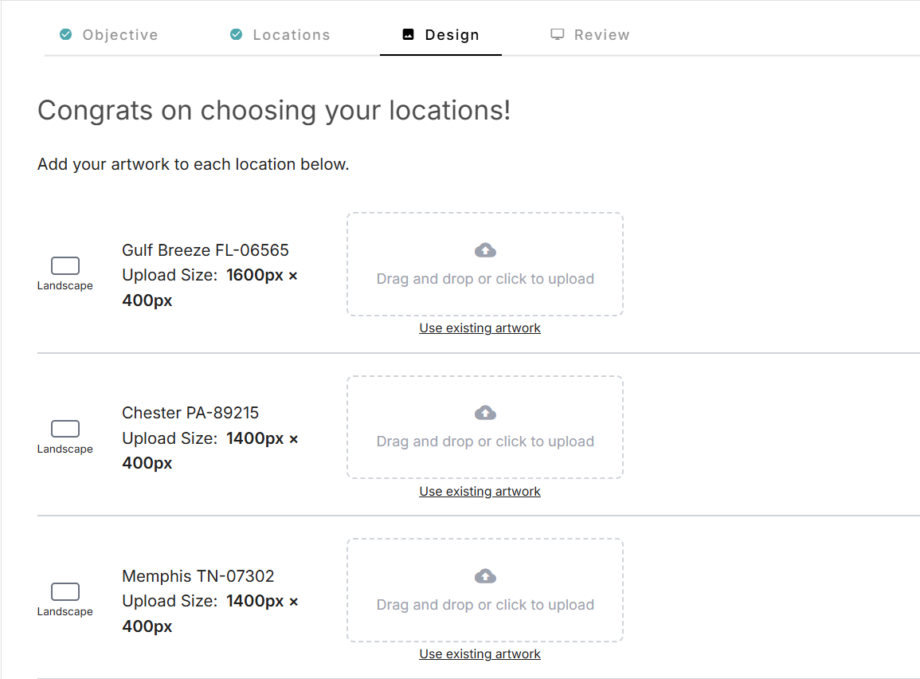
You can have your campaign live in minutes. Create a free account, select your locations, set your budget, upload your design, and start running once approved.
Where can I advertise with Blip in West Park?
Blip has digital billboards in West Park. You can browse available locations on a map, choose the ones that fit your audience, and start advertising right away.
Still have questions? Launch a campaign in minutes — no contracts, no commitments.
Start Your CampaignWest Park Billboard Advertising Guide
West Park, Florida South Broward County’s urban corridor, wedged between Miami-Dade County and the beach cities of Hollywood Hallandale Beach
Understanding the West Park Market
West Park is a small city with big-city traffic around it. According to 2020 data, West Park’s population is roughly 14,000 residents, but it is surrounded by much larger neighbors: Hollywood (about 153,000 residents), Miramar (around 135,000), and Miami Gardens
Some market-defining characteristics:
-
Population density and growth
West Park covers only about 2.2 square miles, yielding a population density of over 6,000 residents per square mile—more than double the overall density of Broward County, which averages around 1,600–1,800 residents per square mile. Broward County as a whole passed 1.9 million residents in recent counts and has added roughly 150,000–200,000 residents since 2010, while the Miami–Fort Lauderdale–West Palm Beach metro is over 6 million people and continues to grow at roughly 0.8–1.0% per year. That means any board near a major corridor in or near West Park is engaging not just locals, but a regional audience that can easily exceed hundreds of thousands of potential viewers per day across multiple routes.For local context and planning documents, you can review population and development trends via the City of West Park Broward County Planning and Development Management Division, and the Broward Metropolitan Planning Organization. These sources help quantify how much exposure West Park billboards can generate as the surrounding population continues to grow.
-
Cultural diversity
West Park and neighboring communities have a strong Caribbean and Latin American presence that shapes consumer preferences. In nearby south Broward zip codes, more than 60% of residents identify as Black or African American, and in many tracts over 30–40% of residents are Hispanic or Latino. In some areas of nearby Hollywood and Miramar, the foreign-born share exceeds 35–40%. Haitian, Jamaican, Trinidadian, Cuban, and Dominican communities are especially prominent, reflected in the hundreds of Caribbean restaurants, grocery stores, salons, and churches spread across SR‑7, Hallandale Beach Boulevard, and County Line Road.For creative strategy, this supports:
- Bilingual (English/Spanish) or multilingual messaging where appropriate.
- Inclusive visuals that reflect Black and Caribbean culture and family life.
- Campaigns aligned with Caribbean festivals, Latin music events, and regional holidays such as Miami Carnival, local Carnival-style parades, and Three Kings Day celebrations highlighted by groups across Broward and Miami-Dade.
-
Income and commuting patterns
Median household income in West Park is in the low- to mid-$40,000s, somewhat below the Broward County median in the mid-$60,000s and the broader Miami metro median in the low- to mid-$60,000s. In practical terms, 30–40% of households in nearby tracts may earn under $50,000 per year, while a sizable share of households in Miramar, Hollywood, and Miami Gardens earn $75,000+—which means boards in and around West Park are seen by both budget-conscious and middle-income consumers.Many residents commute to work in nearby job centers: Hollywood, Miramar, Fort Lauderdale
This has two implications:
- Commuter-heavy traffic windows on north–south routes during weekday morning and evening rush hours, when regional traffic volumes can be 2–3 times higher than mid-day off-peak periods on major corridors.
- A strong role for value-focused messaging—clear offers, payment plans, and promotions tend to resonate in neighborhoods where a significant share of households are cost-conscious.
To keep a pulse on local issues, construction, and events that may impact traffic and messaging, we recommend regularly checking:
- City of West Park official site
- Broward County government
- Local tourism (Visit Lauderdale / Greater Fort Lauderdale)
- Local news: South Florida Sun Sentinel, Miami Herald
- Nearby municipalities for zoning, development, and event calendars: City of Hollywood City of Miramar, City of Hallandale Beach City of Miami Gardens
Key Roadways and Traffic Patterns
Even if your specific Blip boards are slightly outside West Park’s city limits, the relevant coverage area is the south Broward / north Miami-Dade commute zone. We should think in terms of the road network, not city boundaries, when planning West Park billboard advertising.
Important corridors and typical traffic volumes:
-
I-95 through South Broward
- Average Annual Daily Traffic (AADT) is often in the 230,000–260,000 vehicles per day range in segments near Hallandale Beach Boulevard and Pembroke Road, according to Florida Department of Transportation (FDOT) District 4 8,000–10,000 vehicles per hour.
- I-95 is the spine for commuters between Miami, Aventura, Hallandale Beach, Hollywood, Fort Lauderdale, and beyond. Morning southbound and evening northbound are key, with travel time reliability often dropping during those windows—meaning drivers spend more minutes per mile looking at roadside media.
-
Florida’s Turnpike
- Several nearby segments carry 100,000–130,000 vehicles per day, with heavy commuter and freight traffic.
- Toll-road users in South Florida tend to have slightly higher rates of full-time employment and household vehicles per household compared with non-toll users, which is useful for auto, financial services, and higher-ticket retail campaigns.
-
US-441 / State Road 7 (SR-7)
- This busy surface route runs directly along West Park’s western side, with many segments handling 35,000–50,000 vehicles per day and signalized intersections averaging 1,500–2,500 vehicles per hour at peaks.
- SR-7 traffic is heavily local, including residents of West Park, Miramar, and Hollywood using it for daily errands and work trips. It is also a preferred corridor for bus routes linking north Miami-Dade and south Broward, adding daily transit riders to your potential impressions.
-
Hallandale Beach Boulevard (SR-858)
- East–west connector between I-95 and the beaches. Sections near I-95 can exceed 50,000 vehicles per day and see substantial seasonal spikes during winter tourism months when beach-bound volumes rise.
- Ideal for campaigns targeting beachgoers, casino visitors (Mardi Gras Casino, Gulfstream Park 1 million visitors annually across racing, casino, and shopping activities; see Gulfstream Park
-
County Line Road / Pembroke Road
- Major cross-border axes between Miami-Dade and Broward. Traffic volumes on key segments often range from 25,000–40,000 vehicles per day, with strong morning and evening commuter peaks.
- Strong for businesses wanting to reach audiences in both counties with a single creative, particularly those that draw customers from Miami Gardens, West Park, and Miramar.
Because Blip allows us to buy digital billboard space by the blip (a single ad play) rather than by long fixed contracts, we can selectively emphasize:
- I-95 and Turnpike boards for regional campaigns and higher-ticket offerings—auto, education, healthcare, entertainment, and financial services that draw from a 20–40 mile radius.
- US-441 / SR-7 and local arterials for hyperlocal campaigns—car dealers, quick service restaurants, grocery, salons, and neighborhood services.
For advertisers exploring billboard rental in West Park and nearby corridors, this flexibility means you can shift spend between these road types as results come in, rather than being locked into a single placement.
We recommend cross-checking FDOT traffic count maps Broward MPO traffic and safety dashboards Miami-Dade Transportation & Public Works.
Seasonality and Tourism: Timing Your Blips
Greater Fort Lauderdale and Miami are among the most visited regions in the United States. Broward County alone records roughly 13–15 million overnight visitors per year, and when you include day-trippers, total visitation to Greater Fort Lauderdale has recently exceeded 16–18 million visitors annually, with total visitor spending estimated in the $15–20 billion range, according to Visit Lauderdale 24–26 million visitors a year, many of whom drive into Broward for beaches, casinos, and shopping. This regional tourism lifts the value of West Park billboards because so many visitors move through the surrounding road network.
Key seasonal patterns that should influence your schedule:
-
Winter/Spring Peak (November–April)
- High season for “snowbirds” and tourists escaping colder climates; in some winter months, hotel occupancy in Greater Fort Lauderdale can climb into the 80–90% range, and average daily room rates may be 20–40% higher than summer lows.
- Beach traffic spikes; east–west corridors like Hallandale Beach Boulevard and Hollywood Boulevard can see 15–30% higher traffic volumes on sunny weekends compared with shoulder seasons. Many days see roughly double the casual/leisure drivers you might find in off-peak months along roads heading to the beaches and entertainment districts.
-
Use Blip to:
- Increase your bids and share of voice on weekends and early afternoons, when visitor driving is heaviest.
- Target routes connecting I-95 to the coast (Hallandale Beach Blvd, Hollywood Blvd, Sheridan St in adjacent cities) and routes leading to casinos and racetracks.
-
Summer (June–August)
- Tourism remains strong, but with more family vacationers and locals. Broward’s summer room nights are buoyed by staycations and regional drive markets from other parts of Florida and the Southeast.
- Afternoon thunderstorms and heat drive more people to indoor activities—malls, movies, gyms, and restaurants. Indoor attractions and shopping centers often report weekend afternoon peaks that are 20–30% higher than weekday averages.
- Strong timing for retail sales, back-to-school campaigns (typically late July–August), and indoor entertainment promotions.
-
Event-driven surges
West Park is minutes from some of South Florida’s largest event venues. Single events can bring 50,000–75,000+ attendees into the broader area, creating short-term spikes in traffic and impressions. Consider using Blip’s date and time controls to concentrate impressions around:- Hard Rock Stadium in Miami Gardens (10–15 minutes away), which hosts Miami Dolphins NFL games, University of Miami football, the Miami Open tennis tournament, major concerts, and international soccer matches. A sold-out NFL game pushes about 65,000 spectators, many arriving by car.
- Casinos and racing venues in Hallandale Beach and Hollywood, including Gulfstream Park Seminole Hard Rock Hotel & Casino Hollywood. These destinations collectively attract millions of visits annually and generate strong evening and weekend traffic along I‑95, SR‑7, and local arterials.
- Major South Florida events like Miami Carnival, music festivals, and art fairs that push visitors into nearby cities. These can add tens of thousands of additional daily trips on I‑95 and cross-county routes.
For each specific event, we can:
- Identify likely approach routes (I-95, Turnpike, SR-7, and key exits such as Hallandale Beach Blvd, Miami Gardens Drive, and Hollywood Blvd).
- Raise bids and frequency in 2–3 hour windows before and after event start times, concentrating spend when traffic peaks.
- Use event-specific creatives that speak directly to attendees (parking, pre-game promotions, rideshare discounts, after-parties, etc.).
For event calendars and anticipated crowd sizes, monitor sites such as Visit Lauderdale, Visit Hollywood Florida Hollywood Hallandale Beach Miami Gardens
Audience Segments and Localized Messaging
Because West Park occupies a central node between several communities, we can structure creative and scheduling around the people actually on the roads and use that to guide where billboards in West Park and nearby corridors will perform best.
1. Everyday Local Residents
- When they’re on the road:
Weekday morning (6:30–9:00 a.m.) and evening (4:00–7:00 p.m.) commute windows, plus weekend mid-days for errands. In many South Florida corridors, these peak windows can account for 35–45% of total daily traffic. -
What resonates:
- Clear, price-forward offers (e.g., “$49 brake special,” “2-for-1 lunch,” “$0 down financing”), especially in neighborhoods where a large share of households rent or have limited disposable income.
- Directions-based messaging (“Just 2 miles east on Hallandale Beach Blvd”), since many drivers make decisions within a 5–10 minute travel radius.
- Service categories: auto repair, insurance, quick-service restaurants, healthcare, tax prep, real estate, and education.
Blip strategy: Run higher-frequency blips in peak commute windows on SR-7 and east–west arterials, using short, benefit-driven copy and bold contact info. A good starting point is to allocate 60–70% of your impressions into weekday commute dayparts for resident-focused offers.
2. Cross-County Commuters
Many drivers traveling between northern Miami-Dade and southern Broward pass near or through West Park daily. In the broader Miami–Fort Lauderdale area, more than 1 million workers commute across county lines, and over 80% of those trips are taken by car.
-
When they’re on the road:
- Southbound I-95 / Turnpike in the morning, northbound in the evening. In some segments, peak-direction travel volumes can be 2–3 times off-peak volumes.
-
What resonates:
- Time-saving or convenience angles (“Skip Miami traffic—service your car in West Park”).
- Professional services (law, finance, cosmetic medicine, higher education) and larger retail destinations. Commuters are often higher-income than non-commuters and more likely to respond to services that save time or improve quality of life.
Blip strategy: Split creatives by direction where possible (e.g., one design tailored to southbound commuters heading to Miami, another to northbound drivers returning home). Use dayparting to minimize spend outside core commute periods; many advertisers see 20–30% lower cost per response when the schedule is tightly aligned with commute times. This is especially true when pairing well-timed creatives with West Park billboards close to major on- and off-ramps.
3. Tourists and Visitors
Many visitors staying in Hollywood, Hallandale Beach, or north Miami will drive through or near West Park on their way to attractions. Broward tourism data show that a majority of visitors—often 70% or more—arrive by car or rental car, creating consistent exposure opportunities.
- When they’re on the road:
Late mornings to early evenings, especially weekends and holidays. Visitor traffic often peaks from about 10:00 a.m.–1:00 p.m. (beach and daytime attractions) and 5:00–9:00 p.m. (dining and nightlife). -
What resonates:
- Attractions, dining, nightlife, and experiences within a 15–20 minute drive. Visitors frequently report spending $100–$200+ per day on food, entertainment, and shopping, so highlighting mid- to high-ticket experiences is effective.
- Simple calls to action: “Exit 18 – 10 minutes to the best jerk chicken in Broward,” “Beach gear 5 minutes ahead.”
Blip strategy: Increase budget Friday–Sunday, especially on sunny days and holiday weekends. Consider creatives that mention nearby beaches, casinos, or stadiums to hook leisure travelers, and highlight easy parking or “first-time visitor” specials.
Creative Best Practices for West Park Digital Billboards
In a high-traffic, fast-moving urban corridor, the fundamentals of billboard design are especially critical. Strong creative will determine how effectively your investment in billboard rental in West Park turns into measurable awareness and response.
We recommend:
-
Big, bold typography
- Aim for 6–8 words or fewer of primary copy. At 65+ mph on I-95, drivers have only 3–5 seconds to absorb your message; at 40–45 mph on SR‑7 or Hallandale Beach Blvd, you may get 5–7 seconds.
- Use large, high-contrast fonts (white or yellow on dark backgrounds, or vice versa). Avoid thin fonts, as legibility tests show thick, sans-serif type can improve recall by 20–30% on fast roadways.
-
Localized hooks
Tie your messages to familiar references:- “On SR-7 next to City of West Park Hall.”
- “5 minutes west of I-95 on Hallandale Beach Blvd.”
- Mention adjacent cities: “Now open in Miramar, just north of County Line Road.”
Studies of OOH effectiveness frequently show that including a clear directional cue (e.g., “Next Exit,” “2 Miles Ahead”) can increase action intent by 15–25% compared with generic branding alone.
-
Cultural alignment
With a strong Caribbean and Hispanic presence, localized cultural cues help:- Consider bilingual copy in English and Spanish for key campaigns, especially if your business already serves bilingual customers; in many nearby zip codes, more than 40–50% of residents speak a language other than English at home.
- Use authentic imagery representing local demographics—families, professionals, and young adults from Black, Caribbean, and Hispanic communities. Campaigns that reflect local audience identity often achieve significantly higher brand favorability and recall.
-
Offer-focused messages
Because median incomes are moderate, price sensitivity is real:- Highlight promotions and financing (“Pay $0 today,” “$29/month,” “Kids eat free Tuesdays”).
- Use limited-time language (“This week only,” “Weekend special”) to spur action; OOH campaigns with urgency-oriented copy often deliver 10–20% higher redemption or inquiry rates than evergreen messages.
-
Dynamic creative rotation with Blip
Blip allows you to upload multiple creatives and rotate them automatically. We can use this to:- Test distinct offers (“$10 off oil change” vs. “Free tire rotation with service”) and monitor which correlates with inquiry spikes. Running 2–4 versions simultaneously for at least two weeks can quickly reveal top performers.
- Run different creatives by time of day (breakfast vs. dinner specials, day vs. night events).
- Localize by direction or location: one design for boards closer to Miami, another for boards closer to Hollywood or Hallandale Beach.
Using Blip’s Tools Strategically in West Park
Blip’s flexibility shines in a dynamic market like South Broward. Here’s how we can align the platform’s capabilities with the realities on the ground and get the most from billboards in West Park and surrounding areas:
Budget Control and Bid Strategy
- Start with a daily budget aligned to your goal (for many local businesses, $10–$50/day in this area is a common starting test range, often generating hundreds to a few thousand daily impressions depending on bids and board locations).
-
Use higher bids on:
- Weekday commute windows on boards near I-95 and SR-7, when traffic volumes are highest.
- Friday–Sunday daylight hours during high tourist season (November–April), when visitor trip volumes can be 20–30% above off-season levels.
-
Lower bids or pause campaigns during:
- Overnight hours when your audience is less likely to convert (typically 11 p.m.–5 a.m., which may represent 10–15% of daily traffic but often a much smaller share of conversions).
- Heavy rain or storm periods, if your business relies mostly on foot traffic and you see fewer visits in those conditions.
Dayparting and Calendar Controls
With Blip, we can schedule ads by:
-
Time of day:
- 6–9 a.m. for coffee shops, breakfast QSR, daycare, and morning commuters.
- 11 a.m.–2 p.m. for lunch specials and same-day services—these windows often capture 30–40% of daily restaurant transactions.
- 4–8 p.m. for dinner, retail, and service businesses targeting returning commuters and families.
-
Day of week:
- Weekend-heavy for tourism and leisure campaigns; many restaurants, attractions, and entertainment venues see 40–50% of weekly revenue between Friday evening and Sunday.
- Monday–Wednesday emphasis for professional services or B2B, when appointment setting and office-related tasks are most active.
We recommend plotting your customer transaction times from your POS or website analytics. If, for example, 60% of your business happens Thursday–Sunday, structure your Blip schedule so that 60–70% of your impressions also occur on those days.
Geographic Targeting
Even though Blip buys are per-board, we can think of “geographic clusters”:
- West Park / Hollywood / Hallandale cluster for hyperlocal campaigns targeting neighborhoods within roughly a 5–7 mile radius. This is the core zone where West Park billboard advertising can efficiently reach both residents and nearby workers.
- Cross-county connectors (e.g., County Line Road, I-95 segments near the county border) for brands pulling from both Miami-Dade and Broward.
- Regional reach using boards farther up I-95 into Fort Lauderdale or down toward Miami, to build broader brand awareness and support online or multi-location businesses.
As you plan, it helps to align with the regional view presented by entities like:
- Broward County transportation and planning
- Miami-Dade Transportation & Public Works
- Greater Fort Lauderdale Alliance
Industry-Specific Opportunities in West Park
Some industries are especially well-positioned to benefit from digital billboards in this area. When planning billboard rental in West Park, consider how your category lines up with the following opportunities.
Restaurants and Food Businesses
- South Florida households spend a significant share of their food budget on dining out; it’s common for local households to allocate 45–50% of food spending to restaurants and takeout.
- The corridor around West Park features a high mix of takeout, fast casual, and Caribbean and Latin cuisines, with hundreds of independent restaurants and chains within a 5–10 minute drive.
- Commuter + leisure traffic to the beaches and casinos creates strong evening and weekend demand.
Tactics:
- Rotate creatives by mealtime, featuring different menu items and price points (breakfast combos under $6, lunch specials, happy hour, late-night bites).
- Use location cues: “Exit Hallandale Beach Blvd – 2 minutes west, next to [landmark].”
- Feature delivery app partnerships (Uber Eats, DoorDash, etc.) during evenings; third-party delivery orders often spike 20–30% on weekends and rainy days.
Auto Sales, Service, and Insurance
- South Florida has high vehicle ownership, often 1.6–2.0 vehicles per household, and long commute distances.
- Many residents in and around West Park drive older vehicles, which can mean higher demand for maintenance and repair services; in some nearby areas, the average vehicle age is 10+ years.
- Insurance rates in South Florida are among the highest in the state due to congestion and weather, making price-shopping common.
Tactics:
- Promote “same-day service” and “walk-ins welcome” in commute windows, when motorists are thinking about car needs.
- Combine value messaging (“Oil change from $39”) with quick directions and phone/URL callouts.
- Use sequential creatives (if available across multiple boards) to tell a simple three-step story: “Car trouble? – Exit now – We’re on SR-7.”
- Highlight savings amounts (“Save up to $300/year on auto insurance”) when targeting cost-conscious households.
Healthcare and Personal Services
Local clinics, dental offices, urgent care centers, and personal care services can reach both residents and commuters. In South Florida metros, healthcare and social assistance typically rank among the top employment sectors, and many households are actively searching for nearby providers that fit their insurance network.
Tactics:
- Emphasize convenience: “Open late,” “Walk-ins welcome,” “Open 7 days.” Extended hours are a key differentiator for urgent care and dental services in dense commuter areas.
- Use short, reassurance-based copy (“Same-day appointments,” “Most insurance accepted”).
- Increase intensity during back-to-school, flu season (often peaking December–February), and tax season (for stress-related services like dental, vision, mental health, and wellness).
- Tie messaging to local institutions—schools, parks, and city facilities—using references like “5 minutes from City of West Park City Hall.”
Events, Entertainment, and Nightlife
Nightlife and entertainment in nearby Hollywood, Hallandale Beach, and Miami benefit from West Park’s strategic location. The Greater Fort Lauderdale area markets itself as a 24/7 destination, and local CVB data show that visitors spend 30–40% of their trip budget on entertainment, food, and nightlife.
Tactics:
- Promote pre-event and same-day ticket offers during afternoon and early evening hours.
- Use countdown creatives (“Tonight,” “3 days left,” “This weekend only”)—OOH research often finds countdowns can lift urgency and purchase intent by 15–20%.
- Target key drive times from Broward into Miami for concerts and festivals, especially on Fridays and Saturdays between 3:00–8:00 p.m.
- Link your messaging to recognizable hubs like Seminole Hard Rock Hotel & Casino Hollywood or downtown Hollywood’s arts and entertainment district, promoted by the Hollywood Community Redevelopment Agency
Measuring and Optimizing Your Campaign
To get the most from Blip campaigns in West Park and surrounding areas, we should treat digital billboards like any other performance channel:
-
Define clear KPIs
- Direct response: calls, website visits, coupon redemptions.
- Store traffic: footfall increases during specific campaign windows (you can track average daily visits before vs. during a flight; a 10–20% lift is a common target for successful local OOH).
- Brand lift: survey responses, social mentions, or branded search volume in tools like Google Trends.
-
Create trackable offers
- Unique promo codes shown only on billboards (“WESTPARK10,” “SR7SAVE”).
- Custom landing pages tied to billboard messaging.
- “Mention this sign for 10% off” offers; even if only 5–10% of redemptions explicitly mention the sign, you can infer broader awareness impact from overall traffic increases.
-
Compare time-based performance
- Correlate your transaction logs or website analytics with the precise times your blips were running.
- If you see that, for example, 70% of redemptions come from people who heard about you “on my way home from work,” consider shifting more budget to evening commute slots or extending evening hours.
-
Iterate creatives
- Test 2–4 variations simultaneously, each emphasizing a different primary benefit or call to action (price, speed, quality, location).
- After 2–4 weeks, pause the underperformers and produce new variants of the winners. Many advertisers find that top-performing creatives can deliver 30–50% more responses than weaker variants, so systematic testing pays off.
By combining local data from sources like the City of West Park Broward County, Broward MPO, and Visit Lauderdale with Blip’s granular controls over timing, budget, and creatives, we can design digital billboard campaigns that speak directly to the people driving the roads around West Park every day. Whether you are experimenting with your first billboard rental in West Park or scaling an established regional presence, this data-driven approach helps maximize impact while keeping spending efficient and transparent.