Billboards in St. Cloud, FL
No Minimum Spend. No Long-Term Contracts. Just Results.
Trusted by Leading Brands


Billboard advertising
in St. Cloud has never been easier
How much is a billboard in St. Cloud?
Why Choose Blip for Billboard Advertising in St. Cloud
Blip lets you launch fast in St. Cloud and reach daily drivers on US 192, the Turnpike, and Narcoossee without a traditional buy.
St. Cloud's 67.6% growth means new households are everywhere; Blip's flexible budgets help you test and scale as demand shifts.
Daypart your St. Cloud ads for school runs, commuter peaks, or airport traffic on SR 417 and Narcoossee Road.
No contracts in St. Cloud means you can promote care, retail, or home services near Lake Nona and pause anytime.
Track St. Cloud performance in real time and move spend toward the boards driving results on US 441 and US 192.
Use Blip's creative tools to make bilingual St. Cloud billboards that speak to Osceola County's 54%+ Hispanic audience.
Frequently Asked Questions About Billboard Advertising in St. Cloud
How much does a billboard cost in St. Cloud with Blip?
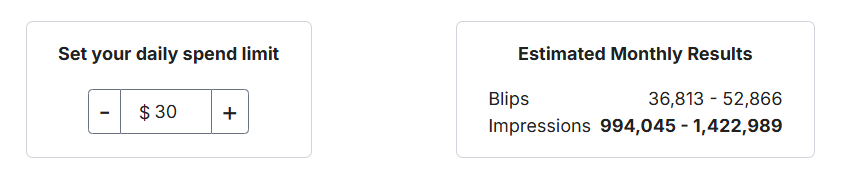
Each display, or “blip,” runs for 7.5 to 10 seconds and starts at just $0.01 per play, with prices changing based on time of day, location, and advertiser demand. That pay-per-play model makes billboard advertising more accessible because there are no minimums or contracts, and you can adjust or pause your budget anytime. Your total cost is simply the sum of each blip over time, giving you control while Blip helps maximize your reach.
Where can I advertise with Blip in St. Cloud, Florida?
St. Cloud’s key traffic corridors include Florida’s Turnpike, US 192, Narcoossee Road, US 441, and SR 417. The Turnpike is especially effective for broad regional visibility, while US 192 works well as a daily-life corridor for local residents and visitors. Narcoossee Road connects St. Cloud with Lake Nona and airport-oriented employment, making it a strategic route for commuters.
Why is St. Cloud, Florida a strong billboard market with Blip?
St. Cloud is one of the most compelling billboard markets in Central Florida because it combines fast residential growth, heavy road use, and easy access to major regional demand drivers. The city grew 67.6% from 35,183 residents in 2010 to 58,964 in 2020, and Osceola County reached 388,656 residents in 2020. That mix of daily repetition, family growth, and tourism spillover makes St. Cloud a strong place for digital billboard advertising.
What kinds of people can I reach with Blip billboards in St. Cloud, Florida?
The core audience is the daily commuter, with roughly 88% of workers traveling by car, truck, or van and average one-way commute times around 32 minutes. Families are also a major audience, since the School District of Osceola County serves more than 74,000 students. St. Cloud also sits inside a tourism ecosystem, with Orlando International Airport bringing in 57.7 million passengers in 2023.
When should I run billboard ads in St. Cloud, Florida with Blip?
Winter and spring bring strong mobility across Central Florida, along with snowbird travel, theme-park demand, spring break planning, and events like the Osceola County Fair. Back-to-school is another key window, since Osceola public schools typically start in early August and late July through September is ideal for family-focused campaigns. Summer is also strong for family-targeted advertising, and Florida’s wet season typically peaks from June through September.
Do I need a contract to advertise with Blip in St. Cloud?
No, Blip has no long-term contracts or minimum commitments. You can start, pause, or stop your campaign at any time.
How fast can I launch a billboard campaign with Blip in St. Cloud?
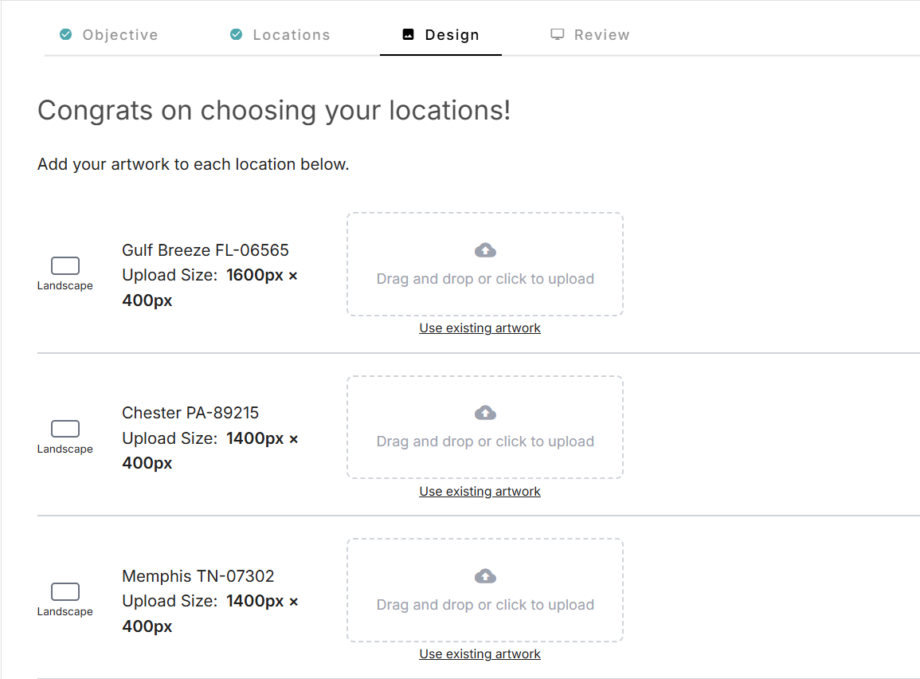
You can have your campaign live in minutes. Create a free account, select your locations, set your budget, upload your design, and start running once approved.
Where can I advertise with Blip in St. Cloud?
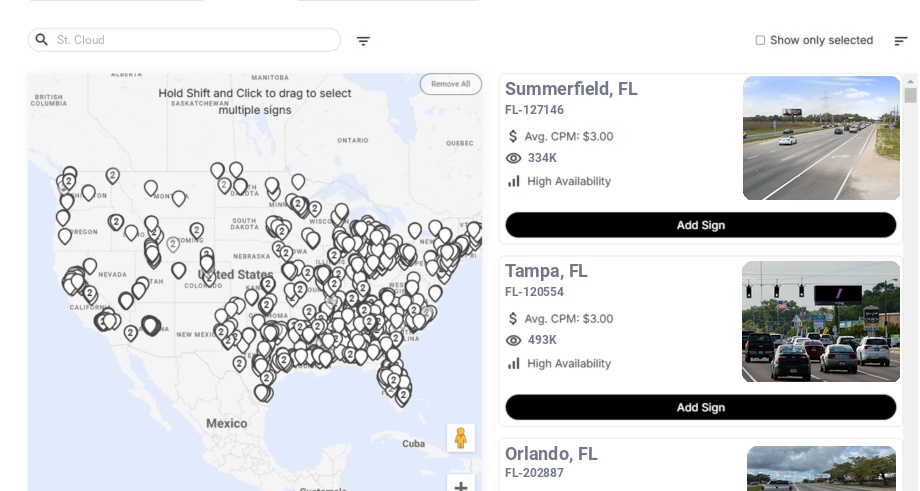
Blip has digital billboards in St. Cloud. You can browse available locations on a map, choose the ones that fit your audience, and start advertising right away.
Still have questions? Launch a campaign in minutes — no contracts, no commitments.
Start Your CampaignSt. Cloud Billboard Advertising Guide
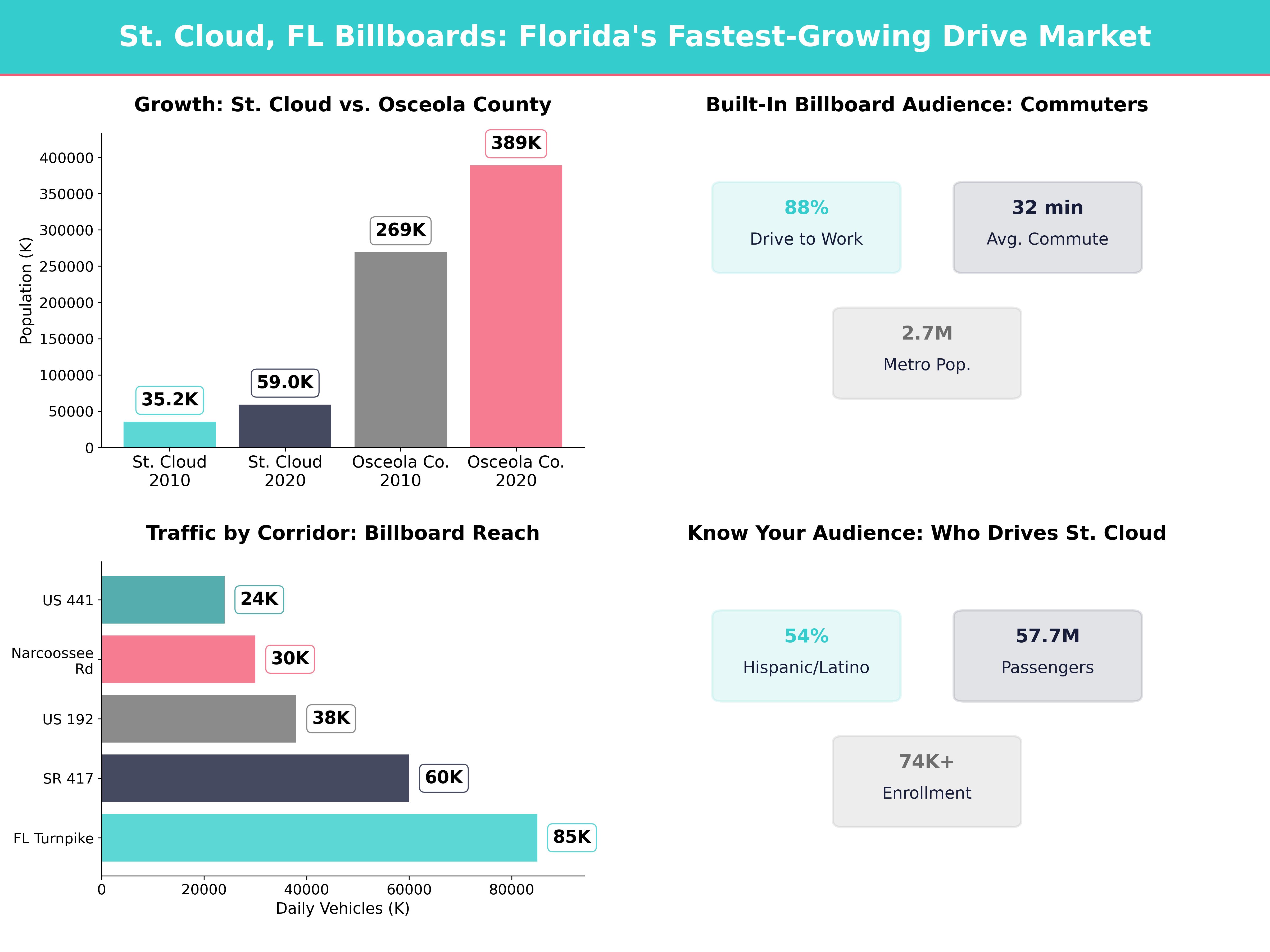
St. Cloud 67.6% from 35,183 residents in 2010 to 58,964 in 2020. Official 2020 population counts show the City of St. Cloud 58,964 residents, while Osceola County reached 388,656, a 44.6% increase from 268,685 in 2010, giving us both a meaningful local audience and a much larger countywide trade area. We also benefit from a deeply car-oriented market, with recent survey estimates showing roughly 88% of workers commuting by car, truck, or van and average one-way travel times of about 32 minutes. That mix of daily repetition, family growth, and tourism spillover makes St. Cloud a strong place for digital billboard advertising.
St. Cloud Market Overview
St. Cloud’s billboard value starts with growth. The city rose from 35,183 residents in 2010 to 58,964 in 2020, which is an increase of 67.6%. Over the same decade, Osceola County grew from 268,685 residents to 388,656, or 44.6% growth. When we advertise in a market growing this quickly, we are not only reaching today’s residents. We are also building familiarity with new households that are still deciding where to shop, eat, seek care, and hire services.
The local economy is broader than many advertisers first assume. St. Cloud sits within commuting distance of Kissimmee, Lake Nona, Orlando International Airport Orlando Economic Partnership region, which anchors a metro of roughly 2.7 million residents. That means our audience includes people tied to tourism, logistics, healthcare, education, construction, and professional services, rather than a single-industry town with narrow buying power.
Healthcare and innovation are especially important to the St. Cloud story. Lake Nona Medical City is a 650-acre health and life sciences cluster to the north, and NeoCity in Osceola County is a 500-acre technology district focused on advanced industry. Inside the city itself, Orlando Health St. Cloud Hospital is an 84-bed community hospital. For billboard advertisers, those employment centers matter because they create reliable weekday travel patterns and attract households with stable incomes.
The family profile of the market is also favorable. The School District of Osceola County serves more than 74,000 students, which signals a large base of parents making recurring decisions about healthcare, childcare, food, retail, tutoring, sports, and home services. Nearby higher education also extends our reach into younger adult segments. The University of Central Florida enrolls more than 68,000 students, and Valencia College serves a very large regional student population as well.
Demographically, St. Cloud sits inside one of Florida’s most diverse consumer markets. Osceola County is majority Hispanic or Latino, at more than 54% of residents. That is important for creative strategy. In many categories, especially retail, food, healthcare, insurance, and community services, bilingual or culturally aware messaging can improve recognition and response.
From a media behavior standpoint, St. Cloud remains strongly vehicle dependent. Public transportation is limited compared with older urban markets, and many daily trips involve moving between neighborhoods, schools, retail nodes, medical campuses, and regional job centers. For us, that means roadside messaging can work at both the brand level and the action level. We can build awareness over time, and we can also prompt near-term visits when the billboard sits close to a turn, interchange, or shopping destination.
Key Traffic Corridors for St. Cloud Billboards
St. Cloud’s mobility is shaped by a few corridors that do most of the work. By matching advertiser goals to those corridors, we can choose boards that deliver either broad reach, route relevance, or both.
Florida’s Turnpike and the St. Cloud-Kissimmee Gateway
Florida’s Turnpike Enterprise is the region’s most important long-distance traffic spine for advertisers targeting commuters, travelers, and regional shoppers. According to FDOT traffic data 70,000 to 100,000+ AADT range, with heavier volumes clustering closer to Kissimmee and the major interchange area.
This corridor is especially effective for advertisers that need broad regional visibility, including the following categories:
- Hospitals, urgent care, and specialty practices perform well here because commuters are repeatedly exposed to the same providers on routine trips.
- Insurance, legal services, and financial brands benefit from frequency because they are often chosen after multiple exposures rather than after a single impression.
- Attractions, hotels, and travel services can use this route to catch leisure travelers moving between South Florida, Osceola County, and the Orlando tourism core.
Turnpike boards are less about neighborhood intimacy and more about scale. If our goal is awareness across a large trade area, this is usually where we start.
US 192 Through St. Cloud
U.S. 192 is the daily-life corridor. FDOT traffic maps typically place St. Cloud segments of US 192 in the 30,000 to 45,000 AADT band, depending on the exact segment and nearby intersections. The road functions as a retail connector, commuter route, and tourism feeder all at once.
This is a strong corridor for high-consideration local categories because people are already in decision mode while driving it. We often like US 192 for the following advertiser types:
- Restaurants, convenience stores, and grocery-adjacent brands benefit because many trips along 192 are errands or after-work stops.
- Auto dealers, tire shops, oil change brands, and collision repair fit naturally because the audience is already engaged in a driving context.
- Home services such as roofing, HVAC, plumbing, pest control, and solar can build local trust here because residents use this corridor repeatedly.
US 192 also helps advertisers reach visitors moving between St. Cloud, Kissimmee, and the larger attractions economy. That makes it one of the better roads in the market for businesses that need both local residents and out-of-area traffic.
Narcoossee Road and the Lake Nona Commute
Narcoossee Road is one of the most strategic routes for reaching St. Cloud residents who work or spend money to the north. FDOT counts along key segments of Narcoossee Road typically fall in the 20,000 to 40,000 AADT range, with volumes strongest near major growth nodes and connections toward Lake Nona.
This corridor matters because it carries an affluent and time-sensitive commuter audience. It connects St. Cloud with Lake Nona, Medical City, and airport-oriented employment. That makes it a smart fit for the following categories:
- Healthcare systems and specialty practices can target workers and families already traveling toward medical campuses.
- Childcare, private schools, tutoring, and youth activities gain relevance because parents often make these trips on a fixed schedule.
- Fitness, dental, and professional services benefit from repeated exposure to higher-frequency commuters.
Narcoossee campaigns should usually lean practical. People on this route are often balancing work, school, and family schedules, so convenience claims tend to outperform abstract branding.
US 441 and Historic Downtown St. Cloud
US 441 gives us a different kind of billboard value. Traffic levels are generally lower than the Turnpike, but many central St. Cloud segments still operate in roughly the 18,000 to 30,000 AADT range. That is enough traffic to matter, especially when the advertiser wants local credibility rather than regional scale.
This corridor is a good fit for the following uses:
- Community banks, local restaurants, salons, and service businesses can feel close to the neighborhoods they actually serve.
- Municipal, nonprofit, and event messaging works well because the audience is more local and more likely to respond to community-oriented calls to action.
- Real estate and home improvement brands benefit because residents in this area are closer to decision points about where they live and shop.
When we want St. Cloud residents to feel that a business is “for us,” downtown-oriented placements can be more persuasive than purely high-volume commuter boards.
SR 417, the Airport Link, and Regional Spillover
The Central Florida Expressway Authority operates SR 417, which is not the main street of St. Cloud but is highly relevant to the market. Key stretches near Lake Nona and the airport frequently carry about 50,000 to 70,000 AADT, depending on the segment. This route captures travelers headed to Orlando International Airport 57.7 million passengers in 2023.
For many advertisers, SR 417 is where St. Cloud stops being just a local market and becomes part of the broader Central Florida movement pattern. This corridor is particularly effective for the following categories:
- Airport parking, hotels, rental-related services, and travel convenience brands benefit from strong trip intent.
- Regional attractions and entertainment brands gain exposure before visitors fully enter the tourism core.
- Business-to-business and recruiting campaigns can reach workers circulating between Osceola County, Orange County, and airport-area employment zones.
Audience Segments We Can Reach in St. Cloud
St. Cloud works best when we think in audiences, not just in road names. The city gives us several distinct groups, and each one responds to different timing, messaging, and placement choices.
St. Cloud Commuters and Everyday Drivers
The core audience is the daily commuter. With roughly 88% of workers traveling by car, truck, or van and average one-way commute times around 32 minutes, St. Cloud produces exactly the kind of repeat exposure pattern that roadside advertising needs. We can show up several times per week, along the same route, before a purchase decision is made.
This segment is ideal for the following advertiser goals:
- Top-of-mind awareness for healthcare, insurance, legal, and financial services.
- Routine purchase prompts for coffee, lunch, groceries, fuel, and quick-service retail.
- Household service demand generation for categories that consumers buy only a few times per year, such as roofing, HVAC, or pest control.
St. Cloud Families and Parents
Families are one of the strongest reasons to advertise here. The School District of Osceola County serves 74,000+ students, and St. Cloud’s housing growth has drawn many young and middle-aged households. These residents are heavy buyers of pediatric care, urgent care, orthodontics, childcare, tutoring, sports, furniture, grocery, and home improvement.
Family-oriented billboard campaigns work especially well when they answer practical questions quickly. We should emphasize proximity, hours, affordability, and trust. In a market like St. Cloud, “Open late on Narcoossee” can be more useful than a clever slogan.
Tourists, Short-Term Visitors, and Airport Traffic
St. Cloud is not a pure tourism town, but it sits inside a tourism ecosystem that advertisers can absolutely tap. Experience Kissimmee Orlando International Airport 57.7 million passengers in 2023. That flow creates opportunities for attractions, restaurants, hotels, vacation services, retail, and entertainment brands that want visibility before visitors settle into fixed plans.
Tourism-oriented billboard campaigns tend to perform best on the Turnpike, US 192, and airport-related routes. The key is simplicity. Visitors usually need one clear idea, one destination cue, and one reason to choose us now.
Healthcare, Education, and Innovation Workers
The St. Cloud area has a larger white-collar and institutional workforce than many people expect. Lake Nona Medical City spans 650 acres, NeoCity covers 500 acres, and Orlando Health St. Cloud Hospital adds another local employment center with 84 beds. These assets support audiences in healthcare, research, engineering, education, administration, and support services.
This matters for billboard advertisers because these workers tend to be routine travelers with stable habits. That is useful for:
- Professional services, such as banks, tax firms, and legal practices.
- Continuing education and workforce programs, including messaging from Valencia College and University of Central Florida.
- Higher-ticket consumer brands, including elective healthcare, home furnishings, and premium fitness offerings.
Bilingual and Multicultural Consumers
Osceola County’s population is more than 54% Hispanic or Latino, so bilingual communication is not a niche tactic here. It is often a mainstream tactic. We do not need to translate every campaign, but we should absolutely consider Spanish-language or bilingual creative when the audience includes families, local retail shoppers, or community services users.
For many categories, bilingual campaigns help us signal accessibility and familiarity. In St. Cloud, that can be the difference between being noticed and being ignored.
Seasonal and Timing Opportunities in St. Cloud
St. Cloud campaigns perform best when we align them with the area’s yearly rhythm. This is a market where school calendars, tourism pulses, weather, and event traffic all matter.
Winter and Spring in St. Cloud
The first part of the year brings strong mobility across Central Florida. Snowbird travel, theme-park demand, and spring break planning all lift road traffic across the region. This is also when county event activity rises, including the Osceola County Fair and programming at Silver Spurs Arena
We like winter and spring for the following campaign types:
- Healthcare enrollment, dental, and elective care campaigns, because households are often resetting routines after the holidays.
- Tourism and entertainment campaigns, because visitors are actively making plans.
- Home services and remodeling campaigns, because milder weather often increases project activity.
Summer in St. Cloud
Summer is a strong season for family-targeted advertising. School is out, travel rises, and local residents spend more time moving between camps, retail centers, food stops, and weekend recreation. This is also when regional airport traffic remains important, reinforcing the value of boards on routes connected to Orlando International Airport
We often prioritize these categories in summer:
- Family dining, attractions, and entertainment campaigns.
- Urgent care, pediatric, and orthodontic campaigns tied to school-break scheduling.
- Retail, back-to-school teasers, and youth activity promotions.
Florida’s wet season typically peaks from June through September, so we also want creative that stays highly legible in glare, rain, and fast-changing afternoon weather.
Back-to-School and Fall in St. Cloud
Back-to-school is one of the most actionable windows in the market. Osceola public schools typically start in early August, which means late July through September is ideal for campaigns tied to families and routines. With 74,000+ students in the district, even a narrow audience slice can be substantial.
This is when we often push the following categories:
- Primary care, dental, vision, and urgent care campaigns.
- Tutoring, after-school programs, youth sports, and music lessons campaigns.
- Furniture, internet, grocery, and home organization campaigns aimed at household reset behavior.
Fall also brings a more local event mix through downtown St. Cloud Main Street and community programming at the St. Cloud Lakefront
Holiday and Weather-Driven Opportunities in St. Cloud
Fourth-quarter advertising in St. Cloud can blend retail urgency with travel flow. Holiday shopping, visiting family, and tourism all contribute to heavier movement on key corridors. We should also remember that Atlantic hurricane season runs from June 1 through November 30, which creates windows for insurance, roofing, generators, storm repair, and preparedness messaging.
Because digital inventory is flexible, we can adjust budgets quickly when demand changes. In a weather-sensitive Florida market, that agility is a real advantage.
Billboard Design Tips for the St. Cloud Market
Creative for St. Cloud should look and sound like Central Florida life, not generic national outdoor advertising.
Keep St. Cloud Copy Fast and Practical
Many of the market’s best boards are seen by drivers moving at 45 to 70 mph, especially on the Turnpike and expressway connectors. We should keep copy short, usually around 6 to 8 words, and focus on one idea. In St. Cloud, practical messages often win. “Urgent Care Near Narcoossee” is stronger than a vague brand statement if our goal is action.
Route-aware language can be very effective here. References to 192, Narcoossee, Lake Nona, Downtown St. Cloud, or the Turnpike immediately make the message feel local and useful.
Use Bilingual or Culturally Aware Creative Where It Fits
Because Osceola County is more than 54% Hispanic or Latino, bilingual creative should be part of our testing plan. We do not need to force it into every campaign, but we should strongly consider it for food, retail, healthcare, education, financial services, and public-interest messaging.
Even when we stay in English, we can still design for inclusiveness. Real families, local settings, and accessible offers tend to resonate better than overly polished luxury imagery.
Reflect the St. Cloud Lifestyle
St. Cloud is not only a pass-through commuter town. It has a lakefront identity, a historic downtown, and a family-centered suburban culture. Creative that uses Florida blues, greens, and sunlight-inspired contrast can feel more natural here, especially for healthcare, real estate, and community brands.
For retail and restaurant campaigns on US 192, brighter oranges, reds, and high-contrast food imagery usually cut through traffic more effectively. We should also favor authenticity over stereotype. A billboard featuring local convenience, family value, or outdoor recreation will generally feel more credible than a generic palm-tree montage.
Regional Strategies Across Greater St. Cloud
Not every part of the market should be approached the same way. We get better performance when we build different strategies for St. Cloud’s sub-areas.
Downtown St. Cloud and the Lakefront
The historic core around St. Cloud Main Street and the St. Cloud Lakefront
West St. Cloud Toward Kissimmee and the Turnpike
The western side of the market pulls in more regional movement. Routes toward Kissimmee and Florida’s Turnpike are ideal when we want reach across commuters, regional shoppers, and visitor spillover. Auto services, retail chains, hospitals, and legal brands often fit well here.
North St. Cloud Toward Narcoossee, Lake Nona, and MCO
This is our commuter-performance zone. The northbound path toward Lake Nona and Orlando International Airport
East and Southeast St. Cloud Growth Areas
Areas tied to master-planned and emerging residential growth, including communities such as Harmony, are often best for home services, healthcare, grocery, and family-oriented retail. These are not always the highest-volume routes, but they can be excellent for advertisers that need residential relevance more than visitor traffic.
Using Blip Tools in St. Cloud
Blip’s strengths line up well with the way St. Cloud works. Because travel patterns are distinct, we can build a smarter campaign by splitting boards and budgets by audience instead of treating the city as one undifferentiated market.
How We Would Apply Blip in St. Cloud
We would usually start by separating commuter routes from local retail routes. Morning dayparts on Narcoossee and Turnpike-connected boards can target northbound workers, while late afternoon and early evening dayparts can catch the return trip. US 192 boards can be weighted toward lunch, after-school, and early evening when errands and dining decisions increase.
Blip also lets us test creative variants efficiently. In St. Cloud, that might mean running an English version and a bilingual version, or comparing a commuter-focused headline against a family-focused one. Real-time analytics make it easier to shift spend toward the boards and dayparts that are actually delivering traction.
The artwork tools are useful in this market because seasonality matters. We can rotate school-themed creative in August, event-driven creative in spring, and tourism-friendly creative when regional travel spikes. Since each blip is only 7.5 to 10 seconds, the best St. Cloud campaigns keep visuals clean and calls to action simple.
For smaller local advertisers, flexible pricing is especially valuable. A neighborhood clinic, restaurant, or roofer can test a corridor with a modest spend, sometimes starting at $0.01 per display, instead of committing to a heavy traditional buy before learning what works.
Getting Started With Billboard Rental in St. Cloud
Renting a billboard in St. Cloud gets easier when we focus on objectives first and inventory second. The right location for a brand-awareness campaign is not always the right location for a same-day traffic campaign.
A Practical Way to Start in St. Cloud
We recommend a simple process.
- Define the audience clearly. If we want commuters, we should look at Narcoossee, the Turnpike, and airport-related connectors. If we want local families, we should look harder at US 192 and neighborhood-serving routes.
- Match the board to the decision point. A board several miles before a destination is better for branding. A board just before a turn or retail node is better for immediate action.
- Check direction of travel. In St. Cloud, northbound morning traffic and southbound evening traffic can behave like two different audiences.
- Start with a small cluster. We often learn more from 2 to 4 well-chosen digital boards than from one isolated placement.
- Review performance quickly. Because Blip reporting is immediate, we can optimize after the first week or two instead of waiting through a long fixed contract period.
Traditional billboard buying often involves manual negotiation, longer commitments, and less flexibility once the campaign is live. Blip simplifies that process by letting us choose boards on a map, control daily spend, adjust timing, and swap creative without turning every update into a paperwork exercise.
The final evaluation should always come back to fit. In St. Cloud, the best billboard is the one that aligns with how our customers actually move. If they commute to Lake Nona, we should show up on that path. If they shop and dine along US 192, we should prioritize those boards. If they are regional travelers crossing Osceola County, Turnpike visibility may matter most. When we align local travel behavior with clear creative and flexible execution, St. Cloud becomes a very efficient billboard market.