Billboards near Gulfport, FL
No Minimum Spend. No Long-Term Contracts. Just Results.
Trusted by Leading Brands


Billboard advertising
near Gulfport has never been easier
How much is a billboard near Gulfport?
Why Choose Blip for Billboard Advertising near Gulfport
Blip lets you launch Gulfport, Florida billboards fast on your budget, reaching I-275 and US-19 commuters without contracts or hassle.
Target Gulfport, Florida snowbirds and retirees mid-day, then shift to evening traffic from downtown St. Pete and the beaches with Blip dayparting.
Gulfport, Florida businesses can use Blip to test Art Walk and GeckoFest creative, then scale what works in real time.
Track Gulfport, Florida billboard results live and adjust as visitor flow rises along Park Boulevard and Bay Pines during peak season.
With Blip's flexible budgets, Gulfport, Florida advertisers can stay on-air for waterfront diners, locals, and beach visitors—only when it matters.
Frequently Asked Questions About Billboard Advertising near Gulfport
How much does a billboard cost near Gulfport, Florida with Blip?
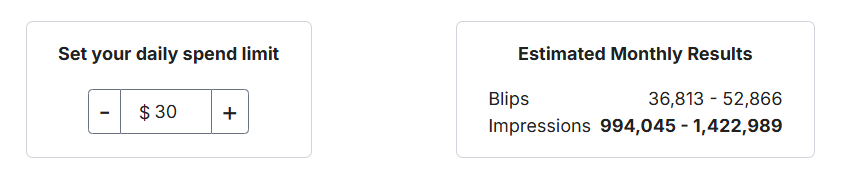
With Blip, you control exactly what you spend on Gulfport billboards by setting a daily budget that can be adjusted anytime, so you only pay for the digital billboard exposure you actually receive. Each “blip” is a brief 7.5–10 second ad display, and the cost of these blips depends on when and where you choose to advertise, as well as real-time advertiser demand for billboards near Gulfport, Florida. Over time, your total cost is simply the sum of each blip your ad receives, making it easy to start small, test messages, and scale up as you see results.
Where can I advertise near Gulfport, Florida with Blip?
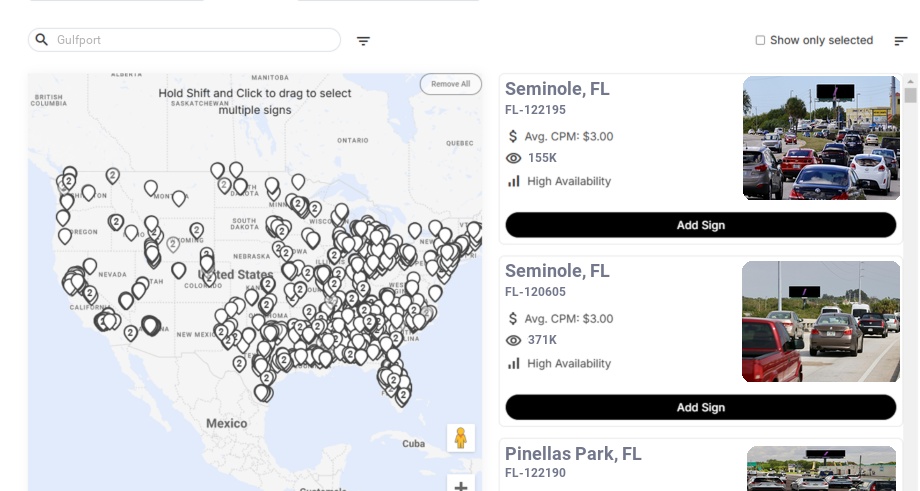
There are no digital billboards directly on Gulfport’s small local streets, but the five boards in St. Petersburg and Seminole are strategically positioned to serve the Gulfport area and function as de facto Gulfport billboards. They are within about 10 miles of Gulfport and tap into some of west-central Pinellas County’s busiest roadways. These boards are designed to reach both residents and visitors moving between Gulfport, downtown St. Petersburg, the beaches, and nearby job centers.
What kind of people do Gulfport, Florida billboards reach?
The Gulfport area brings together an unusually diverse mix of audiences for a city of its size. Key segments include older homeowners and retirees, young professionals and creative workers, tourists and short-term visitors, snowbirds and seasonal residents, and local families and commuters. In Gulfport and west-St. Petersburg neighborhoods, the 65+ share can exceed 30%, while the broader area also includes steady commuter and visitor traffic.
When is the best time to run billboards near Gulfport, Florida with Blip?
Pinellas County is a year-round market, but demand and traffic around Gulfport shift noticeably across seasons. High season runs roughly January through April, when visitor counts and hotel occupancy peak, while summer and shoulder months each bring different traffic patterns and opportunities. Dayparts also matter, with commuters in the morning and afternoon, tourists midday, and nightlife audiences in the evening.
What roads and traffic areas make Gulfport, Florida billboards effective?
Our five digital billboards serving the Gulfport area are positioned in St. Petersburg and Seminole, within about 10 miles of Gulfport. Key corridors include I-275 near St. Petersburg, US-19, Park Boulevard and Bay Pines corridors, local arterials feeding Gulfport, and nearby Tyrone Boulevard/66th Street corridors. Because Gulfport sits between downtown St. Petersburg and the Gulf beaches, drivers traveling these routes frequently pass the billboards.
Do I need a contract to advertise with Blip near Gulfport?
No, Blip has no long-term contracts or minimum commitments. You can start, pause, or stop your campaign at any time.
How fast can I launch a billboard campaign with Blip near Gulfport?
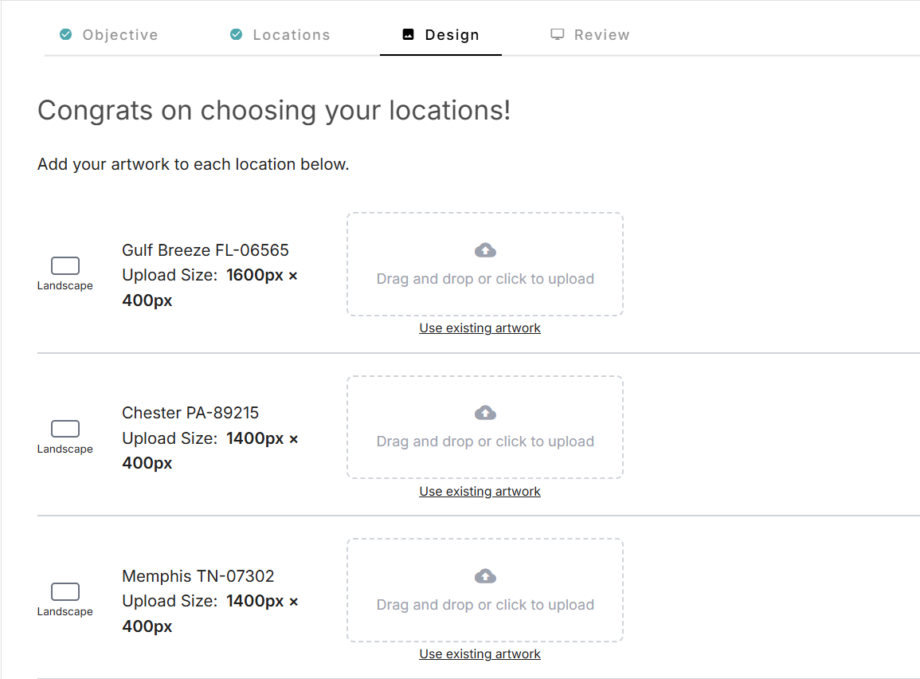
You can have your campaign live in minutes. Create a free account, select your locations, set your budget, upload your design, and start running once approved.
Where can I advertise with Blip near Gulfport?
Blip has digital billboards near Gulfport. You can browse available locations on a map, choose the ones that fit your audience, and start advertising right away.
Still have questions? Launch a campaign in minutes — no contracts, no commitments.
Start Your CampaignGulfport Billboard Advertising Guide
Gulfport, Florida sits on Boca Ciega Bay as one of Pinellas County’s most eclectic waterfront communities, drawing locals, snowbirds, and visitors to its artsy downtown, waterfront parks, and festivals. With five nearby digital billboards in St. Petersburg and Seminole serving the Gulfport area, we can use data-driven planning and smart creative to reach residents and visitors as they move around the west-central Pinellas peninsula, effectively turning billboards near Gulfport into always-on brand touchpoints.
Understanding the Gulfport Area Market
Gulfport itself is a small, character-rich city with big influence relative to its size:
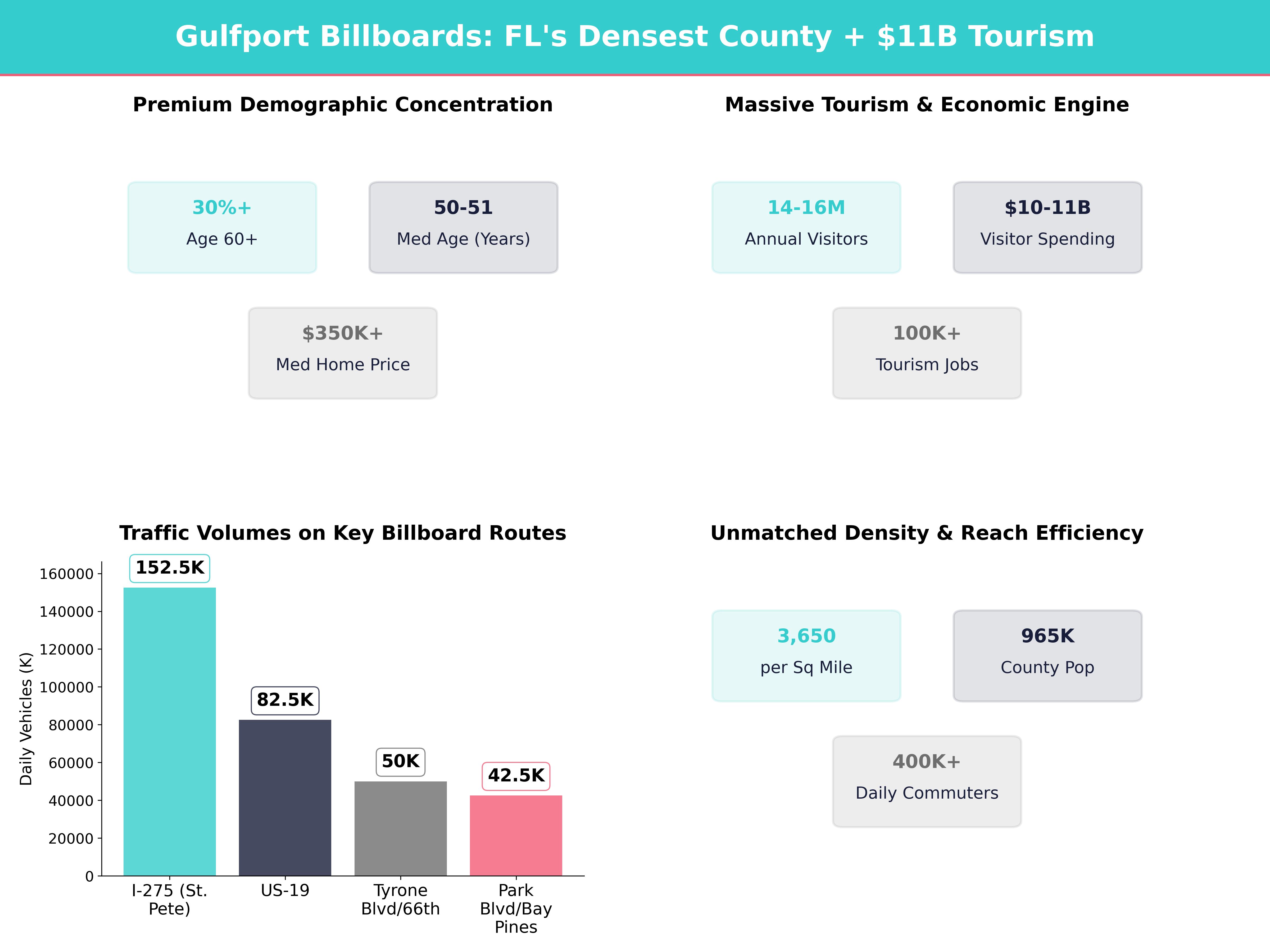
- The City of Gulfport has roughly 12,000–12,500 residents, with a median age around 50–51, significantly higher than the U.S. median in the upper 30s. More than 30% of residents are 60+, skewing the market toward older homeowners and retirees that Gulfport billboards can reach throughout the day.
- Pinellas County as a whole has about 960,000–970,000 residents and is Florida’s most densely populated county, with about 3,500–3,800 people per square mile concentrated in just 280 square miles of land.
- Nearby St. Petersburg adds roughly 260,000–265,000 residents, and City of Seminole contributes around 19,000–19,500 more, all within roughly 5–6 miles of Gulfport.
- The broader Tampa–St. Petersburg–Clearwater metro exceeds 3.2 million residents, creating a large regional customer base that regularly flows through west-central Pinellas.
Tourism dramatically amplifies the advertising opportunity near Gulfport:
- According to Visit St. Pete–Clearwater
- Visitor spending in the St. Pete–Clearwater region typically exceeds $10–11 billion annually, directly supporting more than 100,000 tourism-related jobs and contributing billions in state and local tax revenue.
- In peak months, Pinellas hotels often report countywide occupancy in the 75–85% range, and average daily room rates (ADR) that can exceed $200 on prime beach corridors.
- Gulfport’s waterfront, boutique lodging, and events such as the Gulfport Art Walks and GeckoFest draw significant spillover from nearby beach and downtown St. Pete tourism hubs, where St. Petersburg’s events calendar
In the Gulfport area, digital billboards in St. Petersburg and Seminole give us a way to reach:
- Local residents who regularly drive between Gulfport, downtown St. Petersburg, and the beaches—tapping a daily commuter base that in Pinellas often exceeds 400,000 workers traveling to jobs across the county and passing billboards near Gulfport along the way.
- Tourists staying in St. Pete Beach, Treasure Island, Madeira Beach, and downtown St. Pete who pass near Gulfport for dining, arts, and nightlife; beach communities along the Gulf host tens of thousands of overnight guests on a typical high‑season weekend.
- Commuters using major corridors connecting west Pinellas neighborhoods and job centers, including healthcare campuses, educational institutions, and retail hubs.
For local planning and long-term growth trends, the City of Gulfport and Pinellas County provide useful context on development, events, and neighborhood changes that should inform targeting and creative. Local economic and tourism data from Pinellas County Economic Development and Visit St. Pete–Clearwater’s research section
Traffic Patterns and Where Digital Billboards Work Hardest
Our five digital billboards serving the Gulfport area are positioned in St. Petersburg and Seminole, within about 10 miles of Gulfport. They tap into some of west-central Pinellas County’s busiest roadways, making these Gulfport billboards highly visible to both residents and visitors:
Key corridors typically see these approximate average daily traffic (ADT) volumes based on Florida Department of Transportation (FDOT) counts and local transportation agencies such as Forward Pinellas:
- I‑275 near St. Petersburg: often 140,000–165,000 vehicles per day on core segments between downtown St. Petersburg and Gandy Boulevard.
- US‑19 in Pinellas County: frequently 70,000–95,000 vehicles per day on key multilane segments in mid‑ and north-county.
- Park Boulevard and Bay Pines corridors (connecting Seminole to the beaches): commonly 35,000–50,000 vehicles per day, with peaks on weekends and during high tourist season.
- Local arterials feeding Gulfport (e.g., 49th St S, 22nd Ave S, Gulfport Blvd S): usually 15,000–30,000 vehicles per day, depending on the specific segment and proximity to I‑275 and beach access routes.
- Nearby Tyrone Boulevard/66th Street corridors, which many Gulfport-area drivers use to access retail hubs, can carry 40,000–60,000 vehicles per day.
Because Gulfport is tucked along the bay between St. Petersburg and the Gulf beaches, drivers heading:
- Between downtown St. Petersburg and the barrier islands (St. Pete Beach, Treasure Island, Madeira Beach).
- From Seminole and Largo toward St. Pete’s core employment and medical districts.
- From residential neighborhoods to entertainment districts and shopping corridors such as Tyrone Square, Seminole City Center, and downtown St. Pete.
…will frequently pass our digital billboards. By selecting the specific boards that align with these commutes, we position messages where Gulfport-area audiences are already moving and where billboard advertising near Gulfport can deliver consistent impressions.
Looking at multimodal patterns helps, too: the Pinellas Suncoast Transit Authority (PSTA) reports carrying more than 10 million passenger trips per year across the county, with several routes paralleling key corridors between Gulfport, St. Petersburg, and Seminole—adding transit riders to the roadside audience.
The City of St. Petersburg and City of Seminole share transportation and development updates that can help us anticipate new traffic generators such as construction, new retail centers, or special events. Forward Pinellas’s traffic count maps
Who You Reach Near Gulfport: Key Audience Segments
The Gulfport area brings together an unusually diverse mix of audiences for a city of its size. Demographic and lifestyle data for Gulfport, St. Petersburg, and surrounding Pinellas County suggest several high-value segments:
-
Older Homeowners and Retirees
- Pinellas County’s median age is about 48, well above the U.S. median in the upper 30s and among the highest for large coastal counties.
- Roughly 25–27% of county residents are 65+, compared with about 17–18% nationally; in several Gulfport and west‑St. Petersburg neighborhoods, the 65+ share can exceed 30%.
- Homeownership in many west Pinellas census tracts exceeds 60–65%, and a substantial share of homes are mortgage‑free, translating into strong discretionary income.
- These residents spend heavily on home improvements, healthcare, dining, and leisure; Visit St. Pete–Clearwater data often show older visitors and retirees driving some of the highest per‑trip spending, commonly exceeding $800–$1,000 per party for multi‑night stays.
-
Young Professionals and Creative Workers
- Downtown St. Petersburg has added thousands of new apartments and condos in the past decade, with some estimates showing more than 7,000 new multifamily units completed or under construction since the mid‑2010s.
- The St. Petersburg Innovation District and nearby universities support a growing base of tech, marine science, healthcare, and creative workers, many of whom live in or travel through Gulfport and west St. Pete.
- Gulfport’s arts district and LGBTQ+-friendly reputation attract creatives, remote workers, and small-business owners who often drive between Gulfport, downtown, and co-working or cultural venues like the Morean Arts Center Warehouse Arts District
-
Tourists and Short-Term Visitors
- The St. Pete–Clearwater area ranks among Florida’s top beach destinations, with tens of thousands of hotel and vacation rental units from Clearwater Beach to St. Pete Beach and beyond.
- In many years, hotel occupancy averages around 70–75% across the county, peaking above 80% in winter and spring.
- More than 40% of overnight visitors come from out of state, with strong feeder markets including the Midwest and Northeast (Ohio, New York, Michigan) and Southeastern drive‑in states.
- A meaningful slice of visitors—often 20–30% depending on season—report visiting arts districts, local festivals, and “off‑beach” neighborhoods, where Gulfport’s walkable waterfront and festivals are a natural fit.
-
Snowbirds and Seasonal Residents
- Seasonal residents make up a notable portion of Gulfport-area households, especially in waterfront neighborhoods and 55+ communities along Gulfport Blvd, Pasadena, and Seminole.
- Pinellas County property records show tens of thousands of parcels with out‑of‑state mailing addresses, a strong indicator of second‑home and snowbird ownership.
- Snowbird months (roughly November–April) can push local population and traffic volumes 20–30% higher than off‑peak months in some corridors, extending the market for medical, financial, real estate, and lifestyle services.
-
Local Families and Commuters
- Approximately 25–30% of households in the broader Gulfport–St. Petersburg–Seminole area include children under 18, creating steady demand for schools, family entertainment, healthcare, and youth sports.
- Pinellas County Schools, one of Florida’s larger districts, serves more than 90,000 students across 120+ schools, concentrating regular school‑day traffic around key arterials.
- Median household incomes in west-central Pinellas typically range from the mid‑$50,000s to the low‑$70,000s by neighborhood, with dual‑income households driving weekday commuter peaks.
When we plan a campaign near Gulfport, aligning creative and scheduling with these segments helps us decide:
- Which billboards (St. Petersburg vs. Seminole) reach which audience clusters, based on known commute flows from Forward Pinellas and Pinellas County MPO data.
- What time-of-day or day-of-week patterns match their behavior (e.g., retirees mid‑day; commuters 7–9 a.m. and 4–6 p.m.; tourists late morning and early evening).
- Which messages best resonate with local culture and visitor expectations—arts and dining, seniors’ health, beach getaways, or family-friendly attractions.
Seasonality and Optimal Flighting in the Gulfport Area
Pinellas County is a year‑round market, but demand and traffic around Gulfport shifts noticeably across seasons, affecting how you approach billboard rental near Gulfport:
High Season (roughly January–April)
- Visitor counts and hotel occupancy peak as snowbirds and winter tourists arrive; in some winter months, countywide occupancy can top 80–85% along the beaches and waterfronts.
- Beach routes, downtown St. Pete, and waterfront corridors become busier throughout the day, with weekend beach traffic sometimes adding 10,000–20,000 more vehicles per day on key access roads versus slower months.
- This is prime time for hospitality, attractions, festivals, real estate, and medical services; many Gulfport restaurants and bars report some of their highest monthly revenues during this window.
Summer (May–August)
- Hotter, more humid weather and afternoon thunderstorms impact driving patterns, often pushing more trips to late afternoon and evenings once storms clear.
- Regional tourists and families on school break visit, with Florida drive‑market visitors making up a higher share of total visitation; many attractions see strong June–July attendance even as some older seasonal residents leave.
- Locals still frequent Gulfport’s waterfront, downtown St. Pete, and Seminole shopping areas, often in the evenings when temperatures drop and sunset events draw crowds.
Shoulder and Off‑Peak (September–December)
- Visitation tapers in early fall, then rises again around the holidays and special events like John’s Pass Seafood Festival and holiday boat parades listed on local event calendars
- Hurricane season (June–November) can temporarily shift traffic and local priorities, making flexible scheduling crucial; major storms can reduce hotel occupancy and restaurant traffic for days, followed by spikes in home services demand.
- Shoulder months are ideal for building brand awareness among year‑round residents, as roadways remain active but less congested than peak winter and spring.
Using Blip’s scheduling tools, we can:
- Concentrate impressions during high‑value months (e.g., January–April for tourism-focused businesses, November–April for snowbird‑oriented services).
- Run lower-intensity but consistent branding campaigns across shoulder seasons, keeping message frequency steady at a modest daily budget.
- Quickly scale up during event periods like Gulfport GeckoFest St. Petersburg Arts Alliance, or holiday boat parades promoted by local chambers of commerce
Crafting High-Impact Creative for the Gulfport Area
Digital billboards serving the Gulfport area compete with waterfront scenery, vibrant murals, and bright Florida sunlight. Our creative needs to be bold, simple, and locally tuned:
1. Visuals That Match the Market
- Use bright, high-contrast colors that stand out against sunlit skies and lush greens; FDOT research suggests high-contrast, simple color palettes significantly improve legibility at 45–55 mph.
- Feature imagery locals recognize: Boca Ciega Bay, pier views, sailboats, Gulf sunsets, or Gulfport’s colorful bungalows and brick streets.
- Consider nods to local culture—arts, festivals, and LGBTQ+-inclusive themes resonate well in and near Gulfport, which is known regionally for its inclusive community and frequent waterfront events.
2. Short, Actionable Copy
- Aim for 6–8 words total; drivers at 35–55 mph have only 3–5 seconds and typically can process no more than about 8–10 characters per second at billboard distance.
-
Focus on one main message, such as:
- “Waterfront brunch minutes from downtown”
- “Senior primary care accepting new patients”
- “Beachside condos from the $300s”
- Always include a clear next step: “Exit at …”, “2 miles ahead”, or a simple URL/brand name that can be read in under one second.
3. Localizing Language and Offers
- Reference landmarks and neighborhoods (“near Gulfport waterfront”, “between St. Pete & the beaches”, “by Tyrone Square”) to orient drivers quickly.
- Use specials timed to local patterns: “Snowbird season discounts”, “Locals’ Monday dining deal”, “Summer camp sign-ups now”, “Pre‑storm roof inspections”.
- Tie messaging to major events or seasons listed on City of Gulfport events Visit St. Pete–Clearwater’s events
4. Dynamic and Rotating Creative
Because our boards are digital, we can rotate multiple creatives:
- One creative for tourists (“First time near Gulfport? Try our waterfront bar.”).
- One for locals (“Gulfport locals get 10% off weekdays.”).
- One for specific days (“Wednesday Art Walk specials tonight.”).
This flexibility lets us A/B test offers, headlines, and imagery without reprinting costs. Tracking web traffic, phone calls, or redemption codes in the 24–48 hours after rotating in a new creative provides useful early performance signals.
Geographic Strategy: Positioning Around Gulfport
There are no digital billboards directly on Gulfport’s small local streets, but our five boards in St. Petersburg and Seminole are strategically positioned to serve the Gulfport area and function as de facto Gulfport billboards:
St. Petersburg Boards (approx. 4 miles from Gulfport)
-
Ideal for reaching:
- Gulfport residents commuting to downtown St. Petersburg, where major employers like hospitals, universities, and financial firms employ tens of thousands of workers.
- Tourists staying downtown or on the northern beaches driving west or south toward I‑275, US‑19, or the beaches.
- Workers and students traveling toward hospitals, universities, and office districts such as the Bayfront Health campus and USF St. Petersburg campus.
- Great for: professional services, nightlife, arts venues, healthcare, and events that draw from both Gulfport and downtown St. Pete.
Seminole Boards (approx. 5.5 miles from Gulfport)
-
Ideal for reaching:
- Families and retirees in Seminole, Bay Pines, and Oakhurst headed toward Gulfport and St. Pete, including many 55+ communities and suburban neighborhoods.
- Beach visitors traveling inland for shopping and dining at hubs like Seminole City Center.
- Great for: retail, family entertainment, home services, and medical practices drawing patients from west Pinellas neighborhoods.
For example:
- A Gulfport restaurant can focus more impressions on boards drivers see as they leave downtown St. Petersburg and the beaches toward the Gulfport area during evening hours, aiming at the 4–8 p.m. window when dinner decisions are made.
- A Seminole-based home contractor serving the Gulfport area may lean toward the Seminole boards, concentrating on morning (7–10 a.m.) and late afternoon (3–6 p.m.) commuter patterns when homeowners are most likely to notice service offers.
Forward Pinellas and local planning documents often highlight emerging growth corridors and new housing or retail developments, guiding where we emphasize future billboard placements and impressions. Reviewing Pinellas County planning updates a few times a year can help advertisers anticipate new traffic generators that will impact billboard rental near Gulfport.
Dayparting and Weekly Patterns
In the Gulfport area, traffic and audience composition shift throughout the day and week:
Morning (6 a.m.–10 a.m.)
- Commuters from Gulfport and Seminole heading to downtown St. Petersburg, hospitals, industrial zones, and schools.
- School start times between 7:00 and 9:30 a.m. add concentrated traffic spikes near major arterials.
- Ideal for: coffee shops, breakfast spots, professional services, radio/podcasts, education, and healthcare reminders.
Midday (10 a.m.–3 p.m.)
- Retirees, remote workers, and tourists exploring the area, often combining errands with dining and leisure.
- Tourism research from Visit St. Pete–Clearwater shows many visitors heading to attractions and shopping late morning through early afternoon.
- Ideal for: lunch specials, attractions, museums, retail, and medical appointments.
Afternoon Peak (3 p.m.–7 p.m.)
- Return commute, after-school activities, and people heading out to early dinners or sunset at the waterfront.
- Gulf sunsets draw heavy traffic toward beach access and waterfront streets, especially on Fridays and weekends.
- Ideal for: restaurants, bars, events, fitness, family entertainment, and sunset‑driven experiences.
Evening and Late Night (7 p.m.–midnight)
- Entertainment, nightlife, and shift workers. Gulfport’s bars and live music venues benefit from reaching this crowd as they move between neighborhoods like downtown St. Pete, the beaches, and Gulfport’s waterfront.
- Ideal for: nightlife, late‑night dining, delivery, and entertainment venues.
Weekly patterns matter too:
- Friday–Sunday: Heavier tourism and leisure traffic; higher-impact days for dining, entertainment, attractions, events, and weekend retail. Hotel occupancy and restaurant wait times often peak on Saturday nights, reflecting maximum audience density.
- Monday–Thursday: Stronger for service businesses (healthcare, finance, auto repair, education, B2B) and errands; traffic is more commute‑oriented and predictable.
Blip’s scheduling tools let us bid for impressions during the exact times when our target audiences are most likely to be on the road, rather than paying a single flat rate for 24/7 coverage. Advertisers can, for example, concentrate 70–80% of impressions into just 30–40 key hours per week to maximize cost‑efficiency for billboard advertising near Gulfport.
Industry-Specific Strategies Near Gulfport
We can build particularly effective campaigns in the Gulfport area for several key industries:
Restaurants, Bars, and Nightlife
- Pinellas County’s visitors spend well over $1 billion annually on food and beverage, with restaurant and bar tabs often accounting for 20–25% of total visitor spending according to regional tourism research.
- Gulfport has a dense cluster of independent restaurants and bars near the waterfront and downtown, many seating only a few dozen guests but turning those seats over multiple times per night in season.
- The nearby beaches and downtown St. Pete collectively host hundreds of food-and-drink venues, making differentiated visibility through billboards valuable.
Effective tactics:
- Target St. Petersburg boards for downtown and commuter audiences heading toward the Gulfport area in late afternoon and evening, particularly Thursday–Sunday.
- Promote time-sensitive offers like happy hour (e.g., “3–6 p.m. daily”), weekend brunch, or live music nights; day‑specific promos can lift traffic on slower midweek days by 10–20%.
- Rotate creatives by day: “Taco Tuesday in Gulfport”, “Live Jazz Friday on the Bay”, “Sunday Waterfront Brunch”.
- Include easy‑to‑remember URLs or short names; many diners search on their phones within minutes of seeing an ad, so pairing boards with updated listings on Google Business Profiles and local guides like I Love the Burg
Tourism, Lodging, and Attractions
- With millions of visitors annually, the St. Pete–Clearwater region is one of Florida’s top beach destinations; in strong years it ranks among the top three Gulf Coast destinations for domestic leisure travel.
- Average length of stay for overnight visitors often ranges from 4–6 nights, giving attractions and nearby towns like Gulfport multiple chances to reach travelers as they drive around the county.
- Local attractions—from museums and aquariums to boat tours—see noticeable volume increases (often 20–40%) during peak winter and spring months.
Effective tactics:
- Use Seminole boards to reach beach traffic heading inland for dining, shopping, or overnight stays at quieter, boutique properties.
- Highlight unique positioning: “Quieter than the beach strip, 5 minutes from the water” or “Stay bayside between St. Pete & the Gulf beaches”.
- Promote package offers (“Stay + Dine + Cruise”) that boost average revenue per booking.
- Sync billboard flights with events promoted by Visit St. Pete–Clearwater City of Gulfport events Tampa Bay Times and Spectrum Bay News 9 for major festival or sports weekend dates.
Healthcare and Senior Services
- With more than a quarter of Pinellas County’s population aged 65+, senior healthcare and services are major economic drivers. Estimates put the healthcare and social assistance sector at more than 50,000 jobs countywide.
- Hospitals, specialty practices, and clinics around St. Petersburg and Seminole draw patients from the Gulfport area, many traveling 5–15 miles for routine and specialty care.
- Chronic disease management, Medicare Advantage enrollment, and elective procedures all see seasonal peaks around snowbird arrivals and annual enrollment periods.
Effective tactics:
- Focus on clear, reassuring messaging: “Medicare primary care near Gulfport area”, “Same‑day urgent care appointments”, “Orthopedic specialists in west St. Pete”.
- Target weekday daytime and morning commutes when healthcare decision-makers and caregivers are often on the road.
- Use call-to-action URLs and phone numbers that are easy to remember at a glance; short vanity numbers or URLs often see higher recall rates, sometimes improving direct response by 20–30%.
- Time campaigns around open enrollment (typically October–December) and snowbird season (November–April), when healthcare choices are top‑of‑mind.
Real Estate and Home Services
- West-central Pinellas has seen rising property values over the past decade, with median home prices in many Gulfport and west St. Petersburg neighborhoods climbing into the $350,000–$500,000 range.
- Limited inventory, strong investor interest, and seasonal demand from snowbirds and relocators keep for‑sale and rental markets active year‑round.
- Home services—HVAC, roofing, solar, landscaping, remodeling—see demand spikes after major storms and in pre‑summer and pre‑winter maintenance periods.
Effective tactics:
- Highlight proximity: “Waterfront condos minutes from Gulfport arts district” or “Serving Gulfport and west St. Pete since 1995.”
- For home services, target weekday early mornings and late afternoons shouldering commuter peaks, when homeowners are thinking about to‑do lists.
- Rotate creatives for different offers—free estimates, seasonal checkups, storm preparation—especially ahead of and during hurricane season (June–November).
- Use trackable elements like short URLs and unique phone numbers per campaign to measure lead volume; even a 1–2 extra calls per day from a billboard can significantly improve ROI for high‑ticket services.
Arts, Culture, and Local Events
- Gulfport’s identity is anchored in arts, music, and community festivals, with recurring events such as First Friday and Third Saturday Art Walks and annual festivals like GeckoFest.
- Regional media such as the Tampa Bay Times, Creative Loafing Tampa Bay, and hyperlocal outlets like The Gabber Newspaper regularly spotlight Gulfport’s arts scene.
- Arts and culture visitors typically have higher education and income levels and often spend more per visit on dining, drinks, and shopping.
Effective tactics:
- Promote recurring events (Art Walks, markets) with simple, date-forward creatives: “Gulfport Art Walk – 1st Fri – Waterfront”.
- Use countdown messages for major festivals: “GeckoFest in 7 days”, “Tonight: Street festival on the waterfront.”
- Target late-week (Wed–Sat) and afternoon/evening dayparts when event decisions are made; most ticket and RSVP activity concentrates in the 24–72 hours before events.
- Coordinate messaging with social media pushes and listings on local event calendars
Using Blip’s Flexibility to Your Advantage
Digital billboards near the Gulfport area are especially powerful when we use Blip’s flexible buying model to match local conditions:
- Budget Control: Start with as little as a few dollars per day and scale up around big weekends, events, or snowbird season. Many small businesses find that even $10–$20 per day, focused into peak hours, can generate thousands of weekly impressions.
- Granular Targeting: Choose specific boards in St. Petersburg or Seminole to focus on the portions of the Gulfport area where your customers live or visit most, based on zip code sales data and customer addresses.
- Real-Time Adjustments: Pause campaigns for major storms or unexpected slowdowns, or increase frequency during clear-weather weekends, festivals, or restaurant weeks.
- Creative Testing: Run multiple versions of your artwork and monitor which messages correlate with more web traffic, calls, form fills, or store visits. Simple A/B tests—changing only the offer or headline—can reveal 20–50% performance differences between creatives.
Combining these tools with local data from sources like City of Gulfport, Pinellas County, tourism research from Visit St. Pete–Clearwater Tampa Bay Times helps us keep campaigns relevant and timely and get more value from billboard rental near Gulfport.
Measuring Success and Iterating
To ensure billboard advertising near Gulfport continues to perform, we recommend:
-
Defining Clear KPIs
- Website visits from the Gulfport–St. Petersburg–Seminole area (trackable by city/zip in analytics tools).
- Call volume or form fills during active billboard hours; even a 10–15% lift during your flight window is a meaningful indicator.
- Coupon redemptions or promo codes mentioned only on billboards (“Show this screen for 10% off – Code: GULFPORT10”).
- In-store metrics such as check‑ins, foot traffic counts, or “How did you hear about us?” tallies.
-
Aligning Analytics With Flighting
- Use tools like Google Analytics time-of-day and location reports to match spikes with your Blip flight schedule; look for 10–30% traffic bumps during on‑air windows.
- Track sales or inquiries before, during, and after campaigns to measure lift using simple before/after comparisons or week‑over‑week baselines.
- For events, compare pre‑campaign vs. post‑campaign attendance or ticket sales to quantify billboard impact.
-
Using Local Benchmarks
- Compare performance during high season vs. shoulder season; it’s common to see per‑impression conversion rates rise 20–40% when more of the audience is actively shopping, dining out, or traveling.
- Evaluate event-driven flights versus always-on branding campaigns; short, high‑frequency event pushes may deliver quick spikes, while always‑on branding can steadily increase direct traffic and brand search volume over several months.
- Reference tourism and economic trend reports from Visit St. Pete–Clearwater Pinellas County Economic Development to understand macro trends that could affect baselines.
-
Refining Over Time
- Shift impressions toward boards that correspond with stronger responses—if Seminole boards drive more calls for a home-service business, allocate a higher share of budget there.
- Evolve messaging to reflect what resonates with Gulfport-area audiences—artsy vs. luxury vs. family-friendly themes—using insights from local coverage in outlets like The Gabber Newspaper and I Love the Burg
- Adjust dayparts seasonally (e.g., earlier sunsets in winter make evening boards more visible; summer storms may favor post‑7 p.m. impressions).
By pairing Gulfport’s distinctive waterfront, artsy character, and older-yet-diverse population with flexible, data-driven digital billboard placements in St. Petersburg and Seminole, we can build campaigns that consistently reach the right people at the right times near Gulfport. Thoughtful use of billboards near Gulfport and surrounding corridors turns this compact, eclectic community into a high-impact advertising zone for local and regional brands.