Billboards near West Pensacola, FL
No Minimum Spend. No Long-Term Contracts. Just Results.
Trusted by Leading Brands


Billboard advertising
near West Pensacola has never been easier
How much is a billboard near West Pensacola?
Why Choose Blip for Billboard Advertising near West Pensacola
Blip lets you launch fast in West Pensacola, hitting I-10 and US-98 commuters without contracts or hassle.
Set a flexible West Pensacola budget and reach NAS Pensacola families on Navy Blvd when they’re driving by.
Daypart your West Pensacola ads for weekday rush or weekend beach traffic on I-110 and Gulf Beach Hwy.
Track West Pensacola campaign results in real time, then shift spend as tourism spikes with spring and summer visitors.
Use Blip’s creative tools to tailor bold West Pensacola messages for locals, renters, and military-connected drivers.
Frequently Asked Questions About Billboard Advertising near West Pensacola
How much does a billboard cost near West Pensacola, Florida with Blip?
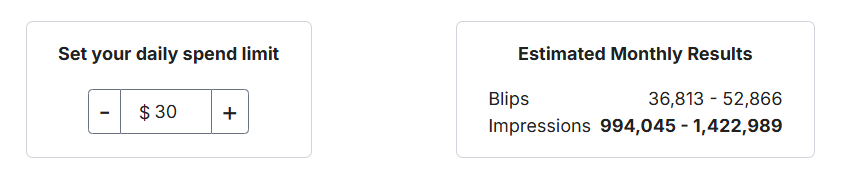
With Blip, you can advertise on digital West Pensacola billboards on any budget, because you set your own daily spend and only pay for each short “blip” of ad time. Every 7.5–10 second display is priced in real time based on when and where you choose to appear and current advertiser demand, giving you full control over costs in the West Pensacola area. It’s affordable to test, learn, and grow your presence serving the West Pensacola area.
Where can I place Blip billboards near West Pensacola, Florida to reach drivers?
West Pensacola sits just west of downtown Pensacola and along some of the busiest commuter and military corridors on Florida’s western Panhandle. With 12 nearby digital billboards serving the West Pensacola area, Blip can help you put your brand in front of commuters, military families, tourists, and long-time locals as they move between neighborhoods, bases, beaches, and downtown. These placements sit along natural travel paths in and out of the community, functioning as practical West Pensacola billboards for both local and through traffic.
Who can West Pensacola, Florida billboards reach?
The West Pensacola area is demographically diverse, with important audience segments advertisers often target. Campaigns near the West Pensacola area can effectively reach everyday local residents, military personnel and their families connected to NAS Pensacola, tourists heading to beaches and downtown, and regional drivers traveling along the I‑10 and US‑98 corridors. Many nearby neighborhoods also have a majority renter population, which supports frequent moves and high demand for everyday services.
When is the best time to run billboards in West Pensacola, Florida with Blip?
Traffic and mobility reports in the Pensacola region typically show weekday traffic volumes 20–30% higher during peak commute windows versus midday. Weekday AM drive, weekday PM drive, and weekends are especially strong, with weekends seeing heavier traffic toward retail, beaches, and entertainment. Seasonal spikes also matter, with spring, summer, fall events, and winter holiday periods each creating different opportunities for West Pensacola billboards.
How busy are the main roads around West Pensacola, Florida for billboard advertising?
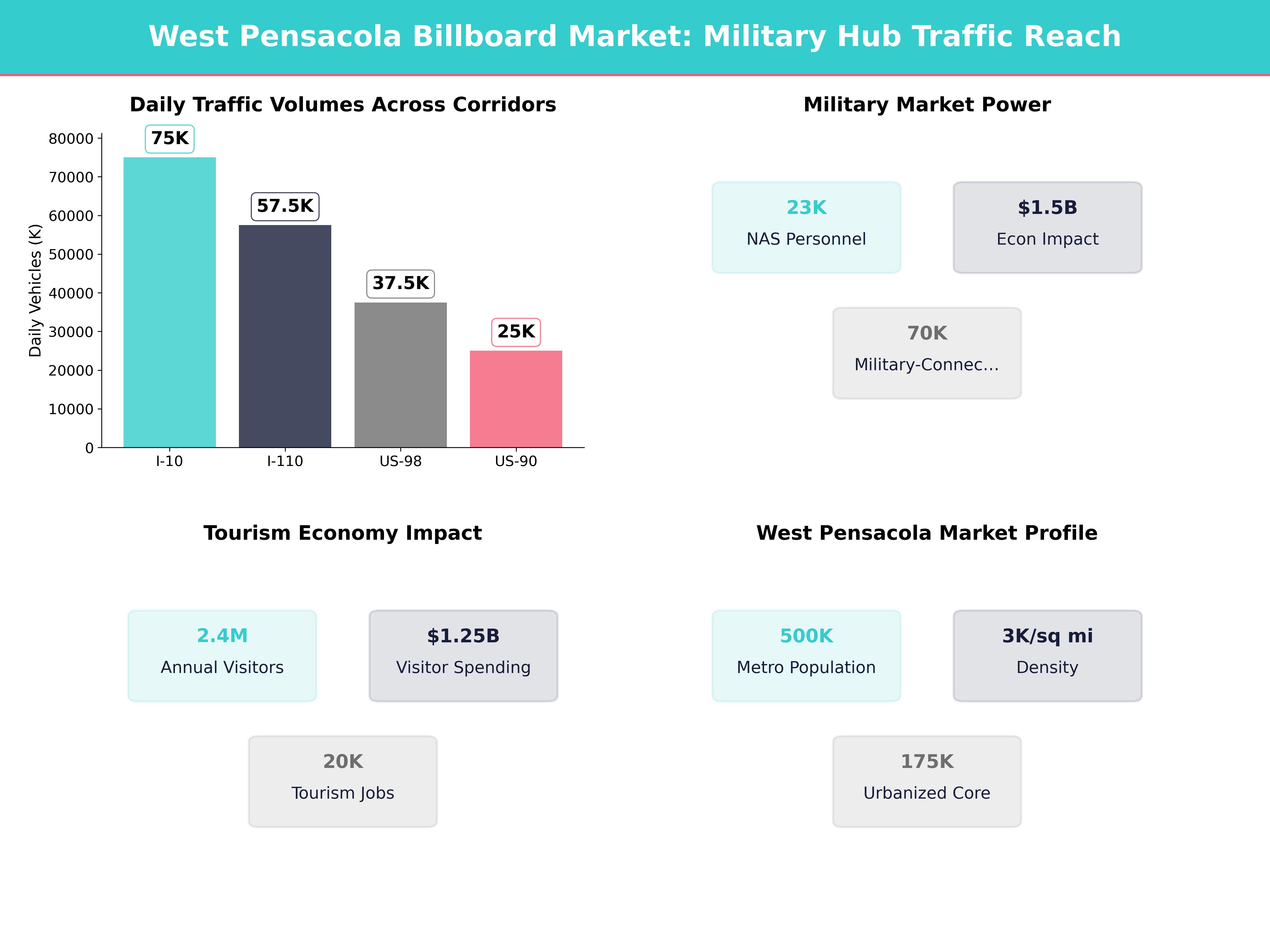
Interstate 10 near Pensacola carries 70,000–80,000 vehicles per day, while Interstate 110 sees around 55,000–60,000 vehicles per day on core segments. US‑98 along the Navy Boulevard / Gulf Beach Highway corridor carries 30,000–45,000 vehicles per day, and US‑90 / Mobile Highway and adjacent arterials often see 20,000–30,000 vehicles per day. These corridors create strong exposure for billboards near West Pensacola because they capture commuters, shoppers, base traffic, and visitors.
Do I need a contract to advertise with Blip near West Pensacola?
No, Blip has no long-term contracts or minimum commitments. You can start, pause, or stop your campaign at any time.
How fast can I launch a billboard campaign with Blip near West Pensacola?
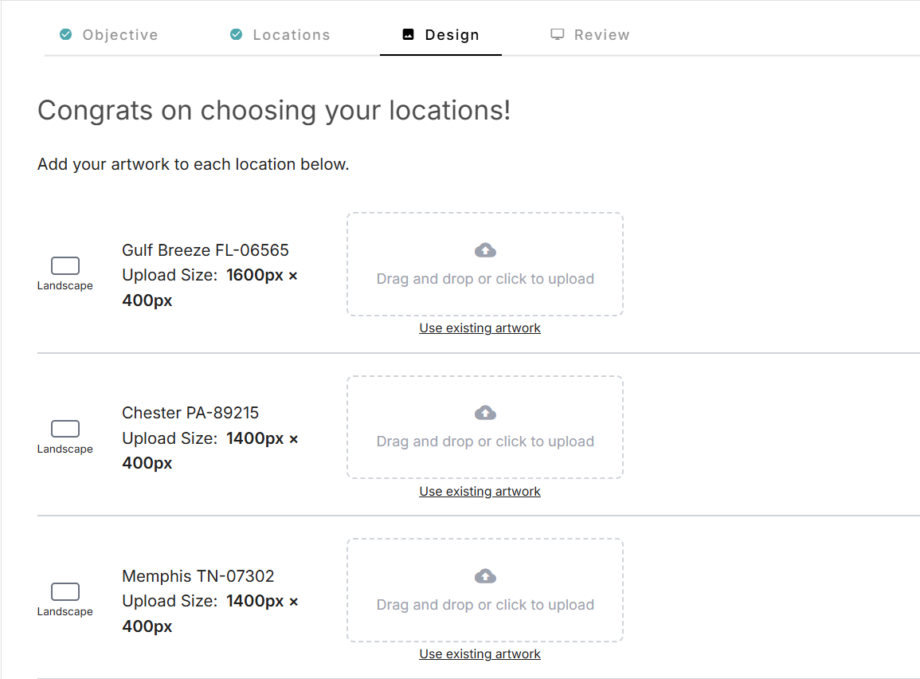
You can have your campaign live in minutes. Create a free account, select your locations, set your budget, upload your design, and start running once approved.
Where can I advertise with Blip near West Pensacola?
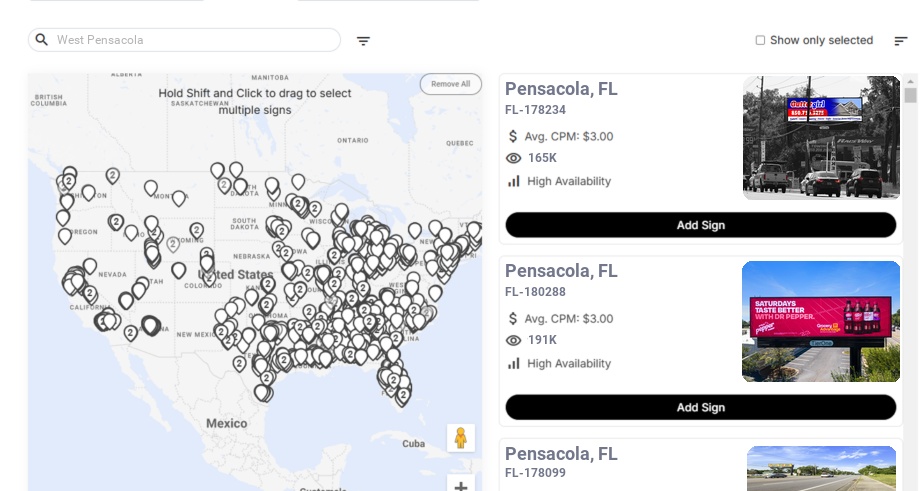
Blip has digital billboards near West Pensacola. You can browse available locations on a map, choose the ones that fit your audience, and start advertising right away.
Still have questions? Launch a campaign in minutes — no contracts, no commitments.
Start Your CampaignWest Pensacola Billboard Advertising Guide
West Pensacola sits just west of downtown Pensacola and along some of the busiest commuter and military corridors on Florida’s western Panhandle. With 12 nearby digital billboards serving the West Pensacola area, we can help you put your brand in front of commuters, military families, tourists, and long-time locals as they move between neighborhoods, bases, beaches, and downtown. If you’re looking for billboards near West Pensacola that can reach both local and regional traffic, these placements give you flexible, data-driven options.
Understanding the West Pensacola Area Market
West Pensacola is an unincorporated community and census-designated place in Escambia County, directly adjacent to the City of Pensacola
- Escambia County’s population is just over 320,000 residents, and county planning documents show that roughly 170,000–180,000 people (about 54%) live in the greater Pensacola urbanized area, including West Pensacola and surrounding neighborhoods.
- The West Pensacola CDP itself has roughly 21,000 residents packed into about 7 square miles, yielding a density of around 3,000 residents per square mile, which is significantly higher than the county average of about 480 residents per square mile.
- The broader Pensacola–Ferry Pass–Brent metro area has grown to around 500,000+ people, adding an estimated 40,000–50,000 residents over the last decade, reflecting steady annual growth of roughly 0.8–1.2% per year as documented by regional planning and economic development agencies such as FloridaWest Economic Development Alliance.
Local demographic snapshots compiled by Escambia County and regional partners indicate:
- A balanced age mix, with roughly 24–26% under age 20, about 55–58% ages 20–64, and 16–18% age 65+ in the greater Pensacola area.
- Household incomes in the West Pensacola area that skew mixed-income, with a sizable share of households between $25,000–$60,000 annually and a growing segment in the $60,000–$100,000 range.
- A majority renter population in many West Pensacola neighborhoods (often 55–65% renters vs. 35–45% homeowners), which supports frequent moves and high demand for everyday services like retail, healthcare, and auto repair that benefit from consistent billboard advertising near West Pensacola.
The West Pensacola area is anchored by:
- Proximity to Naval Air Station (NAS) Pensacola, which hosts about 23,000 military and civilian personnel according to NAS Pensacola $1–2 billion in annual economic activity to NAS Pensacola and related defense operations in the region.
- A steady flow of visitors and tourism spending. Visit Pensacola reports that Escambia County welcomes around 2.3–2.5 million visitors annually, generating roughly $1.1–$1.4 billion in direct visitor spending, and supporting more than 20,000 tourism-related jobs.
- A diverse, mixed-income population with a high share of workers in retail, hospitality, construction, health care, education, and defense-related fields. Local employment dashboards from FloridaWest Economic Development Alliance healthcare and social assistance, retail trade, accommodation and food services, construction, and defense among the top job sectors in the Pensacola area.
For advertisers, this means campaigns near the West Pensacola area can effectively reach:
- Everyday local residents on their commute or shopping trips
- Military personnel and their families connected to NAS Pensacola and nearby facilities
- Tourists heading to beaches, historic downtown, and local attractions like the National Naval Aviation Museum
- Regional drivers traveling along the I‑10 and US‑98 corridors between Alabama, the rest of the Panhandle, and the Pensacola metro
Our goal is to help you use our 12 digital billboards serving the West Pensacola area to speak to these audiences with the right message, at the right time, on the right roads. Whether you need short-term billboard rental near West Pensacola or an always-on presence, the same local insights apply.
Where Our Billboards Are and How the Market Moves
While West Pensacola itself is primarily residential, our 12 digital billboards in nearby Pensacola (within about 5 miles) are strategically placed on major arterials that residents use daily. These locations serve the West Pensacola area by sitting along natural travel paths in and out of the community, functioning as practical West Pensacola billboards for both local and through traffic.
Key routes and traffic patterns to consider:
- Interstate 10 (I‑10): The primary east–west interstate across the Florida Panhandle. Florida Department of Transportation (FDOT) counts show 70,000–80,000 vehicles per day on I‑10 segments near Pensacola, with annual average daily traffic (AADT) continuing to edge upward by about 1–3% per year on many stretches. Drivers from the West Pensacola area use nearby interchanges to reach jobs, shopping, and regional destinations.
- Interstate 110 (I‑110): The spur connecting I‑10 to downtown Pensacola and the waterfront. FDOT data indicates around 55,000–60,000 vehicles per day on core segments of I‑110, with commuter peaks where volumes can climb to 2,500–3,000 vehicles per hour per direction during rush hour. This route is a key commuter path for West Pensacola residents heading downtown and to major employers.
- US‑98 (Navy Boulevard / Gulf Beach Highway corridor): A major surface route connecting the West Pensacola area, NAS Pensacola, and beach access points. Portions of US‑98 carry 30,000–45,000 vehicles per day, with strong morning and late-afternoon commuter peaks as base personnel, service workers, and tourists move between lodging, the base, and the waterfront.
- US‑90 / Mobile Highway and adjacent arterials: These roads serve local commercial strips, big-box retail, and daily errands for residents in and near West Pensacola. Many segments see 20,000–30,000 vehicles per day, with particularly heavy volumes on weekends when big-box and grocery traffic spikes.
Regional transportation summaries show that Escambia County residents have an average one-way commute time of about 22–25 minutes, which keeps people on local roads multiple times per day for work, school, errands, and recreation.
By placing creative on boards along these corridors, you’re effectively “intercepting” West Pensacola area residents as they:
- Commute between home and work (including to and from NAS Pensacola and major employers highlighted by the Greater Pensacola Chamber)
- Drive to downtown Pensacola events, the waterfront, and historic district
- Shop at retail hubs along Mobile Highway, Navy Boulevard, and surrounding arterials
- Travel to and from Perdido Key, Pensacola Beach, or regional attractions promoted by groups like the Perdido Key Area Chamber of Commerce and Pensacola Beach Chamber of Commerce
You can review local roadway and planning information from the City of Pensacola, Escambia County, and FDOT District 3 to better understand how traffic flows around your business location and target customers, then choose the billboards near West Pensacola that best match those daily patterns.
Who You Can Reach in the West Pensacola Area
The West Pensacola area is demographically diverse, with important audience segments advertisers often target. Local planning and school district data indicate that roughly 45–50% of households in the broader Pensacola area include children under 18, and more than 80% of residents live within a 15‑minute drive of major commercial corridors—ideal conditions for out-of-home advertising and especially for targeted billboard advertising near West Pensacola.
1. Military and Defense Community
- NAS Pensacola supports about 23,000 military and civilian personnel plus thousands of trainees each year. Training pipelines often bring in 10,000–12,000 students annually for varying lengths of stay, adding to temporary but steady population churn.
- A local multiplier of 2–3 dependents per active-duty member means tens of thousands of spouses, children, and related households connected to the base. Regional defense studies often estimate the total military-connected population around Pensacola at 60,000–80,000 people when dependents and retirees are included.
- Many live or shop in and near the West Pensacola area and travel Navy Boulevard, US‑98, and connecting roads daily. These roads link the base, off-base housing, and commercial centers that military families frequent for groceries, services, and entertainment.
Campaign implications:
- Use clear value propositions for military families (discounts, flexible hours, family-friendly messaging). Mention of “military discount” or “veteran-owned” can lift response among military-connected households.
- Emphasize trust, reliability, and local roots for services like automotive, banking, healthcare, and insurance—categories where national surveys show 60–70% of consumers prefer providers with strong reputations and community presence.
- Highlight locations and directions from NAS Pensacola or from well-known arteries (e.g., “5 minutes north of Navy Blvd”) to capture both new arrivals and long-time base personnel who see your West Pensacola billboards every week.
2. Working-Class and Service Economy Households
Escambia County’s economy is heavily service-based, with large employment in retail, hospitality, healthcare, and construction, as reported by local economic dashboards from FloridaWest Economic Development Alliance. In many nearby zip codes:
- Service, retail, and hospitality can account for 35–45% of local jobs.
- Construction and trades make up another 7–10% of employment.
- Healthcare and social assistance typically represent 15–20% of the workforce, anchored by major hospital and clinic systems.
Many workers in these sectors live in or commute through the West Pensacola area, often working irregular hours and making multiple trips per day on major corridors for split shifts, school drop-offs, and errands.
Campaign implications:
- Focus on price, convenience, and practical benefits (e.g., “Same-day service”, “Under $50”, “Open late”). These align with budgets where more than 40% of households may have limited discretionary income after housing and transportation.
- Promote job openings, training programs, trade schools, and staffing services along commuter routes—especially effective where unemployment or underemployment in service industries fluctuates seasonally.
- Use simple, bold creative that can be absorbed quickly in drive-time traffic; research on out-of-home effectiveness often shows that ads with 1 clear message and 1 strong visual are recalled significantly more than cluttered designs, particularly on busy billboards near West Pensacola’s main commuter routes.
3. Tourists and Seasonal Visitors
Visit Pensacola reports:
- 2–3 million annual visitors to Escambia County
- Visitor spending over $1 billion each year, with some recent seasons topping $1.2–$1.4 billion in direct expenditures
- Tourism that supports more than 20,000 local jobs across lodging, dining, attractions, retail, and transportation
- Significant spikes during spring and summer beach season, holiday weekends, and major events (Blue Angels shows, festivals, sports)
Local hospitality reports show that hotels and vacation rentals regularly reach 70–80% occupancy or higher during peak weeks, and Pensacola International Airport has grown to more than 2 million passengers per year, bringing steady inflows of visitors who then drive through the West Pensacola and downtown corridors.
Many visitors stay in hotels or rentals west and southwest of downtown, or travel through the West Pensacola area en route to NAS Pensacola (home of the National Naval Aviation Museum) and local beaches.
Campaign implications:
- Promote attractions, dining, nightlife, and shopping with clear “Tonight” or “This Weekend” calls to action to capture short trip windows (many visitors stay 3–5 nights).
- Include exit numbers or “minutes away” messaging to help out-of-towners navigate; tourism research shows that wayfinding cues on out-of-home ads can significantly increase visit rates, especially for non-locals.
- Increase frequency during spring break, summer, and key event weekends highlighted by Visit Pensacola’s event calendar, using billboard rental near West Pensacola beach routes to catch visitors as they drive between lodging, downtown, and the shoreline.
4. Long-Time Local Residents
Pensacola is a regional hub with strong local loyalty. Many households have lived in the area for years, if not generations, and local surveys often show 70%+ of residents participate in at least one community event, festival, or local sports activity each year. Local news outlets like the Pensacola News Journal and WEAR ABC 3 underscore how much attention residents pay to community issues, sports, and local businesses.
Local institutions such as the University of West Florida and the Blue Wahoos minor league baseball team draw tens of thousands of attendees each season, reinforcing a strong sense of community and regular downtown and waterfront traffic.
Campaign implications:
- Emphasize local ownership, local hiring, and community involvement; messages like “Locally owned since 1985” tend to resonate well in markets where a high share of residents grew up or have deep roots in the area.
- Tie campaigns to high-interest local events (Blue Wahoos games, Blue Angels, parades, festivals) that can attract tens of thousands of attendees over a weekend.
- Use familiar landmarks in your copy (“Near Cordova Mall”, “Off Mobile Hwy”, “Across from…”) to tap into residents’ mental maps and make your West Pensacola billboards feel relevant and local.
Timing Your Campaign Near West Pensacola
Because we can schedule “blips” (individual ad plays) down to specific hours and days, you can align your billboard presence with real-world patterns in the West Pensacola area and get more value from billboard advertising near West Pensacola’s highest-demand travel windows.
Traffic and mobility reports in the Pensacola region typically show:
- Weekday traffic volumes 20–30% higher during peak commute windows versus midday.
- Weekend mid-day and afternoon volumes on retail corridors that can rival or exceed weekday peaks, especially near shopping centers and beach routes.
Weekday vs. Weekend
- Weekday AM drive (6–9 a.m.): Strong commuter traffic heading east and north toward jobs, schools, and the base. This can coincide with school start times across the Escambia County School District, making it ideal for coffee shops, breakfast, quick-service restaurants, auto repair, and job recruitment.
- Weekday PM drive (3–7 p.m.): Return traffic to neighborhoods in the West Pensacola area. Great for retail, gyms, family dining, and healthcare/urgent care as people combine commutes with errands.
- Weekends (10 a.m.–7 p.m.): Heavier traffic toward retail, beaches, and entertainment. Perfect for tourism activities, shopping centers, events, and restaurants, particularly when beach weather and event calendars are favorable.
Seasonal Considerations
Local tourism and event calendars from Visit Pensacola highlight strong seasonality:
- Spring (March–May): Increase presence ahead of spring break and early beach season; visitor counts and hotel occupancy climb, and locals are more active outdoors.
- Summer (June–August): Peak tourism and beach traffic, with some weekends reaching near-capacity on popular beaches. Many businesses benefit from sustained high frequency, especially Thursday–Sunday.
- Fall (September–November): Back-to-school and football season; strong local focus, plus major events like Blue Angels Homecoming and regional festivals that can draw tens of thousands of spectators.
- Winter (December–February): Holiday shopping, tax-season prep, and “snowbird” visitors from colder states who may stay several weeks or months, driving consistent traffic on main corridors.
With Blip, you can:
- Bid more aggressively during your peak seasons and scale back in slower months, mirroring patterns in store traffic and revenue.
- Run different creatives by season (for example, “Back to School Sales” in August/September and “Spring Tune-Up” for auto services in March/April).
- Concentrate your budget into specific high-value dayparts instead of spreading it thin across all hours, which is especially useful when you know your top 2–3 revenue windows each day and want your West Pensacola billboards most visible during those times.
Crafting Creative That Works for the West Pensacola Area
Creative that resonates in the West Pensacola area is:
1. Bold and Legible
- Use large fonts (minimum 18–24 inches in physical size, which translates to very large text in your design file). Industry best practices often equate this to roughly 60–80 pt or larger in typical design software, depending on layout.
- Limit to 7–10 words total; many drivers are traveling at 40–60 mph with only 5–7 seconds to absorb your message.
- High contrast colors (dark text on light backgrounds or vice versa) perform best under intense Florida sun and during brief glances at speed.
2. Location- and Route-Specific
Since your boards are in Pensacola but serving the West Pensacola area, directions are powerful:
- “Just 5 minutes from this exit”
- “2 miles west on Mobile Hwy”
- “Left on Navy Blvd, across from [well-known store]”
Use major corridors (I‑10, I‑110, US‑98, Mobile Hwy, Navy Blvd) in your copy when it makes navigation easier, especially for visitors unfamiliar with local street names who are relying on billboards near West Pensacola for guidance.
3. Locally Grounded
- Incorporate recognizable phrases like “Serving the West Pensacola area since 2005” or “Proud to serve military families”.
- Reference local landmarks, events, or neighborhoods when appropriate—downtown Pensacola, Pensacola Beach, Perdido Key, NAS Pensacola, Cordova Mall, and Blue Wahoos Stadium are all widely recognized references.
- When aiming at tourists, anchor them with phrases like “Near downtown Pensacola” or “On the way to NAS Pensacola”.
4. Offer-Driven
With many price-sensitive households and service-industry workers:
- Feature clear offers: “$29 Oil Change”, “Kids Eat Free Tuesday”, “50% Off First Month”. Offers with specific numbers are easier to remember and more likely to prompt action.
- Use urgency: “This Week Only”, “Today”, “Weekend Sale”. Short windows line up with patterns in tourism stays and local paycheck cycles (biweekly or weekly pay periods).
- Make the next step obvious: “Exit 12 • Turn Right” or “Order at PensacolaPizza.com”.
Example Strategies by Business Type
To make this more concrete, here are ways advertisers commonly use our billboards serving the West Pensacola area.
Local Restaurant Near Navy Blvd or Mobile Hwy
- Target: Commuters and families in the West Pensacola area + base personnel.
-
Tactics:
- Run ads from 11 a.m.–2 p.m. and 4–8 p.m. only, Monday–Saturday, when QSR and casual dining often see 60–70% of their daily traffic.
- Use 2–3 rotating creatives: one focused on lunch specials, one on family dinners, one on weekend promotions.
- Highlight proximity: “2 min ahead on Mobile Hwy” and a strong visual of your signature dish.
- Layer promotions during high-tourism months (March–August) and major event weekends called out on Visit Pensacola’s event calendar, taking advantage of billboard advertising near West Pensacola beach corridors to attract hungry travelers.
Auto Repair or Tire Shop
- Target: Working adults and commuters.
-
Tactics:
- Heavy presence during weekday drive times and Saturday mornings, when many shops report 40–50% of weekly visits.
- Seasonal switch-outs: A/C service in early summer, tire and brake checks in fall, “road-trip checkups” ahead of major holidays.
- Messaging examples: “Check Engine Light? Exit 10A – 1 Mile South”, “Free Brake Check – Same Day Service”.
- Use trackable offers like “Mention the Navy Blvd billboard for 10% off” to gauge response and refine which West Pensacola billboards deliver the most engaged customers.
Tourism/Attraction Campaign
- Target: Tourists staying in the Pensacola–Perdido Key corridor, plus locals seeking weekend fun.
-
Tactics:
- Heavier spending from March–August and on holiday weekends, aligning with the months when visitor volumes and hotel occupancy peak.
- Route-based creatives: “On the way to NAS Pensacola”, or “15 minutes from downtown Pensacola”.
- Show compelling visuals (museum, aquarium, park, tour boat) and a short URL or QR code for tickets.
- Coordinate with coverage on outlets like WEAR ABC 3 and the Pensacola News Journal when they feature your attraction or related events, and back that up with focused billboard rental near West Pensacola routes that visitors are already using.
Healthcare Clinic or Urgent Care
- Target: Families and working adults in the West Pensacola area.
-
Tactics:
- Always-on, but with extra impressions during flu season (often peaking November–March) and back-to-school periods when clinics see volume spikes.
- Copy: “Walk-In Care • Open 8–8”, “Pediatrics & Urgent Care • Mobile Hwy”.
- Emphasize convenience: extended hours, same-day appointments, most insurances accepted.
- Consider bilingual or simplified messaging in areas where local schools and community profiles indicate higher shares of Spanish-speaking or multilingual households.
Using Blip’s Tools Strategically for the West Pensacola Area
Our platform is designed to give you precise control over your spending and exposure, whether you need ongoing billboard advertising near West Pensacola or a short, event-focused burst:
1. Choose Specific Boards Serving the West Pensacola Area
- Select boards along I‑110, US‑98, and key arterials where you know your audience drives most. Traffic counts of 20,000–80,000 vehicles per day mean each board can deliver hundreds of thousands of weekly impressions.
- If your business is west or south of downtown, prioritize boards that face traffic heading toward the West Pensacola area and NAS Pensacola so your billboards near West Pensacola are always in front of high-intent drivers.
2. Set Budgets by Time and Day
- Allocate more budget during your peak windows (for example, Friday–Sunday for restaurants, Monday–Friday mornings for job recruitment or automotive).
- Use lower bids during off-peak times to maintain some presence while stretching your budget, which can be especially helpful for campaigns with strict monthly caps.
3. Rotate Multiple Creatives
- Test different headlines or offers across several creatives. Out-of-home research often finds that simple A/B tests (two creative variations rotated evenly) can quickly reveal 10–30% performance differences in recall and response.
- For example, one ad might say “$0 Down – Bad Credit OK” and another “Drive Today for Under $300/Month” for an auto dealer, then track which aligns better with in-store inquiries or web leads.
4. Align with Local Events and Media
- Coordinate with the local news cycle: when PNJ or WEAR 3 are heavily covering events like hurricanes, festivals, or sports, consider tailored creatives (e.g., home repair after storms, special game-day offers).
- Align with events promoted by Visit Pensacola such as festivals, concerts, and air shows, boosting your spend during those high-traffic weekends.
- Track major sports schedules and community events via local calendars from the Greater Pensacola Chamber and local venues, and adjust your calendar to match surges in attendance and road traffic, supported by targeted billboard rental near West Pensacola event routes.
Measuring and Improving Your Campaign
While billboard impressions themselves are measured by traffic and location, you can make your campaign near the West Pensacola area more accountable by tying it to measurable actions:
- Use unique URLs (e.g., /pensacola or /westpensacola) and track visits in your web analytics.
- Promote trackable offers (“Mention ‘Navy Blvd Billboard’ for 10% off”).
- Watch store traffic, phone call volume, and online inquiries during times when your ads are scheduled.
- Adjust your bids, boards, and creative based on what correlates with better results.
We recommend using local benchmarks:
- Compare customer counts by hour/day between weeks with and without heavier billboard exposure. For example, if you increase impressions by 25–50% during a test week and see a 10–20% lift in transactions during the same windows, that’s a strong indicator of impact.
- Overlay your Blip schedule with your POS or CRM data to identify which time windows generate the highest return.
- When possible, line up your data with known traffic peaks from FDOT District 3 or local planning documents to see if you’re fully leveraging the busiest travel times and the highest-performing West Pensacola billboards in your mix.
By understanding how people live, work, and travel in the West Pensacola area—and by taking advantage of flexible scheduling, location targeting, and creative testing—we can help you build a digital billboard campaign that reaches the right audience at the right time. Our 12 digital billboards in nearby Pensacola are positioned to serve the West Pensacola area effectively; with smart strategy informed by local traffic, tourism, and demographic data, they can become a powerful driver of awareness, foot traffic, and sales for your business whenever you need billboards near West Pensacola or scalable billboard rental near West Pensacola tailored to your goals.