Billboards near South Miami Heights, FL
No Minimum Spend. No Long-Term Contracts. Just Results.
Trusted by Leading Brands


Billboard advertising
near South Miami Heights has never been easier
How much is a billboard near South Miami Heights?
Why Choose Blip for Billboard Advertising near South Miami Heights
Blip lets you launch fast in South Miami Heights and time ads for US-1, the Turnpike, and morning commuter rush.
No contracts in South Miami Heights mean you can test bilingual creatives for Miami-Dade’s Hispanic families and scale what works.
Use Blip’s dayparting to hit South Miami Heights school release, weekend shoppers, and Homestead-bound traffic at the right moments.
Track real-time results on South Miami Heights billboards, then shift spend as traffic spikes from Homestead, Cutler Bay, and local events.
Blip’s creative tools make it easy to build bold, simple ads for South Miami Heights commuters, workers, and hurricane-prep shoppers.
Frequently Asked Questions About Billboard Advertising near South Miami Heights
How much does a billboard cost near South Miami Heights, Florida with Blip?
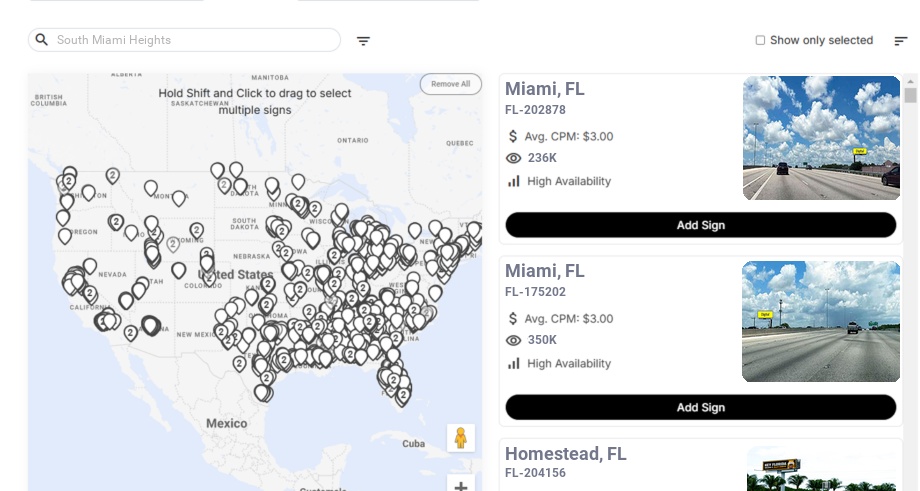
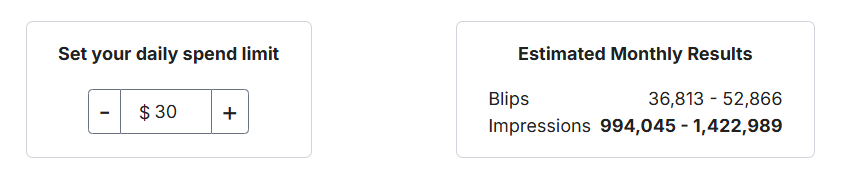
With Blip, you can advertise on South Miami Heights billboards on any budget, because you only pay for each brief 7.5–10 second “blip” your ad receives. You set a daily budget during campaign creation, and Blip automatically keeps your advertising serving the South Miami Heights area within that limit, giving you full cost control. Each blip is priced based on when and where it runs and on advertiser demand, so you’re always paying a fair, transparent rate for billboards near South Miami Heights, Florida.
Where can I advertise with Blip near South Miami Heights, Florida?
Our 12 digital billboards serving the South Miami Heights area are located in nearby Homestead, roughly 8–9 miles south. These placements essentially operate as billboards near South Miami Heights, intercepting traffic that flows steadily between neighborhoods, workplaces, schools, and retail centers. Residents in the South Miami Heights area frequently travel south toward Homestead for work, retail, schools, and services, and north through Homestead-area interchanges to access the Florida Turnpike and US‑1.
What kind of people will see South Miami Heights billboards with Blip?
The South Miami Heights area is part of unincorporated Miami-Dade County, just north of Homestead and south of Cutler Bay. In the South Miami Heights area, neighborhood-level estimates often show Hispanic shares above 80%, with many residents of Cuban, Nicaraguan, Colombian, Dominican, and Mexican origin. The median age in the South Miami Heights area is in the low 30s, and more than 25–30% of residents are under age 18, reflecting a high presence of school-aged children.
When is the best time to run Blip ads near South Miami Heights, Florida?
We can strategically time Blip campaigns for the weekday morning drive from 6:00–9:30 a.m., afternoon school and work traffic from 3:00–7:00 p.m., and evenings and weekends. Weekend mid-day periods often show 10–20% higher retail trip volumes versus weekdays, especially near major centers in Homestead and Cutler Bay. Because Blip lets us schedule and bid by time of day and day of week, we can align your impressions with the exact traffic profiles that matter most for your business.
Why are South Miami Heights billboards effective for reaching commuters and shoppers near Blip's Homestead boards?
Traffic counts from state and regional transportation agencies show that the Homestead–South Miami Heights–Cutler Bay stretch carries tens of thousands of vehicles per day in each direction. Homestead is home to major shopping centers such as Homestead Pavilion and Homestead Towne Square, along with big-box retailers, auto dealers, and restaurants that serve South Miami Heights area residents. Advertising near these destinations influences high-intent shoppers already planning to spend, making this some of the most valuable billboard advertising near South Miami Heights.
Do I need a contract to advertise with Blip near South Miami Heights?
No, Blip has no long-term contracts or minimum commitments. You can start, pause, or stop your campaign at any time.
How fast can I launch a billboard campaign with Blip near South Miami Heights?
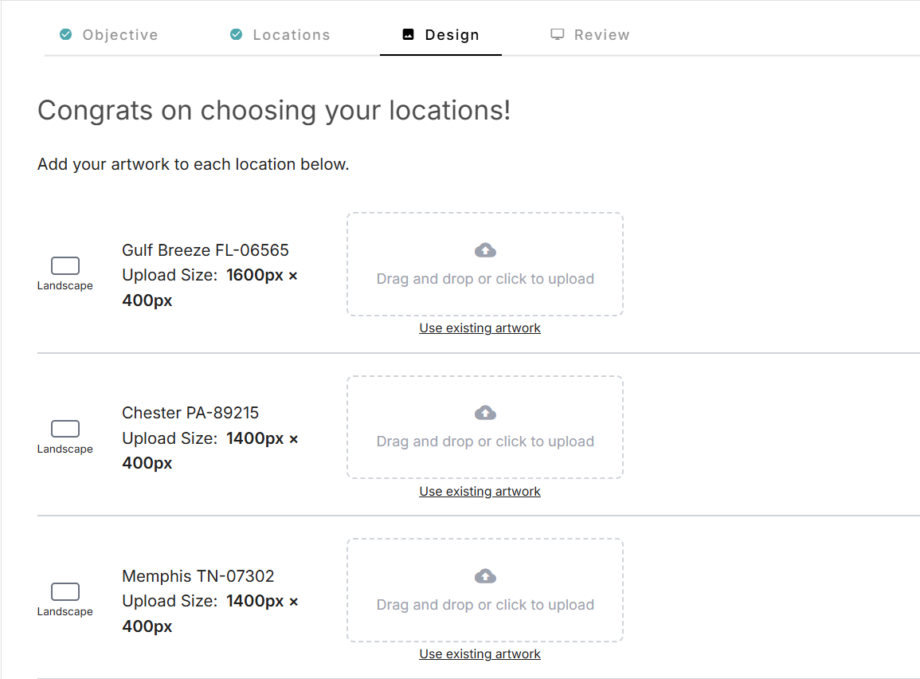
You can have your campaign live in minutes. Create a free account, select your locations, set your budget, upload your design, and start running once approved.
Where can I advertise with Blip near South Miami Heights?
Blip has digital billboards near South Miami Heights. You can browse available locations on a map, choose the ones that fit your audience, and start advertising right away.
Still have questions? Launch a campaign in minutes — no contracts, no commitments.
Start Your CampaignSouth Miami Heights Billboard Advertising Guide
The South Miami Heights area sits at the crossroads between suburban Miami-Dade neighborhoods and the rapidly growing city of Homestead, making it a powerful place to reach families, commuters, and workers headed toward Miami, Cutler Bay

Understanding the South Miami Heights Market
The South Miami Heights area is part of unincorporated Miami-Dade County, just north of Homestead and south of Cutler Bay. The South Miami Heights Census Designated Place counted roughly 36,700 residents in 2020, packed into about 5–5.5 square miles, for a population density of roughly 6,500–7,000 residents per square mile—much higher than the Florida average of about 410 residents per square mile. Miami-Dade County as a whole has about 2.7 million residents and more than 1 million households, making it Florida’s most populous county and one of the ten largest in the United States, according to county demographic summaries published by Miami-Dade County. This density, combined with heavy daily vehicle travel, is what makes South Miami Heights billboards so effective for reaching local residents and commuters.
Key characteristics relevant to billboard advertisers:
- Population density: South Miami Heights area neighborhoods are dense and predominantly residential, feeding strong morning and evening commuter flows toward US‑1, the Florida Turnpike, and Homestead. Nearby communities like Cutler Bay (about 45,000 residents) and Homestead (about 80,700 residents) add to the pool of daily drivers passing through the corridor, creating a combined south Miami-Dade suburban market of well over 160,000 people within a short drive. For advertisers evaluating billboard advertising near South Miami Heights, this daily movement of people is a prime opportunity for repeated exposure.
- Hispanic majority: Miami-Dade County is about 69–70% Hispanic or Latino. In the South Miami Heights area, neighborhood-level estimates reported by Miami-Dade County Regulatory & Economic Resources often show Hispanic shares above 80%, with many residents of Cuban, Nicaraguan, Colombian, Dominican, and Mexican origin. This has major implications for language choice and cultural references in your creative.
- Younger households: The median age in the South Miami Heights area is in the low 30s, compared with a U.S. median around 38–39 years. More than 25–30% of residents are under age 18, reflecting a high presence of school-aged children. That supports campaigns for education, family services, health care, quick-service restaurants, entertainment, and retail.
- Commuter community: County transportation profiles indicate that more than 75–80% of Miami-Dade workers commute by car, van, or truck, and average commute times exceed 30–32 minutes, with many southern-corridor commutes running 40 minutes or more into central Miami. That translates to repeated daily billboard exposures along major arterials near the South Miami Heights area.
- Housing and stability: Miami-Dade has a homeownership rate near 50–52%, and South Miami Heights includes a mix of long-time homeowners and renters in single-family homes and multifamily complexes. This mix supports both big-ticket purchase campaigns (autos, home services, finance) and frequent-purchase categories (QSR, grocery, convenience retail).
For context on local governance and planning that shape mobility and development patterns, advertisers can review resources from Miami-Dade County, the Miami-Dade Transportation Planning Organization, and the county’s mobility and land use plans through Miami-Dade RER Transportation Planning.
Where Our Billboards Are and How They Serve the South Miami Heights Area
Our 12 digital billboards serving the South Miami Heights area are located in nearby Homestead, roughly 8–9 miles south. Homestead itself has a population of around 80,000–81,000 residents and has been one of Miami-Dade’s faster-growing cities over the past decade, with double‑digit percentage growth. It functions as a key gateway between suburban Miami-Dade and the agricultural and Everglades regions, and it anchors a wider trade area of more than 150,000 people when nearby unincorporated neighborhoods are included. These placements essentially operate as billboards near South Miami Heights, intercepting traffic that flows steadily between neighborhoods, workplaces, schools, and retail centers.
Why Homestead billboards are so effective for reaching the South Miami Heights area:
- Shared commute corridors: Residents in the South Miami Heights area frequently travel south toward Homestead for work, retail, schools, and services, and north through Homestead-area interchanges to access the Florida Turnpike and US‑1. Traffic counts from state and regional transportation agencies show that the Homestead–South Miami Heights–Cutler Bay stretch carries tens of thousands of vehicles per day in each direction, connecting workers to major employment centers in Kendall, the Dadeland area, and central Miami. This shared corridor means South Miami Heights billboards in nearby Homestead can efficiently reach people on both legs of their commute.
- Regional retail magnet: Homestead is home to major shopping centers such as Homestead Pavilion and Homestead Towne Square, along with big-box retailers, auto dealers, and restaurants that serve South Miami Heights area residents. Retail studies cited by the City of Homestead point to a retail trade area that pulls shoppers from 10–15 miles away, with regional malls and power centers generating millions of visits annually. Advertising near these destinations influences high-intent shoppers already planning to spend, making this some of the most valuable billboard advertising near South Miami Heights.
- Tourism spillover: Homestead is the last major urban area before Everglades National Park and Biscayne National Park. Everglades typically records around 1–1.2 million recreational visits per year, while Biscayne National Park draws roughly 700,000–800,000 visits, according to park statistics from the National Park Service. Visitors driving through Homestead to the parks, the Redland agricultural area, Homestead-Miami Speedway, or the Florida Keys pass near our boards and often stop for gas, food, and lodging in the broader South Miami Heights–Homestead corridor.
For more about the nearby city’s role in the region, see the City of Homestead and regional visitor information from Greater Miami & Miami Beach and the Homestead/Florida City Chamber of Commerce.
Traffic Patterns and High-Impact Times to Run Ads
Miami-Dade is one of the most congested metros in the U.S., and the South Miami Heights–Homestead corridor is no exception. Reports from transportation planners regularly rank the Miami region among the top 10 most congested U.S. metros, with drivers losing 80–100+ hours per year to traffic delays on average. According to state and local transportation data:
- US‑1 (South Dixie Highway): Daily traffic counts in southern Miami-Dade often exceed 60,000–80,000 vehicles per day on key segments between Cutler Bay, South Miami Heights, and Homestead, with some signalized intersections approaching or surpassing 90,000 vehicles per day in combined directions, per count data summarized by the Florida Department of Transportation District Six.
- Florida Turnpike (Homestead Extension): Certain stretches closer to Homestead carry 80,000–100,000+ vehicles per day, mixing long-distance travelers, freight, and local commuters accessing key exits such as SW 216th St, SW 248th St, and the Homestead exits.
- Local arterials such as SW 152nd St, SW 184th St, and SW 216th St (near the South Miami Heights area and Homestead) support tens of thousands of additional daily trips. For example, some major east–west arterials in south Miami-Dade report 20,000–35,000 vehicles per day, particularly during school times and retail rush hours, according to corridor studies published by the Miami-Dade TPO.
Using these patterns, we can strategically time Blip campaigns:
-
Weekday morning drive (6:00–9:30 a.m.)
- Capture commuters heading north toward Kendall, Dadeland, Coral Gables, and central Miami, or south toward Homestead jobs. In many southern neighborhoods, over 60–65% of workers leave for work between 6:00 a.m. and 9:00 a.m.
- Ideal for service businesses (healthcare, insurance, real estate), education (charter schools, colleges), and breakfast/coffee concepts that want cost-effective billboard rental near South Miami Heights during the highest-traffic hours.
-
Afternoon school and work traffic (3:00–7:00 p.m.)
- Peak school release in Miami-Dade typically falls between 2:00 p.m. and 4:00 p.m., overlapping with end-of-shift traffic. This window regularly registers the highest hourly traffic volumes on urban arterials.
- Strong opportunity for family-oriented messages: quick-service restaurants, grocery, after-school programs, fitness, and entertainment.
-
Evenings and weekends
- Weekend mid-day periods (10:00 a.m.–4:00 p.m.) often show 10–20% higher retail trip volumes versus weekdays, especially near major centers in Homestead and Cutler Bay.
- Perfect for nightlife, churches, event promotion, local attractions, and big-ticket purchases (autos, furniture, home improvement).
- Retail-focused campaigns can ramp up Friday–Sunday to catch paydays and shopping trips to Homestead-area centers.
Because Blip lets us schedule and bid by time of day and day of week, we can align your impressions with the exact traffic profiles that matter most for your business rather than paying full-time rates.
Demographics: Tailoring Messaging for the South Miami Heights Area
To design impactful creatives, advertisers should align with the area’s distinct demographic profile:
-
Language and culture
- In Miami-Dade, more than 73% of residents age 5+ speak a language other than English at home, and over 60% speak Spanish at home. In several south-county ZIP codes, Spanish speakers at home can exceed 75–80%, according to county language-use summaries.
- Bilingual or Spanish-first creatives can significantly boost relevance in the South Miami Heights area, especially for family services, churches, healthcare, and retail.
- Consider alternating English and Spanish creatives using Blip’s rotation capability to test response and brand lift.
-
Income and spending
- Miami-Dade median household income is in the mid‑$50,000s (roughly $54,000–$58,000 depending on the year). The South Miami Heights area typically skews slightly lower, with many households clustered in the $35,000–$55,000 income band, but still showing strong spending on food away from home, wireless services, autos, and personal care.
- Roughly 30–35% of households in southern Miami-Dade are estimated to be families with children, making value-focused family options critical.
- Campaigns that emphasize value, promotions, financing options, and savings resonate strongly.
-
Family and household structure
- The South Miami Heights area has a high share of households with children and multigenerational families. In some nearby tracts, average household sizes reach 3.5–4.0 people, compared with a U.S. average of around 2.5.
- Use imagery showing families, youth sports, school activities, churches, and extended family gatherings.
- Promote after-school programs, pediatric and family healthcare, family dining, and budget-friendly entertainment.
-
Commuter workforce
- Many residents commute to jobs in construction, hospitality, healthcare, transportation, and service industries across Miami-Dade. County labor-force data show that about 20–25% of jobs are in trade/transportation/utilities, another 15–20% in education and health services, and sizable shares in leisure/hospitality and construction.
- Ads for vocational schools, trade programs, staffing agencies, and employers hiring locally can perform well, especially when combined with targeted billboard advertising near South Miami Heights that speaks directly to commuters on their way to and from work.
Local media like Miami Herald, WPLG Local 10, NBC 6 South Florida, and CBS News Miami frequently report on demographic and economic trends that can refine your audience understanding and help you align messaging with current local issues.
Creative Best Practices for Billboards Serving the South Miami Heights Area
With fast-moving traffic and a bilingual, family-heavy audience, creative decisions matter. Here are proven approaches for the South Miami Heights area:
-
Bilingual simplicity
- Limit copy to 7 words or fewer per creative to match typical billboard legibility standards of 1–2 seconds of reading time at highway speeds.
- Consider one fully Spanish creative and one fully English creative rather than mixing languages on the same slide, especially for boards on high-speed corridors like the Turnpike.
- Use universally recognized icons and imagery: families, food, beaches, palm trees, local sports (Miami Dolphins, Heat, Hurricanes colors), and faith-based symbols when relevant.
-
High-contrast, Miami-style color
- Miami-Dade viewers are used to bright, saturated colors—pastels and neons reminiscent of South Beach and Wynwood. Local branding case studies shared by Greater Miami & Miami Beach highlight how bold visuals perform strongly with visitors and residents.
- Use high contrast (e.g., white or yellow text on deep blue or black backgrounds) to stand out against a bright sky and heavy roadside advertising.
-
Location and directions
-
Because many viewers are driving between the South Miami Heights area and Homestead, give simple directional cues:
- “Just 10 min north near South Miami Heights”
- “Off Exit XX, Homestead”
- “Next to [recognizable retailer or intersection]”
- Distances and travel times (e.g., “5 minutes ahead” or “2 miles ahead”) help convert impressions into visits and make it clear that your ad is on a billboard near South Miami Heights rather than far away.
-
Because many viewers are driving between the South Miami Heights area and Homestead, give simple directional cues:
-
Offer- and outcome-focused messaging
-
Focus on one strong value proposition:
- “$0 Down Auto Loans”
- “Walk‑In Urgent Care – Open Late”
- “All‑You‑Can‑Eat Buffet – Kids Under 10 Eat Free”
- Use numbers: discounts (e.g., “Save 25% This Weekend”), monthly payments, phone numbers, or short URLs/QR codes (but only if large and simple enough to read quickly).
-
Focus on one strong value proposition:
-
Consistent branding across rotations
- Even if you run 3–5 different creatives, keep logo placement, brand colors, and typography consistent so frequent commuters build recall over time. With commuters potentially passing the same board 200+ times per year, consistent branding can significantly raise unaided awareness.
Seasonal and Event-Based Opportunities
The South Miami Heights area is deeply influenced by countywide tourism, local schools, and regional events. We can use Blip’s day-parting and calendar flexibility to match these cycles:
-
Tourism and parks
- Greater Miami has recorded more than 26 million overnight visitors in recent years and tens of millions of total visitors annually, according to the destination marketing organization Greater Miami & Miami Beach. A substantial share of self-drive visitors and Florida residents use the US‑1 and Turnpike corridors to reach the Florida Keys and national parks.
- Spring break (March–April), summer (June–August), and holiday periods (December–January) see elevated travel on the Turnpike and US‑1, often with 10–20% higher traffic volumes compared with typical off-peak seasons.
- Ideal for lodging, restaurants, attractions, boat rentals, outdoor gear, and gas stations serving travelers passing near the South Miami Heights area. Local attraction calendars from the Homestead-Miami Speedway and Zoo Miami can help you time campaigns around major race weekends and special events.
-
School calendar
- Miami-Dade County Public Schools is one of the largest districts in the country, with more than 330,000 students, 50,000+ employees, and over 430 schools and centers, according to district summaries on dadeschools.net.
- Back‑to‑school (late July–August), winter break, and testing seasons create spikes in demand for tutoring, uniforms, school supplies, healthcare, and extracurriculars.
-
Use Blip to ramp up during:
- Back-to-school (late July–September), when families may spend hundreds of dollars per child on supplies, clothing, and technology.
- Graduation season (May–early June) for florists, photographers, event venues, and restaurants.
- Report card and testing periods when tutoring and enrichment services are top of mind.
-
Hurricane season (June–November)
- Residents in the South Miami Heights area are highly attuned to hurricane prep. Surveys of Florida homeowners show that more than 70% take specific preparedness steps each season (e.g., stocking supplies, checking insurance).
- Hardware stores, insurance agencies, roofing contractors, shutter installation, and backup power companies can run preparedness and recovery messages timed around storms and tropical updates.
- Local news outlets like WSVN 7 News, WPLG Local 10, NBC 6, and CBS News Miami Weather often drive information spikes; billboards can reinforce your brand during those news cycles.
-
Cultural and community events
- Hispanic Heritage celebrations, church festivals, youth sports tournaments, and local fairs/events around Homestead and southern Miami-Dade offer windows for targeted campaigns.
- Annual events such as the Homestead–Florida City Christmas Parade, Homestead Rodeo, and regional food and music festivals draw thousands to tens of thousands of attendees each year, giving sponsors a chance to synchronize billboard messaging with on-the-ground visibility.
- Advertise event dates, sponsors, and special promotions in the weeks leading up to the event; then switch to “Thank you” or brand-building creatives immediately afterward.
Information on local events is often available through the Miami-Dade County events calendar, the Greater Miami & Miami Beach events listings, and community listings from the City of Homestead and Homestead/Florida City Chamber of Commerce.
Aligning Blip Campaigns With Business Goals
With 12 digital billboards serving the South Miami Heights area, we can match campaign strategies to specific objectives:
-
Driving foot traffic
- Restaurants, gyms, salons, and retail stores can target peak commute and weekend hours, when traffic volumes and discretionary trips are highest.
- Use distance callouts “2 miles ahead in Homestead” or “Just north of South Miami Heights” plus a clear, time-sensitive offer (e.g., “Today Only,” “This Weekend,” or “Happy Hour 4–7 p.m.”).
- Increase bids Friday–Sunday and weekday evenings when leisure and shopping trips are highest. Many retailers report that 30–40% of weekly sales occur between Friday afternoon and Sunday. This makes short-term billboard rental near South Miami Heights particularly attractive for businesses that want to test promotions without long contracts.
-
Lead generation and appointments
-
For medical clinics, dentists, law firms, and financial services, align ads with:
- Morning drive (plant the idea before work)
- Lunchtime (people more likely to call or book)
- Early evening (after work, during planning time)
- Include a vanity URL, memorable phone number, or short call-to-action (“Search: Dr. Lopez Homestead”). Businesses often see higher call and web-visit volumes within 1–2 hours of peak billboard exposure windows, based on local campaign analytics.
-
For medical clinics, dentists, law firms, and financial services, align ads with:
-
Brand awareness across the corridor
- Regional brands (utilities, universities, banks, auto dealers) should prioritize broad time coverage with consistent messaging to reach both daily commuters and weekend travelers.
- Rotate 3–5 creatives highlighting different service lines but use identical logo and color schemes to build cumulative recognition among daily commuters who may pass the same boards five days a week, 50+ weeks per year.
-
Recruiting and workforce
- Many employers in logistics, hospitality, healthcare, and construction compete for workers commuting from the South Miami Heights area. In Miami-Dade, leisure/hospitality jobs alone exceed 150,000 positions, and construction accounts for tens of thousands more.
- Run employment creatives during early mornings (5:00–8:00 a.m.) and late afternoons (3:00–7:00 p.m.), when workers are thinking about their jobs and commute.
- Simple copy: “Now Hiring – $XX/hr + Benefits – Exit XX” with a short URL. Employers frequently report that clear wage-based offers can increase applicant volume by 20–30% versus generic “Now Hiring” messaging.
Optimizing and Testing With Digital Flexibility
Because our boards are digital and purchased one “blip” at a time, we can continuously refine campaigns serving the South Miami Heights area:
-
A/B test headlines and languages
- Run one Spanish and one English version; compare performance through correlated web traffic, call tracking, or promo code redemptions.
- Test value-focused vs. brand-focused messages—e.g., “$0 Down” vs. “Trusted by Miami Families Since 1995.” In many categories, offer-led creatives can drive higher short-term response, while brand-led creatives strengthen long-term recall.
-
Adjust by time of day and day of week
- Allocate more budget to commute windows or weekends, then expand or contract based on results.
- For example, if a restaurant sees a 15–25% sales bump tied to weekend breakfast after turning on Saturday–Sunday morning blips, we can increase bids for those slots and test weekday breakfast next.
-
Weather- and event-responsive messaging
- In rainy season, emphasize indoor activities, covered parking, or roofing services; Miami’s wet season (roughly May–October) brings the majority of the area’s 50+ inches of annual rainfall.
- Before major events or holidays (e.g., Mother’s Day, Valentine’s Day, Black Friday), temporarily swap in promotional creatives, then revert to evergreen brand messages afterward.
- Coordinate event-based creative with local calendars from entities like Miami-Dade Parks, Recreation & Open Spaces and Greater Miami & Miami Beach.
Over time, combining local knowledge, sales data, and Blip’s scheduling flexibility lets us build a highly efficient presence on billboards serving the South Miami Heights area—without the long-term fixed costs of traditional static boards. Advertisers can treat this as an on-demand form of billboard rental near South Miami Heights, scaling spend up or down in real time as results come in.
Putting It All Together for the South Miami Heights Area
To succeed on digital billboards serving the South Miami Heights area:
- Aim your message at the right people: a largely Hispanic (often 75–80%+), family-oriented, commuting audience that moves daily between the South Miami Heights area and Homestead.
- Align with traffic flows: prioritize US‑1, Turnpike feeder traffic, and peak commute windows when impressions are highest, tapping into corridors that routinely see 60,000–100,000+ vehicles per day.
- Respect language and culture: use Spanish or bilingual creatives and culturally resonant imagery and colors that reflect Miami’s character.
- Keep it bold and simple: high-contrast visuals, short headlines (ideally 7 words or fewer), and single, strong offers backed by clear numbers.
- Use time, day, and seasonality to your advantage: adjust your presence around paydays, school calendars, tourism peaks, hurricane season, and major local events.
By combining local insight with Blip’s flexible, data-driven buying model, we can help you build a powerful, cost-effective billboard strategy that consistently reaches your ideal customers near South Miami Heights, whether you need always-on visibility or short-term billboard advertising near South Miami Heights to support specific promotions and events.