Billboards near Tamiami, FL
No Minimum Spend. No Long-Term Contracts. Just Results.
Trusted by Leading Brands


Billboard advertising
near Tamiami has never been easier
How much is a billboard near Tamiami?
Why Choose Blip for Billboard Advertising near Tamiami
Blip lets you launch on Tamiami's SR 836 and SR 826 commuter corridors in minutes—reach drivers stuck in Miami-Dade traffic without the usual hassle.
In Tamiami, flexible daily budgets fit student, family, or industrial campaigns—scale up for FIU peaks or pull back anytime, no contracts.
Daypart your Tamiami ads for 6:30-9:30 a.m. and 4-7 p.m. rushes, so Blip shows your message when commuters, students, and shoppers are on the road.
Track real-time results in Tamiami and shift spend fast as traffic changes on Dolphin, Palmetto, and Medley truck routes.
Use Blip's creative tools to make bold bilingual ads for Tamiami's Spanish-first audience, FIU students, and family-focused neighborhoods.
Frequently Asked Questions About Billboard Advertising near Tamiami
How much does a billboard cost near Tamiami, Florida with Blip?
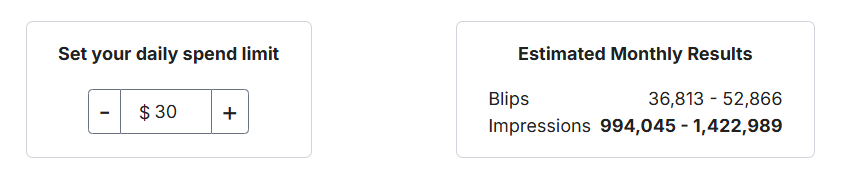
With Blip, you control exactly how much you spend on Tamiami billboards by choosing a daily budget that works for you, whether you’re a local shop, service, or event. Each blip is a short 7.5 to 10-second ad on digital billboards near Tamiami, Florida, and you only pay for the blips you receive. Pricing for each blip varies based on when and where your ad runs and current advertiser demand, so your total spend is simply the sum of all those individual blips over time.
Where can I advertise with Blip near Tamiami, Florida?
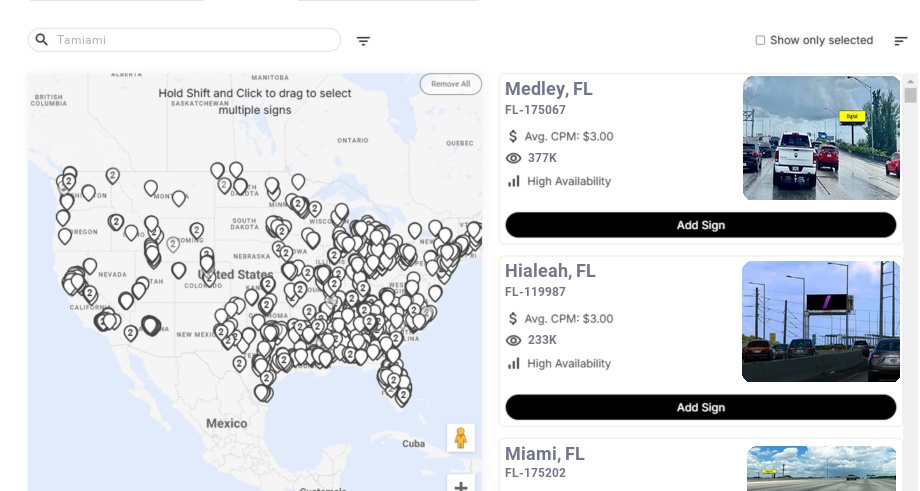
Our 34 digital billboards serving the Tamiami area are strategically placed in nearby Miami, Hialeah, Hialeah Gardens, and Medley. These nearby locations put your message along some of the busiest corridors for Tamiami-area residents and make it easy to secure billboard rental near Tamiami without having to manage multiple vendors. Key routes include Dolphin Expressway, Palmetto Expressway, US 27 / Okeechobee Road, and local arterials approaching the Tamiami area.
Why is Tamiami, Florida a strong market for Blip billboard advertising?
The Tamiami area combines dense residential neighborhoods with heavy regional traffic. The Tamiami CDP in west Miami-Dade has about 54,000+ residents packed into roughly 7.5 square miles, exceeding 7,000 people per square mile. Miami-Dade County’s population is about 2.7 million, and the billboards near Tamiami put your message in front of a large share of that county-wide audience.
When should I run a Blip campaign in Tamiami, Florida to reach commuters?
Peak congestion on SR 836 and SR 826 happens in the morning from roughly 6:30 a.m. to 9:30 a.m. and in the evening from roughly 4:00 p.m. to 7:00 p.m. Around 75–80% of workers countywide travel to work by car, and typical one-way commute times average 30–33 minutes. That makes dayparting especially useful for reaching drivers at the moments they are most likely to see and act on your ad.
What kind of audience will see Blip ads in Tamiami, Florida?
Over 90–95% of residents in the Tamiami area identify as Hispanic or Latino, and more than 75–80% of west Miami-Dade residents speak a language other than English at home, primarily Spanish. The median age in the Tamiami area is in the mid- to late-40s, but nearby FIU brings more than 55,000 students across its campuses. This mix means campaigns can reach established families, bilingual households, commuters, and students.
Do I need a contract to advertise with Blip near Tamiami?
No, Blip has no long-term contracts or minimum commitments. You can start, pause, or stop your campaign at any time.
How fast can I launch a billboard campaign with Blip near Tamiami?
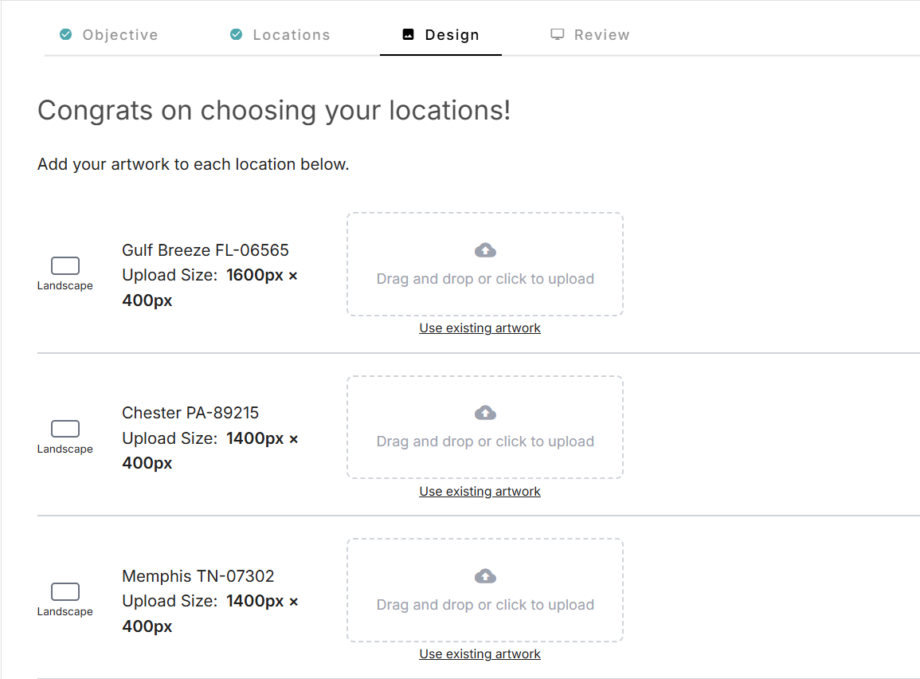
You can have your campaign live in minutes. Create a free account, select your locations, set your budget, upload your design, and start running once approved.
Where can I advertise with Blip near Tamiami?
Blip has digital billboards near Tamiami. You can browse available locations on a map, choose the ones that fit your audience, and start advertising right away.
Still have questions? Launch a campaign in minutes — no contracts, no commitments.
Start Your CampaignTamiami Billboard Advertising Guide
The Tamiami area sits at the crossroads of suburban neighborhoods, major commuter corridors, and one of Florida’s largest universities, making it an ideal place to use digital Tamiami billboards to grow your brand. With 34 digital billboards serving the Tamiami area from nearby Medley, Hialeah Gardens Miami, and Hialeah, we can help you reach daily commuters, students, families, and visitors with precisely timed, locally tailored billboard advertising near Tamiami.
Why the Tamiami Area Is a High-Value Billboard Market
The Tamiami area combines dense residential neighborhoods with heavy regional traffic:
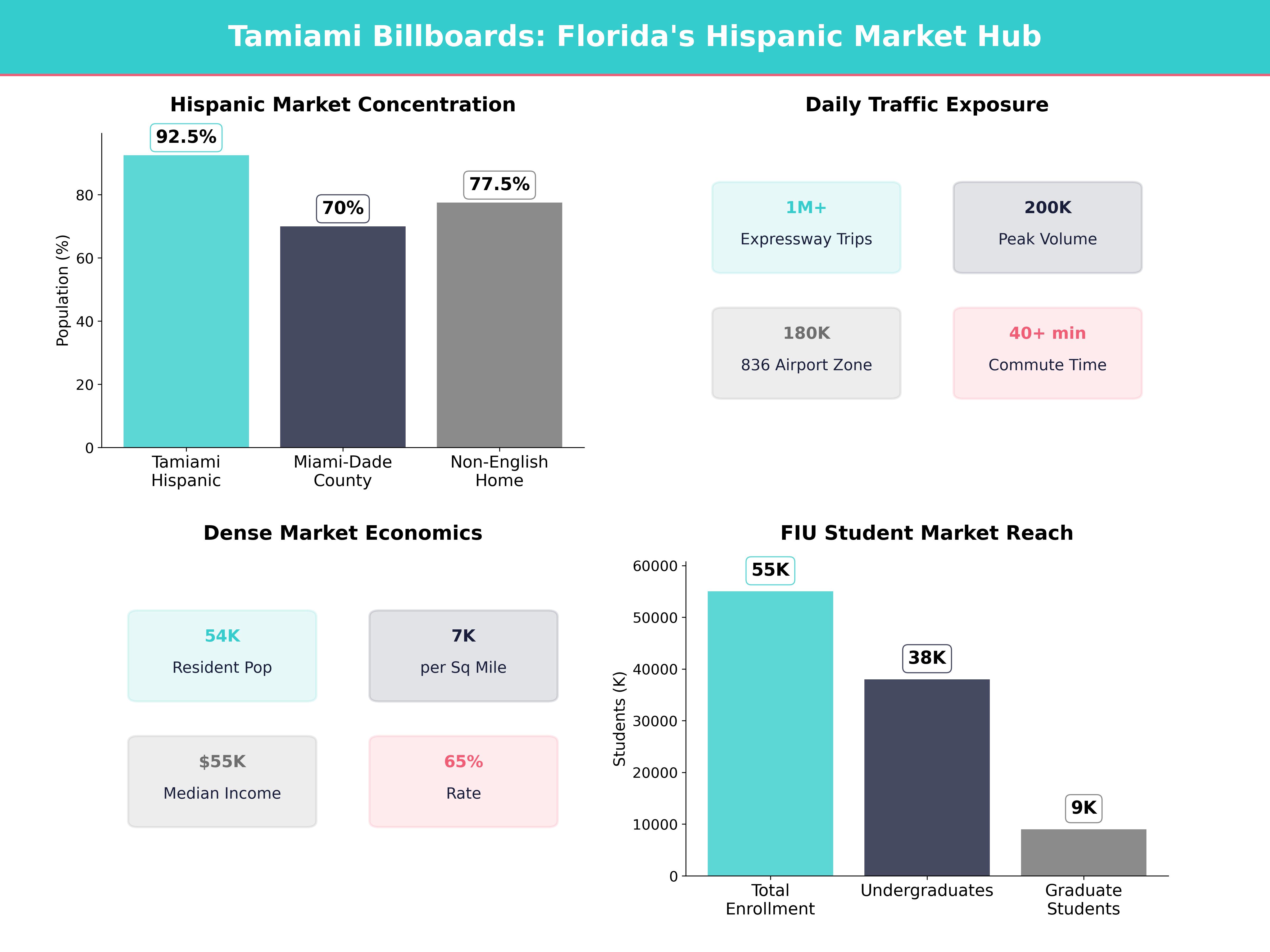
- Population density: The Tamiami CDP in west Miami-Dade has about 54,000+ residents packed into roughly 7.5 square miles, exceeding 7,000 people per square mile—more than 2.5–3 times Florida’s average statewide density.
- Greater market reach: Miami-Dade County’s population is about 2.7 million, making it Florida’s most populous county and representing roughly 12–13% of the state’s total population. The billboards near Tamiami in Medley, Hialeah Gardens, Hialeah, and Miami put your message in front of a large share of that county-wide audience, including more than 1 million workers employed in the county.
- Tourism halo: According to the Greater Miami Convention & Visitors Bureau, Greater Miami and Miami Beach welcomed around 26.5 million overnight and day visitors in 2023, with total visitor expenditures surpassing $20 billion. Visitor counts have rebounded to near or above pre‑2019 levels, and a substantial portion of this traffic passes through west Miami-Dade as travelers drive between Miami International Airport, the Tamiami Trail, the Everglades, and major shopping corridors.
- Regional economic engine: Miami-Dade ranks among the top U.S. counties for small business formation, with 80,000+ employer establishments and tens of thousands of non‑employer firms. Many of these are clustered in west Miami-Dade, Medley, and Hialeah’s industrial and logistics zones—prime targets for B2B and workforce-related billboard messages.
For advertisers, this means campaigns near Tamiami don’t just target a single neighborhood—they tap into a continuous flow of local residents, regional commuters, and tourists moving between the suburbs, Florida International University (FIU), and central Miami. Well-placed Tamiami billboards can repeatedly reach the same drivers throughout their weekly routines.
Understanding the Tamiami Audience
Campaigns in the Tamiami area are most effective when they reflect local culture and daily life.
Key demographic characteristics (Tamiami & west Miami-Dade):
- Heavily Hispanic/Latino: Over 90–95% of residents in the Tamiami area identify as Hispanic or Latino, compared with roughly 70% countywide. Cuban heritage remains central, but there are also large Nicaraguan, Colombian, Venezuelan, and Central American communities, making this one of the most Latino-concentrated corridors in the county.
- Bilingual reality: In west Miami-Dade, more than 75–80% of residents speak a language other than English at home—primarily Spanish—while second- and third‑generation residents are highly bilingual. For many households, Spanish is the language of family and everyday life, while English dominates in school, work, and digital media.
- Age profile: The median age in the Tamiami area is in the mid- to late-40s, several years higher than central Miami, reflecting a high share of established families and older adults. However, nearby FIU brings a younger wave into the trade area: FIU reports 55,000+ students across its campuses, with more than 38,000 undergraduates and over 9,000 graduate students. The main Modesto A. Maidique Campus directly adjacent to the Tamiami area hosts tens of thousands of students, faculty, and staff on a typical weekday during the fall and spring semesters.
- Household economics: Median household incomes in the Tamiami and adjacent west Miami-Dade neighborhoods cluster around $50,000–$60,000, with many zip codes trending slightly above the Miami-Dade countywide median. About 60–70% of households are owner‑occupied in many west‑side neighborhoods, indicating stable, family‑oriented communities with long-term purchasing power.
- Car dependence: In Miami-Dade’s western suburbs, car ownership is high—many households have 2+ vehicles, and a relatively small share rely solely on transit. This makes roadside media, including Tamiami billboards and nearby highway placements, particularly efficient compared to more transit-dependent urban cores.
Implications for billboard messaging:
-
Language strategy:
- Use Spanish-first or bilingual copy for mass-market campaigns; you’re speaking directly to the linguistic majority.
- Spanish-only headlines work especially well for family services, local retail, healthcare, and financial services—categories where trust and cultural familiarity matter.
- Bilingual (English + Spanish) is ideal for brands that want broader regional recognition or serve tourists and business travelers who may be less fluent in Spanish.
- Cultural cues: Incorporate local references (Tamiami Trail, FIU, “el 8” for SW 8th Street, “el Dolphin” for SR 836) and family-centered themes. Humor and phrasing that resonate with Cuban and broader Latin American culture can significantly increase ad recall and word‑of‑mouth.
- Visual style: Use bold colors and simple, high-contrast layouts. Miami-Dade drivers are exposed to thousands of marketing messages per day; OOH research consistently shows that simple designs with 1–2 key elements significantly outperform cluttered layouts in recall and comprehension at highway speeds.
Where Our Digital Billboards Reach Drivers Near Tamiami
Our 34 digital billboards serving the Tamiami area are strategically placed in nearby:
- Miami (about 9 miles from Tamiami)
- Hialeah (about 9.8 miles)
- Hialeah Gardens (about 9 miles)
- Medley (about 8 miles)
These nearby locations put your message along some of the busiest corridors for Tamiami-area residents and make it easy to secure billboard rental near Tamiami without having to manage multiple vendors:
- Dolphin Expressway (SR 836): A core east–west artery connecting the western suburbs to the City of Miami and Miami International Airport. Sections near Medley and west Miami often see 140,000–160,000 vehicles per day, based on Florida Department of Transportation (FDOT) traffic counts. Some central segments closer to the airport approach 180,000+ vehicles daily, ensuring repeated exposure for frequent commuters.
- Palmetto Expressway (SR 826): A major north–south beltway just east of Tamiami, with daily volumes often exceeding 200,000 vehicles on busy segments in Hialeah and Hialeah Gardens. Several interchanges in this corridor rank among the most congested in Miami-Dade, which actually increases dwell time and visibility for digital billboards.
- US 27 / Okeechobee Road & NW 72nd Ave / Milam Dairy Rd (Medley/Hialeah Gardens): Heavy commercial and truck routes serving warehouses, logistics hubs, and industrial parks. Portions of these routes carry 70,000–90,000 vehicles per day, including a high share of commercial trucks and fleet vehicles—prime territory for B2B messages, hiring campaigns, industrial suppliers, and logistics-related services.
- Local arterials approaching the Tamiami area from Hialeah and west Miami (including stretches of SW 8th St/Tamiami Trail and Coral Way) carry large flows of shoppers heading to malls, big-box retailers, strip centers, and local dining districts.
Because digital displays rotate multiple advertisers, we can focus your budget on specific boards and directions of travel that match your target audience—whether that’s:
- Westbound commuters heading home toward the Tamiami area
- Eastbound drivers from Tamiami going toward downtown or Miami International Airport
- North–south traffic connecting Tamiami residents with Hialeah and Hialeah Gardens
- Industrial and logistics workers moving in and out of Medley and the airport‑cargo complexes
This flexibility lets you treat your campaign as a network of billboards near Tamiami, optimized over time as performance data comes in.
Timing Your Campaign Around Local Traffic Patterns
Daily traffic patterns near the Tamiami area follow a strong commuter rhythm, which we can leverage through precise scheduling.
Commuting and driving behavior in Miami-Dade:
- Around 75–80% of workers countywide travel to work by car (driving alone or carpooling), while only a minority rely on transit, walking, or cycling.
- Typical one-way commute times average 30–33 minutes, with many west‑to‑east commuters regularly facing 40+ minute trips during peak congestion.
-
FDOT and Miami-Dade Transportation Planning Organization (TPO) data show peak congestion on SR 836 and SR 826 during:
- Morning: roughly 6:30 a.m. – 9:30 a.m.
- Evening: roughly 4:00 p.m. – 7:00 p.m.
- The TPO estimates that major expressways like SR 836 and SR 826 together carry well over 1 million vehicle trips per weekday, a significant share of which originates from or passes near the Tamiami and west‑side suburbs.
Smart scheduling strategies using Blip:
- Morning-commute focus (6–10 a.m.):
Perfect for coffee shops, breakfast spots, quick-service restaurants, financial services, healthcare, and local schools. Highlight convenience, time savings, and “before work” actions when drivers are planning their day. - Evening-commute focus (4–8 p.m.):
Ideal for restaurants, grocery and retail, entertainment, and home services. Use messages like “Tonight only,” “On your way home,” or “Exit now on your right” when the board location allows; studies of OOH effectiveness show that time‑sensitive offers can significantly increase immediate response such as store visits and app opens. - Midday (10 a.m.–3 p.m.):
Target retirees, stay-at-home parents, shift workers, service providers, and students commuting to FIU. Healthcare providers, car dealerships, and big-ticket services can benefit from lower midday CPMs while still reaching tens of thousands of daily impressions. - Late night (after 9 p.m.):
Leverage for nightlife, delivery apps, convenience stores, and hospitality. Night-time brightness of digital boards makes short, high-contrast creative especially effective, and late‑night traffic often includes service workers and hospitality staff heading home or to work.
With Blip, you can “daypart” campaigns to buy only the hours that matter, then shift your budget dynamically as you see which time blocks deliver the best combination of impressions and conversions.
Creative Strategies That Resonate in the Tamiami Area
To break through on busy Miami-Dade roads, billboard creative serving the Tamiami area needs to be simple, bold, and locally relevant.
1. Keep copy minimal and bilingual-optimized
- Aim for 6–8 words maximum on any frame; OOH industry research shows that keeping copy under 7 words significantly improves recall.
-
Consider two rotating creatives:
- One Spanish-first design (e.g., “¡Café listo en 5 minutos! Salida 27”)
- One English or bilingual design (e.g., “Fast Coffee. Next Exit. / Café rápido. Próxima salida.”)
- Use short, familiar words and big type to ensure readability at 55–65 mph.
2. Use clear calls to action that match driving context
-
For boards near highway exits leading toward the Tamiami area:
- “Próxima salida a la derecha – Venta hoy”
- “Next Exit for Tamiami – New Patients Welcome”
-
For general brand awareness or services with longer consideration cycles:
- “Serving Families in the Tamiami Area”
- “Tamiami-area Delivery in Under 30 Minutes”
- Use directional cues (“2 miles ahead,” “on SW 8th St,” “by FIU”) to help drivers form a mental map; location-based CTAs help increase navigation and search behavior.
3. Visuals tailored to the local lifestyle
- Highlight family, community, food, and soccer/baseball—core themes in many Hispanic households and central to Miami’s cultural identity.
- Use imagery reflecting the local environment (palm trees, pastel colors, coastal sunsets, cafecito cups) rather than generic stock visuals.
- Avoid overcrowding with logos and badges; emphasize one key visual, one brand identifier, and one offer. Studies show that simple, image‑driven creative can drive up to 2x higher unaided recall than text‑heavy designs.
4. Multiple creatives, one campaign
Digital boards allow you to rotate several designs without printing costs. For example:
- Creative A: Brand awareness (“Your Auto Repair Shop for the Tamiami Area”)
- Creative B: Offer-based (“10% Off Oil Change – This Week Only”)
- Creative C: Directional (“On SW 8th St, 10 Minutes from Here”)
You can track the impact via search lifts, unique URLs, or promo codes, then prioritize the creatives that generate the most website visits, calls, or store traffic.
Using Local Events & Seasonality to Your Advantage
The Tamiami area’s calendar is packed with cultural and educational touchpoints that you can mirror in your campaigns.
1. FIU academic calendar
- FIU’s Modesto A. Maidique Campus sits directly adjacent to the Tamiami area, bringing a huge influx of students and staff at the start of each semester. FIU reports 55,000+ students across all campuses, and thousands of faculty and staff work on or travel through the campus daily.
- Peak move‑in, orientation, and enrollment periods occur in late August–September and January, when student-related spending on housing, food, technology, and services spikes.
-
Target these windows with:
- Student housing, textbook buyback, tutoring services, and test prep
- Mobile plans, banking, and insurance products tailored to young adults
- Restaurants, coffee shops, gyms, and nightlife promoting student discounts and loyalty programs
You can reference FIU and its campus location using information from FIU’s official site, and time your Blip schedule to heavy move-in and orientation weeks when campus traffic is highest.
2. Cultural and holiday peaks
In a heavily Hispanic market, certain holidays and cultural observances generate strong spending and family gatherings:
- Three Kings Day (Día de Reyes) – early January
- Carnaval/Mardi Gras period and local street festivals across Miami-Dade
- Mother’s Day and Father’s Day, which consistently rank among the top retail weekends of the year for restaurants, florists, and gift shops
- Back-to-school (August) for K–12 and college shoppers
- Major sports seasons (soccer, baseball, NFL and college football), when watch parties and group gatherings drive demand for restaurants, delivery, and beverage brands
Create limited-time frames that speak directly to these events:
“Especial de Día de las Madres – Reserva hoy” or “Game Night: 2x1 Wings – Tamiami Area Delivery.” Short, event‑driven campaigns often show higher response rates because they tap into existing conversation and urgency.
3. Weather and hurricane season
Miami-Dade’s rainy and hurricane season runs roughly June–November, with the statistical peak in August–October. Use flexible digital creative to:
- Promote home improvement, insurance, and hardware stores before and after storms—think “Prepárate para la tormenta” messages 48–72 hours before a system approaches.
- Highlight roofing, impact windows/doors, and emergency services immediately following major weather events.
- Pivot messaging quickly if a storm disrupts normal routines, positioning your brand as helpful and resilient (e.g., “Abierto después de la tormenta” or “We’re here for the Tamiami Area”).
Sample Strategies by Business Type
Below are example approaches for campaigns serving the Tamiami area. Use them as starting points to design your own Blip strategy and decide which type of billboard advertising near Tamiami best fits your goals.
Local Restaurants & Cafés
- Target audience: Residents of the Tamiami area, FIU students, commuters from Hialeah/Hialeah Gardens, and visitors heading west toward the Everglades and Tamiami Trail.
- Suggested locations: Boards on SR 836 and SR 826 leading to west Miami and Medley, plus key arterials feeding into SW 8th St / Tamiami Trail. These corridors can each carry 100,000+ vehicles per day, ensuring wide exposure for dining offers.
-
Timing:
- Breakfast: 6–10 a.m.
- Lunch: 11 a.m.–2 p.m.
- Dinner: 4–8 p.m.
-
Messaging examples:
- “Comida casera cerca del área de Tamiami – Salida 27”
- “Student Special – Show FIU ID for 15% Off (Near Tamiami Area)”
- Add-ons: Rotate creative for game days, holidays, and weekends, and use mouth‑watering imagery to capture impulse dining decisions during commute times.
Healthcare & Dental Practices
- Target audience: Families and older adults residing in the Tamiami area, plus insured workers commuting through SR 836 and SR 826.
- Suggested locations: Boards in Hialeah Gardens, Medley, and Miami catching commuters driving to/from the Tamiami area and nearby medical corridors.
- Timing: Weekdays 7–10 a.m. and 4–8 p.m., with supplemental midday coverage for retirees and stay‑at‑home parents.
-
Messaging examples:
- “Family Dentist Serving the Tamiami Area – Same-Day Appointments”
- “Clínica abierta los fines de semana – Citas en 24 horas”
- Add-ons: Include strong trust signals (years in business, “Se habla español,” evening/weekend hours, major insurance accepted) and an easy-to-remember phone or URL. Consider patient‑education frames during flu season or open enrollment.
Auto Dealers & Repair Shops
Miami-Dade is highly car-dependent, and many households in the Tamiami area own multiple vehicles.
- Target audience: Daily commuters on SR 836 and SR 826, industrial workers near Medley, and residents in west Miami-Dade who rely on older vehicles.
- Suggested locations: Boards along the Palmetto and Dolphin Expressways, plus industrial corridors in Medley with heavy truck and employee traffic.
- Timing: Weekdays 6–9 a.m., 4–7 p.m.; Saturdays late morning and midday when shoppers are more likely to visit dealerships and service centers.
-
Messaging examples:
- “Oil Change in 30 Minutes – Near the Tamiami Area”
- “Se habla español – Financiamiento fácil – Visítanos hoy”
- Add-ons: Promote limited-time rebates, “weekend only” sales, lease specials, and service discounts. Rotate multiple creatives to test which offers (e.g., “0 down,” “no credit, no problem,” “free diagnostic”) draw the strongest response.
Education & After-School Programs
- Target audience: Parents in the Tamiami area and FIU-adjacent neighborhoods, plus Spanish-speaking families who may be actively seeking tutoring and enrichment for their children.
- Suggested locations: Boards on routes between Tamiami and Hialeah/Hialeah Gardens and along key school commute paths.
- Timing: Early mornings (7–9 a.m.) and late afternoons (3–7 p.m.), when parents are dropping off or picking up students.
-
Messaging examples:
- “After-School Tutoring for Tamiami-Area Students – Enrollment Open”
- “Clases de verano – Matemáticas e inglés – Reserva hoy”
- Add-ons: Align campaign flights with the Miami-Dade County Public Schools calendar (see district info) for back-to-school, exam periods, and report card dates when academic support demand peaks.
Leveraging Local Media & Community Signals
To enhance the impact of your billboard campaign, align it with conversations already happening in local media and community channels:
- News & weather: Coordinate key announcements with coverage from outlets like the Miami Herald, WPLG Local 10, NBC 6 South Florida, and Telemundo 51. For example, insurance and home services can run heavier near weather-related news cycles, while restaurants and entertainment can capitalize on weekend guides and event coverage.
- Local government & infrastructure: Watch updates from Miami-Dade County and nearby cities such as Hialeah, Hialeah Gardens, Medley, and Miami for road projects, new developments, or community events that may change traffic flows or open new business opportunities.
- Tourism & attractions: Monitor announcements from the Greater Miami Convention & Visitors Bureau and local attractions (e.g., Everglades tours, airboat operators, regional parks) to time tourist‑facing campaigns during peak visitation weeks and major events.
When road construction, special events, or new developments change commuting patterns, we can adjust which billboards, dayparts, and directions you emphasize, ensuring your impressions remain efficient and cost‑effective.
Measuring Success and Iterating Your Campaign
Digital billboard campaigns serving the Tamiami area are most powerful when they evolve over time.
Practical ways to track impact:
- Use simple, trackable URLs or unique promo codes visible on billboards; give each campaign or creative its own code to see which one drives more redemptions.
- Watch for search volume spikes for your brand in the Tamiami area using tools like Google Trends and your Google Business Profile insights, especially during and immediately after your Blip flight dates.
- Track store visits, calls, form fills, and online leads during your Blip campaign windows versus baseline periods. For brick‑and‑mortar locations, compare sales and foot traffic on days/times when your ads run against similar windows before the campaign.
- Encourage customers to mention “the billboard ad” and track how many new clients reference seeing you on SR 836, SR 826, or near FIU.
How to iterate:
- Start broad:
Run 2–3 creatives across a set of boards in Miami, Hialeah, Hialeah Gardens, and Medley that serve the Tamiami area. Include at least one Spanish‑first and one bilingual execution to test language impact. - Identify winners:
Compare performance by time of day, language, and offer type. For example, you might find that bilingual ads perform better on commuter expressways, while Spanish-only messages outperform on industrial corridors or neighborhood arterials. - Refine:
Shift more budget to the best-performing corridors and creatives. If Spanish-only messaging near Medley performs better with industrial workers and commuters, emphasize that combination there, while reserving bilingual or English‑leaning creative for tourism or student‑heavy segments. - Layer in seasonality:
As you move into back-to-school, holidays, hurricane season, or FIU’s academic peaks, update creatives while keeping your strongest-performing formats and calls to action. - Repeat testing:
Refresh your messaging every 8–12 weeks to avoid audience fatigue and to keep pace with changing local conditions, promotions, and events.
By combining local demographic insight, traffic data, and the flexibility of Blip’s digital billboards, we can help you build a campaign that truly connects with people in the Tamiami area—on the roads they drive every day, at the exact moments they’re ready to take action. Whether you need a single digital face or a multi-location network, flexible billboard rental near Tamiami makes it easy to scale up or down as your marketing needs evolve.