Billboards in Cooper City, FL
No Minimum Spend. No Long-Term Contracts. Just Results.
Trusted by Leading Brands


Billboard advertising
in Cooper City has never been easier
How much is a billboard in Cooper City?
Why Choose Blip for Billboard Advertising in Cooper City
Blip lets you launch Cooper City billboards fast, reaching I-75 and I-595 commuters without sales calls or delays.
Set a flexible budget for Cooper City and pay only for each blip, ideal for testing families, commuters, and shoppers on US-441.
Use dayparting in Cooper City to hit school pickup on Stirling Road and rush hour on the Turnpike when attention is highest.
No contracts with Blip means you can ramp up Cooper City campaigns for back-to-school, holidays, or hurricane prep, then pause anytime.
Track real-time Cooper City performance and shift spend toward boards near Miramar, Sunrise, and Hollywood that drive the best results.
Blip’s creative tools make it easy to build bold, family-friendly ads for Cooper City’s high-income households and local school pride.
Frequently Asked Questions About Billboard Advertising in Cooper City
How much does a billboard cost near Cooper City, Florida with Blip?
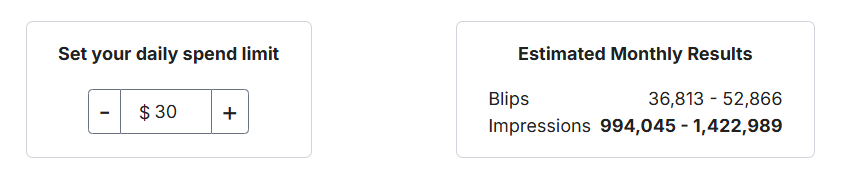
With Blip, you control exactly how much you spend on Cooper City billboards by setting a daily budget that fits your goals, whether you’re testing the waters or running a sustained push. Each “blip” is a brief 7.5–10 second ad on digital billboards near Cooper City, Florida, and you only pay for the blips you receive, based on when and where your ad shows and current advertiser demand. That means the total cost of your campaign in the Cooper City area is simply the sum of those individual blips over time.
Where can I advertise with Blip near Cooper City, Florida?
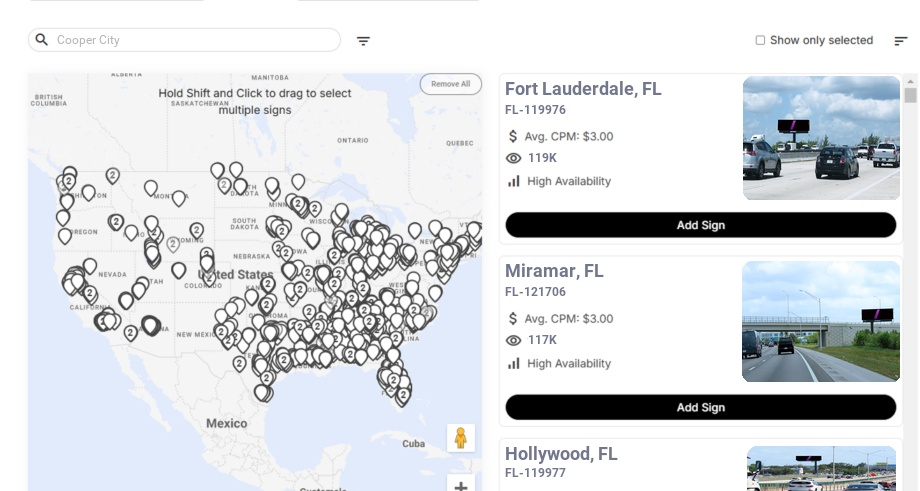
We do not place screens inside Cooper City itself, but our 54 digital billboards serving the Cooper City area are strategically located within roughly 10 miles in Miramar, West Park, Dania Beach, Sunrise, Hollywood, Miami Gardens, Opa-locka, Fort Lauderdale, and Hallandale Beach. These locations effectively function as Cooper City billboards because they sit along or near critical arterials used daily by Cooper City area residents. By selectively choosing locations near on-ramps, intersections, and shopping corridors, we can reliably intercept commuters, parents, shoppers, and leisure traffic.
What kind of audience does Cooper City, Florida billboards with Blip reach?
Cooper City is consistently ranked as one of South Florida’s most desirable family communities, with strong schools, high household incomes, and excellent access to employment centers in both Fort Lauderdale and Miami. Recent estimates put Cooper City’s population at roughly 35,000–36,000 residents, with nearby Davie, Pembroke Pines, Miramar, and Hollywood bringing the immediate trade area to well over 300,000 people within a short drive. The area also has strong spending power, high educational attainment, and a stable homeowner base.
When is the best time to run Cooper City, Florida billboards with Blip?
The Cooper City area is strongly commuter-oriented, so weekday morning commute, afternoon school traffic, evening commute and errands, and weekends are especially valuable. We can leverage that by tailoring our Blip schedules and using billboards near Cooper City when commuters are most receptive. With Blip’s flexible scheduling, we can concentrate your budget into the highest-value periods for your audience rather than spreading impressions thinly across the entire week.
What message works best on Cooper City, Florida billboards?
The Cooper City City area emphasizes its “Someplace Special” branding and family focus, so advertisers should align with that positioning. Safe, family-friendly, aspirational, and community-oriented messaging tends to perform well with this audience and fits naturally on Cooper City billboards and other out-of-home formats targeting nearby corridors. For broader reach campaigns, bilingual English/Spanish creative can also work well, especially along major corridors into Miami Gardens, Opa-locka, Hollywood, and Fort Lauderdale.
Do I need a contract to advertise with Blip in Cooper City?
No, Blip has no long-term contracts or minimum commitments. You can start, pause, or stop your campaign at any time.
How fast can I launch a billboard campaign with Blip in Cooper City?
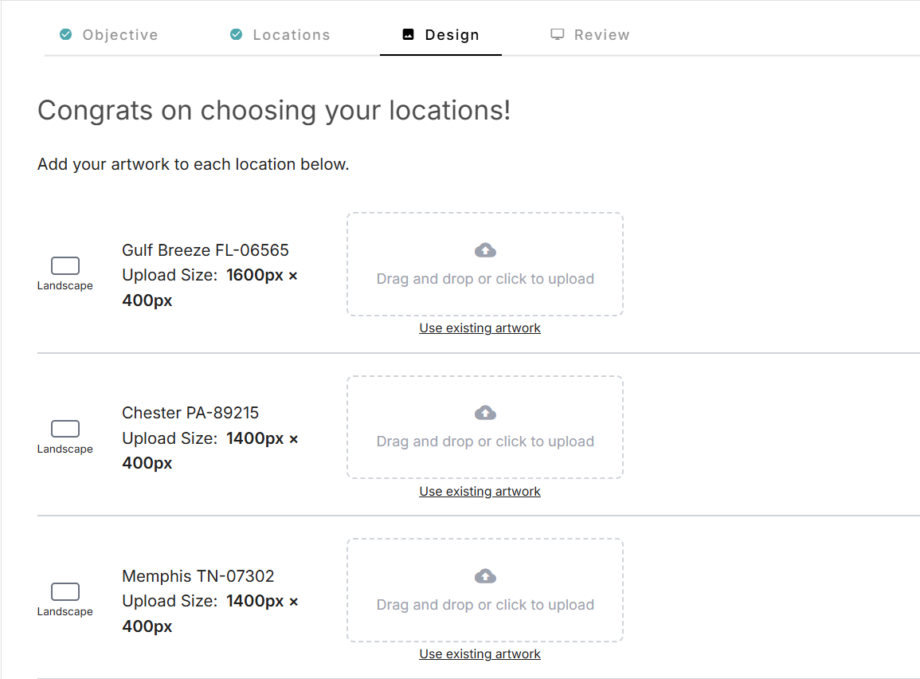
You can have your campaign live in minutes. Create a free account, select your locations, set your budget, upload your design, and start running once approved.
Where can I advertise with Blip in Cooper City?
Blip has digital billboards in Cooper City. You can browse available locations on a map, choose the ones that fit your audience, and start advertising right away.
Still have questions? Launch a campaign in minutes — no contracts, no commitments.
Start Your CampaignCooper City Billboard Advertising Guide
Cooper City is consistently ranked as one of South Florida’s most desirable family communities, with strong schools, high household incomes, and excellent access to employment centers in both Fort Lauderdale and Miami. Recent estimates put Cooper City’s population at roughly 35,000–36,000 residents, with nearby Davie, Pembroke Pines, Miramar, and Hollywood bringing the immediate trade area to well over 300,000 people within a short drive. With 54 digital billboards serving the Cooper City area from nearby cities such as Miramar, Hollywood, Sunrise, and Fort Lauderdale, we can build highly targeted campaigns that reach local residents, commuters, and nearby visitors throughout their daily routines, giving advertisers multiple options for effective billboard advertising near Cooper City.
Understanding the Cooper City Area Market
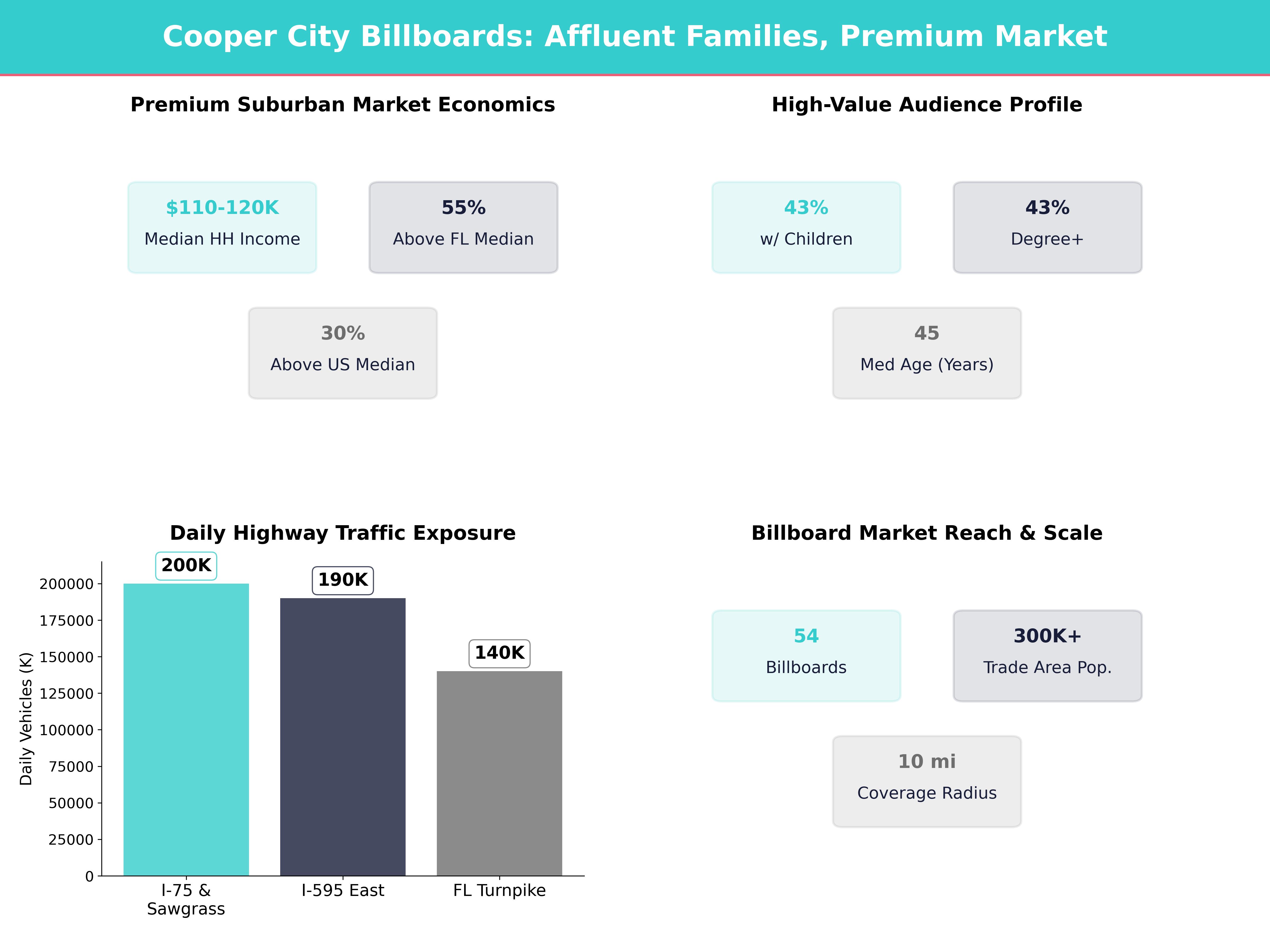
Cooper City sits in the heart of western Broward County, surrounded by major regional hubs. According to recent city and county data, the Cooper City area features:
- Population of roughly 35,000 residents, within a broader Broward County population of about 1.96–2.0 million, making Broward one of the top 20 largest counties in the U.S. by population.
- A strong family orientation: more than 40–45% of households are families with children, and the median age is in the mid‑40s, several years higher than the statewide median—indicating a stable, established homeowner base.
- High spending power: the median household income is around $110,000–$120,000, roughly 50–60% higher than the Florida median and more than 30% above the national median, signaling strong discretionary income for retail, dining, services, and recreation.
- High educational attainment: in many west Broward suburbs, including the Cooper City area, 40–45% of adults hold a bachelor’s degree or higher, well above state and national averages. This supports demand for professional services, enrichment programs, and quality-of-life amenities.
- Strong housing stability: homeownership rates in Cooper City are typically in the 75–80% range, compared with about 66% statewide, reinforcing long-term local ties and repeat purchase behavior for home-related services.
Cooper City’s public schools are part of Broward County Public Schools, one of the largest school districts in the nation, serving over 250,000 students across the county. Schools like Cooper City High and Pioneer Middle often receive “A” ratings in district reports, drawing families who prioritize education and extracurriculars.
The City of Cooper City emphasizes its “Someplace Special” branding and family focus on its official website, the City of Cooper City. Advertisers should align with that positioning: safe, family-friendly, aspirational, and community-oriented messaging tends to perform well with this audience and fits naturally on Cooper City billboards and other out-of-home formats targeting nearby corridors.
Because the Cooper City area is embedded within the larger Fort Lauderdale–Miami corridor, it also benefits from regional tourism and business travel. Visit Lauderdale reports that Broward County attracts roughly 19 million overnight and day visitors per year, generating more than $15 billion in annual economic impact and supporting about 150,000 tourism-related jobs. Cruise traffic through nearby Port Everglades regularly exceeds 3.5 million cruise passengers annually, while Fort Lauderdale-Hollywood International Airport handles more than 35 million passengers per year. Our billboards near Cooper City can tap into both stable local demand and transient visitor traffic heading to and from these destinations.
Where Our 54 Boards Reach Drivers Near Cooper City
We do not place screens inside Cooper City itself, but our 54 digital billboards serving the Cooper City area are strategically located within roughly 10 miles in:
- Miramar (approx. 5.5 miles) – a city of about 135,000 residents and a major employment center; see the City of Miramar.
- West Park (6.4 miles)
- Dania Beach (7.2 miles) – gateway to the beach and Port Everglades; see the City of Dania Beach.
- Sunrise (7.3 miles) – home to Sawgrass Mills FLA Live Arena City of Sunrise
- Hollywood (7.8 miles) – a coastal city with about 150,000 residents; see the City of Hollywood.
- Miami Gardens (8.4 miles)
- Opa-locka (8.7 miles)
- Fort Lauderdale (9.4 miles) – Broward’s county seat with roughly 185,000 residents; see the City of Fort Lauderdale
- Hallandale Beach (9.6 miles)
These locations effectively function as Cooper City billboards because they sit along or near critical arterials used daily by Cooper City area residents:
- I-75 and the Sawgrass Expressway, which together carry well over 200,000 vehicles per day across western Broward and northern Miami‑Dade, providing west–east and north–south travel.
- I-595, where segments east of I‑75 can exceed 180,000–200,000 average daily vehicles, connecting to I‑95, Fort Lauderdale, and Port Everglades.
- The Florida Turnpike, a major commuter spine to Miami, with many Broward segments handling more than 140,000 vehicles daily.
- Key north–south corridors such as University Drive, Flamingo Road, and US‑441/State Road 7, each often carrying 40,000–60,000 vehicles per day in peak segments.
- East–west routes including Griffin Road, Stirling Road, and Sheridan Street, which commonly see 30,000–50,000 vehicles daily near major intersections.
Regional planning agencies such as the Broward Metropolitan Planning Organization and FDOT District 4
Many Cooper City area drivers pass multiple times per day through nearby Miramar, Hollywood, Sunrise, and Fort Lauderdale—exactly where our boards are highly visible. By selectively choosing locations near on-ramps, intersections, and shopping corridors, we can reliably intercept:
- Daily commuters heading to downtown Fort Lauderdale, Miami, or industrial corridors near Port Everglades and Miami International Airport. In Broward, the average one‑way commute is around 28–30 minutes, meaning drivers are exposed to roadside media for substantial stretches of time.
- Parents shuttling to schools, athletic complexes, and recreation areas such as Cooper City and Davie parks and the region’s numerous youth sports facilities.
- Shoppers traveling to popular retail zones like Sawgrass Mills in Sunrise, which draws 26+ million visitors annually, Pembroke Lakes area shopping, and major plazas in Miramar and Hollywood.
- Leisure traffic heading to beaches in Hollywood, Dania Beach, and Fort Lauderdale along corridors frequently highlighted by Greater Fort Lauderdale tourism for their visitor volume.
Key Audience Segments in the Cooper City Area
When planning creative and scheduling, it helps to break the Cooper City area into clear audience segments:
1. Families and Parents
- More than two-fifths of households have children, and Cooper City area schools are highly rated, drawing families who invest heavily in education, extracurriculars, and enrichment.
- In Broward County Public Schools, over 70% of students are enrolled in some form of choice, magnet, or specialty program, reflecting strong parental interest in academic and enrichment offerings.
-
Products and services that resonate:
- After-school programs, tutoring, and test prep (families in high-income suburbs often spend $1,000–$3,000+ per child per year on enrichment).
- Youth sports leagues, dance, martial arts, and arts programs; participation in organized youth sports in suburban South Florida routinely exceeds 50% of school-age children.
- Family dining, quick-service restaurants, and weekend activities; industry data show that higher‑income families average 3–4 restaurant visits per week.
- Pediatric, dental, orthodontic, and family health services.
- Effective angles: safety, convenience, time-saving, and “investing in your child’s future.”
2. Affluent Professionals and Homeowners
- With median household income above $110,000 and homeownership rates around 75–80%, many residents are dual-income professionals with significant equity in their homes.
- In western Broward communities, single-family home median sale prices often exceed $600,000, with many Cooper City and surrounding area homes transacting above $700,000, reinforcing demand for premium home services.
-
Needs include:
- Financial planning, insurance, and legal services—Broward’s concentration of financial and professional service firms supports a high density of white‑collar workers.
- Home upgrades (kitchens, pools, landscaping, solar, impact windows). After major hurricane seasons, regional spending on home hardening has climbed double digits year‑over‑year in many South Florida markets.
- Luxury automotive, fitness, and wellness services; luxury and near‑luxury vehicle registrations are significantly higher in west Broward zip codes than the state average.
- Effective angles: prestige, quality, expertise, and long-term value.
3. Multicultural and Bilingual Households
- Broward County and neighboring Miami-Dade counties are among the most diverse in the United States, with large Hispanic/Latino, Caribbean, and Brazilian populations. In Broward, Hispanic/Latino residents account for roughly 30% of the population, and Black/African American residents (including many Caribbean-born) account for around 30% as well.
- In Broward, more than 30–35% of residents speak a language other than English at home, and in nearby cities like Miramar and Hollywood, that share is even higher—often exceeding 40% in some neighborhoods.
-
For campaigns near Cooper City, this supports:
- Bilingual English/Spanish creative for mass-market campaigns; research from out‑of‑home industry groups shows that bilingual messaging can lift recall and relevance by 10–20 percentage points among Spanish‑dominant audiences.
- Targeted messaging for specific cultural events (e.g., Hispanic Heritage Month, Caribbean festivals, Brazilian events promoted through local cultural organizations and city event calendars).
- Effective angles: inclusivity, community pride, cultural references, and clear bilingual calls-to-action.
4. Regional Visitors and Cruise/Beach Travelers
- Many drivers passing near Cooper City come from other parts of Broward and Miami-Dade, heading toward beaches, airports, and cruise terminals.
- Port Everglades is consistently ranked among the top three cruise ports in the world by passenger volume, and nearby beaches in Hollywood, Dania Beach, and Fort Lauderdale collectively host millions of visitors each year, especially between December and April.
-
Great fits:
- Attractions, casinos, and entertainment venues such as those promoted on Visit Lauderdale.
- Hotels, short-term rentals, and dining near the beaches.
- Transportation services (airport shuttles, parking, rideshare add-ons).
- Effective angles: proximity (minutes away), ease of access, and “don’t miss this before your cruise/flight.”
Commuter Flows: When and Where to Focus
The Cooper City area is strongly commuter-oriented. Regional transportation data and local news reports from outlets like the South Florida Sun Sentinel consistently highlight congestion during peak hours on I-75, I-595, and the Turnpike. Some Broward freeway segments regularly rank among the most congested in Florida, with travel speeds dropping 30–40% during rush hour compared to free-flow conditions.
We can leverage that by tailoring our Blip schedules and using billboards near Cooper City when commuters are most receptive:
Weekday Morning Commute (6:30–9:00 a.m.)
- Strong flows eastbound on I-595 and southbound on the Turnpike and I-75 toward job centers in Fort Lauderdale, Hollywood, Miami Gardens, and downtown Miami. In Broward, more than 70% of workers commute by car, creating a sizeable captive audience for roadside media.
-
Ideal for:
- Coffee shops, breakfast spots, and mobile ordering apps.
- Traffic and weather–driven offers (“Rainy day? 20% off car washes today.”).
- Professional services and B2B branding for firms serving regional offices.
Weekday Afternoon School Traffic (2:00–4:00 p.m.)
- Parents and caregivers making school pickups and heading to after-school activities. Cooper City’s family-heavy demographic means that a large share of local traffic in this window is child-focused.
-
Ideal for:
- Kids’ programs, tutoring, sports, arts.
- Quick-service restaurants and family dining “on the way home.”
- Healthcare and wellness services (pediatrics, urgent care, therapy).
Evening Commute and Errands (4:00–7:30 p.m.)
- Westbound and northbound traffic returning to the Cooper City area and neighboring suburbs. In South Florida, evening peak often extends later than the national average, with heavy volumes until around 7:00–7:30 p.m.
-
Ideal for:
- Retail, grocery, and big-box shopping.
- Fitness centers and evening classes.
- Local events and nightlife in nearby Hollywood, Dania Beach, and Fort Lauderdale; check municipal calendars from Hollywood, Dania Beach, and Fort Lauderdale
Weekends (10:00 a.m.–8:00 p.m.)
- Shopping, dining, recreational trips, and beach traffic. Visit Lauderdale data show winter and spring weekends in particular see pronounced spikes in hotel occupancy and attraction visits.
-
Ideal for:
- Entertainment, attractions, and events.
- Restaurants, brunch spots, and family activities.
- Real estate open houses and new-home communities, especially during peak home-buying seasons (spring and early summer).
With Blip’s flexible scheduling, we can concentrate your budget into the highest-value periods for your audience rather than spreading impressions thinly across the entire week. Industry research from organizations like the Out of Home Advertising Association of America (OAAA) has shown that well‑timed campaigns can lift ad recall by 20–30% compared with untargeted all‑day buys.
Creative Strategy: What Works on Billboards Near Cooper City
Our digital billboards serving the Cooper City area are viewed at highway speeds and along busy arterials. To capture attention, creatives must be:
1. Simple and Bold
- Limit text to 7–10 words. Studies of out-of-home readability consistently show steep drops in comprehension beyond about 8–9 words at highway speeds.
- Use large, high-contrast fonts (white or yellow on dark backgrounds; dark fonts on light backgrounds).
- Focus on a single message: one offer, one benefit, one call-to-action.
2. Family-Friendly and Community-Oriented
-
Use visuals that reflect:
- Families at parks, sports fields, or in local neighborhoods similar to those promoted by the City of Cooper City and neighboring cities.
- Students and school pride, especially around key school seasons and events.
- Highlight local elements: mention the Cooper City area or nearby landmarks (“near Sawgrass Mills,” “minutes from University Drive”) to signal “we’re your neighbor.” Local references can increase relevance and recall by up to 15–20% in some OOH studies and are especially powerful when you are investing in billboard advertising near Cooper City.
3. Bilingual Where Appropriate
-
For broad-reach campaigns along major corridors into Miami Gardens, Opa-locka, Hollywood, and Fort Lauderdale, consider:
- English headline + Spanish subline (or vice versa).
- Clear bilingual CTAs such as “Llama hoy / Call today.”
- Avoid clutter: if going bilingual, keep each language extremely concise. Effective bilingual boards often use 5–6 words per language at most.
4. Location and Time-Specific
-
Use proximity language tied to where drivers are going:
- “5 minutes east on Stirling Road”
- “Next exit for University Drive”
-
Consider daypart-specific creative sets:
- Morning: “Start your day at [Brand] – Coffee & Breakfast”
- Evening: “Dinner solved: Order online now at [URL]”
- Research indicates that aligned daypart messaging can improve response rates by 10–25% compared with generic, all-day messaging.
5. Strong Visual Hierarchy
Each creative should follow a clear order:
- Brand or logo (top or bottom corner, but large enough to be recognized instantly).
- Main message or offer (center; 3–6 words).
- Short call-to-action or URL/QR code.
We recommend testing at least 2–3 variations to see which drives more engagement (measured via web traffic spikes, promo code redemptions, or store visits). Nielsen and other OOH studies have shown that advertisers who rotate multiple creatives and optimize based on performance can achieve 15–20% higher ROI than those running a single static design.
Seasonal and Event-Based Opportunities
The Cooper City area runs on school calendars, sports seasons, and South Florida’s tourism cycles. Aligning your billboard strategy with these rhythms can significantly increase relevance.
Back-to-School (Late July–September)
- Cooper City area families start preparing early for the school year. Broward County Public Schools enrolls more than 250,000 students, and local news outlets like Local 10 News and the South Florida Sun Sentinel regularly cover back‑to‑school spending and traffic patterns.
-
Effective categories:
- Tutoring, test prep, and enrichment programs.
- School supplies, clothing, and tech; national data show back‑to‑school spending often exceeds $850 per family for K–12.
- Healthcare checkups and vaccinations.
- Strategy: increase weekday impressions in late July and August around morning and afternoon traffic. Target boards on routes leading to major school clusters and activity centers.
Youth Sports Seasons (Fall and Spring)
- Local parks and athletic complexes in Cooper City, Davie, Pembroke Pines, and surrounding areas fill up with soccer, baseball, football, and other leagues. Participation rates in organized youth sports in suburban Florida can exceed 55–60% of school-age children.
-
Great for:
- Sports gear, nutrition, and training programs.
- Physical therapy and sports medicine.
- Family dining and takeout near practice fields.
- Strategy: run weekend and early evening campaigns, especially near Hollywood, Sunrise, and Miramar where many leagues play and along corridors highlighted on municipal recreation pages such as the City of Sunrise City of Hollywood.
Tourism Peaks (Winter and Spring)
- From December through April, South Florida welcomes an influx of visitors escaping colder climates. Broward hotel occupancy and average daily rates typically peak in these months, with some beach areas operating near full capacity on prime weekends.
-
Ideal for:
- Attractions, casinos, and live entertainment.
- Hotels and short-term rentals.
- Restaurants and nightlife in Hollywood, Dania Beach, and Fort Lauderdale.
- Strategy: target corridors leading to beaches, airports, and cruise ports, combining brand awareness with time-limited offers. Coordinate timing with the major events calendar on Visit Lauderdale.
Hurricane Season and Weather-Driven Services (June–November)
- Residents focus on insurance, home protection, and preparedness. After active hurricane seasons, Florida has seen double‑digit percentage growth in spending on impact windows, roofing, and generators.
-
Effective categories:
- Impact windows and doors, roofing, generators.
- Insurance agencies and restoration services.
- Strategy: use flexible Blip scheduling to ramp up impressions before and after major weather events, adjusting messages quickly as needed. Local preparedness information from Broward County and the City of Cooper City can help time your campaigns and determine when to emphasize Cooper City billboards in your media mix.
Using Blip’s Tools to Target the Cooper City Area Efficiently
Blip’s platform allows advertisers to buy digital billboard space “by the blip”—a single play of your ad—on any of the 54 digital billboards serving the Cooper City area. This on-demand approach makes billboard rental near Cooper City accessible to businesses of nearly any size. Here’s how we recommend using those capabilities:
1. Geo-Select Boards That Match Your Audience
- Choose boards in Miramar and Hollywood to hit Cooper City area commuters heading to and from Miami and east Broward beaches. Miramar’s large corporate parks and Hollywood’s tourism corridors ensure both worker and visitor exposure.
- Add Sunrise and Fort Lauderdale boards for workers commuting to corporate and healthcare hubs, including major hospitals and office clusters promoted by the City of Fort Lauderdale
- Include Miami Gardens and Opa-locka boards for campaigns that need reach into Miami-Dade while still touching Cooper City area residents.
- Combine several of these locations to create a virtual ring of Cooper City billboards that surround the community and capture traffic from multiple directions.
2. Dayparting: Pay Only When Your Audience Is Likely to See You
-
Concentrate budget on:
- 6:30–9:00 a.m. for professionals and students.
- 2:00–4:00 p.m. for parents and school traffic.
- 4:00–7:30 p.m. for commuters and errand-runners.
- For leisure and tourism campaigns, emphasize weekends and late afternoons/early evenings when Visit Lauderdale reports higher visitor movement toward beaches and attractions.
3. Budget Control and Scaling
- Set a daily or campaign-level budget and let Blip optimize ad plays across chosen boards and times.
- Start with a modest test budget to identify which locations and dayparts perform best, then scale up. Many advertisers see measurable directional results (web visits, calls, redemptions) within the first 2–4 weeks of focused OOH exposure.
- Because there are no long-term contracts, you can ramp up for peak seasons (e.g., holidays, tax season, back-to-school) and pull back during slower periods, keeping your billboard rental near Cooper City tightly aligned with your cash flow and demand cycles.
4. Creative Rotation and Testing
-
Upload multiple creative versions targeting:
- Different segments (families vs. professionals).
- Different languages (English, bilingual).
- Different promotions (intro discount vs. loyalty offer).
- Industry research finds that digital billboard campaigns using 3+ creatives often see 10–20% higher recall than those with a single static design.
- Monitor results through your own KPIs—website visits by zip code, promo code usage, or store traffic—and refine creatives accordingly.
Example Campaign Ideas for the Cooper City Area
To spark ideas, here are a few campaign frameworks that take advantage of the Cooper City area’s demographics and traffic patterns and show how to use billboards near Cooper City effectively:
Local Family Restaurant
- Target boards in Miramar, Hollywood, and Sunrise.
- Dayparts: weekday evenings (4:00–8:00 p.m.) and weekends, when restaurant visits spike.
-
Creative:
- “Family Dinner Tonight? Kids Eat Free Before 7”
- Photo of a local family, large logo, location callout: “10 minutes from Cooper City area on [Major Road].”
- Track: mention a billboard-only promo code (“Show this code for free dessert”) and compare redemption to your baseline; even a 5–10% lift in midweek traffic can be meaningful.
After-School Learning Center
- Target boards closest to Cooper City area commuting paths (Miramar, Hollywood, Fort Lauderdale).
- Dayparts: 2:00–4:00 p.m. on weekdays during the school year, plus heavier rotations during back‑to‑school.
-
Creative:
- “Straight A Support – Math & Reading for K–12”
- “Enroll Near Cooper City Area – Call [Short Phone Number]”
- Run heavy bursts in late July–September and mid-January, aligning with enrollment surges. Track inquiries and signups from Cooper City and adjacent zip codes.
Home Improvement Company (Impact Windows, Roofing, or Solar)
- Target broad footprint: Miramar, Sunrise, Hollywood, Fort Lauderdale, Miami Gardens.
- Dayparts: morning and evening commutes, plus pre‑storm forecast windows during hurricane season.
-
Creative:
- “Protect Your Cooper City Area Home This Hurricane Season”
- “0% Financing • Free Estimate – [BrandName].com”
- Increase frequency before and after major storm forecasts; update messaging quickly via Blip (“Book Now Before the Next Storm”). Many local providers report inquiry spikes of 30–50% around major weather events, making flexible billboard advertising near Cooper City particularly valuable for these businesses.
Healthcare Provider or Urgent Care
- Target boards near busy arterials leading from Cooper City area to hospital and clinic clusters identified by local directories and municipal maps.
- Dayparts: all-day coverage with emphasis on morning and early evening.
-
Creative:
- “Urgent Care 7 Days • Walk In or Check In Online”
- “5 Minutes from Cooper City Area – Exit at [Landmark/Road]”
- Rotate creatives for sports injuries, flu season, and back-to-school physicals. Healthcare providers often see digital billboard campaigns drive noticeable upticks in call volume and walk‑ins within the first 30–60 days.
Tapping Local Resources and Staying Relevant
Staying plugged into local developments helps keep your messaging timely and effective. We recommend:
- Monitoring announcements and community updates on the City of Cooper City website for city events, construction, and new amenities that may impact traffic patterns or create promotional hooks.
- Following Broward County for transportation projects, infrastructure updates, and county-wide initiatives that affect traffic flows, such as roadway expansions, transit changes, or major public works.
- Watching local coverage from outlets like the South Florida Sun Sentinel, Local 10 News, and other South Florida stations and publications for stories that reveal community priorities, growth areas, and new commercial developments.
- Checking Visit Lauderdale for tourism campaigns, seasonal events, festivals, and major conventions that drive additional visitor traffic through nearby corridors.
- Reviewing event calendars from city sites such as Hollywood, Fort Lauderdale Dania Beach, and Miramar to identify sponsorship or timing opportunities.
By combining these insights with Blip’s flexible, data-driven digital billboard platform, we can help you build campaigns that efficiently reach households, commuters, and visitors throughout the Cooper City area—maximizing every dollar you invest in out-of-home advertising and taking full advantage of one of South Florida’s most attractive, high‑income suburban markets with scalable, on-demand billboard rental near Cooper City.