Billboards near University, FL
No Minimum Spend. No Long-Term Contracts. Just Results.
Trusted by Leading Brands


Billboard advertising
near University has never been easier
How much is a billboard near University?
Why Choose Blip for Billboard Advertising near University
Blip lets University, Florida brands launch fast on Fowler, Fletcher, and I-275 to reach USF students and commuters without hiring an agency.
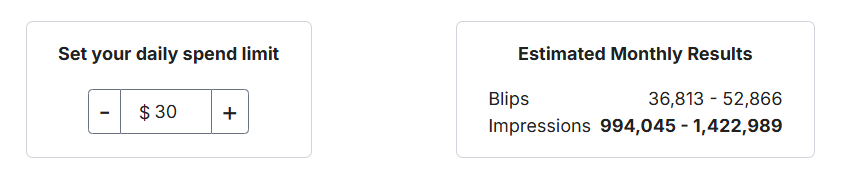
In University, Florida, set flexible budgets and pay only for your blips—ideal for shifting spend around USF events, hospital shifts, and Busch Gardens peaks.
University, Florida campaigns can use dayparting to hit 6–10 a.m. commuters, midday students, or late-night staff on Bruce B. Downs and I-75.
No contracts make it easy to test University, Florida traffic corridors, then scale what works near Moffitt, AdventHealth Tampa, and Temple Terrace.
Blip's real-time analytics show what resonates in University, Florida, so you can refine creative for students, healthcare workers, and weekend visitors fast.
Frequently Asked Questions About Billboard Advertising near University
How much does a billboard cost near University, Florida with Blip?
With Blip, you control exactly what you spend on University billboards by setting a daily budget that can be adjusted at any time. Each ad is a short “blip” on a rotating digital screen, so you only pay for the actual exposures you receive. Pricing for billboards near University, Florida is based on when and where your ads run in the University area, plus real-time advertiser demand, making it flexible for any budget.
Where can I place Blip billboards near University, Florida to reach students and commuters?
The University area is one of the most concentrated student and health-care corridors in the Tampa region, anchored by the University of South Florida and major medical complexes. With 59 digital billboards serving the University area from nearby Temple Terrace and Tampa, Blip can help you tap into a dense, mobile audience of students, healthcare workers, researchers, tourists, and long-term residents. Because many of these audiences travel from across Tampa, New Tampa, and Temple Terrace, those boards are strategically positioned along the real paths people drive every day to reach the University area.
What roads get the most traffic for University, Florida billboard advertising with Blip?
I‑275 near the Fowler Avenue and Fletcher Avenue interchanges carries roughly 150,000–170,000 vehicles per day, making it one of the busiest highway segments in the Tampa region. I‑75 near Fletcher Avenue and Fowler Avenue handles approximately 120,000–140,000 vehicles per day, and I‑4 just south of the University area carries 130,000–150,000 vehicles per day. Fowler Avenue, Fletcher Avenue, and Busch Boulevard also move large daily volumes and are key corridors serving USF, the medical complex, and nearby attractions.
When is the best time to run Blip ads near University, Florida?
The University area doesn’t move on a standard 9–5 schedule, since shift work at hospitals, evening classes, and tourism traffic spread activity across early mornings, late nights, and weekends. Morning hours are strong for inbound traffic to USF and hospitals, while afternoon peak and late night are especially useful for commuters, students, and overnight staff. Blip’s flexible scheduling lets you increase delivery during high-value windows and scale back during slower periods.
Who can Blip billboards in University, Florida reach besides USF students?
The University area is far from just a college town, and campaigns here can efficiently reach several distinct, high-value segments. In addition to students and young adults, you can reach healthcare and research professionals, families and local residents in Temple Terrace and New Tampa, and tourists and day visitors headed to Busch Gardens and Adventure Island. This mix makes the corridor valuable for everything from restaurants and healthcare clinics to housing, retail, and entertainment.
Do I need a contract to advertise with Blip near University?
No, Blip has no long-term contracts or minimum commitments. You can start, pause, or stop your campaign at any time.
How fast can I launch a billboard campaign with Blip near University?
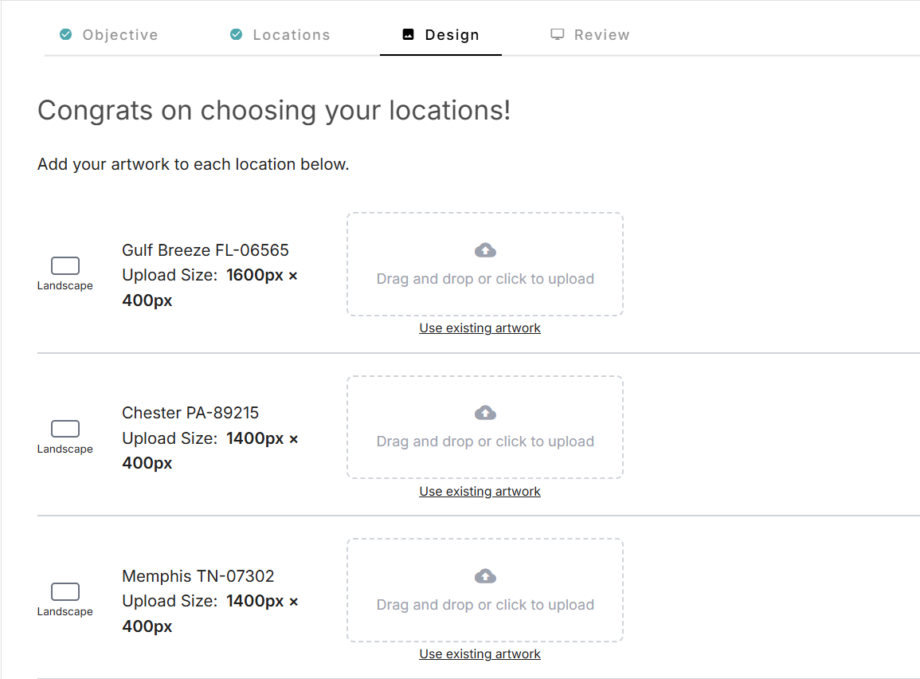
You can have your campaign live in minutes. Create a free account, select your locations, set your budget, upload your design, and start running once approved.
Where can I advertise with Blip near University?
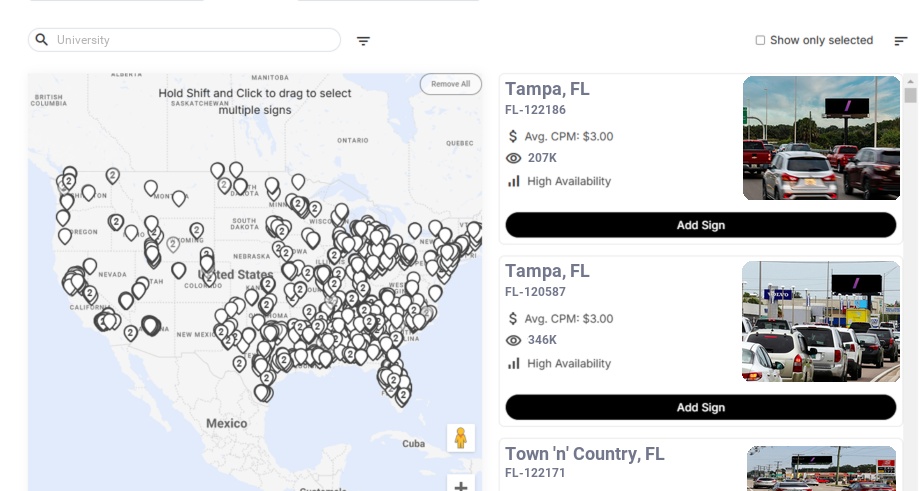
Blip has digital billboards near University. You can browse available locations on a map, choose the ones that fit your audience, and start advertising right away.
Still have questions? Launch a campaign in minutes — no contracts, no commitments.
Start Your CampaignUniversity Billboard Advertising Guide
The University, Florida area is one of the most concentrated student and health-care corridors in the Tampa region, anchored by the University of South Florida and major medical complexes. With 59 digital billboards serving the University area from nearby Temple Terrace and Tampa, we can help you tap into a dense, mobile audience of students, healthcare workers, researchers, tourists, and long-term residents moving along some of the busiest roads in Hillsborough County. If you’re looking for billboards near University activity centers that deliver consistent impressions, this corridor offers some of the strongest opportunities in the region.
Understanding the University, Florida Area
The University area is an unincorporated community just north of Tampa, centered around the University of South Florida’s Tampa campus. It sits at the crossroads of several major institutions and attractions and is one of the most efficient places in Tampa Bay to use University billboards to reach both local and regional audiences:
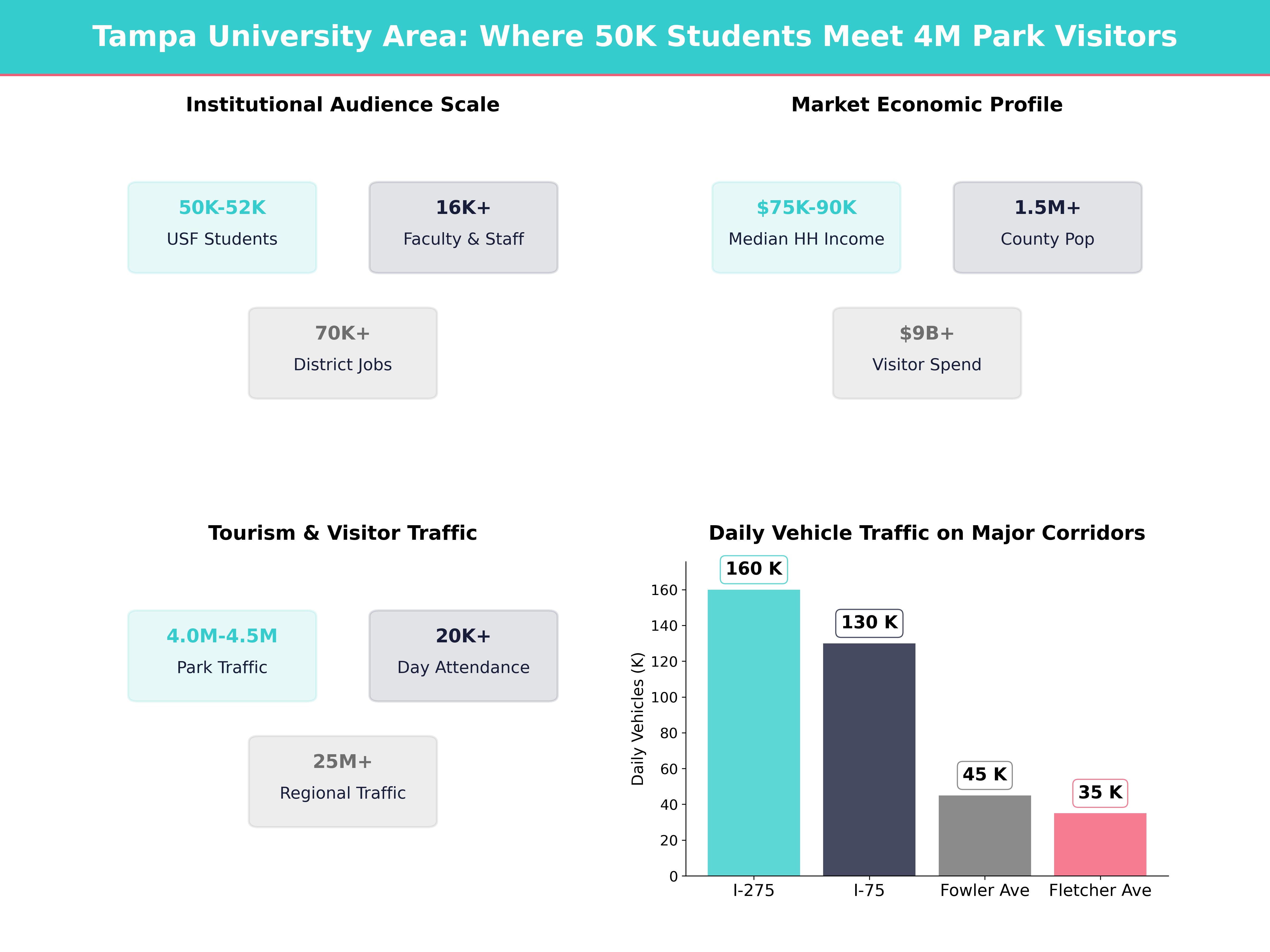
- University of South Florida (USF): USF enrolls roughly 50,000–52,000 students systemwide each year, with about 38,000 on the Tampa campus alone and more than 16,000 faculty and staff supporting teaching, research, and clinical operations. USF reports that about 90+ countries are represented in its student body, and over 40% of undergraduates are first-generation college students, creating a broad demographic mix for advertisers and strong justification for billboard advertising near University gateways and commuter routes.
- “Uptown” Innovation District: The Uptown / USF area AdventHealth Tampa, H. Lee Moffitt Cancer Center USF Health, and numerous tech and research firms. Local planning documents estimate more than 70,000 jobs concentrated in the broader Uptown district, with many in life sciences, healthcare, education, and professional services, all frequently exposed to University billboards as they commute.
- Tourism and entertainment: Busch Gardens Tampa Bay and Adventure Island Visit Tampa Bay
- Population density: The University CDP and adjacent neighborhoods host more than 40,000 residents in a compact area of roughly 6–7 square miles, yielding densities above 6,000 residents per square mile in some tracts. Many blocks feature large apartment complexes and student housing communities, with renter-occupancy rates that can exceed 80% in blocks closest to campus and the medical complex.
Because many of these audiences travel from across Tampa, New Tampa, and Temple Terrace, our 59 digital billboards in nearby Tampa and Temple Terrace are strategically positioned along the real paths people drive every day to reach the University area. This coverage makes billboard advertising near University employment centers, classrooms, and entertainment destinations both scalable and highly targeted.
For context, the City of Tampa now has more than 400,000 residents, and Hillsborough County overall exceeds 1.5 million people. That scale, combined with a concentrated cluster of institutions in the University/Uptown district, creates one of the most advertising-rich corridors in west-central Florida.
Who You Can Reach in the University Area
The University area is dominated by young adults but is far from “just a college town.” Campaigns here can efficiently reach several distinct, high-value segments with University billboards that appear where these audiences already travel every day:
1. Students and young adults
- USF’s median student age for undergraduates hovers around 21–22, while graduate and professional programs add thousands of students in their mid‑20s to mid‑30s. In nearby census tracts, the overall median age in some areas drops below 30, substantially younger than the countywide median of roughly 37–38.
- In student-heavy blocks, more than 60–70% of residents are renters, and a large share live within a 1–3 mile radius of campus. Many of the largest complexes sit along or just off Fowler Avenue, Fletcher Avenue, and 42nd/46th Streets, areas your billboards can touch multiple times per week for the same commuter.
- National surveys at commuter-focused public universities indicate 60–70% of students drive or rideshare to campus, and USF’s parking and transit usage patterns track closely with that range. That means tens of thousands of daily car trips into and out of the University area by students alone, ideal for billboard advertising near University entrances and parking hubs.
- USF reports that more than 6,000–7,000 degrees are awarded annually on the Tampa campus, continually refreshing the pool of early-career professionals, renters, and first-time buyers you can target.
Implications for advertisers:
- Emphasize price, convenience, and speed (“5 minutes from campus,” “student discount,” “walkable from Fowler & 50th”).
- Use bold, youth-oriented visuals and short copy tailored for quick drivers, who typically have only 5–8 seconds to absorb a digital billboard message on major arterials.
2. Healthcare & research professionals
With Moffitt Cancer Center AdventHealth Tampa, the James A. Haley Veterans’ Hospital USF Health clustered nearby, tens of thousands of high-income professionals flow into the area daily.
- Moffitt Cancer Center alone employs more than 8,000 team members and continues to expand its clinical and research footprint around the University corridor.
- AdventHealth Tampa lists more than 2,000 team members and 500+ physicians on its campus, with a large share commuting from outside the immediate neighborhood.
- The James A. Haley Veterans’ Hospital is one of the largest VA hospitals in the country, serving more than 100,000 veterans annually and employing thousands of clinical and support staff.
- Hillsborough County’s health care and social assistance sector employs more than 100,000 people across the county, and local economic reports identify the USF/Uptown corridor as one of the densest concentrations of those jobs.
- Many of these professionals commute from across Tampa, Wesley Chapel, Brandon, and Temple Terrace, passing digital billboards on I‑275, I‑75, I‑4, and high‑volume surface roads multiple times per week.
Implications:
- Focus on professional services, financial products, housing, and lifestyle brands aimed at mid- to high-income households. Median household incomes for many professional-heavy neighborhoods feeding the University area exceed $75,000–$90,000.
- Messaging can be more sophisticated, highlighting time savings, quality, and reputation (“Trusted by Tampa’s medical professionals,” “Preferred by USF Health clinicians”), especially when placed on billboards near University hospitals and medical offices.
3. Families and local residents
Neighborhoods in and around Temple Terrace, North Tampa, and New Tampa provide a stable residential base that supplements the student and worker population.
- Temple Terrace alone has more than 27,000 residents, with a median household income above $60,000 and homeownership rates in many tracts around 55–65%.
- Nearby New Tampa master-planned communities connect via Bruce B. Downs Boulevard and I‑75, with several ZIP codes showing median household incomes above $80,000–$90,000 and family sizes averaging 3 or more people.
- Surrounding ZIP codes mix working- and middle-class households, many with school-age children attending Hillsborough County Public Schools. District-wide, enrollment exceeds 190,000 students across more than 200 schools, indicating a large base of parents regularly driving school, activity, and sports routes.
- Local retail centers along Fowler, Fletcher, Bruce B. Downs, and Busch Boulevard serve these neighborhoods and are natural destinations for grocery, banking, healthcare, and weekend errands.
Implications:
- Strong opportunities for grocery, quick-service restaurants, childcare, healthcare, auto services, home services, and local attractions.
- Include family-oriented messaging and clear directions from major roads (“Off Fowler just east of I‑275,” “Near Temple Terrace City Hall”) to make it easy for busy parents and caregivers to find you, especially when your ads appear on billboards near University-area schools and parks.
4. Tourists and day visitors
Visit Tampa Bay reports tens of millions of visitors to the Tampa Bay region annually, with Busch Gardens and Adventure Island as top draws.
- Overnight visitors to Hillsborough County now exceed 10 million per year, with overall visitation—including day trips—topping 25 million. Average hotel occupancy in peak seasons often runs 70–80%, driving steady flows of out-of-area travelers along the University corridor.
- Busch Gardens and Adventure Island are among the most-searched and most-visited attractions in regional tourism reports. On peak weekends or holiday periods, combined daily attendance can top 20,000–25,000 guests.
- Many out-of-town visitors drive I‑4, I‑275, and I‑75 and stay in nearby hotels along Fowler, Busch, and Fletcher. Itineraries typically include 2–4 restaurant visits per day plus shopping and entertainment within a 5–10 mile radius of their hotel.
- Average visitor party sizes to Tampa Bay hover around 2.5–3 people, and average length of stay for overnight visitors is often 3–4 nights, giving brands multiple chances to be seen on digital billboards and then acted upon during the same trip.
Implications:
- Focus on simple wayfinding (“Next exit,” “2 miles ahead on Fowler”), recognizable logos, and high-contrast visuals that visitors can process quickly while navigating unfamiliar roads.
- Rotate creatives to highlight time-limited offers (“Tonight only,” “Weekend special,” “Show hotel key for discount”) that connect directly to the short-stay, high-spend nature of tourist traffic and make billboard advertising near University-area hotels and attractions highly actionable.
Where Traffic Flows: Key Roadways Serving the University Area
Our billboards in Temple Terrace and Tampa are positioned along corridors feeding directly into the University area. According to Florida Department of Transportation District 7 Hillsborough Transportation Planning Organization:
-
I‑275 (north Tampa corridor)
- Carries roughly 150,000–170,000 vehicles per day near the Fowler Avenue and Fletcher Avenue interchanges, placing it among the busiest highway segments in the Tampa region.
- Primary route for commuters from central and south Tampa to the University area and Uptown, with peak-hour volumes often exceeding 8,000–10,000 vehicles per direction.
-
I‑75 (east side of University area)
- Handles approximately 120,000–140,000 vehicles per day near Fletcher Avenue and Fowler Avenue.
- Feeds commuters from Wesley Chapel, New Tampa, and Brandon, as well as regional visitors coming from Orlando and southwest Florida. Certain segments show annual traffic growth rates of 2–4%, increasing impressions over time for billboards along this corridor.
-
I‑4 (east–west regional connector)
- Just south of the University area, I‑4 carries 130,000–150,000 vehicles per day between Plant City and downtown Tampa, including a heavy mix of tourists heading to Busch Gardens, Adventure Island, and USF events.
-
Fowler Avenue (SR 582)
- A key east–west arterial running along the south edge of USF, with many segments seeing 40,000–50,000 vehicles per day.
- Lined with retail, food, and services targeting students and visitors, and serving as the primary “front door” to Busch Gardens, USF, and multiple shopping centers, making it a prime corridor for billboards near University entrances.
-
Fletcher Avenue (CR 582A)
- Another crucial east–west connector, with daily volumes around 30,000–40,000 vehicles in segments near USF and I‑75.
- Strong commuter route for residents of Carrollwood, Lake Magdalene, and New Tampa accessing the University medical complex.
-
Busch Boulevard, Bruce B. Downs, 30th/40th/56th Streets
- Major north–south connectors funnelling traffic from residential areas into the campus and medical complex. Many segments carry 25,000–35,000 vehicles daily, mixing students, hospital staff, families, and tourists en route to Busch Gardens.
Because our 59 digital billboards sit within about 10 miles of the University area—primarily in Tampa and Temple Terrace—we can place your message where these streams converge, repeatedly hitting commuters on their way to and from the University area. Even conservative frequency models suggest that a daily commuter crossing two well-placed digital boards can see your message 10–20 times per week, turning University billboards into a reliable touchpoint for awareness and response.
For more detail on traffic patterns and planned improvements that may affect flows, you can monitor updates from Hillsborough County City of Tampa transportation department.
Timing Your Campaign Around the University Area’s Daily Rhythm
The University area doesn’t move on a standard 9–5 schedule. Shift work at hospitals, evening classes, and tourism traffic spread activity across early mornings, late nights, and weekends. Using Blip’s flexible scheduling, we can match your ads to the area’s real patterns and make billboard rental near University corridors more efficient.
Weekday patterns
-
Morning (6–10 a.m.):
- Heavy inbound traffic to USF, hospitals, and research centers, plus school drop-offs at nearby K‑12 campuses. Many arterial segments see 25–30% of their daily traffic in this window.
-
Best for:
- Coffee shops, breakfast concepts, transit services, parking apps.
- Healthcare, financial, and B2B services targeting professionals.
-
Midday (10 a.m.–3 p.m.):
- Students changing classes, shift changes at healthcare facilities (common hospital shift times are 7 a.m., 11 a.m., 3 p.m., and 7 p.m.), and visitors heading to Busch Gardens and Adventure Island.
-
Ideal for:
- Quick-service restaurants and lunch spots, as many workers and students have 30–60 minute breaks.
- Retail, salons, gyms, and medical offices that cater to flexible student and staff schedules.
-
Afternoon peak (3–7 p.m.):
- Outbound commuters, after-school activities, grocery and errand runs. PM peak often carries 30–35% of corridor daily volume, especially on I‑275 and I‑75.
-
Great for:
- Grocers, big-box retailers, auto service, family activities.
- Promotions for evening events, dining, and entertainment.
-
Late night (7 p.m.–1 a.m.):
- Student nightlife, late shifts, overnight medical staff changes, and visitor traffic back to hotels. USF’s large residential and near-campus population keeps corridors like Fowler and Bruce B. Downs active well after traditional business hours.
-
Perfect for:
- Bars, late-night dining, entertainment venues, delivery apps, and 24/7 services.
Weekends and event-based spikes
-
Game days & campus events
USF home football games (though played at Raymond James Stadium in Tampa), basketball at the Yuengling Center, graduations, job fairs, and large campus events can draw tens of thousands of attendees per event. Typical USF football home games attract crowds in the 20,000–30,000 range, with traffic spikes on I‑275, I‑4, and surface streets 2–3 hours before and after kickoff.- Use Blip’s day-of-week and time-of-day controls to increase bids during key arrival windows (2–4 hours before and after events).
- Monitor USF’s event calendar via USF’s official events listings and local coverage from outlets like the Tampa Bay Times and WFLA News Channel 8
-
Theme park peaks
Busch Gardens and Adventure Island see their heaviest traffic on weekends, holidays, and school breaks. Regional tourism data shows spring break, summer (June–August), and winter holidays as the highest-volume periods.- Schedule heavier delivery on Saturdays, Sundays, and during local school vacations listed on the Hillsborough County Public Schools calendar.
- Because a family visit can mean $200–$400 in combined ticket, food, and souvenir spending, even a small lift in visits from billboard-driven awareness can create a strong return.
With Blip, you can raise your budget and frequency during high-value windows and scale back during slower periods, instead of paying a flat, all-day rate. That flexibility is particularly valuable in a market where traffic volumes can swing 30–50% between off‑peak weekdays and peak event or holiday periods.
Creative Strategies That Resonate Near the University Area
In a fast-moving, youth-skewed market, your creative must be instantly clear and visually bold. Based on how drivers move near the University area and how they interact with University billboards:
1. Keep it ultra-simple
- Aim for 7 words or fewer on each creative. Readability studies for roadside digital displays show steep drop-offs in comprehension beyond 7–10 words.
- Use a single dominant image or icon, as drivers at 35–55 mph typically glance at a sign for 1–2 seconds.
- Make your logo large enough to be recognized at a glance (10–15% of the height of the creative is a useful rule of thumb).
Examples that work well near the University area:
- “$5 Student Lunch — Fowler & 30th”
- “Urgent Care 1 Mile Ahead — Open 24/7”
- “New Luxury Apartments — 3 Minutes from USF”
2. Location & proximity are your superpower
Because people identify strongly with USF and nearby roads, use hyper-local references:
- Mention landmarks: “By USF Tampa,” “Near Busch Gardens,” “Minutes from Moffitt,” “Close to James A. Haley VA.”
- Use directional cues from major roads: “Off I‑275 at Fowler,” “Just east of I‑75,” “Near Temple Terrace Golf & Country Club.”
- Studies of out-of-home effectiveness in urban markets indicate that adding distance cues (“2 miles ahead,” “Next exit”) can increase recall and response rates by 10–20% compared with brand-only messages, especially on billboards near University anchor destinations.
3. Speak to students and professionals differently
If you target both audiences, rotate creatives with Blip:
- Student-focused creative:
Emphasize price (“$10 haircut”), speed (“In and out in 20 minutes”), and convenience (“Walkable from campus”). Students often have limited budgets but high flexibility; national surveys show more than 60% of full-time undergraduates work part-time, making time-efficient services especially appealing. - Professional-focused creative:
Highlight quality, time savings, and trust (“Board-certified,” “Same-day results,” “Trusted by Tampa physicians”). Healthcare and research professionals are more likely to have higher incomes and tight schedules, responding well to solutions that save time or enhance work–life balance.
4. Visual style tips
- Use high-contrast color palettes (dark text on light background or vice versa). This is especially important on sunny Tampa days, when glare can reduce legibility. FDOT and industry guidelines often recommend contrast ratios of at least 70% between text and background for roadside signs.
- Avoid small details or thin typefaces—drivers on I‑275 may have only 3–5 seconds to read your message at highway speeds.
- Include a simple CTA: “Exit 51,” “Order Now,” “Book Today,” “Text USF to 12345.” Campaigns with explicit calls to action consistently outperform pure awareness messages in tracked redemptions and web visits.
Using Blip’s Tools to Target the University Area Smartly
With 59 digital billboards serving the University area, we can fine-tune where and when your ads appear so your billboard rental near University corridors is efficient and measurable.
1. Select boards that match your audience’s path
- To reach commuters from central Tampa:
Emphasize boards along I‑275 and east–west roads leading toward the University area (Fowler, Fletcher, Busch). Many central Tampa neighborhoods—Seminole Heights, Tampa Heights, downtown—feed directly into I‑275, giving you access to professionals, students, and service workers in a single corridor. - To reach Temple Terrace and northern suburbs:
Focus on boards in Temple Terrace and along Fowler, Busch, and Fletcher. Nearly all local traffic from Temple Terrace to USF and the medical centers uses these routes daily, giving you repeated impressions among a stable base of residents. - To reach regional visitors and long-distance commuters:
Add boards along I‑4 and I‑75 that feed into Tampa and the University area. For example, I‑4 carries large volumes of visitors coming from Orlando’s theme parks, while I‑75 moves traffic from Wesley Chapel, Pasco County, and Brandon/Riverview.
We can help you build a board mix that mirrors your customers’ likely drive patterns and balances high-traffic interstate locations with more targeted surface-street placements near your business.
2. Daypart and day-of-week targeting
- Restaurants and nightlife:
Emphasize late afternoon through late night, Thursday–Sunday. Industry data shows restaurant and bar sales often peak Thursday–Saturday, with Sunday brunch and early dinner as a strong secondary period. - Healthcare and professional services:
Prioritize weekday mornings and early evenings when commuting flows are strongest and professionals are thinking about errands, appointments, and financial decisions. - Retail and attractions:
Focus on weekends and late afternoons when families and visitors are most active. Retail foot traffic data typically shows a 20–40% bump on Saturdays compared with midweek days in similar urban corridors.
Because you only pay for the “blips” (individual ad plays) you choose, you can run multiple experiments across days and time blocks to see what generates the most results, then shift spending toward the highest-performing windows.
3. Test and iterate multiple creatives
The University area’s diversity makes it ideal for A/B testing:
- Run two or three versions of your creative simultaneously—one student-focused, one professional-focused, one family/tourist-focused.
-
Use short URLs, unique promo codes, or different phone numbers to track which creative produces the most responses. For example:
- “USF10” for students,
- “MED15” for healthcare workers,
- “FAMILY20” for weekend visitors.
- Even a 10–20% performance difference between creatives can translate into meaningful revenue gains when spread over thousands of impressions per day per board.
Over time, shift more of your budget toward the versions that perform best, and refresh underperforming messages every 4–8 weeks to avoid creative fatigue and keep your billboard advertising near University routes feeling fresh and relevant.
Campaign Ideas Tailored to the University Area
To spark your planning, here are concrete campaign concepts aligned with local patterns and suited to billboards near University corridors:
Local restaurant near campus
- Target audience: USF students and staff, hospital employees, nearby residents.
- Board selection: High-traffic boards in Tampa and Temple Terrace along routes leading to Fowler and Fletcher, plus select I‑275 boards that capture inbound lunch and dinner traffic.
- Schedule: Heavier ad delivery 10 a.m.–2 p.m. and 4–9 p.m., Monday–Friday; expanded hours on weekends and during home football games, major concerts, or theme-park peak seasons.
-
Creative:
- “$8 Student Combo — Show USF ID — 1 Mile from Campus”
- “Nights ’Til Midnight — Next to Busch Gardens Gate”
-
Measurement:
- Unique code like “USF8” redeemable only in-store.
- Track check sizes for billboards-coded orders vs. non-coded orders to quantify lift.
Healthcare clinic or urgent care
- Target audience: Residents, students, and medical workers.
- Board selection: Corridors feeding the University area and nearby residential zones—especially Fowler, Fletcher, Bruce B. Downs, and I‑275/I‑75 interchanges.
- Schedule: Early mornings (6–10 a.m.), late afternoons (3–7 p.m.), plus weekend coverage when urgent care demand typically spikes.
-
Creative:
- “Urgent Care — Open 7 Days — Fowler & 56th”
- “Walk-In Clinic Near USF — Most Insurance Accepted”
-
Measurement:
- “Mention ‘FOWLERCARE’ for $0 sports physical” or similar limited-time offer.
- Track new patient registrations by ZIP code to see concentrations from University-area neighborhoods.
Apartment community or student housing
- Target audience: USF students, hospital and research staff, relocating professionals.
- Board selection: University-bound routes from across Tampa and I‑75 corridor, plus boards near Tampa International Airport
- Schedule: Heaviest during leasing seasons (March–August and again in December–January), with consistent daytime presence and added evening rotation when apartment tours are most common.
-
Creative:
- “Now Leasing — 2 Min from USF — Tour Today”
- “Luxury Apts — Pool, Gym, Pet Friendly — Exit at Fowler”
-
Measurement:
- Vanity URL like “YourPropertyNameUSF.com” plus “Mention ‘BILLBOARD’ for Application Fee Credit.”
- Track call volume and web leads during heavy vs. light billboard weeks to estimate cost per lead and refine your billboard rental near University tactics.
Local attractions and entertainment
- Target audience: Tourists, weekend visitors, students, families.
- Board selection: I‑4, I‑75, and I‑275 billboards serving visitors entering Tampa, plus Temple Terrace boards near Busch Gardens routes and University-area hotels.
- Schedule: Weekends, holidays, and evenings, with boosted budgets during spring break, summer, and winter holiday weeks highlighted on Visit Tampa Bay and local event calendars.
-
Creative:
- “Tonight: Live Music Near USF — Free Parking”
- “Family Fun 5 Minutes from Busch Gardens — Tickets Online”
-
Measurement:
- Use QR codes tailored for visitors to buy tickets on mobile.
- Offer “Show today’s Busch Gardens ticket for 10% off” and track same-day redemptions.
Integrating Data and Measurement
To make your University area campaign accountable:
-
Use localized landing pages
Create a page specifically for the University area (e.g.,/university-flor/usf) and feature it on your creatives. Compare traffic to this page against your baseline using web analytics, and align with impression counts from your Blip dashboard to estimate click-equivalent rates. -
Assign trackable offers
- “Show this code: USF15 for 15% off”
- “Text ‘USF’ to [short code] for a free appetizer”
This lets you attribute redemptions directly to your billboard exposure and measure response rates. For example, if 1,000 people see an offer per day on a high-traffic board and 10–20 redeem per week, you can calculate an approximate conversion rate of 0.1–0.3% and refine from there.
-
Watch timing correlations
Align your analytics with campaign timings. If you ramp up your budget during weekday commute hours, watch for matching spikes in phone calls, website visits, or foot traffic in those same windows. Even a 5–10% lift during targeted hours can translate into substantial incremental revenue when multiplied across high-volume weeks. -
Monitor local trends and events
Use local news sources like the Tampa Bay Times, WFLA News Channel 8 FOX 13 Tampa Bay Bay News 9 to stay on top of major events, road construction, or USF-related news that may change traffic flows—and adjust your flighting accordingly. For example:- Major road projects can temporarily shift 10–30% of traffic from one corridor to another.
- Weather events, particularly summer thunderstorms or tropical systems, can alter theme-park and beach traffic dramatically over a few days.
By understanding how students, professionals, residents, and visitors move through the University area—and by using our 59 digital billboards in nearby Tampa and Temple Terrace strategically—we can build campaigns that deliver meaningful, measurable impact for your brand. With flexible budgeting, precise scheduling, and data-informed creative, digital billboards near the University area can become a powerful, always-on engine for awareness and growth in one of Tampa Bay’s most dynamic, high-traffic corridors, giving you a smart, measurable approach to billboard advertising near University anchors.