Billboards in Melbourne, FL
No Minimum Spend. No Long-Term Contracts. Just Results.
Trusted by Leading Brands


Billboard advertising
in Melbourne has never been easier
How much is a billboard in Melbourne?
Why Choose Blip for Billboard Advertising in Melbourne
Blip lets you launch Melbourne billboards online in minutes, reaching I-95 commuters, beach-bound US-192 traffic, and Space Coast visitors.
Set flexible daily budgets in Melbourne and Blip stays within them—ideal for testing causeway, US-1, or Pineda traffic without long commitments.
Daypart your Melbourne ads for launch days, school commutes, or weekend beach rushes so your message hits the right drivers at the right time.
Get real-time analytics on Melbourne campaigns and shift spend fast when rocket launches, tourism spikes, or downtown event traffic surges.
Use Blip's creative tools to build bold Melbourne ads for sunny causeways, aerospace jobs, or healthcare offers—clear, local, and road-ready.
Frequently Asked Questions About Billboard Advertising in Melbourne
How much does a billboard cost in Melbourne, Florida with Blip?
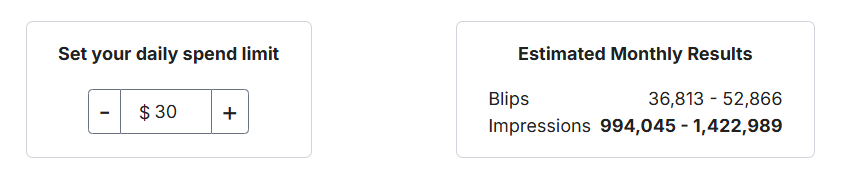
With Blip, you can start advertising on Melbourne billboards with any budget, because you decide your own daily spend and Blip automatically keeps your campaign within that limit. Each ad is a short, 7.5 to 10-second “blip,” and you only pay for the blips you receive, similar to pay-per-click online ads. The price of individual blips on billboards in Melbourne, Florida varies based on when and where you choose to show your ad and on advertiser demand, so you stay in control as conditions change.
Where can I advertise with Blip in Melbourne, Florida?
I-95 through Melbourne typically sees 100,000–130,000 vehicles per day near key exits like US-192 and Pineda Causeway, making it ideal for broad-reach campaigns. US-1, US-192, Eau Gallie Causeway, and Pineda Causeway all carry substantial traffic and serve different travel patterns. Boards near Downtown Melbourne and the Eau Gallie Arts District also fit local, event-driven messaging.
When is the best time to run Melbourne, Florida billboard ads with Blip?
Melbourne’s demand patterns are highly seasonal, driven by tourism, launches, and retirees. Winter from November to March is especially strong because snowbirds swell the population and visitor numbers are typically strongest during this period. Weekend and evening traffic also spikes on east-west beach routes and near shopping and dining districts.
What kinds of businesses should use Melbourne, Florida billboards with Blip?
This market creates strong demand for home services, healthcare, financial and retirement planning, B2B and professional services, tourism, attractions, dining, events, education, and workforce recruitment. Melbourne’s mix of aerospace and defense, healthcare, tourism, and retirees means advertisers can reach both established locals and visitors. Digital billboards let us slice these audiences by location, time, and season, aligning ads with who is most likely on the road at a given moment.
Why do Melbourne, Florida billboards work well for visitors and locals?
Most visitors use I-95 coming from Orlando, Daytona, Miami, or Jacksonville, or use US-192, Eau Gallie, or Pineda Causeways heading to beaches and hotels. Locals are more likely to use US-1 and parallel collectors like Babcock St and Wickham Rd for work and school commutes. This makes it possible to tailor messages for tourists and short-stay guests on one set of roads and trust-building, repeat-business messaging for locals on another.
Do I need a contract to advertise with Blip in Melbourne?
No, Blip has no long-term contracts or minimum commitments. You can start, pause, or stop your campaign at any time.
How fast can I launch a billboard campaign with Blip in Melbourne?
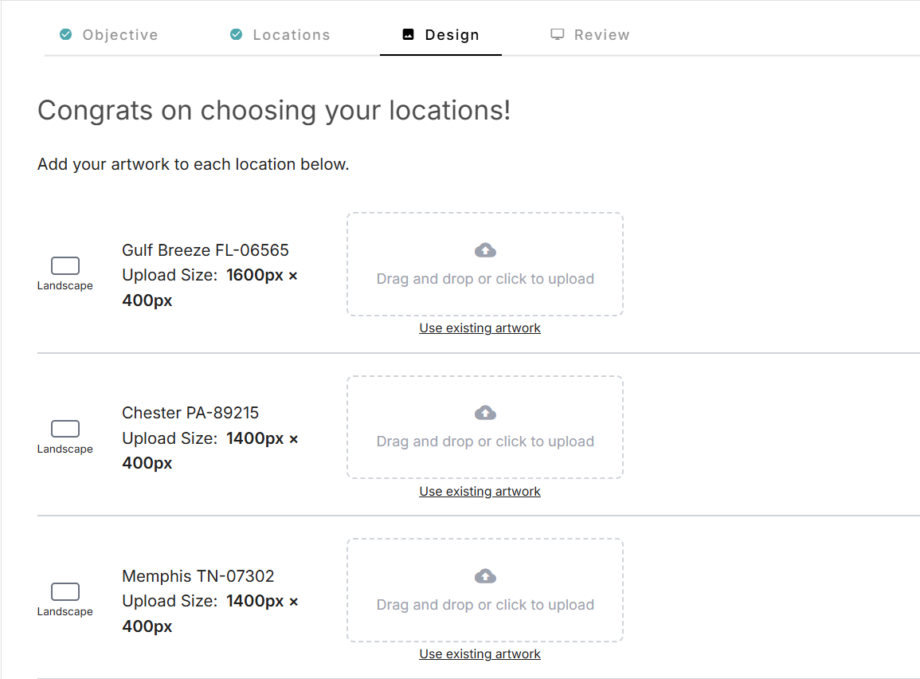
You can have your campaign live in minutes. Create a free account, select your locations, set your budget, upload your design, and start running once approved.
Where can I advertise with Blip in Melbourne?
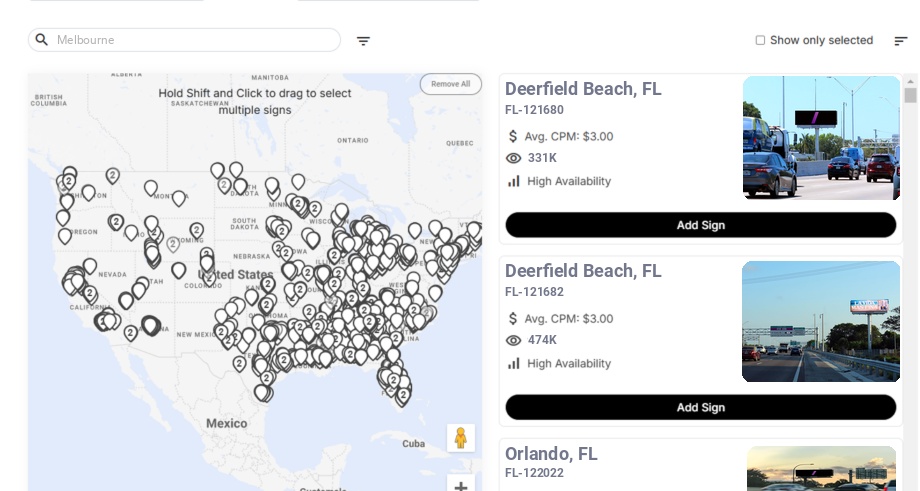
Blip has digital billboards in Melbourne. You can browse available locations on a map, choose the ones that fit your audience, and start advertising right away.
Still have questions? Launch a campaign in minutes — no contracts, no commitments.
Start Your CampaignMelbourne Billboard Advertising Guide
Melbourne, Florida sits at the heart of Florida’s Space Coast, blending aerospace, tourism, retirees, and growing tech and healthcare sectors. When we plan digital billboard campaigns here, success comes from understanding who is on the roads, when they’re traveling, and what they care about—from rocket launches to beach weekends and school commutes. Below, we break down how to use Melbourne’s unique patterns to build highly targeted, effective campaigns with digital billboards and maximize the value of Melbourne billboards for local and regional advertisers.
Understanding the Melbourne Market
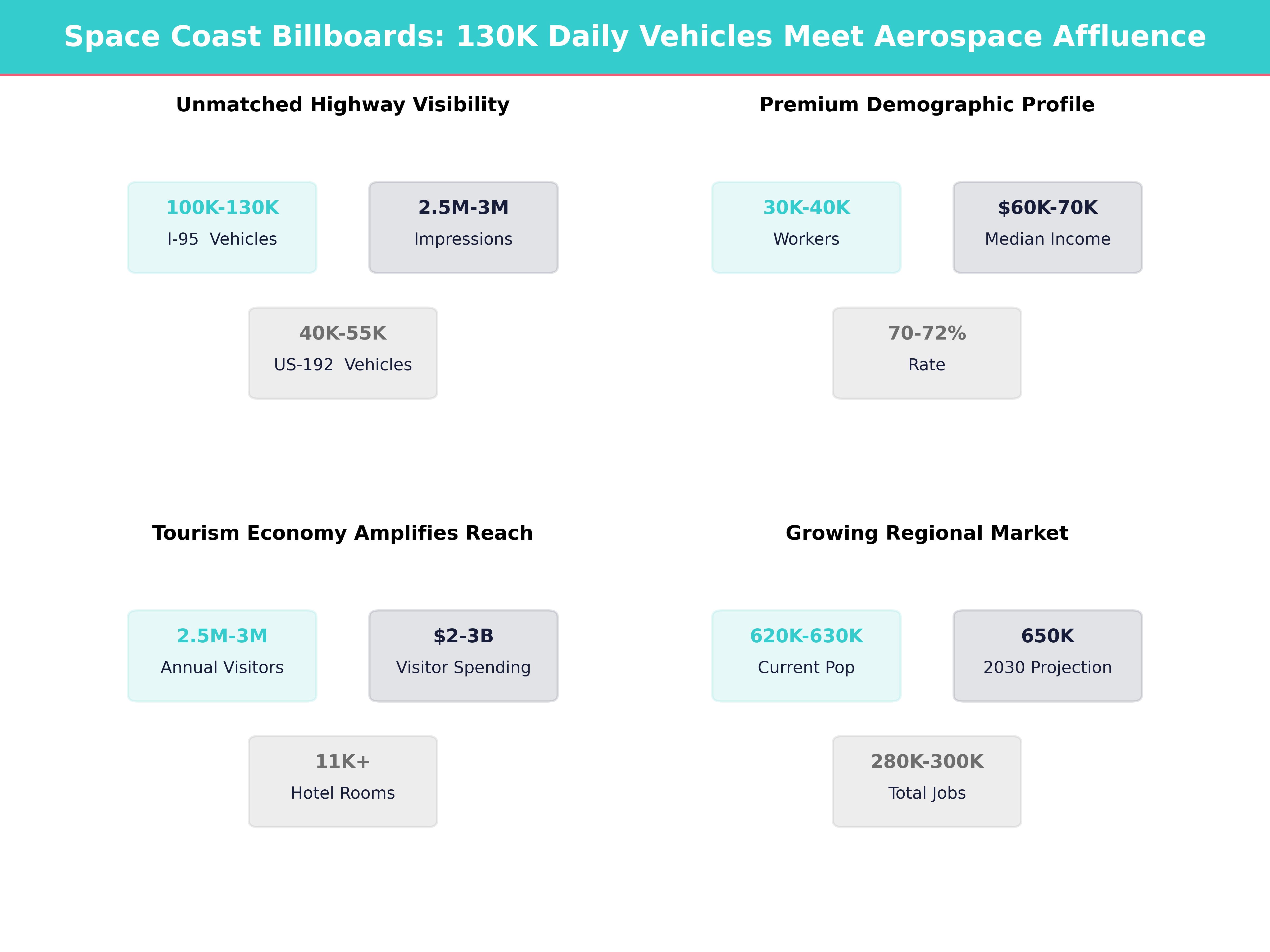
Melbourne itself has about 84,000–86,000 residents (the 2020 Census counted 84,678), but our real advertising footprint is the broader Brevard County area, which has roughly 620,000–630,000 residents. The City of Melbourne and Brevard County Government
Economically, Brevard County supports more than 280,000–300,000 jobs, with an unemployment rate that has recently hovered around 3–4%, often tracking below the statewide average. Median household income countywide is in the mid–$60,000s to low–$70,000s, while many aerospace and defense households earn substantially more. Owner-occupied housing rates sit around 70–72%, signaling a stable, long-term resident base that invests in homes, vehicles, and local services—exactly the kind of audience that Melbourne billboard advertising reaches repeatedly over time.
The region is economically and culturally defined by:
- Aerospace & defense: Major employers like L3Harris Technologies, Northrop Grumman, and companies tied to nearby Kennedy Space Center and Cape Canaveral Space Force Station
-
Education:
- Florida Institute of Technology (Florida Tech) in Melbourne enrolls around 7,000 students across on-campus and online programs and reports students from more than 100 countries, making it a diverse, globally connected audience.
- Eastern Florida State College reports about 13,000–15,000 students across its campuses, including Melbourne, with more than 100 degree and certificate programs feeding local employers.
- Healthcare & services: Systems like Health First and Holmes Regional Medical Center
- Tourism & hospitality: The Space Coast welcomes approximately 2.5–3 million visitors per year, based on data reported by the Space Coast Office of Tourism, filling Brevard’s 11,000+ hotel rooms and a rapidly growing short-term rental inventory. Recent tourism reports from the Tourism Development Council
- Retirees and “snowbirds”: Brevard’s median age is roughly 45–47, several years above the U.S. average. In Melbourne specifically, the median sits around 42–43. Older adults (55+) make up roughly one-third of county residents, and seasonal “snowbird” residents can add another 5–10% to the winter population in coastal neighborhoods. That means we are often speaking to an older, more established audience with disposable income and higher utilization of healthcare, financial, and home services.
This mix creates strong demand for:
- Home services, healthcare, financial and retirement planning
- B2B and professional services targeting engineers and technical staff
- Tourism, attractions, dining, and events
- Education and workforce recruitment
Digital billboards let us slice these audiences by location, time, and season, aligning ads with who is most likely on the road at a given moment. Done well, Melbourne billboard advertising can function as an always-on backbone for these sectors, with digital placements supplementing or rotating alongside static Melbourne billboards for maximum reach.
Key Travel Corridors and Traffic Patterns
To choose boards and schedules intelligently, we look at where the traffic actually is. The Florida Department of Transportation (FDOT) District 5
- Interstate 95 (I-95) through Melbourne typically sees 100,000–130,000 vehicles per day (annual average daily traffic, or AADT) near key exits like US-192 and Pineda Causeway. In some segments of Brevard, peak averages can exceed 140,000 vehicles per day.
- US-1 (Harbor City Blvd) often carries 30,000–45,000 vehicles per day in segments running through and just north/south of downtown Melbourne.
- US-192 (New Haven Ave / Melbourne Cswy), the main east–west route to the beach, handles about 40,000–55,000 vehicles per day as it crosses the Indian River Lagoon into Indialantic.
- Eau Gallie Causeway (SR 518) and Pineda Causeway (SR 404) each carry roughly 30,000–50,000 vehicles per day, connecting mainland residential/office zones with beach communities.
- Busy north–south arterials like Wickham Road and Babcock Street commonly see 25,000–40,000 vehicles per day in key commercial segments, feeding traffic to retail centers such as Melbourne Square
You can explore roadway volumes from FDOT via the District 5 traffic data tools City of Melbourne Public Works & Utilities and Brevard County Public Works Space Coast Transportation Planning Organization
How this informs billboard strategy:
- I-95 boards are ideal for broad-reach campaigns: regional retailers, healthcare networks, universities, auto dealers, and any brand trying to reach both locals and through-travelers. A single I-95 board can easily rack up 2.5–3 million vehicle impressions per month based on AADT.
- US-1 and causeway boards excel at intent-based messaging: beach trips, dining, local attractions, car washes, marine/boat services, and last-mile “turn now” instructions, reaching hundreds of thousands of monthly trips focused on local destinations.
- US-192 eastbound is perfect for vacationers and weekenders heading to the beaches and barrier island; westbound catches them returning hungry, tired, and more likely to stop for dining, shopping, or lodging. On peak summer Saturdays and launch days, daily trip counts on this bridge corridor can surge well above typical AADT.
- Boards near Downtown Melbourne Eau Gallie Arts District (EGAD)
With Blip’s flexibility, we can prioritize impressions on boards that align with each objective—broad exposure vs. localized calls-to-action—making it easier to tailor billboard rental in Melbourne to your exact budget and audience goals.
Seasonal & Weekly Rhythms in Melbourne
Melbourne’s demand patterns are highly seasonal, driven by tourism, launches, and retirees. Hotel occupancy, visitor spending, and restaurant sales often swing 15–30% between off-peak and peak months, according to the Space Coast Office of Tourism. Understanding these rhythms helps you time Melbourne billboard advertising so it coincides with your highest-value prospects.
Winter (November–March)
- Snowbirds from the Midwest and Northeast swell the population notably, especially January–March. In some coastal neighborhoods, seasonal residents can increase occupancy by 20–30% compared to summer.
- Visitor numbers reported by the Space Coast Office of Tourism are typically strongest during this period, contributing a disproportionate share of annual tourism revenues—often more than one-third of yearly visitor spending in just five months.
- Average daytime highs in the low 70s and relatively dry weather make this prime time for golf, fishing, and outdoor dining, all categories that respond well to billboard prompts.
-
Strategy implications:
- Promote healthcare, financial services, home improvement, and real estate to capture seasonal residents upgrading or relocating; surveys of Florida snowbirds show that 15–20% are considering a permanent move within a few years.
- Use simple, high-contrast creative tailored to older audiences: larger fonts, clear benefits, and strong phone or website CTAs, knowing that 55+ audiences tend to convert more via phone calls than QR codes.
Spring (March–May)
- Spring break brings a spike in younger visitors and families; school calendars from Brevard Public Schools help pinpoint peak weeks when student absences and family travel rise sharply.
- Hotel and vacation rental occupancy often stays 5–10 percentage points above annual averages during peak spring-break weeks.
- Florida Tech and Eastern Florida State have academic calendars with finals and graduation periods, ideal for employment recruiting, housing, and moving services. Combined, local colleges graduate thousands of students each year—an attractive pool for recruiters.
-
Strategy implications:
- Emphasize attractions, entertainment, and family activities in March–April, when families with school-age children are actively spending on outings.
- Run recruitment, graduate programs, and relocation ads late April–May as students and families make summer decisions, capitalizing on a surge in job applications and leasing activity.
Summer (June–August)
- Fewer snowbirds, but steady family tourism to beaches and space-related attractions. The Space Coast has recently logged 80–100+ rocket launches per year from Cape Canaveral, and many summer visitors plan trips around launches.
- Daily beach and causeway traffic rises on weekends; FDOT and local law enforcement often report noticeable congestion spikes on US-192 and SR 518 during holiday weekends like Memorial Day and Fourth of July.
- Higher volumes of local youth and service workers commuting to seasonal jobs, with some beach-area businesses increasing staffing by 30–50% compared to shoulder seasons.
-
Strategy implications:
- Promote theme-park-adjacent trips, water activities, surf shops, ice cream, and casual dining to visitors making multiple trips between hotels and beaches using eye-catching Melbourne billboards on causeways and beach approaches.
- Target morning and late-afternoon commuting windows to reach hospitality and service workers with recruitment, paycheck advance, and convenience offers (fast food, gas, financial services).
Fall (September–October)
- Shoulder season with more locals on the roads and fewer tourists; occupancy and visitor counts may dip 10–20% from peak winter months.
- Back-to-school routines stabilize traffic patterns along school corridors, with Brevard Public Schools serving roughly 70,000–75,000 students across the county.
- Hurricane-season considerations can influence campaigns for insurance, home services, roofing, and storage. Insurance and roofing inquiries typically spike 50–100% in the weeks immediately before and after notable storms.
-
Strategy implications:
- Focus on services for homeowners and residents: healthcare checkups, home maintenance, insurance, and education.
- Use more locally oriented messaging and community-based calls-to-action, highlighting longevity (“Serving Brevard for 25 years”) and storm readiness.
Across all seasons, weekdays tend to show more consistent commuter traffic, while weekends spike along east–west beach routes and near shopping / dining districts. Saturday can rival or exceed weekday volumes on retail corridors like Wickham Road and US-192 near Melbourne Square, making weekend-only flighting on billboards in Melbourne a high-value tactic for certain verticals.
Daily Commuter and Lifestyle Dayparts
Understanding how people move through Melbourne during the day lets us schedule creative more intelligently. Regional commuting data show that a majority of workers (often 70%+) drive alone to work, with typical one-way commutes of 20–30 minutes, translating into hundreds of thousands of daily vehicle trips within greater Melbourne that can be influenced by well-placed Melbourne billboards.
Morning (6–10 a.m.)
- Heaviest inbound commuting to Melbourne’s employment centers: downtown, airport/industrial zones, and aerospace campuses near I-95 and Wickham Road. Large employers along the I-95 corridor alone account for tens of thousands of inbound trips each weekday.
- Healthcare shifts, defense contractors, and tech employees dominate this window, along with school drop-offs on days when Brevard schools are in session.
-
Best for:
- B2B services, tech recruiting, professional certifications, coffee and quick breakfast offers, urgent care and healthcare awareness.
- Time-limited offers (“Today only,” “Before 10 a.m.”) that match commuter behavior.
Midday (10 a.m.–3 p.m.)
- Mix of retirees, tourists, stay-at-home parents, and off-shift workers. This segment includes a high share of discretionary trips: shopping, errands, medical appointments, lunch, and tourism.
- Medical and professional offices report their highest appointment volumes between 10 a.m. and 2 p.m., aligning perfectly with billboard impressions in this window.
-
Best for:
- Retail, medical/dental providers, banks, real estate, and senior-focused services.
- Messaging with specific appointment CTAs: “Same-day appointments,” “Walk-ins welcome,” “Call now for a 1 p.m. slot.”
Afternoon Peak (3–7 p.m.)
- After-school and end-of-work traffic: parents, professionals, students.
- Strong flows along corridors near schools and residential areas, especially along Eau Gallie Blvd, US-192, and Wickham Road; these segments often reach or exceed daily AADT averages during this window.
-
Best for:
- Family dining, grocery, extracurricular programs, fitness centers, entertainment venues.
- Promotions tied to the same evening: “Kids eat free tonight,” “Practice-night dinner specials,” “After-school tutoring – call now.”
Evening (7–11 p.m.)
- Traffic tapers but still significant along restaurant, bar, and entertainment corridors, particularly near downtown and the beaches. Weekend evenings can remain busy until 10–11 p.m., especially during events and launch nights.
-
Best for:
- Nightlife, events, movie theaters, bars and breweries, live music at venues near Downtown Melbourne and EGAD.
- “Tonight only” offers, ticket sales, and post-event promotions (“Show your wristband for 10% off”).
Digital billboard scheduling lets us concentrate budget into the dayparts that match our target customers, rather than paying for all-day visibility, which is one of the core advantages of digital Melbourne billboard advertising compared with static formats.
Creative That Resonates on the Space Coast
Melbourne’s identity is tied to space, the ocean, and a relaxed but professional lifestyle. Our creatives perform best when they tap into that local flavor while staying clear and legible at highway speeds.
- Leverage Space and Technology Themes
- Aerospace workers and tech professionals respond well to “smart,” forward-thinking visuals and headlines. With more than 30,000–40,000 high-tech workers across the Space Coast, this is a sizable niche audience.
- Consider subtle space or innovation motifs—rockets, satellites, circuit lines, or “future-focused” messages—for recruiting, B2B, and STEM education campaigns.
- Tie major rocket launches (tracked by local outlets like Florida Today) to timely messages: “Launch your career,” “Countdown to savings,” etc. Launch coverage pages on Florida Today routinely draw large local and visitor audiences, amplifying the cultural impact of your themed campaigns and reinforcing the relevance of Melbourne billboards near viewing areas.
- Embrace Coastal and Outdoor Imagery
- Beach scenes, surf culture, fishing, and boating visuals feel native here; the Space Coast boasts 72 miles of coastline, and a significant share of visitors list “beaches” as their top reason for travel.
- For tourism, dining, and lifestyle brands, pair high-saturation images of water or sunset with one central offer (e.g., “Fresh seafood 10 minutes ahead – Exit 180”).
- Outdoor recreation is big business locally, with boating and fishing expenditures in the tens of millions of dollars annually—ideal verticals for marine services, outfitters, and charter businesses.
- Design for Mixed Ages
Because Melbourne skews older but also has a sizable student and young-family population:
- Use large text (minimum 18–24 inch letter height at printed size; on-screen this translates to very bold, simple typography). Industry readability tests show that larger letter heights can increase comprehension at 60–70 mph by 20–30% compared to crowded designs.
- Limit each creative to 7 words or fewer, plus logo/URL/QR code, which aligns with best-practice recommendations for drivers viewing a board for 3–6 seconds.
- High color contrast: dark text on light backgrounds or vice versa for readability in bright sun, which is critical in a market that averages 230+ sunny days per year.
- Use Clear Local References
- Mention well-known landmarks: “Off US-192,” “Near Melbourne Square,” “5 minutes from MLB Airport.” The Orlando Melbourne International Airport
-
Consider directional cues that align with major road flows:
- “Next right on US-1”
- “2 exits ahead on I-95”
These “wayfinding” messages work especially well on causeways and US-192, where destination traffic is high and last-minute decisions (where to eat, fuel, or shop) are common, and they increase the utility of billboard rental in Melbourne for tourism and hospitality brands.
Aligning Campaigns with Local Events and News
Melbourne and the broader Space Coast have an active event calendar and frequent rocket launches, giving us frequent hooks for short, high-impact campaigns.
Key local information hubs include:
- City of Melbourne Events Calendar
- Space Coast Office of Tourism – Events
- Local coverage from Florida Today
- Regional listings via the Melbourne Regional Chamber
Ways to capitalize:
- Rocket Launch Windows: The Space Coast has recently averaged one or more launches per week, with marquee missions drawing tens of thousands of spectators to beachside viewing spots and parks. We can run 1–3 day campaigns around high-profile launches promoting viewing locations, bars, restaurants, lodging, and branded “watch parties.” On major launch days, causeway and beach-approach traffic can swell by 20–40% over typical volumes, dramatically boosting the visibility of digital billboards in Melbourne along those approach routes.
- Downtown and EGAD Festivals: Art festivals, food and music events, and holiday parades bring thousands downtown; single-day signature events can draw 5,000–20,000+ attendees. Short campaigns directing traffic to parking, ticketing, or event sponsors can dramatically lift foot traffic and same-day sales. Check the City of Melbourne EGAD
-
Sports and School Calendars:
- High school football, Florida Tech athletics, and youth sports tournaments increase evening and weekend traffic near schools and complexes. A single tournament weekend can attract hundreds to several thousand visiting families.
- We can support local sponsorships or push fan-focused offers (“Show your ticket for 10% off tonight”), synchronizing flight dates with schedules published by Brevard Public Schools and local colleges.
- Storm & Hurricane Season: When storms threaten, campaigns for insurance, roofing, generators, and storage can pivot quickly with messaging like “Storm damage? Call us first.” Digital boards allow rapid creative swaps as conditions change, aligning with emergency information shared via Brevard County Emergency Management melbournefl.org.
Segmenting by Audience: Locals vs. Visitors
A powerful feature of digital billboards is the ability to tailor messages based on likely audience mix.
Visitor-Focused Messaging
Most visitors use:
- I-95 coming from Orlando, Daytona, Miami, or Jacksonville
- US-192, Eau Gallie, or Pineda Causeways heading to beaches and hotels
- Areas around Orlando Melbourne International Airport (MLB), which served nearly 1 million passengers in 2023 according to MLB Airport
In addition, cruise passengers traveling to and from Port Canaveral (which processes 4–5 million passengers per year) often use I-95 and Space Coast highways, creating additional transient traffic that can be captured before or after cruises with targeted Melbourne billboard advertising on those corridors.
For tourists and short-stay guests:
- Emphasize distance and convenience: “Oceanfront rooms 5 min ahead,” “Next exit for seafood & cocktails,” “Free parking – 2 miles ahead on US-1.”
- Use visual urgency: limited-time offers, “Tonight only,” or “This weekend,” knowing that many visitors stay 3–5 nights and make frequent last-minute decisions.
- Consider multi-language support (e.g., English + small Spanish line) depending on your audience, especially if you attract international visitors flying into MLB or nearby Orlando.
Local & Commuter-Focused Messaging
Locals are more likely to use:
- US-1 and parallel collectors (Babcock St, Wickham Rd)
- Neighborhood access routes connecting to I-95
- School and work commute paths highlighted by the Space Coast TPO
For them:
- Promote ongoing services: primary care, dentists, legal services, auto repair, home services, and financial institutions. Many of these categories rely on repeat business and referrals—exactly what high-frequency billboard exposure supports.
- Use trust-building cues: “Serving Melbourne since 1985,” “Rated #1 in Brevard,” local awards and affiliations (chamber memberships, community sponsorships). Local surveys often show that 60–70% of residents prefer doing business with locally owned or long-established firms when given a choice.
- Experiment with sequence messaging on multiple boards (“Problem – Solution – Call us”) along a known commute path. Sequential views can increase ad recall by 20–30% compared to a single exposure.
Sector-Specific Strategies We Recommend
Below are practical playbooks for major advertiser categories in Melbourne, showing how to get more out of billboard rental in Melbourne while keeping campaigns tightly focused on business outcomes.
Healthcare & Wellness
Healthcare is one of Brevard’s largest employment sectors, and residents 65+ often account for 40% or more of visits to hospitals and clinics.
- Focus corridors: I-95 near major exits, US-192, US-1 near hospital clusters, and routes leading to Holmes Regional Medical Center and other Health First facilities.
- Timing: Weekday mornings and midday, plus early evenings for urgent care, aligning with peak appointment and walk-in volumes.
-
Messaging:
- “Urgent care – check-in online in minutes”
- “New patients welcome – same-week appointments”
- Highlight specialties in demand among older populations: cardiology, orthopedics, eye care, oncology, and primary care.
- Use data-based claims when available: “Average wait under 15 minutes,” “Same-day imaging appointments,” or “24/7 ER in downtown Melbourne.”
Home Services & Real Estate
With high homeownership and a large retiree population, home services have a large addressable market. Median home values in Brevard have climbed significantly over the past decade, with many neighborhoods seeing 30–60% appreciation, increasing equity and remodeling budgets.
- Focus corridors: Neighborhood-feeding arterials (Wickham Rd, Babcock St, US-1), plus I-95 for broader reach into countywide homeowners.
-
Seasonal focus:
- Pre-summer and pre-hurricane season for roofing, impact windows, generators, and insurance; inquiries can spike by 50%+ as storm activity enters the news cycle.
- Winter season for real estate aimed at snowbirds and relocators; open house traffic and second-home purchases rise during January–March.
-
Messaging:
- “Free roof inspection – local, licensed & insured”
- “55+ communities available now – visit today”
- “Cash offer in 24 hours – no repairs needed” for investors and quick-sale services.
- Include clear service areas: “Serving Melbourne, Palm Bay, and the Beaches” to reassure local relevance.
Tourism, Dining & Entertainment
Tourism spending on food and beverage alone can reach hundreds of millions of dollars annually on the Space Coast, and restaurant visits are highly impulsive.
- Focus corridors: US-192, Eau Gallie and Pineda Causeways, beach routes, and boards near MLB Airport and downtown. Downtown Melbourne and EGAD are major nightlife and dining nodes that benefit from directional and “tonight” messaging on nearby Melbourne billboards.
- Timing: Evenings, weekends, holiday periods, and launch days. Consider ramping up impressions 2–4 hours before major events or rocket launches to capture planning windows.
-
Messaging:
- High-appeal visuals (sunset, ocean, signature dishes, live music).
- Short CTAs: “Live music tonight,” “Happy hour 4–7 p.m.,” “Breakfast all day,” “Kids eat free on Tuesdays.”
- Use social proof when available: “Voted Best Seafood in Brevard,” “Over 1,000 5-star reviews,” tying into recognition from local outlets or the Space Coast Office of Tourism.
Education & Recruiting
The combination of Florida Tech, Eastern Florida State, and a large K–12 system means tens of thousands of students and early-career professionals are reachable each day.
- Focus audiences: High school students, college students, and mid-career professionals in aerospace/tech.
- Focus corridors: Near schools (see Brevard Public Schools), Florida Tech, Eastern Florida State, and I-95 commuter routes that serve major employers.
-
Timing:
- Late spring and early summer for enrollment pushes; colleges often see 30–40% of annual inquiries in the months before fall term.
- Year-round for talent recruiting in competitive fields like engineering, cybersecurity, avionics, and nursing.
-
Messaging:
- “Advance your engineering career – apply this month”
- “Now hiring technicians – competitive pay & benefits”
- “Scholarships available – classes start August 19” with clear dates and URLs.
- Highlight local advantage: “Study in the heart of Florida’s Space Coast” or “Intern with leading aerospace companies nearby.”
Testing, Measurement, and Optimization
To get the most from digital billboards in Melbourne, we treat campaigns as ongoing experiments. Advertisers that regularly test and refine creative can see 20–50% improvements in response rates over static, untested campaigns.
- A/B test creative: Run two variations (e.g., offer vs. brand-focused) on the same boards and track differences in web traffic, calls, or promo code usage. Even small tweaks—changing a headline or adding a countdown—can change performance by 10–20%.
- Compare corridors: Allocate a portion of impressions to I-95 and another to US-1 or a causeway; see which drives more conversions for your specific goal. Tourism offers, for example, often perform better on east–west routes to the beaches, while professional services may perform better on commuter-heavy north–south arterials.
- Use clear landing pages & tracking: Create simple URLs or QR codes tied to outdoor campaigns and monitor sessions, form fills, and calls in your analytics. Aim for vanity URLs that are 15 characters or fewer to aid recall.
- Align with news & weather: Monitor local outlets like Florida Today and city alerts from melbournefl.org to adjust messaging around major stories, weather events, and community happenings. During significant local news or weather events, related categories (e.g., insurance, repairs, healthcare) can see inquiry spikes of 30–80%, making timely billboard changes especially valuable.
Over time, we can shift more budget toward the boards, times, and messages that repeatedly produce measurable results and build a data-backed strategy for billboard rental in Melbourne that compounds in effectiveness.
Bringing It All Together
Melbourne is a rare blend: a space-and-tech hub, a laid-back coastal town, and a retiree destination, all packed into one market of around 600,000+ people regionally and millions of annual visitors. Digital billboards let us take advantage of:
- Heavy, predictable traffic on I-95, US-1, and the beach causeways
- Strong seasonal patterns tied to tourism, snowbirds, launches, and school calendars
- Local pride around space, the ocean, and community events documented by entities like the City of Melbourne, Space Coast Office of Tourism, and Florida Today
By pairing geography-specific insight with flexible scheduling and creative tailored to Melbourne’s character—and grounding your decisions in hard data on traffic counts, visitor volumes, demographics, and event calendars—you can build digital billboard campaigns that not only get seen but also drive real, trackable business outcomes across the Space Coast. Thoughtful use of Melbourne billboards, both static and digital, ensures your message is consistently in front of the right people at the right moments.