Billboards near Safety Harbor, FL
No Minimum Spend. No Long-Term Contracts. Just Results.
Trusted by Leading Brands


Billboard advertising
near Safety Harbor has never been easier
How much is a billboard near Safety Harbor?
Why Choose Blip for Billboard Advertising near Safety Harbor
Blip lets you self-serve Safety Harbor billboards in minutes, reaching drivers on US-19, SR-580, and McMullen Booth without the old-school hassle.
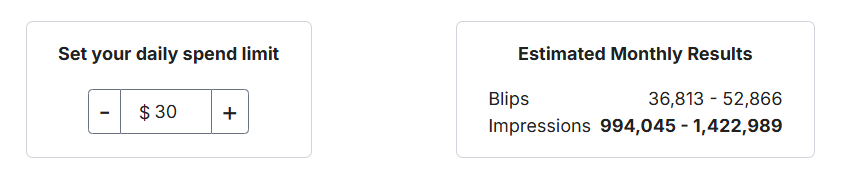
Set a flexible budget for Safety Harbor and stay in control as commuter and visitor traffic rises from Clearwater and Palm Harbor.
Daypart your Safety Harbor campaign for 7-9 a.m. commutes or 4-7 p.m. school pickup traffic to match local drive times.
No contracts means you can test Safety Harbor billboards for snowbird season, spring training, or Art & Seafood Festival weekends, then adjust fast.
Track Safety Harbor performance in real time with Blip, so you can shift spend between Clearwater and Palm Harbor routes as results come in.
Use Blip's creative tools to build a bold Safety Harbor ad that stands out in bright Florida sun and speaks to wellness, dining, and waterfront local pride.
Frequently Asked Questions About Billboard Advertising near Safety Harbor
How much does a billboard cost near Safety Harbor, Florida with Blip?
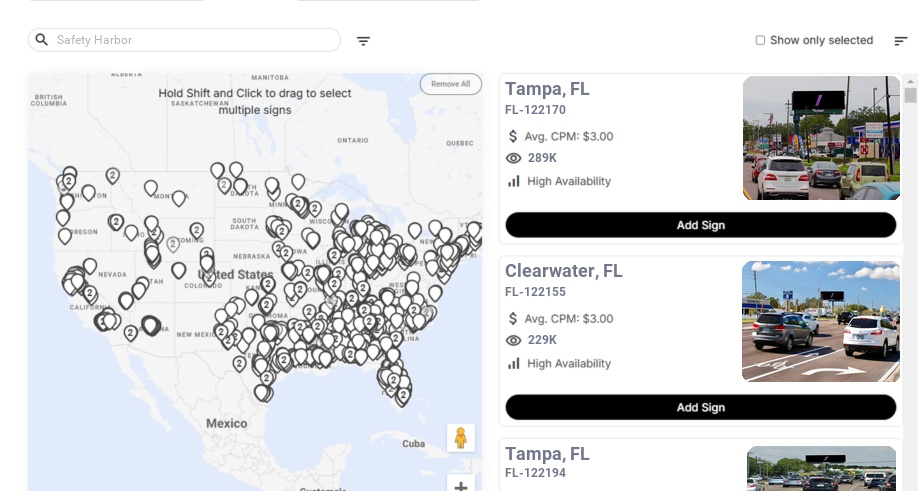
With Blip, you can run eye-catching Safety Harbor billboards on any budget by setting a daily spend that works for you, and Blip automatically keeps your campaign within that limit. Each “blip” is a 7.5 to 10-second display on digital billboards near Safety Harbor, Florida, and you only pay for the blips you receive. Pricing is flexible because the cost per blip depends on when and where you choose to advertise and on current advertiser demand.
Where can I advertise near Safety Harbor, Florida with Blip?
We have 21 digital billboards serving the Safety Harbor area, all located within about a 10-mile radius in nearby Palm Harbor and Clearwater. This footprint effectively functions as a ring of billboards near Safety Harbor, capturing traffic flowing in and out of the city. Because these locations are all within 10 miles of Safety Harbor, you can build a coverage pattern that repeatedly reaches the same households at multiple points in their weekly routines.
What kind of traffic and commuters do Safety Harbor, Florida billboards reach?
Just a few minutes from downtown Safety Harbor, major roadways like McMullen Booth Road (CR 611), State Road 580, and US-19 carry the bulk of regional traffic. McMullen Booth Road near Safety Harbor often exceed 50,000 vehicles per day, with some segments approaching 60,000, while US-19 through Clearwater and Palm Harbor regularly tops 90,000–110,000 vehicles per day on key stretches. Most workers in the Safety Harbor area commute out to employment centers in Clearwater, the US-19 corridor, and the Tampa side of the bay.
Who is the audience for Safety Harbor, Florida billboards on Blip?
Safety Harbor sits on the western shore of Tampa Bay in northeastern Pinellas County, and the city itself has a population of roughly 17,000 residents while being embedded within a much larger regional market. In Safety Harbor specifically, local demographic summaries often show that roughly 20–25% of residents are under 18, 55–60% are working-age adults, and 20–25% are 65 and older. Median household income in the Safety Harbor area is estimated in the mid-$70,000s, notably above the broader Pinellas County figure in the low $60,000s.
When should I run my Safety Harbor, Florida Blip campaign for the best results?
Weekday morning from 6:30–9:00 a.m. is prime for commuters heading from neighborhoods around Safety Harbor toward Clearwater, Palm Harbor, and Tampa. Midday from 11:00 a.m.–2:00 p.m. catches lunch runs, retirees and stay-at-home parents out for errands, and service professionals on the road, while evening from 3:30–7:00 p.m. is a strong window for school pickup routes and workers heading home. The Safety Harbor area also has pronounced seasonal swings, with winter snowbird season, spring training, summer family traffic, and a shoulder season in fall.
Do I need a contract to advertise with Blip near Safety Harbor?
No, Blip has no long-term contracts or minimum commitments. You can start, pause, or stop your campaign at any time.
How fast can I launch a billboard campaign with Blip near Safety Harbor?
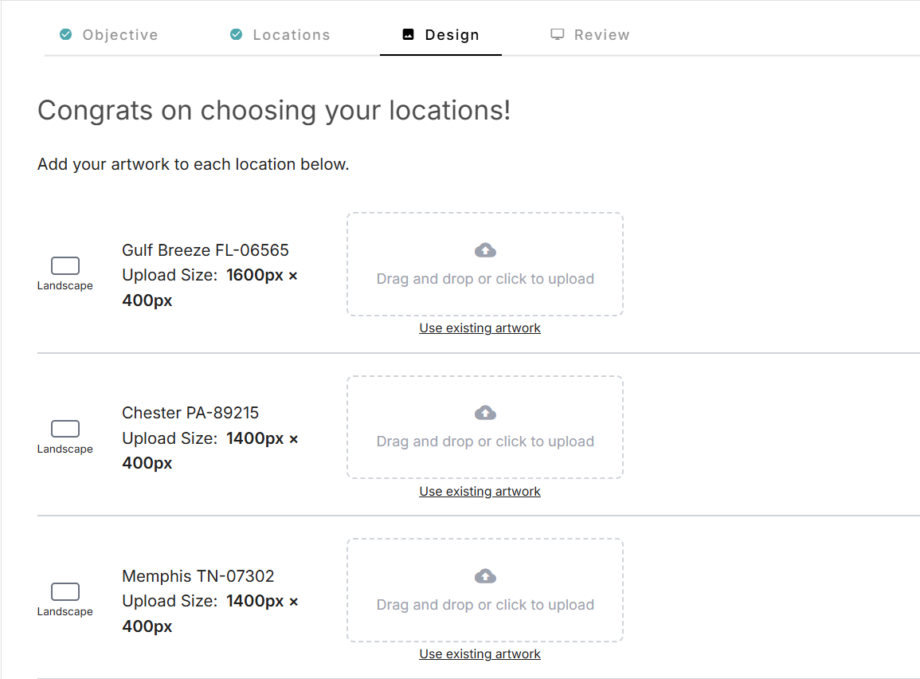
You can have your campaign live in minutes. Create a free account, select your locations, set your budget, upload your design, and start running once approved.
Where can I advertise with Blip near Safety Harbor?
Blip has digital billboards near Safety Harbor. You can browse available locations on a map, choose the ones that fit your audience, and start advertising right away.
Still have questions? Launch a campaign in minutes — no contracts, no commitments.
Start Your CampaignSafety Harbor Billboard Advertising Guide
The Safety Harbor area combines small-town charm with the traffic of a major coastal corridor, making it an unusually efficient place to use digital billboards. With 21 digital billboards within 10 miles of Safety Harbor—concentrated in nearby Palm Harbor and Clearwater—we can help you reach both local residents and the steady flow of commuters and visitors who travel through this part of north Pinellas County every day. For brands looking specifically for billboards near Safety Harbor, this cluster offers strong reach without needing to advertise deep into the larger metro.
Why the Safety Harbor Area Is a High-Value OOH Market
Safety Harbor sits on the western shore of Tampa Bay in northeastern Pinellas County. While the city itself has a population of roughly 17,000 residents, it is embedded within a much larger regional market:
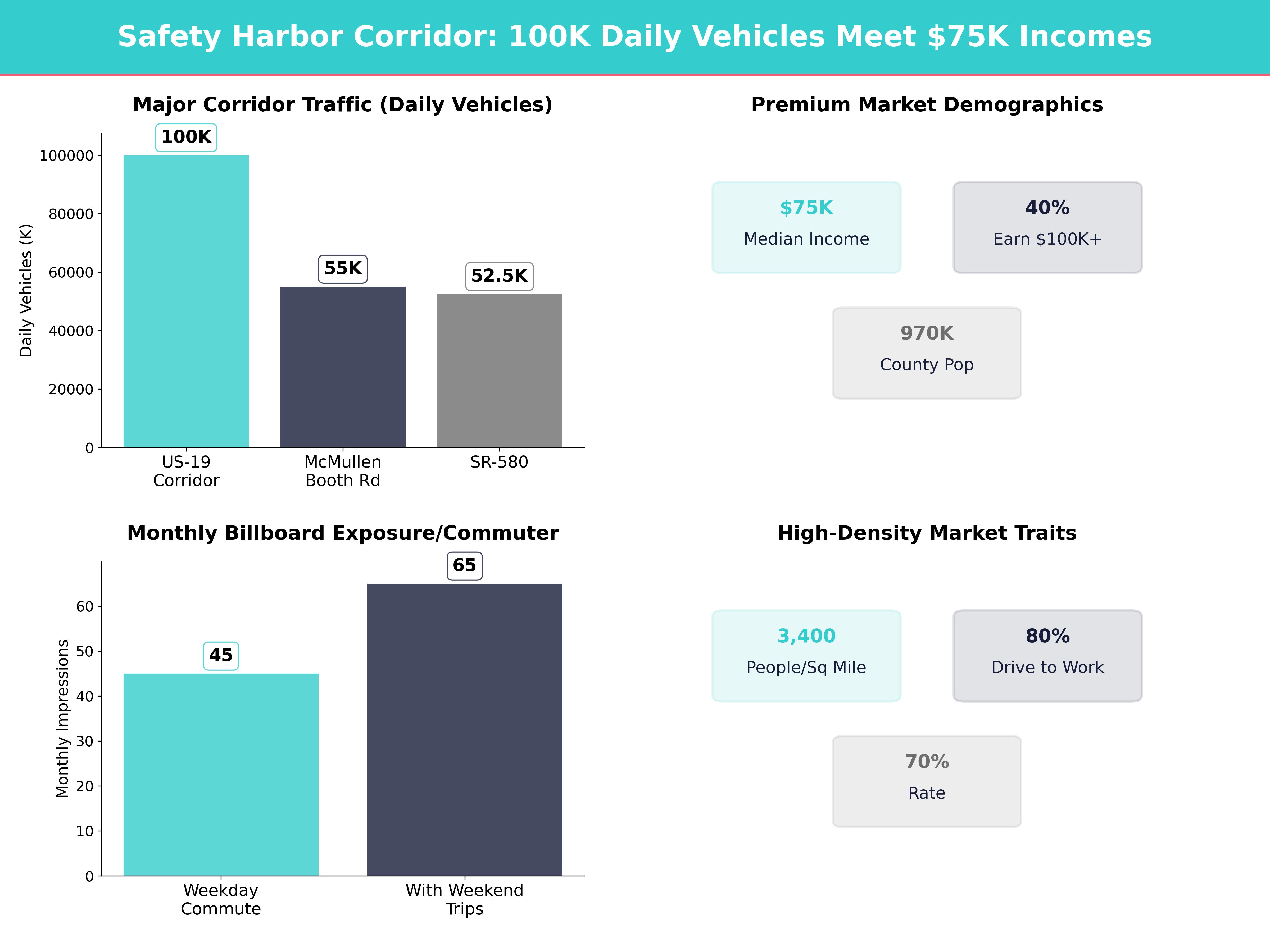
- Pinellas County has about 970,000 residents packed into just 280 square miles, making it one of Florida’s most densely populated counties with more than 3,400 residents per square mile, according to regional planning agency Forward Pinellas.
- The City of Safety Harbor
- Household incomes in the Safety Harbor area skew above the Pinellas County median, with many estimates placing median household income around the mid‑$70,000s versus countywide figures in the low $60,000s. In some Safety Harbor ZIP codes, more than 40% of households earn $100,000 or more annually, supporting higher discretionary spending on dining, wellness, home services, and leisure.
Just a few minutes from downtown Safety Harbor, major roadways like McMullen Booth Road (CR 611), State Road 580, and US-19 carry the bulk of regional traffic:
-
According to Florida Department of Transportation District 7
- McMullen Booth Road near Safety Harbor often exceed 50,000 vehicles per day, with some segments approaching 60,000.
- SR-580 between Oldsmar and Clearwater typically ranges from 45,000–60,000 vehicles per day.
- US-19 through Clearwater and Palm Harbor regularly tops 90,000–110,000 vehicles per day on key stretches.
- Regional commuting data compiled by Forward Pinellas
Most workers in the Safety Harbor area commute out to employment centers in Clearwater, the US-19 corridor, and the Tampa side of the bay. That means your potential customers are repeatedly exposed to billboards along these routes—especially our locations in Clearwater and Palm Harbor—multiple times per week. With typical five‑day‑a‑week commuting, a driver passing a digital billboard twice a day can generate 40–50 impressions per month from just one individual, making Safety Harbor billboards an efficient way to stay top of mind.
Combine this with the strong stream of regional visitors who use these same corridors to reach beaches, resorts, and events, and digital billboards become a powerful way to get your brand into the daily rhythm of life near Safety Harbor. County tourism reports summarized by Visit St. Pete/Clearwater
Where Our Digital Billboards Reach Drivers Near Safety Harbor
We have 21 digital billboards serving the Safety Harbor area, all located within about a 10‑mile radius in nearby Palm Harbor and Clearwater. This footprint effectively functions as a ring of billboards near Safety Harbor, capturing traffic flowing in and out of the city:
-
Clearwater (about 6.4 miles from Safety Harbor)
Clearwater is the primary commercial hub surrounding the Safety Harbor area. The City of Clearwater notes that it has more than 117,000 residents and draws several million visitors per year to its beaches and downtown attractions. Our boards in this market can catch:- Commuters using US-19 to travel between north Pinellas, Clearwater, and the greater Tampa Bay region. US‑19 is one of the region’s highest volume surface highways, with many drivers logging 10–20 miles per day along its length.
- Shoppers heading to big-box retail clusters and auto dealers along the US-19 and Gulf to Bay corridors. Clearwater’s core commercial corridors contain hundreds of retail and service businesses, from national chains to local independents.
- Visitors driving toward Clearwater Beach, one of Florida’s most popular beach destinations, promoted by Visit St. Pete/Clearwater
-
Palm Harbor (about 4.6 miles from Safety Harbor)
Palm Harbor is a dense suburban community directly north of Safety Harbor. Although unincorporated, it is home to an estimated 60,000+ residents in its broader area, with residential densities in many neighborhoods exceeding 3,000 residents per square mile. Boards here intercept:- North–south traffic along US-19, including commuters, residents, and travelers accessing nearby beach communities like Dunedin and Honeymoon Island. Honeymoon Island State Park
- Residents heading toward Safety Harbor’s restaurants, wellness services, and waterfront events. Many Palm Harbor households are within a 10–20 minute drive of downtown Safety Harbor, which makes frequent trips between the two areas common and increases exposure to Safety Harbor billboards along the way.
Because these locations are all within 10 miles of Safety Harbor, you can build a coverage pattern that repeatedly reaches the same households at multiple points in their weekly routines—morning commutes, school drop-offs, retail trips, and weekend outings. With 21 boards in the mix, even a modest schedule can create hundreds of thousands of weekly impressions across the combined Clearwater–Palm Harbor–Safety Harbor catchment area, depending on your selected dayparts and budgets. This makes flexible billboard rental near Safety Harbor practical even for small and midsize local businesses.
Understanding the Safety Harbor Audience
To get the most from your campaign, it helps to understand who you are talking to in the Safety Harbor area:
Age and life stage
- The median age in many north Pinellas communities sits in the mid to late 40s, reflecting a balanced mix of families, working professionals, and retirees. In Safety Harbor specifically, local demographic summaries often show that roughly 20–25% of residents are under 18, 55–60% are working‑age adults, and 20–25% are 65 and older.
- A significant share of households are married couples, and owner-occupied housing rates are typically around two-thirds or higher in nearby suburbs, signaling stable, long-term residents. In some Safety Harbor neighborhoods, homeownership rates exceed 70%, and average lengths of residence are 10 years or more, according to regional housing profiles from Pinellas County Government.
Income and spending power
- Median household income in the Safety Harbor area is estimated in the mid‑$70,000s, notably above the broader Pinellas County figure in the low $60,000s. In northern and eastern Safety Harbor census tracts, median incomes often approach $80,000–$85,000.
-
This supports robust spending on:
- Home improvements and services: regional home improvement and remodeling spending regularly runs into hundreds of millions of dollars annually across Pinellas County, with strong concentrations in owner‑occupied neighborhoods.
- Healthcare and wellness (chiropractors, physical therapy, spas, dental, and specialty medical): Pinellas County is home to dozens of major medical centers and hundreds of outpatient clinics, and local healthcare employment accounts for more than 15% of all jobs, based on Pinellas County Economic Development sector snapshots.
- Dining out, craft breweries, and specialty retail: tourism and local residents help support thousands of food and beverage jobs countywide, with restaurant and bar sales totaling billions of dollars each year.
- Recreation and tourism, both local and regional: beach, boating, and sports tourism are key drivers of discretionary spending, with visitors and locals alike supporting attractions from Clearwater Marine Aquarium
Commuting and daily patterns
- Many residents commute to employment centers in Clearwater, Tampa, and the Westshore area via SR‑580, McMullen Booth Road, and the Courtney Campbell Causeway. Surveys and transportation models cited by Forward Pinellas
- This creates predictable high‑frequency exposure opportunities across our Clearwater-facing inventory. A worker commuting Monday through Friday can pass the same digital billboard 40+ times per month, and when combined with weekend trips, monthly exposures can easily exceed 60–70 impressions per person.
- School schedules (Pinellas County Schools serves more than 95,000 students countywide, according to Pinellas County Schools) also shape traffic peaks around morning and midafternoon. With nearly 140 schools across the district and several elementary and middle schools within a short drive of Safety Harbor, pickup and dropoff times reliably increase local traffic on neighborhood arterials.
Tourism and events
Even though Safety Harbor is smaller than nearby beach cities, it punches above its weight in tourism and events:
- The historic Safety Harbor Resort & Spa draws wellness travelers and event attendees year-round. The resort’s meeting and event spaces can host hundreds of attendees per conference or wedding, generating recurring surges of overnight guests and day visitors.
- Popular attractions like Philippe Park
- Countywide, Visit St. Pete/Clearwater
- Signature local events—such as the Safety Harbor Art & Seafood on the Waterfront Festival, Safety Harbor SongFest, and monthly Third Friday celebrations promoted by the City of Safety Harbor
This blend of stable, higher‑income residents plus recurring influxes of visitors and event-goers makes the Safety Harbor area ideal for both ongoing branding and shorter event-driven campaigns, especially when paired with flexible billboard advertising near Safety Harbor that can ramp up ahead of key dates.
Timing Your Blip Campaign Around Local Patterns
With digital billboards, we can adjust your schedule down to specific hours and days. In the Safety Harbor area, timing strategy is especially important.
Daily drive times
- Weekday morning: 6:30–9:00 a.m. is prime for commuters heading from neighborhoods around Safety Harbor toward Clearwater, Palm Harbor, and Tampa. On key routes like McMullen Booth and SR‑580, these hours can account for 25–30% of weekday vehicle volume. Use these hours to promote coffee shops, breakfast spots, professional services, and healthcare, as people are mentally planning their day.
- Midday: 11:00 a.m.–2:00 p.m. catches lunch runs, retirees and stay‑at‑home parents out for errands, and service professionals on the road. In many suburban corridors, midday traffic can represent another 25–30% of daily volume, driven by retail, medical, and service trips. Restaurants, medical offices, home services, and retail can perform well here.
- Evening: 3:30–7:00 p.m. is a strong window for reaching parents on school pickup routes, workers heading home, and people planning evening activities. These late‑day hours correspond with school dismissals and end‑of‑shift traffic, often making up 30–35% of weekday vehicle counts. Promote family entertainment, restaurants, local events, and same‑day or next‑day appointments.
Weekly patterns
- Monday–Thursday: Great for routine needs: medical appointments, home repairs, automotive services, financial and legal services. Businesses in these categories often see more than half of their weekly appointments scheduled Monday through Thursday, according to various local service‑industry surveys.
- Friday–Sunday: Ideal for hospitality, events, restaurants, entertainment, weekend sales, real estate open houses, and church or community activities. Tourism data from Visit St. Pete/Clearwater
Seasonality
The Safety Harbor area has pronounced seasonal swings:
-
Winter “snowbird” season (January–March):
- Pinellas County’s winter tourism peaks as northern visitors arrive; Visit St. Pete/Clearwater data often shows some of the year’s highest hotel occupancy (frequently 80–90% in prime beach zones) and room rates in this period.
- Retiree traffic and visitor spending rise, making this prime season for hospitality, attractions, wellness, and real estate campaigns. Many local restaurants and attractions report double‑digit percentage increases in sales compared with slower shoulder months.
-
Spring (February–April):
- Philadelphia Phillies spring training at BayCare Ballpark in Clearwater boosts regional traffic and visitor spending. A typical spring training season can bring more than 100,000 total attendees to Clearwater games alone.
- Local festivals in Safety Harbor and neighboring cities further increase weekend exposure, with some multi‑day festivals drawing crowds in the thousands or tens of thousands across their run.
-
Summer (June–August):
- Families are out of school; beach and recreation traffic remains high. Pinellas Suncoast Transit Authority often reports increased seasonal ridership on beach routes during this window, indicating sustained visitor volumes.
- This is a key window for back‑to‑school offers, youth activities, camps, and family entertainment.
-
Fall (September–November):
- A shoulder season with lower visitor counts but strong local engagement. Many businesses see a shift toward local customers as snowbirds depart and before winter visitors arrive in full force.
- Effective for building brand awareness before the winter surge and promoting services like medical checkups, home projects, and financial planning. It is also a prime time for hurricane‑season preparation messaging and year‑end financial or healthcare reminders.
Using Blip’s scheduling tools, you can increase your “blips” during high-value periods (like snowbird season or major festivals) and scale back to a maintenance schedule in quieter months. This kind of flexible billboard rental near Safety Harbor lets you match advertising intensity to real-world demand.
Crafting Creative That Resonates Near Safety Harbor
To stand out on digital billboards near Safety Harbor, your creative should be tailored to both the physical environment and the local mindset.
Design for Florida sun and short viewing times
- Use high contrast color combinations; bright sunlight can wash out low-contrast designs. White or yellow text on deep blue, black, or dark green backgrounds performs well, especially during midday when sun angles are strongest.
- Keep text to 7 words or fewer for the main message. Drivers typically have 6–8 seconds to see and process your ad at 45–55 mph.
- Use large, bold fonts—avoid thin scripts or cramped layouts that disappear at a distance. Legibility studies on roadside advertising often recommend minimum letter heights of 12–18 inches on the physical display, which translates to very large, clean typography in your design file.
- Feature a single focal image (a product shot, a happy customer, a dish, or a logo) rather than busy collages. Simple, high‑contrast images improve recall, especially at highway speeds.
Reflect local identity
Safety Harbor area residents often value waterfront living, wellness, community, and small-business authenticity. You can tap into that by:
- Featuring imagery of water, trees, parks, kayaks, and outdoor dining that mirrors local settings like the Safety Harbor Marina, Philippe Park
- Highlighting phrases like “local,” “family‑owned,” or “serving the Safety Harbor area since [year]” to build trust. Surveys of consumer behavior frequently show that a majority of shoppers—often 60–70%—prefer to buy from local businesses when prices and quality are comparable.
- Using geographic anchors: “Minutes from downtown Safety Harbor,” “Off McMullen Booth,” or “Near Philippe Park.” Location‑based cues help drivers quickly connect your message to their mental map and strengthen the association with Safety Harbor billboards they see repeatedly.
Make directions and calls to action simple
- Use clear directional cues: “Next right on SR‑580,” “Just off US‑19,” or “2 miles ahead on McMullen Booth.”
- For mobile-friendly calls to action, short URLs and simple keywords work best: “Book today at HarborDental.com” or “Text HARBOR to [short code].”
- If you rely on phone calls, prominently display a local area code, which residents recognize and trust. Studies of call response often show higher answer and callback rates for familiar local prefixes compared with toll‑free or unfamiliar numbers.
Strategy Examples for Key Industries Near Safety Harbor
Different industries can leverage the Safety Harbor area’s traffic and demographics in specific ways.
Local service businesses (home services, auto, contractors)
- Target weekday rush hours on Clearwater and Palm Harbor boards to catch commuters who live near Safety Harbor but drive US‑19 daily. A contractor’s billboard visible on a commuter’s route 40+ times per month can dramatically increase top‑of‑mind awareness when an urgent need arises.
- Emphasize speed and convenience: “Same‑day AC repair,” “Free roof inspections,” or “Oil change in 30 minutes.” For context, summer heat indexes in Pinellas County frequently exceed 100°F, which makes rapid home and auto service especially compelling.
- Rotate creative seasonally: hurricane prep offers in late summer (the Atlantic hurricane season officially runs June 1–November 30), AC tune‑ups in spring, and holiday lighting services in late fall when neighborhood decorating peaks.
Healthcare and wellness
With a health‑oriented demographic and the presence of the Safety Harbor Resort & Spa:
- Promote chiropractic, physical therapy, dental, optometry, and specialty clinics with reassuring imagery and simple benefit statements: “Back pain relief near Safety Harbor” or “New patients seen this week.” Healthcare is a major local employer; Pinellas County Economic Development notes that thousands of businesses and tens of thousands of jobs in the county are tied to health and life sciences.
- Use midday and early evening dayparts when people are most likely to call for appointments. Many clinics report that call volume spikes between 9 a.m.–11 a.m. and 3 p.m.–5 p.m., which aligns well with high‑traffic intervals.
- For wellness centers, spas, and gyms, align heavier schedules to New Year’s resolutions (January–February) and post‑summer resets (September–October), when interest in health and fitness services typically climbs by double‑digit percentages compared with off‑peak months.
Hospitality, tourism, and attractions
- Coordinate with major visitor flows highlighted by Visit St. Pete/Clearwater Tampa International Airport
- Use lighthouse, bay, or beach imagery to attract visitors heading through Clearwater and Palm Harbor to coastal destinations. Promoting “10 minutes from Clearwater Beach” or “Bayfront views in Safety Harbor” capitalizes on the area’s strong beach brand and helps your billboard advertising near Safety Harbor stand out to travelers.
- Promote lodging, restaurants, and experiences as “calmer alternatives” or “hidden gems near Safety Harbor” to differentiate from crowded beach hotspots. Many visitors look for options away from the highest‑priced beachfront hotels and congested parking, giving inland waterfront communities a competitive edge.
Professional services (legal, financial, real estate)
- Target morning and evening commuting windows to reach working professionals with higher incomes. In some north Pinellas neighborhoods, more than 40% of adults hold bachelor’s degrees or higher, and professional services benefit from messaging that speaks to planning, protection, and long‑term value.
- Use authoritative but approachable creative: strong headshots, clean layouts, and concise messages like “Estate planning for Safety Harbor families” or “Local real estate expert for north Pinellas.”
- For real estate, adjust messaging to market conditions: seller-focused when inventory is tight (“We have buyers waiting in the Safety Harbor area”) or buyer-focused when rates or inventory become more favorable. Regional housing statistics often show median sales prices in many Safety Harbor and north Pinellas neighborhoods above the countywide average, which underscores the value of targeting higher‑income audiences with well-placed Safety Harbor billboards.
Events and community organizations
- Promote festivals, fundraisers, and concerts with countdown-style messages: “Harbor Art & Seafood Festival – This Weekend” or “Third Friday in Safety Harbor – 2 Days Away.” Local event platforms like Safety Harbor Connect showcase how these events can bring hundreds to thousands of visitors downtown in a single evening.
- Increase blip frequency in the 5–7 days leading up to event day, then taper off as the event wraps. For multi‑day festivals, consider heavier saturation on the opening day and on peak weekend dates.
- For churches and nonprofits, use consistent weekend scheduling with simple invitations: “Join us Sunday 10 a.m. – Near Safety Harbor.” Faith communities and nonprofits are highly active locally, with dozens of congregations and organizations operating within a short drive of downtown.
Using Blip Tools to Maximize Results Near Safety Harbor
Blip’s platform lets you control when and where your message appears on our 21 boards serving the Safety Harbor area, with budgets that can start very small and scale as you see results. This self-serve approach to billboard rental near Safety Harbor helps local advertisers test and optimize without committing to long, inflexible contracts.
Location mix
- Prioritize Clearwater boards for reaching commuters and regional visitors who go on to spend time in the Safety Harbor area. Clearwater’s status as a beach gateway and employment hub means your creative can tap into both work and leisure trips.
- Add Palm Harbor locations to deepen your reach among north Pinellas residents who consider Safety Harbor a natural destination for dining, services, and recreation. Many Palm Harbor households make several round trips per week along US‑19 and Curlew or Tampa Road, crossing paths with our inventory repeatedly.
- Test running the same creative across multiple boards to see which locations generate the most website traffic, calls, or visits (tracked through your own analytics and customer intake questions). Even simple tracking methods—such as unique URLs or “How did you hear about us?” questions—can reveal which board clusters are delivering the highest return per dollar.
Dayparting and budgeting
- Start with a focused set of high‑value hours (e.g., 7–9 a.m. and 4–7 p.m. on weekdays) to maximize exposure among commuters for each dollar spent. On many high‑volume arterials, these combined windows can represent 50–60% of total daily traffic.
- Layer in targeted weekend or midday blips for industries that benefit from those times (restaurants, attractions, medical clinics, etc.).
- Adjust your budget to be higher in peak months (January–April and June–August) and maintain a more efficient, brand‑building presence in shoulder seasons. Businesses that track seasonality closely often see revenue swings of 20–40% between peak and off‑peak months, which can inform how aggressively you advertise by season.
Testing and optimization
-
Run A/B tests by:
- Varying headlines (e.g., price-focused vs. benefit-focused).
- Changing imagery (people-focused vs. product-focused).
- Adjusting offers (percent discounts vs. dollar savings).
- Monitor how different creatives correlate with your internal KPIs: web form submissions, coupon redemptions, call volume, or in-store inquiries mentioning “the billboard.”
- Refresh creative every 6–8 weeks, or sooner for event-based campaigns, to keep your message feeling timely and relevant. In high‑frequency placements, audiences can become “blind” to unchanged creative after a couple of months, so regular updates help maintain attention.
Integrating Billboards With Other Local Marketing
Digital billboards near Safety Harbor become even more effective when integrated with your other marketing channels:
- Align billboard messaging with promotions you are running in local news outlets like the Tampa Bay Times or community coverage from Bay News 9, ABC Action News, or WFLA News Channel 8
- Mirror your billboard visuals on social media so that when people see your ad on the road and later on their phones, the recognition compounds. Multi‑channel campaigns often deliver significantly higher recall and response rates than single‑channel efforts.
- Consider cross-promotion with local organizations such as the Safety Harbor Chamber of Commerce or neighboring city partners like City of Clearwater and county agencies like Pinellas County Government. Joint promotions with tourism partners like Visit St. Pete/Clearwater Pinellas County Economic Development can further extend your reach into business and visitor networks.
By combining precise scheduling, strategic location choices, and locally tuned creative, we can use Blip’s digital billboards in Clearwater and Palm Harbor to keep your message consistently in front of the residents, commuters, and visitors who power the Safety Harbor area’s economy—and make the most of every dollar you invest in billboard advertising near Safety Harbor.