Billboards near Cudahy, CA
No Minimum Spend. No Long-Term Contracts. Just Results.
Trusted by Leading Brands


Billboard advertising
near Cudahy has never been easier
How much is a billboard near Cudahy?
Why Choose Blip for Billboard Advertising near Cudahy
Blip lets you launch in Cudahy fast and self-serve, reaching I-710 and I-105 commuters without a long sales process.
Set a daily budget for Cudahy billboards and Blip keeps spend on track, so you can test Southeast LA on any budget.
Use dayparting in Cudahy to hit 6-9 a.m. and 3:30-7 p.m. rushes, plus school drop-off traffic on Atlantic and Firestone.
No contracts mean you can pause or scale Cudahy campaigns around paydays, back-to-school, or weekend shopping bursts.
Track Cudahy performance in real time and shift creative toward the Spanish-speaking, family-heavy audience driving Bell Gardens and South Gate.
Blip's creative tools make it easy to rotate bilingual ads for Cudahy, tailored to dense neighborhood streets and freeway visibility.
Frequently Asked Questions About Billboard Advertising near Cudahy
How much does a billboard cost near Cudahy, California with Blip?
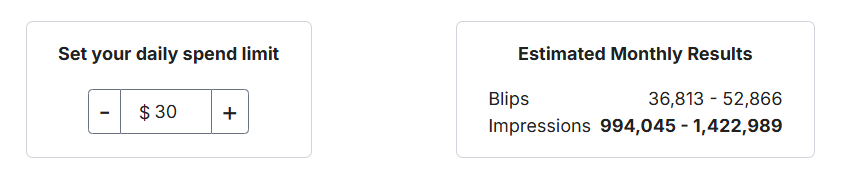
With Blip, you control exactly what you spend on Cudahy billboards by setting your own daily budget, and Blip automatically keeps your campaign within that amount. Each “blip” is a quick 7.5 to 10-second ad on digital billboards near Cudahy, California, and you only pay for the blips you receive. Costs per blip vary based on when and where you choose to advertise and on advertiser demand, so you can start small and adjust as you go.
Where can I advertise with Blip near Cudahy, California?
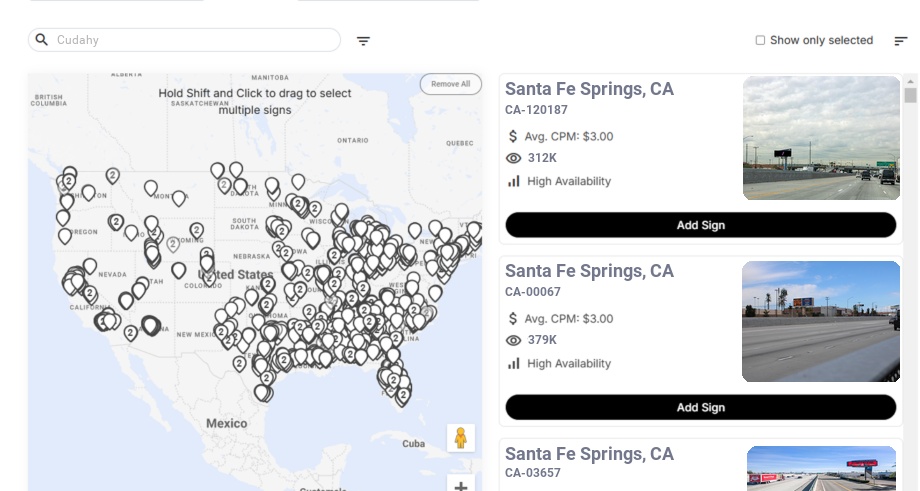
We have 43 digital billboards serving the Cudahy area within roughly 10 miles, positioned in nearby cities that residents regularly travel through for work, school, errands, and entertainment. Key nearby locations include Bell Gardens, South Gate, Lynwood, Los Angeles, Montebello, Norwalk, Santa Fe Springs, Artesia, and Carson. This network of billboards near Cudahy gives you the flexibility to focus on hyper-local reach or broader regional coverage, depending on your goals.
What kind of people do Cudahy, California billboards with Blip reach?
Cudahy is one of the most densely populated cities in California and in the western United States, with roughly 22,000–24,000 residents in only about 1.2 square miles. Median age in Cudahy and neighboring Southeast LA cities is around 27–30 years, and roughly 90–95% of residents in Cudahy and immediate neighboring cities identify as Hispanic or Latino. Around 80–90% of households in the broader Southeast LA area speak a language other than English at home, predominantly Spanish.
When should I run my Cudahy, California billboard ads with Blip for the best exposure?
Digital billboard success near the Cudahy area depends on matching your schedule to real traffic flows. Weekday mornings from 6:00–9:00 a.m. and weekday evenings from 3:30–7:00 p.m. are strong windows because commuter traffic is heaviest then. School-related traffic also increases around 7:00–8:30 a.m. and 2:00–4:00 p.m., and late Friday afternoons, Saturdays, and Sundays see increased traffic toward shopping centers, parks, and entertainment.
Which roads near Cudahy, California get the most billboard traffic?
These boards tend to sit on or near I-710, I-5, I-105, and I-110, as well as major arterials such as Atlantic Boulevard, Florence Avenue, Firestone Boulevard, Long Beach Boulevard, and Garfield Avenue. Sections near the Cudahy area can carry around 150,000–180,000 vehicles per day on I-710, while parts of I-5 and I-110 exceed 200,000 vehicles per day. Major arterials in commercial segments often see daily traffic counts in the 20,000–35,000 vehicle range.
Do I need a contract to advertise with Blip near Cudahy?
No, Blip has no long-term contracts or minimum commitments. You can start, pause, or stop your campaign at any time.
How fast can I launch a billboard campaign with Blip near Cudahy?
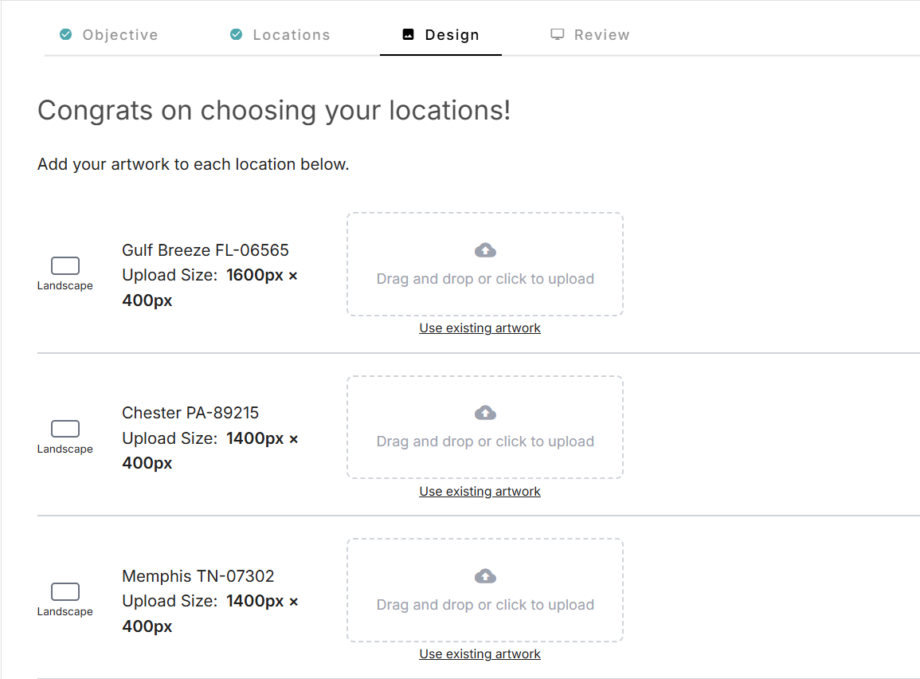
You can have your campaign live in minutes. Create a free account, select your locations, set your budget, upload your design, and start running once approved.
Where can I advertise with Blip near Cudahy?
Blip has digital billboards near Cudahy. You can browse available locations on a map, choose the ones that fit your audience, and start advertising right away.
Still have questions? Launch a campaign in minutes — no contracts, no commitments.
Start Your CampaignCudahy Billboard Advertising Guide
The Cudahy area sits at the heart of Southeast Los Angeles, surrounded by major commuter routes and dense neighborhoods that move, shop, and work across nearby cities all day long. With 43 digital billboards serving the Cudahy area from Bell Gardens, South Gate, Lynwood, Los Angeles, Montebello, Compton, Norwalk, Artesia, Carson, and Santa Fe Springs, we can help you build highly targeted, data-informed campaigns that reach residents where they actually drive and shop—without paying for impressions you don’t need. Whether you’re a local business or a regional brand, these billboards near Cudahy give you a cost-effective way to stay visible in the daily lives of Southeast LA consumers.
Understanding the Cudahy Area Market
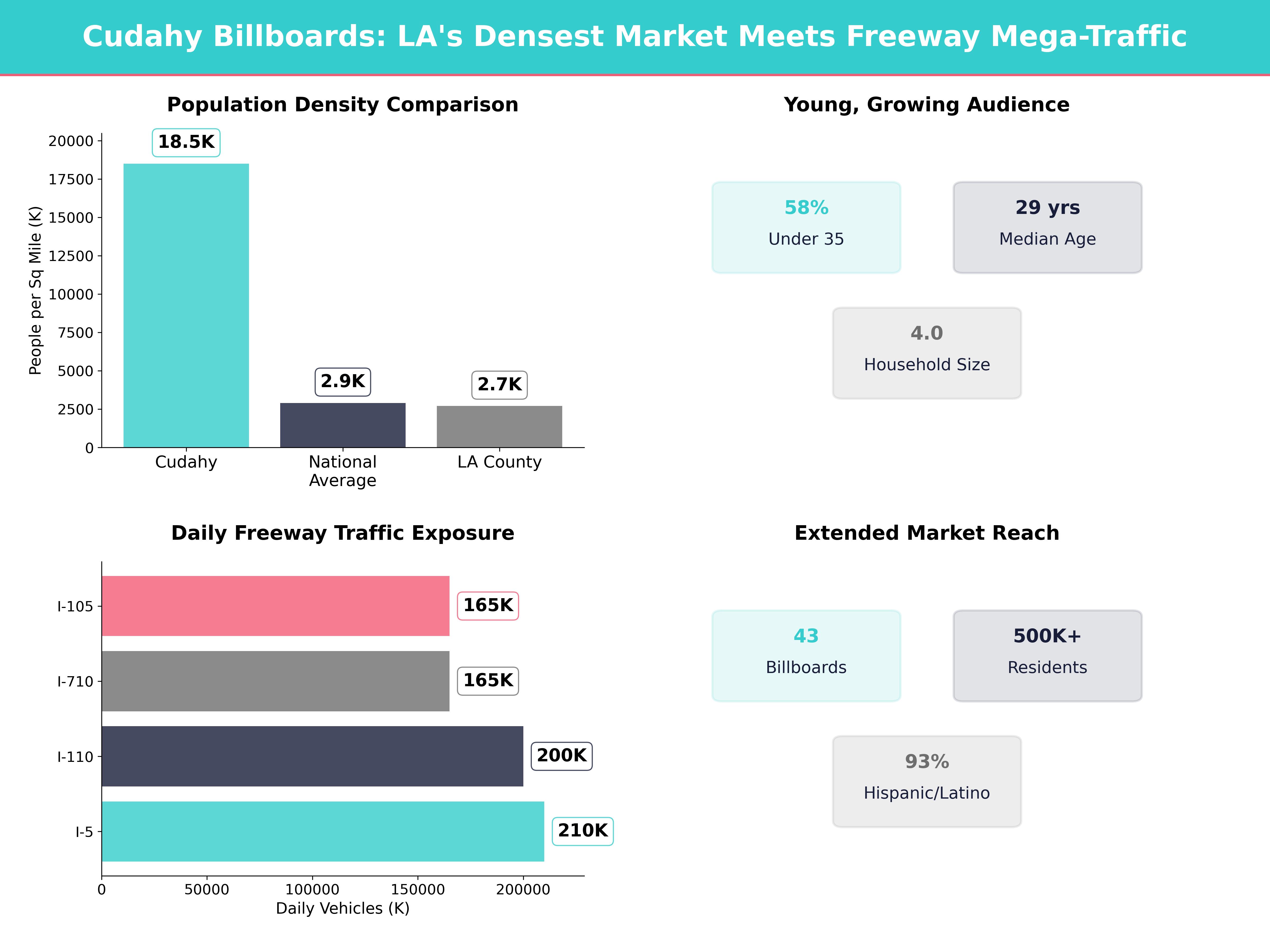
Cudahy is one of the most densely populated cities in California and in the western United States. With roughly 22,000–24,000 residents in only about 1.2 square miles, population density exceeds 18,000–19,000 people per square mile—over 4 times higher than the Los Angeles County average (around 2,500–2,800 people per square mile) and more than 6 times the national average (roughly 2,900 people per square mile for incorporated places). That means a relatively small geographic area delivers a very high concentration of impressions when we place your message along the right corridors and select the most strategic Cudahy billboards and nearby boards.
Key characteristics of the Cudahy area:
- Density and proximity: Adjacent cities like Bell Gardens South Gate, and Lynwood
- Young population: Median age in Cudahy and several neighboring cities is around 27–30 years, versus roughly 36 years for Los Angeles County as a whole and about 38 years nationally. In many census tracts around Cudahy, more than 55–60% of residents are under 35, which means a strong base of young families, first-time homebuyers, and working-age adults.
- Hispanic-majority community: Roughly 90–95% of residents in Cudahy and immediate neighboring cities identify as Hispanic or Latino, with some nearby neighborhoods reporting Hispanic shares above 95%. In many local school catchment areas, over 80–90% of students come from Hispanic households.
- Language: Around 80–90% of households in the broader Southeast LA area speak a language other than English at home, predominantly Spanish. In several nearby ZIP codes, more than 70% of residents report speaking Spanish at home.
- Commuter culture: In Southeast LA cities, more than 80–85% of workers commute by car, and average commute times typically run 30–35 minutes each way. Nearby freeways like the I‑710, I‑110, I‑105, and I‑5 carry well over 150,000–220,000 vehicles per day on several segments, providing huge exposure for smartly located digital billboards.
Local civic and community resources highlight how interconnected this region is:
- City of Cudahy – local government, community programs, and events.
- City of Bell Gardens City of South Gate – major neighboring markets where many Cudahy area residents shop and drive daily.
- Nearby cities such as Lynwood Norwalk, Artesia Carson, and Santa Fe Springs add additional residential, industrial, and retail audiences.
- Los Angeles County
- Regional transportation agencies like Metro Caltrans District 7 manage freeways and major corridors that move hundreds of thousands of daily travelers through the area.
For advertisers, this combination of density, youth, and mobility means you can generate large-scale visibility with carefully chosen billboards in nearby cities serving the Cudahy area—especially when you use flexible buying tools to concentrate your message at the most valuable times. Well-planned billboard advertising near Cudahy lets you tap into this movement efficiently instead of spreading budget across less relevant locations.
Where Our Billboards Reach People Near Cudahy
We have 43 digital billboards serving the Cudahy area within roughly 10 miles, positioned in nearby cities that residents regularly travel through for work, school, errands, and entertainment. In dense corridors of Southeast LA, traffic counts on busy arterials can exceed 25,000–40,000 vehicles per day, multiplying impressions even off the freeways. This network of billboards near Cudahy gives you the flexibility to focus on hyper-local reach or broader regional coverage, depending on your goals.
Key nearby locations:
- Bell Gardens (0.8 miles) – Close-in neighborhood shopping and local traffic; a prime way to reach residents on everyday trips. Bell Gardens has more than 40,000 residents in under 3 square miles and major draws like The Bicycle Hotel & Casino, which alone attracts thousands of visitors weekly.
- South Gate (1.4 miles) – A major hub for retail and services; South Gate has about 93,000 residents and regional centers like the Azalea Regional Shopping Center
- Lynwood (2.6 miles) & Compton (6.6 miles) – Lynwood (roughly 67,000 residents) and Compton (over 95,000 residents) feature strong commuter corridors, especially along Long Beach Boulevard and access to I‑105 and I‑710.
- Los Angeles (3.1 miles) – Strategic placements near Downtown LA
- Montebello (3.3 miles), Norwalk (8.3 miles), Santa Fe Springs (9.4 miles) – Montebello (about 63,000 residents) and Norwalk (around 100,000 residents) combine strong residential density with major employment centers, while Santa Fe Springs has a daytime population boosted by thousands of industrial, logistics, and manufacturing jobs.
- Artesia (8.4 miles) & Carson (9.4 miles) – Artesia and Carson sit at key junctions linking Southeast LA with the South Bay and Orange County. Carson alone has more than 90,000 residents and major destinations like the Dignity Health Sports Park, which attracts tens of thousands of visitors for sports and events.
These boards tend to sit on or near:
- I‑710 (Long Beach Freeway): Sections near the Cudahy area can carry around 150,000–180,000 vehicles per day. Some segments between Compton and Commerce report annual average daily traffic (AADT) above 170,000 vehicles.
- I‑5 (Santa Ana Freeway): A major north–south spine with segments exceeding 200,000–220,000 vehicles per day closer to downtown Los Angeles and the Commerce/Montebello area.
- I‑105 (Century Freeway): Connects the Cudahy area toward LAX and the South Bay, with segments commonly near or above 150,000–180,000 vehicles per day.
- I‑110 (Harbor Freeway): Carries roughly 180,000–220,000 vehicles per day between the South Bay and Downtown LA, important for regional campaigns drawing from a wide radius.
- Major arterials such as Atlantic Boulevard, Florence Avenue, Firestone Boulevard, Long Beach Boulevard, and Garfield Avenue, many of which see daily traffic counts in the 20,000–35,000 vehicle range in commercial segments.
By selecting boards in these nearby cities, we can align your message with daily realities: school drop‑offs, commutes to industrial areas in Commerce and Vernon
Audience & Demographics: Who You Can Reach
Understanding who lives and works in the Cudahy area helps shape everything from language choice to imagery and offers. Local city profiles from Cudahy, South Gate, Lynwood, and surrounding communities show consistent patterns that are highly relevant for advertisers using Cudahy billboards and nearby placements.
Key demographic insights:
-
Age profile
- Median age around 27–30 years in Cudahy and neighboring Southeast LA cities, versus about 36 for Los Angeles County.
- In many nearby tracts, 30–35% of residents are under age 18 and another 25–30% are ages 18–34, creating a strong youth and young adult presence.
- This skew toward younger ages supports campaigns for education, first-time financial products, entry-level career opportunities, and family-oriented services.
-
Household composition
- Larger household sizes (often 3–4+ people per household), with averages in many Southeast LA communities around 3.7–4.2 people per household, compared with roughly 2.9 nationally.
- Significant number of multigenerational households, where purchasing decisions may involve parents, grandparents, and adult children. In some neighborhood surveys, more than 20–25% of households report three or more generations under one roof.
- Higher rates of households with children under 18—commonly above 45–50% in many adjacent cities.
-
Income and employment
- Median household incomes often range from about $45,000 to $55,000 in these Southeast LA communities, below the Los Angeles County median (around $76,000) but with a high share of dual-earner households.
- In local labor force profiles, 20–30% of workers are employed in service occupations, 15–20% in transportation and material moving, and significant shares in construction, manufacturing, and hospitality.
- Many warehouse, logistics, and industrial parks in nearby Commerce, Vernon, and Santa Fe Springs collectively employ tens of thousands of workers who pass through the Cudahy area corridors daily.
-
Language & culture
- Around 80–90% of households in the broader area speak Spanish at home, and in some Cudahy-adjacent tracts, Spanish usage at home exceeds 90%.
- A majority of adults are bilingual to some degree, and local schools report high participation in dual-language or English learner programs.
- Cultural touchpoints such as soccer leagues, church communities, and family gatherings in local parks drive regular, predictable travel patterns on evenings and weekends.
Local media outlets such as the Los Angeles Times, LAist, LA Weekly, KTLA, and ABC7 Los Angeles regularly spotlight issues affecting Southeast Los Angeles, from housing and small business growth to transportation and education—topics that resonate heavily with residents and help shape local sentiment.
Implications for your campaign:
- Bilingual or Spanish-first creative: With Spanish spoken at home by a large majority of households, Spanish-first or bilingual messaging can significantly increase relevance. Studies of Hispanic audiences in Southern California show that Spanish-language campaigns often deliver higher recall and favorability, particularly among first-generation and older residents.
- Family-oriented value propositions: Emphasize value, reliability, and family benefits—“para toda la familia,” special bundles, or cost savings per household. In communities where 40–50% of households have children and many support multi-person households on moderate incomes, clear savings messages perform well.
- Career and education messaging: Job training, community college programs, and workforce opportunities resonate strongly with a young, working population. Local institutions such as community colleges and trade schools often draw from a 5–10 mile radius that overlaps heavily with Cudahy’s commuter corridors.
- Mobile call-to-action: Younger audiences are highly mobile-first. In national out-of-home (OOH) studies, more than 60–70% of viewers say they have used a smartphone to look up information after seeing an outdoor ad. Short URLs, QR codes, and short codes work well when paired with concise copy.
Traffic Patterns & Optimal Times to Run Your Ads
Digital billboard success near the Cudahy area depends on matching your schedule to real traffic flows. Several factors shape when your audience is most likely to see your message:
1. Rush-hour commuter traffic
Local traffic studies in Los Angeles County repeatedly show that peak-period speeds on major freeways drop by 30–50%, increasing dwell time and impressions for digital billboards.
-
Weekday mornings (6:00–9:00 a.m.)
- Heavy northbound and westbound flows toward downtown Los Angeles, Vernon, Commerce, and other job centers. In these windows, some freeway segments operate at 30–40 mph instead of 55–65 mph, effectively increasing ad exposure time.
- Strong exposure on I‑710, I‑5, and arterial roads leading to freeways, where combined morning peak volumes can exceed tens of thousands of vehicles in just a few hours.
-
Weekday evenings (3:30–7:00 p.m.)
- Reverse flow as workers return to the Cudahy area and nearby neighborhoods. Evening peaks can last longer than morning peaks, often stretching past 7:00 p.m.
- Good timing for offers tied to dinner, errands, retail visits, and entertainment, as household spending frequently spikes in the late afternoon and early evening.
2. School and family routines
The Cudahy area has a high concentration of school-aged children. Nearby school districts, including those served by Los Angeles Unified School District Lynwood Unified and Montebello Unified, collectively enroll tens of thousands of students in Southeast LA.
These districts generate:
- Significant vehicle volumes around 7:00–8:30 a.m. and 2:00–4:00 p.m. on local streets as parents drive or carpool students.
- Increased local trips on Atlantic Boulevard, Elizabeth Street, and other local connectors, where school-related traffic can account for a notable share of daily volumes during drop-off and pick-up times.
If you operate tutoring services, after-school programs, childcare, or family-oriented retail, you can time your Blip campaigns to match these windows on boards close to school routes and neighborhood shopping.
3. Weekend shopping & leisure
- Late Friday afternoons, Saturdays, and Sundays see increased traffic toward shopping centers, parks, and entertainment. In retail corridors across LA County, weekend days often account for 35–40% of weekly sales volume, with peak foot traffic typically between 11:00 a.m. and 6:00 p.m.
- Nearby attractions and areas like Downtown LA (highlighted at Discover Los Angeles), Long Beach, and local casinos or malls draw regional traffic. Event days, concerts, and sports games can spike traffic by tens of thousands of additional trips on specific corridors.
Retailers, restaurants, and entertainment venues often see better returns by shifting a higher portion of budget to weekends and early evenings, when conversion intent is higher and families are already out spending.
With Blip’s flexible scheduling, we can:
- Boost impressions during the highest-value time blocks (e.g., 7–9 a.m., 4–7 p.m., Sat–Sun midday).
- Reduce or pause spend during lower-value overnights, unless you serve late-night diners, logistics workers, or 24/7 services—important in industrial corridors where night shifts are common.
Creative Strategies That Work in the Cudahy Area
Because digital billboards near the Cudahy area sit along fast-moving routes, your creative has to communicate at a glance. We recommend designing specifically for a 3–5 second read. Industry research on OOH effectiveness shows that concise creative with a single core message consistently delivers higher recall rates (often 20–30 percentage points higher) than cluttered designs.
1. Language & tone
- Use simple, bold headlines, ideally 5–7 words or fewer. Keeping text under about 10 words can improve legibility by up to 50% at freeway speeds.
-
Consider Spanish-first headlines for local businesses or campaigns clearly targeting Hispanic families:
- Example: “Ahorra en tu seguro de auto” (Save on your car insurance).
-
For broader regional campaigns, bilingual creative can expand reach while remaining culturally tuned:
- Example: “Clases de inglés / English Classes – Regístrate Hoy.”
- Match tone to local culture—warm, direct, and community-oriented messaging tends to resonate more than corporate or highly formal language.
2. Visuals that match local life
- Feature families, workers, and students resembling the community’s demographics—predominantly Hispanic, often multigenerational. Ads featuring people similar to the target audience have been shown in OOH and digital studies to increase relevance and brand affinity.
- Show relatable settings: neighborhood parks, soccer fields, local streetscapes, or everyday home life.
- Use vibrant, high-contrast colors that stand out against the urban environment—strong yellows, reds, and blues often perform well, especially during dusk and dawn when ambient light changes quickly.
3. Offers and calls-to-action
-
Lead with a clear benefit plus an easy next step:
- “$29 Limpieza Dental – Llama Hoy”
- “Nuevo Menú de $5 – Salida Siguiente”
-
Use location-based CTAs when near your business:
- “Next Exit – Atlantic Blvd”
- “3 Min From Here – Bell Gardens”
- Integrate short URLs or QR codes to capture mobile-driven response. In national OOH studies, more than 40–50% of smartphone users say they have scanned a QR code from advertising at least once, and larger codes with strong contrast significantly improve scan rates.
4. Multiple creatives, one campaign
Blip allows you to upload multiple designs and rotate them. For the Cudahy area, consider:
- One general brand ad.
- One offer-focused ad (discount, free consultation, limited-time).
- One Spanish-specific or bilingual variant.
We can test and refine based on performance indicators like website visits, coupon redemptions, or calls during specific time blocks. Advertisers that regularly A/B test creative variants in OOH frequently report 10–30% improvements in response over time as they refine offers and messaging.
Aligning Billboard Locations With Local Behavior
Because our 43 digital billboards serving the Cudahy area are spread across nearby cities, think in terms of behavioral zones rather than just municipal boundaries. This helps you treat billboard advertising near Cudahy as a connected network that mirrors how residents actually move through Southeast LA.
1. Everyday errands & neighborhood shopping
- Focus on boards in Bell Gardens and South Gate, where many residents go for groceries, banking, and quick-service restaurants. In these cities, local retail corridors often capture tens of thousands of shoppers per week.
- Community parks and recreation facilities listed on sites like the City of Cudahy and neighboring city pages see high weekend usage, reinforcing local trip patterns.
-
Ideal for:
- Grocery stores and markets
- Quick-service and casual dining
- Local medical and dental offices
- Check cashing, insurance, and financial services
- Neighborhood gyms, laundromats, and beauty services
2. Commuter corridors
- Use Lynwood, Compton, Los Angeles, Montebello, Norwalk, Santa Fe Springs boards to intercept commuters headed to industrial, warehouse, and office job centers. Industrial cities like Commerce, Vernon, and Santa Fe Springs have thousands of businesses and tens of thousands of jobs, many in logistics and manufacturing, which depend on freeway access.
- Daily traffic volumes on connector arterials in these cities can exceed 25,000–35,000 vehicles, especially near freeway interchanges.
-
Ideal for:
- Recruiting and staffing agencies
- Trade schools and community colleges
- Automotive services near freeway exits
- Regional brands looking for scale
- Logistics, trucking, and warehouse services targeting shift workers
3. Destination and regional traffic
- Boards in Carson and Artesia are well suited for brands drawing customers from a wider radius—auto dealerships, furniture stores, or attractions. Carson’s event venues and shopping centers draw visitors from across Los Angeles County, boosting weekend and evening traffic.
- Use messaging that emphasizes “Worth the Drive” or special regional promotions. Including distance markers (e.g., “15 Min from Here”) can help convert regional travelers.
This zone-based approach helps us match each creative to the consumer mindset: errands, commute, or destination trip. Advertisers who align messaging with intent (for example, “quick stop tonight” for errands vs. “plan your weekend visit” for destination boards) typically see stronger engagement and conversion.
Budgeting & Using Blip’s Flexibility to Your Advantage
Traditional billboard buys often require multi-week commitments and high minimums. In contrast, Blip lets you:
- Set a total or daily budget that fits your cash flow, then scale up as you see results.
- Pay per “blip” (each play of your ad) instead of renting an entire board full-time.
- Start and pause campaigns anytime for promotions, events, or seasonality.
For the Cudahy area, consider these practical budgeting strategies when planning billboard rental near Cudahy and surrounding cities:
-
Local business test campaign
- $10–$20 per day over 14 days, yielding hundreds to a few thousand plays depending on bid levels and competition.
- Focus on 5–10 boards closest to your storefront or main service area.
- Concentrate impressions on commute times and weekends, when local trip frequency and purchase intent are highest.
-
Regional brand awareness push
- $50–$150 per day over 4–6 weeks.
- Use a wider set of boards across South Gate, Lynwood, Compton, Los Angeles, and Norwalk to tap into a potential audience of several hundred thousand residents plus daily commuters.
- Run more hours per day (e.g., 6 a.m.–10 p.m.) to build frequency. OOH campaigns that maintain consistent presence over a month or more often see double-digit lifts in brand awareness measures.
-
Event or grand opening
- Temporarily increase budget 7–10 days before the event.
- Focus near the event site and along primary approach routes identified via mapping tools and local knowledge.
- Use countdown creatives: “Grand Opening in 3 Días,” “Hoy – 5 p.m.” Time-bound messaging can significantly boost urgency; some advertisers report 20–30% higher turnout when countdown messaging is used before openings and limited-time promotions.
Because you can adjust bids and schedules in real time, you retain control over how much you spend to reach the Cudahy area at different times of day or week. This flexibility is especially useful in a working-class, paycheck-driven market where demand often spikes around paydays, tax refunds, and back-to-school periods.
Campaign Ideas by Industry
To make this more concrete, here are ways different types of advertisers can leverage digital billboards serving the Cudahy area.
1. Restaurants & food service
- Target evening commuters and weekend shoppers in Bell Gardens and South Gate. In many working-class neighborhoods, restaurant visits and takeout orders increase noticeably on Fridays and weekends.
- Run time-limited specials (“Happy Hour 4–7 p.m.”) only during those hours, using Blip’s dayparting tools so you pay only when the message is relevant.
- Feature mouthwatering imagery and short CTAs: “Salida Siguiente – Ordena Hoy.”
- Highlight value-driven offers—family meals, combo deals, or kids-eat-free nights—to appeal to larger households.
2. Healthcare & dental clinics
- Emphasize affordability, family care, and bilingual staff. In communities where uninsured or underinsured rates are higher than the county average, clear messages about low-cost services and payment options are especially powerful.
- Schedule heavier presence at the beginning of the month (when insurance benefits reset or paychecks arrive) and during back-to-school and year-end checkup periods.
- Use boards near major intersections residents pass daily, such as those in Bell Gardens, South Gate, or Lynwood.
- Promote specific services: “Exámenes Físicos para la Escuela,” “Limpieza Dental para Niños,” or “Clínica Abierta los Sábados.”
3. Auto dealers & repair shops
- Focus on freeway-adjacent boards near Compton, Carson, and Norwalk, where auto rows and service centers cluster.
- Highlight easy financing, low down payments, and warranties. Auto finance offers are particularly compelling in markets where many households rely on cars for work commutes.
- Offer service specials for commuters: “Oil Change $39 – 10 Min from Here.”
- Use callouts for Spanish-speaking staff and fast approvals: “Crédito Fácil – Aprobación en Minutos.”
4. Education & training
-
Use Spanish and English messaging to promote:
- ESL programs
- Trade schools and certification courses
- Community college pathways
- Run heavier during late summer and early winter enrollment periods, when application activity typically spikes.
- Align boards near commuter corridors leading to campus locations and adult education centers.
- Emphasize outcomes such as wage gains or job placement; workforce studies in LA County consistently show higher median earnings for residents with postsecondary certificates or degrees.
5. Financial services
- Highlight tax services, insurance, money transfers, and credit unions. In working-class communities, tax season (January–April) and mid-year back-to-school periods are key financial decision windows.
- Focus on trust, transparency, and community roots—messages like “Sirviendo a Cudahy y el Sureste de LA por 20 Años” can build credibility.
- Run intensified campaigns during tax season, emphasizing rapid refunds, bilingual preparers, and extended hours.
- Consider linking billboard messages with in-branch promotions to track lifts in walk-in traffic.
Measuring and Optimizing Your Campaign
While billboards are a top-of-funnel medium, we can still create very real feedback loops and optimization cycles.
Trackable elements you can integrate:
- Unique landing pages or promo codes: e.g., “/Cudahy20” or “Código: CUDAHY”.
- Distinct phone numbers for billboard campaigns.
- QR codes that direct to mobile-friendly offers. With smartphone penetration in California above 85%, QR-based journeys are accessible to most of your audience.
Combine this with your internal metrics:
- Changes in web traffic from the Southeast LA area during campaign periods.
- Lift in store visits or call volume correlated with your Blip schedule.
- Engagement on social media when you reference your billboard (“¿Ya viste nuestro anuncio en South Gate?”). Posts that show the physical billboard often perform strongly because they provide social proof and a sense of local presence.
We recommend:
- Running an initial 2–4 week baseline campaign with varied creatives, time blocks, and a mix of nearby cities.
- Identifying which times, locations, and messages correlate with the best response—e.g., higher call volumes during weekday evenings, more QR scans on weekend displays, or better promo code redemption near specific corridors.
- Shifting more of your budget to those combinations while testing one new variable at a time (headline, offer, language, or time of day).
Advertisers that follow this test-and-optimize cycle often see incremental gains of 10–20% in key performance indicators over successive campaign waves.
Tying It All Together
The Cudahy area is compact, young, culturally vibrant, and deeply connected to neighboring cities through a web of freeways and busy arterials. With 43 digital billboards serving the Cudahy area from Bell Gardens, South Gate, Lynwood, Los Angeles, and other nearby cities, you don’t need a massive budget to achieve meaningful visibility—only a smart strategy.
By:
- Aligning creative with the area’s bilingual, family-oriented demographics,
- Targeting boards along the routes residents actually use for work, school, and shopping,
- Scheduling ads around real-world traffic patterns, and
- Leveraging Blip’s flexible budgeting and real-time control,
we can help you turn digital billboards into a powerful, measurable driver of awareness and sales near Cudahy. Thoughtful use of billboard advertising near Cudahy, backed by precise scheduling and location choices, ensures your message shows up in the right place, at the right time, for the right audience.