Billboards near Stanford, CA
No Minimum Spend. No Long-Term Contracts. Just Results.
Trusted by Leading Brands


Billboard advertising
near Stanford has never been easier

How much is a billboard near Stanford?
Why Choose Blip for Billboard Advertising near Stanford
Blip lets you launch Stanford billboards in minutes, reaching US-101 and I-280 commuters without calling a rep.
Use Stanford's peak 7-10 a.m. and 4-7 p.m. traffic to daypart Blip ads for tech workers, students, and hospital visitors.
No contracts with Blip means you can test Stanford's high-income, tech-savvy audience and shift budget as results come in.
Track Stanford campaign performance in real time and optimize for US-101, El Camino Real, and San Carlos commute flows.
Blip's creative tools help Stanford brands build sharp, high-contrast ads for Stanford Research Park, campus, and healthcare traffic.
Frequently Asked Questions About Billboard Advertising near Stanford
How much does a billboard cost near Stanford, California with Blip?
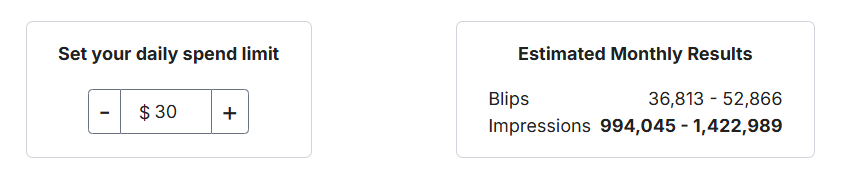
With Blip, you can run eye-catching Stanford billboards in the Stanford area on virtually any budget, because you only pay per “blip”—a 7.5 to 10-second ad display on digital billboards near Stanford, California. During campaign setup, you simply choose a daily budget, and Blip automatically keeps your advertising within that limit while maximizing when and where your message appears. The price of each blip varies based on location, time, and advertiser demand, so you’re always paying a fair, market-driven rate.
Where can I advertise with Blip near Stanford, California?
Our digital billboards near Stanford are located in San Carlos, a key city along the US‑101 corridor in San Mateo County, giving advertisers a strategic option for billboard rental near Stanford that reaches the same core audience. Our San Carlos billboards are positioned to intercept audiences along major commute and leisure routes, providing a highly efficient form of billboard advertising near Stanford without the higher costs often associated with inventory directly on campus. San Carlos inventory offers a strong balance of reach, frequency, and budget efficiency.
Why are Stanford billboards in San Carlos effective for reaching the Stanford area?
The Stanford area sits at the heart of Silicon Valley’s innovation corridor, with high-income residents, global visitors, and decision‑makers from some of the world’s most influential companies moving through its streets and freeways every day. By using digital billboards near Stanford, especially along key commute routes in nearby San Carlos, brands can be put directly in front of tech professionals, students, healthcare workers, and affluent households who live, work, and travel in the Stanford area. Many commuters traveling between Palo Alto, Menlo Park, Stanford, and San Francisco routinely pass through or near San Carlos, making it an efficient choke point for high-frequency impressions.
When is the best time to run Blip billboard ads in Stanford, California?
Transit peaks typically coincide with 7–10 a.m. and 4–7 p.m., reinforcing those as key drive-time windows for billboard campaigns. The Stanford area also has strong seasonal patterns, with campus busiest from October through early June, and product announcements and conferences often clustering in spring and fall. With flexible digital scheduling, budgets can be ramped up or down around these specific periods rather than paying for constant exposure during low-impact times.
What kind of audience do Stanford, California billboards reach?
Stanford is surrounded by some of the most valuable audiences in the country, including affluent residents, tech professionals, students, faculty, and healthcare visitors. The Stanford Research Park hosts over 150 companies with more than 29,000 workers, and Stanford University plus its medical campus create dense flows of students, staff, patients, and visitors. This makes the area ideal for premium, B2B, healthcare, education, and consumer lifestyle campaigns.
Do I need a contract to advertise with Blip near Stanford?
No, Blip has no long-term contracts or minimum commitments. You can start, pause, or stop your campaign at any time.
How fast can I launch a billboard campaign with Blip near Stanford?
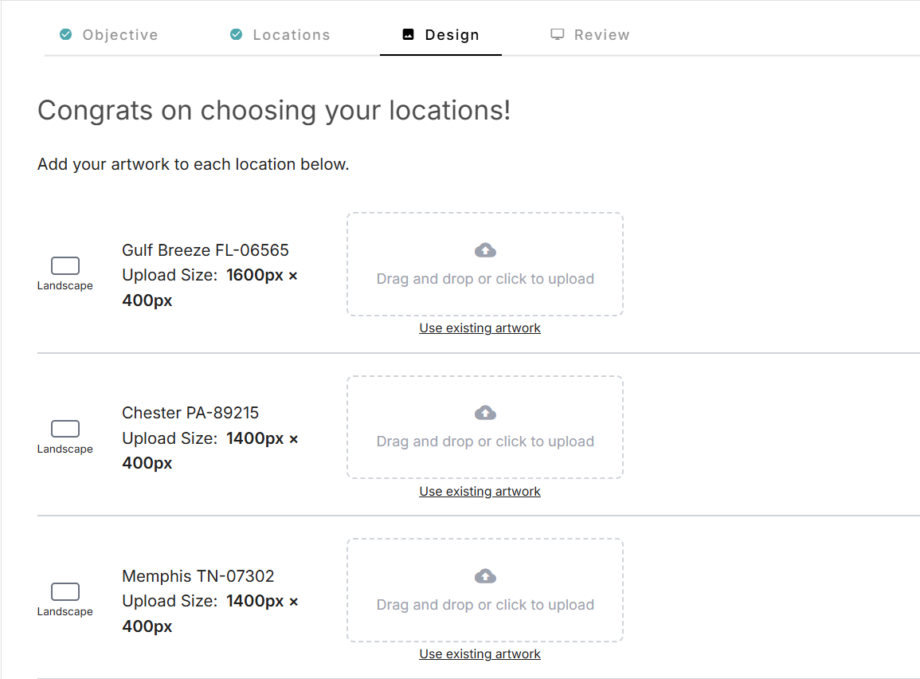
You can have your campaign live in minutes. Create a free account, select your locations, set your budget, upload your design, and start running once approved.
Where can I advertise with Blip near Stanford?
Blip has digital billboards near Stanford. You can browse available locations on a map, choose the ones that fit your audience, and start advertising right away.
Still have questions? Launch a campaign in minutes — no contracts, no commitments.
Start Your CampaignStanford Billboard Advertising Guide
The Stanford area sits at the heart of Silicon Valley’s innovation corridor, with high-income residents, global visitors, and decision‑makers from some of the world’s most influential companies moving through its streets and freeways every day. By using digital billboards near Stanford, especially along key commute routes in nearby San Carlos, we can put brands directly in front of tech professionals, students, healthcare workers, and affluent households who live, work, and travel in the Stanford area. For many brands, these Stanford billboards function as a high‑impact extension of existing digital and offline campaigns focused on the Peninsula.

Understanding the Stanford Area Market
Stanford is surrounded by some of the most valuable audiences in the country:
-
Population density and wealth
-
The Stanford census-designated place itself has roughly 15,000–17,000 residents, but it is immediately adjacent to:
- Palo Alto (about 68,000 residents and roughly 26,000+ households) – City of Palo Alto
- Menlo Park (about 35,000 residents and around 12,000–13,000 households) – City of Menlo Park
- Mountain View (about 82,000 residents and roughly 36,000 housing units) – City of Mountain View
- Within a 10‑mile radius of Stanford, the broader Peninsula/South Bay catchment easily exceeds 1 million residents when including Redwood City, San Carlos, Sunnyvale, and Los Altos.
-
Median household income is extremely high, ranking among the top urban areas in the U.S.:
- Palo Alto’s median household income is around $190,000–$200,000, with some neighborhoods exceeding $250,000.
- Menlo Park and Mountain View both sit in the $160,000+ range, with tech‑heavy tracts reporting medians above $200,000.
- In nearby Los Altos, median household income is frequently reported above $230,000.
-
Educational attainment is equally elevated:
- More than 70–80% of adults in Palo Alto, Menlo Park, and Mountain View hold at least a bachelor’s degree.
- Graduate or professional degree attainment exceeds 40–50% in several tracts bordering the Stanford campus.
- In some Stanford‑adjacent neighborhoods, fewer than 5–7% of adults lack any college education, indicating an extremely high‑skill audience.
-
The Stanford census-designated place itself has roughly 15,000–17,000 residents, but it is immediately adjacent to:
-
Innovation and employment
- Stanford University employs roughly 16,000–18,000 people (including faculty and staff) and enrolls about 17,000 students (approximately 7,800 undergraduates and 9,000+ graduate students) – Stanford University. Total on‑campus population on a typical weekday can exceed 35,000–40,000 when including postdocs, contractors, and visitors.
- The Stanford Research Park hosts over 150 companies with more than 29,000 workers in fields from AI to biotech – Stanford Research Park. Many firms are high‑growth or publicly traded, creating dense clusters of decision‑makers and high‑earning employees who are regularly exposed to billboard advertising near Stanford as they commute.
-
Nearby tech hubs:
- Meta in Menlo Park, with tens of thousands of employees globally and several thousand at its Menlo Park headquarters.
- Google in Mountain View, with global employment over 180,000 and a massive campus population in the Shoreline and North Bayshore areas.
- Dozens of venture capital firms along Sand Hill Road managing hundreds of billions of dollars in assets, making this corridor one of the highest concentrations of venture capital in the world.
- Local unemployment rates in Palo Alto, Menlo Park, and Mountain View typically trend below 3–4%, reflecting a tight labor market and strong spending power.
-
Healthcare and campus traffic
- Stanford Health Care and Lucile Packard Children’s Hospital together report hundreds of thousands of outpatient visits per year, plus tens of thousands of inpatient admissions – Stanford Health Care. On a typical weekday, it is common for 10,000–15,000 staff, patients, and visitors to be on the Stanford medical campus.
- The Stanford medical complex draws patients from across Northern California, with meaningful inflows from the Peninsula, the East Bay, Sacramento, and Central Valley regions. Many of these visitors travel via US‑101 or I‑280, passing our San Carlos boards en route and making them ideal Stanford billboards for reaching healthcare audiences.
This combination of affluent residents, global talent, and constant visitor inflow makes the Stanford area ideal for premium, B2B, healthcare, education, and consumer lifestyle campaigns. Our digital billboards in nearby San Carlos (about 6.9 miles from Stanford) are positioned to intercept these audiences along major commute and leisure routes, providing a highly efficient form of billboard advertising near Stanford without the higher costs often associated with inventory directly on campus.
Why San Carlos Billboards Effectively Serve the Stanford Area
Our digital billboards near Stanford are located in San Carlos, a key city along the US‑101 corridor in San Mateo County, giving advertisers a strategic option for billboard rental near Stanford that reaches the same core audience:
-
San Carlos at a glance
- San Carlos itself has a population of roughly 30,000 residents, with median household income often reported above $180,000 and home values well over $2 million in many neighborhoods – City of San Carlos.
- The city sits between Redwood City and Belmont, with convenient access to both US‑101 and El Camino Real (CA‑82), capturing local and regional traffic streams.
-
Commuter flows
- US‑101 between San Jose and San Francisco carries well over 200,000 vehicles per day on many segments, according to Caltrans District 4. Specific Peninsula count stations frequently report 180,000–220,000 average daily vehicles.
- During peak hours, northbound and southbound flows can exceed 8,000–10,000 vehicles per hour in each direction on the busiest stretches.
-
Commuters traveling between:
- Palo Alto / Menlo Park / Stanford and San Francisco
- Stanford area employers and San Mateo / Redwood City / Belmont routinely pass through or near San Carlos, making it an efficient choke point for high‑frequency impressions.
- Average one‑way commute times in Silicon Valley commonly fall in the 28–35 minute range, increasing dwell time on freeways and enhancing billboard visibility.
-
Regional reach
-
The Stanford area draws workers from both San Mateo County and Santa Clara County:
- San Mateo County population: about 750,000+ – County of San Mateo
- Santa Clara County population: about 1.9 million+ – County of Santa Clara
- Nearly 60–65% of employed residents in these counties commute by car, truck, or van to work, and a majority of those drive alone—feeding steady volumes onto US‑101 and I‑280.
- Many of these workers commute north–south along 101, making San Carlos a powerful location for reaching decision‑makers going to or from the Stanford area, SFO, or downtown San Francisco.
-
The Stanford area draws workers from both San Mateo County and Santa Clara County:
-
Behavioral patterns
-
Tech and professional services employees commonly drive between campus/office locations and:
- San Francisco and the Peninsula suburbs to the north
- San Jose and South Bay cities to the south
- San Carlos is also a dining and nightlife stop with a lively downtown, particularly along Laurel Street, where local businesses benefit from both local residents and regional visitors – highlighted by San Carlos Business Community.
- Weekend patterns show elevated leisure traffic to coastal destinations (Half Moon Bay, Pacifica) and shopping hubs like Stanford Shopping Center, leading to strong Saturday and Sunday impression counts.
-
Tech and professional services employees commonly drive between campus/office locations and:
By leveraging billboards in San Carlos, we can cost‑effectively blanket the commute paths that Stanford‑area professionals, students, and visitors travel every day, with the flexibility to concentrate impressions during the most valuable time-of-day windows. For advertisers exploring billboard rental near Stanford, San Carlos inventory offers a strong balance of reach, frequency, and budget efficiency.
Key Audience Segments in the Stanford Area
We can plan stronger campaigns by understanding who we are actually reaching near Stanford and how different billboards near Stanford can speak to each group:
1. Tech and Startup Professionals
-
Occupation mix
- In Palo Alto, Menlo Park, and Mountain View, 50–60% of employed residents work in management, business, science, or arts occupations—far above the national share (around 40%).
- In some Stanford‑adjacent census tracts, the share of residents employed in professional and technical services, information, and finance exceeds 45–50% of all jobs.
- The Stanford Research Park and nearby campuses collectively house tens of thousands of engineers, product managers, founders, and executives who commute daily across US‑101 and I‑280.
-
Income and spending
- Individual tech salaries frequently exceed $150,000–$200,000 for mid‑career engineers, with total compensation (stock + bonus) for senior roles often surpassing $300,000–400,000.
- High earnings translate into large discretionary budgets for software tools, professional education, premium devices, EVs, and financial services.
-
Implications for creatives
- This audience responds to concise, high‑IQ messaging and clear value propositions.
-
B2B brands can highlight:
- Enterprise SaaS
- Cloud infrastructure
- Developer tools
- AI solutions and security products
-
Consumer brands can emphasize:
- Premium hardware and gadgets
- Financial services and wealth management
- Travel, experiences, and high‑end lifestyle
2. Students, Faculty, and Academic Visitors
-
University population
- About 17,000 Stanford students plus 2,000+ postdocs and thousands of visiting scholars and continuing education participants.
- Stanford hosts over 100+ major conferences and symposia annually, along with hundreds of departmental events, bringing tens of thousands of unique visitors each year – Stanford Events.
- Campus‑based centers like the Stanford Linear Accelerator (SLAC), the SLAC National Accelerator Laboratory, Hoover Institution, and professional schools create additional flows of visiting academics and industry partners – including the Hoover Institution.
-
Mobility patterns
- A significant share of students do not own cars, which means family members, rideshare drivers, and visitors frequently travel by car to and from campus along US‑101, I‑280, and El Camino Real.
- Large events (e.g., admit weekends, move‑in and move‑out, graduation) can push daily visitor counts on or near campus above 40,000–50,000.
-
Implications
- Students: responsive to food delivery, nightlife, local experiences, career fairs, and skill‑building tools.
- Faculty/visitors: strong potential for executive education, conferences, luxury hotels, and premium dining.
3. Healthcare Patients and Families
-
Reach and demographics
- Stanford’s medical centers draw patients from across Northern California and beyond, including high‑acuity cases that typically involve multi‑day stays and repeat follow‑up visits.
- A substantial portion of patients and caregivers travel more than 25–50 miles for care, often using US‑101 as the primary route.
-
Visitor behaviors
- Many patient families stay in nearby hotels and extended‑stay properties in Palo Alto, Menlo Park, Redwood City, and San Carlos, contributing to local hotel occupancy rates that frequently exceed 70–80% during peak periods.
- Visitors commonly search for services within a 5–10 mile radius of the hospital, including dining, grocery, and wellness offerings.
-
Needs and opportunities
- Lodging and short‑term rentals
- Restaurants and grocery options
- Financial and legal services
- Wellness and pharmacy services
Our San Carlos billboards can capture this flow for brands wanting to support patients and families heading toward or departing the Stanford area, making them a practical alternative to on‑campus Stanford billboards that may be more limited in availability.
4. Affluent Local Residents
-
Home values
- Palo Alto’s median home value is well over $3 million, and in some neighborhoods, median sales prices surpass $4 million, as reflected in regional real estate data frequently highlighted by outlets like Palo Alto Online.
- Menlo Park and Los Altos frequently report median values above $2–3 million, with luxury properties regularly transacting at $5 million+.
- Along the Peninsula, cities such as Atherton and Hillsborough often rank among the highest‑priced ZIP codes in the nation, reinforcing the local concentration of ultra‑high‑net‑worth households.
-
Spending power
- High discretionary income supports premium auto, luxury retail, private schools, travel, and investment services.
- Local private schools commonly charge tuition in the $40,000–60,000 per year range, illustrating the willingness to spend on education.
- EV adoption rates in many Peninsula ZIP codes are several times the national average, making this a prime region for EV and home‑energy campaigns.
-
Billboard messaging can successfully promote:
- Wealth management and private banking
- High‑end automotive brands and EVs
- Boutique fitness, medical aesthetics, and wellness
- Luxury home services and renovations
Traffic, Transit, and Movement Patterns to Leverage
We want to align our schedules and creatives with how people actually move near Stanford, so that billboard advertising near Stanford reaches audiences at the right moments:
Freeways and Arterials
-
US‑101 (Bayshore Freeway)
- Primary north–south artery between San Francisco and San Jose.
- Caltrans data shows daily traffic volumes commonly in the 200,000+ vehicle range on busy Peninsula segments – Caltrans District 4.
- Average speeds during peak periods can drop below 25–30 mph, creating longer exposure times to digital billboard messages.
-
Ideal for commuters between:
- San Francisco / San Mateo cities and the Stanford area
- South Bay tech campuses and Stanford area residential zones.
-
I‑280 (Junipero Serra Freeway)
- More scenic alternative to 101, with lighter but still significant commuter flows; many sections still carry 80,000–120,000 vehicles per day.
- Many Stanford‑area residents prefer I‑280 for its lower congestion and direct access to Palo Alto via Page Mill Road and Sand Hill Road.
- I‑280 also carries substantial weekend leisure traffic to and from the Peninsula’s open space preserves and coastal destinations.
-
El Camino Real (CA‑82)
- Major surface arterial paralleling US‑101, with daily traffic volumes typically in the 30,000–60,000 vehicles per day range in Peninsula cities.
- Serves as a key connector between downtowns (San Carlos, Redwood City, Menlo Park, Palo Alto, Mountain View) and local retail, dining, and services.
Our San Carlos locations capitalize on the heavy US‑101 corridor traffic, which captures a large share of Stanford‑bound commuters and visitors and gives Stanford billboards excellent coverage for north–south travel.
Rail and Transit
While our billboards focus on road traffic, understanding transit helps clarify when roads are most congested:
-
Caltrain
- Peninsula commuter rail linking San Francisco, the Stanford area (Palo Alto, Menlo Park, Mountain View stations), and San Jose – Caltrain.
- Pre‑pandemic weekday ridership exceeded 60,000 boardings; recent recovery figures show tens of thousands of weekday riders, with peaks on commute‑oriented “Baby Bullet” and limited‑stop trains.
- Special event trains (e.g., for sports or major events) further amplify ridership spikes that closely mirror highway congestion.
-
SamTrans & VTA
- SamTrans buses serve San Mateo County and connect to Caltrain – SamTrans. Key routes along El Camino Real and cross‑Peninsula corridors help feed traffic onto park‑and‑ride lots and station areas.
- VTA buses and light rail serve the South Bay and connect into the Stanford area via Palo Alto Transit Center – VTA.
- Together, SamTrans and VTA move tens of thousands of riders per weekday, many of whom are “multimodal” commuters who also use cars, rideshare, or shuttles.
Transit peaks typically coincide with 7–10 a.m. and 4–7 p.m., reinforcing those as key drive‑time windows for billboard campaigns.
Seasonality: When to Push Hard Near Stanford
The Stanford area has strong seasonal patterns that can guide our campaign timing and help plan billboard rental near Stanford for maximum impact:
-
Academic calendar
- Fall quarter starts in late September; campus is busiest from October through early June – Stanford Academic Calendar
- Move‑in and orientation weeks can push short‑term visitor counts up by 5,000–10,000+ additional people on and around campus.
-
Heavier student and faculty presence means:
- Back‑to‑school campaigns in September–October
- Internship and recruiting messages in January–March
- Graduation and relocation services in April–June
-
Tech industry cycles
-
Product announcements and conferences in the Bay Area often cluster around:
- Spring (March–May)
- Fall (September–November)
- Major events in nearby San Francisco and San Jose regularly attract 10,000–60,000+ attendees each, depending on the show, which drives hotel, dining, and transportation demand along the Peninsula.
-
Consider timed pushes for:
- B2B SaaS and developer products during major conference weeks (e.g., San Francisco and San Jose tech events covered by The Mercury News and Silicon Valley Business Journal
- Recruiting campaigns right before and after big tech events.
-
Product announcements and conferences in the Bay Area often cluster around:
-
Holiday and travel peaks
- Thanksgiving and winter holidays (late November–December) see strong retail and travel demand.
- SFO handled over 57 million passengers in peak pre‑pandemic years, and even during recovery years, tens of millions pass through annually. A significant share of Peninsula travelers access SFO via US‑101, increasing impressions along our San Carlos boards – San Francisco International Airport.
- Many Stanford‑area residents also use San Jose Mineta International Airport (SJC) via US‑101 and CA‑85, further boosting seasonal freeway traffic – San José Mineta International Airport.
-
Sports and events
- Stanford football and other sports draw tens of thousands of fans on game days, with Stanford Stadium capacity around 50,000 – Stanford Athletics and Stanford Stadium
- Large home games and NCAA tournaments spike car traffic on both US‑101 and I‑280 several hours before and after events.
- Event‑driven campaigns (restaurants, rideshare promos, sports merchandise) can be intensified on weekends with home games and regional tournaments.
With flexible digital scheduling, we can ramp budgets up or down around these specific periods, rather than paying for constant exposure during low‑impact times, making billboard advertising near Stanford more efficient.
Dayparting: Timing Messages for Maximum Effect
Because the Stanford area’s audience is heavily professional and academic, the time of day we run specific creatives matters:
-
Morning Drive (6–10 a.m.)
- Target: tech workers, executives, faculty, and students commuting north–south on US‑101.
- On busy days, morning peak hour volumes on US‑101 can exceed 9,000–10,000 vehicles per direction, generating extremely dense impressions.
-
Best for:
- B2B messaging (“Reach developers across 10,000+ teams,” etc.)
- Financial and productivity apps
- Coffee, breakfast, and grab‑and‑go offers
- Use benefit‑first copy: “Cut your dev cloud bill by 40%” is stronger than a vague brand slogan.
-
Midday (10 a.m.–3 p.m.)
- Traffic mix: business trips, medical appointments, logistics, and local errands.
- Midday traffic levels on Peninsula freeways typically operate at 60–80% of peak volumes, but with higher leisure and errand‑related trip purpose.
-
Best for:
- Healthcare services around Stanford hospitals
- Retail and dining, especially lunch promos
- Home services targeting remote workers
-
Evening Peak (3–7 p.m.)
- Heavy traffic returning from Stanford area offices and campuses toward Peninsula and San Francisco.
- Evening peak can be even more congested than morning, with recurring bottlenecks that slow average speeds to 15–25 mph on some 101 segments.
-
Best for:
- Restaurant and nightlife promotions in Palo Alto, Menlo Park, Redwood City, and San Carlos
- Streaming, gaming, entertainment, and sports
- Auto dealers and EVs (drivers literally looking at cars while driving their current one)
-
Late Evening (7–11 p.m.)
- Less volume but higher leisure mind‑set.
- Still captures tens of thousands of vehicles nightly on US‑101, including diners, entertainment seekers, and shift workers.
-
Focus on:
- Entertainment, events, and weekend planning
- Food delivery and late‑night dining
- Subscription services and apps
Using digital billboards, we can rotate separate creatives for each daypart, matching message tone and offer to the audience’s mindset and getting more value out of every billboard rental near Stanford.
Creative Best Practices for the Stanford Area
The Stanford area is one of the most media‑savvy regions in the world. Many drivers work in design, product, or marketing. Our creatives need to respect that:
-
Respect intelligence; avoid clichés
- Tech and academic audiences respond poorly to generic slogans.
-
Use one clear idea per creative:
- “Ship compliant AI faster” (for an AI tooling platform)
- “Same‑day MRI near Stanford area” (for a medical imaging center)
- Aim for 6–8 words plus a logo and URL or simple CTA.
-
Lean on data and proof
-
Numbers resonate strongly with analytical audiences:
- “Trusted by 3,000+ engineering teams”
- “Average client portfolio grew 18% annually over 5 years”
- “4.9★ rated care, 10 minutes from Stanford area”
- If citing data, keep it short and legible in a glance—roughly 1–2 seconds of reading at highway speed.
-
Numbers resonate strongly with analytical audiences:
-
Minimalist design with strong contrast
- Use 6–8 words max.
- High‑contrast color palettes (dark background, light text or vice versa).
-
Emphasize:
- Large brand logo
- Simple icon or product shot
- Short URL or brand name easy to recall.
- On a 14′ x 48′ digital board at freeway distances, characters around 18–24 inches tall typically offer solid legibility.
-
Local cues without overdoing it
-
Subtle references can work:
- “Serving the Stanford area and Silicon Valley since 2005”
- Visual nods to the Dish, Hoover Tower, or palm‑lined campus drives (without cluttering the design).
- Mentioning local ties can improve trust for healthcare, education, and professional services—especially when paired with recognitions from local outlets like Palo Alto Online or Almanac News.
-
Subtle references can work:
-
Clear next step
-
Use simple calls to action that work at 65 mph:
- “Search ‘FirmName Wealth’”
- “Visit ParkNameEV.com”
- “Scan to save 20%” if the board placement allows longer dwell times (e.g., at bottlenecks).
- Consider using short vanity URLs (under 15 characters) and brand names with high recall.
-
Use simple calls to action that work at 65 mph:
These principles apply whether you are testing a single creative on a few billboards near Stanford or scaling a multi‑board regional takeover.
Tailoring Strategies by Industry
Below are concrete ways different advertisers can leverage billboards serving the Stanford area from San Carlos.
Tech and B2B SaaS
- Objective: Brand awareness among engineers, founders, and tech decision‑makers.
- Target audience: Workers at Stanford Research Park, Meta, Google, and startups across the Peninsula.
-
Market context:
- The Bay Area hosts thousands of venture‑backed startups and a high density of Fortune 500 and global tech firms.
- Local VC funding in a strong year can exceed $40–50 billion, indicating substantial budgets for software, cloud, and infrastructure.
-
Tactics:
- Run campaigns heavy on weekday rush hours (7–10 a.m., 4–7 p.m.).
-
Use strong social proof:
- “Used by 8 of the top 10 Silicon Valley unicorns.”
- “Cut deploy times by 60% for 2,000+ teams.”
- Synchronize with PR and launch weeks covered by outlets like Palo Alto Online and The Mercury News.
- Pair out‑of‑home with geo‑targeted digital ads aimed at ZIP codes near Stanford and San Carlos to reinforce recall.
- Consider flighting billboard advertising near Stanford around major industry events, using creative that references conference themes or pain points.
Healthcare and Wellness
- Objective: Drive patient appointments and awareness of new facilities or services.
- Target audience: Patients and families traveling to Stanford hospitals and nearby clinics.
-
Market context:
- The Stanford medical ecosystem includes multiple satellite clinics across the Peninsula and South Bay, creating a network of dozens of locations reachable via US‑101.
- Healthcare spending per household in affluent ZIP codes is significantly higher than national averages, particularly for elective and specialty care.
-
Tactics:
- Target daytime and early evening when medical visits are most common.
-
Highlight accessibility and speed:
- “Urgent Care, 10 minutes from Stanford area – Open 8 a.m.–8 p.m.”
- “Same‑day telehealth visits, covered by major plans.”
- For mental health and wellness, keep messaging reassuring and discreet, focusing on outcomes (e.g., “Feel like yourself again in 8 weeks.”).
- Coordinate messaging with public health updates and local coverage from sources like San Mateo County Health and Santa Clara County Public Health
Education and EdTech
- Objective: Recruit students for local private schools, online courses, or graduate programs.
- Target audience: Parents in high‑income households and Stanford‑area students.
-
Market context:
- The Peninsula hosts dozens of competitive private K‑12 schools and tutoring centers, serving thousands of students each year.
- EdTech adoption is high, with local households often maintaining multiple computers/tablets and high‑speed internet penetration above 95%.
-
Tactics:
- Concentrate campaigns around admission seasons (Jan–April for fall, Oct–Nov for midyear).
-
Use clear differentiators:
- “Ranked top 1% in California test scores.”
- “AI‑focused bootcamp in 12 weeks; no CS degree required.”
-
Highlight outcomes:
- “90% admitted to top‑50 universities.”
- “Average score increase: +200 SAT points.”
- Use Stanford billboards to reinforce brand credibility by associating with a globally recognized education hub.
Retail, Dining, and Hospitality
- Objective: Increase foot traffic and reservations from affluent Stanford‑area residents and visitors.
- Target audience: Commuters and weekend travelers passing through San Carlos to or from the Stanford area.
-
Market context:
- Downtown San Carlos and nearby Redwood City have seen substantial restaurant and nightlife growth, with dozens of venues drawing locals and visitors on weekends – supported by resources from the City of Redwood City City of Belmont
- Hotel occupancy along US‑101 in San Mateo County often runs in the 70–80% range in busy months, with average daily rates reflecting high willingness to pay.
-
Tactics:
-
Promote specific offers:
- “Happy Hour 4–6 p.m., Downtown San Carlos – Exit Now”
- “Boutique hotel 12 minutes from Stanford area, Free parking + Wi‑Fi”
- Highlight proximity (e.g., “3 minutes off 101”) and parking availability—key decision factors for Peninsula residents.
- Amplify in sync with local event calendars from Discover Palo Alto or San Mateo County tourism resources.
- Use digital billboards near Stanford to run dynamic offers for weekends, holidays, and game days.
-
Promote specific offers:
Geographic Targeting and Message Mapping
Even with our billboards located in San Carlos, we can conceptually “map” messages to Stanford‑area sub‑audiences based on commute routes:
-
Northbound 101 in the morning
- Targets: people leaving the Stanford area for San Mateo County, San Francisco, or SFO.
- Typical trip lengths can range from 15–40 miles, giving multiple exposure opportunities to freeway‑side creative.
-
Best for:
- Airport parking, travel services, and business hotels
- Financial services and B2B offers (people mentally in “work mode”)
- News media subscriptions and productivity tools
-
Southbound 101 in the evening
- Targets: workers returning to the Stanford area from northern cities.
- Evening return trips often coincide with errands and dining decisions; roughly 30–40% of weekday dining out occasions occur on weeknights in many metro areas, and this pattern holds strongly in tech hubs.
-
Best for:
- Restaurants and grocery delivery
- Streaming, gaming, and home products
- Education and skills (ads consumed while planning personal growth and side projects)
-
Weekend scheduling
- Targets: families heading to coastal destinations, parks, or shopping hubs like Stanford Shopping Center – Stanford Shopping Center
- Weekend freeway flows can remain high, often at 70–90% of weekday volumes, but with far more leisure‑driven trips.
-
Best for:
- Attractions, events, family dining
- Auto services, detailing, and home improvement retailers
- Local experiences promoted through regional guides and coverage from San Mateo County Parks and similar resources.
By selectively adjusting timing and creative themes, we can effectively “speak” to Stanford students, hospital visitors, or tech executives during exactly the moments they’re most receptive, maximizing the value of billboard advertising near Stanford.
Measuring and Optimizing Campaigns Serving the Stanford Area
A data‑driven region expects data‑driven marketing. While billboard impact is partly brand‑level, we can still measure and refine:
-
Correlated web and app traffic
-
Track:
- Direct traffic spikes to your URL
- Branded search queries (e.g., “BrandName Stanford”)
- Compare periods when billboards are active vs. paused.
- In many OOH case studies, brands see 10–30% lifts in branded search during active campaigns; use this as a benchmark when analyzing your own deltas.
-
Track:
-
Promo codes and vanity URLs
- Use exclusive codes like “STANFORD20” or vanity URLs (e.g., Brand.com/StanfordArea) shown only on billboards to attribute leads and sales.
- When possible, segment codes by direction or creative (“NORTH101”, “SC‑EVENING”) to understand which placements and dayparts perform best.
-
Location‑based analytics
-
Compare app installs, signups, or store visits from:
- ZIP codes around Stanford (94305, 94301, 94303, 94025, 94040/41)
- Nearby Peninsula ZIP codes reached through San Carlos.
- Many advertisers observe 15–40% higher engagement in ZIP codes closest to their OOH assets; use this as a reference point for optimization.
- Layer in local data sources, such as economic and demographic profiles from City of Palo Alto, City of Menlo Park City of San Carlos, to refine targeting assumptions.
-
Compare app installs, signups, or store visits from:
-
A/B creative testing
-
Rotate two or three variants:
- Data‑driven headline vs. emotional benefit
- Product image vs. lifestyle image
- After 2–4 weeks, double down on the higher‑performing approach.
- Look for statistically meaningful differences in key metrics (e.g., 10–20%+ variance in CTR on parallel digital campaigns or in branded search volume during matching flight dates).
-
Rotate two or three variants:
Because digital billboards allow quick creative swaps, we can iterate visuals and messages much like online campaigns, but at the scale and impact of large‑format out‑of‑home. This flexibility is especially valuable when managing billboard rental near Stanford for seasonal, event‑based, or testing‑heavy campaigns.
By combining the innovation‑rich audience of the Stanford area with the heavy traffic flows near our San Carlos billboards, we can build campaigns that reach some of the most influential and affluent consumers and decision‑makers in the world. With smart timing, data‑backed messaging, and thoughtful creative tailored to tech‑savvy, high‑income, and academically oriented viewers, digital billboards near Stanford become a powerful complement to any media mix and a scalable way to own the conversation along Silicon Valley’s most important commute corridors.