Billboards near Pleasanton, CA
No Minimum Spend. No Long-Term Contracts. Just Results.
Trusted by Leading Brands


Billboard advertising
near Pleasanton has never been easier
How much is a billboard near Pleasanton?
Why Choose Blip for Billboard Advertising near Pleasanton
Blip lets you launch Pleasanton billboards in minutes, reaching I-580/I-680 commuters without a media buyer.
Set a flexible budget for Pleasanton and Blip keeps your ads serving near Stoneridge and Hacienda within it.
Daypart your Pleasanton ads for 6:30-9 a.m. and 3-6:30 p.m. to catch Tri-Valley commuter traffic.
No contracts means you can test Pleasanton around the Fairgrounds, then scale what works in real time.
Use Blip's real-time analytics and creative tools to tune Pleasanton messages for shoppers, families, and BART riders.
Frequently Asked Questions About Billboard Advertising near Pleasanton
How much does a billboard cost near Pleasanton, California with Blip?
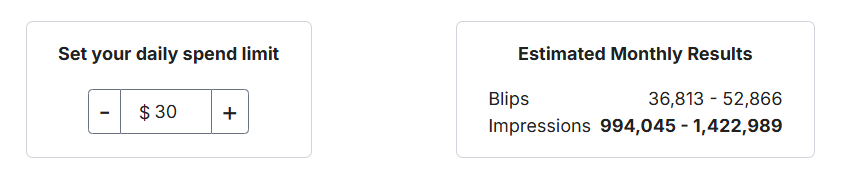
With Blip’s flexible, pay-per-blip pricing, you can run Pleasanton billboards on any budget, paying only for the individual 7.5–10-second ad displays you receive. You set a daily budget while building your campaign, and Blip automatically keeps your ads serving the Pleasanton area within that amount, so you stay in control of your spend. The price of each blip on billboards near Pleasanton, California depends on when you choose to advertise, which locations you select, and current advertiser demand.
Where can I advertise with Blip near Pleasanton, California?
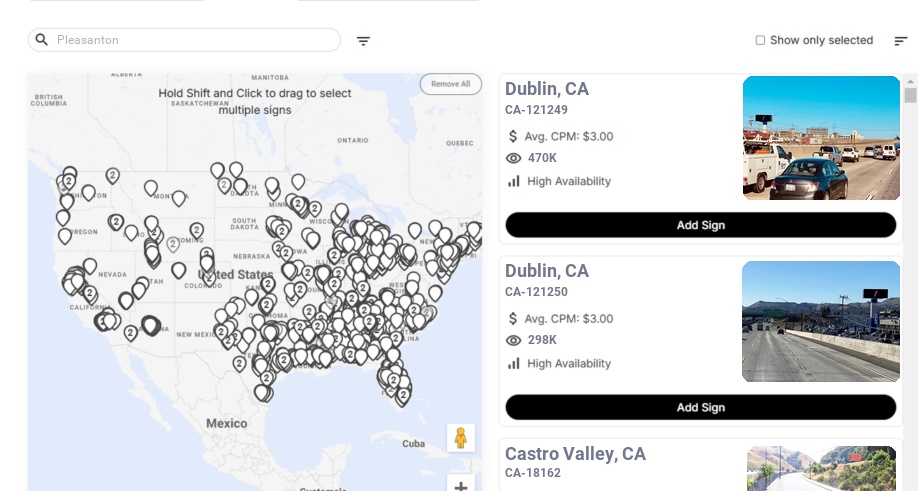
With Blip’s digital billboards in nearby Dublin serving the Pleasanton area, we can put advertisers directly in front of residents, commuters, and visitors at the exact moments they are most likely to respond. Our three digital billboards in Dublin are all within roughly 3 miles of Pleasanton, positioned along primary regional corridors that Pleasanton residents use daily. For most advertisers, these billboards near Pleasanton function like true local placements because they sit on the exact routes residents travel between home, work, school, and shopping.
What makes the Pleasanton area good for billboard advertising with Blip?
Pleasanton is one of the most desirable suburban communities in the Bay Area, and that shows up in both demographics and spending power. Pleasanton sits at the crossroads of the Tri-Valley, with affluent neighborhoods, major employers, regional shopping, and heavy commuter flows all converging around I-580 and I-680. This strong local profile is exactly why Pleasanton billboards and nearby digital placements perform so well for regional and neighborhood businesses.
When is the best time to run billboards in Pleasanton, California?
Billboard success near Pleasanton hinges on aligning your schedule and creative with how people actually move through the area. Morning peak is approximately 6:30–9:00 a.m., afternoon traffic builds from about 3:00–6:30 p.m., and evening traffic includes shopping and restaurant outings along Dublin and Pleasanton’s commercial corridors. Weekends are strong for retail, parks, wineries, and events, making daytime placements especially useful for family- and leisure-oriented campaigns.
What kinds of businesses work well on Pleasanton billboards with Blip?
Certain industries are especially well-positioned to succeed with digital billboards serving the Pleasanton market. Local retail, professional and home services, healthcare, fitness and wellness, real estate, and events, hospitality, and tourism can all benefit from reaching commuters and shoppers in the corridor. With high homeownership, strong incomes, and frequent regional traffic, these billboards can build brand familiarity and drive action across many local verticals.
Do I need a contract to advertise with Blip near Pleasanton?
No, Blip has no long-term contracts or minimum commitments. You can start, pause, or stop your campaign at any time.
How fast can I launch a billboard campaign with Blip near Pleasanton?
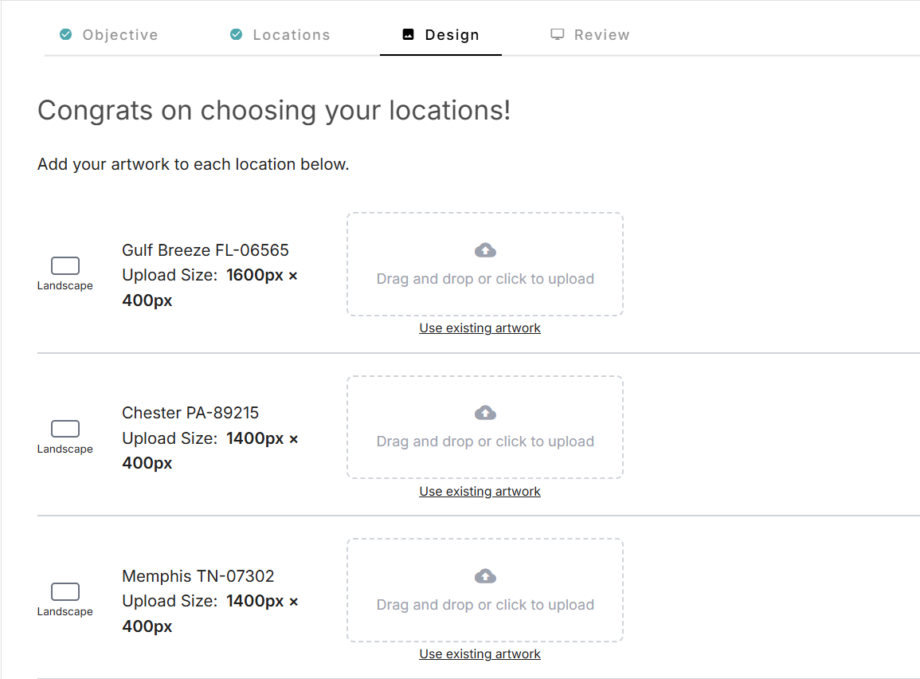
You can have your campaign live in minutes. Create a free account, select your locations, set your budget, upload your design, and start running once approved.
Where can I advertise with Blip near Pleasanton?
Blip has digital billboards near Pleasanton. You can browse available locations on a map, choose the ones that fit your audience, and start advertising right away.
Still have questions? Launch a campaign in minutes — no contracts, no commitments.
Start Your CampaignPleasanton Billboard Advertising Guide
Pleasanton sits at the crossroads of the Tri‑Valley, with affluent neighborhoods, major employers, regional shopping, and heavy commuter flows all converging around I‑580 and I‑680. With Blip’s digital billboards in nearby Dublin serving the Pleasanton area, we can put advertisers directly in front of residents, commuters, and visitors at the exact moments they are most likely to respond, making billboards near Pleasanton an efficient extension of your overall marketing mix.
Understanding the Pleasanton Area Market
Pleasanton is one of the most desirable suburban communities in the Bay Area, and that shows up in both demographics and spending power. This strong local profile is exactly why Pleasanton billboards and nearby digital placements perform so well for regional and neighborhood businesses.
-
Population & growth
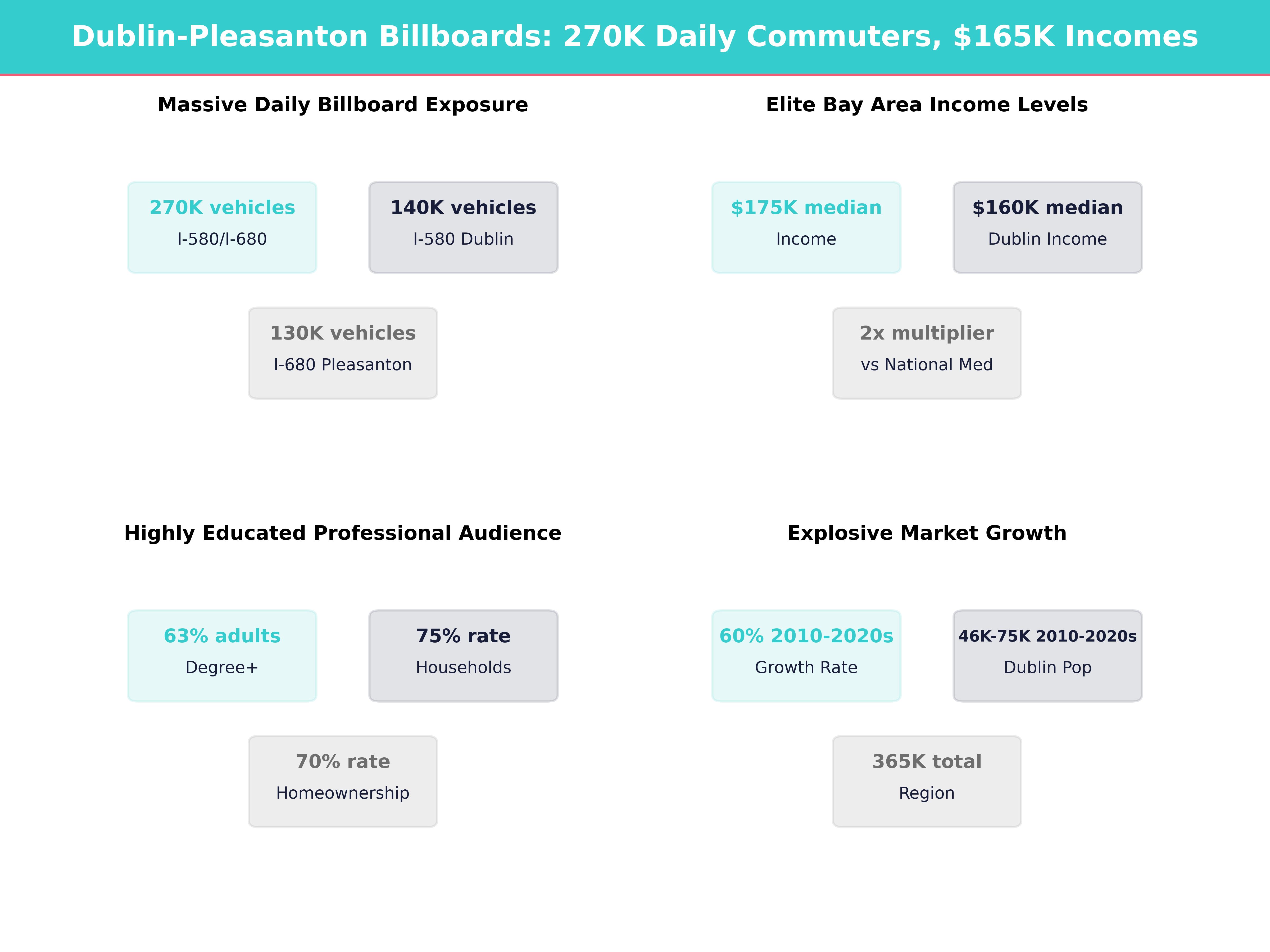
- Pleasanton has roughly 78,000–82,000 residents, and the broader Tri‑Valley (Pleasanton, Dublin, Livermore, San Ramon, and Danville) totals 360,000–370,000 residents when you combine each city’s official estimates from local city profiles and economic development reports.
- Dublin, where our boards are located, has been one of the fastest‑growing cities in California over the last decade, growing from about 46,000 residents in 2010 to more than 75,000 by the early 2020s—an increase of over 60% according to city demographic summaries from the City of Dublin. This growth expands the everyday audience for billboard advertising near Pleasanton.
- Pleasanton’s population skews heavily family‑oriented, with children under 18 making up roughly 25–27% of residents and about three‑quarters of households classified as family households in recent city demographic snapshots. This supports strong demand for family services, education, healthcare, and recreation.
- Homeownership is high, with many local profiles placing Pleasanton’s owner‑occupied rate near 70% and Dublin’s near 60–65%, well above many inner‑Bay Area markets—important for home services, remodeling, and real estate advertisers.
-
Income & spending
- Pleasanton’s median household income is consistently among the highest in Bay Area suburban markets, commonly reported in recent city and regional economic reports at $170,000–$180,000+ per household, which is more than double the national median.
- Dublin’s median household income is similarly strong, often cited at $150,000–$170,000+, reflecting the concentration of dual‑income professional households in the I‑580 corridor.
-
High incomes translate into significant discretionary spending. Regional economic development summaries for the Tri‑Valley frequently note:
- Annual household spending on restaurants and food away from home exceeding $7,000–$8,000 per household.
- Annual spending on entertainment and recreation often above $4,000 per household.
- Strong outlays on home improvement, furnishings, and vehicles, with local per‑household spending often 30–50% higher than national averages.
- Educational attainment is also high, with around 60–65% of adults in Pleasanton and Dublin holding at least a bachelor’s degree. This supports demand for premium services, high‑end retail, and sophisticated financial and professional offerings.
-
Employment & commuting
- Pleasanton is home to major employers clustered around Hacienda Business Park and the Stoneridge corridor, including technology, finance, life sciences, and professional services firms. Hacienda alone encompasses more than 11 million square feet of mixed‑use space and is frequently cited as supporting 15,000–20,000+ jobs on a typical weekday.
- Major companies and institutions in and around Pleasanton and Dublin collectively account for tens of thousands of daily commuters, including employees of healthcare systems, financial institutions, and technology firms highlighted by the City of Pleasanton Economic Development team.
- A significant share of Pleasanton and Dublin residents commute daily to other East Bay cities and Silicon Valley via I‑580, I‑680, and BART. Regional transportation data from agencies such as Caltrans District 4 and BART show tens of thousands of daily cross‑county trips moving through the I‑580/I‑680 junction, creating repeated opportunities for billboard advertising near Pleasanton.
- Pleasanton benefits from two BART stations nearby (West Dublin/Pleasanton and Dublin/Pleasanton), with combined weekday ridership that, pre‑pandemic, reached 9,000–11,000 entries/exits per day. Even with post‑pandemic ridership in the 60–70% recovery range system‑wide, this still represents a sizable transit‑oriented audience and a powerful, recurring commuter base for advertisers.
For context and local insights, advertisers can reference the City of Pleasanton, the City of Dublin, Alameda County, and regional tourism resources such as Visit Tri‑Valley, which regularly publishes visitor statistics, event calendars, and hospitality data for the region. These resources are useful when planning both online campaigns and billboard rental near Pleasanton.
Why Dublin Boards Work for the Pleasanton Area
Our three digital billboards in Dublin are all within roughly 3 miles of Pleasanton, positioned along primary regional corridors that Pleasanton residents use daily. For most advertisers, these billboards near Pleasanton function like true local placements because they sit on the exact routes residents travel between home, work, school, and shopping.
Key advantages of these locations:
-
Proximity to I‑580 and I‑680:
Traffic counts reported by Caltrans show:- I‑580 through Dublin carrying roughly 130,000–150,000 vehicles per day near the I‑680 interchange.
- I‑680 near Pleasanton carrying on the order of 120,000–140,000 vehicles per day.
- Combined, that’s approximately 250,000–290,000 daily vehicle trips in the immediate interchange area. Traffic includes:
- Local Tri‑Valley residents heading to work and school.
- Long‑distance commuters heading to Oakland, San Francisco, and Silicon Valley.
- Visitors traveling between the Central Valley and the Bay Area, particularly on weekends and holidays.
-
Access to major destinations:
- Stoneridge Shopping Center, a regional mall drawing shoppers from across the Tri‑Valley and beyond, with mall and retail‑analytics sources typically estimating millions of annual visits.
- Hacienda Crossings, Dublin Place, and other high‑traffic retail nodes around Dublin Boulevard, Amador Plaza Road, and Fallon Road that together host hundreds of thousands of shopper visits per month.
- The Dublin/Pleasanton BART and West Dublin/Pleasanton BART stations, key park‑and‑ride hubs for commuters from Pleasanton, Dublin, Livermore, and beyond.
- Office parks and business centers along Hacienda Drive and Owens Drive, including large multi‑tenant campuses promoted by the Hacienda and City of Dublin business resource pages.
-
Daily repetition for locals:
Tri‑Valley transportation and commuting surveys consistently show that a large share of residents drive their own vehicles to work—often 70% or more in these suburban communities. Pleasanton residents traveling between home, retail, schools, and work frequently pass through these Dublin corridors multiple times per week, giving advertisers dozens of potential impressions per household each month on Pleasanton billboards and nearby units.
When we combine high‑traffic roadways with affluent, repeat local audiences, the result is an ideal platform for awareness and top‑of‑funnel campaigns aimed at the Pleasanton area.
Audience & Traffic Patterns to Leverage
Billboard success near Pleasanton hinges on aligning your schedule and creative with how people actually move through the area.
Weekday vs. weekend
-
Weekdays
- Morning peak (approximately 6:30–9:00 a.m.) is dominated by commuters heading from Pleasanton/Dublin toward Oakland, San Francisco, or San Jose, plus local trips to offices in the Hacienda/Stoneridge area. Regional congestion reports from 511 SF Bay regularly flag the I‑580/I‑680 interchange as one of the East Bay’s busy morning bottlenecks.
- Afternoon school and work traffic builds from about 3:00–6:30 p.m. as families head to after‑school activities, retail, and dining. Local school districts such as Pleasanton Unified School District and Dublin Unified School District serve tens of thousands of students combined, generating substantial pickup/drop‑off traffic every weekday.
- Evening traffic (6:30–9:00 p.m.) includes shopping and restaurant outings along Dublin and Pleasanton’s commercial corridors, often boosted by weekday events, youth sports, and fitness classes.
-
Weekends
-
Saturdays and Sundays see strong traffic heading to:
- Stoneridge Shopping Center and nearby big‑box retail clusters, which collectively attract tens of thousands of weekend shoppers.
- Regional parks and wineries in and around Pleasanton, Livermore, and the broader Tri‑Valley, promoted by Visit Tri‑Valley and the East Bay Regional Park District, which reports millions of annual visits to its trails and open spaces.
- Events at the Alameda County Fairgrounds, including horse shows, festivals, and trade events in addition to the main fair.
- Weekend daytime traffic tends to be more family‑ and leisure‑oriented, ideal for campaigns promoting entertainment, retail, events, and dining in the Pleasanton area.
-
Saturdays and Sundays see strong traffic heading to:
Seasonality and local events
Key annual patterns to build into your digital billboard strategy:
-
Alameda County Fair:
The annual fair at the Pleasanton Alameda County Fairgrounds typically runs for several weeks in early summer and has recently drawn on the order of 400,000–450,000 visitors per year according to fair attendance recaps and local media coverage from outlets like Pleasanton Weekly. This is a prime window to:- Promote events, food & beverage, and attractions that tie into fair attendance.
- Reach out‑of‑area visitors driving through the Pleasanton/Dublin corridor on I‑580 and I‑680.
-
Back‑to‑school & graduation:
With multiple high‑performing public and private schools, August–September (back‑to‑school) and May–June (graduations) are strong for:- Tutoring centers, after‑school programs, and enrichment, serving a combined K–12 enrollment that easily exceeds 20,000 students across Pleasanton and Dublin public schools alone.
- Colleges and trade schools targeting local households that place a premium on education; local profiles frequently show that over half of households have school‑age or college‑age children.
- Retailers offering apparel, electronics, and home goods, especially those near major retail hubs like Stoneridge Shopping Center, Hacienda Crossings, and downtown shopping districts highlighted by the Pleasanton Downtown Association.
-
Holiday shopping season (November–December):
- Regional malls and retail centers in the Pleasanton area see some of their highest monthly sales volumes of the year, with holiday foot traffic often rising 20–40% over typical months based on mall and merchant reports.
- Advertisers can capture intent‑driven shoppers with timely promotions, gift ideas, and holiday events, especially when synced with Black Friday, Small Business Saturday, and local events promoted by Visit Tri‑Valley’s events calendar.
Stay on top of local happenings through outlets like Pleasanton Weekly, East Bay Times, and Visit Tri‑Valley’s events calendar, then adjust your Blip campaigns in near‑real time.
Creative Strategies That Resonate Near Pleasanton
Because our digital billboards serve an educated, high‑income, family‑oriented audience, creative should reflect the lifestyle and expectations of Pleasanton‑area residents. Thoughtful creative makes billboard advertising near Pleasanton feel relevant and helpful rather than generic.
Design principles for this market
-
Lead with benefits, not just brand
- Example: “Same‑day HVAC repair in the Pleasanton area” with a clear phone and URL, rather than just a logo and slogan.
- For professional services (financial advisors, legal, medical), emphasize trust, expertise, and local credentials—such as “Serving Tri‑Valley families since 1998” or “Top‑rated in Pleasanton Weekly’s readers’ poll.”
-
Showcase local relevance
- Use familiar place‑based language: “Serving the Pleasanton–Dublin area,” “Minutes from Stoneridge,” or “Across from the Fairgrounds.”
- If your business is physically in or near Pleasanton, highlight the proximity: “5 minutes from Hacienda Business Park” or “Next to Stoneridge Mall,” and consider including recognizable local landmarks referenced on the City of Pleasanton visitor pages.
-
Use imagery that reflects the community
- Families, professionals, and active lifestyles (hiking, cycling, wine‑country scenes) resonate well, especially given the popularity of nearby open spaces promoted by the East Bay Regional Park District.
- Emphasize quality and modern aesthetics; with median incomes in the $150,000–$180,000+ range, audiences here tend to respond to clean, polished, premium‑looking design.
-
Keep text concise
- Aim for 6–8 words of core message plus logo/CTA. At freeway speeds of 55–65 mph, drivers typically have just 3–6 seconds to absorb your message.
- Use high‑contrast colors to stand out against bright daylight and evening headlights.
Tailoring messages by direction & daypart
If your business primarily draws from Pleasanton residents commuting toward the Bay, focus on:
- Morning east‑to‑west traffic: “Order tonight’s dinner now,” “Schedule your weekend home project,” or “Book your Tri‑Valley dental checkup before 9 a.m.”
- Afternoon west‑to‑east traffic returning home: “Stop by on your way home,” “Tonight only: 20% off at Hacienda location,” or “Pickup ready in 15 minutes – exit Pleasanton.”
For later‑night or weekend entertainment and dining, creatives can lean more into mood and experience:
- “Date night in the Pleasanton area? Reserve now.”
- “Live music this weekend – 10 minutes from here.”
- “Family brunch near the Fairgrounds – exit Pleasanton.”
Using Blip’s Tools to Target the Pleasanton Area
Blip’s flexibility is especially powerful in a corridor‑focused market like Pleasanton/Dublin. We can fine‑tune when and how often your ads appear to match your ideal audience and make your billboard rental near Pleasanton as efficient as possible.
Dayparting: Only pay when your audience is on the road
-
Commuter‑focused advertisers (coworking spaces, transit‑adjacent housing, B2B services) can run primarily during:
- 6:30–9:30 a.m. and 3:30–7:00 p.m., Monday–Friday, aligning with the documented peak periods of congestion reported by 511 SF Bay for I‑580 and I‑680.
-
Retail, dining, fitness, and entertainment can concentrate inventory in:
- Late afternoon/evening weekdays and 10:00 a.m.–9:00 p.m. on weekends, when shopping centers like Stoneridge Shopping Center, Hacienda Crossings, and downtown Pleasanton typically see their highest visit volumes.
-
Child‑ and family‑focused services (sports clubs, tutoring, pediatric care) often perform best when parents are in “family mode”:
- School pickup hours (2:30–5:30 p.m.) and weekend days, when traffic around local schools and parks highlighted by the City of Pleasanton Parks & Recreation department is especially strong.
Because Blip charges per “blip” (a single ad play), you can shift spend quickly between time blocks based on performance or seasonal needs.
Location selection: Owning the Pleasanton–Dublin approach
With three digital boards in Dublin serving the Pleasanton area, we can:
-
Emphasize specific boards that:
- Face traffic heading toward Pleasanton’s retail centers and neighborhoods, especially along approaches to the Bernal, Hopyard, and Santa Rita exits.
- Capture commuters heading to or from major employers in Hacienda Business Park or along Stoneridge, which collectively support tens of thousands of daily employee trips.
-
Create separate creatives for:
- Inbound to Pleasanton: “Turn right in 2 exits for our showroom,” “Visit our Pleasanton service center – 1 mile ahead.”
- Outbound from Pleasanton: “Schedule now and we’ll be ready when you get home,” “Book tomorrow’s appointment before you hit traffic.”
Even within a compact geography, this directional messaging can significantly increase relevance and lift recall. Studies of OOH campaigns frequently show double‑digit increases in ad recall when creative is tailored to direction and time of day.
Creative rotation and testing
Because digital boards allow fast creative updates, we recommend:
-
Running at least 2–4 variations at a time:
- Different value propositions (price vs. quality vs. convenience).
- Different CTAs (“Book today,” “Visit this weekend,” “Call now”).
- Comparing performance through downstream metrics (web traffic, calls, coupon redemptions). Many Tri‑Valley businesses report 10–30% lifts in branded search volume or website traffic during sustained OOH flights when paired with digital tracking.
- Swapping underperforming designs out quickly, rather than being locked into a single static board, to make the most of your impressions.
Key Vertical Opportunities in the Pleasanton Area
Certain industries are especially well‑positioned to succeed with digital billboards serving the Pleasanton market. When paired with billboards near Pleasanton that reach commuters and shoppers, these verticals can see particularly strong lifts.
Local retail & shopping destinations
The Pleasanton area is anchored by Stoneridge Shopping Center and several power centers in both Pleasanton and Dublin. Digital billboards can:
-
Drive last‑minute destination decisions:
- “Today only: extra 20% off at Stoneridge location.”
- “Exit now – free parking and kids’ play area.”
-
Highlight new store openings or seasonal lines:
- Holiday shop‑ins, spring fashion, back‑to‑school promotions.
- Support smaller retailers in downtown districts promoted by the Pleasanton Downtown Association and City of Dublin, where merchants rely heavily on regional visitors from across the Tri‑Valley.
Professional & home services
With high homeownership and income levels, residents invest heavily in home maintenance, improvement, and financial planning.
-
Home services (HVAC, roofing, landscaping, solar, remodeling):
- Emphasize reliability, local roots, and free estimates; many Pleasanton and Dublin households spend thousands of dollars per year on home improvement and maintenance.
- Promote seasonal offers (A/C tune‑ups before summer; roofing and gutter services before winter rains), synced with local climate patterns shared by outlets like East Bay Times.
-
Professional services (financial advisors, estate attorneys, CPAs):
- Use billboards to build brand familiarity ahead of tax season or market changes.
- Example: “Tri‑Valley financial planning for families earning $200k+,” aligning with local income profiles published by the City of Pleasanton Economic Development office.
Healthcare, fitness, and wellness
Pleasanton‑area families prioritize health, kids’ activities, and personal fitness.
-
Primary care, dental, and specialists:
- Promote new patient availability, extended hours, or specific specialties such as pediatrics, orthodontics, or sports medicine, especially as local medical groups and clinics expand along the I‑580 corridor.
-
Gyms, studios, and youth sports:
- Time ads around New Year’s, back‑to‑school, and early summer—peak enrollment periods when many fitness and youth sports programs see 20–40% spikes in sign‑ups.
- Example: “Summer swim lessons – 5 minutes from the Pleasanton BART station,” or “Join 2,000+ Tri‑Valley members at our Dublin gym.”
Real estate and housing
The Tri‑Valley continues to be a high‑demand housing market.
-
Residential real estate brokers and new home communities:
- Target commuters already driving through the area considering a move closer to work; regional housing reports often show Pleasanton and Dublin vacancy rates in the low single digits, with strong competition for listings.
- Promote open houses and new development releases on specific weekends, especially those highlighted in local real estate sections of Pleasanton Weekly and East Bay Times.
-
Apartments and transit‑oriented developments:
- Highlight walking distance to BART and major employers, emphasizing commute reductions of 20–40 minutes compared with more distant East Bay or Central Valley locations.
- Use directional copy like “Now leasing – 2 minutes from West Dublin/Pleasanton BART.”
Events, hospitality, and tourism
Pleasanton’s Fairgrounds, nearby wineries, golf courses, and regional parks attract visitors throughout the year.
-
Promote:
- Concerts, festivals, and trade shows at the Fairgrounds, many of which draw thousands of attendees per event according to Fairgrounds and local news reports.
- Winery weekends, tasting rooms, and hotel packages highlighted on Visit Tri‑Valley, which showcases dozens of wineries and lodging options across Pleasanton, Livermore, and Dublin.
- Use countdown messaging: “This weekend only,” “3 days left,” or “Tonight at 7 p.m.”; event marketers often see higher ticket sales in the final 72 hours, making flexible digital billboard scheduling especially valuable.
Measuring and Optimizing Your Pleasanton‑Area Campaign
To get the most from Blip’s boards near Pleasanton, we recommend a simple but disciplined approach to measurement. Whether you’re testing Pleasanton billboards for the first time or scaling a proven effort, tracking will help you refine your spend.
Set clear, trackable goals
Define success up front:
-
Website visits:
- Use memorable URLs or landing pages specific to your billboard campaign (e.g., yoursite.com/pleasanton). Many advertisers see 5–20% lifts in direct and branded traffic when OOH is active and properly tagged.
-
Phone calls:
- Use call tracking numbers dedicated to billboard ads and monitor call volume by time of day and day of week.
-
Store visits and sales:
- Track “How did you hear about us?” at the register or in sign‑up forms; in many local case studies, 15–30% of new customers report first hearing about a business through a sign or billboard.
-
Promotion codes:
- Use simple codes like “PLEAS10” for Pleasanton‑area billboard viewers to directly attribute redemptions to your OOH campaign.
Align schedules with outcomes
-
If you see more web traffic during evening hours, consider shifting more blips to 3:00–9:00 p.m., when commuters are home and researching purchases.
- If you are focused on billboard rental near Pleasanton that drives in‑store visits, prioritize the hours just before your busiest in‑store periods.
- If weekends drive more coupon redemptions or in‑store visits, increase your weekend bid and reduce weekday spend, aligning with retail foot traffic peaks reported by centers like Stoneridge Shopping Center and Hacienda Crossings.
- Review performance at least weekly. Many advertisers find that small schedule adjustments can yield 10–20% improvements in response metrics over the course of a campaign.
Because Blip allows you to adjust budgets and schedules continuously, you can iterate weekly or even daily.
Leverage local feedback
Pay attention to local channels:
- Monitor coverage and community trends via Pleasanton Weekly and East Bay Times, which frequently report on new developments, commute patterns, and consumer trends.
- Ask customers directly if they’ve seen your board near Dublin and what they recall from it. If they remember the brand but not the web address, you may need a larger URL or simpler message; if they remember only the offer, you might need clearer branding.
- For event‑driven campaigns, compare ticket sales or RSVPs in the Pleasanton/Dublin zip codes before, during, and after your billboard run to quantify your impact.
Putting It All Together
Digital billboards serving the Pleasanton area from nearby Dublin give advertisers a powerful combination of:
- High‑income, family‑oriented households, with median household incomes frequently in the $150,000–$180,000+ range and strong spending on retail, dining, travel, and home services.
- Heavy, repeat commuter traffic on I‑580 and I‑680, with roughly 250,000–290,000 vehicles per day moving through the Dublin/Pleasanton interchange.
- Regional destinations like Stoneridge Shopping Center, Hacienda Business Park, and the Alameda County Fairgrounds that attract hundreds of thousands to millions of visits annually.
- The flexibility to adjust spend and creative as conditions change, leveraging Blip’s per‑blip pricing and real‑time scheduling tools.
By aligning your dayparting, creative, and offers with how Pleasanton residents actually live, commute, shop, and play—and by grounding your decisions in local data and resources from organizations such as the City of Pleasanton, City of Dublin, and Visit Tri‑Valley—we can turn those daily drive‑by impressions into measurable results for your brand and make billboard advertising near Pleasanton a dependable growth channel for your business.