Billboards near Redlands, CA
No Minimum Spend. No Long-Term Contracts. Just Results.
Trusted by Leading Brands


Billboard advertising
near Redlands has never been easier
How much is a billboard near Redlands?
Why Choose Blip for Billboard Advertising near Redlands
Blip lets you launch Redlands billboards in minutes and reach I-10, I-215, and CA-60 commuters without a long-term contract.
Set flexible budgets in Redlands and pay only for the blips you want—ideal for testing routes near Moreno Valley and San Bernardino.
Use dayparting on Blip to catch Redlands hospital staff, students, and shift workers during 6-9 a.m. and 6-9 p.m. commute peaks.
Track Redlands campaign results in real time and shift spend when traffic spikes for the Redlands Bowl, back-to-school, or holiday shopping.
Blip's creative tools make it easy to build bold, high-contrast ads for Redlands freeway drivers with a clear CTA in seconds.
Frequently Asked Questions About Billboard Advertising near Redlands
How much does a billboard cost near Redlands, California with Blip?
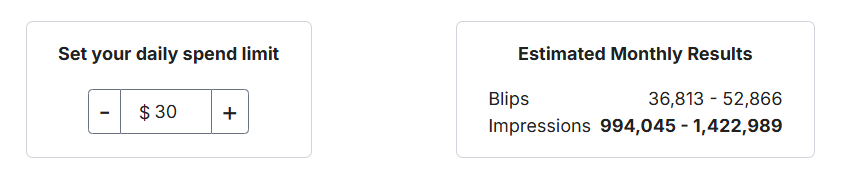
Blip makes the answer refreshingly simple: you set your own daily budget, and your ad only plays when it fits that budget. Every blip is a 7.5 to 10-second display on digital Redlands billboards serving the Redlands area, and you pay only for the individual blips you receive. Costs vary based on when and where your ad appears, plus real-time advertiser demand, but you stay in control because you can adjust your budget at any moment.
Where can I advertise with Blip near Redlands, California?
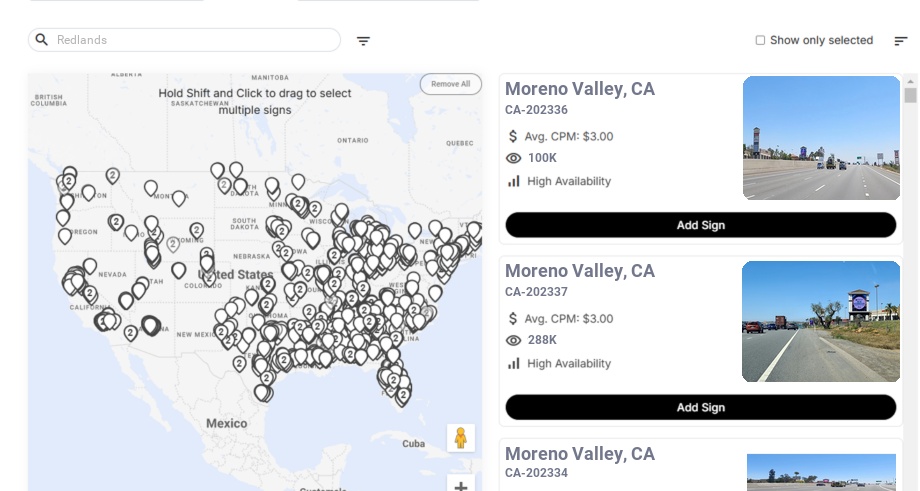
With six Blip digital billboards serving the Redlands area from nearby Moreno Valley and San Bernardino—each along heavily traveled corridors—advertisers can efficiently reach a diverse, commuter-heavy audience with flexible, data-driven campaigns. These placements provide metro-level reach without the cost and rigidity of traditional static units. They primarily capture I‑10 & I‑215 corridors near San Bernardino and CA‑60 and key surface streets near Moreno Valley.
What kinds of people do Redlands, California billboards with Blip reach?
In the Redlands area, several distinct groups respond well to billboard messaging, including suburban families and professionals, university and graduate students, healthcare professionals and hospital staff, and logistics, warehouse, and industrial workers. Many residents commute west toward Riverside and Orange County via I‑10 and CA‑60, or north toward San Bernardino along I‑215. This gives advertisers millions of weekly impressions when they run campaigns on the units serving the Redlands area.
When is the best time to run a Redlands, California billboard campaign with Blip?
Weekday commute peaks typically run from about 6:30–9:00 a.m. and 3:30–7:00 p.m. on I‑10, I‑215, and CA‑60, with traffic management data showing that these windows account for 40–50% of daily freeway volume. Midday captures stay-at-home parents, retirees, service workers, and students, while weekends see heavy traffic to shopping centers and events in downtown Redlands. Blip’s flexible scheduling lets you match your message to those patterns and adjust your schedule and budget weekly or even daily.
Why is Redlands, California a strong market for billboard advertising with Blip?
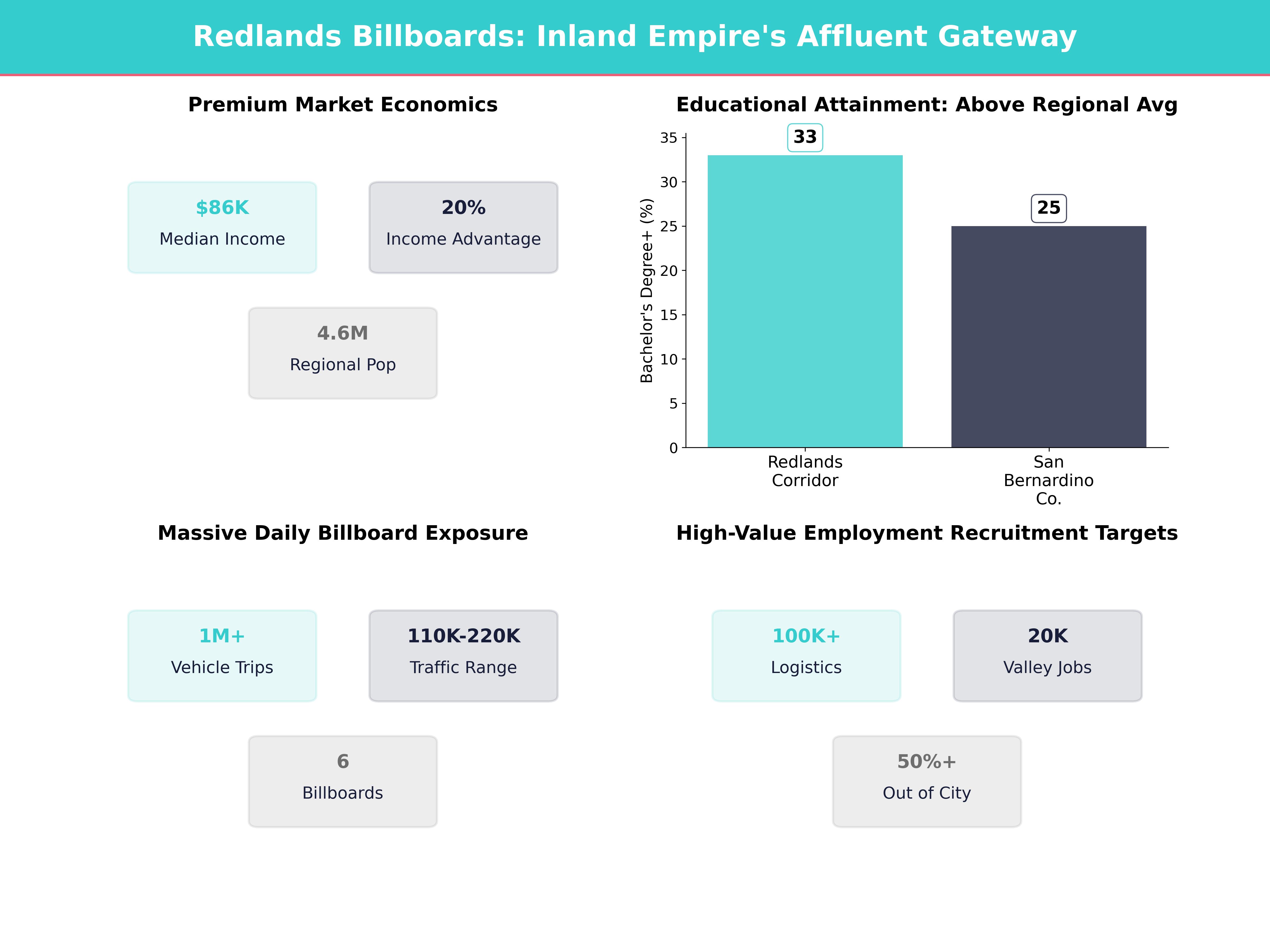
The Redlands area combines affluent neighborhoods, established institutions, and regional traffic flows that make out-of-home advertising especially effective. The city has a population in the mid‑70,000s, while San Bernardino County has more than 2.2 million residents and the broader Inland Empire exceeds 4.6 million people. Median household income is in the mid‑$80,000s, and the area also has strong commuter traffic and regional growth through 2045.
Do I need a contract to advertise with Blip near Redlands?
No, Blip has no long-term contracts or minimum commitments. You can start, pause, or stop your campaign at any time.
How fast can I launch a billboard campaign with Blip near Redlands?
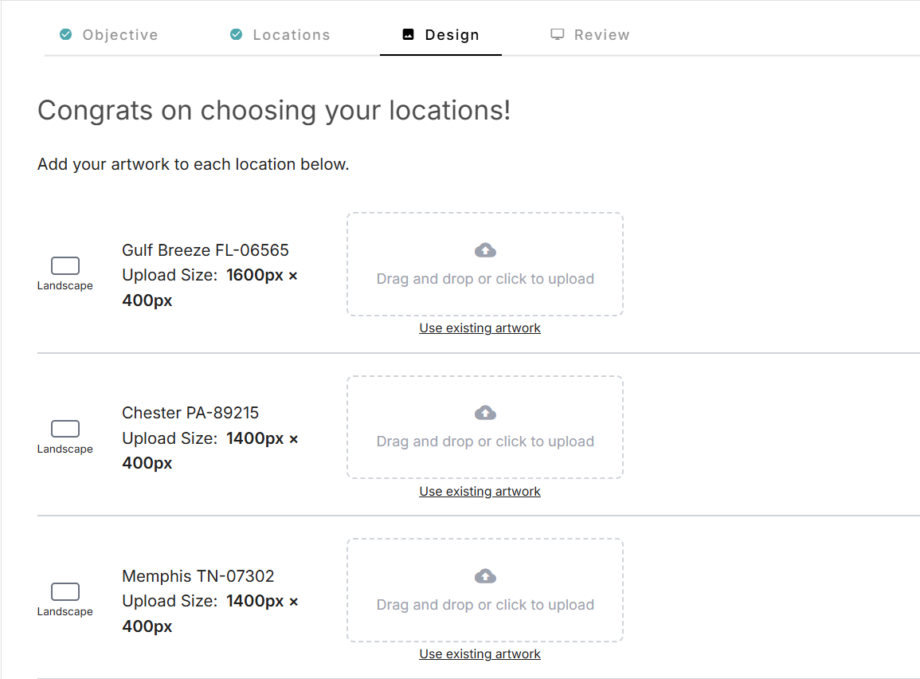
You can have your campaign live in minutes. Create a free account, select your locations, set your budget, upload your design, and start running once approved.
Where can I advertise with Blip near Redlands?
Blip has digital billboards near Redlands. You can browse available locations on a map, choose the ones that fit your audience, and start advertising right away.
Still have questions? Launch a campaign in minutes — no contracts, no commitments.
Start Your CampaignRedlands Billboard Advertising Guide
We explore billboard advertising opportunities in the Redlands, California area as a cost-effective way to reach commuters, families, students, and professionals moving through the Inland Empire every day. By focusing on data, local traffic patterns, and flexible digital inventory, we can help businesses of all sizes plug into high-traffic corridors without committing to rigid, long-term static boards. In this guide, we walk through why Redlands is a valuable out-of-home market, who you can reach, how to time your campaigns, and how to craft creative that truly resonates with local drivers.
The Redlands, California area sits at the heart of the Inland Empire, surrounded by major freeways, universities, healthcare hubs, and fast-growing logistics centers. With six Blip digital billboards serving the Redlands area from nearby Moreno Valley and San Bernardino—each along heavily traveled corridors—advertisers can efficiently reach a diverse, commuter-heavy audience with flexible, data-driven campaigns. For businesses comparing options for billboard advertising near Redlands, these placements provide metro-level reach without the cost and rigidity of traditional static units.
Why the Redlands Area Is a High-Value Billboard Market
The Redlands area combines affluent neighborhoods, established institutions, and regional traffic flows that make out-of-home advertising especially effective. When you factor in how many of these trips pass our Redlands billboards on their way to work, school, and shopping, it becomes clear why the area is so attractive for local and regional brands.
- The City of Redlands reports a population in the mid‑70,000s, within a wider San Bernardino County population of more than 2.2 million residents. The broader Inland Empire region exceeds 4.6 million people, creating a large, contiguous market for regional campaigns.
- Local financial and planning documents from Redlands show median household income in the mid‑$80,000s (roughly $83,000–$88,000), which is 15–25% higher than many nearby Inland Empire communities. Neighborhoods on the south side and in areas near the University of Redlands skew even higher, making the area attractive for premium retail, home services, and financial products.
- In the Redlands–Loma Linda–Yucaipa corridor, roughly 30–35% of residents hold a bachelor’s degree or higher, compared with about a quarter of residents countywide. This is driven in part by institutions like the University of Redlands and nearby Loma Linda University, creating strong demand for professional services, continuing education, and enrichment programs.
- San Bernardino County has consistently been one of the fastest-growing large counties in California, adding tens of thousands of residents over the past decade. Regional planning documents from agencies such as the Southern California Association of Governments project that the Inland Empire will continue to see population and job growth through 2045, especially in logistics, healthcare, and education.
The Redlands area also functions as a commuter nexus:
- Many residents commute west toward Riverside and Orange County via I‑10 and CA‑60, or north toward San Bernardino along I‑215. Local travel surveys and regional plans indicate that more than half of employed residents commute to jobs outside their home city, often traveling 20–40 minutes each way.
- Caltrans District 8 corridor counts along nearby stretches of I‑10, CA‑60, and I‑215 typically range from about 110,000 to over 220,000 vehicles per day on busy segments near Moreno Valley and San Bernardino, depending on the exact location and direction. This gives advertisers millions of weekly impressions when they run campaigns on our units serving the Redlands area.
With six digital billboards within about 10 miles—strategically located in Moreno Valley (about 9.4 miles from Redlands) and San Bernardino (about 9.5 miles from Redlands)—we can tap into both local Redlands trips and regional through-traffic, reaching commuters, shoppers, students, and logistics workers who travel these corridors daily. For many advertisers, this makes our inventory one of the most efficient options for billboard rental near Redlands.
Understanding Local Audience Segments
Effective creative starts with clear audience definitions. In the Redlands area, several distinct groups respond well to billboard messaging, and each can be reached efficiently through digital billboards near Redlands on I‑10, I‑215, and CA‑60.
1. Suburban families and professionals
- In Redlands and surrounding communities, roughly 25%–30% of residents are under age 18, reflecting a strong family presence and a substantial K–12 population across the Redlands Unified School District, which serves more than 20,000 students across its schools.
- Local housing data show that a majority of Redlands households are family households, with many dual-income professional families commuting to jobs in healthcare, education, government, logistics management, or professional services across San Bernardino, Riverside, and Moreno Valley.
- Homeownership rates in many Redlands neighborhoods exceed 55%–60%, supporting demand for home improvement, landscaping, solar, and financial planning.
Messaging tips:
- Focus on family-friendly imagery: parks, dining, extracurriculars, local landmarks like the historic downtown or the Redlands Bowl.
- Use benefit-led headlines: “Make Weeknights Easier,” “Protect What Matters,” “Weekend Fun Close to Home.”
- Highlight value and convenience—national surveys consistently show that more than 60% of suburban families prioritize time savings and easy access when choosing local services.
2. University and graduate students
- The University of Redlands enrolls around 3,000–4,000 students across its undergraduate and graduate programs, with hundreds of faculty and staff commuting from across the region.
- Nearby Loma Linda University adds several thousand more students and residents in healthcare, dentistry, pharmacy, and public health, along with thousands of employees at affiliated hospitals and clinics.
- Regional college-age populations (18–24) in the Redlands–San Bernardino–Riverside area number in the tens of thousands, creating a large audience for youth-focused brands.
Messaging tips:
- Emphasize affordability, convenience, and speed: phone repair, fast-casual dining, off-campus housing, gyms, and entertainment.
- Include short URLs and QR codes to capture phone-savvy audiences stopped in traffic—national OOH studies indicate QR response rates can rise 20–30% when targeting younger demographics in congested corridors.
- Promote student discounts clearly; more than 70% of college students report seeking discounts and deals when choosing where to eat or shop.
3. Healthcare professionals and hospital staff
The Redlands area is part of a significant healthcare corridor:
- Redlands Community Hospital serves the city and surrounding communities, employing hundreds of nurses, physicians, and support staff, and handling tens of thousands of patient visits each year.
- Nearby Loma Linda University Medical Center is one of the region’s largest healthcare employers, with several thousand staff members, medical residents, and faculty, plus high daily patient volumes across its campus.
- Healthcare is one of the top employment sectors in the Inland Empire, with regional labor market reports showing tens of thousands of healthcare jobs concentrated along the I‑10 and I‑215 corridors.
Messaging tips:
- Target dayparts that align with shift changes (6–8 a.m., 6–9 p.m.) and weekend rotations; hospital workers often work 10–12 hour shifts and commute during non-traditional rush hours.
- Pitch services that solve time and stress problems: prepared meals, auto services, financial services, childcare, and wellness.
- Feature easy parking, extended hours, or online booking—survey data show that more than half of healthcare workers rank flexible hours and time savings as top decision factors for personal services.
4. Logistics, warehouse, and industrial workers
To the west, Moreno Valley is home to one of the largest logistics clusters in the region, including the March Air Reserve Base
- The City of Moreno Valley reports more than 20,000 logistics, manufacturing, and distribution jobs in the area, with large facilities for e‑commerce, retail, and third-party logistics.
- Regional transportation and logistics sectors in the Inland Empire support well over 100,000 jobs, many of which involve daily commuting along I‑215, CA‑60, and I‑10 past our billboard locations.
- Many workers commute from the Redlands area or drive through it daily; typical logistics shifts (early morning and late night) create strong exposure during non-peak dayparts when digital billboards are highly visible.
Messaging tips:
- Target blue-collar and mid-income audiences with offers on automotive, quick-service restaurants, workwear, and training programs.
- Heavy emphasis on direct, bold offers: “$19.99 Oil Change,” “Hiring Now: $22/hr + Benefits.”
- Consider recruitment-focused creative: regional workforce reports indicate that warehousing and logistics employers frequently experience vacancy rates high enough that even modest increases in applicant flow (10–20%) can significantly impact operations.
Where Our Digital Billboards Reach Drivers Near Redlands
Our six digital billboards serving the Redlands area are located in nearby Moreno Valley and San Bernardino, along major freeway and arterial corridors. These corridors are documented by Caltrans District 8 as some of the highest-volume roadways in the Inland Empire. For advertisers searching for billboards near Redlands that still capture regional traffic, these placements provide a strong balance of reach, frequency, and flexibility.
While exact locations vary, they primarily capture:
-
I‑10 & I‑215 corridors near San Bernardino
- I‑10 carries high volumes of east–west traffic between the Redlands area, San Bernardino, and the rest of the Inland Empire. On busier segments, average daily traffic commonly ranges from 160,000 to more than 220,000 vehicles.
- I‑215 channels north–south commuters between San Bernardino, Riverside, and Moreno Valley, with many segments handling 120,000–180,000 vehicles per day.
- Combined, these routes generate well over 1 million weekly vehicle trips past our coverage area, translating to millions of potential brand impressions each month.
-
CA‑60 and key surface streets near Moreno Valley
- CA‑60 is the main commuter route between Moreno Valley, Riverside, and the Redlands area via I‑215/I‑10 connections.
- Traffic on CA‑60 through Moreno Valley often runs above 100,000–150,000 vehicles per day on busy segments, capturing both commuter and heavy truck traffic headed to distribution centers.
- Major arterials feeding CA‑60 and I‑215 add tens of thousands more daily vehicles, especially during peak commuting and shopping hours.
What this means for advertisers:
- Even though our boards are not within city limits, they effectively serve the Redlands area by intercepting residents during their daily commutes to work, shopping, and recreation.
- With typical commuters making 10 or more round trips per week, you can achieve high frequency and recall by maintaining presence across the same routes over several weeks.
- You can position your brand as the “local choice” for Redlands-area consumers while they travel through regional hubs they regularly pass, taking full advantage of digital billboard advertising near Redlands without being limited to a single static location.
Use our location filters to:
- Prioritize units closest to the routes you know your customers use.
- Mix Moreno Valley and San Bernardino placements for both east–west and north–south coverage.
- Build layered reach—regional OOH studies show that adding multiple boards along a commuter’s path can increase brand recall by 20–40% versus a single static location.
Timing Your Campaign for Maximum Impact
The Redlands area has clear patterns in when people are on the road. Leveraging Blip’s flexible scheduling, we can match your message to those patterns and make sure your Redlands billboards show up at the moments your customers are most likely to respond.
Weekday vs. weekend
- Weekday commute peaks typically run from about 6:30–9:00 a.m. and 3:30–7:00 p.m. on I‑10, I‑215, and CA‑60, with traffic management data showing that these windows account for 40–50% of daily freeway volume.
- Midday (10:00 a.m.–2:30 p.m.) captures stay-at-home parents, retirees, service workers, and students—groups that often make discretionary trips for shopping, dining, and services.
- Weekends see heavy traffic to shopping centers like Citrus Plaza San Bernardino Mountains, and events in downtown Redlands. Retail centers typically report higher foot traffic on Saturdays and Sundays, often 20–30% above weekday averages.
Strategy suggestions:
- B2B, professional services, and recruitment: focus heavily on weekday rush hours and early morning windows when decision-makers and frontline workers commute.
- Retail, restaurants, entertainment: layer weekend and evening coverage where discretionary trips are higher; national OOH research often finds weekend campaigns can deliver 10–15% higher response rates for dining and leisure.
- Event-based ads (concerts, festivals, open houses): ramp up impressions 3–7 days before the event, especially Thursday–Saturday, when ticket purchasing and planning activity spikes.
Seasonal patterns
The Redlands area has a year-round driving culture, but several seasons stand out:
-
Spring (March–May):
- University admissions visits, local festivals, and outdoor activities ramp up, with campus tours and community events drawing thousands of extra visitors.
- Target parents and students with education, housing, and activity messaging as local schools and colleges host orientations and showcases.
-
Summer (June–August):
- The Redlands Bowl Summer Music Festival is known for drawing tens of thousands of visitors each season, with individual performances often attracting crowds of 3,000–5,000 people.
- Tourism to nearby mountains and lakes increases, sending more traffic past our billboards as residents seek cooler weather and outdoor recreation.
- Great for attractions, dining, tourism, and seasonal hiring campaigns—many local employers increase staffing by 10–20% for summer operations.
-
Back-to-school (August–September):
- University of Redlands and nearby campuses restart; K–12 schools in the Redlands Unified School District return as well, bringing more than 20,000 students and thousands of staff back to daily commutes.
- Ideal timing for tutoring, extracurricular programs, family retail, and transportation services; back-to-school spending is one of the biggest consumer spending periods of the year.
-
Holiday season (November–December):
- Shopping centers in Redlands, San Bernardino, and Moreno Valley see heavy weekend and evening traffic, with some centers reporting double or triple normal weekday volumes on key dates.
- Emphasize gift-buying, year-end promotions, and charitable campaigns; charitable giving and retail promotions typically spike in December, making timely messaging especially effective.
With Blip, you can adjust your schedule and budget weekly or even daily to match these seasonal pulses rather than committing to a single static schedule.
Crafting Creative That Resonates With the Redlands Area
Local relevance dramatically improves billboard performance. In the Redlands area, we recommend focusing on:
1. Local identity and landmarks
- Reference well-known local touchpoints: downtown Redlands, the university, the Redlands Bowl, the city’s historic orange and citrus heritage, and nearby mountain views.
- Visitors bureaus and tourism resources like the City of Redlands and Redlands Chamber of Commerce consistently highlight these themes because they resonate with both residents and visitors.
- Example: “Redlands Families Save 20% This Weekend” with imagery of local-style homes or downtown streets.
These details help your billboard advertising near Redlands feel authentically local, which often boosts trust and response.
2. Clear, high-contrast design for freeway speeds
Traffic on I‑10 and CA‑60 often flows at 55–70 mph (when not congested), giving drivers only 6–8 seconds to absorb your message. Studies from major OOH industry groups show that ads with simple layouts and high contrast can increase recall by 20% or more compared with cluttered designs.
Design guidelines:
- 7 words or fewer in your main line.
- Large, high-contrast fonts (light text on dark background or vice versa).
- One key visual element (product image, happy customer, recognizable logo).
- A single call to action: “Exit at Alabama St,” “Order at FreshRedlands.com,” or a simple QR code.
3. Spanish-inclusive messaging where appropriate
San Bernardino County and nearby Moreno Valley have significant Hispanic/Latino populations, often over 50% in some communities, and around half of county residents identify as Hispanic or Latino.
- Consider bilingual creatives or Spanish-only versions for certain campaigns, especially retail, food, and family services.
- Keep Spanish copy just as concise as English; avoid cramming two full messages into one frame.
- Local and national marketing studies show that bilingual or Spanish-language campaigns in majority-Hispanic areas can see double-digit percentage lifts in engagement and response.
4. Directional and proximity-based calls to action
Drivers are often on their way to or from the Redlands area, so directional cues work very well:
- “Next 2 Exits – Redlands Auto Care”
- “10 Minutes from Here – Downtown Redlands Dining”
- “Near the University of Redlands – Book Your Tour Today”
Directional creative becomes particularly powerful when synchronized with specific boards that match the route to your location; simple distance indicators (e.g., “5 Minutes from This Exit”) have been shown in OOH research to boost store visits by measurable margins, often 10–15% compared with non-directional ads.
Smart Targeting Strategies With Blip Near Redlands
Blip’s flexible buying model lets us treat the Redlands area as a micro-market and fine-tune your exposure. Instead of locking into a single sign, you can treat all of our Redlands billboards as a coordinated network and shape your presence by time, route, and audience.
1. Start with a clear geographic focus
- If your store or service is in the Redlands area and draws from a 5–10 mile radius, prioritize units on I‑10 and I‑215 that are logical approaches from San Bernardino and Moreno Valley.
- If you serve a broader radius (e.g., healthcare, auto dealerships, regional attractions), run on a mix of all six boards to boost frequency for Redlands-area drivers across multiple routes.
- Regional travel surveys show that commuters often use the same corridors 10–20 times per week; consistent presence on those routes can significantly increase brand familiarity.
2. Use dayparting to match your customer’s schedule
Examples:
- Coffee shops, breakfast spots: focus on 6:00–10:00 a.m., when morning commute volumes are at their highest.
- Quick-service restaurants: 11:00 a.m.–2:00 p.m. and 5:00–8:00 p.m., to catch both lunch and dinner decisions.
- Gyms and fitness: early morning + late evening (5:00–7:30 a.m., 6:00–9:00 p.m.).
- Community events and entertainment: late afternoon and evening, especially Thursday–Sunday.
3. Layer creatives for different segments
Because we can rotate multiple artworks, you can serve slightly different messages to the same traffic:
- One design geared toward families: “Kids Eat Free on Tuesdays.”
- Another aimed at students and young adults: “Late-Night Bites Near Campus.”
- A third highlighting an upcoming event: “Live Music Friday – Reserve Now.”
Even if all three run on the same board, the combination increases the chance that a particular viewer will see at least one highly relevant message over the course of a week. OOH campaign analyses often show that rotating creative can extend campaign effectiveness and reduce “ad fatigue” compared with a single static message.
4. A/B test offers and headlines
For Redlands-area campaigns, small copy changes can produce noticeable lifts:
- Test “Save 20% in the Redlands Area” vs. “$50 Off Your First Visit.”
- Compare a brand-centric creative (big logo, tagline) with an offer-centric creative (price, limited-time deal).
- Evaluate performance using website traffic, promo codes, or direct mentions from customers (“We saw you on the billboard”).
Digital campaigns that actively test offers and headlines can see performance improvements of 15–30% over time, and those same principles apply to digital billboards when you track response carefully.
Use Cases: Who Thrives on Billboards Serving the Redlands Area
A wide range of advertisers can benefit from digital billboards near Redlands and the flexibility of short-term billboard rental near Redlands:
- Local restaurants and cafes in and around downtown, Citrus Plaza
- Healthcare providers in the Redlands and Loma Linda corridor: Highlight convenience, specialties, and new patient promotions; healthcare is one of the highest-spend categories in local advertising budgets regionally.
- Auto dealerships and services near I‑10 and CA‑60: Promote seasonal service specials and inventory highlights; auto-related OOH ads often benefit from proximity to major corridors where drivers are already thinking about their vehicles.
- Education and training providers (tutoring, trade schools, continuing education): Align with school-calendar peaks and graduation seasons; local colleges and training programs regularly leverage OOH to drive applications during key enrollment windows.
- Home services (HVAC, landscaping, solar, remodeling): Target affluent homeowners in the Redlands area with straightforward value propositions; rising temperatures and energy costs in the Inland Empire make HVAC and solar especially responsive categories.
- Recruitment campaigns for logistics, warehousing, and healthcare employers: Run on Moreno Valley and San Bernardino boards to reach commuting workers across the region; employers frequently report higher-quality applicants when OOH is combined with digital and job board campaigns.
When combined with Blip’s ability to buy by the “blip” (individual ad plays), these advertisers can run campaigns that match their real budgets rather than committing to large, inflexible contracts, making digital billboard advertising near Redlands accessible to organizations of all sizes.
Measuring Success and Iterating
To get the most out of your Redlands-area billboard campaign, we recommend a simple measurement framework:
-
Set a clear objective before launch
- Brand awareness (more people recognize your name in the Redlands area).
- Store traffic (more visits to a specific location).
- Leads or sign-ups (for services, events, or education programs).
- Hiring (more job applications from local candidates).
-
Tie at least one metric to that objective
- Use unique URLs or landing pages for billboard traffic.
- Add a “Mention this billboard for 10% off” offer at point of sale.
- Track spikes in direct website traffic or branded search volume during your campaign window.
- For recruitment, ask applicants how they heard about you and record “billboard near Redlands” as a specific option.
- Compare week-over-week or month-over-month performance; even single-digit percentage lifts (5–10%) can translate into substantial revenue or applicant gains over a full campaign.
-
Adjust based on performance
- If awareness is strong but conversions are weak, test a more aggressive offer or clearer call to action.
- If certain times or boards seem to correlate with better outcomes, shift more of your budget there.
- Rotate new creative every 4–8 weeks to avoid fatigue for daily commuters; commuters who see the same drive multiple times per week can quickly tune out unchanging messages.
Plugging Into the Redlands Community
Finally, consider integrating your campaign with local institutions and events:
- Sponsor or promote around Redlands Bowl performances and local festivals, many of which draw thousands of attendees per event.
- Tie billboards to stories or promotions featured in local news outlets like the Redlands Daily Facts or the Inland Valley Press-Enterprise, which reach readers across Redlands, San Bernardino, Riverside, and surrounding communities.
- Coordinate with city and tourism resources, such as the City of Redlands, the Redlands Chamber of Commerce, and countywide resources like San Bernardino County, to align your messaging with community initiatives, business programs, or major events.
By using data-driven scheduling, locally resonant creative, and well-defined goals, advertisers can turn our six digital billboards near Redlands into a powerful, flexible platform for reaching commuters, families, students, and professionals across the greater Redlands area, and make the most of every dollar they invest in billboard advertising near Redlands.