Billboards near Chino, CA
No Minimum Spend. No Long-Term Contracts. Just Results.
Trusted by Leading Brands


Billboard advertising
near Chino has never been easier
How much is a billboard near Chino?
Why Choose Blip for Billboard Advertising near Chino
Blip lets you launch Chino billboard ads on SR-60 and SR-71 commuter flows in minutes, with self-serve control and no traditional barriers.
Set a daily budget for Chino and never exceed it, so you can test weekday workers, shoppers, and Chino Airport logistics traffic with confidence.
Use dayparting in Chino to hit 5:30-9 a.m. commutes and 3-7:30 p.m. school pickup rushes, then shift spend anytime.
No contracts means Chino businesses can promote back-to-school, holiday, or move-in seasons, then pause or scale as demand changes.
Track Chino campaign results in real time and refine fast for high-volume routes like SR-91 and I-10-connected traffic.
Blip's creative tools make it easy to tailor Chino ads for bilingual families, weekend shoppers, and high-speed freeway viewing.
Frequently Asked Questions About Billboard Advertising near Chino
How much does a billboard cost near Chino, California with Blip?
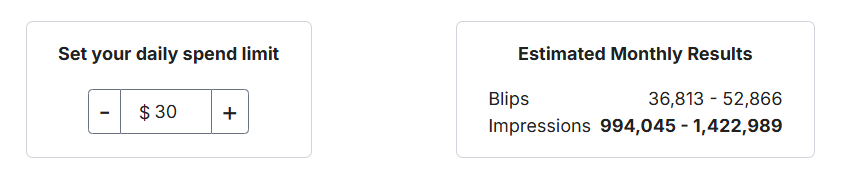
With Blip, you control exactly what you spend on Chino billboards by setting a daily budget that our system never exceeds, so you can test digital billboards near Chino, California on virtually any budget. Each “blip” is a brief 7.5–10 second ad shown on rotating digital displays serving the Chino area, and you only pay for the blips you receive. Prices per blip change based on location, time of day, and advertiser demand, so you can pay less during off-peak times or focus your spend on premium hours.
Where can I advertise with Blip near Chino, California?
With five digital billboards serving the Chino area from nearby Corona and Upland, you can reach commuters, families, and workers who move through this busy Inland Empire hub every day. Because our boards are located in nearby Corona (about 7.6 miles away) and Upland (about 8.7 miles away), they allow you to intercept a high volume of commuters, shoppers, and workers with direct daily ties to the Chino area. For advertisers comparing different Chino billboards and placements, this close-in coverage provides an efficient way to reach these same audiences with flexible, digital inventory.
What kind of people will Blip billboards near Chino, California reach?
The Chino area blends long-time residents, new master-planned communities, and a large working population in logistics and services. About 40–45% of households have children under 18, median age is around 34–36, and more than 80–85% of workers commute by car. A substantial Hispanic/Latino population—above 50% in many Inland Empire communities—also makes bilingual or culturally tailored creative a strong advantage.
When is the best time to run Blip ads near Chino, California?
Digital billboard flexibility is especially valuable in the Chino area because traffic patterns change noticeably throughout the week and year. Early-morning and late-afternoon weekday blips work well for commuters and industrial workers, while midday and weekend blips are ideal for shoppers and families. Late-night and early-morning windows can reach logistics, staffing, and QSR promotions.
What roads around Chino, California get the most traffic for billboard ads?
Major regional corridors influencing traffic to and from Chino include SR-60, SR-71, SR-91, I-15, and I-10. SR-60 carries heavy commuter, freight, and retail traffic, SR-71 links Chino to Corona and Pomona, and SR-91 near Corona routinely reaches 250,000+ vehicles per day. I-10 near Ontario and Upland and I-15 between Corona and the I-10 junction also carry very high daily volumes, making them important routes for roadside advertising.
Do I need a contract to advertise with Blip near Chino?
No, Blip has no long-term contracts or minimum commitments. You can start, pause, or stop your campaign at any time.
How fast can I launch a billboard campaign with Blip near Chino?
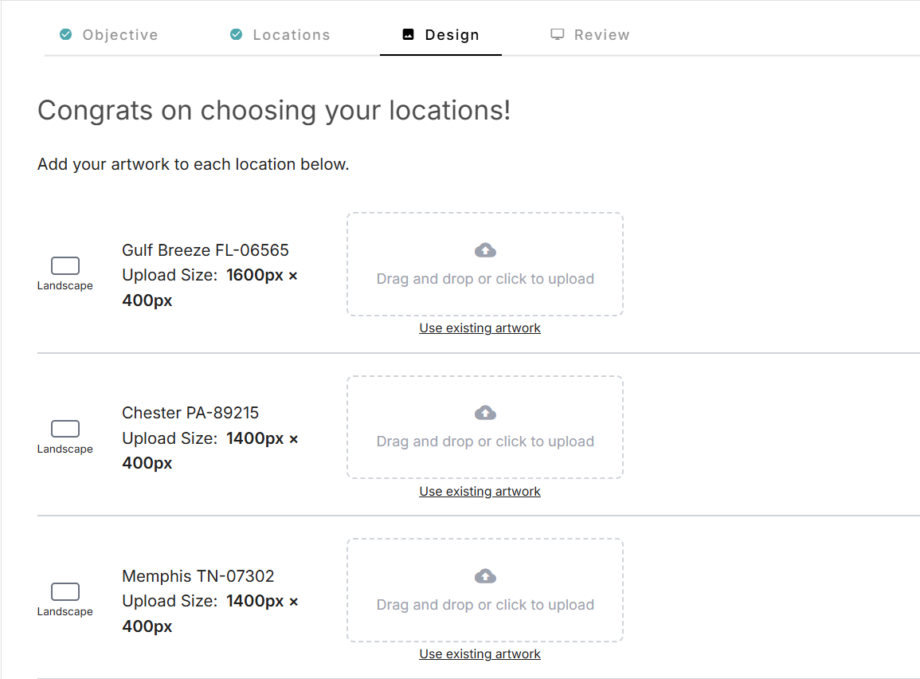
You can have your campaign live in minutes. Create a free account, select your locations, set your budget, upload your design, and start running once approved.
Where can I advertise with Blip near Chino?
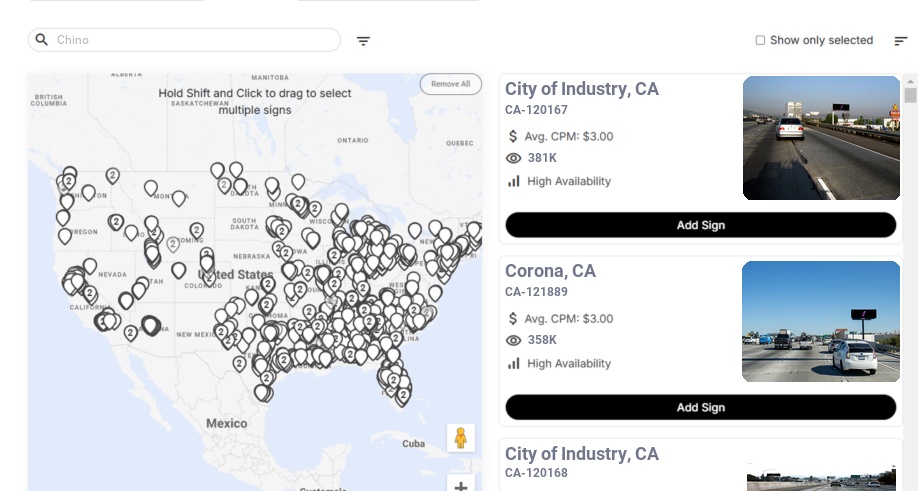
Blip has digital billboards near Chino. You can browse available locations on a map, choose the ones that fit your audience, and start advertising right away.
Still have questions? Launch a campaign in minutes — no contracts, no commitments.
Start Your CampaignChino Billboard Advertising Guide
Chino sits at a powerful crossroads of logistics, suburban growth, and Southern California commuter traffic. With five digital billboards serving the Chino area from nearby Corona and Upland, we can help you reach commuters, families, and workers who move through this busy Inland Empire hub every day. If you’re evaluating billboards near Chino to support a local or regional campaign, these nearby placements give you coverage that functions much like in-town inventory.
Understanding the Chino Area Market
Chino is one of the most strategically located communities in the Inland Empire. According to recent city and regional estimates from the City of Chino, San Bernardino County, and regional planning agencies:
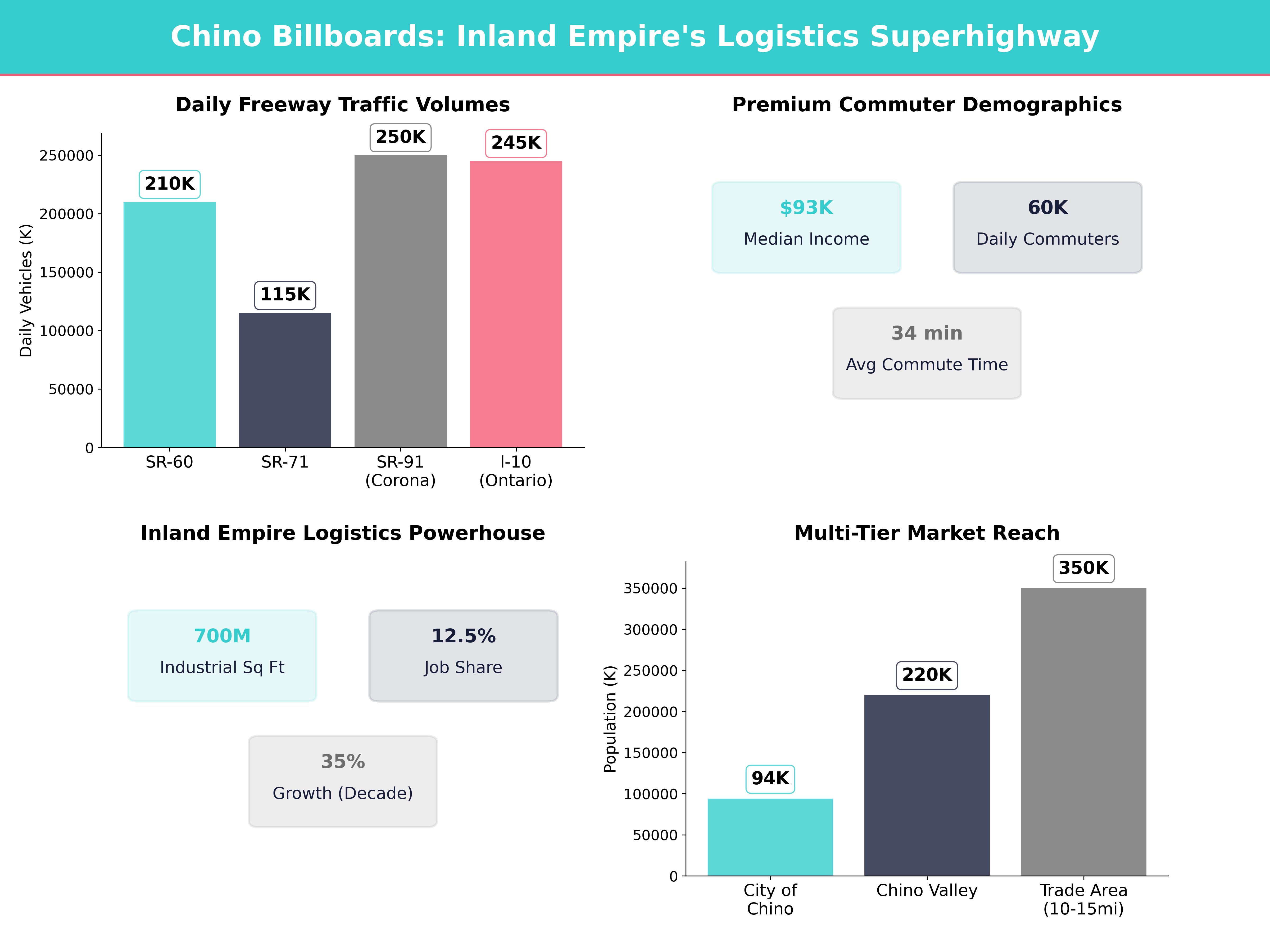
- The City of Chino has a population of roughly 92,000–95,000 residents, while the broader Chino Valley (Chino, Chino Hills, and immediate surroundings) exceeds 215,000–225,000 people when you include daily workers and students.
- San Bernardino County’s population has climbed to about 2.2–2.3 million residents, growing roughly 7–9% over the last decade, making it California’s 5th most populous county and one of its fastest-growing large counties.
- The median household income in Chino is in the $90,000–$95,000 range, and neighboring Chino Hills is over $115,000, putting the Chino Valley well above both state and national medians and signaling strong local purchasing power.
- About 68–72% of residents live in family households, and roughly 32–35% of residents are under age 25, giving the area a strong family, youth, and education orientation.
- Owner-occupancy rates in the Chino Valley sit near 60–65%, and average household sizes are around 3.2–3.4 people, reinforcing the area’s family-focused profile.
- Within a 10–15 minute drive radius of central Chino, trade area population estimates often exceed 350,000 people, counting residents of Chino, Chino Hills, Ontario, Eastvale
Local government and regional resources such as the City of Chino, City of Chino Hills, Chino Valley Chamber of Commerce Inland Empire Economic Partnership highlight:
- Millions of square feet of logistics and industrial space added over the past decade in and around Chino and neighboring cities.
- Retail and restaurant growth in major centers like Chino Spectrum Marketplace The Shoppes at Chino Hills tens of thousands of weekly shoppers from surrounding communities.
- Ongoing residential construction, particularly in master-planned neighborhoods on the borders with Eastvale and Ontario.
This mix makes digital billboards serving the Chino area ideal for:
- National and regional brands targeting Inland Empire growth
- Local service businesses, restaurants, and healthcare providers
- Logistics, warehousing, and industrial employers
- Education providers and trade schools
- Family-oriented entertainment and attractions
Because our boards are located in nearby Corona (about 7.6 miles away) and Upland (about 8.7 miles away), they allow you to intercept a high volume of commuters, shoppers, and workers with direct daily ties to the Chino area, including thousands of residents traveling to job clusters in Corona, Ontario, and the wider Inland Empire each weekday. For advertisers comparing different Chino billboards and placements, this close-in coverage provides an efficient way to reach these same audiences with flexible, digital inventory.
Key Traffic Corridors Serving the Chino Area
To build a strong strategy, it’s critical to understand how people move around the Chino area. Major regional corridors influencing traffic to and from Chino include (based on recent Caltrans and San Bernardino County Transportation Authority data):
- SR-60 (Pomona Freeway) – This key east–west corridor carries heavy commuter, freight, and retail traffic between Los Angeles County 200,000–220,000 vehicles per day (annual average daily traffic), with truck traffic making up 10–15% of total volume on some segments.
- SR-71 (Chino Valley Freeway) – Linking Chino to Corona, Pomona 100,000–130,000 vehicles per day through the Chino Valley segment. Peak-hour volumes often exceed 8,000–10,000 vehicles per hour per direction during rush hour, making it a prime corridor for commuting and shopping traffic.
- SR-91 (Riverside Freeway) – Just south of Chino, SR-91 near Corona routinely reaches 250,000+ vehicles per day, one of the busiest freeway segments in the region, with significant flows from Chino and Chino Hills toward Orange County and Riverside.
-
I-15 and I-10 – While not inside Chino’s city limits, these regional freeways frame local travel and connect Chino commuters with Riverside, Ontario, Rancho Cucamonga, and beyond.
- I-10 near Ontario and Upland typically carries 230,000–260,000 vehicles per day.
- I-15 between Corona and the I-10 junction often sees 180,000–210,000 vehicles per day, with high freight volumes serving major distribution centers.
Our digital billboards in Corona and Upland are strategically placed to catch:
- Commuters traveling between Chino-area neighborhoods and employment centers in Corona, Riverside, Ontario, Pomona, and Los Angeles County—corridors where daily commute flows commonly exceed 50,000–70,000 Chino Valley residents.
- Shoppers headed to key retail destinations including The Shoppes at Chino Hills, Ontario Mills 20+ million visitors annually according to local tourism and mall reports), Crossings at Corona, and Chino Spectrum Marketplace.
- Workers in the Chino Airport industrial/logistics zone, where Chino Airport thousands of logistics, aviation, and manufacturing jobs, plus major warehouse districts in Ontario, Eastvale, and Corona.
For local traffic news that reflects day-to-day patterns, we recommend tracking outlets such as the Inland Valley Daily Bulletin, The Press-Enterprise, and local Caltrans updates (via the Caltrans District 8 page).
When you plan your Blip campaigns, align your schedules with these flows:
- Early-morning and late-afternoon weekday blips for commuters and industrial workers
- Midday and weekend blips for shoppers and families
- Late-night and early-morning windows for logistics, staffing, and QSR promotions
Who You’ll Reach Near Chino: Demographics & Lifestyles
The Chino area blends long-time residents, new master-planned communities, and a large working population in logistics and services. Based on regional planning documents and local economic reports:
- Age profile: Median age is around 34–36, with a strong presence of 25–44-year-olds (often 30%+ of the population), which are prime working and family-building years.
- Households with children: About 40–45% of households have children under 18, well above many coastal Southern California communities.
- Education: Roughly 25–30% of adults have a bachelor’s degree or higher, while a substantial additional share hold associate degrees, technical certificates, or trade credentials, supporting demand for professional and skills-based education.
- Commuting: Average one-way commute times sit near 33–35 minutes, and more than 80–85% of workers commute by car (alone or carpool), underlining the importance of roadside media. Regional surveys show that over 90% of commuters report using freeways or major arterials at least several times a week.
- Industry employment: Within the broader Inland Empire, logistics/warehousing and transportation account for 10–15% of total jobs, with hundreds of millions of square feet of industrial space. Manufacturing, healthcare, education, government, and retail together account for another 40–50% of local employment.
- Housing and growth: Housing permit data for the Chino Valley and neighboring cities show thousands of new units approved over the last decade, contributing to regional population gains of 20–30% in certain nearby communities such as Eastvale.
These characteristics translate into several high-opportunity audience segments:
- Commuter families: Parents driving between newer residential neighborhoods and jobs in industrial parks, schools, or medical facilities. Many two-income households have combined incomes above $120,000, supporting discretionary spending in dining, retail, and services.
- Blue- and gray-collar workers: Warehouse, trucking, and trades professionals who spend many hours on freeways, ideal for recruitment and training campaigns; logistics-related wages locally often range from $18–$30 per hour, making hiring incentives and benefits strong differentiators.
- Bilingual and multicultural audiences: A substantial Hispanic/Latino population—above 50% in many Inland Empire communities, and significant in both Chino and surrounding cities—makes bilingual or culturally tailored creative a strong advantage. Asian and Pacific Islander communities also form important consumer segments, particularly in Chino Hills and parts of Ontario.
- Retail and dining decision-makers: Shoppers who split their time between local Chino retailers and regional centers in Corona, Ontario, and Upland; trade area studies for major malls and power centers show average household retail expenditures often 10–20% higher than national averages for categories like dining out, electronics, and home improvement.
We can use Blip’s location and daypart tools to focus on the segments that matter most to you—whether that’s weekday workers, weekend shoppers, or late-night logistics crews. This makes billboard advertising near Chino highly adaptable to different audience and budget needs.
Timing Your Campaigns: When to Run Blips
Digital billboard flexibility is especially valuable in the Chino area because traffic patterns change noticeably throughout the week and year. Data from regional transportation agencies and navigation providers indicate:
- Weekday traffic volumes on SR-60, SR-71, I-15, and I-10 can spike 20–35% above mid-day averages during peak periods.
- Weekend mid-day volumes on shopping corridors near major centers like The Shoppes at Chino Hills, Ontario Mills, and Crossings at Corona often exceed weekday mid-day levels by 15–25%, driven by shopping, dining, and leisure trips.
Here are timing strategies to consider:
Weekday Patterns
-
5:30–9:00 a.m. – Capture commuters leaving the Chino area toward Corona, Ontario, Pomona, or Los Angeles County. Regional commute surveys show that over half of workers start shifts between 6:00 and 9:00 a.m. Highlight:
- Job openings and hiring bonuses
- Coffee, fast food, and breakfast promotions
- School-related messages and education offers
-
3:00–7:30 p.m. – Afternoon rush for both commuters and school pick-ups, when traffic volumes on key freeways crank back up to near-morning levels:
- Restaurants, family dining, and grocery
- After-school programs, tutoring, gyms, and youth sports
- Retail sales and limited-time weekday deals
Weekend & Off-Peak
-
Saturday & Sunday late morning to evening – Ideal for:
- Auto dealerships, home improvement, and furniture (auto dealers and big-box home stores report some of their highest weekly traffic on Saturdays and Sundays, often 30–40% of weekly sales).
- Entertainment, recreation, and family attractions
- Healthcare (urgent care, dental, vision) and elective services
-
Night and early morning – Between 10 p.m. and 5 a.m., traffic shifts toward:
- Trucking, logistics, and warehouse employees
- Shift workers heading to and from regional distribution centers; many distribution hubs in the Inland Empire run two or three shifts per day, with thousands of employees on overnight schedules.
With Blip, you can:
- Increase your bids during high-value periods (e.g., Friday afternoon, Saturday mid-day).
- Run budget-efficient branding in shoulder periods (midday weekdays, later evenings).
- Turn campaigns up or down quickly around local events and promotions without committing to long-term, fixed schedules.
Local Events and Seasonal Opportunities
Chino’s civic and cultural calendar offers predictable spikes in attention that you can leverage. The City of Chino events calendar Chino Valley Chamber of Commerce Discover Inland Empire InlandEmpire.us track larger regional happenings.
Examples of seasonal and event-based opportunities:
- Chino Valley Parade and major community festivals – Events such as summer concerts, Independence Day celebrations, and holiday parades often attract thousands of attendees per event, creating spikes in local traffic and community pride. These are great times to run civic-minded, community-support messaging and brand awareness.
- Holiday season (November–December) – Retail and e-commerce advertisers can build urgency with countdown-style copy and gift-focused creative. Local malls and shopping centers typically see 20–40% higher foot traffic in the holiday period compared with typical months.
- Back-to-school (late July–September) – With local K–12 districts like the Chino Valley Unified School District serving tens of thousands of students, late summer and early fall are ideal for tutoring, after-school care, healthcare checkups, apparel, and tech.
- Local sports seasons – Youth sports, high school athletics, and regional tournaments bring families onto major corridors; large Friday night high school football games and weekend tournaments can draw 1,000–5,000 spectators depending on the venue and matchup. Consider sports sponsorship messages and family-targeted offers.
- New residential move-ins – The broader Inland Empire, including the Chino area, continues to add new housing. Regional reports show thousands of new housing units completed annually in the corridor between Chino, Eastvale, Ontario, and Corona. Home services (insurance, banking, remodeling, pest control, landscaping) can run evergreen campaigns that spike during spring and summer moving seasons, when moving activity often rises 20–30%.
By adjusting your Blip schedule around these windows, you can put more of your budget into the days and weeks when local audiences are most responsive and get more value from your billboard rental near Chino.
Crafting Effective Creative for the Chino Area
Roadside conditions near Chino, Corona, and Upland share some common traits: high-speed traffic, commuter fatigue, and crowded visual environments. On many freeway segments, average speeds outside of congestion periods hover near 60–70 mph, leaving drivers just a few seconds of viewing time. Effective creative cuts through quickly.
Keep It Fast and Legible
- Aim for 6–8 words of main copy, rarely more than 10.
- Use large, high-contrast fonts (sans-serif works best).
- Avoid clutter—one main message, one visual focus, and one clear call-to-action.
Because these boards serve wide freeways and major arterials, design for 3–5 seconds of viewing time. Ask: “Can someone understand this message if they glance once at 60 mph?” Research from out-of-home industry studies consistently shows that recall drops sharply beyond 7–8 words of copy.
Localize the Message
The Chino area responds well to signals that you understand the community:
- Mention recognizable anchors: “Near Chino Spectrum,” “Just minutes from Chino Airport,” or “Serving Chino Valley Families.”
- Reference key directions from the major freeways: “Next exit,” “5 minutes off the 71,” “East of the 15.”
- Use community-oriented language: “Proud to serve the Chino area” rather than generic national messaging.
- When appropriate, reference local institutions such as the Chino Valley Unified School District, Chino Hills State Park, or regional employers at Chino Airport and surrounding business parks.
Consider Bilingual and Multicultural Creative
With a significant Hispanic/Latino population across the Inland Empire and strong representation in the Chino Valley:
- Test Spanish-only or bilingual English–Spanish creative for services like banking, wireless, healthcare, and retail. Local surveys and campaign case studies frequently show 10–30% higher engagement among Hispanic/Latino audiences when ads are in their preferred language.
- Keep Spanish lines as short and bold as their English counterparts—avoid long sentences.
- Consider running alternating English and Spanish creatives in the same campaign to see which gets more secondary engagement (website visits, calls, walk-ins).
Strong Calls-to-Action
Because people can’t safely write down long URLs while driving, keep CTAs simple:
- Short URLs or recognizable domains: “Visit ChinoSmiles.com”
- “Exit at [street]” or “Next Right at [interchange]”
- “Apply Today – [CompanyName].com” for hiring campaigns
- Use QR codes only when your boards also reach low-speed streets or stop-and-go traffic; they’re less useful at freeway speeds, where drivers might only see your message for 3–4 seconds.
High-Value Verticals in the Chino Area
Different industries can use digital billboards serving the Chino area in distinct ways. Here are strategies tailored to local conditions.
Logistics, Manufacturing, and Hiring
The Inland Empire is one of the largest logistics hubs in North America, with regional economic reports estimating more than 700 million square feet of industrial and logistics space and logistics/warehousing jobs growing by 30–40% over the past decade. The Chino area sits right in the middle of it:
- Target shift changes with blips during 5–7 a.m. and 4–7 p.m., when freight and distribution workers are most likely to be commuting.
- Promote hiring bonuses, benefits, and quick-apply URLs. Some of the most effective campaigns highlight starting wages, such as “Now Hiring Forklift Drivers – $23/hr” or “Night Shift Openings – Apply Today,” along with benefits like health insurance or tuition assistance.
- Consider linking messages to specific industrial areas near Chino Airport, Ontario International Airport
Healthcare & Dental
With many families and commuters:
- Highlight convenience and access: “Walk-In Urgent Care Near the 60/71,” “Same-Day Appointments,” or “Open 7 Days.”
- Run campaigns around flu season, sports seasons, and back-to-school periods—urgent cares and pediatric offices often see 20–30% patient volume increases in these windows.
- Promote specific high-margin services (implants, orthodontics, elective procedures) during evenings and weekends when families are together in the car and more likely to discuss higher-consideration decisions.
- Reference recognizable local locations (for example, “Across from Chino Valley Medical Center
Education & Training
Colleges, trade schools, and certification programs can:
- Focus on working adults passing through Corona and Upland from the Chino area. Regional data show that a significant share of Inland Empire adults—often 20–30%—are interested in upskilling or career changes, especially in healthcare, logistics, and technical trades.
- Run weekday evening messages like “Finish Your Degree at Night” or “6-Month HVAC Program,” timed with evening commutes between 4–9 p.m.
- Schedule heavier rotations around enrollment deadlines, open house events, or financial aid windows, when application volume typically spikes 30–50%.
Retail, Dining, and Auto
For retail and restaurants:
- Use urgency and proximity: “Exit Now for Chino’s Newest BBQ Spot” or “2 Miles Ahead at [Major Cross Street].”
- Emphasize weekend shopping hours and limited-time promotions; local customer surveys frequently show that 40–50% of discretionary shopping trips happen on weekends.
- Tie creative to holidays, three-day weekends, and local pay cycles (for example, “Payday Weekend Sale – This Fri–Sun”).
- Consider highlighting curbside pickup or online ordering, which saw double-digit adoption growth in the region and remains popular with busy commuters.
Auto dealers in Corona, Ontario, and Upland can:
- Position themselves as the go-to dealerships for the Chino area, tapping into a regional auto market where Inland Empire dealers collectively sell hundreds of thousands of vehicles annually.
- Run separate creatives for financing (“0% APR”), inventory (“200+ Used Cars in Stock”), and service specials.
- Use weekend-focused rotations when many dealerships report 40–60% of weekly showroom traffic.
Using Blip’s Tools to Target the Chino Area
Because our five digital billboards serving the Chino area are in Corona and Upland, Blip’s platform lets you fine-tune exactly how you appear on them:
-
Location targeting – Select specific boards that best align with your audience’s daily routes:
- Corona-facing boards to catch Chino commuters heading southwest toward Orange County and Riverside via the 71 and 91.
- Upland-facing boards to reach drivers tied to the I-10 and 210 corridors and the Ontario employment area, including those heading to and from Ontario International Airport and nearby logistics hubs.
- Dayparting – Schedule ads only during your target time windows (commutes, weekends, or late-night shifts), matching known traffic peaks where volumes can be 20–35% higher than off-peak.
- Budget controls – Set a daily or total campaign budget, then adjust your bid per blip based on how aggressively you want to compete for impressions. You can scale up during high-ROI periods (like holiday weekends) and dial down when demand is lower.
-
Creative rotation – Upload multiple creatives and test variations:
- English vs. bilingual
- Discount vs. brand-focused messaging
- Different offers for weekdays vs. weekends
- Hiring vs. consumer-facing messaging for companies that serve both B2B and B2C markets
Monitor your own website analytics, call volume, and in-store traffic around the periods when your blips run. Over time, you’ll identify which board/time combinations drive the best response for the Chino area and which billboards near Chino deliver the most value for your goals.
Measuring and Optimizing Performance
Even without traditional “clicks,” you can measure the impact of your campaign serving the Chino area:
- Traffic & search lift – Look for lifts in direct website visits, branded search volume, or calls that correlate with your campaign dates and dayparts. Many local advertisers see 10–30% increases in branded search during strong out-of-home campaigns.
- Offer codes and landing pages – Use simple URLs like
YourBrand.com/Chinoor promo codes like “CHINO20” to track redemptions tied to your billboard ads. - Geo-based comparisons – If you also market to other Inland Empire or Orange County areas, compare performance from ZIP codes closest to Chino against other regions during your campaign using your POS or CRM data.
- A/B creative testing – Rotate two or more creatives and adjust your mix toward the designs that coincide with the strongest lift in your key metrics. For example, you might find that bilingual creative performs 15–20% better in Chino than in some neighboring markets.
Over time, the data will show you:
- Which nearby city (Corona vs. Upland) delivers better outcomes for your specific audience
- What time windows produce the most measurable results
- Which types of creative and language (English, Spanish, or bilingual) resonate most with residents of the Chino area
Putting It All Together
The Chino area offers an attractive combination of:
- A growing, family-focused population with strong household incomes
- One of the country’s most important logistics corridors, creating tremendous opportunity for hiring and B2B campaigns
- Heavy daily car usage and long commutes, making roadside media highly influential
By using digital billboards via Blip in nearby Corona and Upland, we can help you:
- Reach Chino-area commuters on the routes they travel every day
- Time your message to key commuting, shopping, and event-driven windows
- Tailor your creative to the lifestyles, languages, and priorities of local residents
- Measure and refine your campaigns quickly, without long-term contracts
With the right combination of location, timing, and message, digital billboards serving the Chino area can become a powerful, flexible part of your marketing mix—whether you’re a local business, a regional brand, or a national advertiser looking to tap into Inland Empire growth and maximize the impact of your billboard rental near Chino.