Billboards in Walnut, CA
No Minimum Spend. No Long-Term Contracts. Just Results.
Trusted by Leading Brands


Billboard advertising
in Walnut has never been easier

How much is a billboard in Walnut?
Why Choose Blip for Billboard Advertising in Walnut
Blip lets you launch Walnut billboards in minutes, perfect for SR-60 and I-10 commuter traffic without the usual buy-in hassle.
Set a daily budget for Walnut and stay in control while reaching Mt. SAC students, City of Industry workers, and nearby families.
Use dayparting in Walnut to hit 6-9 a.m. school runs and 4-7 p.m. commute peaks on the routes locals actually drive.
No contracts means you can test Walnut, Covina, and La Puente corridors, then shift spend to what works best.
Track Walnut campaign results in real time and react fast to shifts from school season, weekends, and Fairplex event traffic.
Blip's creative tools help tailor Walnut ads for bilingual households and high-speed freeway views with bold, simple copy.
Frequently Asked Questions About Billboard Advertising in Walnut
How much does a billboard cost near Walnut, California with Blip?
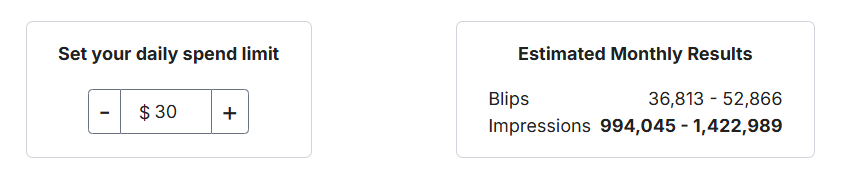
With Blip, you can advertise on digital Walnut billboards on any budget, because you set a daily amount that works for you and Blip automatically keeps your campaign within that limit. Each blip is a brief 7.5 to 10-second spot on rotating digital billboards near Walnut, California, and you only pay for the blips you receive. Costs per blip vary based on the time of day, location, and advertiser demand, so you stay in control.
Where can I advertise with Blip in Walnut, California?
There are 20 digital billboards serving the Walnut area from nearby cities such as City of Industry, Covina, La Puente, Baldwin Park, and Irwindale. These billboards near Walnut give you metro-scale reach while staying tightly focused on the local community. The network is designed to follow the real-world movement of core audiences across major nearby corridors.
Why is Walnut, California a good place for billboard advertising?
The Walnut area offers advertisers a rare mix of affluent households, top-performing schools, and heavy commuter traffic across the San Gabriel and Pomona Valleys. Walnut has been repeatedly highlighted as one of the most desirable suburbs in the eastern San Gabriel Valley due to low crime, green space, and strong schools. This makes Walnut billboards especially effective for brands that need both visibility and trust.
Who will see Blip billboards near Walnut, California?
Within a 10–15 minute drive of Walnut, the broader trade area easily exceeds 300,000 residents and well over 150,000 jobs. The area includes affluent homeowners, students, and commuters, plus large Chinese, Taiwanese, Filipino, and Hispanic communities. Nearby anchors like Mt. San Antonio College, Cal Poly Pomona, and the City of Industry add thousands of daily visitors and workers to the audience mix.
When is the best time to run billboards in Walnut, California with Blip?
Morning rush is about 6–9 a.m., afternoon peak is 2–4 p.m., and evening commute is 4–7 p.m., when parents, students, and workers are on the road. Weekend traffic also stays strong along SR-60, I-10, and local arterials as families shop, attend religious services, and visit parks. The page also recommends increasing weekend bids during major community or regional events.
Do I need a contract to advertise with Blip in Walnut?
No, Blip has no long-term contracts or minimum commitments. You can start, pause, or stop your campaign at any time.
How fast can I launch a billboard campaign with Blip in Walnut?
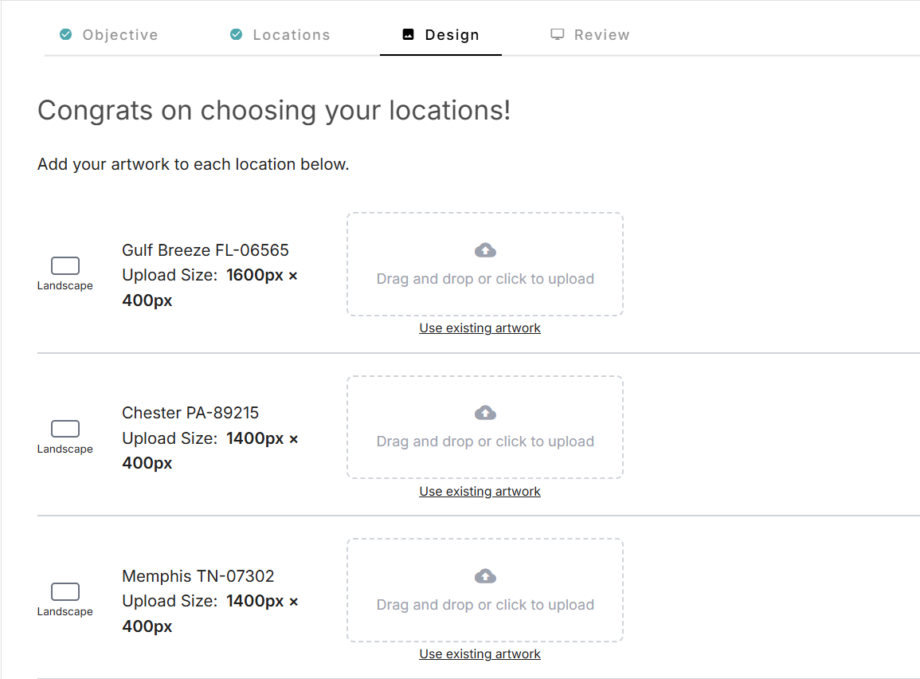
You can have your campaign live in minutes. Create a free account, select your locations, set your budget, upload your design, and start running once approved.
Where can I advertise with Blip in Walnut?
Blip has digital billboards in Walnut. You can browse available locations on a map, choose the ones that fit your audience, and start advertising right away.
Still have questions? Launch a campaign in minutes — no contracts, no commitments.
Start Your CampaignWalnut Billboard Advertising Guide
Tucked between major freeways and thriving suburban communities, the Walnut, California area offers advertisers a rare mix of affluent households, top-performing schools, and heavy commuter traffic across the San Gabriel and Pomona Valleys. With 20 digital billboards serving the Walnut area from nearby cities such as City of Industry, Covina La Puente, Baldwin Park, and Irwindale, we can help you reach residents, workers, and students moving through this high-intent market every day. These billboards near Walnut give you metro-scale reach while staying tightly focused on the local community.

Why the Walnut Area Is a High-Value OOH Market
The Walnut area punches far above its size in economic power and daily traffic:
- The City of Walnut reports a population of just under 30,000 residents across roughly 9 square miles, with a residential density of a little over 3,000 people per square mile—dense enough for efficient reach, but with a “small-town” feel that keeps local advertising highly visible. Walnut has been repeatedly highlighted by regional outlets such as the San Gabriel Valley Tribune as one of the most desirable suburbs in the eastern San Gabriel Valley due to low crime, green space, and strong schools. This makes Walnut billboards especially effective for brands that need both visibility and trust.
- Median household income in Walnut is roughly $120,000–$130,000 per year based on recent community estimates—around 40–50% higher than the Los Angeles County median. In many Walnut neighborhoods, median home values exceed $900,000, and owner-occupancy rates are well over 70%. This indicates strong purchasing power for categories like autos, financial services, education, furnishings, and home improvement.
- Roughly two-thirds of residents identify as Asian, with large Chinese, Taiwanese, and Filipino communities, and a strong Hispanic community as well. In many nearby ZIP codes, Asian and Hispanic residents together account for more than 80% of the population, creating rich opportunities for bilingual or culturally tailored campaigns.
-
Walnut is surrounded by major economic anchors:
- Mt. San Antonio College (Mt. SAC), directly adjacent to Walnut, serves about 30,000+ students each term and reports more than 50,000 unduplicated students annually across credit, noncredit, and continuing education. Campus activities and events bring in thousands of additional visitors throughout the year.
- Cal Poly Pomona, roughly 5–6 miles away, enrolls more than 26,000 students and employs several thousand faculty and staff. The campus generates more than 1 million annual in-person visits when you include students, employees, and event attendees.
- The nearby City of Industry hosts over 3,000 businesses and more than 67,000 jobs despite fewer than 300 residents, drawing heavy freight, employee, and shopper traffic daily. Its business parks and retail destinations pull workers and visitors from across Los Angeles, Orange, San Bernardino, and Riverside counties.
Within a 10–15 minute drive of Walnut, the broader trade area easily exceeds 300,000 residents and well over 150,000 jobs, meaning that digital billboards serving the Walnut area can efficiently reach multiple high-value audience segments with a single, well-structured campaign. When you focus billboard advertising near Walnut, you get a concentrated mix of affluent homeowners, students, and commuters that many larger markets struggle to replicate.
Understanding the Walnut Area Audience
To make the most of digital billboards near Walnut, it helps to understand who you’re speaking to and what their days look like.
Family- and education-focused households
- The Walnut Valley Unified School District Diamond Bar, and adjacent communities. WVUSD consistently records graduation rates around the high 90% range and sends a significant share of graduates to four-year universities.
- WVUSD high schools frequently place near the top of California rankings for academics and college readiness, with honors and AP participation rates that can exceed 60–70% of upper-grade students. Competitive programs in STEM, music, and athletics attract families who prioritize education and are willing to invest in enrichment, tutoring, extracurriculars, and college prep.
- Local households commonly average 3 or more persons, and family-oriented amenities—parks, youth sports leagues, and community programs promoted by the Walnut Parks & Recreation Department
Advertising implications:
- Emphasize education, quality, trust, and long-term value.
- Use imagery of families, students, and achievement milestones.
- Promote services with strong after-school or weekend relevance (tutors, music academies, sports, healthcare, dining, and family entertainment).
Commuters and regional professionals
- Many Walnut area residents commute to nearby job centers in City of Industry, Diamond Bar, West Covina, and across greater Los Angeles. In Los Angeles County, average one-way commute times regularly sit near 30 minutes, and for many San Gabriel Valley residents, daily travel includes at least one freeway leg.
-
State Route 60 (SR-60), State Route 57 (SR-57), and Interstate 10 (I‑10) carry some of the highest volumes in Southern California:
- Caltrans’ latest traffic counts show daily volumes often exceeding 250,000 vehicles on SR‑60 through nearby City of Industry and Hacienda Heights.
- SR‑57 near Diamond Bar regularly sees over 200,000 vehicles per day.
- I‑10 in the West Covina/Baldwin Park corridor can exceed 280,000–300,000 vehicles per day.
Source: Caltrans Traffic Census Program
- Regional transit options like Foothill Transit LA Metro
Advertising implications:
- Peak-hour impressions are extremely valuable. Consider heavier bidding during morning (6–9 a.m.) and evening (3–7 p.m.) commutes when professionals and parents are traveling.
- Quick, bold messaging focused on convenience—drive-thru, mobile app ordering, fast service, express healthcare, and commuter-focused banking—performs well.
Students and young adults
- Combined, Mt. SAC and Cal Poly Pomona put more than 50,000 college students and thousands of faculty/staff within a short drive of the Walnut area. Between fall and spring semesters, weekday campus populations routinely exceed 20,000–25,000 people at each institution.
- Student surveys at regional colleges often show that 70–80% of students work part time or full time and that a large portion commute by car, creating strong exposure opportunities along SR‑60, SR‑57, I‑10, and local arterials.
- These students and staff regularly travel through City of Industry, Covina, La Puente, and Baldwin Park for housing, shopping, dining, and nightlife. Local spending by college communities can reach tens of millions of dollars annually in categories like food, entertainment, electronics, and fitness.
Advertising implications:
- Use youthful visuals, simple CTAs, and value-focused messaging (student discounts, limited-time offers).
- Promote quick-serve dining, fitness, rideshare, tech, and local entertainment.
- Time creative to coincide with semester starts, finals, and large campus events like the Mt. SAC Relays
Key Corridors and Where Our Nearby Boards Shine
Our 20 digital billboards serving the Walnut area are strategically positioned within about 10 miles, clustered around high-traffic corridors that Walnut residents and workers use daily. This network of billboards near Walnut is designed to follow the real-world movement of your core audiences.
City of Industry (about 2.6 miles from Walnut)
A powerhouse industrial and retail hub:
- Major arterials such as Valley Boulevard, Azusa Avenue, and Gale Avenue, along with nearby SR‑60, draw commuters, freight traffic, and retail shoppers. Sections of Valley Boulevard alone can carry more than 30,000–40,000 vehicles per day.
- The City of Industry notes thousands of daily visitors to regional shopping centers and business parks, in addition to tens of thousands of employees entering and exiting the city on weekdays.
Use boards near City of Industry to:
- Reach Walnut residents commuting east–west along SR‑60, where single boards can generate tens of thousands of impressions per day.
- Capture shoppers heading to or from industrial parks and big-box retail stores.
- Promote B2B services, logistics, leasing, and staffing alongside consumer brands.
Covina (about 2.6 miles from Walnut)
- Covina, with a population of around 50,000 according to the City of Covina Foothill Transit Metrolink
- The Covina/West Covina area supports multiple regional shopping centers and auto dealers, drawing customers from a trade area that can exceed 200,000 residents.
Use boards near Covina to:
- Extend your Walnut-focused campaign east and west along I‑10, targeting commuters who also shop, dine, and attend church or school events near Walnut.
- Market regional services such as healthcare networks, auto dealers, and insurance agencies.
La Puente (about 4.9 miles from Walnut)
- La Puente is a dense, largely residential city of roughly 40,000 residents in just under 4 square miles, creating very high population density and steady surface-street traffic.
- The community has strong Hispanic and Asian populations, with many bilingual households, and shares school, work, and shopping corridors with Walnut and the City of Industry.
Use La Puente-area boards to:
- Reach multicultural families with bilingual English/Spanish or English/Chinese messaging.
- Promote local retail, grocery, and quick-service restaurants spanning Walnut, La Puente, and Industry.
Baldwin Park (about 7.5 miles) and Irwindale (about 8.6 miles)
- Baldwin Park and Irwindale sit near or along I‑10 and the 605, pulling heavy through-traffic between the San Gabriel Valley, Inland Empire, and central Los Angeles. Certain I‑10 segments here can approach or exceed 250,000 average daily vehicles.
- Irwindale is home to industrial operations and event venues like the Irwindale Speedway & Event Center, which can attract thousands of spectators on race nights and special events.
Use these corridors to:
- Reach east–west travelers who regularly pass within a short drive of Walnut.
- Support campaigns tied to large events (sporting events, fairs, concerts) that draw regional audiences who may later shop or dine near Walnut.
Timing Your Campaign: When Walnut Area Audiences Are on the Road
Using Blip’s flexible scheduling, we can line up your impressions with the real-world rhythms of the Walnut area. Smart timing is one of the easiest ways to get more from billboard advertising near Walnut without increasing your budget.
Weekday commute windows
- Morning rush (approx. 6–9 a.m.): Parents dropping kids at WVUSD schools, college students heading to Mt. SAC and Cal Poly Pomona, and employees commuting to City of Industry and other job centers. In many Southern California commuter corridors, more than 30% of daily traffic occurs in these morning peak hours.
- Afternoon peak (2–4 p.m.): School release and after-school activities start to dominate. WVUSD and nearby districts send thousands of students home across a fairly tight time window, concentrating family traffic on local arterials and freeway on/off-ramps.
- Evening commute (4–7 p.m.): Workers head home or to shopping centers and fitness clubs. Retail and dining trips often spike in the 5–7 p.m. window, when households combine commuting with errands and meals.
Strategy:
- Set higher per-blip bids during specific rush-hour dayparts on boards near City of Industry, Covina, and La Puente to capture the densest commuter flows that include Walnut residents.
- Use shorter, high-impact messages (6–8 word headlines) during peak hours, and reserve more detailed or brand-building creative for off-peak time slots.
Weekends and events
- Weekend traffic stays strong along SR‑60, I‑10, and local arterials as families shop, attend religious services, and visit parks such as Snow Creek Park
- Walnut’s community events, such as the Walnut Family Festival LA County Fair at Fairplex in Pomona
- The Fairplex Pomona
Strategy:
- Increase weekend bids during major community or regional events.
- Rotate in event-specific creative (“This Weekend Only,” “Fair Special,” “Festival Offer”) targeted to boards along the most likely approach routes (e.g., I‑10 near Baldwin Park/Covina for Pomona-bound drivers).
Creative Strategies That Resonate in the Walnut Area
The Walnut area’s mix of cultures, affluence, and strong schools leads to some clear design best practices. Thoughtful creative can turn simple Walnut billboards into memorable touchpoints that people see multiple times a day.
Lead with clarity and trust
- Use clean, modern designs that signal professionalism—this aligns with the area’s high educational attainment and income. A significant share of adult residents hold bachelor’s or graduate degrees, particularly in nearby Diamond Bar and Walnut neighborhoods.
-
For professional services (dentists, orthodontists, real estate agents, financial advisors), feature:
- A confident headshot
- A brief trust signal (“20+ Years Serving Local Families,” “Top-Rated in Walnut Area”)
- A clear CTA (“Call Today,” “Visit Next Exit,” “Scan to Book”)
Reflect the community
- Consider including diverse families and students in your visuals to reflect Walnut’s Asian and Hispanic communities. In some local schools, Asian and Hispanic students together account for more than 80–90% of enrollment.
-
If appropriate for your audience, use bilingual headlines or sub-lines:
- English + Spanish for broader San Gabriel Valley reach.
- English + Simplified or Traditional Chinese for certain education, real estate, or financial services brands that target Chinese-speaking families.
- Local organizations like the Walnut Chamber of Commerce
Design for high-speed corridors
- Many boards serving the Walnut area sit along or near high-speed roads where drivers have 6 seconds or less to process your message. Studies of OOH effectiveness often show that recall can drop sharply when copy exceeds 7–10 words.
-
Best practices:
- Limit copy to 7 words or fewer when possible.
- Use high-contrast color combinations (dark background with light text, or vice versa).
- Make your logo large and avoid clutter; one main image is usually enough.
- If using QR codes, place them on boards that face slower surface streets near shopping centers, not freeway-speed locations.
Seasonal and school-calendar timing
-
Align creative with the local school and college calendars:
- Late July–September: Back-to-school offers and extracurricular enrichment; schools in WVUSD and nearby districts typically resume in early to mid-August, so launching creative 3–4 weeks ahead captures early planners.
- November–December: Holiday shopping, travel, and end-of-year healthcare or financial planning; retail sales volumes can increase 20–40% in this period compared with typical months.
- January: New-year fitness, education, and career services; gyms and learning centers often see double-digit percentage spikes in inquiries.
- Spring: Home improvement, real estate, and graduation-related services as families prepare for moves aligned with the school year.
- Using multiple creatives in rotation—one for families, one for commuters, one for students—lets us test what resonates most with audiences moving through different parts of the Walnut area and can improve response rates by 10–30% versus a single static message.
Using Blip Tools to Target the Walnut Area Efficiently
Blip’s platform allows you to buy digital billboard time in flexible “blips” (small increments) instead of locking into a single, long-term board. For a market like the Walnut area, that flexibility is especially powerful for billboard rental near Walnut, where you may want to test several routes and audiences before scaling up.
Focus spend on the right locations
-
Start by selecting boards closest to the main traffic routes used by Walnut residents:
- Boards near SR‑60 and key arterials in the City of Industry for east–west commuter coverage. A single SR‑60-facing board can deliver tens of thousands of daily impressions at a fraction of the cost of traditional fixed buys.
- Boards along or near I‑10 in Covina and Baldwin Park to catch regional commuters and shoppers traveling between the San Gabriel Valley and Inland Empire.
- Boards in La Puente to deepen reach among nearby family neighborhoods with strong ties to Walnut.
- Pair freeway-facing boards with slower surface-street boards where possible so you can run both brand messages (freeways) and more detailed, offer-based creative (surface streets).
Dayparting for maximum impact
-
Use daypart scheduling to:
- Target school-related trips (7–9 a.m. and 2–4 p.m.) with education, childcare, and family-oriented creative.
- Deploy restaurant, entertainment, and retail ads late afternoon and evening (4–9 p.m.) when dining and shopping trips increase; for many retailers, 50% or more of weekday revenue can come from this window.
- Reach students and young adults with nightlife, food delivery, and streaming offers in the evenings and on weekends.
- Adjust dayparts seasonally—extend evening coverage later in summer when daylight hours and outdoor activities increase, and consider heavier weekend schedules around major events at Mt. SAC, Cal Poly Pomona, and Fairplex
Budget control and testing
- Set a daily or monthly budget you’re comfortable with; Blip will automatically optimize to deliver your blips when and where they’re most competitive.
-
Run A/B tests:
- Two different headlines on the same boards and dayparts.
- One creative aimed at families and another at students on overlapping routes.
- English-only versus bilingual creative in La Puente and Industry corridors.
- Monitor impression counts and, when possible, correlate with website traffic, store visits, or promo code redemptions from the Walnut area and neighboring ZIP codes. Even a 5–10% lift in local web sessions or call volume during your flight can signal strong ROI in a tightly defined trade area.
Campaign Ideas by Industry in the Walnut Area
Here are concrete ways businesses can tailor campaigns to Walnut area dynamics and get more from billboard advertising near Walnut.
Education & enrichment
- Who: Tutoring centers, test prep, language schools, music/dance academies, STEM camps.
- Where: Boards in City of Industry and La Puente near main routes families travel between home, school, and activities.
- When: School-year afternoons and early evenings; summer camp promotion in late spring. Many programs aim to fill 70–90% of capacity before school terms start, so early visibility is key.
- Creative angle: “Top Scores for Walnut Students,” “Enroll Before Classes Fill,” “Next Exit – Free Assessment.” Use short enrollment deadlines (“Enroll by Sept. 1”) to spur response.
Restaurants & retail
- Who: Family restaurants, boba shops, bakeries, grocery stores, shopping centers.
- Where: Boards near shopping corridors in City of Industry, Covina, and La Puente, including routes leading to major centers highlighted by local cities and the San Gabriel Valley Tribune in retail coverage.
- When: Lunch and dinner dayparts, weekends, and holidays. Many restaurants see 60–70% of weekly sales concentrated from Friday to Sunday.
- Creative angle: High-impact food imagery, short offers (“Kids Eat Free Tuesday,” “Happy Hour Near Walnut”), directional cues if close by (“Next Signal, Turn Right”), and limited-time deals that can be rotated weekly.
Healthcare & wellness
- Who: Clinics, urgent care, dental, orthodontists, optometrists, gyms, and fitness studios.
- Where: Route-based boards used by commuters and families, especially along SR‑60 and I‑10.
- When: All-day coverage with heavier emphasis on commute times and weekends. Urgent care and walk-in clinics often see spikes in evening and weekend visits when primary-care offices are closed.
- Creative angle: “Same-Day Appointments Near Walnut,” “Braces with $0 Down,” “Join in Walnut Area – 24/7 Gym.” Consider adding simple distance markers (“5 Minutes from Walnut City Hall”) using landmarks like the City of Walnut civic center.
Real estate & home services
- Who: Realtors, mortgage brokers, solar installers, contractors, landscapers.
- Where: Broad coverage on regional routes (City of Industry, Covina, Baldwin Park) to reach both current and prospective Walnut-area homeowners.
- When: Spring and early summer, with steady presence year-round for brand building. Many local markets see 40–50% of annual home transactions close between April and August.
- Creative angle: “Move Up in the Walnut Area,” “Top-Rated Agent for Walnut Schools,” “Solar Savings in Your Neighborhood.” Include simple metrics where allowed (“Over 100 Walnut Homes Sold”) to reinforce credibility.
Auto dealers & services
- Who: Auto dealerships, tire shops, auto body, oil change, car washes.
- Where: Boards near I‑10 and SR‑60, especially close to established auto rows in Covina, West Covina, and Industry that serve tens of thousands of shoppers annually.
- When: Weekends and commute windows; auto dealers commonly report their busiest traffic on Saturdays and late weekday afternoons.
- Creative angle: “0% APR, 10 Minutes from Walnut,” “Service Special – Exit at …,” “Free Car Wash with Service.” Use limited-time monthly offers to sync with dealer sales calendars and drive urgency.
Measuring and Optimizing Performance Over Time
To turn Walnut area exposure into measurable outcomes, we should connect your billboard activity to real-world metrics. Treat your Walnut billboards like any other performance channel, with clear goals and regular optimization.
Set clear local goals
- Define target ZIP codes (e.g., 91789, 91792, and adjacent ZIPs that cover Walnut, West Covina, and parts of Diamond Bar) that represent your core Walnut-area trade area.
-
Track:
- Website sessions and conversions from those ZIPs.
- Google Business Profile views and driving-direction requests from Walnut and nearby cities (City of Industry, Covina, La Puente, Baldwin Park, Pomona).
- In-store visits or redemptions tied to Walnut area–specific promo codes (for example, “WALNUT10” or “91789” on coupons).
- Use call tracking or unique landing pages to isolate leads from campaigns that focus on the Walnut corridor versus your broader regional marketing.
Use time-based tracking
-
Align your digital analytics with your billboard schedule:
- If you run heavier during weekday evenings, compare website traffic or calls from Walnut area ZIPs in those hours versus off-hours.
- When you introduce a new creative focused on Walnut families, monitor lead volumes from the area in the following 2–4 weeks and compare with your prior baseline.
- For event-based campaigns (e.g., LA County Fair promotions), track day-by-day metrics during the event window and the week immediately after, when many visitors return to the Walnut area for follow-up purchases or services.
- Even modest shifts—like a 5% increase in calls from 91789/91792 during your flight—can be meaningful in higher-ticket categories such as healthcare, auto, or real estate.
Iterate with the data
- If you see stronger response from boards nearer City of Industry than Baldwin Park for a particular offer, reallocate more of your Blip budget there and treat Baldwin Park boards as reach/awareness assets.
- If bilingual creative outperforms English-only by 15–20% in calls or coupon redemptions, expand multilingual executions across more boards in La Puente, Covina, and other multicultural corridors.
- Use monthly or quarterly reviews to compare impressions, spend, and outcomes. Over time, many advertisers find that a focused, data-driven Walnut-area plan can deliver higher local ROI than a broader but less targeted Los Angeles–wide buy.
By pairing location- and time-specific insights with Blip’s flexible buying model, we can continually refine your presence on the 20 digital billboards serving the Walnut area—reaching the right mix of families, commuters, students, and regional shoppers with messages tailored to how they truly live, work, and move around the community. Whether you’re testing your first billboard rental near Walnut or scaling a multi-month campaign, this localized approach helps every impression work harder for your brand.