Billboards near Crestline, CA
No Minimum Spend. No Long-Term Contracts. Just Results.
Trusted by Leading Brands


Billboard advertising
near Crestline has never been easier
How much is a billboard near Crestline?
Why Choose Blip for Billboard Advertising near Crestline
Blip lets you launch Crestline billboards fast, reaching I-215 and SR-210 drivers before they turn up SR-18 to the mountain.
Set a flexible budget for Crestline and scale up for Lake Gregory summer weekends or snow days—no contracts, no commitment.
Daypart your Crestline ads for AM commutes, midday day-trippers, or PM return traffic from San Bernardino and the Inland Empire.
Track Crestline performance in real time, then shift spend as weekend visitor traffic and holiday demand change.
Use Blip's creative tools to make Crestline ads pop with pine, lake, and escape-the-heat messaging for valley drivers.
Frequently Asked Questions About Billboard Advertising near Crestline
How much does a billboard cost near Crestline, California with Blip?
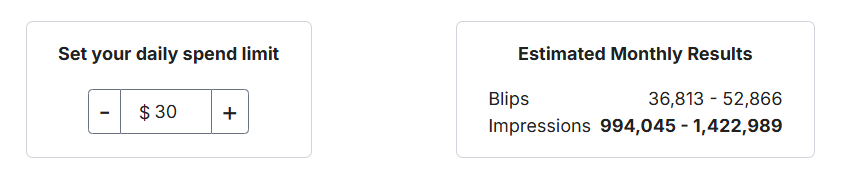
With Blip’s flexible, pay-per-blip model, you control exactly how much you spend to reach drivers in the Crestline area. Each blip is a brief digital ad display, and you set a daily budget that Blip automatically follows, so Crestline billboards can fit almost any marketing budget. The cost per blip adjusts based on timing, location, and advertiser demand, and you only pay for the blips you receive.
Where can I advertise with Blip near Crestline, California?
With digital billboards near Crestline in nearby San Bernardino, Blip can tap into both year-round locals and weekend travelers heading to Lake Gregory and neighboring resort towns. Our two digital billboards serving the Crestline area are positioned in San Bernardino, roughly 6.7 miles from Crestline. This setup is ideal for reaching people before they commit to specific stops in the Crestline area.
Who can Crestline, California billboards with Blip reach?
Digital billboards near Crestline in San Bernardino allow us to reach local residents commuting between the mountain communities and the valley, Inland Empire residents planning day trips or weekend getaways, and long-distance visitors coming from the Los Angeles and Orange County basins. Because our boards serving the Crestline area are located in nearby San Bernardino, your message can reach multiple audience layers. The area’s combination of small-town population and large regional catchment makes it ideal for campaigns that need both hyper-local relevance and broader regional reach.
When should I run a Crestline, California billboard campaign with Blip?
The Crestline area is strongly seasonal, and aligning your Blip schedule with local rhythms can stretch your budget further. County tourism and local lodging data consistently show that summer and winter holiday periods account for a disproportionate share of annual visitor revenue. Blip can ramp up impressions during high-value periods like summer weekends, holiday Mondays, or the first major snow weekends, while pulling back during slower stretches.
What kind of traffic and visitors do Crestline, California billboards near Blip capture?
Visitors coming from the valley up to the Crestline area will often pass through San Bernardino on I-215 or SR-210 before transitioning onto SR-18 or SR-138 to climb into the mountains. Caltrans reports typical AADT volumes of 15,000–25,000 vehicles per day on popular mountain approach segments during peak seasons. Targeting these approach routes with digital billboards near Crestline is a powerful way to capture trip-planning attention before drivers commit to specific activities.
Do I need a contract to advertise with Blip near Crestline?
No, Blip has no long-term contracts or minimum commitments. You can start, pause, or stop your campaign at any time.
How fast can I launch a billboard campaign with Blip near Crestline?
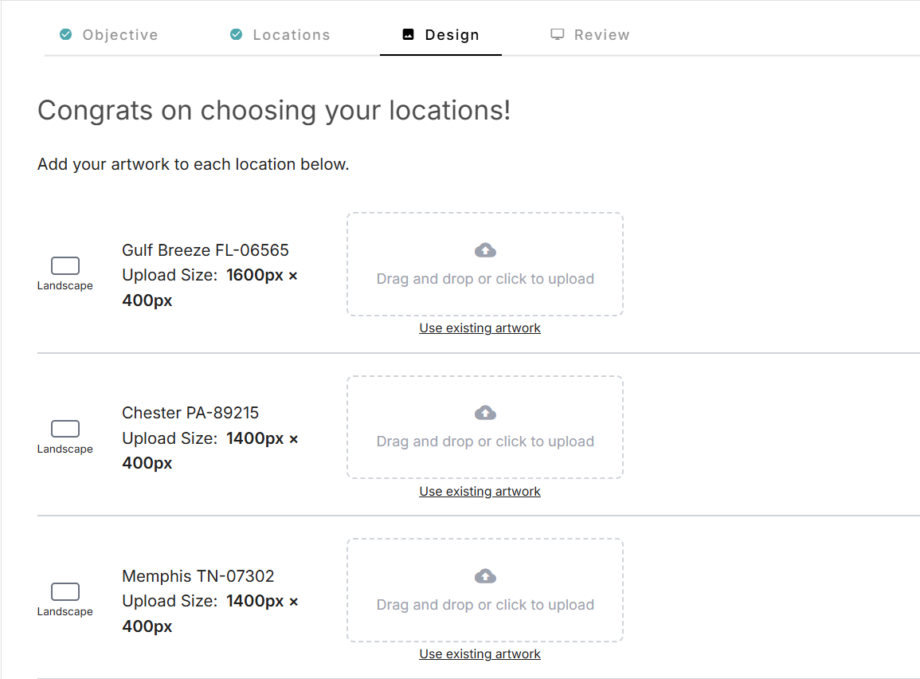
You can have your campaign live in minutes. Create a free account, select your locations, set your budget, upload your design, and start running once approved.
Where can I advertise with Blip near Crestline?
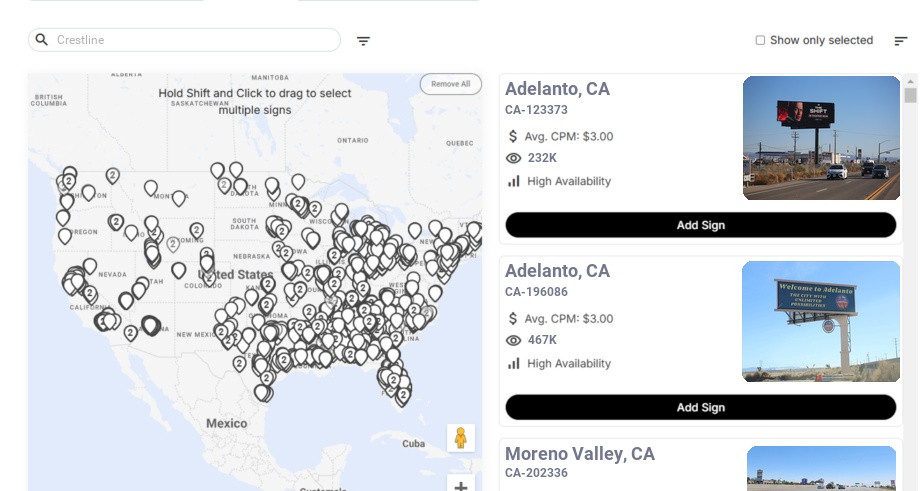
Blip has digital billboards near Crestline. You can browse available locations on a map, choose the ones that fit your audience, and start advertising right away.
Still have questions? Launch a campaign in minutes — no contracts, no commitments.
Start Your CampaignCrestline Billboard Advertising Guide
Perched among the pines of the San Bernardino Mountains, Crestline offers advertisers a rare mix of close‑knit mountain community, drive‑through visitor traffic, and easy access from the Inland Empire. With digital billboards near Crestline in nearby San Bernardino, we can tap into both year‑round locals and weekend travelers heading to Lake Gregory and neighboring resort towns. For brands that want Crestline billboards without the higher cost and limited inventory of in‑town structures, these nearby freeway faces often deliver broader reach and more flexible scheduling.
Understanding the Crestline Area Market
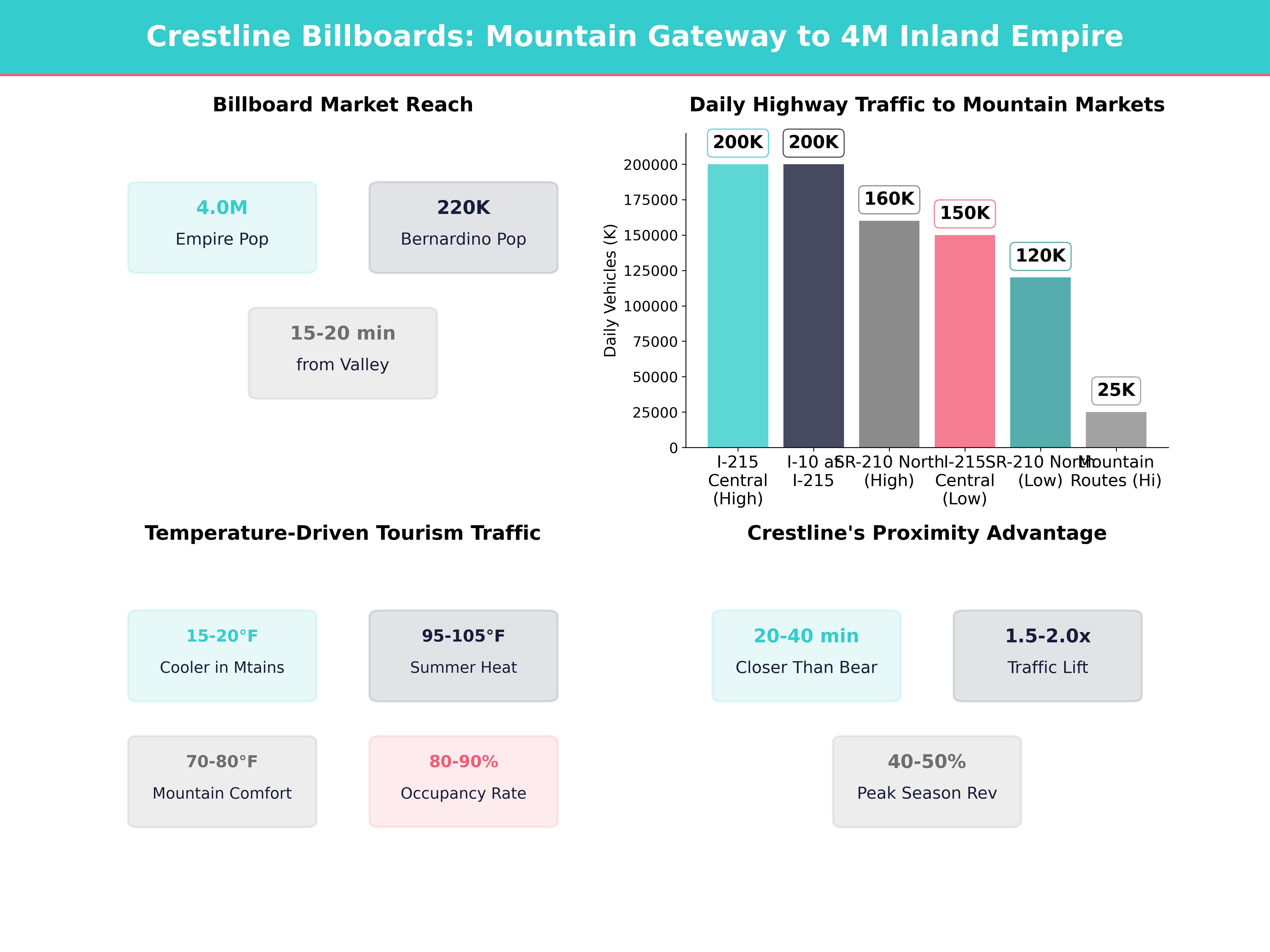
Crestline is a census‑designated community of roughly 10,000–11,000 residents (2020 count: 10,770), set at about 4,600–4,800 feet in elevation above the San Bernardino Valley. It is one of the primary gateway communities to the San Bernardino Mountains, centered around Lake Gregory Regional Park.
Key regional context:
- San Bernardino County is one of the largest counties in the U.S., with more than 2.1 million residents (2020: about 2,194,000), according to county data highlighted by San Bernardino County government. The county spans over 20,000 square miles, and county economic reports note that tourism and recreation generate well over $4 billion in annual travel spending across the region.
- The City of San Bernardino alone has more than 220,000 residents, per city profiles from the City of San Bernardino. City economic data shows a daytime population that swells significantly due to commuters and students at institutions like Cal State San Bernardino, supporting a retail market of several billion dollars in annual sales.
- Crestline is about 15–20 minutes’ drive (6.7 miles as the crow flies) from San Bernardino, linked by State Routes 18 and 138. Elevation rises by roughly 4,000 feet from the I‑215 corridor up to Crestline, creating a strong “escape the heat” dynamic—summer temperatures can be 15–20°F cooler in Crestline than in San Bernardino on peak days, which is one reason billboard advertising near Crestline often leans into cool‑weather and lake‑day themes.
Demographic highlights for the Crestline area and nearby mountain communities (rounded from county and regional profiles):
- Median household income in the Crestline ZIPs is commonly reported in the $60,000–$70,000 range, with a substantial proportion of dual‑income households.
- Homeownership rates in many Crestline‑area tracts exceed 60–65%, higher than many valley communities, creating strong demand for home, auto, and financial services.
- Age distribution is relatively balanced, with a significant concentration of adults 30–64 and a notable share of retirees, giving advertisers access to both family and empty‑nester segments.
On the tourism side, county and regional tourism organizations such as Discover San Bernardino County
Digital billboards near Crestline in San Bernardino allow us to reach:
- Local residents commuting between the mountain communities and the valley
- Inland Empire residents planning day trips or weekend getaways into the Crestline area
- Long‑distance visitors coming from the Los Angeles and Orange County basins through major corridors like I‑215 and SR‑210 before heading up the mountain
The Crestline area’s combination of small‑town population and large regional catchment makes it ideal for campaigns that need both hyper‑local relevance and broader regional reach, especially when you leverage flexible billboard rental near Crestline rather than committing to long‑term static placements.
Who You Can Reach Near Crestline
Because our boards serving the Crestline area are located in nearby San Bernardino, your message can reach multiple audience layers:
1. Mountain Community Residents
Crestline, along with nearby communities like Twin Peaks and Lake Arrowhead, hosts:
- Tens of thousands of year‑round residents across the western San Bernardino Mountains, many of whom commute down the hill for work or school. Local transit provider Mountain Transit reports multiple fixed routes and commuter services connecting mountain towns to San Bernardino, illustrating steady daily travel flows.
- A large share of homeowners and long‑term renters, creating strong opportunities for local services (home improvement, insurance, healthcare, education). In some Crestline‑area neighborhoods, single‑family homes make up 70%+ of occupied housing units, meaning many households are responsible for ongoing property upkeep.
Local outlets such as the Mountain News and the Crestline‑Lake Gregory Chamber of Commerce
2. Inland Empire Commuters and Families
The Inland Empire region (Riverside–San Bernardino–Ontario metro) includes well over 4 million residents. Major corridors through San Bernardino—particularly I‑215, I‑10, and SR‑210—carry heavy daily traffic. According to Caltrans District 8, typical Average Annual Daily Traffic (AADT) volumes include:
- I‑215 through central San Bernardino: frequently 150,000–200,000+ vehicles per day on key segments
- I‑10 near the I‑215 interchange: in the 200,000+ vehicles per day range on busy stretches
- SR‑210 through north San Bernardino: often 120,000–160,000 vehicles per day, serving many commuters headed toward mountain routes
This group includes:
- Middle‑income families seeking affordable recreation and weekend escapes—many Inland Empire households have children at home and are price‑sensitive, making value‑driven offers effective.
- Commuters who regularly see the same boards at the same times: research from out‑of‑home industry studies often finds that repeated daily exposure can increase ad recall by 20–30 percentage points versus one‑off exposures.
- Shoppers who use San Bernardino as a major retail and services hub: the city’s retail corridors generate billions of dollars in annual taxable sales, according to city economic development summaries.
They are prime targets for:
- Tourism and hospitality offers in the Crestline area
- Restaurants, cafes, and retail aimed at weekend visitors
- Real estate, auto, healthcare, education, and financial services
Because so many of these drivers are in trip‑planning mode, well‑timed billboard advertising near Crestline can nudge them toward choosing a mountain getaway over staying in the valley.
3. Visitors and Tourists Heading to the Mountains
Lake Gregory is a significant regional draw, especially in warmer months, with amenities like swimming, fishing, walking trails, and seasonal attractions. The San Bernardino County Regional Parks system promotes Lake Gregory as a key destination, noting a variety of day‑use and seasonal offerings. Across the county park system, annual attendance reaches into the hundreds of thousands of visits, and Lake Gregory is consistently among the more heavily used mountain lake assets. Broader travel resources like Visit California’s Inland Empire pages highlight mountain recreation as a core attraction, with Inland Empire travel spending totaling several billions of dollars per year across lodging, food, retail, and transportation.
Visitors coming from the valley up to the Crestline area will often:
- Pass through San Bernardino on I‑215 or SR‑210
- Transition onto SR‑18 or SR‑138 to climb into the mountains, where Caltrans reports typical AADT volumes of 15,000–25,000 vehicles per day on popular mountain approach segments during peak seasons
Targeting these approach routes with digital billboards near Crestline is a powerful way to:
- Capture “trip‑planning” attention before drivers commit to specific activities
- Promote same‑day decisions (dining, rentals, activities, lodging)—many day‑trip families decide where to eat or rent gear less than 1–2 hours before arrival
- Influence where visitors stop first once they arrive in the Crestline area, which often determines where they spend the bulk of their in‑destination budget
Seasonality: When to Emphasize Your Campaign
The Crestline area is strongly seasonal. Aligning your Blip schedule with local rhythms can stretch your budget further and ensure you’re present when traffic and spending peak. County tourism and local lodging data consistently show that summer and winter holiday periods account for a disproportionate share of annual visitor revenue—often 40–50% of yearly room nights in just a few high‑demand months.
Smart billboard rental near Crestline lets you increase your presence during these profitable windows and scale back in slower shoulder seasons without long contracts.
Winter (roughly December–March)
- Occasional snow makes Crestline a closer “snow day” option for Inland Empire and LA families compared with higher‑elevation resorts. On the busiest snow weekends, mountain roads can see traffic increases of 50–100% versus average winter days, according to Caltrans District 8 winter operations updates.
- Road conditions can slow traffic, increasing dwell time on your boards but also causing unpredictable travel patterns. Even a 5–10 mph reduction in freeway speeds can lengthen the viewing window of a digital billboard by several seconds for passing drivers.
- Best for: lodging, hot drinks/dining, tire chains, auto repair, winter clothing, emergency services.
Spring (March–May)
- Thaw and wildflower season; locals get more active, and early visitors return. Shoulder‑season room rates are often 10–20% lower than peak summer, which appeals to price‑sensitive travelers.
- Great window to promote home services, landscaping, and real‑estate–related campaigns before the peak summer tourism season, as many mountain homeowners schedule major projects in late spring.
- Best for: home improvement, garden and hardware, health and fitness, local events.
Summer (June–September)
- Prime season for Lake Gregory; weekend and holiday traffic to the Crestline area spikes. On peak summer holiday weekends, visitor counts in the San Bernardino Mountains can swell by tens of thousands of additional people per day, according to regional tourism estimates from sources like Discover San Bernardino County
- School vacations drive family outings and overnight stays. Average occupancy for mountain lodging can rise into the 80–90% range on July and August weekends.
- Best for: water activities, lodging, restaurants, festivals, outdoor gear, local attractions.
Fall (September–November)
- Shoulder season with mild weather and fall foliage; good for couples’ getaways and locals. Many lodgings see steadier midweek bookings from retirees and remote workers during this period.
- Often less crowded but still busy on weekends, meaning media costs can be efficient relative to audience quality. Visitor spending may dip from summer peaks but still represents a strong baseline, with local businesses often offering 10–30% fall discounts to stimulate demand.
- Best for: romantic getaways, wellness retreats, local services, and “locals’ specials.”
With Blip, we can ramp up impressions during high‑value periods—summer weekends, holiday Mondays, or the first major snow weekends—while pulling back during slower stretches to keep overall costs in line.
Dayparting: Matching Your Message to Daily Traffic
Traffic flows near Crestline are influenced by commute patterns and mountain recreation timing. Caltrans and the San Bernardino County Transportation Authority data show distinct AM and PM peaks on I‑215 and SR‑210, with many segments experiencing two pronounced rush‑hour windows and lighter midday volumes.
Fine‑tuning your billboard advertising near Crestline around these patterns ensures that your message appears when your best prospects are actually on the road.
Morning (6 a.m.–10 a.m.)
- Commuters heading from Crestline and nearby communities down to the valley; mountain commute traffic can be heavier on Mondays and Fridays as flexible workers time their mountain stays.
- Day‑trip visitors leaving the Inland Empire early to get a head start up the mountain—particularly on summer Saturdays and winter snow days, when early departures help avoid congestion.
Good for:
- Coffee shops, breakfast spots, and to‑go food in the Crestline area
- Professional services (medical, dental, financial, legal) targeting residents
- Ski/snow‑play and outdoor gear messaging during winter
Midday (10 a.m.–3 p.m.)
- Families and tourists already en route or returning from morning activities; many day visitors arrive at Lake Gregory between 10 a.m. and 1 p.m., based on typical park day‑use patterns.
- Retirees and remote workers, who have more flexible schedules and often run errands or travel outside traditional rush hours.
Good for:
- Attractions, rentals (kayaks, boards, cabins), and lunch promotions
- Retail and errands messaging for valley residents heading into San Bernardino
- “Same‑day fun” creative encouraging a spontaneous stop at Lake Gregory
Afternoon & Evening (3 p.m.–8 p.m.)
- Return traffic from the Crestline area back down to the valley; peak downhill flows often align with 3–6 p.m. congestion windows.
- Residents of San Bernardino and the Inland Empire out for shopping, dining, or commuting home—prime time for capturing after‑work spending, which accounts for a significant share of daily restaurant and retail revenue.
Good for:
- Dinner deals and nightlife around the Crestline area and the valley
- Healthcare, education (evening classes), and subscription services
- “Before you head home” offers—gas, groceries, last‑minute stops
Blip’s scheduling tools allow us to selectively bid for these higher‑value dayparts, so your budget focuses on the times when your exact audience is most likely to be driving.
Creative Strategies for the Crestline Area
Messages near Crestline should acknowledge both the mountain identity and the Inland Empire context. Here’s how to tailor your artwork.
1. Lean Into the Mountain Vibe
Locals and visitors both respond strongly to the distinct sense of place:
- Use visuals of pine trees, lakes, and mountains to evoke the Crestline area. Research on out‑of‑home creative consistently shows that relevant imagery can increase ad recall by 10–20% compared with generic visuals.
- Short phrases like “Up the mountain,” “Lake day,” and “Escape the heat” resonate with drivers transitioning from the valley to higher elevations—especially on summer days when San Bernardino valley temperatures can top 95–105°F while Crestline stays in the 70s–80s.
- Consider color palettes that stand out against natural backgrounds: bright blues, yellows, and oranges contrast well with greens and browns.
2. Design for Fast‑Moving Freeway Traffic
Vehicles on I‑215 and SR‑210 move quickly; keep your message instantly legible:
- Limit to 6–8 words total plus a logo or icon; readability studies for freeway billboards often find that exceeding about 7 words sharply reduces comprehension at 55–65 mph.
- Use high‑contrast combinations (e.g., white or yellow text on a dark background). Contrast ratios above 4.5:1 significantly improve legibility, especially at dawn/dusk.
- Feature the most important information (offer, call to action, exit or “Just 20 minutes up the mountain”) in the largest type—ideally at least one‑third of your total design height.
Examples:
- “Cool Off at Lake Gregory – Exit Now, Up the Mountain”
- “Cabin Tonight? Crestline Lodging • Book Now”
- “Hungry After the Hike? Crestline Eats Ahead”
3. Promote Clear Next Steps
Because drivers near Crestline are often in motion between valley and mountain:
- Use directional language: “Just 15 minutes up SR‑18,” “Turn toward Crestline,” or “Exit for the Crestline area.” On average, giving a specific time or distance cue can improve intent‑to‑visit by double‑digit percentages in traveler surveys.
- Include simple URL slugs (e.g., YourBrand.com/Lake) or easy keywords for search—short URLs are far more likely to be remembered after a 5–10 second exposure.
- For local brick‑and‑mortar, mention the Crestline area explicitly to tie identity: “Proudly Serving the Crestline Area.”
4. Rotate Creative Based on Season and Audience
Blip lets you upload multiple creative files and run different ones by time of day or season:
- Summer creative: water activities, picnics, outdoor concerts, “Beat the valley heat.”
- Winter creative: snow‑play, cozy cabins, “Mountain snow, valley drive.”
- Off‑season creative: locals’ discounts, loyalty programs, maintenance services.
By refreshing artwork at least quarterly, you can speak to what drivers are actually planning to do in the Crestline area right now and reduce creative fatigue—industry data suggests that updating out‑of‑home creative at least 3–4 times per year can help maintain higher recall and response rates.
Location Strategy: Using San Bernardino Boards to Reach Crestline
Our two digital billboards serving the Crestline area are positioned in San Bernardino, roughly 6.7 miles from Crestline. This configuration is ideal for:
1. Pre‑Trip Influence
Before drivers commit to specific stops in the Crestline area, they pass:
- Retail centers, fuel stops, and food options in San Bernardino, including major shopping corridors that collectively generate hundreds of millions of dollars in annual sales.
- Junctions where they decide whether to go to Crestline, Lake Arrowhead, or other mountain destinations such as Big Bear.
Place creative that:
- Highlights unique advantages of the Crestline area—family‑friendly, closer drive, lake access. Crestline’s drive time can be 20–40 minutes shorter from many Inland Empire origins compared with Big Bear, which is a strong selling point.
- Offers time‑sensitive deals (“Today Only: 20% Off Lake Rentals”). Limited‑time messaging is often associated with higher immediate response, especially for discretionary travel.
- Encourages them to choose Crestline for their mountain stop.
2. Round‑Trip Exposure
Many residents and regular visitors make the valley‑to‑mountain drive multiple times per week:
- Show awareness‑building creative on the “uphill” direction (“Visit Us in the Crestline Area”). Frequent drivers can see the same board hundreds of times per year; even modest weekly frequency (e.g., 5–7 impressions per person) significantly boosts brand recognition.
- Rotate to response‑oriented creative on the “downhill” leg (“Book Your Next Stay Now”).
This repetition through both legs of a trip builds recall and drives higher conversion rates, especially for bookings and repeat visits.
3. Cross‑Promoting Valley and Mountain Businesses
If you operate in both San Bernardino and the Crestline area—or partner with complementary businesses—you can:
- Promote mountain offerings to valley audiences (e.g., cabins, activities).
- Cross‑sell valley services to mountain residents (e.g., auto repair, big‑box retail, medical specialists at valley hospitals and clinics).
Using Blip’s flexible budgeting, we can test which messages pull more engagement (tracked via web traffic, QR scans, or offer redemptions) and then shift spend accordingly. Even small directional improvements—such as a 5–10% increase in click‑through or call volume—can be meaningful for high‑value categories like lodging and real estate. Over time, this creates a highly efficient form of billboard advertising near Crestline that aligns spend with the most responsive audiences.
Using Blip’s Flexibility to Your Advantage
Digital billboards near Crestline through Blip are purchased on a per‑“blip” basis—a brief display of your ad, usually 7.5–10 seconds. That gives us unique control over how and when your campaign runs, compared with traditional fixed‑term out‑of‑home buys.
Key tactics for the Crestline area:
1. Start Small, Scale With What Works
- Launch with modest daily budgets focused on the times and days you expect the best results (e.g., Friday afternoons and Saturday mornings in summer). Even $10–$20 per day can generate a meaningful number of blips on less competitive time slots.
- Track performance via your own metrics: website visits, calls, bookings, or foot traffic from the Crestline area. Many advertisers see measurable lifts in branded search and direct website visits within the first 2–4 weeks of a focused out‑of‑home campaign.
- Increase your bid and budget on high‑performing slots while trimming lower‑value times.
This test‑and‑learn approach makes billboard rental near Crestline accessible even for smaller, local businesses that need to prove ROI quickly.
2. Target Weekends and Holidays
Mountain traffic is heavily skewed toward weekends and holiday periods:
- Concentrate impressions on Fridays, Saturdays, Sundays, and long‑weekend Mondays. Weekend travel volumes to the mountains can be 1.5–2.0 times weekday levels in summer and during snow events, based on Caltrans and county tourism patterns.
- For major holidays (Memorial Day, Independence Day, Labor Day), temporarily increase your budget to dominate share of voice near Crestline. Many mountain businesses report that these few weekends can account for 10–20% of their annual revenue.
- During off‑peak weekdays, keep a light presence for brand continuity at low cost.
3. Run Pop‑Up Campaigns for Events and Weather
Crestline’s event schedule and weather shifts provide natural triggers:
- Use short, intense bursts of impressions the week before local events promoted by groups like the Crestline‑Lake Gregory Chamber of Commerce
- When snow is forecast, quickly switch to snow‑play and cabin creative to catch day‑trippers. Even a single well‑timed weekend storm can drive thousands of additional vehicles up SR‑18 and SR‑138.
- If Lake Gregory announces special programs or pricing through county channels, mirror those promotions on your boards.
4. Test Different Messages for Locals vs. Visitors
Because the same board can be seen by multiple audiences at different times:
- Run “locals only” offers during weekday commute times (e.g., “Mountain Residents: Midweek Discount”).
- Show visitor‑focused, exploratory creative on weekend and late‑morning slots.
- Monitor which segments generate more responses and refine your scheduling. Even simple A/B tests—two versions of a headline rotated evenly—can identify 10–30% performance differences that you can scale.
Local Compliance, Tone, and Community Alignment
The Crestline area and San Bernardino County value safety, environmental stewardship, and community character.
To keep your campaign aligned:
- Ensure your creative avoids imitating official alerts or using emergency colors that could be confused with guidance from the County of San Bernardino or Caltrans. Both entities use standardized color palettes and sign designs; staying clearly distinct helps avoid confusion.
- Avoid cluttered, distracting designs; simple, readable messaging supports road safety and aligns with state and county expectations for responsible advertising along key corridors.
- When promoting activities in the Crestline area (off‑roading, boating, snow play), incorporate responsible‑use cues—like “Pack it in, pack it out” or “Drive safely on mountain roads”—to resonate with both residents and county agencies. This language mirrors the tone of many public‑education campaigns run by local agencies and can enhance your brand’s perceived community commitment.
Partnering with or referencing local organizations, such as the Mountain News, Discover San Bernardino County
By understanding the unique dynamics of the Crestline area—its mountain community, strong seasonal tourism tied to Lake Gregory, and heavy approach‑route traffic through San Bernardino—we can design digital billboard campaigns that are precisely timed, locally resonant, and cost‑effective. Using Blip’s flexible tools, advertisers can start with focused tests near Crestline, learn quickly, and then scale into a powerful, always‑on presence that captures both locals and visitors on every trip up and down the mountain.