Billboards in Lodi, CA
No Minimum Spend. No Long-Term Contracts. Just Results.
Trusted by Leading Brands


Billboard advertising
in Lodi has never been easier



How much is a billboard in Lodi?
Why Choose Blip for Billboard Advertising in Lodi
Blip's self-serve launch lets Lodi brands go live fast on SR-99 and I-5 commuter routes, reaching drivers headed between Sacramento and Stockton.
Set a budget that fits Lodi traffic—Blip keeps you in control while your ad hits wine tourists, school runs, and downtown shoppers.
Use dayparting in Lodi to focus on 6:30-9 a.m. commuters and Friday-Sunday wine visitors, then pause when your audience thins.
No contracts make Lodi testing easy: run a short burst for Grape Festival weekends or harvest season, then adjust based on results.
Blip's real-time analytics help Lodi advertisers track response and shift spend as SR-99 volumes, event crowds, and weekend visitor flow change.
Build bold, highway-ready creative in Blip for Lodi's 55-70 mph viewing, with quick CTAs like 'Next Exit for Lodi Wine Country.'
Frequently Asked Questions About Billboard Advertising in Lodi
How much does a billboard cost near Lodi, California with Blip?
With Blip, you choose a daily budget that works for you, and your ads run on digital Lodi billboards without you ever overspending. Each “blip” is a short 7.5–10 second display on rotating digital billboards near Lodi, California, and you only pay for the blips you receive. Prices for each blip change based on when and where your ad shows and current advertiser demand, so you stay in control by adjusting your budget or schedule anytime.
Where can I advertise with Blip near Lodi, California?
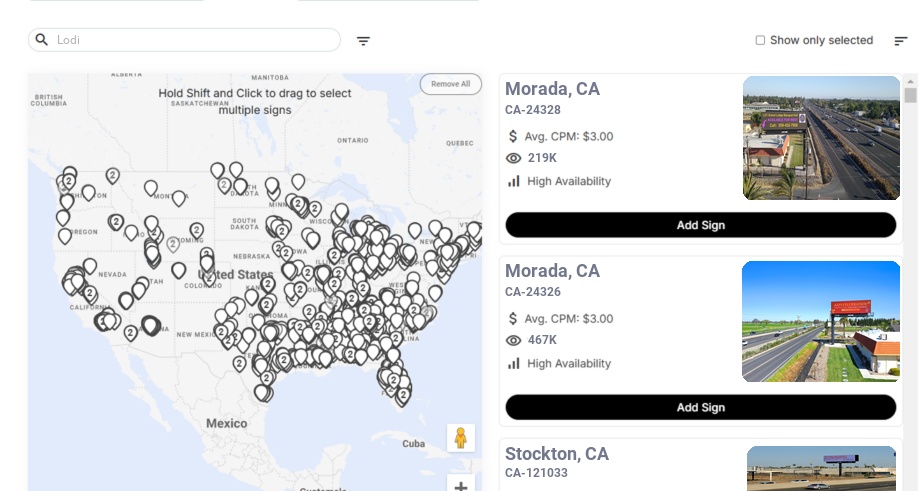
With 5 digital billboards near the Lodi area in nearby Morada, advertisers can tap into daily local traffic, regional commuters, and year-round wine tourism. Morada sits about 5.3 miles from Lodi and is positioned near SR-99 and key arterials connecting Stockton’s north side to the Lodi area. These locations offer efficient visibility for both residents and visitors without paying big-city rates.
What kind of traffic can Blip billboards near Lodi, California reach?
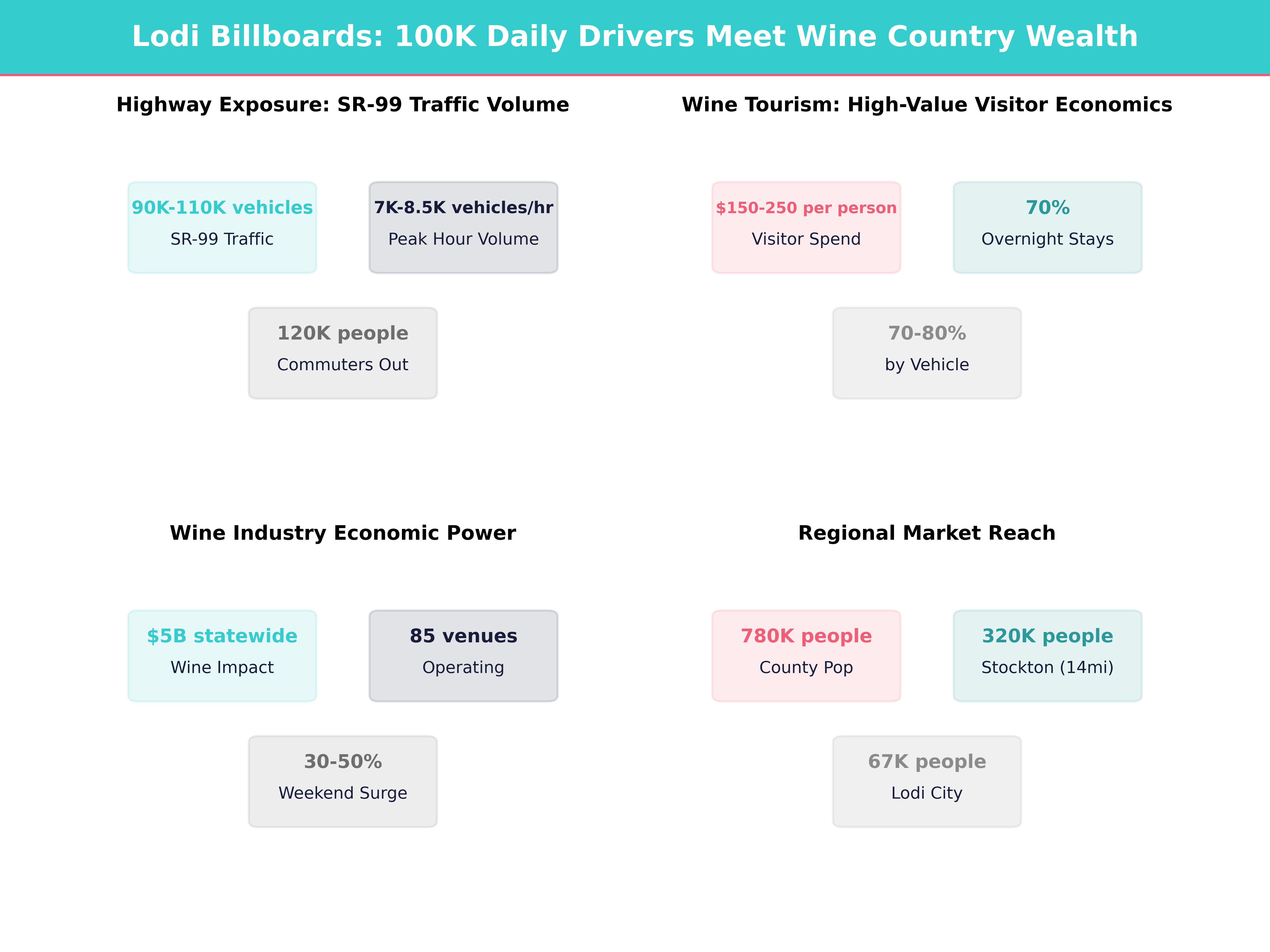
Lodi sits between two major north–south corridors, State Route 99 to the east and I-5 to the west, both feeding traffic past Morada and toward the Lodi area. Caltrans District 10 traffic counts show average daily traffic on SR-99 near Lodi and Morada commonly in the 90,000–110,000 vehicles per day range, with heavy truck volumes tied to agriculture and logistics. In commute windows, peak-hour volumes on SR-99 near Morada and Lodi can reach 7,000–8,500 vehicles per hour in both directions.
When should I run my Blip ads in Lodi, California for the best results?
For Lodi and nearby Morada, morning peak traffic is roughly 6:30–9:00 a.m., midday traffic picks up from 11:30 a.m.–1:30 p.m., and evening peak traffic runs about 3:30–6:30 p.m. For tourism-driven advertisers, Friday afternoon through Sunday evening is especially important, since many visitors arrive Friday after 3:00 p.m. and depart Sunday between 11:00 a.m. and 4:00 p.m. The page also recommends weighting event weekends and using early a.m. or late-night windows for shift-based industries.
What makes the Lodi, California billboard market good for Blip advertisers?
Lodi is a compact but influential hub in northern San Joaquin County, with about 67,000 residents in the City of Lodi and roughly 780,000 people in the county. It sits at the heart of one of the most productive winegrape regions in the world, with more than 100,000 acres of winegrapes and over 85 wineries in and around Lodi. The area blends agriculture, tourism, commuter traffic, and logistics, which creates multiple audience segments for local and regional advertisers.
Do I need a contract to advertise with Blip in Lodi?
No, Blip has no long-term contracts or minimum commitments. You can start, pause, or stop your campaign at any time.
How fast can I launch a billboard campaign with Blip in Lodi?
You can have your campaign live in minutes. Create a free account, select your locations, set your budget, upload your design, and start running once approved.
Where can I advertise with Blip in Lodi?
Blip has digital billboards in Lodi. You can browse available locations on a map, choose the ones that fit your audience, and start advertising right away.
Still have questions? Launch a campaign in minutes — no contracts, no commitments.
Start Your CampaignLodi Billboard Advertising Guide
Lodi, California sits at the heart of one of the most productive winegrape regions in the world and anchors a busy commuter and logistics corridor between Sacramento and Stockton. With 5 digital billboards near the Lodi area in nearby Morada, we can help advertisers tap into daily local traffic, regional commuters, and year‑round wine tourism with flexible, data‑driven campaigns. For brands specifically seeking billboards near Lodi without paying big‑city rates, these positions offer an efficient way to stay visible to both residents and visitors.
Understanding the Lodi Area Market
Lodi is a compact but influential hub in northern San Joaquin County:
- The City of Lodi has about 67,000 residents (2020 count), while San Joaquin County totals roughly 780,000 people, according to county‑level estimates from San Joaquin County.
- More than 100,000 acres of winegrapes are grown in the Lodi AVA, and over 85 wineries operate in and around Lodi, according to Visit Lodi and the Lodi Winegrape Commission.
- Industry groups estimate that Lodi’s wine industry generates well over $5 billion in annual economic activity statewide when you factor in growing, winemaking, tourism, and related services.
- The city promotes itself heavily as “Winegrape Capital of the World,” making wine, agritourism, and hospitality central to the local economy; Visit Lodi reports that visitor spending in the Lodi area has grown by double‑digit percentages in several recent years as wine tourism has expanded.
Key nearby anchors that shape billboard audiences:
- Stockton, just 14–15 miles south, has over 320,000 residents and is one of California’s largest inland ports. The Port of Stockton handles more than 4 million metric tons of cargo annually and supports thousands of direct and indirect jobs, contributing heavily to daily truck and employee commuting traffic.
- Lodi sits between two major north–south corridors: State Route 99 to the east and I‑5 to the west, both feeding traffic past Morada and toward the Lodi area. Caltrans District 10 traffic counts show average daily traffic (ADT) on SR‑99 near Lodi and Morada commonly in the 90,000–110,000 vehicles per day range, with heavy truck volumes tied to agriculture and logistics.
Our 5 digital billboards in Morada (about 5.3 miles from Lodi) serve as prime exposure points for:
- Lodi residents commuting to Stockton or passing Morada for shopping, services, and dining. In San Joaquin County, more than 60% of workers drive alone to their jobs and another 10–12% carpool, creating consistent daily flows.
- Stockton‑area residents heading to the Lodi area for wineries, Lodi Lake, and events—Visit Lodi reports that roughly 70–80% of Lodi wine visitors arrive by personal vehicle from within a 150‑mile radius.
- Regional travelers moving between Sacramento, the Central Valley, and the Bay Area along SR‑99 and I‑5, including a substantial share of long‑haul truck traffic.
This mix gives campaigns strong reach into both everyday local life and higher‑spending visitor segments. Tourism research cited by Visit Lodi shows that overnight visitors to the Lodi area often spend $150–$250 per person per day on lodging, dining, and experiences—high‑value impressions for hospitality and entertainment advertisers using Lodi billboards to drive bookings and reservations.
Traffic Patterns and When to Run Your Blips
To maximize campaign effectiveness near the Lodi area, it’s essential to align your schedule with how people actually move through the corridor. Thoughtful timing is what turns basic billboard advertising near Lodi into a consistently performing channel.
Commuter flows
Data from the San Joaquin Council of Governments shows that San Joaquin County is heavily commuter‑oriented:
- More than 120,000 residents commute out of the county daily, many through SR‑99 and I‑5 toward Sacramento, the Bay Area, and nearby counties.
- Average one‑way commute times in the county are around 33 minutes, several minutes above the U.S. average, with many workers spending 45–60 minutes or more on the road each way.
- In key commute windows, Caltrans data show that peak‑hour volumes on SR‑99 near Morada and Lodi can reach 7,000–8,500 vehicles per hour in both directions.
For Lodi and nearby Morada, that translates to:
- Morning peak: roughly 6:30–9:00 a.m. southbound and northbound as workers head between Lodi, Stockton, and other Central Valley cities.
- Midday bump: 11:30 a.m.–1:30 p.m., driven by service workers, local errands, and lunch traffic.
- Evening peak: roughly 3:30–6:30 p.m. as commuters return, with some corridors experiencing elevated volumes until 7:00 p.m.
How to use Blip:
-
Schedule heavier weekday rush‑hour exposure for:
- Professional services (insurance, healthcare, real estate, financial services).
- Quick‑decision offers (coffee, drive‑thru, auto service) positioned as “on your way” choices.
-
Rotate message variations by time:
- Morning: “Start your day in Lodi with…” or “On your way home tonight, stop by…”
- Evening: “Dinner in downtown Lodi tonight” or “Need a gym near home?”
- For shift‑based industries (warehouses, port‑related jobs, hospitals), consider supplementary early a.m. (4:30–6:30 a.m.) and late‑night (9:00–11:00 p.m.) windows, when roads are quieter but worker traffic is concentrated.
Weekend and tourism traffic
Lodi’s tourism traffic spikes on weekends, especially during wine events and festival seasons:
- Visit Lodi and the Lodi Winegrape Commission report that Lodi wineries collectively attract hundreds of thousands of visitors per year, with many tasting rooms seeing 30–50% higher visitation on Saturdays and Sundays compared with weekdays.
- The Lodi Wine Experience (formerly ZinFest) routinely draws several thousand attendees over its run, many of whom travel from Sacramento, the Bay Area, and out of state.
- The Lodi Grape Festival and other fairgrounds events have historically attracted 60,000–100,000+ visitors across multi‑day runs, significantly boosting hotel occupancy and restaurant traffic.
- Lodi Lake Park and the Mokelumne River attract warm‑weather visitors for boating, paddling, and family outings; Lodi Lake Park
For tourism‑driven advertisers (wineries, tasting rooms, hotels, restaurants, boutiques):
- Concentrate impressions Friday afternoon through Sunday evening, when weekend visitors are driving through the Morada corridor toward the Lodi area. Visitor surveys from Visit Lodi show that many tourists arrive Friday after 3:00 p.m. and depart Sunday between 11:00 a.m. and 4:00 p.m.
- Use Blip’s scheduling tools to heavily weight event weekends (festival dates, wine weekends, holiday events) without committing to constant high spend year‑round.
- Create “welcome” creatives timed to arrival windows (Friday p.m., Saturday late morning) and “last‑chance” creatives for departures (Sunday afternoon), such as “Last Chance: Brunch in Downtown Lodi Before You Head Home.”
Where Our Billboards Reach: Lodi Area Geography
Our 5 digital billboards in Morada sit strategically near the routes that naturally feed into the Lodi area, giving you billboard rental near Lodi that is visible to both city traffic and regional flows:
- Morada lies just south of Lodi, near the SR‑99 corridor and key arterials connecting Stockton’s north side to the Lodi area. According to San Joaquin Council of Governments, north Stockton and Lodi together encompass well over 150,000 residents, many of whom rely on SR‑99 for daily travel.
- Drivers heading to Lodi wineries, downtown, or the Lodi Lake area
What this means for advertisers:
- You can reach Lodi residents leaving or returning to the city for work, school, and shopping. Household surveys show that a large share of Lodi residents do at least one or two car trips per day, multiplying potential billboard impressions.
- You can target Stockton and north San Joaquin County residents who regularly choose Lodi for dining, wine tasting, and recreation. Visitor‑origin data cited by Visit Lodi indicate that a significant portion of day‑trip visitors come from within 30–50 miles, a radius that includes most of Stockton and the surrounding communities.
- You can capture pass‑through regional traffic making decisions on where to stop for gas, food, and attractions near the Lodi area—critical for categories like quick‑service restaurants, fuel, roadside lodging, and emergency services.
Use board‑specific targeting to:
- Emphasize “next exit” or “minutes away” copy where appropriate to guide drivers toward your Lodi‑area location.
- Test localized messages referencing “near Lodi Lake,” “downtown Lodi,” or “Lodi Wine Country” to see which phrasing triggers more engagement for your category.
- Align messages with major junctions and cross‑streets highlighted in City of Lodi and City of Stockton visitor and traffic maps to make directions feel intuitive.
Audience Segments to Consider in the Lodi Area
Because the Lodi area blends agriculture, tourism, and commuter lifestyles, advertisers can reach several distinct segments. Well‑placed Lodi billboards can speak differently to each of these audiences while using the same locations.
1. Local families and long‑time residents
Lodi’s housing stock and schools make it attractive for families and multi‑generation households:
- About one‑third of San Joaquin County residents are under 25, and households with children are common throughout the region, according to county demographic summaries from San Joaquin County.
- Roughly 60–65% of Lodi‑area households are family households, with a substantial share including children under 18.
- Lodi Unified School District, one of the larger districts in the Central Valley, serves over 28,000 students across the broader area. The district operates more than 50 schools across Lodi, Stockton, and nearby communities, creating strong morning and afternoon school traffic patterns.
- School‑related travel (drop‑offs, pick‑ups, sports, and activities) can add an extra 10–20% to local traffic volumes on key corridors around bell times.
Effective approaches:
- Family‑oriented offers: after‑school activities, healthcare, dentistry, family restaurants, youth sports, tutoring.
- Time messaging around school commute hours and after‑school activities (7:00–9:00 a.m. and 2:30–5:30 p.m.).
- Use visuals that feature families, kids, and school‑friendly imagery with simple calls‑to‑action (CTA): “Sports Physicals This Week,” “Family Dinner Night in Lodi.”
- For businesses drawing from multiple schools, align campaigns with district calendars posted by Lodi USD (back‑to‑school, graduation, sports seasons).
2. Wine and agritourism visitors
Wine tourism is a major economic driver:
- Visit Lodi notes that the region’s wineries collectively attract hundreds of thousands of visitors annually, with Lodi now recognized as one of California’s largest winegrowing regions by acreage.
- Tourism impact reports cited by Visit Lodi show that visitor spending in the area has reached tens of millions of dollars per year, supporting local jobs in hospitality, retail, and transportation.
- Many visitors come from the Bay Area, Sacramento, and other Central Valley cities for weekend getaways; survey data indicate that more than 70% of wine tourists stay for at least one night, and a large share travels in groups of 2–4 people, amplifying party‑level spend.
Relevant industries:
- Wineries and tasting rooms.
- Boutique hotels, B&Bs, and vacation rentals.
- Guided tours, transport services, and designated‑driver companies.
- Restaurants, breweries, and specialty shops.
- Outdoor recreation and wellness brands that complement wine trips (spas, yoga, river and lake activities).
Creative ideas:
- Use high‑impact wine imagery (vineyards, glasses, barrels) with very limited text: “Award‑Winning Tasting Room – 10 Minutes Ahead.”
- Highlight unique differentiators: “Pet‑Friendly Tasting Patio,” “Live Music This Weekend,” “No Reservation Needed.”
- Run day‑of‑event creatives: “Today Only: Wine & Jazz Festival – Exit Now for Lodi.”
- Coordinate messages with event listings from Visit Lodi and wine‑trail promotions by the Lodi Winegrape Commission to ride existing marketing momentum.
3. Agricultural and industrial workforce
San Joaquin County is a logistics and agriculture powerhouse:
- County agricultural reports highlight multi‑billion‑dollar annual crop values, with winegrapes, almonds, walnuts, and other specialty crops prominent in the Lodi area.
- The Port of Stockton and regional distribution centers employ thousands of logistics workers and truck drivers, handling millions of tons of cargo each year.
- Industrial and warehousing growth along the SR‑99 and I‑5 corridors has added significant early‑morning and overnight truck traffic, especially around Stockton and Lodi.
For B2B and workforce‑oriented advertisers:
- Promote equipment, trucking, safety gear, training programs, and staffing services.
- Use more direct, benefit‑driven language: “Need Drivers? Local CDL Training,” “Forklift Certification – Classes This Week.”
- Schedule heavier frequency early mornings and late nights, when shifts are changing and long‑haul drivers are on the road.
- Consider bilingual ads to reach a diverse labor force, particularly in agriculture and logistics.
Crafting Effective Creative for the Lodi Area
The Lodi area’s environment and driving conditions shape how your visuals should look, regardless of whether you’re focused on long‑term branding or short‑term billboard rental near Lodi for a specific event.
Design for high‑speed, highway‑adjacent viewing
Most impressions near the Lodi area will come from drivers at 55–70 mph along major routes:
- Use 5–7 words maximum in your main headline.
- Reserve large font sizes and high‑contrast colors (e.g., white text on dark vineyard greens or deep purples).
- Put your primary CTA and location cue on one side (e.g., “Exit 10B – Lodi Wine Country”).
- Aim for logos that are simple and bold, occupying at least 15–20% of the canvas, so they remain legible at distance and speed.
Leverage local identity and pride
Lodi residents and regular visitors respond to messaging that reflects the place:
- Reference iconic terms: “Lodi Wine Country,” “Lodi Lake,” “Downtown Lodi,” “Grape Festival.”
- Incorporate imagery that matches the region: vineyards, the Mokelumne River, oak trees, or recognizable downtown streetscapes.
- For community‑minded businesses, align with local events featured by the City of Lodi or Lodi Grape Festival Grounds.
- Highlight local accolades, such as wine awards promoted by the Lodi Winegrape Commission, to build credibility with both locals and tourists.
Adjust for seasonality and climate
Lodi experiences hot, dry summers and mild winters:
-
Summers often see daytime highs above 90°F, with heat waves reaching 100–105°F; people are looking for cool escapes and evening activities.
- Promote air‑conditioned venues, cold beverages, water activities, and indoor events.
- Emphasize later operating hours as residents often shift activities to cooler evening periods.
-
During harvest season (late summer/early fall), vineyards are at peak visual appeal:
- Feature lush vineyard visuals and harvest‑themed promotions.
- Time special‑event ads (harvest dinners, grape stomps) around weekends and evenings.
-
In winter and early spring, emphasize:
- Tax services, auto maintenance, and “new year” themes.
- Early‑season event announcements (wine festivals, spring fairs) promoted on calendars by Visit Lodi and the Lodi Grape Festival.
With Blip, you can swap creatives across seasons instead of running a single static design all year, aligning with seasonal demand spikes to increase ROI.
Using Blip’s Flexibility for Local Testing
Digital billboards serving the Lodi area let you refine your message the same way you might optimize a digital ad campaign.
A/B test local references
Run two or more creatives simultaneously:
- Version A: “Visit Lodi Wine Country – 10 Minutes Ahead”
- Version B: “Downtown Lodi Dining – 10 Minutes Ahead”
Compare performance using:
- Blip’s impression and playback data by time.
- Correlated metrics on your side (web traffic spikes by hour, promo code redemptions, call volume).
- Location‑based metrics if you use call tracking numbers or URLs tailored to specific creatives.
Test offers by day and time
For example:
- Monday–Thursday: emphasize locals’ specials: “Lodi Locals: 10% Off This Week.”
- Friday–Sunday: switch to tourist‑friendly offers: “Weekend Tasting Flight Special.”
- Midday: lunch and quick‑service offers (“Lunch in Lodi – 5 Minutes Ahead”).
- Evening: entertainment and hospitality (“Tonight in Downtown Lodi – Live Music & Wine”).
Because Blip’s system allows you to bid per “blip” (each ad slot), you can:
- Increase bids during peak traffic windows (Friday evening, event days).
- Lower bids or pause during low‑value windows for your business.
- Build short, intense campaigns (for example, 3–5 days around a single festival at the Lodi Grape Festival Grounds) without long‑term commitments.
Aligning With Local Events and News
Timing your creative around what locals are talking about helps you stand out.
Track event calendars
- Visit Lodi’s Event Calendar lists major wine events, festivals, and community gatherings.
- The City of Lodi site includes civic events, park programs, and public notices that drive traffic to areas around downtown, Lodi Lake, and community centers.
- The Lodi Grape Festival calendar highlights fairgrounds events, which can dramatically increase traffic flows, hotel bookings, and evening restaurant demand.
- Business‑oriented events and community programs from organizations like the Lodi District Chamber of Commerce can also provide timing cues for B2B and local‑service campaigns.
With Blip, you can:
- Set short‑term, high‑intensity flights around major festival weekends.
- Create event‑specific creatives (“Parking Here for Grape Festival,” “After‑Festival Dinner in Lodi”) and only run them on selected days.
- Coordinate creative changes with event setup and teardown periods, capturing both incoming crowds and local service demand before and after large events.
Leverage local news cycles
Local outlets like the Lodi News‑Sentinel and RecordNet (Stockton Record) shape public conversation in the Lodi area:
- When local issues (water, agriculture, downtown development) are in the news, community‑oriented businesses can run supportive or clarifying messages.
- New businesses opening near the Lodi area can synchronize their launch with press coverage and a short burst of high‑frequency Blip exposures.
- For cause‑oriented campaigns (fundraisers, nonprofit events, public health), aligning billboard creative with stories covered in these outlets can significantly increase recognition and response.
Budgeting and Scaling for the Lodi Area
The Lodi area offers an appealing balance: smaller‑city audience sizes with access to large regional markets, often at a more efficient CPM than bigger metro cores like Sacramento or the Bay Area. Well‑planned billboard advertising near Lodi can deliver strong reach without overspending.
Start small, then scale
Because Blip has no long‑term minimum contracts:
- New advertisers can start with modest daily budgets to test messaging near the Lodi area—often as low as the cost of a few dozen blips per day.
- Once you see which creatives and time windows perform best, you can scale up your bids and daily caps around those segments.
- Advertisers focused on event‑driven traffic (for example, a single weekend at Lodi Lake or a wine release party) can funnel a high percentage of their budget into just a few high‑value days, yielding thousands of targeted impressions efficiently.
Match spend to your catchment area
Consider the realistic radius from which your customers will drive:
- Local services (dentists, auto shops, gyms): focus spend on commuter and school‑run windows, mainly targeting residents of the Lodi area and north Stockton—roughly a 5–15‑mile radius.
- Destination venues (wineries, wedding venues, resorts): invest more in weekend and event‑driven bursts, since visitors may come from 30–100+ miles away and are highly responsive to clear directional messages.
- Regional healthcare, higher education, or large retail centers can blend both approaches, using weekday commuter windows plus event‑specific surges tied to open houses or special promotions.
Coordinate with other channels
Billboards serving the Lodi area work best alongside:
- Search and social campaigns targeting “Lodi wine tasting,” “Lodi restaurants,” “Lodi hotels,” etc., which often capture intent from the same visitors who see your billboards en route.
- Print or digital ads in local media such as the Lodi News‑Sentinel and regional outlets covering Stockton and San Joaquin County.
- Visitor‑facing content on Visit Lodi and regional tourism channels, ensuring your branding and offers are consistent.
Use billboard creative that echoes your core branding from other channels so drivers easily connect your message when they see your ads elsewhere—this repetition can significantly increase recall, with outdoor advertising studies often showing 20–30% lifts in brand awareness when billboards are layered with digital campaigns.
Practical Creative Tips Specific to the Lodi Area
To make your campaigns near the Lodi area as effective as possible:
- Highlight proximity: “5 Minutes to Downtown Lodi,” “Next Exit for Lodi Wineries,” “Just Off 99 in the Lodi Area.” Simple distance cues help both locals and visitors commit quickly.
- Use local directional cues: reference landmarks like “near Lodi Lake,” “by the Grape Festival Grounds,” or “old downtown Lodi.”
-
Feature bilingual or Spanish‑friendly messaging where appropriate.
- San Joaquin County has a large Hispanic/Latino population (over 40% countywide), according to summaries from San Joaquin County.
- Short, clear bilingual slogans can help restaurants, retail, and services broaden reach and improve response among Spanish‑speaking households.
- Avoid clutter: Lodi’s sunny days and highway speeds demand clean, bold layouts, not detailed text or small logos. Aim for one key image, one headline, one CTA.
- Include one clear CTA: “Exit 10B,” “Visit Today,” “Book at VisitLodiHotel.com,” or “Text LODI to 12345.”
- Consider seasonal color palettes that visually match the region—greens and golds for summer vineyards, deep reds and purples for harvest, and rich blues for winter river and lake imagery.
Turning Lodi‑Area Traffic Into Your Audience
By understanding how residents, commuters, and visitors move through the Lodi area—and by taking advantage of the flexibility of our 5 digital billboards near Morada—you can create campaigns that:
- Capture high‑value weekend wine tourists who may spend hundreds of dollars per trip on lodging, dining, and experiences.
- Build top‑of‑mind awareness with local families and commuters who pass the same boards dozens of times per month.
- Support key seasonal pushes: harvest, holidays, tax season, back‑to‑school, and major festivals at the Lodi Grape Festival Grounds, Lodi Lake, and downtown.
With data‑driven scheduling, multiple creatives, and the ability to adjust bids in real time, Blip makes it possible to treat billboard advertising serving the Lodi area like a dynamic, testable channel—while still benefiting from the massive impact of large‑format media on some of the region’s busiest roads as documented by Caltrans District 10 and regional planners at the San Joaquin Council of Governments. Whether you need always‑on visibility from billboards near Lodi or a short burst of billboard rental near Lodi for a single event, the same network can be tuned to match your goals and budget.