Billboards near Menlo Park, CA
No Minimum Spend. No Long-Term Contracts. Just Results.
Trusted by Leading Brands


Billboard advertising
near Menlo Park has never been easier
How much is a billboard near Menlo Park?
Why Choose Blip for Billboard Advertising near Menlo Park
Blip lets Menlo Park advertisers launch in minutes and reach US-101 commuters near San Carlos without long setup delays.
Use flexible budgets in Menlo Park to test campaigns for Meta, Stanford, or Sand Hill Road traffic and scale what works.
Daypart your Menlo Park ads for morning inbound and evening outbound Peninsula commuters, so Blip hits people when they're deciding.
No contracts means Menlo Park brands can run around Stanford events, holiday shopping, or summer travel—then pause anytime.
Track Menlo Park performance in real time and adjust creative fast as US-101 and El Camino Real traffic patterns shift.
Blip’s creative tools help Menlo Park ads stay sharp for a high-income, tech-savvy audience with clear, polished messaging.
Frequently Asked Questions About Billboard Advertising near Menlo Park
How much does a billboard cost near Menlo Park, California with Blip?
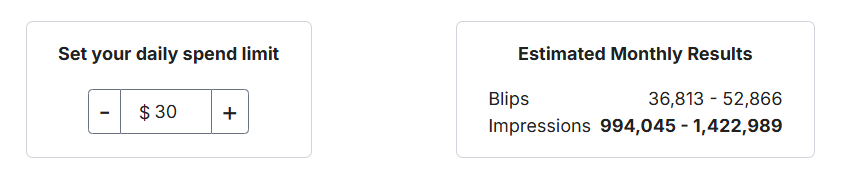
With Blip, advertising on Menlo Park billboards is flexible and budget-friendly because you only pay for each 7.5 to 10-second “blip” your ad receives on digital billboards serving the Menlo Park area. You set a daily budget that works for you, and Blip automatically keeps your campaign within that amount, while still letting you adjust your budget whenever you like. Costs per blip for billboards near Menlo Park, California vary based on the times you choose to run your ads and current advertiser demand, so you’re in control of how aggressively you want to reach people.
Where can I advertise with Blip in Menlo Park, California?
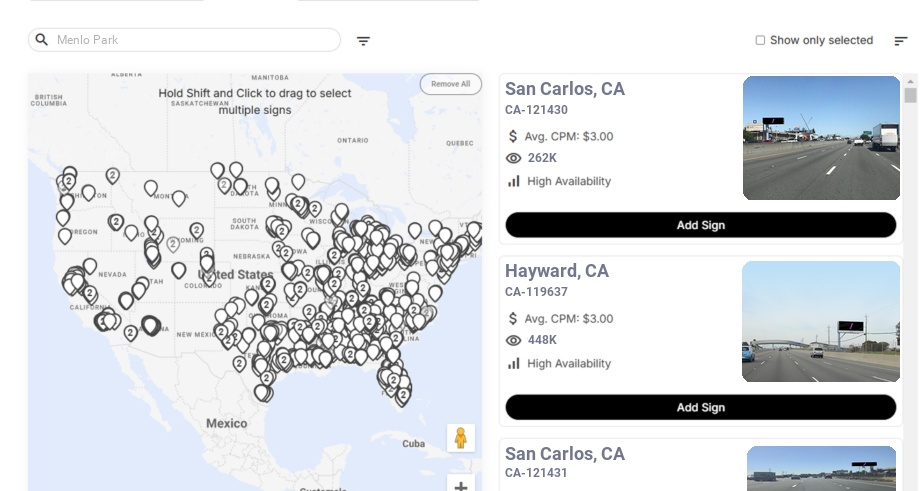
With two digital billboards serving the Menlo Park area from nearby San Carlos (about 5 miles north), advertisers can tap into daily flows of high-income commuters, tech workers, investors, and families moving between the Peninsula’s major employment and shopping hubs. The two digital billboards serving the Menlo Park area are located in nearby San Carlos, roughly 5 miles to the north. This is a strategic position in the Peninsula’s transportation network for anyone planning billboard advertising near Menlo Park.
What kind of people will see Menlo Park billboards near San Carlos?
Menlo Park sits at the center of one of the most affluent, innovation-driven corridors in the world. Advertisers can tap into daily flows of high-income commuters, tech workers, investors, and families moving between the Peninsula’s major employment and shopping hubs. The Menlo Park area’s audience breaks into powerful segments including tech and knowledge workers, affluent families, investors and business decision-makers, and visitors and event attendees.
When is the best time to run Blip ads in Menlo Park, California?
Traffic in the Menlo Park area is heavily commute-driven, but it also follows local school and tech industry calendars. Morning commute hours from 6:30–10:00 a.m. are ideal for B2B, SaaS, financial services, recruiting, and productivity tools, while midday is great for medical offices, restaurants, retail, and home services. Evening commute hours from 3:30–7:30 p.m. are a strong time to emphasize dining, entertainment, fitness, groceries, and after-school activities.
Why do the San Carlos billboards work well for Menlo Park advertisers with Blip?
The boards near San Carlos can reach a significant share of drivers heading to and from Menlo Park, Palo Alto, Redwood City, and San Francisco. US-101 through San Mateo County carries around 190,000–210,000 vehicles per day, and El Camino Real carries roughly 30,000–40,000 vehicles per day through San Carlos and nearby communities. When planning campaigns, think of these boards as “gateways” to the Menlo Park area, catching both residents and non-residents at regional travel decision points.
Do I need a contract to advertise with Blip near Menlo Park?
No, Blip has no long-term contracts or minimum commitments. You can start, pause, or stop your campaign at any time.
How fast can I launch a billboard campaign with Blip near Menlo Park?
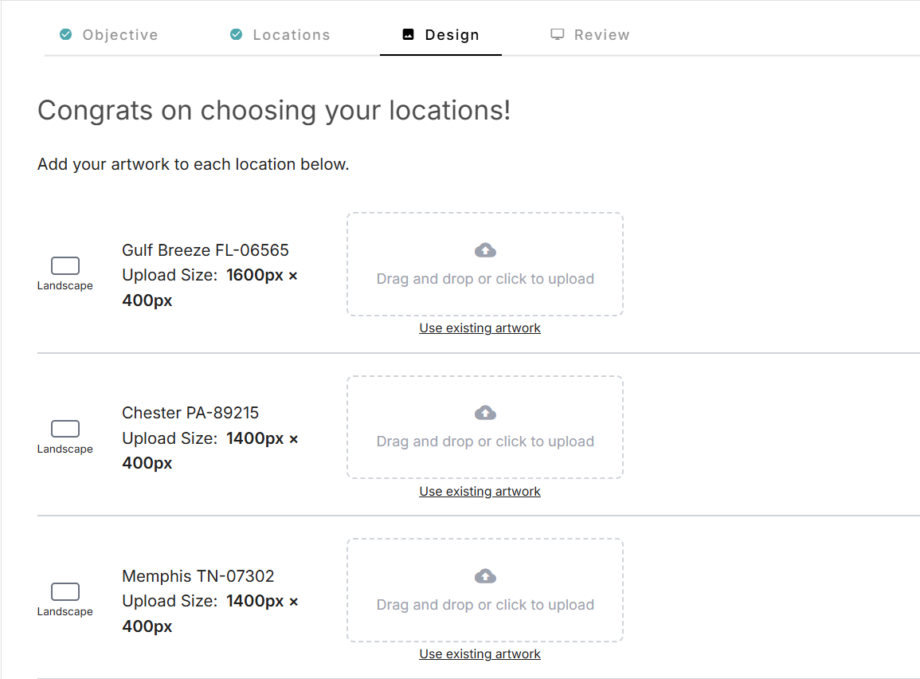
You can have your campaign live in minutes. Create a free account, select your locations, set your budget, upload your design, and start running once approved.
Where can I advertise with Blip near Menlo Park?
Blip has digital billboards near Menlo Park. You can browse available locations on a map, choose the ones that fit your audience, and start advertising right away.
Still have questions? Launch a campaign in minutes — no contracts, no commitments.
Start Your CampaignMenlo Park Billboard Advertising Guide
Menlo Park sits at the center of one of the most affluent, innovation‑driven corridors in the world. With two digital billboards serving the Menlo Park area from nearby San Carlos (about 5 miles north), advertisers can tap into daily flows of high‑income commuters, tech workers, investors, and families moving between the Peninsula’s major employment and shopping hubs. For brands specifically looking for billboards near Menlo Park, these placements provide high‑impact reach without sacrificing local relevance. Below, we outline how to use those placements most effectively with data‑driven creative, targeting, and scheduling strategies tailored to the Menlo Park area.

Understanding the Menlo Park Area Market
Menlo Park is relatively small in population but enormous in economic influence:
- The City of Menlo Park estimates a population of roughly 33,000–34,000 residents, with city profiles in recent years listing around 33,700 residents and modest annual growth.
- City‑compiled summaries of American Community Survey data show a median household income above $150,000, with many local estimates clustering around $160,000–$170,000, more than 60–70% higher than California’s statewide median.
- Over 70% of residents hold a bachelor’s degree or higher; many neighborhood profiles cite 3 in 4 adults (75%+) with at least a four‑year degree, making this one of the most educated local markets in the country.
- Local housing reports frequently referenced by The Almanac and Palo Alto Online show median single‑family home prices in the $2–3 million range, with Menlo Park often exceeding $2.3–2.5 million in recent years.
- The area is anchored by large employers: Meta’s headquarters in the Bayfront area, SRI International near downtown, nearby Stanford University (with 17,000+ students and over 15,000 faculty and staff), and major venture capital firms along Sand Hill Road—creating tens of thousands of high‑income jobs within a 5–10 mile radius.
For more local context on population, housing, and business conditions, the City of Menlo Park publishes ongoing demographic and economic reports, and regional insights are frequently covered by local outlets like The Almanac and Palo Alto Online.
What this means for billboard advertisers:
- Messages can assume a high baseline of tech literacy and education—short, clever, and sophisticated concepts perform well in a market where roughly 3 out of 4 adults have college degrees.
- High incomes support premium products and services: local coverage often notes that a substantial share of households earn $200,000+, making private schools, financial services, luxury retail, health and wellness, and B2B enterprise offerings especially relevant.
- With a strong commuter and daytime population—Menlo Park’s weekday daytime population is significantly higher than its residential base due to inbound workers—campaigns should be designed for both residents and non‑resident workers who move through the Menlo Park area every day. Well‑placed Menlo Park billboards can put your message in front of these audiences repeatedly throughout the week.
Where Your Billboards Reach: Key Corridors Near Menlo Park
The two digital billboards serving the Menlo Park area are located in nearby San Carlos, roughly 5 miles to the north. This is a strategic position in the Peninsula’s transportation network for anyone planning billboard advertising near Menlo Park:
- US‑101 corridor: According to recent Caltrans traffic census data, segments of US‑101 through San Mateo County carry around 190,000–210,000 vehicles per day (annual average daily traffic). Peak weekday hours can see 8,000–10,000 vehicles per hour in each direction. The boards near San Carlos can reach a significant share of drivers heading to and from Menlo Park, Palo Alto, Redwood City, and San Francisco.
- El Camino Real (CA‑82): This surface arterial carries roughly 30,000–40,000 vehicles per day through San Carlos and nearby communities, linking shopping districts, auto dealers, and neighborhood retail that Menlo Park residents and workers frequently use. The City of San Carlos notes that El Camino is one of its primary commercial corridors.
- Caltrain corridor: While digital billboards are focused on road traffic, keep in mind that Caltrain reports 30,000+ average weekday riders system‑wide in the post‑pandemic recovery period, with Menlo Park, Palo Alto, and Redwood City stations each handling hundreds to a few thousand daily boardings. This underscores how transit‑oriented, walkable downtowns (like Menlo Park and San Carlos) combine with highway corridors to create dense exposure opportunities.
Why San Carlos placements work for Menlo Park advertisers:
- San Mateo County as a whole has over 760,000 residents, and a large share of Menlo Park area residents commute north toward San Mateo, San Francisco, and SFO via US‑101, passing San Carlos daily.
- Local commute analyses frequently cited by outlets such as The Mercury News show that in many Peninsula cities, 40–60% of employed residents work in a different city, supporting the idea that thousands of Menlo Park workers pass through the US‑101 and CA‑82 corridors each day.
- The boards serve both morning inbound and evening outbound flows for people whose work, shopping, or social destinations are in or around Menlo Park, Redwood City, and Palo Alto, as well as travelers heading to San Francisco International Airport, which handles 50+ million passengers in a typical year and is heavily accessed via US‑101.
When planning campaigns, think of these boards as “gateways” to the Menlo Park area, catching both residents and non‑residents at the regional travel decision points—before they choose which exits, services, or businesses to visit. For advertisers evaluating billboard rental near Menlo Park, this gateway coverage can be more cost‑efficient than smaller, hyperlocal options with less total traffic.
Who You Can Reach in the Menlo Park Area
The Menlo Park area’s audience breaks into a few powerful segments:
-
Tech and Knowledge Workers
- Between Meta, SRI International, Stanford‑adjacent offices, and Sand Hill Road firms, there are tens of thousands of high‑skill jobs within a short drive of Menlo Park. Individual tech and research campuses often employ 1,000–10,000+ workers each, creating large daily flows.
- Many of these workers earn $150,000–$250,000+ annually, and local commutes average 25–35 minutes, giving them repeated billboard exposure each week (often 10+ passes per commuter).
- These workers often have high disposable income, are early adopters, and respond to innovation‑focused messages.
-
Affluent Families
- Menlo Park’s neighborhoods and nearby communities such as Palo Alto and Atherton consistently rank among the highest‑income ZIP codes in California, with local reporting frequently citing median household incomes over $200,000 in the most affluent pockets.
- Public school districts in and around Menlo Park enroll thousands of K–12 students, and private/independent schools add several thousand more, creating a large base of school‑aged children.
- Parents are active consumers of education, tutoring, enrichment programs, pediatric care, home services, and family entertainment, and are accustomed to paying premium rates in a market where childcare and enrichment can easily exceed $1,500–$2,000 per month per child.
-
Investors and Business Decision‑Makers
- Sand Hill Road and downtown Menlo Park host dozens of venture capital and private equity firms managing tens of billions of dollars in assets, with individual funds often exceeding $500 million–$1 billion.
- These visitors and local executives make frequent trips between San Francisco, SFO, Sand Hill Road, and Menlo Park, contributing to the high‑value traffic along US‑101 and CA‑82.
- These decision‑makers value credibility and brand leadership, making billboards ideal for B2B and brand‑building campaigns where even a small number of conversions can yield six‑ or seven‑figure deal values.
-
Visitors and Event Attendees
- The broader San Mateo County/Silicon Valley area attracts conferences, university events, and tourism. The San Mateo County/Silicon Valley travel site notes millions of annual visitors to regional attractions, supporting thousands of hotel rooms and hospitality jobs across the county.
- Stanford University alone hosts hundreds of public events, athletic games, and conferences each year, bringing in tens of thousands of visitors who rely on US‑101 and El Camino Real.
- Visitors often rely on quick roadside cues for hotels, dining, entertainment, and transportation services, making clear exit‑based or distance‑based billboards (“2 exits ahead,” “5 minutes from Menlo Park”) particularly effective.
For each of these groups, tailor your creative and scheduling to where they’re coming from, where they’re going, and what decisions they’re making while on the road so your Menlo Park billboards feel timely and relevant.
Timing Your Campaign: Commuter Patterns and Seasonality
Traffic in the Menlo Park area is heavily commute‑driven, but it also follows local school and tech industry calendars.
Daily timing
-
Morning commute (6:30–10:00 a.m.):
- On US‑101 segments near San Carlos, morning peak hours can account for 30–35% of weekday traffic volume.
- High volumes toward major employment hubs along US‑101—San Mateo, Redwood City, Menlo Park, Mountain View, and San Jose.
- Ideal for B2B, SaaS, financial services, recruiting, and productivity tools—people are in “work mode.”
-
Midday (10:00 a.m.–3:00 p.m.):
- Typically 25–30% of daily traffic, made up of remote workers, parents, service providers, and visitors.
- Great for medical offices, restaurants, retail, and home services, where same‑day or same‑week actions are common.
-
Evening commute (3:30–7:30 p.m.):
- Another 30–35% of daily weekday traffic, with strong flows heading back toward residential areas across San Mateo County and the South Bay.
- Emphasize dining, entertainment, fitness, groceries, and after‑school activities as people plan their evenings.
Weekday vs. weekend
-
Weekdays:
- Commuter traffic dominates; on US‑101 in San Mateo County, Monday–Friday volumes are typically 10–20% higher than weekend averages.
- Expect higher office‑related decisions (co‑working, enterprise software, recruiting, corporate events).
-
Weekends:
- More recreational, shopping, and family‑oriented travel, plus airport, coastal, and city‑visitor traffic.
- Use this time for restaurants, local attractions, retail promotions, and real estate open houses.
Seasonal patterns
-
Tech and academic calendar (September–May):
- Stanford’s academic cycles bring thousands of students and staff back into the area each fall, and tech conference seasons add waves of business travelers.
- Regional tourism and event calendars highlighted by San Mateo County/Silicon Valley show a steady cadence of fall and spring events that increase weekday traffic and hotel occupancy.
- Promote education products, internships, recruiting campaigns, and professional services.
-
Summer (June–August):
- Many local schools and Stanford operate on reduced schedules, softening peak commuter congestion by an estimated 5–10% on some corridors.
- In exchange, there is more leisure and family traffic, including tourists heading between San Francisco, the Peninsula, and coastal attractions via US‑101.
- Lean into tourism, entertainment, summer camps, and local experiences.
-
Holiday season (November–December):
- Retail spending in affluent areas like Menlo Park often spikes; national trends show 20–25% of annual retail sales occurring in this period, and local shopping districts mirror that pattern.
- Strong opportunity for retail, e‑commerce, philanthropy, and end‑of‑year financial services, especially when timed with local holiday events promoted by city governments and regional tourism boards.
Using Blip’s flexible scheduling, we can concentrate impressions during the most valuable hours and seasons for your particular audience rather than running evenly all day, making your billboard advertising near Menlo Park more efficient and results‑driven.
Creative Strategies That Fit the Menlo Park Area
With highly educated, time‑pressed viewers, your billboard creative near the Menlo Park area must be clear, smart, and visually distinctive.
1. Keep messaging sharp and minimal
- Use 7 words or fewer for the main message whenever possible; studies of roadside advertising consistently show recall dropping sharply once you exceed 8–10 words.
- Assume drivers have 3–5 seconds to absorb your ad at freeway speeds of 55–65 mph.
- Focus on one value proposition and one clear CTA (e.g., “Book Today,” “Apply Now,” “Visit This Exit”).
2. Design for high contrast and bright daylight
- The Peninsula often has 260+ sunny days per year in nearby cities, so avoid low‑contrast combinations (e.g., gray on blue).
- Use high‑contrast color pairs (dark text on light background or vice versa).
- Make logos and URLs short and bold; a simple, easy‑to‑remember domain or vanity URL is better than complex query strings, especially when viewers only have a few seconds.
3. Speak to a sophisticated, tech‑savvy audience
- Menlo Park area viewers are accustomed to polished Silicon Valley branding from major tech firms, Stanford, and high‑end retailers.
- Avoid generic stock imagery; opt for clean illustrations, product visuals, or minimal graphic elements.
-
Data‑driven or benefit‑first messaging works well:
- “Cut cloud costs by 30%.”
- “Same‑day pediatric appointments on the Peninsula.”
- “Zero‑down ADU financing for Bay Area homeowners.”
4. Localize your message
Even though the boards sit in San Carlos, explicitly connect to the Menlo Park area:
- “Trusted by Menlo Park families since 1998.”
- “Serving Menlo Park area startups and VCs.”
- “Just 10 minutes south of here – Menlo Park location.”
This positioning reassures viewers that your offering is local and accessible, not abstract, and aligns with local loyalty patterns often highlighted in neighborhood business coverage by The Almanac. Local cues like these help your billboards near Menlo Park stand out from generic regional campaigns.
5. Use dynamic creative and rotations
With digital billboards, we can rotate multiple creatives within a campaign:
-
A B2B SaaS company might show:
- Morning creative: “Engineers stuck in build pipelines? Automate releases.”
- Evening creative: “Ship faster. Sleep better. Try our CI/CD platform.”
-
A restaurant group could rotate:
- Weekday lunch special
- Weekend brunch
- Happy hour promotion
By tailoring creative rotations to time of day and day of week, you maximize relevance at the exact moment viewers are making plans, and you can compare performance between variations over hundreds or thousands of impressions per day.
Sample Strategies for Common Advertiser Types
Below are blueprint ideas for different industries targeting the Menlo Park area with our San Carlos boards.
Tech & B2B Companies
- Objective: Brand awareness with decision‑makers, recruiting, and lead generation, where even a handful of qualified leads per month can justify the spend.
- Target windows: Weekday mornings and late afternoons, plus conference periods highlighted in local calendars and outlets like The Mercury News and Palo Alto Online.
-
Creative suggestions:
- Benefit‑driven headlines: “Cut cloud spend 25% without changing providers.”
- Employer branding: “Build the future of AI near Menlo Park. We’re hiring.”
- Short URLs or QR codes (use large, high‑contrast QR for surface‑street‑facing creatives only; avoid for high‑speed freeway boards where scan rates at 55+ mph are low).
These tactics work especially well for companies looking to use Menlo Park billboards as part of a broader Silicon Valley thought‑leadership or recruiting strategy.
Education, Tutoring, and Youth Programs
- Objective: Enrollment growth for private schools, test prep, STEM camps, and extracurricular programs that may cost $500–$2,000+ per session in this market.
- Target windows: After‑school hours, weekends, and enrollment seasons (spring for fall programs, late winter for summer camps).
-
Creative suggestions:
- “Menlo Park area STEM camps – Grades 3–8 – Enrolling Now.”
- “Top‑scoring SAT prep for Peninsula students.”
- Feature clear age ranges and locations so parents quickly understand relevance, and consider referencing notable feeder schools or districts covered by the Menlo Park City School District and community news.
Healthcare and Wellness
- Objective: Grow patient volume for clinics, specialty practices, mental health providers, and fitness studios.
- Target windows: Mid‑day and early evening, when people plan personal errands and appointments.
-
Creative suggestions:
- “Same‑day primary care near Menlo Park – Book online.”
- “Elite sports medicine for Peninsula athletes.”
- Use trust signals like “Board‑certified,” “Rated 4.9/5 by local patients,” or affiliations with regional health systems often discussed in The Almanac and other local outlets.
Local Retail, Dining, and Services
- Objective: Drive in‑person traffic and online orders from Menlo Park area residents and workers, who often have high restaurant and retail spend per household compared with statewide averages.
- Target windows: Lunch, evening, and weekend dayparts, which collectively can represent 50%+ of daily vehicle volumes past the boards.
-
Creative suggestions:
- “Tonight: Craft cocktails & small plates, 10 minutes from Menlo Park.”
- “Peninsula‑wide delivery in under 1 hour.”
- Emphasize offers (“Free appetizer with this ad,” “Same‑day pickup”) and include easy domain names.
For many of these businesses, flexible billboard rental near Menlo Park allows campaigns to scale up around key weekends, holidays, or events without committing to long‑term static placements.
Real Estate and Home Services
- Objective: Generate seller and buyer leads in a high‑value housing market where a single transaction may yield $50,000–$100,000+ in gross commission.
- Target windows: Weekends and early evenings, when people are more likely to tour homes or research projects.
-
Creative suggestions:
- “Menlo Park area homes sold 15% over list – Ask how.”
- “Design‑build ADUs for Peninsula lots – Free consult.”
- Use a strong visual (e.g., before/after kitchen remodel) plus simple CTA, and consider referencing proximity to top local schools and downtown amenities that frequently appear in real‑estate coverage on Palo Alto Online.
Using Data and Testing to Improve Results
The Menlo Park area market is analytically minded; we recommend running your campaign the same way—iterative and data‑driven.
1. Start with clear geographic and commuter hypotheses
- Example: “Most of our Menlo Park area customers work in San Francisco, so they’ll see our message on northbound 101 in the morning.”
- Use Caltrans traffic counts and local news coverage of transportation issues (e.g., on Almanac News and The Mercury News) to validate which directions and times have the heaviest flows.
- Consider SamTrans and Caltrain corridor data—both linked by Caltrain and county transportation dashboards—to estimate overlap between drivers and transit users. Agencies like SamTrans regularly publish route and ridership updates that provide additional context.
2. Test multiple creatives
-
Run A/B tests with two or three variations:
- Different headlines (price‑led vs. quality‑led).
- Different CTAs (visit, scan, call).
- Different brand tones (playful vs. authoritative).
- Monitor downstream metrics like website visits, call volumes, sign‑ups, or coupon redemptions during the flight, and aim for statistically meaningful sample sizes (for example, 1,000+ impressions per creative before drawing strong conclusions).
3. Align with your digital campaigns
- Sync billboard messaging with paid search, social, and display campaigns targeted to the Menlo Park area.
- Use consistent keywords and phrases so that when viewers later search, your ad copy and landing pages feel familiar.
- Track incremental lifts in branded search traffic and direct visits during billboard flights, looking for week‑over‑week increases that align with when your boards go live.
4. Iterate by time of day and season
- If you see stronger conversion correlations during certain dayparts or months (for example, higher sign‑ups during back‑to‑school periods reported by the Menlo Park City School District or Stanford‑related events), rebalance spend to those windows.
- Over a few campaign cycles, many advertisers find that concentrating spend into the top 30–40% of hours (by performance) can deliver disproportionate results compared with running evenly.
Local Context and Compliance
While our boards are located in San Carlos, your messaging will be interpreted through the lens of Menlo Park area norms and expectations:
- The area is highly engaged with local issues like sustainability, transportation, and housing. Consider highlighting green credentials, community involvement, or local partnerships when appropriate—topics frequently covered by The Almanac and Palo Alto Online.
- Stay mindful of local regulations and best practices for advertising sensitive services (healthcare, legal, financial). Review relevant guidance from the City of Menlo Park, the City of San Carlos, and San Mateo County when planning disclaimers and required disclosures.
- Monitor local news sources such as The Almanac and Palo Alto Online for major roadwork, large events, or policy changes that could affect traffic patterns or customer sentiment—closures or detours on US‑101 and El Camino Real can temporarily shift thousands of vehicles per day.
By understanding who travels through the corridors serving the Menlo Park area, when they are on the road, and what motivates them, we can craft digital billboard campaigns that are both visually compelling and strategically precise. Using flexible scheduling, multiple creative variations, and local data, advertisers can turn two well‑placed digital billboards near Menlo Park into a powerful, measurable engine for awareness and growth.