Billboards in Selma, CA
No Minimum Spend. No Long-Term Contracts. Just Results.
Trusted by Leading Brands


Billboard advertising
in Selma has never been easier
How much is a billboard in Selma?
Why Choose Blip for Billboard Advertising in Selma
Blip lets Selma campaigns launch fast and self-serve, reaching SR-99 and SR-180 commuters without the usual billboard hassle.
Set any budget in Selma with Blip’s pay-per-blip control, ideal for harvest swings and payday weekends in this ag-driven market.
Use dayparting in Selma to hit 5–9 a.m. field crews and 3–7 p.m. family traffic on Manning Ave and local connectors.
No contracts means Selma advertisers can test bilingual creative, then shift spend to what works for Hispanic families and young commuters.
Blip’s real-time analytics help Selma businesses track results and adjust around back-to-school, harvest, and holiday shopping peaks.
Frequently Asked Questions About Billboard Advertising in Selma
How much does a billboard cost near Selma, California with Blip?
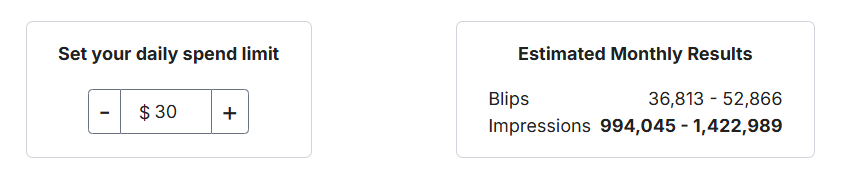
With Blip’s pay-per-blip model, you can run eye-catching Selma billboards on any budget by setting a daily amount that works for you, and Blip will automatically keep your campaign within that limit. Each blip is a short 7.5–10 second ad on digital billboards near Selma, California, and you only pay for the blips you receive. Pricing varies based on when you choose to run your ads, where they appear, and overall advertiser demand, so you stay in control of both cost and exposure.
Where can I advertise with Blip near Selma, California?
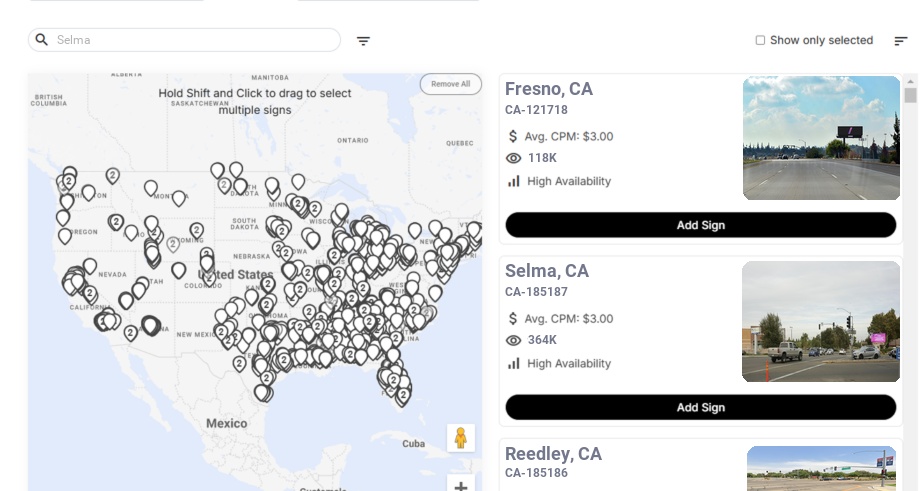
We serve the Selma area with three digital billboards located in nearby Reedley, about 8.8 miles away. These Reedley-area boards give you coverage along key east-west and local routes that residents use to access employment centers, schools, clinics, and grocery and discount retailers that serve families from the Selma area. Effectively, these locations function as Selma billboards, reaching the same audience that lives, shops, and works in and around the city.
What kind of audience do Selma billboards reach with Blip?
Selma’s population was 24,414 in the 2020 Census, with current population estimates in the 25,000–26,000 range as of 2024. Roughly 76–80% of Selma residents identify as Hispanic or Latino, and the median age is about 30, with close to 30% of residents under 18. That means Selma billboards reach a young, family-heavy, predominantly Latino audience.
When is the best time to run billboards near Selma, California?
Typical rush periods are 6:30–8:30 a.m., 11 a.m.–2 p.m., and 4–6:30 p.m., with many ag and packing-house schedules starting even earlier between 5–6 a.m. Seasonal timing also matters, since harvest, back-to-school, holiday shopping, and tax season all create predictable spikes in local activity. Blip lets you align impressions with those time windows so your message reaches commuters, shoppers, and families when traffic is heaviest.
Do I need a contract to advertise with Blip in Selma?
No, Blip has no long-term contracts or minimum commitments. You can start, pause, or stop your campaign at any time.
How fast can I launch a billboard campaign with Blip in Selma?
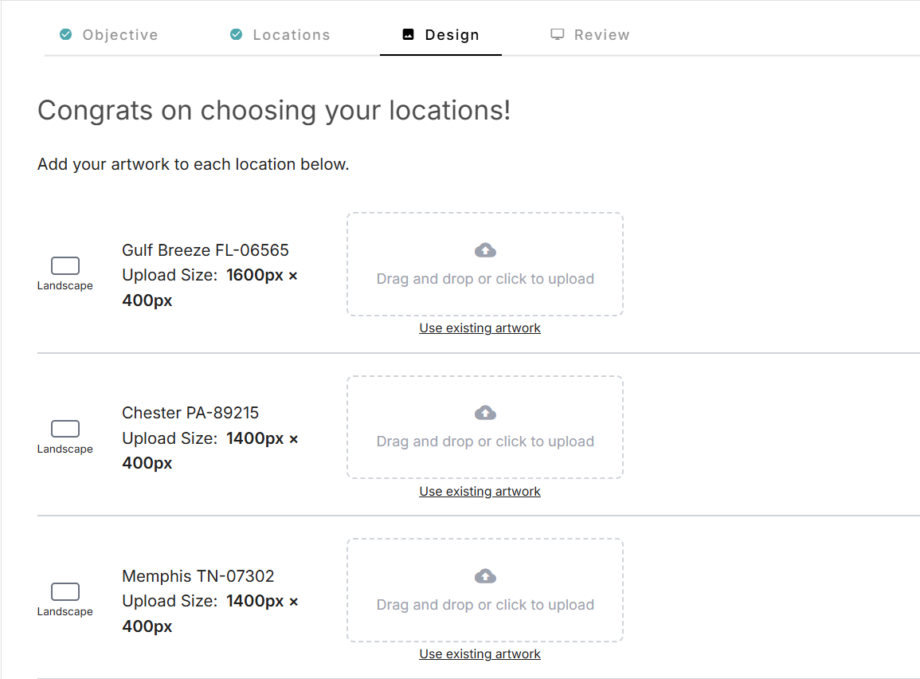
You can have your campaign live in minutes. Create a free account, select your locations, set your budget, upload your design, and start running once approved.
Where can I advertise with Blip in Selma?
Blip has digital billboards in Selma. You can browse available locations on a map, choose the ones that fit your audience, and start advertising right away.
Still have questions? Launch a campaign in minutes — no contracts, no commitments.
Start Your CampaignSelma Billboard Advertising Guide
Selma, California sits at the heart of the Central Valley’s agricultural powerhouse, drawing workers, families, and shoppers from across southern Fresno County every day. With three digital billboards serving the Selma area from nearby Reedley, we can tap into high-value commuter and local-errand traffic with flexible, data-driven campaigns that match the rhythms of this community. These strategically placed billboards near Selma give local businesses access to an audience that is difficult to reach efficiently through other channels.
Understanding the Selma Area Market
The City of Selma is a compact but influential hub in Fresno County’s south valley corridor:
- Selma’s population was 24,414 in the 2020 Census, with local and state estimates placing current population in the 25,000–26,000 range as of 2024.
- Fresno County’s total population is just over 1,000,000 residents, and the county labor force has hovered around 540,000–550,000 workers in recent years, creating a large pool of daily commuters moving through and around the Selma area.
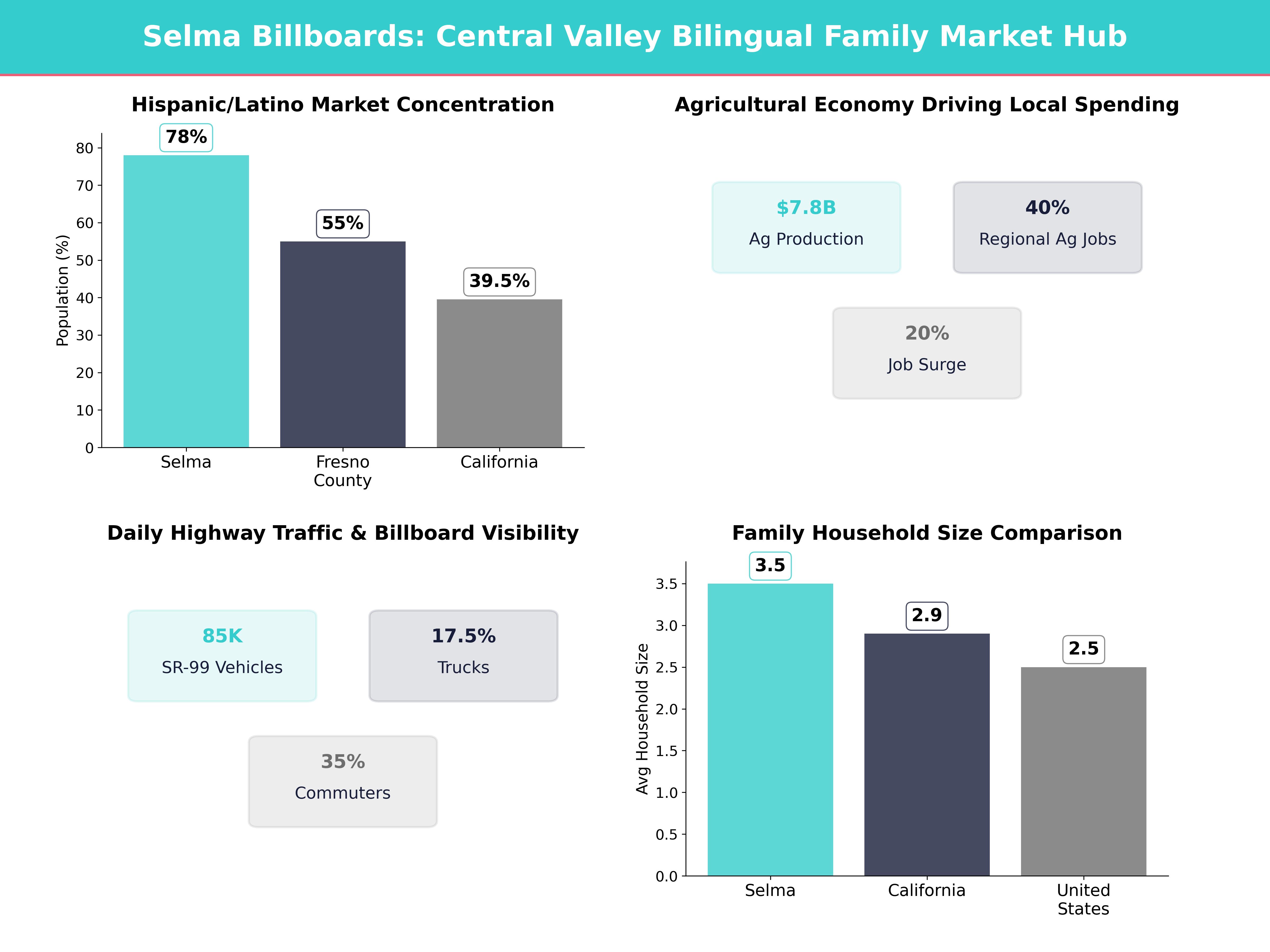
- Roughly 76–80% of Selma residents identify as Hispanic or Latino, compared with about 54–56% countywide, making it one of the most heavily Latino markets in the Central Valley.
- The median age is about 30, versus roughly 35–38 for California overall, and close to 30% of residents are under 18, signaling a young, family‑heavy audience.
- About 65–70% of households in the broader south Fresno County area are family households, and average household size in Selma is over 3.5 people, significantly higher than the U.S. average of about 2.5.
Selma brands itself as the “Raisin Capital of the World,” and agriculture is still the backbone of the local economy. According to Fresno County data, the county’s agricultural production regularly exceeds $7 billion annually, with several recent years topping $7.5–$8 billion in total farmgate value. Grapes (including raisins) alone typically account for well over $1 billion per year, and almonds, citrus, and tree fruit remain top‑five crops by value. That means:
- Large seasonal swings in employment and traffic: at peak harvest periods, agricultural employment in Fresno County can rise 15–25% above off‑season levels.
- Strong networks of small businesses that supply ag operations, transportation, refrigeration, farmworker housing, and services—often hundreds of small contractors and vendors clustered within a 20–30 mile radius.
- Heavy pickup, truck, and farm‑related vehicle traffic, especially during harvest and packing seasons, when truck counts on key corridors can spike 10–20% compared with winter lows.
Local business and civic resources like the City of Selma, Fresno County, and the Selma District Chamber of Commerce provide a useful view into economic development, permitting, workforce trends, and community priorities that can help shape your campaign message, tone, and language mix. Reviewing these resources while planning billboard advertising near Selma helps ensure your messaging speaks directly to local needs and opportunities.
Where Our Billboards Reach the Selma Area
We serve the Selma area with three digital billboards located in nearby Reedley, about 8.8 miles away. Reedley, with a population around 25,000, is another agriculture‑driven city that shares workforce, shopping, and school ties with Selma:
- More than 40% of jobs in the Reedley‑Parlier‑Selma micro‑area are tied directly or indirectly to agriculture, packinghouses, cold storage, and food processing.
- Thousands of residents travel between Reedley, Selma, Fowler, Parlier, Kingsburg, and Fresno for work, school, and shopping; regional commute data suggest that 30–40% of workers in smaller cities commute to another city for their job.
These Reedley‑area boards give you coverage along key east‑west and local routes that residents use to access employment centers, schools, clinics, and grocery and discount retailers that serve families from the Selma area. Effectively, these locations function as Selma billboards, reaching the same audience that lives, shops, and works in and around the city. Because Blip lets you buy individual “blips” of ad time instead of a long‑term static contract, we can precisely align your message with:
- Specific times of day when Selma/Parlier/Reedley traffic is heaviest, capturing commuters traveling at 45–65 mph on main routes.
- Certain days of the week (for example, Fridays and Saturdays, when grocery and big‑box retail trips typically rise 15–25% compared with weekdays).
- Key seasons (harvest, back‑to‑school, holiday shopping, tax season, and more), where local sales tax data often show double‑digit percentage swings in spending.
For advertisers looking for flexible billboard rental near Selma, this network provides regional reach without the high commitment and cost of traditional static boards.
Demographics and Audience Insights for the Selma Area
Designing effective billboard creative starts with understanding who lives and works near Selma and how they interact with billboards near Selma during their daily routines.
Ethnicity & Language
- About 76–80% of Selma residents are Hispanic or Latino, compared with roughly 39–40% for California overall.
- In Fresno County overall, more than 43% of residents speak a language other than English at home, with Spanish by far the dominant language; in many south‑county neighborhoods, that share exceeds 60%.
- In Fresno County schools, nearly 60% of students are classified as Hispanic or Latino, and more than 20–25% are English Learners—reinforcing the importance of bilingual communication for families.
- Many households are bilingual, but a significant share of adults and elders are primarily Spanish‑speaking, especially among first‑generation immigrant and farmworker families.
Implications for creative:
- Consider Spanish‑first or bilingual ads; among Latino audiences nationally, bilingual and in‑language ads have been shown in various studies to improve recall and intent by 10–30% compared with English‑only messaging.
- Use culturally resonant imagery: family gatherings, church events, soccer, quinceañeras, and agricultural pride themes tend to feel authentic and drive stronger emotional connection than generic stock imagery.
Age & Household Structure
- Median age in Selma is about 30, versus roughly 38 nationally, indicating a much younger local population.
- About 30% of the population is under 18, and 6–7% is under age 5, creating a strong base for youth‑oriented services and family products.
- The average household size is above 3.5 persons, compared with around 2.9 for California and 2.5 for the United States.
- Multi‑generational households are common; in many Central Valley communities, 10–15% of households include three or more generations under one roof.
Implications for creative:
- Emphasize value, family, and reliability for products and services; research consistently finds that “value for money” and “taking care of family” rank as top priorities for Latino and working‑class audiences.
- Show multiple generations in imagery when advertising healthcare, financial services, or big‑ticket purchases like vehicles and furniture.
- Youth and young adults are an important audience for education, fast food, entertainment, wireless providers, and entry‑level job recruitment.
Income & Work
- Median household income in Selma is around $50,000–$55,000, compared with roughly $70,000–$80,000 for California as a whole.
- Fresno County’s poverty rate hovers around 20%, versus about 12–13% statewide, and child poverty rates in some south‑county tracts can exceed 25%.
- Unemployment in Fresno County often runs 2–4 percentage points above the California average, with seasonal spikes tied to agriculture.
- Large numbers of residents work in agriculture, warehousing, service, manufacturing, and retail. A significant share commutes to Fresno, Kingsburg, Parlier, and other nearby cities; in some smaller cities, 50% or more of employed residents work outside their city of residence.
Implications for creative:
- Price sensitivity is real: clear prices, limited‑time deals, and savings messages tend to outperform brand‑only ads in lower‑ and middle‑income markets.
- Promote practical benefits (savings on utilities, lower auto insurance rates, budget‑friendly meal deals, basic healthcare, prescription discounts).
- Payment timing matters. In ag and service sectors, weekly or bi‑weekly Friday pay cycles are common; tailoring campaigns to these pay cycles often lifts response rates in local retail and QSR by 10–20%.
Traffic Patterns and Commuter Behavior
Even though our boards are in Reedley, they intersect with daily movement patterns that include a large share of Selma‑area residents who are exposed to billboard advertising near Selma as they commute, shop, and travel for school and services.
Key Corridors Affecting the Selma Area
- State Route 99 (SR‑99) runs just west of Selma and is the primary north‑south freeway through the Central Valley. Caltrans data near Selma show average annual daily traffic (AADT) commonly in the 80,000–90,000 vehicle range, with truck traffic often accounting for 15–20% of that flow—an indicator of strong goods movement and worker mobility.
- State Route 180 (SR‑180) connects Fresno eastward to Reedley and the foothills; AADT on SR‑180 segments serving eastern Fresno County typically ranges from about 18,000–25,000 vehicles per day, making it a major corridor for residents traveling between the Fresno metro and eastern Fresno County towns, including those from the Selma area heading toward Reedley or vice versa.
- Local arterials between Selma, Parlier, and Reedley—such as Manning Avenue and other east‑west connectors—carry a high mix of workers, students, and local shoppers, with school‑time peaks evident when classes are in session.
You can explore current highway counts and projects through Caltrans District 6, which oversees Fresno County’s state routes and publishes regular traffic and construction updates that can help time your campaigns around detours or new projects.
Daily Patterns
In the broader Fresno County area, commute data show:
- Roughly 75–80% of workers drive alone to work, while about 10–13% carpool and a smaller share use public transit or walk.
-
Typical rush periods:
- Morning: 6:30–8:30 a.m., with peak volumes often 20–30% above the daily average.
- Midday errand traffic: 11 a.m.–2 p.m., when stay‑at‑home parents, seniors, and shift workers run errands.
- Evening: 4–6:30 p.m., capturing both commuters and after‑school traffic.
- Many ag and packing‑house schedules start earlier, with some shifts beginning between 5–6 a.m., especially during harvest and peak packing months.
How we can use this with Blip:
- Concentrate impressions for commuter‑oriented messages (jobs, auto services, gas, quick‑serve restaurants, convenience stores) from 5–9 a.m. and 3–7 p.m., when vehicle volumes and decision‑making moments are highest.
- Use midday windows (10 a.m.–3 p.m.) for healthcare, financial services, grocery, and government services targeting caregivers, seniors, and part‑time workers.
- Run late‑evening and weekend blips for restaurants, entertainment, nightlife, and e‑commerce; in many communities, restaurant and entertainment spending spikes 20–30% on Friday and Saturday nights relative to weekdays.
Seasonal Opportunities in the Selma Area
The ag‑driven economy and local school calendar create predictable peaks for specific messaging and make it easier to time billboard rental near Selma for maximum impact.
Agricultural Seasons
Fresno County’s major crops drive work patterns:
- Grape/raisin harvest, drying, and packing typically peak from July through October; in some years, raisin grape tonnage exceeds 200,000–250,000 tons, supporting tens of thousands of seasonal jobs.
- Citrus (oranges, mandarins) tends to peak in the winter months, often December–March, supporting packinghouse and shipping activity when other crops are slower.
- Tree fruits (peaches, nectarines, plums, apricots) and other specialty crops add activity in late spring and summer, helping smooth employment from roughly May through August.
Campaign implications:
- Pre‑harvest (May–July): Promote hiring, equipment sales and service, banking products for farm businesses, and safety/insurance messages. Many employers launch recruitment pushes 4–8 weeks before peak harvest.
-
Harvest (July–October):
- Target workers with quick‑serve restaurants, hydration and snack products, workwear, and remittance services. Long shifts and high temperatures (summer highs in Fresno County commonly reach 95–105°F) make cold drinks, fast meals, and health services especially appealing.
- Employers can run HR and safety messages, both in English and Spanish, to support compliance and reduce incident rates during the busiest months.
- Post‑harvest (November–January): Focus on holiday retail, auto sales, tax prep teasers, and financial services as incomes stabilize and holiday spending rises. Many retailers see 20–40% of annual sales in the November–December period, making this a prime window for strong offers.
School and Youth Calendar
Selma Unified School District serves more than 5,000 students, according to Selma Unified School District data, and Reedley College adds a sizable student population nearby, with enrollment in the thousands across credit and non‑credit programs.
Key windows:
- Back‑to‑school (late July–September): School calendars in the Central Valley often start in early to mid‑August. Families’ back‑to‑school spending on clothing, supplies, and tech commonly rises 20–30% above typical monthly levels during this period.
- Graduation & college enrollment (April–August): High school graduations and community college registration windows overlap; this is ideal for technical schools, community colleges, military recruitment, and entry‑level employers to spotlight programs and openings.
- Sports seasons: Football (fall), soccer (fall/winter), and baseball/softball (spring) draw families to fields and stadiums multiple times per week. These events create recurring travel patterns perfect for family dining, fundraising promotions, and youth activities.
You can monitor local event calendars at the City of Selma, City of Reedley Mid Valley Times, which covers high school sports and community events across Selma, Reedley, and surrounding cities.
Crafting Effective Creative for the Selma Area
To stand out on digital billboards serving the Selma area, focus on clarity, cultural resonance, and value so that your Selma billboards work effectively even in a crowded advertising environment.
Messaging Principles
- Lead with one main idea. Traffic speeds on regional routes are typically 45–65 mph, giving drivers just 3–6 seconds to absorb your message. Aim for 7–10 words maximum in your main line.
- Use large, high‑contrast text. Bold fonts with strong contrast (white on dark, yellow on dark, or black on light) remain readable in bright Central Valley sun, which averages over 260–270 sunny days per year.
-
Feature a simple call to action. Examples:
- “Exit at [Street]” or “5 min from downtown Selma.”
- “Call 559‑XXX‑XXXX” with a big phone icon.
- Simple URLs or short codes; avoid long website addresses that are hard to recall at highway speeds.
Language Strategy
Given the high share of Spanish speakers:
- Use bilingual creatives: for example, headline in Spanish and CTA in English, or separate English and Spanish slides rotated via Blip. Bilingual ads can broaden reach while respecting language preferences.
-
Keep Spanish short and conversational. For instance:
- “Aseguranza de Auto desde $29/mes”
- “Clínica cerca de ti en Selma”
- When budget allows, create distinct Spanish‑only and English‑only creatives and allocate impressions by time of day and message type—e.g., Spanish‑heavy in early mornings and evenings when field workers commute, more English‑dominant around midday for mixed professional audiences.
Visuals That Resonate
- Families, local agriculture, churchgoing, and school pride imagery align well with community values documented in local reporting by outlets such as The Fresno Bee ABC30 Action News, and YourCentralValley (KSEE24/CBS47)
- For healthcare, use friendly, diverse family images rather than sterile clinical photos to reduce anxiety and emphasize trust.
- For auto dealers and services, show real vehicles common to the area: trucks, SUVs, and compact sedans, which dominate Central Valley registrations.
- Use seasonal cues: grapes and orchards in late summer, festive lights and tamales imagery during the holidays, caps and gowns during graduation season.
Timing and Daypart Strategies with Blip
Blip’s flexibility is especially useful for matching Selma‑area rhythms and fine‑tuning billboard advertising near Selma to your customers’ schedules:
-
Weekday vs. Weekend:
- Weekdays: Heavier commuter and worker focus (jobs, gas, food, childcare, healthcare). Many local convenience and QSR businesses see 60–70% of weekday sales before 7 p.m.
- Weekends: Family outings, churches, events, auto shopping, and big‑ticket retail. Auto dealers and furniture stores typically see their highest foot traffic on Saturdays and Sundays.
-
Pay Period Targeting:
- Many ag and service jobs pay weekly or bi‑weekly on Fridays. In lower‑ and middle‑income markets, consumer spending on groceries, restaurants, and entertainment can jump 20–40% on payday weekends.
- Increase your bid and frequency Thursdays–Saturdays around typical pay cycles for retail, remittances, and entertainment.
-
Early Mornings:
- Shift workers and field crews travel early; 5–7 a.m. can be ideal for coffee shops, breakfast offerings, and safety reminders. In peak ag season, a notable share of daily traffic on rural connectors can occur before 7 a.m.
-
Evenings:
- 5–9 p.m. is ideal for streaming services, restaurants, gyms, and family‑oriented promotions, as families plan dinner, shopping, and next‑day activities.
Because you can change bids and schedules at any time, we can test specific time blocks over a few weeks, compare performance against your in‑store traffic, call volume, or web analytics, and then shift budget toward the ones that deliver the strongest ROI.
Industry‑Specific Ideas for the Selma Area
Below are concrete ways different advertisers can leverage billboards serving the Selma area, whether you’re testing digital boards for the first time or adding Selma billboards to an existing media mix.
Local Retail & Grocery
- Promote weekly specials or “3‑day sales” with big price points: “$0.99/lb grapes,” “Family pack deal $19.99.” Value‑driven grocery promotions routinely outperform brand‑only ads in price‑sensitive markets.
- Around holidays (Mother’s Day, Christmas, Día de las Madres, Easter), highlight culturally relevant items and family meals; holiday weeks can generate 20–50% higher grocery sales than off‑peak weeks.
- Run heavier between 3–7 p.m. when families are likely shopping after work or school pickups.
Restaurants & Quick‑Serve
- Emphasize value meals, combo pricing, and speed: “Lunch under $6,” “Drive‑thru open late.” National data show that more than 50% of QSR visits occur during lunch and early dinner periods.
- Feature limited‑time menus or seasonal dishes; Blip lets you swap creative at no extra printing cost, so you can highlight Lent specials, summer drinks, or holiday platters.
- Use breakfast campaigns starting at 5 a.m. on weekdays to capture field workers and commuters. In some agricultural areas, breakfast and early coffee runs can represent 15–25% of QSR morning revenue.
Automotive Sales & Service
- Promote “No credit? OK,” “$0 down,” and bilingual services—highly relevant where many shoppers are first‑time buyers or credit rebuilding; in working‑class markets, special finance customers can represent 25–40% of sales.
- Tie campaigns to tax season (February–April) and harvest/post‑harvest periods when disposable income spikes from refunds and seasonal earnings.
- Advertise service specials: “Oil change $39.99,” “Free brake inspection – 10 min from Selma.” Vehicle age in California averages around 11–12 years, making maintenance offers particularly appealing.
Healthcare & Dental
- Many residents delay care due to cost and access. In higher‑poverty counties, uninsured or publicly insured rates can exceed 30–40% of adults, so highlight low‑cost or sliding‑scale services, Medi‑Cal acceptance, and bilingual staff.
- Use clear location and phone, with simple benefits: “Same‑day appointments,” “Walk‑ins welcome,” “Open evenings & Saturdays.”
- Coordinate campaigns with back‑to‑school physicals, vaccination drives, and open enrollment periods. Enrollment windows for Covered California and Medi‑Cal expansions are heavily promoted by local media and clinics.
Education & Workforce Training
- Reedley College and other local schools can promote certification programs, ESL classes, and short‑term training that appeal to working adults; many certificate programs can increase hourly wages from around $15–$16 to $20–$25 for in‑demand trades.
- Use before/after income messages—“Earn up to $20/hr with [Program]”—to connect education directly to economic benefit, which is a key motivator for adult learners.
- Run heavier in early evening when adults are commuting and thinking about long‑term goals, and around semester starts (January and August) and late application deadlines.
Financial Services, Taxes, and Insurance
- During January–April, focus on tax prep, rapid refunds, and ITIN‑friendly services. Many households receive thousands of dollars in combined refunds and credits, driving spikes in retail, auto, and electronics spending.
- Throughout the year, insurance agencies can emphasize affordable auto, home, and farm policies; Central Valley auto insurance rates can be several hundred dollars per year below large‑metro coastal markets, which is a compelling savings angle.
- Promote lending products around back‑to‑school and holiday shopping seasons, when short‑term cash needs are highest.
Integrating Billboards with Local Media
For maximum impact, connect billboard campaigns with other channels where Selma‑area residents get news and information:
-
Local news outlets:
- The Fresno Bee
- ABC30 Action News
- YourCentralValley (KSEE24/CBS47)
- Mid Valley Times – community coverage for Selma, Reedley, Parlier, and surrounding towns
- KVPR (Valley Public Radio) – regional news and public affairs
-
Community and tourism resources:
- Visit Fresno County
- City of Selma – events, parks, and community programs
- City of Reedley
Practical ideas:
- Run the same key slogan and colors on billboards and digital ads on these outlets to build recognition and frequency; marketing studies often show that consistent cross‑channel creative can improve brand recall by 20–30%.
- If you sponsor local events, churches, or school activities, align billboard messaging with those sponsorships and link to coverage or recaps on local news or city sites.
- Use billboards to push simple URLs or QR codes that lead to landing pages featuring local news coverage, testimonials, Spanish‑language resources, or promotions tailored to Selma‑area audiences.
Measuring, Testing, and Optimizing Campaigns
To make billboards serving the Selma area perform like digital campaigns, we should:
-
Define a primary KPI.
Examples: store visits, calls, coupon redemptions, online leads, job applications, or appointment requests. -
Use trackable elements.
- Billboard‑only promo codes (“SELMA10”) for discounts.
- Unique phone numbers for attribution; even modest call‑tracking setups can reveal which time windows drive 60–70% of response.
- Short, memorable URLs that redirect to campaign landing pages, with UTM parameters for analytics.
-
Test variations.
- Two different offers (e.g., “$0 down” vs. “Low monthly payment”) to see which yields higher conversion rates.
- English‑only vs. bilingual creative in specific time blocks; track which generates more calls or web hits from Spanish‑language pages.
- Different dayparts (morning vs. evening; weekday vs. weekend) to align with SR‑99 and SR‑180 volume patterns.
-
Adjust quickly.
- If your POS data or call volume shows spikes during particular windows, shift more of your Blip budget into those times; even a 10–20% reallocation can significantly improve cost per result.
- Swap out underperforming creative without print costs, and roll successful designs across more boards or longer time windows.
By anchoring our decisions in real statistics about the Selma area—its young, family‑oriented, predominantly Latino population; its agriculture‑driven economy worth more than $7 billion a year; and its commuter and seasonal traffic patterns on high‑volume routes like SR‑99 and SR‑180—we can use Blip’s digital billboards near Selma to reach exactly the right people, at the right time, with messages that genuinely resonate and drive measurable results, all while keeping your billboard rental near Selma flexible and cost‑effective.