Billboards in Long Beach, CA
No Minimum Spend. No Long-Term Contracts. Just Results.
Trusted by Leading Brands


Billboard advertising
in Long Beach has never been easier

How much is a billboard in Long Beach?
Why Choose Blip for Billboard Advertising in Long Beach
Blip lets you launch Long Beach billboards fast, without contracts, and reach I-405 and I-710 commuters in the South Bay.
Set a flexible budget in Long Beach and scale up for Port traffic, CSULB, or summer tourism when demand rises.
Daypart your Long Beach ads for rush hour, shift changes, or weekend beach runs along SR-91 and Lakewood Blvd.
Track Long Beach campaigns in real time and shift spend toward boards that perform on port routes and coastal corridors.
Use Blip creative tools to tailor Long Beach billboards for bilingual audiences, Grand Prix crowds, or Aquarium visitors.
Frequently Asked Questions About Billboard Advertising in Long Beach
How much does a billboard cost near Long Beach, California with Blip?
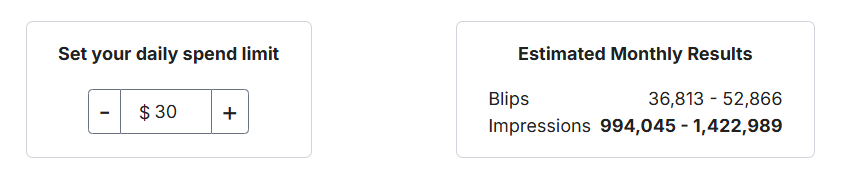
With Blip, you control exactly what you spend on Long Beach billboards by setting a daily budget that can be adjusted at any time, so you only pay for the brief “blips” your ad actually displays. Each blip is a 7.5 to 10-second spot on digital billboards near Long Beach, California, and the price of each one depends on when you choose to run your ad, where it appears, and current advertiser demand. Your total cost over time is simply the sum of those individual blips, making it easy to start with any budget and scale up as you see results.
Where can I advertise with Blip in Long Beach, California?
With 34 digital billboards serving the Long Beach area from nearby cities like Carson, Compton, Artesia, La Palma, Los Angeles, Lynwood, Norwalk, and Santa Fe Springs, Blip can help you put your message in front of hundreds of thousands of drivers, commuters, and visitors every day. Because these boards are positioned in nearby cities within about 10 miles of Long Beach, you can tap into multiple overlapping commuter corridors feeding into and out of the Long Beach area. This cluster of boards effectively functions as a flexible network of billboards near Long Beach.
What kind of traffic can Long Beach, California billboards reach with Blip?
Long Beach sits at the convergence of several major freeways and arterials that pass through nearby cities where our billboards operate. The region’s roads support some of the heaviest traffic volumes in Southern California, which is why outdoor advertising is so effective here. Key corridors include I‑405, I‑710, SR‑91, and the I‑105 and I‑110 corridors near Lynwood and Compton.
Who can Long Beach, California billboards reach in the local market?
Long Beach is the seventh-largest city in California and a major economic engine for Los Angeles County, with approximately 460,000+ residents in the city itself. Within a broader South Bay / Southeast LA trade area, the reachable population quickly rises to 2.0–2.5 million people within a 10–12 mile radius. The local audience includes students, families, port and industrial workers, tourists, and multicultural communities.
When is the best time to run Blip ads near Long Beach, California?
Blip’s flexibility lets you buy digital billboard “blips” by the moment, not by the month, so you can align exposure with when traffic is heaviest and when your audience is most receptive. Weekday rush hours, especially roughly 6:00–9:00 a.m. and 3:30–7:30 p.m., are strong for commuters, while midday, weekends, summer season, and marquee events like the Acura Grand Prix of Long Beach can also be valuable. Use Blip to run short, intensive campaigns centered on these dates, then taper spend afterward.
Do I need a contract to advertise with Blip in Long Beach?
No, Blip has no long-term contracts or minimum commitments. You can start, pause, or stop your campaign at any time.
How fast can I launch a billboard campaign with Blip in Long Beach?
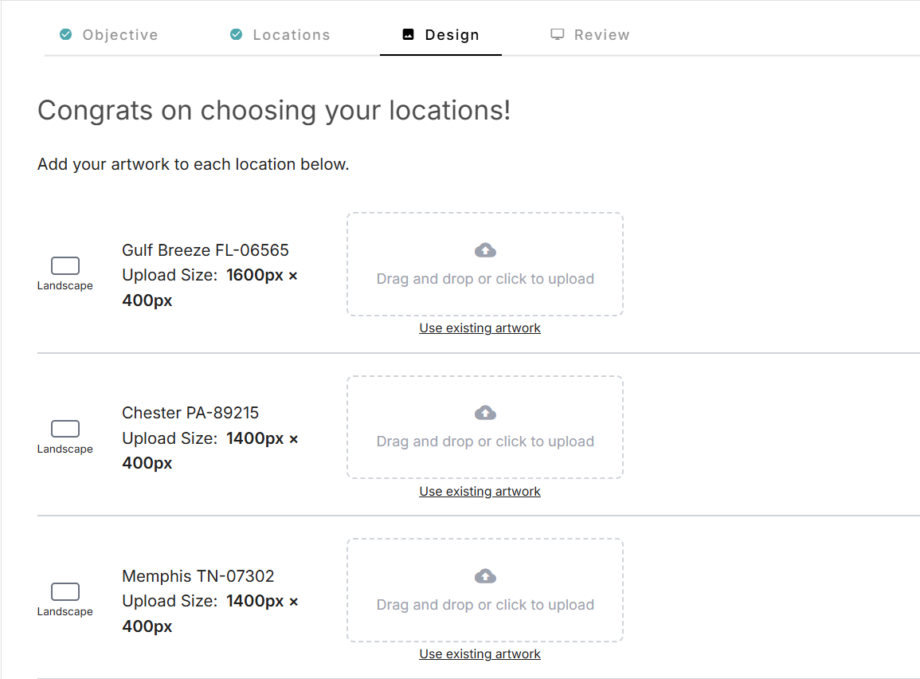
You can have your campaign live in minutes. Create a free account, select your locations, set your budget, upload your design, and start running once approved.
Where can I advertise with Blip in Long Beach?
Blip has digital billboards in Long Beach. You can browse available locations on a map, choose the ones that fit your audience, and start advertising right away.
Still have questions? Launch a campaign in minutes — no contracts, no commitments.
Start Your CampaignLong Beach Billboard Advertising Guide
Long Beach is one of Southern California’s most dynamic coastal cities, with a dense urban core, busy ports, major colleges, and year‑round tourism. With 34 digital billboards serving the Long Beach area from nearby cities like Carson, Compton Artesia La Palma Los Angeles, Lynwood Norwalk, and Santa Fe Springs, we can help you put your message in front of hundreds of thousands of drivers, commuters, and visitors every day—without committing to traditional long-term billboard contracts. If you’re exploring billboards near Long Beach but want flexibility and control, these digital options give you regional reach without typical static board commitments.

Understanding the Long Beach Area Market
Long Beach is the seventh-largest city in California and a major economic engine for Los Angeles County City of Long Beach, the city spans roughly 52 square miles of land and water and hosts a diverse mix of residential, industrial, and coastal neighborhoods, all of which can be effectively reached through Long Beach billboards in the surrounding freeway network.
Key market facts:
-
Population:
- Approximately 460,000+ residents in Long Beach itself.
- Within a broader South Bay / Southeast LA trade area (including nearby cities such as Carson, Compton, Norwalk, and Lynwood), the reachable population quickly rises to 2.0–2.5 million people within a 10–12 mile radius, all regularly exposed to billboard advertising near Long Beach along major commute routes.
-
Age profile:
- About 26–28% under age 20 (strong family and youth market, with thousands enrolled in LBUSD and nearby school districts).
- Roughly 34–36% between 25–44 (prime working-age professionals and young families).
- Seniors (65+) typically account for 11–13% of the local population, supporting strong demand for healthcare and senior services.
-
Linguistic diversity:
- Over 60% of residents speak a language other than English at home, with Spanish speakers alone often making up 35–40% of households.
- Long Beach has one of the largest Cambodian communities in the U.S., with several neighborhoods where Khmer is commonly spoken, as well as significant Filipino, Vietnamese, Korean, and Pacific Islander populations.
-
Income & housing:
- Median household income in Long Beach is in the $75,000–$80,000 range.
- Adjacent communities vary widely—from some neighborhoods under $60,000 median household income to nearby enclaves above $100,000—so board selection lets you fine‑tune your reach from value-oriented to higher-income consumers.
- Roughly 55–60% of housing units are renter‑occupied, which supports strong demand for moves, furniture, quick-service restaurants, mobile services, and financial products.
-
Employment & commute:
- The Long Beach area supports well over 200,000 local jobs when you include port operations, healthcare, education, hospitality, and retail.
- Average one‑way commute times for many residents fall in the 30–35 minute range, with a heavy reliance on freeways and major arterials—exactly where our digital boards are located, making billboard rental near Long Beach a practical way to stay in front of residents day after day.
Local references you can use for deeper market reading:
- City of Long Beach: https://www.longbeach.gov
- Economic Development (business climate & stats): https://longbeach.gov/economicdevelopment
- Visit Long Beach (tourism & events): https://www.visitlongbeach.com
- Long Beach Post (local news): https://lbpost.com
- Long Beach Press-Telegram: https://www.presstelegram.com
Because our 34 digital boards are positioned in nearby cities within about 10 miles of Long Beach, you can tap into multiple overlapping commuter corridors feeding into and out of the Long Beach area—dramatically expanding your reach beyond what a single static board could do. This cluster of boards effectively functions as a flexible network of billboards near Long Beach, letting you scale up or down across different corridors as your needs change.
Where Long Beach Area Traffic Flows (and Why It Matters)
Long Beach sits at the convergence of several major freeways and arterials that pass through nearby cities where our billboards operate. The region’s roads support some of the heaviest traffic volumes in Southern California, which is why outdoor advertising is so effective here. Understanding the movement of people helps you choose the best boards and dayparts for billboard advertising near Long Beach.
Key transportation corridors serving the Long Beach area:
- I‑405 (San Diego Freeway):
One of the busiest freeways in the U.S., with segments near Long Beach regularly carrying 250,000–300,000 vehicles per day. Many Long Beach commuters travel this corridor through Carson and the South Bay. This freeway also connects drivers to Long Beach Airport (LGB), which serves roughly 3–4 million passengers per year, adding to visitor traffic and making I‑405-facing Long Beach billboards especially valuable. - I‑710 (Long Beach Freeway):
Connects the Port of Long Beach to downtown Los Angeles. Heavy truck and commuter traffic often exceeds 200,000 vehicles per day on key segments, with some port‑adjacent stretches seeing tens of thousands of trucks daily. This corridor is ideal for targeting blue‑collar workers, logistics, and industrial audiences linked to the ports and nearby distribution centers. - SR‑91 (Artesia Freeway):
A major east‑west route through Artesia, Norwalk, and Santa Fe Springs, carrying 200,000+ vehicles daily across some sections. It offers strong regional reach into the Gateway Cities and inland suburbs whose residents regularly visit Long Beach for shopping, healthcare, and coastal recreation. - I‑105 and I‑110 corridors near Lynwood and Compton:
These act as connectors between Long Beach, South LA, and LAX, with segments between 170,000–220,000 vehicles per day. They are ideal for building awareness among travelers headed toward the coast or returning from the airport and central LA. -
Key arterials & transit:
- Major surface streets like Carson Street, Lakewood Boulevard, Long Beach Boulevard, and Artesia Boulevard each carry 30,000–60,000 vehicles per day in many segments.
- Long Beach Transit and LA Metro
Because our boards are in cities like Carson (about 4.2 miles from Long Beach), Compton (about 6.3 miles), Artesia (about 7.5 miles), and others, you can strategically position your messages where:
- Long Beach residents commute to jobs in Los Angeles, Carson, the South Bay, and inland industrial hubs.
- Workers employed at the Port of Long Beach, local hospitals (such as MemorialCare Long Beach Medical Center St. Mary Medical Center
- Visitors staying in nearby parts of LA County drive toward Long Beach attractions like the Queen Mary, Aquarium of the Pacific, and the Downtown Waterfront.
When selecting placements, prioritize:
- Freeway-facing boards near I‑405, SR‑91, and I‑710 for maximum volume and regional branding, especially if your goal is broad billboard advertising near Long Beach rather than hyperlocal only.
- Surface street boards in commercial zones of Carson, Compton, and Norwalk for retail, restaurants, and service businesses catering to local residents and neighborhood shoppers.
Who You Reach Near Long Beach: Key Audience Segments
Long Beach and its surrounding cities present a mix of demographics and lifestyles that can be segmented with tailored creative. By pairing message and board location, you can target specific high‑value groups using billboards near Long Beach and its feeder cities.
-
Port & Industrial Workforce
- The Port of Long Beach 51,000 jobs in Long Beach and over 306,000 jobs across Southern California, and handles over $200 billion in trade value in a typical year.
- Together with the neighboring Port of Los Angeles, the San Pedro Bay port complex processes roughly 40% of all containerized imports into the U.S., drawing tens of thousands of truck drivers, logistics workers, and warehouse staff through nearby freeways daily.
- Many of these workers commute via I‑710, I‑405, and arterials in Carson, Compton, La Palma, and Santa Fe Springs.
- Ideal targets: B2B logistics services, workforce recruitment, trade schools and maritime programs, equipment suppliers, industrial real estate, and financial services like credit unions and paycheck‑advance products that benefit from high-frequency Long Beach billboards along port routes.
-
Students & Young Adults
- California State University, Long Beach (CSULB) enrollment is around 38,000 students plus several thousand faculty and staff.
- Long Beach City College (LBCC) enrolls roughly 24,000–26,000 students each year across its Liberal Arts and Pacific Coast campuses.
- When you include nearby community colleges and trade schools in cities like Norwalk, Compton, and Santa Fe Springs, the broader student population within a reasonable drive time surpasses 70,000+.
-
Many students live in nearby cities or commute through them, making surrounding boards highly effective for:
- Apartments & student housing
- Mobile apps, fintech, and tech services
- Quick-service restaurants, nightlife, and entertainment
- Fitness centers, gyms, and health‑oriented brands appealing to young adults
-
Families & Multigenerational Households
- Household size in the Long Beach area typically averages 3.0–3.2 persons, with a high share of multigenerational households in many neighborhoods.
- In several nearby communities, 30% or more of households include children under 18, creating strong demand for family‑oriented brands.
- Family-centric businesses—healthcare, childcare, education and tutoring, grocery, automotive, and home improvement—can benefit from campaigns timed around school, work, and weekend errands.
-
Tourists & Event Attendees
- According to tourism data from Visit Long Beach, the city attracts millions of visitors annually, with recent estimates often in the 5–7 million range when you include day visitors and overnight stays.
- Visitor spending in the area is commonly reported in the hundreds of millions of dollars per year, supporting thousands of jobs in hotels, restaurants, attractions, and retail.
- Long Beach’s major draws include the Aquarium of the Pacific, which typically welcomes 1.6–1.8 million visitors annually, the Queen Mary, Shoreline Village, Belmont Shore, Naples Island, and the Downtown Waterfront.
- Many visitors stay in other parts of LA County and drive into the Long Beach area, particularly along I‑405, I‑710, and SR‑91, where billboard advertising near Long Beach can direct them toward key attractions and districts.
- Hotels, attractions, restaurants, and retail can reach this mobile audience with targeted bursts during peak tourist seasons and signature events.
-
Multicultural Communities
- Long Beach and neighboring cities host large Latino, Black, Asian, and Pacific Islander communities, with many neighborhoods where no single group is a majority.
- Spanish speakers often account for 35–40% of households across the broader trade area, while certain districts have some of the highest concentrations of Cambodian Americans in the country.
- Advertisers who incorporate bilingual or culturally attuned creative can significantly improve engagement; campaigns that reflect local culture and languages can deliver noticeably higher recall and response compared with generic messaging.
- Hyperlocal boards in places like Norwalk, Compton, and Lynwood can be used to test different language mixes and cultural references, then scaled to the rest of your campaign.
Timing Your Campaigns Around Long Beach Area Rhythms
Blip’s flexibility lets you buy digital billboard “blips” by the moment, not by the month. That means you can align exposure with when traffic is heaviest and when your audience is most receptive, making billboard rental near Long Beach more efficient and cost‑effective.
Daily Patterns
-
Weekday rush hours:
- Morning: roughly 6:00–9:00 a.m., when tens of thousands of commuters head to Long Beach, downtown LA, and the South Bay along I‑405, I‑710, I‑110, and SR‑91.
- Evening: about 3:30–7:30 p.m., with return traffic plus shift changes at port facilities, hospitals, and industrial parks.
-
Use these blocks for:
- B2B and professional services
- Healthcare and education enrollment
- Recruitment campaigns (hiring for port, logistics, hospitality, and healthcare)
-
Midday & early afternoon (10:00 a.m.–3:00 p.m.):
- Strong for stay-at-home parents, flexible workers, service trades, and tourists exploring the area.
- Retail centers, big‑box stores, and grocery-anchored plazas often see 20–30% of their daily traffic in this window.
- Perfect for retail promotions, restaurants, medical offices, car washes, and auto repair.
-
Late-night (after 9:00 p.m.):
- Best for nightlife, late‑open restaurants, delivery services, entertainment venues, and casinos in the broader region.
- CPMs often more efficient if competition is lower; you can sometimes buy a higher share of nightly impressions for the same budget compared with peak daytime hours.
Weekly & Seasonal Patterns
-
Weekends:
- Weekends often account for 30–40% of weekly retail and dining revenue for many local businesses.
- Ideal for furniture, auto dealerships, entertainment, and events tied to beach visits and family outings.
- Saturday mid‑day and early evening traffic toward the coast is especially strong in summer.
-
Summer season (May–September):
- Increased tourism and beach traffic as coastal temperatures and daylight hours peak; visitation to waterfront attractions frequently spikes by 20–40% compared with winter months.
- Port activity remains strong year‑round, but recreational trips to beaches and parks increase notably on sunny weekends.
- Focus on attractions, hospitality, quick-service restaurants, outdoor events, and seasonal retail.
-
School calendar:
- Back‑to‑school (August–September) and spring enrollment periods for CSULB and LBCC are prime windows for education campaigns and youth-focused brands.
- Local K–12 school calendars in Long Beach Unified and surrounding districts drive predictable spikes in spending on supplies, apparel, and extracurricular activities.
-
Marquee events:
- Acura Grand Prix of Long Beach (https://gplb.com) typically draws 180,000–190,000+ spectators over race weekend.
- Long Beach Pride ( https://longbeachpride.com 75,000–100,000+ attendees for its parade and festival.
- Large conventions at the Long Beach Convention & Entertainment Center (https://www.longbeachcc.com) can bring in tens of thousands of delegates in a single week, with major events filling 90–100% of nearby hotel inventory.
- Use Blip to run short, intensive campaigns (e.g., 7–14 days) centered on these dates, then taper spend afterward.
Crafting Effective Creative for Long Beach Area Drivers
Digital billboards near Long Beach must compete with dense traffic, diverse audiences, and short viewing windows. To perform well, your creative should be optimized for fast comprehension and high relevance.
Keep the Message Ultra-Clear
- Aim for 6–8 words of main copy plus a logo or product image. Studies of outdoor readability consistently show that messages with fewer than 10 words are processed more quickly by drivers.
- Prioritize one call-to-action: “Exit at…”, “Now hiring,” “Order at…”, “Visit this weekend.”
- Use large, sans-serif fonts and a strong color contrast (e.g., dark background with bright text). High-contrast designs can improve recall by 20–30% compared with low‑contrast layouts.
Tailor to Local Identity
-
Reference Long Beach landmarks or lifestyle:
- “Minutes from the waterfront”
- “Perfect before the game at Blair Field”
- “Fuel up on your way to the Port”
- “From Belmont Shore to Carson – We’ve Got You Covered”
-
Consider localized variations:
- Boards nearer Carson or Compton can highlight proximity: “Just 10 minutes south in Long Beach area.”
- Boards nearer Norwalk or Santa Fe Springs can lean into regional access: “Long Beach’s best seafood—worth the drive.”
- Local references and neighborhood names can meaningfully boost engagement, as audiences recognize the message is specifically for them.
Respect Language & Culture
- Use bilingual English/Spanish creative where appropriate, especially along corridors with a high share of Spanish speakers (many segments where 50%+ of residents speak Spanish at home).
- If your brand serves specific cultural communities (e.g., Filipino, Cambodian, Korean), test culturally relevant imagery and references while keeping the layout simple.
- Rotating creative across different languages and cultural appeals lets you A/B test messaging while staying within the same Blip schedule.
Design for Heavy Traffic Conditions
Traffic near Long Beach is often slow or stop‑and‑go, particularly along I‑405 and approaches to I‑710. While average speeds may drop well below 35 mph at peak times, you still need fast comprehension:
- Use large, bold imagery rather than detailed photos.
- Avoid clutter—one key image, one key message.
- Include directional cues if relevant: “Next exit,” “Off 405 at…,” “10 min north of Long Beach area.”
- For time-sensitive messages (e.g., “Sale Ends Sunday”), use clear, high-contrast countdowns or date references.
Using Blip’s Flexibility to Your Advantage
With Blip, you decide:
- Which boards (among the 34 serving the Long Beach area) to appear on.
- What times of day your ads run.
- How much you spend per day and per blip.
This makes it easy to match your media plan to audience behavior and your own business cycles, whether you’re testing billboard advertising near Long Beach for the first time or scaling an established campaign.
Strategic approaches for this market:
Daypart Targeting
- Concentrate budget on high‑value windows (e.g., weekday rush hour, weekend midday) that match your audience, instead of paying for low‑value impressions.
-
For example:
- A quick-service restaurant might emphasize 11:00 a.m.–2:00 p.m. and 5:00–8:00 p.m. near Carson and Compton boards to capture lunch and dinner traffic, which often represents 60–70% of daily restaurant revenue.
- A staffing agency hiring port workers might focus on early mornings (4:30–8:00 a.m.) and shift change times (2:00–6:00 p.m.) along I‑710 and I‑405 corridors.
- Healthcare providers can weight schedules toward late afternoon and early evening when families are more likely to book appointments.
Hyperlocal Board Selection
- Use boards in Carson and Compton to catch people driving between Long Beach, LA, and South Bay industrial areas, especially those employed in logistics, manufacturing, and refinery‑adjacent jobs.
- Use Artesia, Norwalk, and Santa Fe Springs boards to reach residents who periodically visit the Long Beach area for shopping, healthcare, or entertainment; these communities collectively represent hundreds of thousands of potential visitors.
- Use Los Angeles and Lynwood area boards for broader brand awareness and to position Long Beach-based businesses as regional destinations, especially for nightlife, dining, and waterfront attractions.
- Combine freeway and surface street locations: freeway boards for mass awareness, surface street boards for last‑mile conversion messages (“Turn right at Atlantic Ave,” “Next left into plaza”).
Budget Modulation
-
Ramp up spend during:
- Grand openings, special sales, or new product launches.
- Seasonal peaks (summer tourism, holiday retail, major events like the Grand Prix or Pride).
- Enrollment deadlines or healthcare open-enrollment periods.
- Dial back to maintenance levels other times, maintaining 24/7 presence at lower frequency so your brand remains familiar.
- Because digital billboards can update creative quickly (often within minutes to hours), you can adjust pricing, countdowns, or offers almost in real time without reprinting costs. This makes ongoing billboard rental near Long Beach much more agile than traditional static placements.
Campaign Ideas by Industry in the Long Beach Area
Here are some tailored concepts illustrating how different sectors can leverage our boards serving the Long Beach area:
Local Retail & Shopping Centers
- Promote limited‑time sales or weekend events near high-traffic boards in Carson and Norwalk, where daily traffic volumes frequently exceed 200,000 vehicles on adjacent freeways.
-
Creative example:
- Headline: “Big Sale, Short Drive”
- Sub: “Save up to 50% – [Center Name], near Long Beach area”
- CTA: “This weekend only”
- Run heavier Friday–Sunday to drive weekend traffic; for many centers, 35–45% of weekly sales occur between Friday afternoon and Sunday evening. Retailers looking for billboards near Long Beach can rotate multiple offers across this period to capture different shopper segments.
Restaurants, Bars & Nightlife
- Use LA-adjacent boards to position Long Beach as a food and nightlife destination, especially for downtown, Belmont Shore, and waterfront districts.
-
Segment messaging:
- Lunch specials near industrial and office corridors where thousands of workers clock in on staggered shifts.
- Happy hour and late‑night near commuter routes from South Bay and downtown LA.
- Example CTA: “Exit now for tacos & craft beer – Downtown Long Beach area.”
- Highlight key metrics where possible: “Open late, full bar, free parking.”
Attractions & Tourism
- Coordinate with events listed on Visit Long Beach.
- Run countdown campaigns: “3 Days Until Long Beach Grand Prix – Plan Your Route.”
- Promote bundles: “Aquarium + Dinner + Parking—Make It a Long Beach Day.”
- Use boards on SR‑91 and I‑105 to reach inland families and out-of-town visitors who often plan day trips to the coast and can add Long Beach to their itinerary.
Healthcare Providers
- Long Beach’s population includes significant senior, family, and low‑income segments with ongoing healthcare needs; thousands of residents use local hospitals and clinics every day.
-
Advertise:
- ER/urgent care wait times (“Open 24/7 – Minutes from Long Beach area”)
- Clinics, dental, and vision care
- Specialty services (orthopedics, pediatrics, mental health, women’s health)
- Target daytime and early evening, especially weekdays and Saturdays, when appointment requests and walk‑ins are highest.
Education & Training
-
CSULB, LBCC, adult schools, and trade programs can:
- Push enrollment deadlines: “Apply by Aug. 15 – Train for Port Careers.”
- Highlight financial aid: “Low-cost classes, close to Long Beach area.”
- Promote short-term certificate programs that align with port, healthcare, and logistics industries.
- Time campaigns around semester starts and application windows, with heavier investment 4–8 weeks before deadlines.
Auto Dealerships & Services
-
Auto is a natural fit given the vehicle-heavy commuting patterns:
- “$0 Down – 10 min from Long Beach area on 405 South.”
- “Oil Change While You Work – Book Today.”
- Focus on boards near 405/91 interchanges and commercial corridors in Carson and Norwalk where auto malls and service centers cluster.
- Tie messages to mileage and seasonality: “Summer Road Trip Check – Exit Now,” or “New EVs In Stock – Charge Ahead from Long Beach area.”
Measuring Success in the Long Beach Area
To get the most from your campaigns near Long Beach, define measurable goals before you launch, then use Blip’s flexibility to refine.
-
Direct response metrics:
- Track promo codes specific to billboard campaigns (e.g., “LB10” or “405DEAL”).
- Use vanity URLs or landing pages (e.g., yourbrand.com/longbeach) and monitor unique sessions and conversion rates.
- Monitor call volumes or online bookings during active campaign hours; a spike of 10–20% during your flight is a strong indicator of impact.
-
Location-based metrics:
- Compare store traffic or POS data in periods with and without billboard activity, ideally using 4–8 week windows for cleaner comparison.
- For multi-location businesses, compare performance of locations closest to major traffic corridors versus those outside the Blip coverage area.
-
Brand lift indicators:
- Look for increases in branded search volume from ZIP codes around Long Beach and nearby cities (e.g., 90802, 90803, 90805, 90745, 90746, 90650).
- Monitor social media mentions and engagement from local users; include hashtags or location tags in your creative when appropriate.
Because you can adjust spend, boards, and creative quickly, treat your campaign as an ongoing test‑and‑learn process:
- Start with a focused 2–4 week flight on key boards during prime times.
- Evaluate results against your baseline (sales, website visits, calls, or store traffic).
- Shift budget toward the best-performing corridors and creative.
- Layer in new messages (e.g., price promotions, seasonal offers, language variations) and re‑test. Over time, this helps you identify exactly which Long Beach billboards and dayparts deliver the highest return.
Bringing It All Together
The Long Beach area’s dense population, busy transportation network, major port, universities, and tourism make it one of the most powerful outdoor advertising markets in Southern California. By using our 34 digital billboards in nearby cities like Carson, Compton, Artesia, La Palma, Los Angeles, Lynwood, Norwalk, and Santa Fe Springs, you can:
- Reach hundreds of thousands of commuters and visitors moving toward and around the Long Beach area each day on some of the region’s highest‑volume roadways.
- Tailor your timing and spend to the rhythms of port activity, school calendars, tourism peaks, and major events like the Grand Prix, Pride, and large conventions.
- Deliver creative that speaks directly to the local culture, language, and lifestyle while staying flexible enough to test new ideas and offers.
With Blip, you control when, where, and how often you appear—so you can build a flexible, data-driven campaign that keeps your brand in front of the Long Beach area audience that matters most to you, using billboards near Long Beach in a way that fits your budget, your goals, and your growth plans.