Billboards in Bell, CA
No Minimum Spend. No Long-Term Contracts. Just Results.
Trusted by Leading Brands


Billboard advertising
in Bell has never been easier

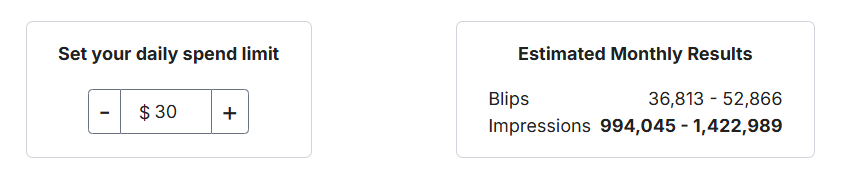
How much is a billboard in Bell?
Why Choose Blip for Billboard Advertising in Bell
Blip lets you launch in Bell fast and self-serve, reaching I-710 commuters and dense Florence Ave traffic without the usual ad-buy hassle.
Set flexible budgets in Bell and only pay for the blips you use—great for price-conscious families, renters, and local shops along Gage and Atlantic.
Daypart your Bell campaign for 6-9 a.m. or 3-7 p.m. to catch shift workers, school runs, and 30-35 minute commutes on I-5 and I-710.
No contracts means Bell advertisers can test Spanish-first creative during back-to-school, holidays, or Dodgers season, then scale what works.
Track Bell results in real time and shift spend toward the busiest corridors near Bell Gardens, South Gate, and Lynwood as traffic patterns change.
Use Blip's creative tools to build bold, bilingual ads for Bell's young Latino audience—simple, high-contrast messages that pop on fast-moving freeways.
Frequently Asked Questions About Billboard Advertising in Bell
How much does a billboard cost near Bell, California with Blip?
With Blip, you control exactly what you spend on Bell billboards by setting a daily budget that can be as small or as large as you’d like, and Blip automatically keeps your campaign within that limit. Every “blip” is a 7.5 to 10-second ad display on rotating digital billboards near Bell, California, and you only pay for the blips you receive. Costs vary based on when and where your ad runs and current advertiser demand, but you can adjust your budget anytime to match your goals in the Bell area.
Where can I advertise with Blip near Bell, California?
There are 38 digital billboards serving the Bell area from nearby cities like Bell Gardens, South Gate, Montebello, Lynwood, Los Angeles, Compton, Norwalk, Artesia, and Santa Fe Springs. These Bell billboards function as a connected network of billboards near Bell, ideal for brands that want sustained visibility just outside city limits. With 38 digital billboards serving the Bell area up to about 10 miles away, you can layer coverage to follow residents across their typical day.
Who will see my Bell, California billboard ads?
Bell is a compact but densely populated city with an estimated 33,000–34,000 residents, and within a 10–15 minute drive of Bell you tap into some of the most population-dense neighborhoods in the county. In Bell and adjacent cities such as Bell Gardens, Cudahy, Maywood, Huntington Park, and South Gate, 85–95% of residents identify as Hispanic/Latino. In many Southeast LA cities, 70–80% of households speak Spanish at home, and in some tracts it exceeds 80–85%.
When is the best time to run billboards near Bell, California with Blip?
Because Blip allows you to choose specific hours and days, timing your messages around real-world behavior in the Bell area is critical. Typical commute windows are the weekday morning peak from 6:00–9:00 a.m. and the evening peak from 3:30–7:00 p.m. Weekend traffic on key arterials remains strong, especially near retail and entertainment hubs, and midday volumes often remain within 80–90% of weekday levels.
Do I need a contract to advertise with Blip in Bell?
No, Blip has no long-term contracts or minimum commitments. You can start, pause, or stop your campaign at any time.
How fast can I launch a billboard campaign with Blip in Bell?
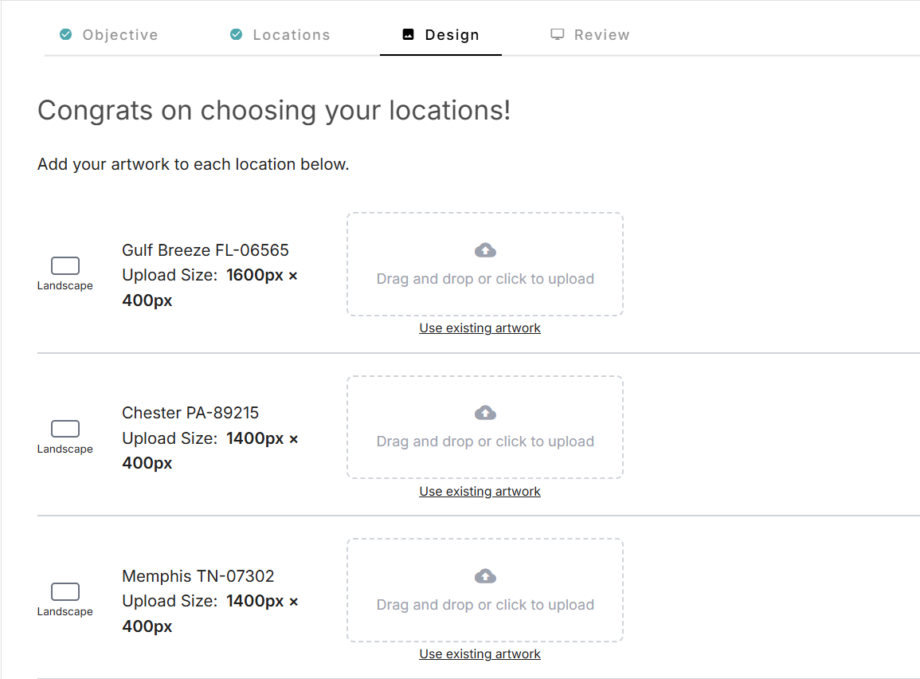
You can have your campaign live in minutes. Create a free account, select your locations, set your budget, upload your design, and start running once approved.
Where can I advertise with Blip in Bell?
Blip has digital billboards in Bell. You can browse available locations on a map, choose the ones that fit your audience, and start advertising right away.
Still have questions? Launch a campaign in minutes — no contracts, no commitments.
Start Your CampaignBell Billboard Advertising Guide
Bell sits at the heart of Southeast Los Angeles, surrounded by some of the busiest freeways and surface streets in Southern California. With 38 digital billboards serving the Bell area from nearby cities like Bell Gardens South Gate, Montebello Lynwood, Los Angeles, Compton Norwalk, Artesia, and Santa Fe Springs, we can help you precisely target local shoppers, commuters, and families as they move through this dense urban corridor. These Bell billboards function as a connected network of billboards near Bell, ideal for brands that want sustained visibility just outside city limits. Many of these corridors connect to regional destinations highlighted by tourism and business groups such as Discover Los Angeles and the Los Angeles Area Chamber of Commerce

Understanding the Bell Area Market
Bell is a compact but densely populated city—about 2.6 square miles—with an estimated 33,000–34,000 residents (roughly 33,500 based on recent local and county estimates). That translates to around 12,800–13,200 people per square mile, significantly denser than the U.S. average of roughly 94 people per square mile and higher than the overall Los Angeles County density of around 2,500–2,700 people per square mile. Within a 10–15 minute drive of Bell, you tap into some of the most population-dense neighborhoods in the county, which is why strategically placed billboard advertising near Bell can deliver very high impressions per dollar.
Key characteristics of the Bell area audience:
- Population: ~33,000–34,000 residents in Bell itself; 900,000+ residents when including nearby cities like Bell Gardens, South Gate, Lynwood, Montebello, Huntington Park, Cudahy, Maywood, and parts of East and South Los Angeles. For local planning profiles, you can review the City of Bell official website, City of Bell Gardens City of South Gate, City of Lynwood, and City of Montebello
- Age profile: The median age in Bell is around 30–31 years, which is younger than the nationwide median of about 38 years and younger than Los Angeles County’s median of roughly 36 years. Roughly 30–35% of residents are under age 20, and only about 8–10% are 65+, which means family-focused and youth-oriented campaigns can have broad impact.
- Households: Average household size in Bell is about 3.9–4.1 people, well above the national average of about 2.5 and above the Los Angeles County average of about 3.0. In many Southeast LA blocks, it is common to see two or more adult wage earners in the same household, increasing the purchasing power per address even when incomes are modest.
- Income: Median household income in Bell typically falls in the $45,000–$50,000 range, compared to Los Angeles County’s roughly $75,000–$80,000 and California’s roughly $85,000–$90,000. In several surrounding communities (Bell Gardens, Cudahy, Maywood), median household incomes cluster in a similar $45,000–$60,000 band. This underscores a price-sensitive, value-driven audience where discounts, package deals, and financing offers tend to perform strongly.
- Employment & commute: In Southeast LA cities, around 25–30% of workers are employed in manufacturing, transportation/warehousing, and construction, and another 20–25% in retail, hospitality, and food services. Average commute times are typically 30–35 minutes each way, with more than 70% of workers leaving the city for jobs elsewhere in the county.
- Housing: A mix of renters and homeowners, with renters making up roughly 70–80% of households in Bell and neighboring Southeast LA communities. In many census tracts, more than 3 in 4 households rent. This makes local services, neighborhood retail, and quick-service restaurants central to daily life, and it also means campaigns for affordable housing, tenant services, and moving/storage can be effective.
For local context and municipal data, we recommend reviewing the City of Bell official website and regional information from Los Angeles County City of Compton City of Norwalk, City of Artesia, and City of Santa Fe Springs.
Cultural & Language Insights for Creative
The Bell area sits within one of the most strongly Latino communities in the country:
- Ethnicity: In Bell and adjacent cities such as Bell Gardens, Cudahy, Maywood, Huntington Park, and South Gate, 85–95% of residents identify as Hispanic/Latino. In some nearby neighborhoods, this figure exceeds 95%, making the Southeast LA region one of the most heavily Latino corridors in California.
- Language: In many Southeast LA cities, 70–80% of households speak Spanish at home, and in some tracts it exceeds 80–85%. A large share of residents are bilingual or Spanish-dominant; in several nearby cities, more than 60% of adults speak English “less than very well,” reinforcing the value of Spanish-first messaging.
This has clear implications for billboard creative:
-
Bilingual or Spanish-first creative: For consumer-facing brands, bilingual headlines (Spanish primary, English secondary) often resonate best. Studies of Spanish-language advertising in LA media markets show double-digit lifts in recall (10–20%) among Spanish-dominant audiences when copy is in their preferred language.
-
Example:
- “Ahorra hoy en tu seguro de auto” / “Save on auto insurance today”
-
Example:
- Cultural references: Local sports (LA Dodgers, LAFC, Lakers, Rams), family-focused events (fiestas patronales, school festivals, church events), and food culture (tacos, mariscos, panaderías) are powerful creative anchors. LA sports broadcasts routinely attract hundreds of thousands of local viewers per game, and aligning with that fandom can significantly improve message relevance.
- Trust & community: Emphasize trust, family, and community—values that strongly influence buying decisions in the Bell area. Surveys in Latino-majority communities in LA County routinely show 70–80% of respondents ranking “family” and “community recommendation” as top decision drivers.
Local media such as the Los Angeles Times La Opinión, LAist, and regional outlets like the Press-Telegram offer additional insight into community priorities, concerns, and cultural touchpoints that you can reflect in your messaging.
Where Traffic Flows Near Bell (And Why It Matters)
While our digital billboards are placed in nearby cities, they are positioned on the key routes that Bell area residents use daily. In Los Angeles County, drivers collectively make more than 80 million vehicle trips per day, and Southeast LA corridors handle a disproportionate share of that volume. To design effective campaigns, it helps to understand how and where people travel so your billboard advertising near Bell reaches the right mix of commuters and shoppers.
Major freeways near the Bell area
-
I-710 (Long Beach Freeway)
- Runs immediately west of Bell, connecting the Port of Long Beach
- Caltrans reports average daily traffic volumes on I-710 near the Bell/Bell Gardens segment in the range of 140,000–170,000 vehicles per day, with truck traffic often accounting for 15–20% of that total due to port-related activity.
- Excellent for reaching workers commuting to and from industrial, logistics, and port-related jobs, as well as residents headed to regional shopping destinations in cities such as South Gate and Lynwood.
-
I-5 (Santa Ana Freeway)
- East of Bell, used by commuters traveling between Southeast LA, Orange County, and Downtown LA.
- Caltrans counts in nearby segments frequently exceed 200,000–230,000 vehicles per day, making it one of the highest-volume corridors in the region.
- Ideal for brands needing regional reach while still touching the Bell area audience.
-
I-105 (Century Freeway) and I-110 (Harbor Freeway)
- Within easy reach of our inventory in cities like Lynwood, South Gate, and Los Angeles.
- Depending on the segment, I-105 commonly carries 140,000–170,000+ vehicles daily, while I-110 in South LA and near Downtown can reach 180,000–220,000+ vehicles per day.
- These routes capture both daily commuters and weekend travelers heading to LAX, Downtown LA, and major sports/entertainment venues.
For traffic count details and maps, you can review the Caltrans Traffic Census Program.
Key surface streets near Bell
Our boards in Bell Gardens, South Gate, and Lynwood intersect major arterials that Bell area residents depend on and are popular choices for billboard rental near Bell:
- Florence Avenue
- Gage Avenue
- Atlantic Boulevard
- Eastern Avenue
- Firestone Boulevard
- State Street and Slauson Avenue (nearby corridors)
These streets are heavily used for school runs, shopping, and local errands. Los Angeles County Department of Public Works transportation reports and local city traffic studies often show many segments supporting 20,000–40,000 vehicles per day, with some intersections exceeding 45,000 vehicles per day when counted in both directions. That density gives you concentrated neighborhood exposure, especially around commercial hubs, schools, and shopping centers. Local transportation divisions—such as those listed on the City of South Gate, City of Bell Gardens City of Lynwood sites—periodically publish corridor-specific data that can help fine-tune targeting.
Matching Billboard Locations to Your Audience
With 38 digital billboards serving the Bell area up to about 10 miles away, we can layer coverage to follow residents across their typical day. Within that radius, you reach a trade area that easily exceeds 1.5–2.0 million people when including major adjacent communities, giving advertisers multiple ways to choose billboards near Bell that align with their ideal customer profile.
-
Bell Gardens & South Gate (1.3–2.4 miles from Bell)
These two cities together account for 150,000+ residents and thousands of small businesses. Perfect for:- Grocery stores, restaurants, auto repair, and other neighborhood staples that depend on repeat visits from a 2–4 mile radius.
- Local schools and community organizations promoting events or programs to families—many local schools in these cities enroll 1,000–3,000+ students each, creating constant family traffic.
- Political or advocacy campaigns targeting Southeast LA voters; in high-turnout general elections, combined vote counts from Bell, Bell Gardens, and South Gate can surpass 60,000–70,000 ballots.
-
Montebello & Lynwood (2.8–3.8 miles)
Montebello and Lynwood together add another 120,000–140,000 residents, with significant regional shopping and healthcare hubs. Useful for:- Retailers and service providers drawing from a wider Southeast LA radius and appealing to multi-city shopper patterns.
- Healthcare, dental, and wellness providers serving multi-city catchment areas; local hospitals and medical centers in these cities collectively handle hundreds of thousands of outpatient visits per year.
- Automotive, furniture, and other high-consideration purchases where consumers often comparison-shop across multiple cities.
-
Los Angeles (4.2 miles)
Boards closer to Downtown and South Los Angeles help reach portions of the city that together have hundreds of thousands of jobs in government, health care, education, and professional services. Boards here:- Bridge local Bell area audiences with central LA job centers; in many Southeast LA communities, 40–50% of workers commute into the City of Los Angeles.
- Support regional brands that still want a strong footprint among Southeast LA commuters moving along I-5, I-10, I-110, and I-710.
- Increase frequency for campaigns running concurrently on other LA County media, where frequency of 8–12 weekly impressions per person often correlates with higher recall.
-
Compton, Norwalk, Artesia, Santa Fe Springs (7.8–9.9 miles)
These cities together account for an additional 250,000–300,000 residents and tens of thousands of industrial, logistics, and office jobs. Ideal for:- Businesses that draw from multiple Southeast / Gateway cities (car dealerships, colleges, warehouses hiring, regional clinics). For example, major auto rows and big-box clusters routinely pull from 10–15 mile trade areas.
- Employers recruiting blue-collar or logistics workers from this corridor; industrial parks in Compton, Norwalk, and Santa Fe Springs collectively employ tens of thousands of warehouse, trucking, and manufacturing workers.
- Multi-location chains building a consistent regional brand presence, where maintaining consistent visibility across 5–8 neighboring cities can significantly improve top-of-mind awareness.
We can help you cluster locations to either saturate the immediate Bell area or create a “corridor” campaign along I-710, I-5, or key arterials, depending on your objectives and budget. Corridor campaigns are particularly effective for commuters who see the same brand message multiple times during a single trip, boosting recall.
Timing: When Bell Area Residents Are on the Road
Because Blip allows you to choose specific hours and days, timing your messages around real-world behavior in the Bell area is critical.
Commuting patterns
- Many Bell area residents work in manufacturing, logistics, warehousing, hospitality, and services across LA County. In Southeast LA, it is common for 60–70% of workers to be in blue-collar or service occupations.
- In LA County, roughly 74–76% of workers drive alone to work; in working-class communities like Bell and Bell Gardens, this share is often closer to 78–82%, with an additional 10–15% carpooling and 5–8% using transit.
-
Typical commute windows:
- Weekday morning peak: 6:00–9:00 a.m., with traffic volumes on some freeways nearly doubling compared to off-peak hours.
- Evening peak: 3:30–7:00 p.m., often slightly longer in duration due to staggered shift work.
Strategy examples:
- Promote coffee, breakfast, or quick-serve offers from 5:30–9:30 a.m. to capture the 40–50% of commuters who leave home before 8 a.m.
- Highlight dinner, grocery, and retail from 3:00–8:00 p.m., when households are picking up kids, shopping, or heading home.
- Run recruitment and education messages around both peaks when job seekers and students are commuting; adult education and trade school programs frequently report higher response rates when ads are seen during these windows.
Weekend behavior
Families in the Bell area frequently travel to:
- Shopping centers in South Gate, Bell Gardens, Montebello, and Commerce 20,000–40,000 visits per weekend day).
- Entertainment in Los Angeles and nearby cities, including major sports venues and cultural institutions promoted by Discover Los Angeles.
- Churches and community events across Southeast LA; in heavily religious neighborhoods, weekly church attendance can reach 40–50% of local residents.
Weekend traffic on key arterials remains strong; while commute peaks flatten out, midday volumes often remain within 80–90% of weekday levels, especially near retail and entertainment hubs.
Campaign ideas:
- Focus on family entertainment, retail sales, food & beverage, and events Friday–Sunday.
- Shift more impressions to midday and afternoon (10:00 a.m.–6:00 p.m.) when families are out and more likely to respond with immediate visits.
Transit & multimodal reality
Nearby LA Metro 7–8% of commuters use transit and another 2–3% walk or bike; in dense urban corridors like Southeast LA, transit and walking shares can be higher.
Review the LA Metro
Crafting High-Impact Creative for the Bell Area
In a dense, fast-moving environment, creative must be instantly clear and culturally tuned to the Bell area audience. Research on digital out-of-home (DOOH) effectiveness shows that ads with simple layouts and fewer than 7 words of copy can achieve recall rates 10–30% higher than cluttered designs.
Core principles
- Big, simple headlines: Aim for 7 words or fewer; in practice, 4–6 words often work best at freeway speeds.
- Readable fonts: Bold, sans-serif, high-contrast colors (e.g., white or yellow on dark backgrounds). Tests in urban DOOH networks show legibility improvements of 20–25% with strong contrast versus low-contrast palettes.
- One main visual: A clear product shot, logo, or person—avoid clutter that competes for attention.
- Strong call to action: “Salida en Atlantic Blvd,” “Llama hoy,” “Order online,” or “Apply now.” Including a distinct CTA can improve response rates by 15–25% over brand-only messaging.
Language strategy
- Use Spanish headline + English subline for mass-market consumer brands to match local language preferences. In bilingual campaigns in LA County, Spanish-first creative often yields higher engagement among Hispanic audiences without reducing comprehension among English-dominant viewers.
- For niche B2B or specialized services, English-only can still work, but consider occasional Spanish versions to build inclusivity and trust, especially when 50% or more of your target customers are Latino-owned businesses.
Examples:
-
Insurance:
- “Asegura tu auto hoy”
- “Llámamos: 323-XXX-XXXX”
-
Restaurant:
- “Tacos 24/7 cerca de aquí”
- “Ordena en línea: sitio.com”
Local trust signals
- Include local phone numbers, local neighborhood names (e.g., “Southeast LA,” “cerca de Bell”), and recognizable landmarks (e.g., “junto al centro comercial en South Gate”). Local cues can increase perceived relevance and trust by 10–20% in ad recall studies.
- Feature Latino families and business owners in visuals for authenticity, reflecting the reality that 9 in 10 residents in many nearby tracts are Hispanic/Latino.
- If you’ve been covered by local outlets, a small “Visto en [media logo]” line can enhance credibility (when permitted) and can leverage the strong brand equity of sources like the Los Angeles Times La Opinión, or LAist.
Using Blip’s Flexibility for Smart Targeting
Blip’s pay-per-“blip” model lets you buy digital billboard space one impression at a time, then adjust in real time. For the Bell area, that flexibility is especially useful because of its:
- High traffic variability by corridor and time of day
- Price-sensitive audience
- Strong seasonality for certain categories (tax prep, back-to-school, holidays, and immigration/legal services)
This makes it easy to experiment with different Bell billboards and quickly learn which placements and time blocks are most efficient for your goals.
Tactics to consider
-
Dayparting
-
Target:
- 6–9 a.m. for coffee, QSR, radio shows, local news, and transit apps.
- 11 a.m.–2 p.m. for lunch specials and local shopping when many workers in industrial areas break for meals.
- 3–7 p.m. for retail, services, and family activities when after-school traffic is highest.
- Reduce spend overnight unless you cater to shift workers, logistics, or 24-hour services—in Southeast LA, warehouses and manufacturing facilities often run late or overnight shifts, creating a niche but valuable audience between 9 p.m. and 5 a.m. along corridors such as I-710 and I-5.
-
Target:
-
Event-based bursts
-
Run higher-frequency campaigns around:
- Major sports games (Dodgers, Lakers, Rams, LAFC) and playoffs, when regional TV and streaming audiences can spike by 50–100% above regular-season levels.
- Holidays with strong cultural resonance (Día de las Madres, Día de los Muertos, Christmas, New Year’s, Independence Day, and key Catholic holidays), when retail and restaurant spending often rises 20–40% compared with typical weeks.
- Coordinate messaging with community happenings listed on the City of Bell and neighboring cities’ event calendars (e.g., City of South Gate, City of Bell Gardens City of Lynwood, City of Montebello
-
Run higher-frequency campaigns around:
-
Geo-layered campaigns
- Use boards in Bell Gardens and South Gate for hyperlocal offers with copy like “A 5 minutos de aquí.”
-
Then:
- Add Los Angeles boards to reach workers before and after they return to the Bell area, tapping into Downtown and South LA job centers that host hundreds of thousands of jobs.
- Extend to Compton, Norwalk, and Santa Fe Springs to recruit staff or attract shoppers from a wider radius, especially for large-format retail or higher-ticket services.
-
Budget phasing
- Start with a test phase: a modest budget spread over 2–4 weeks, focusing on 5–10 boards closest to Bell.
-
Evaluate performance (web traffic, calls, in-store mentions), then:
- Increase frequency on top-performing locations and times; doubling frequency on the best boards often produces disproportionate gains in response once a recognition threshold is reached.
- Pause underperforming slots to maximize ROI and reallocate toward corridors where customers most often say they saw your ad (e.g., “cerca del 710” or “por Florence”).
Category-Specific Strategies for the Bell Area
Different industries can leverage the Bell area’s characteristics in specific ways, especially given the local demographics and spending patterns in Los Angeles County, where total annual consumer spending exceeds $300 billion.
Local retail & restaurants
-
Emphasize:
- Value: “Especiales desde $4.99,” “Paquetes familiares desde $19.99.”
- Convenience: “A 5 minutos de aquí,” “Sal en Florence Ave.”
- Family: “Niños comen gratis los martes,” “Paquete familiar para 4.”
- Run heavier on Thursday–Sunday and afternoons/evenings, when local foot traffic and dining tend to peak; many restaurants report 30–40% of weekly sales concentrated between Friday evening and Sunday night.
- Consider aligning major promotions with pay cycles; a large share of hourly workers in the area are paid weekly or biweekly, with spikes in discretionary spending immediately after payday.
Auto dealers & services
- Many residents drive older vehicles, with local estimates suggesting that in Southeast LA communities, a significant portion of vehicles on the road are 10+ years old. This creates ongoing demand for maintenance, used cars, and financing solutions.
-
Ideas:
- “Financiamiento fácil sin crédito perfecto”
- “Cambio de aceite hoy sin cita”
- “Aprobación en 15 minutos”
- Best times: Weekday commute hours and Saturday midday, traditionally the busiest car-shopping day, when dealerships often see 30–50% more lot traffic than midweek.
Healthcare, dental, and clinics
-
Focus on:
- Bilingual staff—clinics promoting Spanish-language services can see higher appointment conversion rates among local residents.
- Low-cost or sliding-scale services; in communities where 15–20% of residents may be uninsured or underinsured, price transparency is critical.
- Walk-in or same-day availability, especially for urgent care and dental emergencies.
- Use mentions like “Atendemos Medi-Cal,” “Clínica comunitaria,” or “Consultas en español” where appropriate; these phrases directly address common concerns and can significantly improve response among hesitant patients.
Education & training
-
Community colleges, trade schools, and ESL or GED programs can highlight:
- Short programs leading to higher-paying jobs (HVAC, welding, trucking, medical assistant, CNA, phlebotomy). Many of these fields in LA County report median wages of $20–30 per hour, significantly above local minimum wage.
- Night or weekend classes for working adults; in Southeast LA, a large share of adult learners work full-time, so flexible schedules are essential.
- Target commute hours and late afternoons when potential students are more receptive. Enrollment campaigns near semester starts (August–September and January–February) can show sharp spikes in inquiries, especially when outdoor ads are combined with social and search campaigns.
Recruiting & employment
-
The Bell area and surrounding cities host strong labor pools for:
- Logistics, warehousing, manufacturing, and construction
- Hospitality and service industries
-
Clear CTAs:
- “$20/hr + beneficios”
- “Aplica hoy, entrevista esta semana”
- “Turnos de noche disponibles”
- Concentrate impressions on corridors leading to industrial parks and major warehouse zones in cities like Commerce, Santa Fe Springs, and Compton. Industrial submarkets in this broader region boast tens of millions of square feet of warehouse and manufacturing space, employing tens of thousands of workers.
Measuring and Optimizing Your Campaign
To make the most of digital billboard campaigns near the Bell area, we encourage a structured approach to measurement. DOOH campaigns that incorporate tracking elements can often demonstrate 10–30% lifts in key metrics like website visits or calls during active flight periods.
-
Use trackable CTAs
- Unique URLs (e.g., “sitio.com/bell” or “brand.com/sela”)
- Distinct phone numbers for outdoor campaigns, tracked via call analytics
- Simple promo codes like “BELL10” or “BELL710” to link redemptions back to your billboard spend
-
Set benchmarks
-
Track:
- Website traffic lift during campaign dates versus prior 2–4 weeks
- Call volume changes by time of day (to match your dayparts)
- In-store “How did you hear about us?” responses, aiming to capture at least 10–20 responses per week for a clear signal
- Compare weeks with and without active Blip flights to estimate incremental impact.
-
Track:
-
Optimize locations & times
-
After 2–4 weeks, review:
- Are certain days or hours driving more web visits or calls?
- Do customers mention a specific board location or route (e.g., “la del 710,” “por Firestone,” “cerca del centro comercial”)? Even anecdotal counts of 10–20 mentions per month can guide optimization.
-
Shift your budget toward:
- Best-performing corridors (e.g., boards near I-710 vs. I-5, or closer to South Gate vs. Lynwood)
- Best-performing time blocks (e.g., evenings over mornings if you’re a restaurant, or mornings if you’re a coffee shop or breakfast concept).
-
After 2–4 weeks, review:
-
Combine with other channels
-
Coordinate billboard messaging with:
- Social ads targeted to ZIP codes around Bell, Bell Gardens, and South Gate, using the same core offer and creatives.
- Local print or digital media (e.g., Los Angeles Times La Opinión, LAist, Press-Telegram).
- Keep your core message, offer, and visuals consistent across channels; multi-channel campaigns in urban markets often show 20–40% higher recall than single-channel efforts.
-
Coordinate billboard messaging with:
Local Rules, Sensitivities, and Community Alignment
Bell and surrounding cities are tightly knit communities. Successful campaigns both respect and reflect local values.
-
Regulation awareness
- Digital billboard placements and operations in nearby cities follow local regulations; our inventory is already compliant with municipal and county rules.
- For general zoning and business rules in the Bell area, consult the City of Bell and relevant neighboring municipalities such as City of South Gate, City of Bell Gardens City of Lynwood, City of Compton City of Norwalk, City of Artesia, and City of Santa Fe Springs.
-
Community priorities
- Topics like public safety, environmental justice, air quality, and economic opportunity are important in Southeast LA. Many residents live near major freeways and industrial corridors, where concerns about pollution and truck traffic are common.
- Positive, empowering messaging tends to be more effective than fear-based appeals, especially for campaigns related to health, financial services, and youth programs.
-
Public service & cause marketing
-
Nonprofits and public agencies can use boards serving the Bell area to:
- Promote health campaigns, vaccination events, or food distributions; local food banks and community centers in LA County regularly serve thousands of households per month.
- Drive awareness for community programs and educational resources, including after-school activities, adult education, and public safety initiatives.
- Short, directive messages work best: “Vacunas gratis este sábado,” “Ayuda de renta disponible,” or “Clases de inglés gratis aquí.” Public-service DOOH campaigns often see measurable lifts in awareness of 15–25% in post-campaign surveys.
-
Nonprofits and public agencies can use boards serving the Bell area to:
By understanding the Bell area’s dense, young, predominantly Latino population; its heavy reliance on driving; and the commuting patterns that link it with nearby cities, we can craft digital billboard campaigns that feel relevant, timely, and effective. With 38 digital billboards serving the Bell area across adjacent communities, and Blip’s ability to precisely control where and when your ads appear, you can reach local residents with the right message at the right moment—without overspending, and with the flexibility to choose exactly the billboard rental near Bell that best matches your goals.