Billboards near Half Moon Bay, CA
No Minimum Spend. No Long-Term Contracts. Just Results.
Trusted by Leading Brands


Billboard advertising
near Half Moon Bay has never been easier
How much is a billboard near Half Moon Bay?
Why Choose Blip for Billboard Advertising near Half Moon Bay
Blip lets you launch Half Moon Bay ads fast, catching 101 and 92 drivers headed to the coast from Burlingame and SFO.
Use flexible budgets in Half Moon Bay to scale up for summer beach traffic or the Pumpkin Festival rush, then dial back anytime.
No contracts with Blip means Half Moon Bay brands can test weekend commuters and day-trippers before committing long term.
Daypart your Half Moon Bay campaign for 6-10 a.m. and 3-7 p.m. peaks, when Peninsula commuters and SFO travelers are on 101.
Track Half Moon Bay results in real time and shift spend when coastal weekends, pumpkin season, or storms change visitor flow.
Blip's creative tools help you build simple, coastal ads for Half Moon Bay visitors and affluent locals in the San Mateo coast market.
Frequently Asked Questions About Billboard Advertising near Half Moon Bay
How much does a billboard cost near Half Moon Bay, California with Blip?
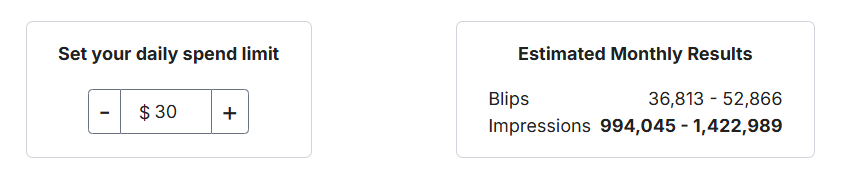
With Blip, you can advertise on digital Half Moon Bay billboards on any budget, setting a daily amount that Blip automatically honors while your 7.5–10 second ads rotate on screens serving the Half Moon Bay area. Each blip is individually priced based on when and where it runs and on current advertiser demand, so you only pay for the impressions you actually receive. Your total cost is simply the sum of your blips over time—no large upfront commitments required.
Where can I advertise with Blip near Half Moon Bay, California?
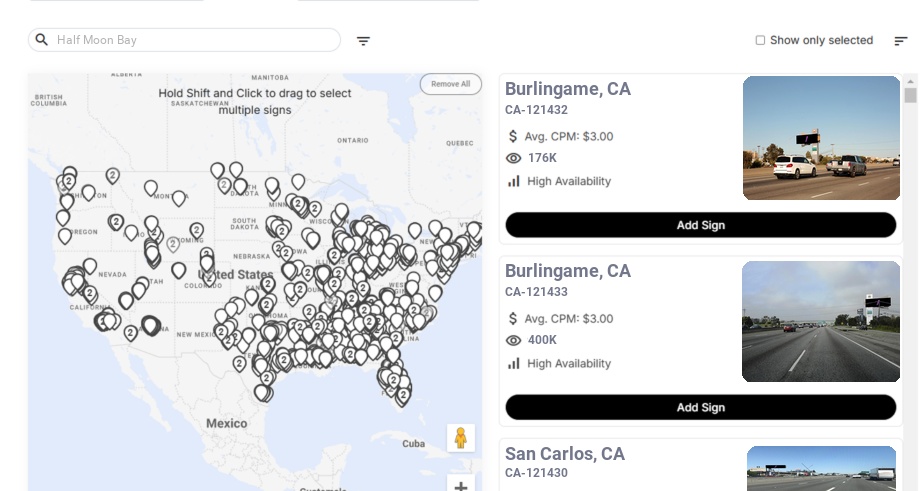
We currently have 2 digital billboards serving the Half Moon Bay area, located in Burlingame, California, about 9.8 miles from Half Moon Bay. For many advertisers, these locations function as de facto billboards near Half Moon Bay because they intercept most coastal traffic coming from the Peninsula, San Francisco, and SFO. Burlingame sits along U.S. 101, making it a crucial corridor for reaching this market.
Who can I reach with Half Moon Bay billboards?
The Half Moon Bay area includes local residents, regional commuters, and tourists or day-trippers. The coastal corridor is affluent, with median household incomes often above $130,000 to $150,000, and it also attracts Bay Area professionals who commute across the Peninsula. The area is especially strong for hospitality, outdoor recreation, home services, real estate, health and wellness, and local experiences.
When is the best time to run Half Moon Bay billboard ads with Blip?
Seasonally, the strongest periods are summer and fall, especially October for the Pumpkin Festival and pumpkin patches. Weekday traffic also has clear peaks, with weekday rush hours typically running from 6–10 a.m. and 3–7 p.m. For tourism and leisure campaigns, Friday through Sunday often delivers the heaviest flows and strongest visibility.
What kind of traffic do Half Moon Bay billboards near Burlingame get?
U.S. 101 near Burlingame carries well over 200,000 vehicles per day on many segments, based on corridor data published by Caltrans District 4. Peak commuter hours can see flows exceeding 10,000 vehicles per hour per direction, providing dense, repeated exposure opportunities. Many Half Moon Bay residents also work along the 101 corridor, so these boards reach both local residents and visitors traveling to the coast.
Do I need a contract to advertise with Blip near Half Moon Bay?
No, Blip has no long-term contracts or minimum commitments. You can start, pause, or stop your campaign at any time.
How fast can I launch a billboard campaign with Blip near Half Moon Bay?
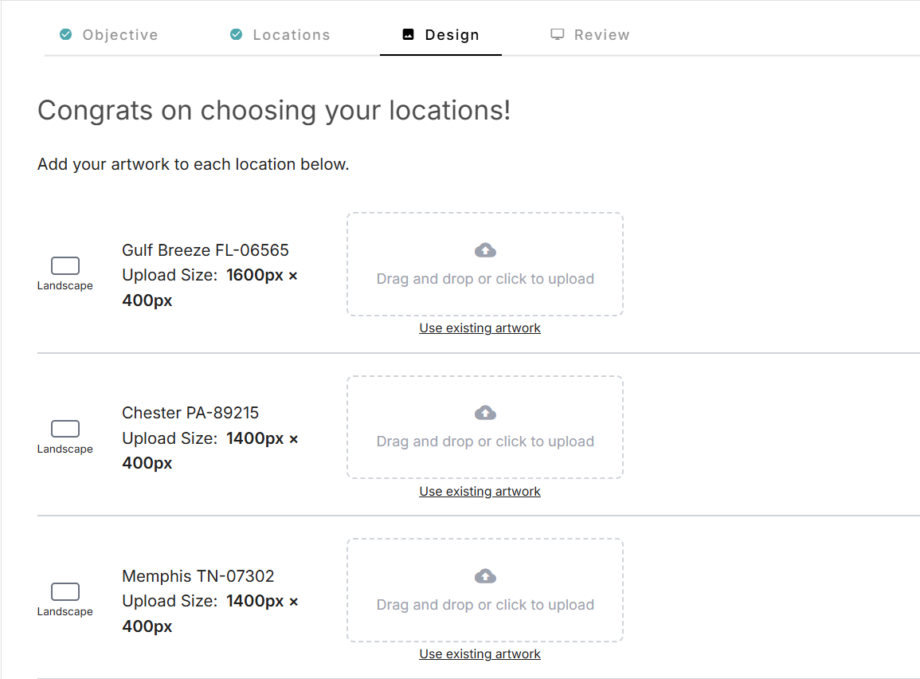
You can have your campaign live in minutes. Create a free account, select your locations, set your budget, upload your design, and start running once approved.
Where can I advertise with Blip near Half Moon Bay?
Blip has digital billboards near Half Moon Bay. You can browse available locations on a map, choose the ones that fit your audience, and start advertising right away.
Still have questions? Launch a campaign in minutes — no contracts, no commitments.
Start Your CampaignHalf Moon Bay Billboard Advertising Guide
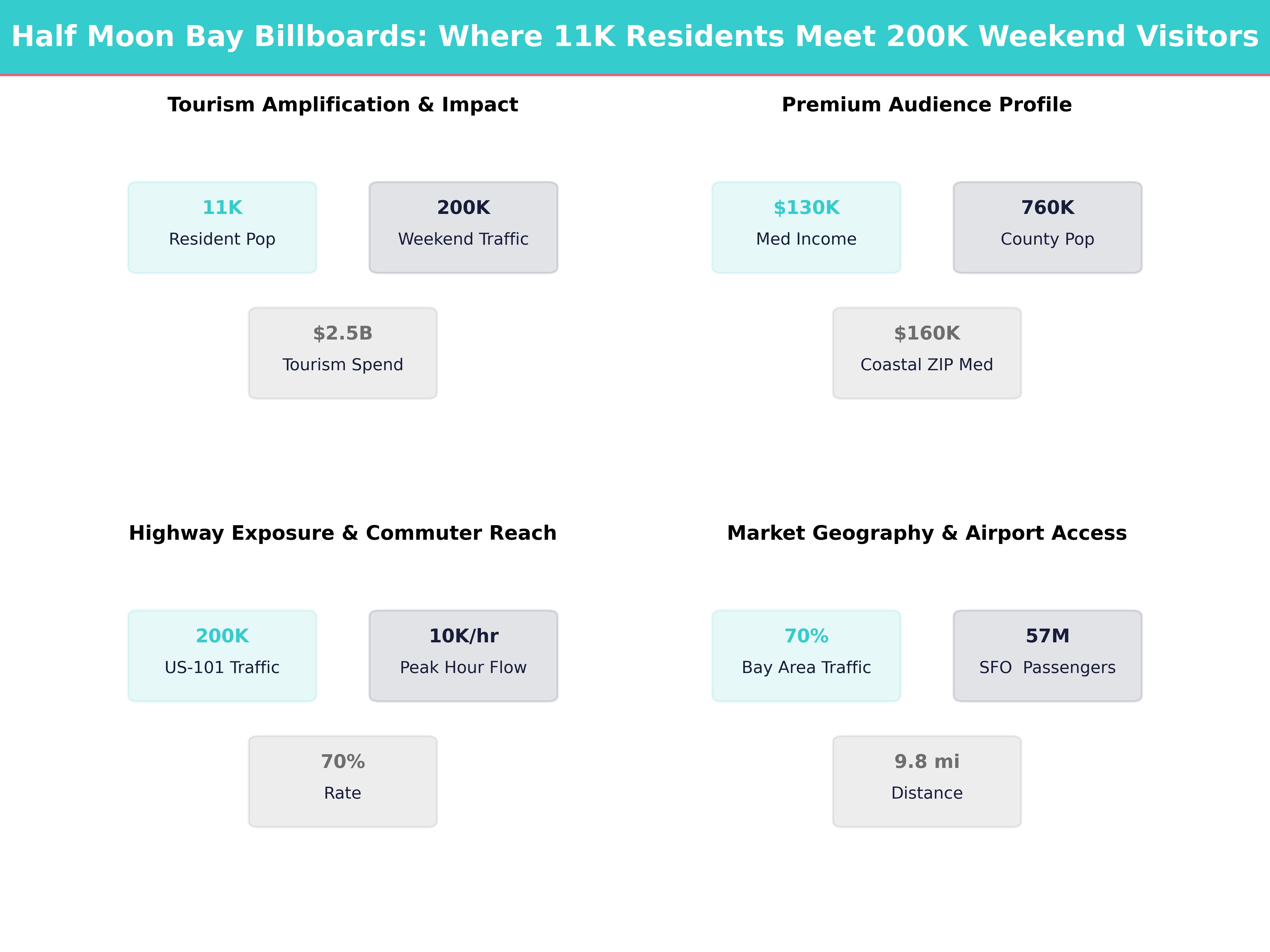
Half Moon Bay may be a small coastal town, but the Half Moon Bay area punches far above its weight in tourism, spending power, and regional influence. With just over 11,000 residents, yet seasonal visitor surges that can multiply the population many times over, digital billboards serving the Half Moon Bay area give us a powerful way to speak to both locals and visitors—especially along key commuter and travel corridors near Burlingame and the San Francisco Peninsula. For advertisers looking for billboards near Half Moon Bay without placing structures directly on the coast, these strategically positioned digital displays are an efficient solution.
Understanding the Half Moon Bay Area Market
Half Moon Bay is the primary city on the San Mateo County coast, with a 2020 population of about 11,795 residents according to city data referenced by the City of Half Moon Bay San Mateo County, which has more than 760,000 residents and one of the highest median household incomes in California (over $130,000 per household according to county economic reports).
Across the county, visitor‑serving industries are a major economic driver. Tourism reports from the San Mateo County/Silicon Valley Convention & Visitors Bureau indicate that:
- Visitors to San Mateo County generate roughly $2–2.5 billion in direct travel spending annually.
- Tourism supports an estimated 18,000–20,000 local jobs, including lodging, food service, recreation, and retail.
- Visitor‑generated tax revenue (transient occupancy tax, sales tax, and related fees) contributes tens of millions of dollars each year to local governments, including coastal cities like Half Moon Bay.
Key dynamics that matter for billboard advertisers:
-
Resident affluence: Local and regional households have significant disposable income. San Mateo County consistently ranks in the top tier of California counties for earnings; recent county profiles from San Mateo County show:
- Median household income above $130,000, with many coastal ZIP codes in the $140,000–160,000 range.
- More than 45% of adults holding a bachelor’s degree or higher.
- Unemployment rates often running 1–2 percentage points below the statewide average.
The San Mateo County coast, including the Half Moon Bay area, attracts Bay Area professionals in tech, biotech, and finance, many of whom commute across the Peninsula and regularly see Half Moon Bay billboards on their drive.
-
Tourism concentration: Half Moon Bay is a major coastal destination:
- The annual Half Moon Bay Art & Pumpkin Festival alone typically draws around 150,000–200,000 visitors over a single weekend, according to event figures cited by Visit Half Moon Bay
- Lodging metrics shared by Visit Half Moon Bay San Mateo County/Silicon Valley Convention & Visitors Bureau show coastal hotel occupancy routinely climbing into the 75–85% range on peak summer and fall weekends.
- Year‑round, the coast attracts surfers, hikers, and beachgoers to places like Half Moon Bay State Beach and the Coastal Trail, highlighted by California State Parks. State park data for the San Mateo coast commonly report hundreds of thousands of annual day‑use visits across the coastal park system.
- Day‑trip traffic: A high proportion of visitors come on day trips from San Francisco, the East Bay, and Silicon Valley, funneling via Highway 92 and Highway 1. Regional tourism analyses indicate that 60–70% of Half Moon Bay visitors arrive by car for same‑day visits. Many of these visitors pass through the Peninsula freeway system where our digital boards near Burlingame can reach them before they head west, making billboard advertising near Half Moon Bay especially effective at influencing last‑minute decisions.
This mix of affluent locals, commuters, and visitors makes the Half Moon Bay area ideal for campaigns focused on hospitality, outdoor recreation, home services, real estate, health and wellness, and local experiences.
Where Our Digital Billboards Reach the Half Moon Bay Area
We currently have 2 digital billboards serving the Half Moon Bay area, located in Burlingame, California, about 9.8 miles from Half Moon Bay. For many advertisers, these locations function as de facto billboards near Half Moon Bay because they intercept most coastal traffic coming from the Peninsula, San Francisco, and SFO.
Burlingame itself is a high‑value market: the City of Burlingame reports a population of roughly 30,000 residents, with median household incomes frequently reported in the $150,000+ range and a strong concentration of offices, hotels, and retail along the waterfront and Broadway/California Drive corridors.
Why Burlingame matters for reaching this market:
- Burlingame sits along U.S. 101, one of the Bay Area’s busiest freeways, and just south of San Francisco International Airport (SFO). SFO handled more than 57 million passengers in 2019 and has rebounded to tens of millions of passengers per year as recovery continues strongly according to updates from San Francisco International Airport. A substantial share of these passengers either stay on the Peninsula or visit the coast within a few days of arrival, making U.S. 101 a crucial corridor for any billboard rental near Half Moon Bay.
- U.S. 101 near Burlingame carries well over 200,000 vehicles per day on many segments, based on corridor data published by Caltrans District 4. Peak commuter hours can see flows exceeding 10,000 vehicles per hour per direction, providing dense, repeated exposure opportunities.
- Many Half Moon Bay residents work in jobs along the 101 corridor (San Mateo, Burlingame, South San Francisco), meaning your messages near Burlingame reach local residents during their regular commute. County commute data summarized by San Mateo County show that more than 70% of local workers drive or carpool to work, and coastal residents heavily rely on Highway 92 to connect to 101.
Positioning digital ads near Burlingame lets us influence:
- Coastal residents on their way to and from work
- Bay Area day‑trippers and tourists en route to the Half Moon Bay area
- Business travelers and airline passengers arriving through SFO and exploring the region
- Peninsula shoppers visiting popular retail hubs such as Burlingame Avenue and the Bayfront hotel district
For brands comparing different options for billboard advertising near Half Moon Bay, these placements offer high reach, strong commuter frequency, and direct proximity to core visitor flows.
Who You Can Reach in the Half Moon Bay Area
When we plan campaigns serving the Half Moon Bay area, we consider several overlapping audiences:
1. Local residents
- Population: ~11,800 in the City of Half Moon Bay, with additional residents in nearby coastal communities like El Granada, Moss Beach, and Montara bringing the broader coastal corridor to roughly 20,000–22,000 residents, based on estimates used in planning reports from San Mateo County.
-
Age and family structure: The coast leans family‑oriented. City and county planning documents show:
- Around 25–30% of residents under age 20.
- Household sizes averaging about 2.7–2.9 persons per household.
- A notable share of multi‑generation households, common in coastal and agricultural communities.
- Income: Median household incomes on the coast often exceed $130,000–150,000, reflective of proximity to major tech and biotech hubs. Owner‑occupied home rates are typically near or above 60%, and median single‑family home prices frequently exceed $1.2–$1.4 million in and around Half Moon Bay, according to regional real estate data widely cited in local outlets like the Half Moon Bay Review.
- Local spending patterns: County‑level retail and tax reports indicate that households in San Mateo County spend significantly above the national average on dining out, recreation, and home improvement—often 10–20% higher per household than statewide averages.
-
Top verticals to target:
- Home services (landscaping, solar, remodeling, roofing, HVAC)
- Financial services (local banks, credit unions, advisors)
- Healthcare and wellness (clinics, dentists, fitness studios)
- Education and enrichment programs for kids
Well‑planned Half Moon Bay billboards can connect these residents with local businesses they pass by daily, as well as with coastal brands located a short drive away.
2. Regional commuters
Many residents of Half Moon Bay and the surrounding coast commute to jobs along the 92/101 or 92/280 corridors. At the same time, Peninsula and San Francisco workers visit the coast after work or on weekends.
- About 13–15% of San Mateo County workers commute across county lines, according to regional transportation analyses referenced by the Metropolitan Transportation Commission.
- Within the county, more than 80% of workers commute by car (single‑occupancy or carpool), with transit options like SamTrans and Caltrain serving key North‑South corridors.
-
Commutes often involve:
- Highway 92 (east–west) connecting to 280 and 101
- 101 corridor through Burlingame, San Mateo, and South San Francisco
- Average one‑way commute times for coastal workers typically fall in the 30–40 minute range, creating repeated daily exposure opportunities for freeway‑visible digital boards.
Billboards near Burlingame give us consistent weekday visibility with these commuters, ideal for building frequency and brand familiarity, and they function as highly efficient billboards near Half Moon Bay for anyone traveling between the coast and the rest of the Peninsula.
3. Tourists and day‑trippers
The Half Moon Bay area is heavily tourism‑driven:
- The coastal area features high‑profile attractions and events promoted by Visit Half Moon Bay San Mateo County/Silicon Valley Convention & Visitors Bureau. County tourism recaps often credit coastal communities with a sizeable share of the region’s multi‑million annual visitor trips.
- Roughly 60–70% of visitors to the San Mateo County coast come from within the greater Bay Area, with the balance from out‑of‑state and international markets routed largely through SFO, per visitor profile summaries shared by the CVB.
-
Peak times include:
- Spring and summer weekends (beaches, hiking, festivals)
- Winter surf season and the Mavericks viewing season (conditions permitting)
- October for pumpkin patches and the Pumpkin Festival
These visitors commonly arrive from San Francisco, Oakland, San Jose, and beyond, often traveling via Highway 101 and 92—where our Burlingame boards can intercept them. During peak pumpkin‑patch weekends, local traffic advisories published by the City of Half Moon Bay San Mateo County Sheriff’s Office
Seasonality: When to Turn Up (or Down) Your Campaign
One of the biggest advantages of digital billboards with Blip is control over timing and spend. For the Half Moon Bay area, we recommend thinking in seasons. Tourism and lodging statistics from the San Mateo County/Silicon Valley Convention & Visitors Bureau generally show:
- Hotel occupancy often 10–15 percentage points higher on summer and fall weekends than in winter.
- Average daily room rates (ADR) on the Peninsula and coast rising 20–30% between off‑peak and peak seasons.
- Visitor volumes peaking on weekends, with some coastal destinations seeing 2–3x typical weekday visitation during major events and holiday periods.
Understanding these patterns helps you time your billboard rental near Half Moon Bay for the moments when your audience is largest and most ready to buy.
Winter (January–March)
- Cooler, stormy weather but big waves and surf tourism (including interest in Mavericks events highlighted in outlets like the Half Moon Bay Review). On large‑swell days, local estimates suggest thousands of spectators may come to the coast, even if they remain outside restricted viewing zones.
-
Good time to promote:
- Indoor dining, tasting rooms, and cozy hotel getaways
- Health, wellness, and “new year” services
- Home improvement and financial planning
- Strategy: Moderate always‑on presence, with budget pulses around long weekends (MLK Day, Presidents’ Day) when coastal traffic can spike by 20–30% compared with typical winter weekends.
Spring (April–June)
- Rising coastal traffic, wildflower hikes, weddings, and events. Local wedding venues across the San Mateo County coast often report that April–June and September–October are their top booking months.
-
Strong season for:
- Wedding venues, florists, photographers, event planners
- Outdoor gear and adventure activities
- Real estate and home services as moving season ramps up
- Strategy: Gradually increase impressions on Fridays and weekends; run countdowns for major events. For example, a 4–6 week runway is common for building awareness for ticketed spring events promoted on Visit Half Moon Bay
Summer (July–September)
- High tourism season; coastal areas offer relief from inland heat. On hot inland days, local agencies often note particularly heavy traffic on Highway 92 and 1, as residents from San Jose, the East Bay, and Sacramento Valley seek cooler temperatures on the coast.
-
Ideal for:
- Hotels, B&Bs, vacation rentals
- Restaurants, breweries, and local attractions
- Family activities, camps, and experiences
- Strategy: Concentrate spend Thurs–Sun and evening dayparts to hit weekend travelers; consider heavier frequency for limited‑time offers. A common pattern is to allocate 60–70% of summer billboard impressions to Friday–Sunday to mirror hotel check‑in and peak day‑trip behavior.
Fall (October–November)
- Peak visibility thanks to pumpkin patches and the world‑famous Half Moon Bay Pumpkin Festival, which draws up to 200,000 visitors in a single weekend according to local festival organizers cited in the Half Moon Bay Review.
- Pumpkin‑patch operators on the San Mateo County coast have reported visitor counts that can push weekend traffic volumes to multiple times normal levels in October, with the City of Half Moon Bay
-
Great for:
- Agritourism (farms, u‑pick, corn mazes)
- Seasonal retail and food products
- Local non‑profits and community events
- Strategy: This is the prime window for coastal advertising; consider front‑loading your annual budget here, especially for tourism‑driven brands. It’s common for local businesses to generate 20–30% or more of their annual revenue during the October high season, making well‑timed Half Moon Bay billboards particularly valuable.
Holiday Season (late November–December)
- Coastal escapes, holiday shopping, and company parties. Peninsula retail hubs in Burlingame, San Mateo, and surrounding cities often see double‑digit percentage increases in sales tax receipts during the holiday quarter compared with earlier in the year, according to city budget reports from municipalities such as the City of Burlingame.
-
Use billboards serving the Half Moon Bay area to:
- Promote gift cards, holiday menus, and special events
- Drive bookings for New Year’s Eve and holiday retreats
- Strategy: Use shorter, high‑impact flights around key dates (Thanksgiving weekend, first two weekends in December, and the week between Christmas and New Year). Concentrating impressions in 7–10 day bursts around these periods can efficiently capture high‑intent holiday travelers.
Dayparting: Matching Your Message to the Drive
Because the billboards serving the Half Moon Bay area are placed along busy freeway corridors near Burlingame, timing matters. Traffic monitoring from Caltrans District 4 shows that:
- Weekday peak periods on 101 typically occur between 6–10 a.m. and 3–7 p.m..
- Midday and evening hours still carry tens of thousands of vehicles, with somewhat lower speeds that can actually aid message retention.
- Friday afternoon and Sunday evening often have particularly heavy flows due to weekend travel.
Thoughtful dayparting ensures billboard advertising near Half Moon Bay reaches people when they are most receptive.
Morning commute (6–10 a.m.)
- Reaches Half Moon Bay and coastal residents heading east, plus Peninsula commuters and business travelers catching morning flights from SFO.
-
Best for:
- Coffee shops and breakfast spots along the coast
- Time‑sensitive services (“Same‑day repair,” “Open at 8 a.m.”)
- Brand‑building for local pros (realtors, attorneys, medical practices)
Midday (10 a.m.–3 p.m.)
- Strong visibility to tourists, retirees, and flexible workers. Many day‑trippers depart urban centers mid‑morning, hitting the Burlingame corridor between 10:30 a.m. and 1 p.m. on their way to the coast.
-
Ideal for:
- Lunch spots, cafes, beach rentals
- Attractions, golf courses, farms, and tours
- Weekday deals and “work from the coast” packages
Evening commute (3–7 p.m.)
- Heavy traffic, including travelers returning from SFO or heading out for dinners and events. SFO’s flight banks generate pronounced ground‑traffic peaks, and evening periods capture both departing and arriving passenger flows.
-
Great for:
- Dining, breweries, wineries, and entertainment venues
- Retail promotions (“Tonight only,” “Happy hour until 6”)
- Health and fitness studios promoting after‑work classes
Evening and late night (7 p.m.–midnight)
- Good for hospitality campaigns (hotels, bars, nightlife) and brand awareness, especially Thursday–Saturday nights when Peninsula night‑life and events are most active.
- Consider high‑contrast creative for maximum legibility after dark. Digital OOH research commonly recommends maintaining a contrast ratio of at least 3:1 between text and background for nighttime readability.
With Blip, we can selectively purchase “blips” during these windows, aligning spend with your highest‑value customers and throttling impressions up or down based on real‑time performance. This flexibility is a key advantage of digital billboard rental near Half Moon Bay compared with static, fixed‑schedule options.
Crafting Creative That Resonates in the Half Moon Bay Area
Locals and visitors to the Half Moon Bay area share certain preferences: a strong outdoor lifestyle, appreciation for nature, and sensitivity to authenticity and environmental impact. That should guide your creative:
1. Visual style
- Use coastal imagery: cliffs, beaches, ocean, cypress trees, and farm fields that feel true to the region. Visuals inspired by iconic spots like Pillar Point Harbor, Montara State Beach, and Half Moon Bay State Beach (featured by California State Parks) instantly signal “local” and help your Half Moon Bay billboards feel relevant and place‑specific.
- Favor clean, minimalist layouts: bold headlines, 1–2 brand colors, and a single dominant image. Industry studies on digital OOH typically show that creatives with one key image and fewer than 10 design elements outperform cluttered designs on recall.
- Ensure text is large and readable: aim for 6–8 words maximum on the main message and avoid type smaller than what would appear as roughly 18–24 inches tall on the board, based on standard readability guidelines for freeway speeds.
2. Tone and messaging
-
Emphasize:
- Sustainability and local sourcing (“Locally harvested,” “Ocean‑friendly gear”)—a strong fit with the coast’s agricultural heritage and environmental priorities reflected in local policies from entities such as San Mateo County and the City of Half Moon Bay
- Experiences over possessions (“Make your next beach day unforgettable”)
- Community connection (“Proud supporter of Half Moon Bay schools”)
- Avoid overly “corporate” language. The coastal audience responds better to straightforward, down‑to‑earth phrasing that matches the tone often seen in local media like the Half Moon Bay Review.
3. Clear calls‑to‑action
Drivers on 101 near Burlingame have only a few seconds to absorb your message. At typical freeway speeds of 55–65 mph, drivers may view a billboard for 5–8 seconds at most. Make the action obvious:
- “Take Highway 92 west for coastal dining”
- “Book your Half Moon Bay getaway this weekend”
- “Visit [yourURL].com – 10% off with code COAST”
Short, memorable URLs or brand names work better than long, complex web addresses. QR codes can be used but should not be the only call‑to‑action; many safety agencies, including the California Highway Patrol, remind drivers to minimize phone use while driving, so QR codes are best treated as a bonus for passengers or slow‑moving traffic, not the primary interaction.
Aligning Your Message With Local Events
Leveraging local news and events can significantly increase relevance. We recommend following:
- Half Moon Bay Review – local newspaper covering community events, schools, and city issues.
- City of Half Moon Bay Events Calendar
- Visit Half Moon Bay
- San Mateo County/Silicon Valley CVB – wider county‑level events that drive travel.
- San Mateo Daily Journal – countywide news with regular coverage of transportation, development, and business trends impacting the Peninsula.
- City of Burlingame community and events pages – information on festivals, farmer’s markets, and waterfront activities near the billboard locations.
Ideas for event‑tied campaigns:
-
Pumpkin Festival:
- Countdown creatives (“Pumpkin Festival in 7 Days – Book Your Stay Now”).
- Special offers for festival weekend parking, shuttles, or local business promotions. During this weekend, it’s not unusual for some businesses to see double or triple their typical daily sales.
-
Surf and beach seasons:
- Rentals, surf schools, and outdoor gear can align messaging with surf contests and swell windows. Surf‑related events along the San Mateo County coast can bring in hundreds to thousands of participants and spectators per day, depending on conditions.
-
Farm‑to‑table and harvest seasons:
- Highlight local produce, farm boxes, and coastal restaurants serving seasonal menus. Agricultural and agritourism activity on the coast is a key part of the local economy, with farm stands and u‑pick operations drawing thousands of visitors across late summer and fall weekends.
With digital billboards, we can rapidly update creative to reflect upcoming events or local headlines, keeping your brand timely and top‑of‑mind. This agility is one of the reasons advertisers increasingly choose flexible billboard rental near Half Moon Bay over long‑locked traditional buys.
Geo‑Targeted Strategy: Who Sees Your Message Before They Reach the Coast
Because the boards serving the Half Moon Bay area sit near Burlingame, we can shape strategy around traveler origin. Travel behavior data summarized by the San Mateo County/Silicon Valley Convention & Visitors Bureau and local tourism partners generally show that:
- A majority of visitors arrive by personal vehicle via Bay Area freeways.
- The largest origin markets include San Francisco, the Peninsula/Silicon Valley, the East Bay, and out‑of‑state/international visitors via SFO.
- Many trips to Half Moon Bay are decided within a few days of travel, making last‑minute messaging especially effective.
1. South Bay and Peninsula residents
- Many drivers from San Jose, Palo Alto, and Redwood City take 101 or 280 north toward 92 or SFO. Combined, these South Bay and Peninsula communities represent hundreds of thousands of high‑income households, making them a prime audience for coastal getaways and big‑ticket services.
- Messages that say “Make your next weekend a Half Moon Bay weekend” or “Coastal escape just 20 minutes from 92” can influence spontaneous trips, especially when paired with weather‑responsive or weekend‑specific creative.
2. San Francisco and East Bay visitors
- Some travelers use 101 south from San Francisco to reach the coast, while others connect via the San Mateo or Dumbarton bridges. Weekend traffic counts on key Bay crossings regularly surpass 200,000 vehicles per day, according to Caltrans monitoring.
- Use directional cues (“Exit 92 West for Half Moon Bay”) and time cues (“20 minutes from this sign”) to anchor expectations. When congestion is lighter, the typical drive from 101/92 to downtown Half Moon Bay can be 20–25 minutes, though travel times rise significantly during peak season.
3. SFO passengers and business travelers
- Many visitors rent cars or ride‑share from SFO and explore the coast within 24–48 hours of arrival, especially if they have a free day between meetings or conferences in Silicon Valley and San Francisco.
-
Campaigns serving these travelers can emphasize:
- Corporate and group event venues on the coast
- Upscale lodging, spas, and restaurants
- Team‑building or retreat offerings
SFO’s annual passenger volumes (tens of millions per year) translate into a steady stream of potential first‑time visitors to Half Moon Bay, many of whom are looking for memorable, premium experiences.
When we select boards and times, we’re effectively pre‑framing the coastal experience before people choose where to eat, stay, or shop. That early influence can shape not only where visitors go, but how long they stay and how much they spend once they reach the coast, making strategic Half Moon Bay billboards a key part of a broader coastal marketing plan.
Measuring Success and Iterating
Blip’s platform makes it easy to:
- Start with small test budgets focused on specific days or events.
-
Run A/B tests by rotating multiple creatives:
- Version A: “Book your coastal stay now”
- Version B: “Oceanview rooms starting at $X”
-
Track:
- Website traffic and bookings from the Bay Area and SFO catchment zones
- Promo code redemptions tied specifically to billboard campaigns
- Google Analytics or similar tools to watch regional spikes during your flight dates
To add more local insight, you can align campaign analytics with:
- Hotel occupancy and rate trends reported by the San Mateo County/Silicon Valley Convention & Visitors Bureau.
- Local market coverage from sources like Half Moon Bay Review and San Mateo Daily Journal, which can signal tourism surges, new attractions, or changing visitor patterns.
- City council or planning updates from the City of Half Moon Bay City of Burlingame, which often include data on traffic, parking, and business performance in commercial districts.
By comparing your billboard flight dates with these local indicators, you can refine:
- Which seasons and weeks deliver the strongest ROI.
- Which creative messages drive the most web traffic or store visits.
- How many impressions (and at what times of day) you need to hit revenue or attendance goals.
These same techniques work whether you are testing a single pilot board or scaling a large buy of billboards near Half Moon Bay across multiple boards and campaigns.
Putting It All Together
To make digital billboards serving the Half Moon Bay area work hard for your brand, we recommend:
- Anchor your goals
Decide whether you’re driving tourism, local loyalty, event attendance, or general brand awareness. For example, if your objective is to boost weekend bookings by 15–20%, we can work backwards from historical numbers to set impression and budget targets. - Match season and message
Align your creative and budget with coastal tourism cycles, especially summer and October, when visitor volumes and spending are highest. Use quieter months to build loyalty among locals and repeat visitors. - Use dayparting strategically
Focus on commuter windows for local services and evening/weekend windows for tourism and leisure experiences. Adjust your mix based on performance data; if evening campaigns drive higher website conversion rates, shift a larger share of impressions into those hours. - Keep creative simple and coastal‑authentic
Short copy, big type, and imagery that reflects the real Half Moon Bay area. Test at least 2–3 creative variations per campaign to identify top‑performing messages. - Stay hyper‑local and timely
Sync with local events and news from sources like Visit Half Moon Bay City of Half Moon Bay tens of thousands of visitors, shift your schedule and messaging to capture that surge.
By thoughtfully combining location, timing, and creative that feels true to the Half Moon Bay area, we can use our digital billboards near Burlingame to influence high‑value audiences right before they make choices about where to go, what to do, and whom to buy from on the coast. If your goal is to secure high‑impact billboard advertising near Half Moon Bay without over‑committing budget, this approach to flexible billboard rental near Half Moon Bay offers a powerful, data‑driven path forward.